Escape to the Wilds

Recently I travelled up to Northumberland to visit friends from university. They are two of the busiest people I know, so I was pleased to be able to steal a few days in October to catch up and visit their local patch.

The first thing I experienced was severe house envy. Wildlife art adorned every wall; the sort of beautiful paintings and drawings that I planned to splash all over my own home some day. However, it was the bookshelf that really caught my attention. Sprawled across an entire wall and almost reaching the ceiling, it was crammed with every book on natural history you could want. Not just modern paperbacks but antiquarian hardbacks with leather bound covers and swirling gold titles. In front of every row of books was an envious selection of treasures: pinecones, gannet eggshells, roe deer antlers, pin badges, lino prints, Wade Whimsies, fossils, gemstones, lichens, miniature animal wood carvings and a beautifully preserved badger skull with its lower jaw intact. I spent ages studying everything in turn, gravitating first to the roe antlers. I have a roe buck skull of my own – one of my most prized possessions – but I still long to find dropped antlers too. It was an impressive collection of everything nature, framed by dozens of books from my wish list.

I stayed with my friends for a long weekend and managed to cram quite a lot into those few days. Heather and I visited a fantastic patch of woodland, which was home to not only red squirrels but also pine martens! I knew we probably wouldn’t catch a glimpse of one during the day, but it was still exciting to walk among trees that might be housing a sleeping marten. It was so peaceful and quiet with only faint birdsong punctuating the air. As we searched for fungi to photograph, I found a gorgeous caterpillar making its way along the fence. Later, we discovered it was a buff tip moth caterpillar.

IMG_1888

IMG_4477
Photo by Heather Devey

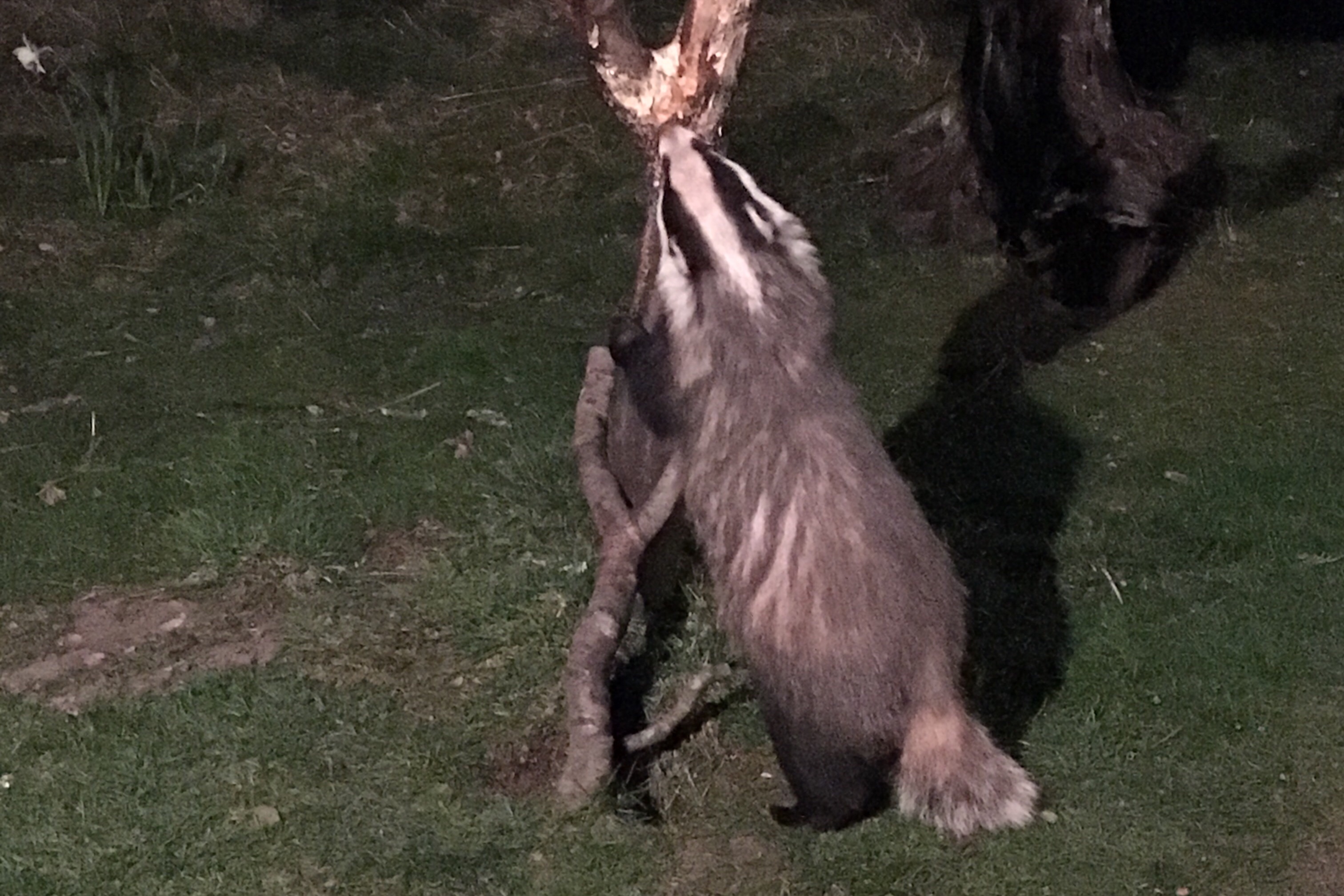
The next day I helped Heather with a “Mini Wildlife Adventure” that she was running for a child’s birthday party. The boy was intrigued by nature and so he and his friends spent the morning pond dipping, searching for bugs, finding badger prints and birdwatching in a hide. It was such a fantastic idea for a birthday party, and it was particularly refreshing to see that the boys had good wildlife knowledge and were genuinely excited by what they saw. Educating children about nature at a young age is the key to ensuring they continue to care about it when they grow up. Those boys would have spent hours pond dipping if we’d had the time, and it was so lovely to see.

IMG_4449
Here there be badgers

That evening Heather, Cain and I spent a peaceful last evening watching Sherlock with the fire cracking and snapping in the grate. It had been a pretty jam-packed weekend but as always, I felt inspired with a rejuvenated love for nature that always comes after a trip to northern England or Scotland. I sometimes struggle to feel that same passion at home in the south, where there are more people and noise and far fewer pine martens. I love escaping to the wilder parts of the UK and look forward to another wildlife adventure very soon.

IMG_4478
Photo by Heather Devey

Art, Music and Dance

I began my last full day in Madrid with a bit of vintage shopping in the district Malasaña, just north of the downtown area. I’d gotten quite badly overheated from walking yesterday so I used the metro for the first time, journeying from Sol to Tribunal. Although the platforms were a little stuffy, the trains themselves were air-conditioned (unlike the ghastly London tube) and the time saved was more than worth it. As long as you knew the station at the end of the line and the direction, the metro was very easy to use and I would definitely recommend it to avoid getting hot and bothered before you even arrived anywhere!

P1000363
Malasaña

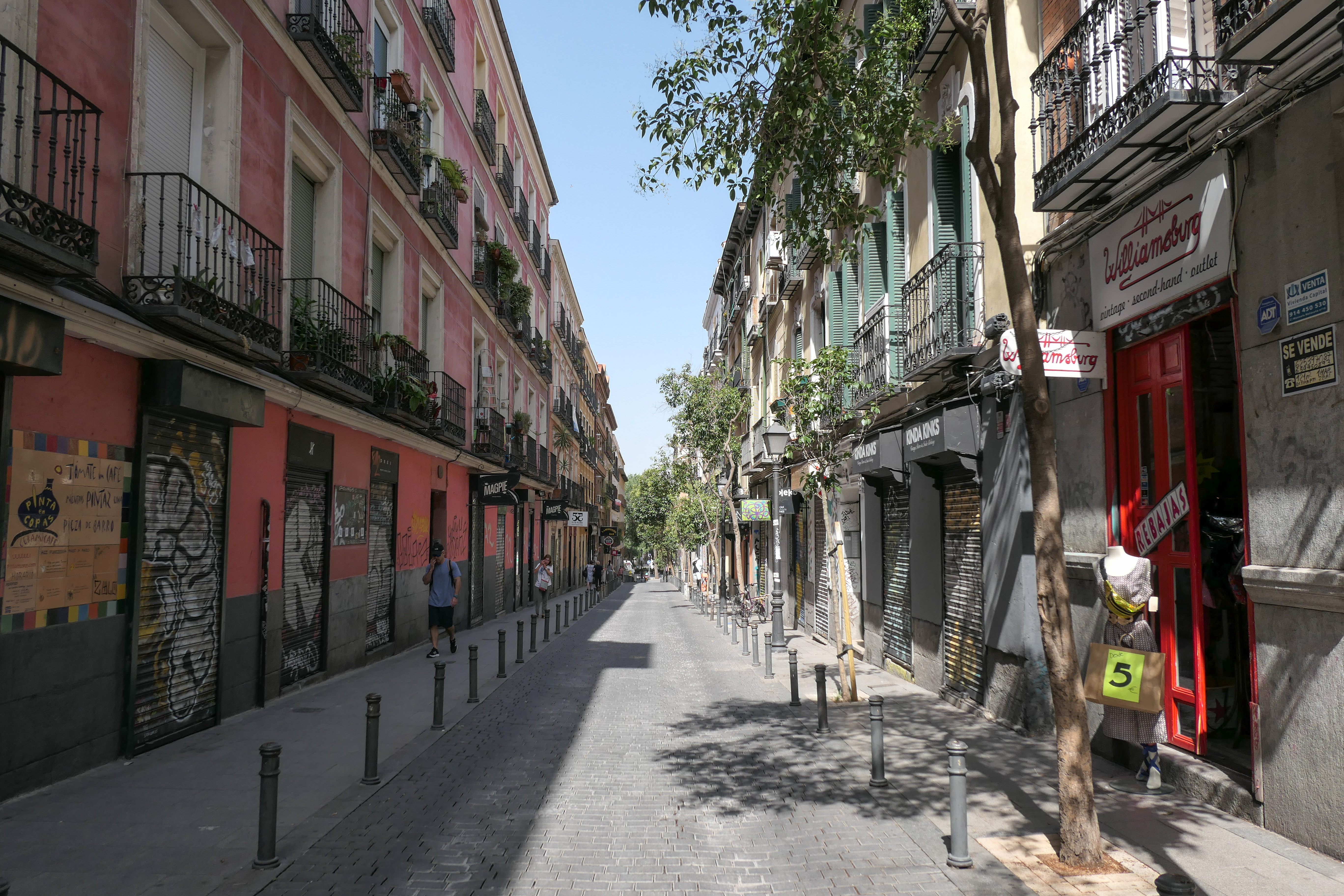
The street to be for vintage shopping was Calle de Velarde, with second-hand shops lining both sides of the street. I pinballed out of one directly into another: Magpie Vintage, Biba Vintage and La Mona Checa to name a few. The clothes were very affordable and I bought a lovely maxi skirt from Retro City for 20€. I could have also bought about a dozen denim jackets, but after remembering my extensive existing collection back home I managed to refrain.

I stopped for a drink and a slice of carrot cake at a dinky little place by Plaza del Dos de Mayo called El 2D and wrote for a while in the shade of an outdoor table. Aside from an unfortunate amount of graffiti (and not the skilled kind) it was a perfectly nice place to sit, but lacked the striking appearance of the frescoed walls of Plaza Mayor.

I hopped back on the metro and tried my luck getting into the Prado Museum, the main Spanish national art museum. Luckily I’d timed it right and sailed straight in. When faced with such a colossal museum such as the Prado and lacking any professional art knowledge, I decided to wander into the first room that took my fancy. It was filled with vast paintings of stunning natural landscapes with one stretching across an entire wall: “Landscape at El Pardo, Mist Rising” by Antonio Muñoz Degrain (1866). I’m always most drawn to realist paintings and get a little sceptical with the more modern, interpretive types. The colours in this oil painting were beautiful; it captured the perfect moment when the sun was at its most golden, casting a soft light over the tops of the trees and the clouds. There was so much depth in the scene; you could really believe that the rider letting his horse drink in the river was many miles from the distant mountains. I loved everything about it, from the glassy reflection in the water to the fluffy clouds.

Mist Rising
Photo: Museo del Prado

Once I’d had my fill of the Prado I faced the peak of the day’s heat, which would remain at 37°C until 6pm. I’d planned on reading in El Retiro Park, but there wasn’t enough granizado de limón in the world to keep me cool enough. In addition, my sandal promptly broke, and I took that as affirmation that I should get out of the sun.

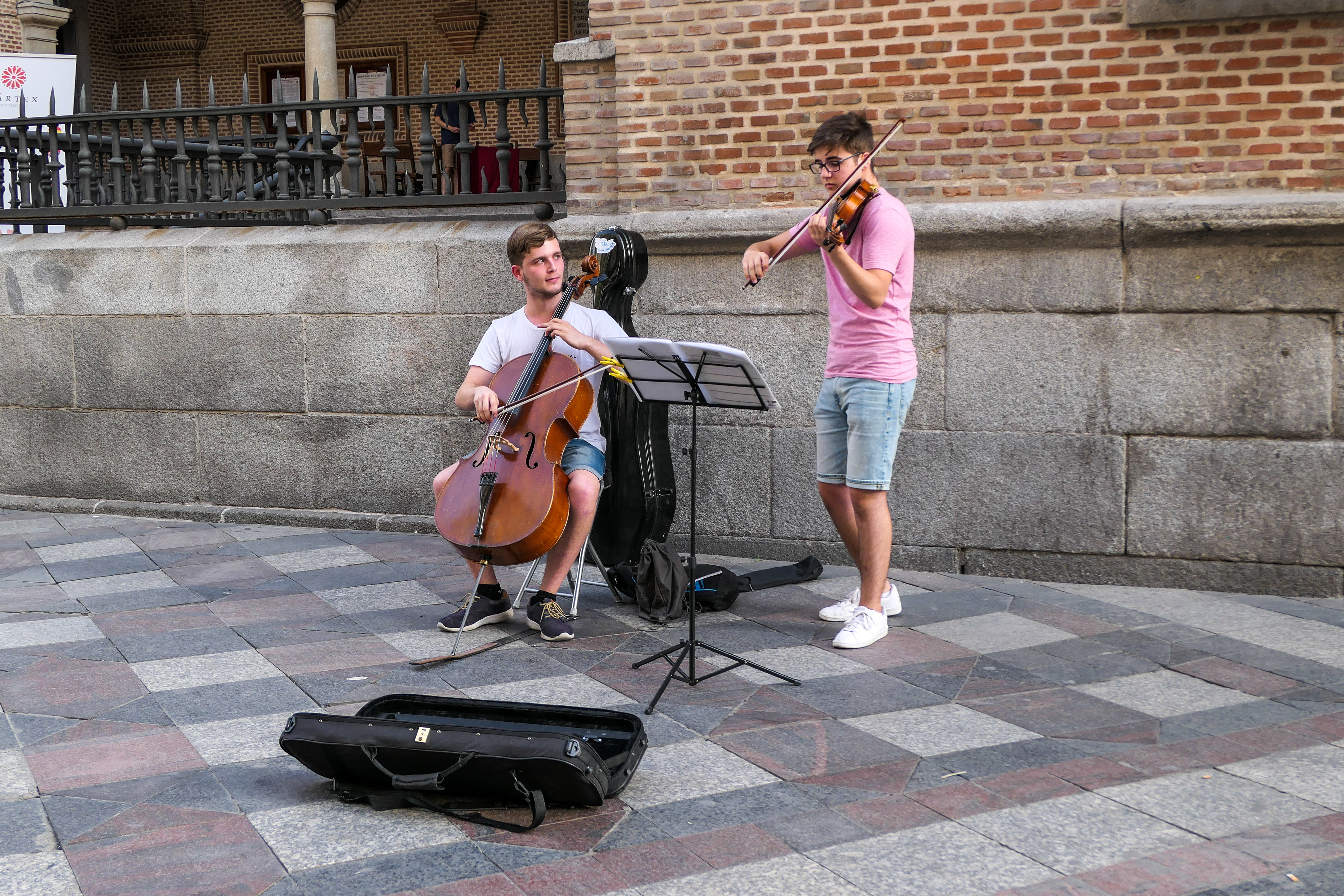
After a brief cooling off period, I ventured back out in the early evening when the temperature was far friendlier. I bought a strawberry slush this time, just to mix things up a little, and took a leisurely stroll up Calle de los Bordadores and then Calle del Arenal, where two school-age boys were busking. One was playing violin, the other cello. As well as classical pieces I also recognised Dancing Queen, Viva La Vida and Smooth Criminal, which all sounded fantastic played on strings. A little further up the street another busker was strumming Spanish guitar: the epitome of a balmy evening in Madrid.

P1000367

To make my last night even more Spanish, I went to see a flamenco show. Of the many tablaos (flamenco venues) around, I chose Las Carboneras, which was just around the corner from Mercado de San Miguel. As I sipped my complimentary drink, I had to suppress a sob when one tourist asked for the Wi-Fi password. I was delighted when the waiter denied it, and instead told them to enjoy the show.

Unfortunately I had waiters marching to and fro in front of me for the duration of the performance, as well as several tourists who couldn’t sit still. It was a shame that photography without flash was permitted so there were dozens of distracting phone screens blaring. After testing my patience too far, I had to tell one man to stop because he had begun to lean into my view. It wasn’t the cheapest flamenco show in town and I wasn’t about to watch it on someone else’s screen.

Nonetheless, the show itself was electrifying, which may sound melodramatic and cliché but it genuinely was. The atmosphere created by the seven performers – four dancers, two singers and a guitarist – was nothing short of incredible. The sound of the dancers’ shoes hitting the floor was like the crack of fireworks. One minute they were spinning in a frenzy, long skirts swirling, and the next they were frozen with just their fingers clicking or their wrists twisting in slow circles.

At times I didn’t know where to look. While the dancers obviously caught the eye in their elaborate and brightly coloured dresses, I found the guitarist fascinating too. His fingers moved almost in a blur but his actions looked effortless and he barely watched what he was playing. As mesmerising as he was, I most enjoyed the parts where the only sound was the lead dancer’s feet and the other dancers’ – who took it in turns to take the stage – clapping. They watched the lead dancer’s movements like a hawk and increased or decreased the rhythm of their clapping in response. There was such dramatic contrast between the gunshot stomps and moments of utter silence. As each dance built to a dizzying climax I felt my chest tighten. The tension in the room was overwhelming.

I would be interested to see how other shows compare to Las Carboneras. It was cabaret-style seating with tables dotted haphazardly and waiters weaving between with trays of drinks. While this suited the environment and lent itself well to such an intimate and emotional performance, for the sake of being fully immersed in the whole ambience, I would have preferred more traditional theatre-style seating. The constant interruptions of drinks coming and going was irritating, not to mention inconsiderate tourists. Venues more catered towards locals may be less tolerant of taking photos, or perhaps locals don’t feel the need to take any in the first place. Even considering that, I would recommend flamenco to anyone visiting Madrid, purely to hear that explosion of sound with their own ears.

P1000372

When I left the show I didn’t feel like turning in. It was a beautiful evening so I strolled to Plaza Mayor for some night photography. At 11pm the square was buzzing with activity. A saxophone was serenading diners with “Sway” and a tour group was in full swing, assembled by Felipe’s statue in the middle of the plaza. A woman walked by with her dog. Life continued just the same after dark as it did during the day. Perched on a bench, I felt perfectly safe in the bustling square. There are, without a doubt, things that a girl shouldn’t do alone at night, but in a place like downtown Madrid I felt perfectly at ease. When I got peckish I tried another portion of churros from a café and still found them hard as nails. If there was one disappointment from my trip, it was the let-down of the churros.

As I people-watched and scribbled in my journal, I reflected on the past five days. My time in Madrid had been both diverse and enlightening – my first trip alone to a non-English speaking country. While the language barrier had sometimes felt like quite the hurdle, I’d muddled through and had some incredible experiences. I’d watched terrapins up close and personal, sampled the buzz of El Rastro flea market and had been truly moved by the passion of flamenco. With a little more Spanish under my belt, I could really see myself living like a true madrileña.

P1000181

Reptiles in the Park

I bought a ticket for the Madrid City Bus Tour from hotel reception and hopped on at Plaza Mayor. With such intense heat, I thought it would be a good idea to explore the city in the comfort of an open-top bus, where I could jump on and off wherever I pleased. First stop was Puerta del Sol with the bear and strawberry tree statue, and then we headed east into the Retiro district, which was probably best known for its trio of world-famous museums. As I’d anticipated, the queues to get inside were eye-watering even at late morning, so once again I was content just admiring the exterior. As much as I quite liked wandering through art galleries, I wasn’t willing to spend an hour waiting to get in. Besides, on a weekend day you wouldn’t have seen the art for the tourists anyway.

P1000388

I was far more interested in what lay beside the museums and I hopped off the bus. El Parque de Buen Retiro was a vast and beautiful park spanning 350 acres. I began at the north end and made my way leisurely past elaborate fountains and sprawling trees. One of the trees was the oldest in Madrid, but there was no shortage of vast leaved giants, which provided much-needed shade for tourists and locals alike. While some people were lolling on the grass with food or books, others were jogging and walking dogs. It was a hive of activity and yet seemed extremely tranquil, similar to how I felt in Plaza Mayor. Despite a population of several million, the city didn’t feel cramped or overcrowded the way London does. The pace of life in Madrid was far more relaxed and I was keen to savour it. The only signs of congestion were from the parakeets perched in every treetop, whose disgruntled calls sounded like trainers on a squeaky floor.

P1000241

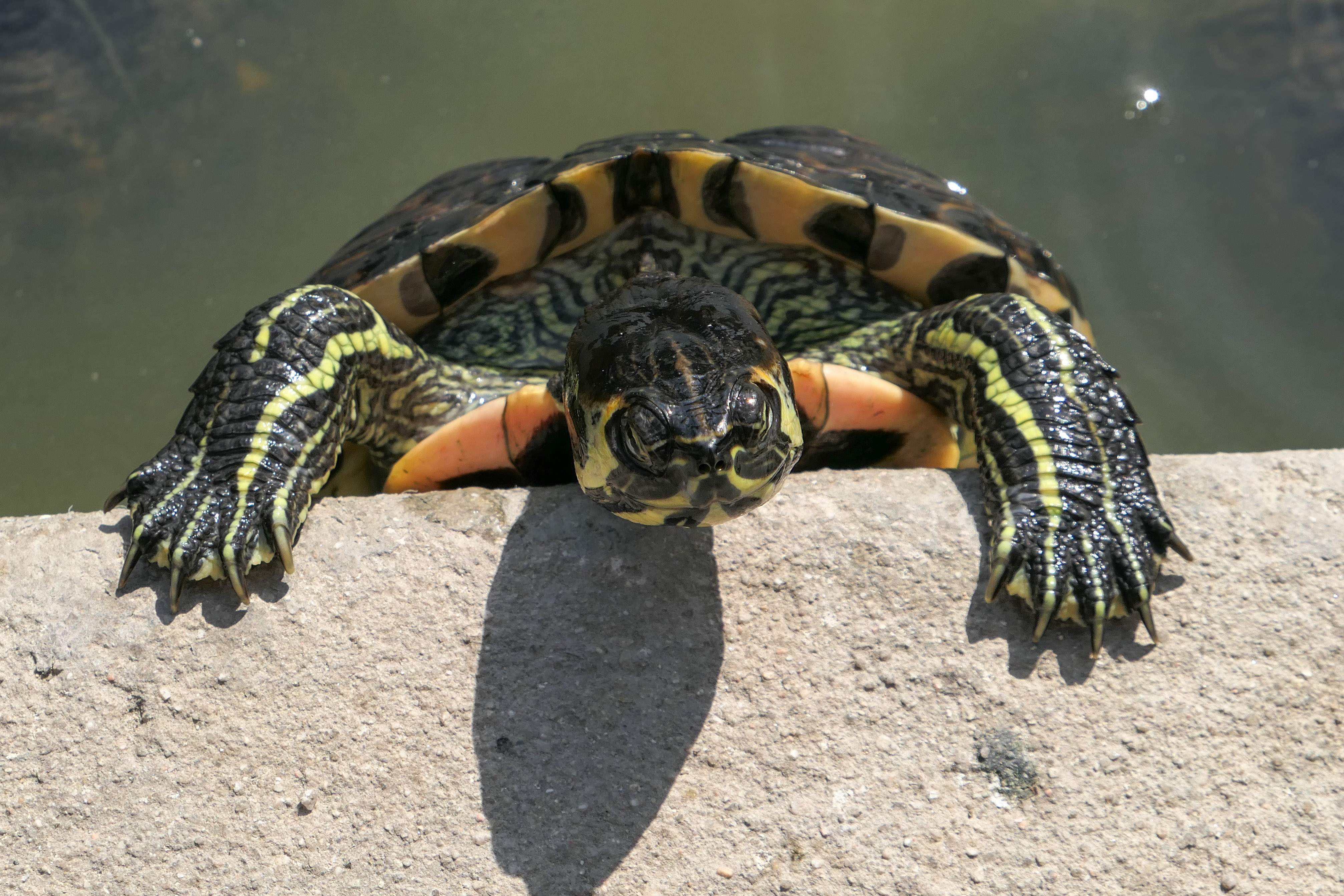
In almost the very centre of the park was El Palacio Cristal – a beautiful glass building overlooking a lake where ducks and a lone black swan were swimming in lazy circles. Surrounding the water were dramatic sprays of white blooms, rosebushes as tall as trees and a miniature waterfall cascading over a rocky outcrop into the lake below. I sat down on the stone steps of the palace to see the ducks a little closer and was surprised to find the water full of tiny terrapins. While their shells remained submerged, their black and yellow-striped heads poked out of the water, eyes blinking up at the child beside me who was throwing popcorn. On the steps, feral pigeons and sparrows tussled for the prizes, while in the water the terrapins were joined by ducks and the occasional gaping lips of a fish. The black swan came gliding over for a look too.

P1000282

One terrapin made the monumental effort of grasping the side with its broad claws and heaving itself up. For a few surreal moments we gazed at each other before it realised I wasn’t the one with food and plopped back underwater. Meanwhile, a pigeon strolled nonchalantly across my foot in pursuit of an unclaimed kernel, while others exploded into flight around my head, their wing beats sending a welcome burst of fresh air.

P1000293
P1000278
Terrapin v pigeon face-off!

Beside me on the step I could hear the child with the popcorn munching. “One for you, one for me” was obviously in play. When the bag was empty, birds and reptiles slowly dissipated until the next snack arrived.

I wanted to sit and watch the terrapins a bit longer, but the steps were in direct sunlight and I was beginning to fry. I left the diverse gaggle of creatures behind and headed out of the park, but not before passing through La Rosaleda (rose garden) for a few photos. A dozen other young female tourists were posing for shots, no doubt gathering new ammunition for Instagram.

P1000325
La Rosaleda

All along the downward slope leading back to the museums were small wooden huts overflowing with books, which I made a beeline for. It was La Cuesta de Claudio Moyano bookstalls. Nearly all were in Spanish but there were a couple of titles I recognised. I couldn’t help buying “Harry Potter y la piedra filosofal”, which would probably be challenging enough for my rusty Spanish.

For lunch I had a bocadillo de calamari (squid ring sandwich) from El Brillante – another Lonely Planet recommendation that fell short of the mark for me. The calamari itself was good, with just a thin layer of batter, but when sandwiched in a dry baguette it had me gasping for a drink. It seemed that the Spanish didn’t use sauces much in their cooking. The bacon bits and bare bread at Casa Revuelta had been the same. Perhaps the locals just washed it all down with a few cervezas, but I was left wanting after El Brillante.

P1000342
Gran Vía

Later in the evening, after a full circuit on the bus and hopping off on Gran Vía, the hub of central Madrid, I walked back towards Plaza Mayor and a sign for “Tapa Tapa” caught my eye. I ignored the guidebooks and had dinner in a place I knew nothing about, which was an excellent decision. I chose four cheese croquettes, mini portions of Iberian ham and mozzarella toasted sandwiches and langoustine skewers, which were all absolutely delicious. To drink I had a mocktail called San Francisco, which was bursting with the flavours of orange, peach, pineapple and blackcurrant juices. It was an extremely satisfying end to a long day exploring the park. Tomorrow I had a real Madrid tradition to look forward to: the infamous El Rastro flea market.

Arriving in Madrid

I thought I was reasonably calm about staying in Madrid by myself, but on the train to Gatwick I felt sick to my stomach. After the stressful ordeal of flying to Florida I thought this would be a doddle, but then again I always panic when I travel. I lost count of how times I checked my camera, purse and passport were still in my bag. I knew I wouldn’t be truly relaxed until I checked into the hotel.

I wanted to make this trip the best it could be. Initially I had designed an elaborate agenda for each of the four full days I was in Madrid, pretty much hour by hour, but on reflection I decided just to list a few things in each district that I wanted to see and keep the rest of the time free for happy accidents. Ultimately it was supposed to be a holiday and if I dashed around cramming everything in I would come back needing to book another. There was also the heat. It was over 30°C all week, day and night, and the last thing I wanted to be doing was frogmarching around Madrid ticking off my wish list. I was embracing a little spontaneous.

The flight was delayed by nearly an hour. While we were sat in our seats, the pilot announced that another plane had been parked in their spot and Gatwick’s announcements had been “a mess”. It was nice to hear he was frustrated too. At least I didn’t have a connecting flight, but it meant I had to gaze outside at muggy drizzle for a while longer.

Eventually we took off and it soon became too bright to look out the window. When the clouds parted, the landscape stretched out in a never-ending blanket of blue; ocean blended seamlessly into sky with the horizon nowhere to be seen. A plane passed us, which was a bizarre sight that I’d never experienced before. It looked minuscule and quite surreal as it zoomed back the way we’d come, soon disappearing out of sight. It seemed as small as a bird flying alongside a car.
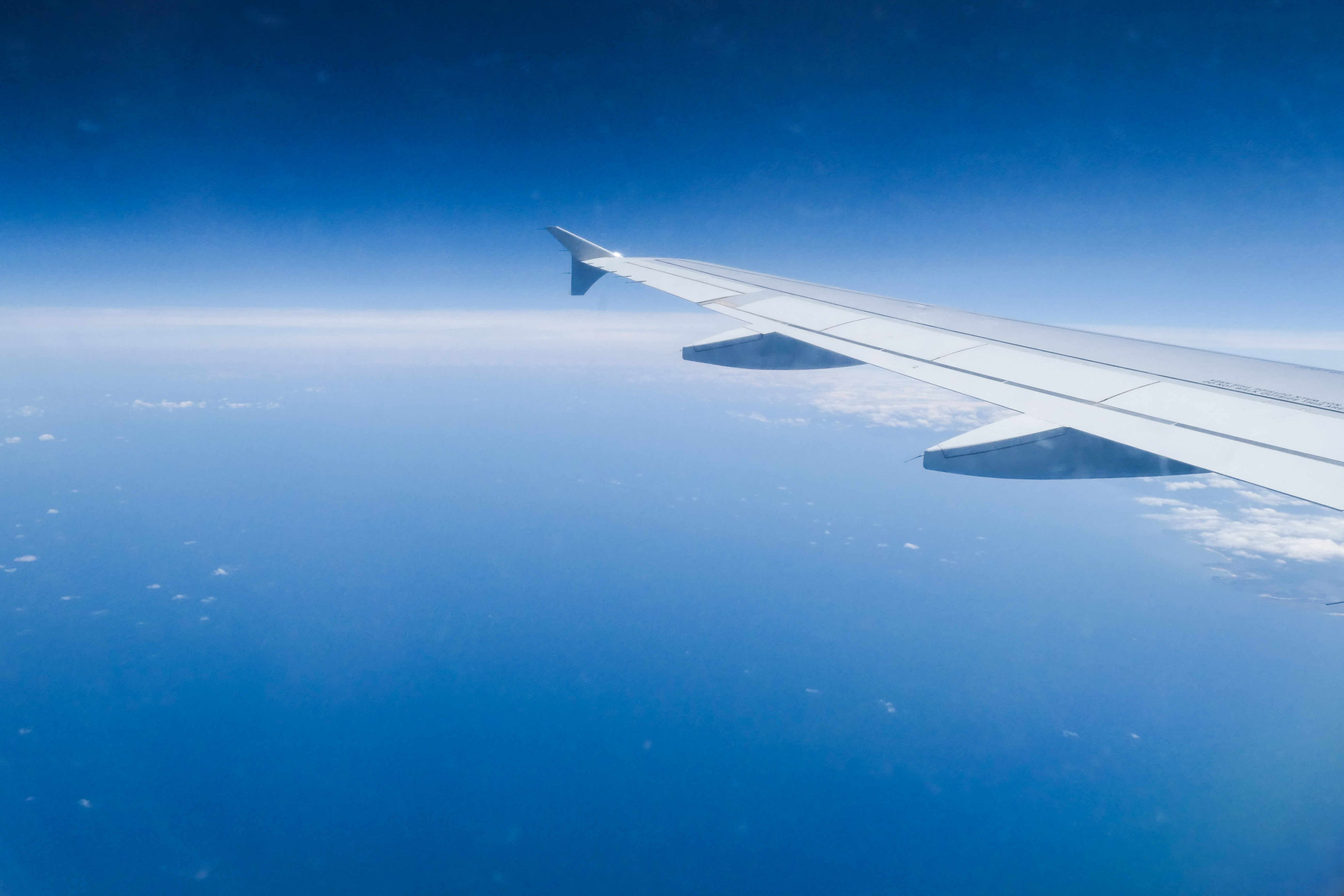
P1000116

Soon we left the ocean behind and land took its place: a spectrum of browns and pinks swirled in patterns like a gigantic marbled ink painting. Pockets of civilisation sat amongst a jumbled jigsaw of fields, their winding roads linking them in a complex web.

We sank lower and my ears popped. The sandy browns transformed into the greens of a vast expanse of forest, split into dead straight and uniform blocks by white boundary lines. All the while, bulging cumulus clouds slid slowly by. At times they covered the ground completely, puffing up like a worldwide bath full of soapy suds, their dark shadows blooming below them.

After so much open countryside, Madrid sprang up unexpectedly. Large tower blocks loomed over car parks and long bustling streets. I only managed to snatch a quick glimpse before the plane reached the runway and touched down. Once we’d disembarked, we crossed the bridge into the entirety of Madrid–Barajas Airport. Departures and Arrivals were all combined into one chaotic space. Passengers were amassing by the passport check kiosks so I followed, but when it was my turn my passport wasn’t recognised. I was sent to another queue, this one about two hundred-strong. By then I was getting anxious about my case arriving without me, not to mention my poor taxi driver who’d already suffered as a result of my flight’s delay.

The queue inched forwards. A woman in uniform asked to see my passport and told me I needed the other queue. I explained I’d already been rejected there, despite another attendant saying it was for European passports. The woman took me out of the queue and bumped me right to the front. Apparently I’d been in the right place but the machine didn’t recognise a passport if you pressed it down on the sensor, despite the natural instinct to do so.

Eventually I was through and hurried to Baggage Reclaim where I was quite alarmed to see that I shared a luggage belt with two other flights. Luckily my case appeared after only a minute’s wait so I dashed off to meet my driver Santiago, who was all smiles when I spotted him. He took my case, gave me a bottle of water and once we’d reached his car, pointed out the best shopping and tapas on a map. I was pleased to find out that I’d read about most of them during my research, so it was reassuring that a man born in the city recommended the same places.

We left the stress of the airport behind and I finally began to relax. Santiago showed me several landmarks on the way. There was the Wanda Metropolitano Stadium where Madrid-based football team Atlético Madrid play, and the Cuatro Torres Business Area – a business district with the tallest skyscrapers in Spain.

As we drove further into Madrid, the buildings closed in and soon the city had a similar feel to bustling London. I glimpsed zapaterias (shoe shops), panaderias (bakeries) and lots of tapas bars. We dipped down into an underground tunnel and Santiago told me that we were right beneath Plaza Mayor, arguably the heart of Madrid and where I would be staying. When we emerged back into daylight, the architecture changed drastically. In place of the drab, sombre buildings I’d seen on the approach were quaint apartment blocks in pastel shades with tiny wrought-iron balconies and pinstriped awnings. We had suddenly arrived at my hotel: the Petit Palace Plaza Mayor, one of a chain of Petit Palaces found in six other cities across Spain: Barcelona, Bilbao, Valencia, Mallorca, Málaga and Seville.
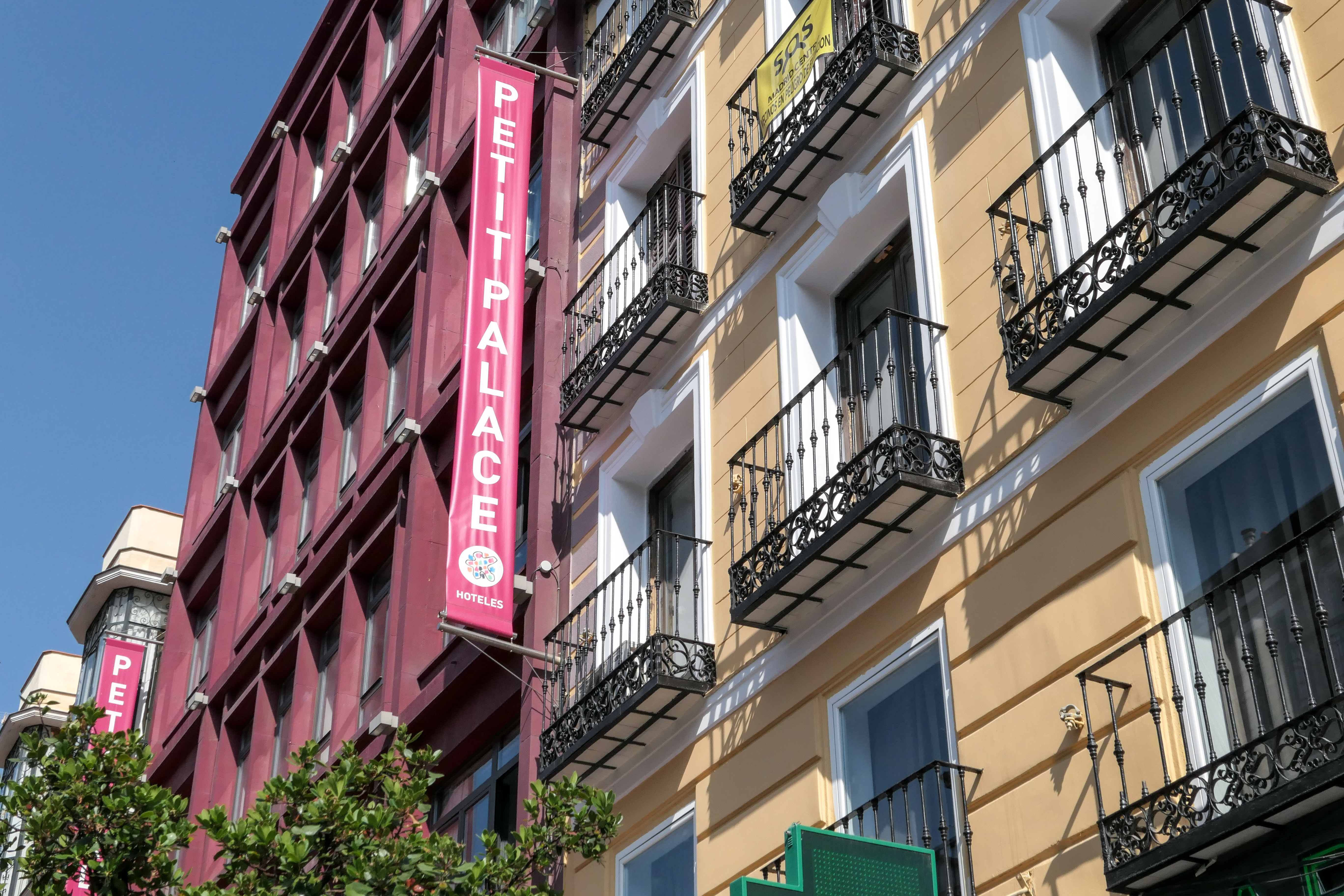
P1000156

In stark contrast to the bright and gracefully aged Plaza Mayor, the boutique-style hotel’s interior was subdued in colour with a significantly futuristic feel. I told the receptionist in Spanish that I had a reservation in the name of Rebecca Gibson and he proceeded to reply solely in English, which was a shame. One of the main reasons I had chosen Madrid for my destination was to brush up on my rusty Spanish. I knew a lot of tourists weren’t too keen to attempt the language, but I was very eager to talk in Spanish and I hoped that the locals would give me that chance.

P1000125

My first trip out was to Plaza Mayor itself, which was only a minute’s walk from the hotel. There were numerous people milling around but the square was spacious and tranquil in the early evening. The plaza was built in the sixteenth century when Madrid became Spain’s capital. It was used for state occasions including executions and bullfights, where the spectators would be crammed into the square and royalty would watch from the balconies. Luckily, the plaza is now filled with restaurants and cafes instead, and hosts a stamp and coin market on Sunday mornings.

On three sides the buildings were terracotta in colour with prim white balconies and shutters. On the fourth side – a building called La Casa de la Panadería (Bakery House) – the bricks were covered with intensely detailed frescoes dating back to only 1988, when the Madrid City Council launched a competition for the design covering the wall. The winner was Carlos Franco, whose artwork incorporating mythological characters was completed in 1992. Each part of the fresco was rich in colour with shocks of marigold yellow, rose pink and dusky orange.

P1000120

Standing pride of place in the centre of the plaza was King Felipe III on horseback – the subject of hundreds of photos found in Madrid guidebooks. I’d seen him at most angles before I even arrived, but I couldn’t resist taking my own version.
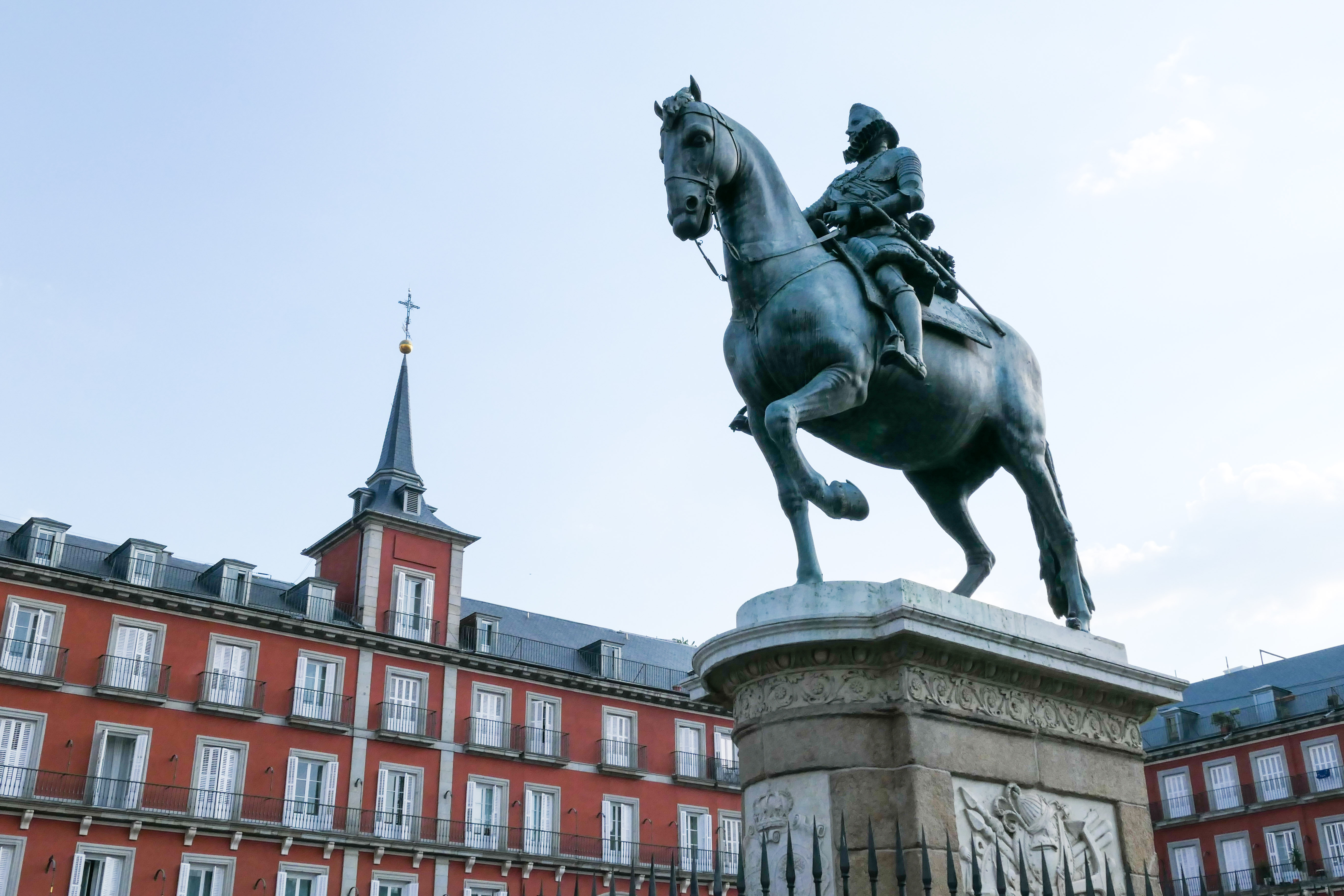
P1000122

It really was as hot in Madrid as I’d been told. At nearly 8pm, the temperature easily reached the most blistering of summer days in England. I perched on a stone seat to write and had to move to the shady side almost immediately to avoid burnt thighs. I vowed to definitely look into using the metro during my stay, as it was far too hot to walk any considerable distance.

Along with the glamorous architecture were splashes of kitsch, as with any city location that tourists have access to. Headless mannequins donning flamenco dresses stood in lines while people peered from behind them in Madrid’s answer to the Brighton beach scenes you could stick your face through. Mickey Mouse and Pikachu stood idly for no obvious reason, and several traders ambled around selling light-up toys and novelty whistles. All that aside, Plaza Mayor had undeniable charm. Restaurants and cafes lined the entire square’s border, but I’d been warned against their extortionate prices. I’d read that if I ventured only a few streets further afield I would find high-quality and authentic tapas at a fraction of the price.

I unintentionally threw myself in at the deep end by going to Casa Revuelta for dinner. It had come highly recommended for its bacalao (cod) tapas, but I soon realised it wasn’t your typical restaurant. There weren’t any menus – a waiter came over and you told him what you wanted. Every bit of food vocabulary flew out of my head and all I could utter was pescado (fish). Luckily, I was brought some of the bacalao, which really was delicious. With no bones, the meat was beautifully smooth and with only a thin covering of batter. I ordered something I saw on my neighbour’s table, which turned out to be bite-sized pieces of pork crackling, which I wasn’t a fan of. It was my fault for not brushing up on my vocab beforehand, but by happy accident (the first of many I hoped!) I had tried my first Spanish delicacy in the bacalao.

After settling up at Casa Revuelta, which was already swelling with hungry customers including many native Spanish speakers – I strolled back through Plaza Mayor. Street entertainers were in full swing and Pikachu now had a throng of children around him. I passed El Restaurante Sobrino de Botín, the oldest restaurant in the world, which already had a queue out the door. The dramatic soundtrack of a flamenco show drifted out of a dimly lit doorway.
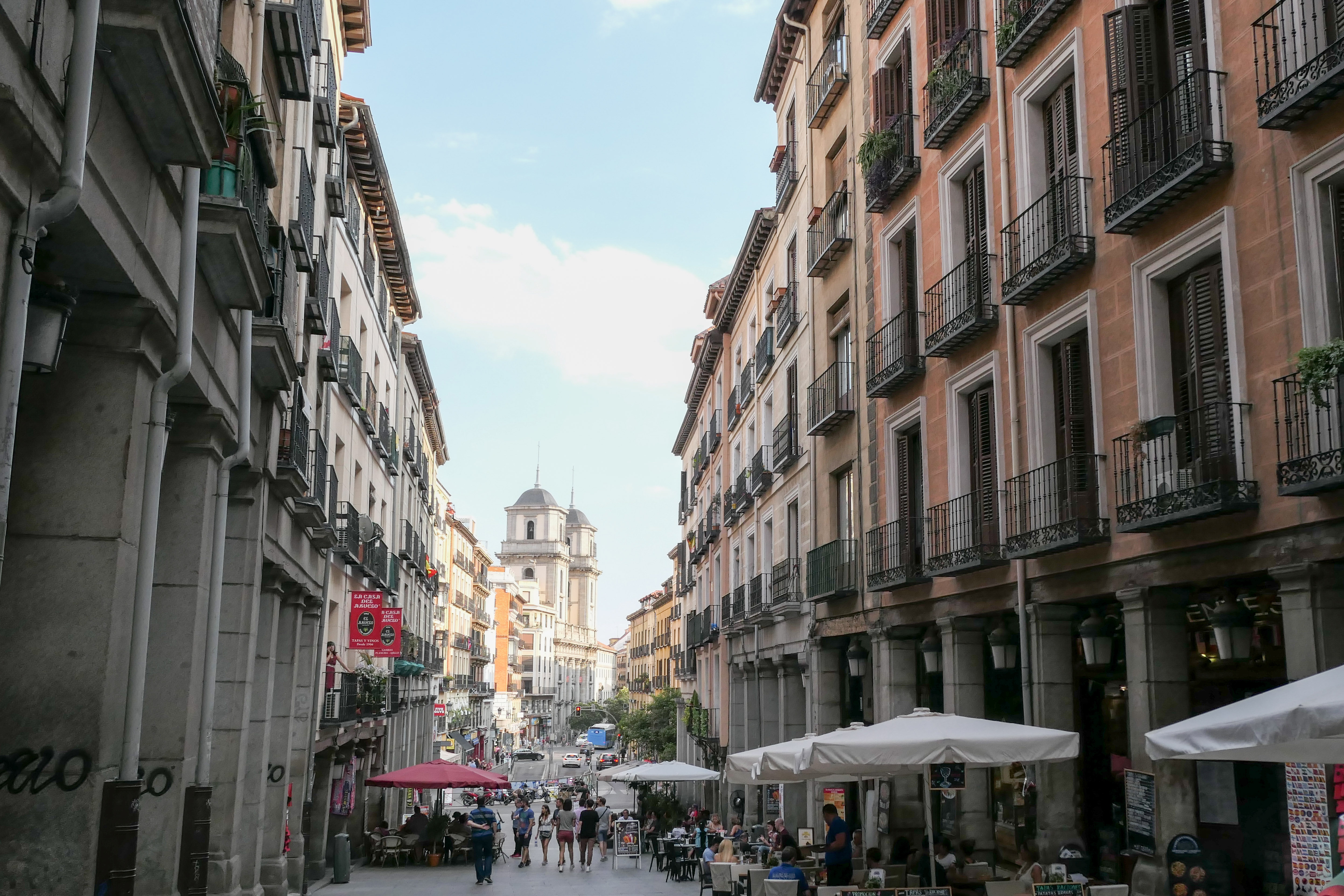
P1000129

I wandered further on and found myself in Puerta del Sol, which was buzzing with activity. One of the busiest places in Madrid, Puerta del Sol (Gate of the Sun) is home to the clock that chimes during the traditional eating of the twelve grapes and signals the start of the New Year. At the far end was a fun little statue that many people had flocked to for photographs: El Oso y el Madroño (the Bear and the Strawberry Tree). Although reasonably small in size, this intriguing bronze statue weighs twenty tonnes and replicates the similar emblem shown on the Madrid coat of arms. The determined bear stretching for the fruit symbolises the resilience and tenacity of madrileños (people from Madrid). Bears used to be found in many of Madrid’s forests, as well as trees bearing fruit that closely resembled strawberries. Madrid was thought to have once been named Ursa, Latin for bear. You wouldn’t find many foraging bears in Madrid nowadays, but Antonio Navarro Santafé’s sculpture in Puerta del Sol was lively enough.

P1000137

I decided to get an early night after a long day of travelling so as most madrileños were heading out for the night, I made my way back to the hotel. Casa Revuelta was a bit of a shaky start, but as time went on I knew I would start to find my feet.
The Dreaded Block

Although it may not look like it on this blog, a lot has happened over the past few weeks. It’s high time I put out an update, as I was very conscious of the gap between posts getting longer and longer. I’ve been suffering from a crippling case of writer’s block pretty much since my last post from the Grant Arms Wildlife Book Festival in April and it’s been driving me crazy, as The Block has a habit of doing.

Recently my optician told me I have both blepharitis (dry eyes) and Posterior Vitreous Detachment (PVD), which is the reason behind my numerous floaters and flashing episodes. Luckily, neither condition is sinister in my case, but I’ve now become very conscious of straining my eyes from too much screen time. However, as a writer who prefers to type (it’s the only way my hands can keep up with my brain), it’s meant that I’m now reluctant to gaze at my mac screen for hours on end. So, I’ve been considering going full-on retro and getting a typewriter, which honestly is something I’ve dreamed of owning for years. As well as being loads of fun, it would be a screen-free alternative to typing that would give my eyes a rest.

Elsewhere during my long absence, in an attempt to meet new people and also learn new skills, I’ve joined my local writers group and started singing lessons. Verulam Writers has already pushed me out of my comfort zone. I’ve read out several of my pieces during manuscript evenings and got new perspectives on description in a recent workshop. It’s so refreshing to hear how others write because although it’s not always a genre I write in myself, it’s still so useful to hear how different writers approach tackling synopses or developing characters. Although I’m still trying to fight my way out of writer’s block, being around fellow writers has been very reassuring and it’s the right environment for me to get back into it again.

As for singing, I’m having an amazing time. I got back in contact with my piano teacher after a three-year break – it’s hard to believe that the last time I saw her was before the whole whirlwind of university – and asked her about taking up singing lessons, which was one of the best decisions I’ve made. She is an absolute tonic and helps me forget my uneasiness about The Block (and honestly my whole future) for a short time. I love singing; I find it incredibly relaxing and often quite uplifting. To now be able to improve my technique and feel my voice getting stronger is so incredible. After only three lessons I’m already hearing a difference in high notes, which is something I’ve always struggled with.

In addition to singing lessons, I’ve got something else exciting to look forward to: next month I’m going to Madrid! I was determined to make the most of a block of holiday off work and I’ve wanted to go back to Spain and practise the language for ages, so I seized the day and booked myself five nights in Plaza Mayor – bang in the centre of the city. I’ve been shredding through Lonely Planet guides and have assembled a list of landmarks, events and, perhaps most importantly, restaurants that I need to visit. Now I have to schedule a plan of action to see as much as possible without burning myself out. Either way, I’ve indulged in a beautiful new Panasonic compact camera to tuck into my bum bag and capture some of Madrid’s charm.

So, although writing has been agonisingly slow this month, I’m hoping that my new extra-curricular timetable will really help me get inspired. Writer’s block is an inevitable evil that you can try and push through, but I think sometimes it’s best to step back and approach new things that take your mind off it, which can actually help more in the long run. All I can say is bring on Madrid!

The Scourge of the Glen

Our meeting point was a narrow track just outside Aviemore. The light was beginning to fade and the moon shone in a clear sky, fringed by a sprinkling of stars. We threaded our way up the track, keeping an eye out for roe deer in the surrounding fields, and eventually reached the hide: an impressive building with large windows running along each side. The interior was luxurious; carpeted flooring, posters adorning the walls and above all, heating! It was indulgence that I hadn’t had the fortune of experiencing in a lot of hides. This one was positively posh.

Once inside, there was the habitual jostling for the best space as politely as possible. The guide always says that the animals may come from any direction, but we all know some spots are usually better than others. After we were all settled, our guide James left the hide to distribute the food. He explained the importance of only providing a supplement to the animals’ diet to make sure they didn’t become reliant on human assistance. On the menu tonight was a selection of peanuts, raisins, dollops of peanut butter and the ultimate prize: an egg.

So what were we hoping to see at this time of night? To Victorian gamekeepers, they were the “scourge of the glen”, known for stealing the eggs and chicks of ground-nesting birds. In my opinion, they were on par with the unicorn – a creature so stealthy and elusive that although they’re relatively common in Scotland and doing well there, they are very rarely seen. Coming to a hide dedicated to seeing them is your only semi-reliable chance, but of course nothing about wildlife is ever guaranteed. I’m talking about the pine marten.

img_3348
Photo: Jai Redman

A member of the mustelid family with otters, stoats and weasels, pine martens are cat-like and forest-dwelling. Their coats are a rich, chocolate-brown and each animal has a unique pattern on their bib ranging in colour from yolky yellow to almost white. Pine martens are adept at dispatching grey squirrels, which are slower and less agile than reds. The latter have evolved alongside martens and know how to evade them, which is why there are no grey squirrels in the Highlands and plenty of reds. It’s interesting to think that if pine martens had been abundant across the whole of the UK when grey squirrels were introduced in the 1870s, would we have such a drastic problem with this invasive rodent today?

Once the food was in place, the wait began. Not only were we hoping for martens but also badgers, owls, a deer perhaps. It was a complete lottery, which made the whole thing incredibly exciting. The light was fading fast and my camera struggled to cope. Cranking up the ISO caused a sandstorm of grain to fill the screen, but I wasn’t planning on prize-winning photos on this occasion. This was one of those times when, more than anything, I wanted to watch.

After a short while we had our first visitor. Out of a knot of tree roots came a wood mouse. It appeared as though time had been sped up – the mouse zoomed out into the open, seized a peanut and retreated into its shelter within what seemed to be the blink of an eye. He or she entertained us for a while but before long it was quiet again.

Gazing outside into the dark clearing roused a slight feeling of unease. The longer I looked, the more my eyes played tricks on me. Shadows took on the appearance of strange shapes appearing to move on their own. Coupled with the expectant silence in the hide, the scene was close to eerie.

My eyes kept flicking to a shadowy patch just out of reach of the yellow spotlights. Beyond it the ground dipped into a shallow hill that plunged into complete darkness. I kept picturing a marten cresting the hill and trotting along the track for the tempting egg. I thought if I imagined this hard enough, it just might happen. I appreciated this fantasy had an undeniable whiff of desperation about it.

Suddenly, a flash of pale wings caught my eye. I glanced up and watched a scene unfold in slow motion. A bird catapulted through the air, wheeled tightly around the mouse’s tree and swept straight past the window. A blink-and-miss-it moment. For a few seconds I was stunned. I’d never seen a tawny owl before, and couldn’t believe how small they seemed! Small, yet incredibly skilled hunters. It really was a privilege to get nocturnal wildlife encounters, especially scenes as dramatic as a high-speed fly-by from a tawny.

After that exciting moment, there was a distinct lack of life for quite some time. It was still early days, I reminded myself, eyes flicking once more to the shadowy patch, there was time yet. I leant forwards on my stool, peering so close to the window that my breath fogged up the glass. Martens could approach from anywhere, and being so dark they would be completely concealed apart from their trademark bib.
The other visitors coughed, switched seats, paced up and down and chatted in hushed whispers. Meanwhile, I was glued to my stool. Far from blessed with social prowess at the best of times, I refrained from making conversation and kept my eyes planted firmly outside – there was no way I was missing anything.

There was a sudden, hushed commotion in the hide and I peered to the side to see a badger had appeared. Badgers have terrible eyesight but an exceptional nose, and mainly use smell to discern their surroundings. The animal picked her way across the grass, fanning her snout over the ground like a metal detector. Tragically, my previous badger experience consisted of road kill and one that I had nearly killed myself when it ran out in front of my car, so to watch a real, live badger going about her nightly business mere feet away was such a treat.

img_3251

After she’d polished off most of the nuts, the female was joined by a male. He was the same size, suggesting he was also the same age if not younger. Adult male badgers typically weigh a kilo more than females and are noticeably more muscular. The two animals completely ignored each other so there was no doubt that they belonged to the same clan. If they hadn’t, there would have been a serious standoff. The male cleared up what the female hadn’t found and one by one they left the way they’d come. The only evidence of their visit was a distinct lack of peanuts.
img_3249

An hour and a half later, my enduring optimism was beginning to turn. I was conscious of the time and that our evening would eventually come to a close, marten or no marten. I started seeing more and more phantom animals out in the gloom. The moon was radiant and my eyes were drawn to its pure white hue. A lone bat darted over the roof of the hide, silhouetted briefly against the lighter sky before disappearing. How anyone got a decent photograph of a bat eluded me. To capture such erratic and rapid flight was seriously impressive.

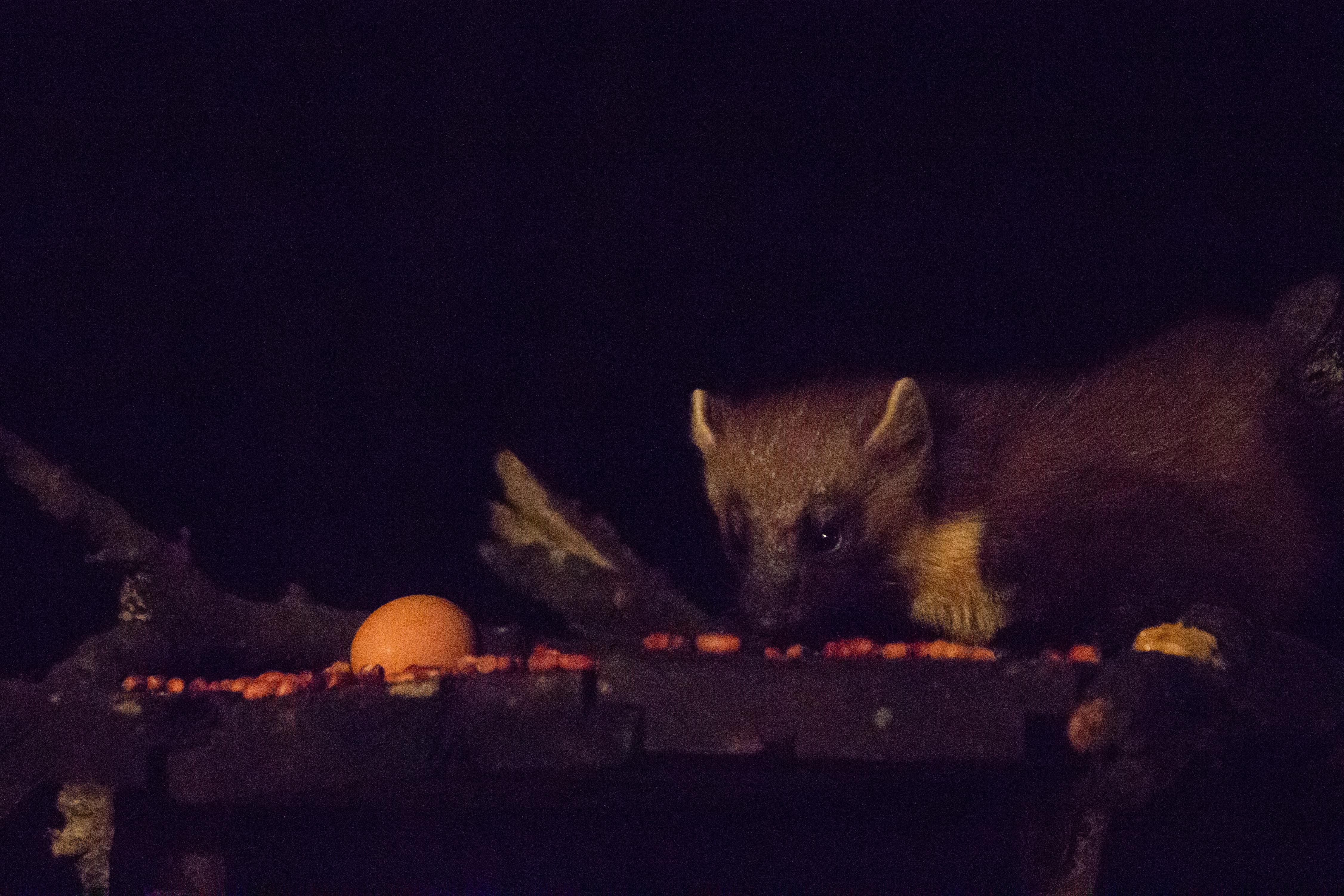
I glanced over at the shadowy patch again and saw a pine marten staring back at me, beady eyes glinting in the light. My insides jolted and as quietly as could I exclaimed, “There’s one!” Everyone knew exactly what I meant and came hurrying in my direction with barely restrained urgency. I couldn’t quite believe what I was watching on the other side of a pane of glass.

img_3262_lively

James told us the marten was a female. Similar to badgers, males were larger and typically had broader faces. Many people underestimate a marten’s size when they see one, imagining something along the lines of a weasel or stoat. I was quite the opposite; the marten was smaller than I’d expected, smaller than most house cats. What couldn’t be disputed was how beautiful she was with her long bushy tail, sleek mocha fur, tiny button nose and white-rimmed ears. I fell instantly in love.

The marten crossed to the other window and we swiftly followed suit. She climbed up onto the table and munched through the peanuts. As stunning as she was, she certainly wasn’t the most ladylike when it came to eating. She took the egg in her mouth and, despite her sharp teeth, carried it delicately down the table onto the grass. After a quick readjustment, she lolloped out of sight.

IMG_1579

We’d spent two hours in darkness and experienced less than a minute of what we’d travelled here to see, but the atmosphere in the hide could only be described as barely contained hysteria, in my corner at least. We made the unanimous decision to end our evening on a fantastic high. Not only had I had my first proper badger sighting, but I’d also seen a Scottish icon. I couldn’t have hoped for better.

img_3345
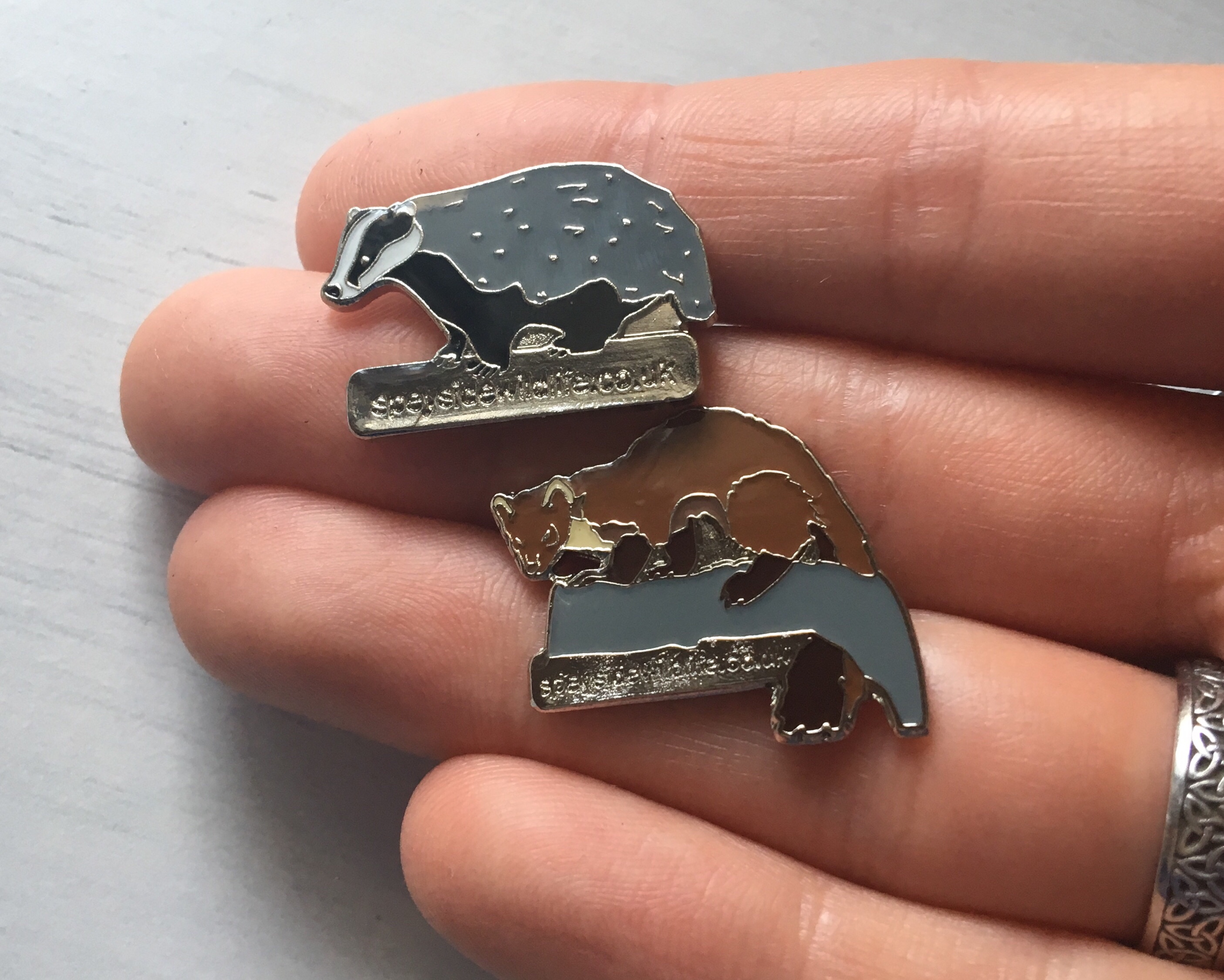
Mementos


A Charm of Bramblings


With the bitter cold of winter often come unexpected and welcome surprises. Two years ago, flocks of waxwings graced us with their presence as they passed through from Scandinavia. The following year, hawfinches could be seen crunching hard seeds with their formidable bills. In 2019, it seems to be bramblings that are turning heads as they gather en masse across the UK. While they have been known to breed in Scotland in previous years, this is very rare. However, bramblings often visit the UK during the winter months, with this year being no exception.

At a quick glance, bramblings could easily be mistaken for a male chaffinch; these birds are of the same size and have very similar colouration, if a little more diluted than our more common garden inhabitants. Both male and female bramblings have an attractive orange blush on their sides and a white belly. In summer, males have black markings on their head. Bramblings can be found in beech woodland and close to other wooded areas, often joining flocks of chaffinches to look for food. Like many finches, bramblings prefer seed, so providing a good seed mix could attract them into gardens. There are several collective nouns for finches, including a “charm”, “company” and “trembling”. I couldn’t find a specific term for a gathering of bramblings, but as the birds themselves are so charming to look at, a “charm” seems appropriate.

It is thought that the reason behind this year’s explosion of bramblings is beech mast, or fruit, that falls from the trees, dispersing seeds for the birds to eat. If the beech mast fails in European countries such as Scandinavia, species including bramblings will move south and west in vast flocks to find more food. While impressive gatherings of five hundred bramblings can currently be seen in areas of the UK, earlier in January there was a flock of around five million in Slovenia. This number of birds could seem difficult to comprehend, but even that pales in comparison to the flock seen in Switzerland in the winter of 1951, which was up to 70 million strong.

As with all winter visitors, the bramblings’ time here could be short. Despite the plummeting temperatures, wrap up warm and head outside to find some of these beautiful finches. For more information on wildlife winter sightings, check out the BBC Winterwatch page. I for one would love to see a charm of bramblings before the winter wanes.

Looking Forward

I am very enthusiastic about 2019, mostly because I’m not quite sure what it will bring. All I know for sure is that it will feature lots of writing. For quite a few years now, writing has been predominantly a side-project for me. I’ve always loved it, but unfortunately it hasn’t been my sole focus because of school, work and other commitments.

I began writing stories at a very young age. My mum would give me a title and leave the rest to me. She was always keen for me to be creative – providing inspiration and encouragement in the form of spelling rhymes, handwriting exercises and story prompts. Writing stories always featured heavily in my childhood and adolescence, but when I became an adult it didn’t occur to me to pursue it professionally. I have no idea why I thought this – perhaps I was distracted by other things or was always keen to keep learning new skills, but the idea of writing stories stayed at the back of my mind until the end of last year when it finally clicked. After weeks of refreshing job site pages and filling out application forms, I realised what I’d probably known subconsciously for years: that I want to be an author.

Probably the thing holding me back from pursuing a career as an author was my lack of technical knowledge. I had the drive to write – a constantly growing stack of full notebooks was proof of that – but I hadn’t learnt the techniques of story structure or character development yet. At the time of picking my A Levels, I wanted to study Biology because of its connection to wildlife and the natural world, and Photography and Spanish were my definitive other choices. As a result, I didn’t have space for English, so a lot of my writing is self-taught, from books I read and prompts I found for myself.

To learn more about the mechanics of writing – in particular writing novels – I recently enrolled in Masterclass: a series of online courses taught by experts in their fields. Gordon Ramsay teaches cooking, Serena Williams teaches tennis, and groundbreaking authors such as Margaret Attwood and James Patterson teach creative writing. It seemed like the perfect solution for me – learning and making notes at my own pace. I already had the passion to be an author, and now I’m using Masterclass to learn the tools that will help me develop my abilities further.

img_1095img_1099

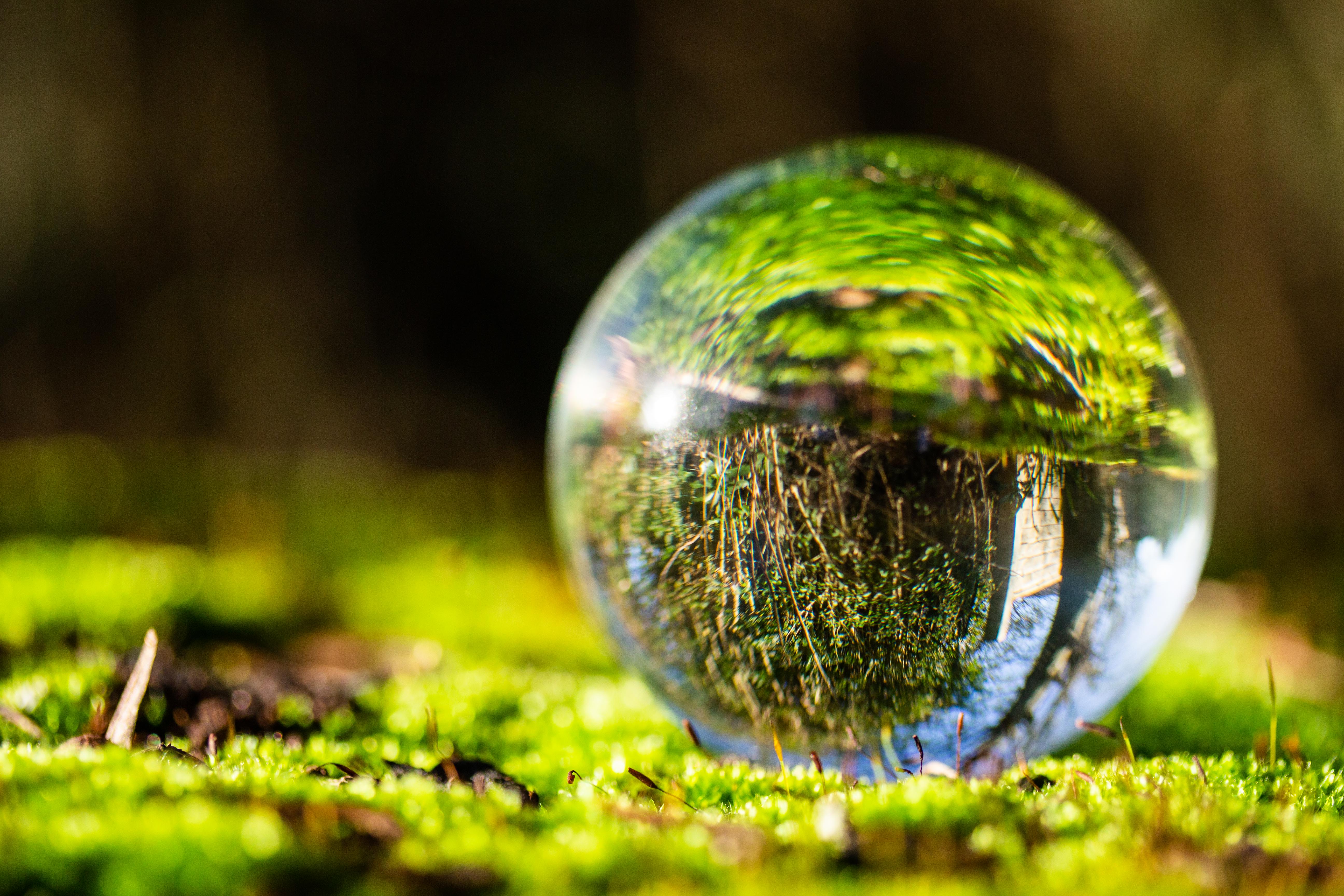
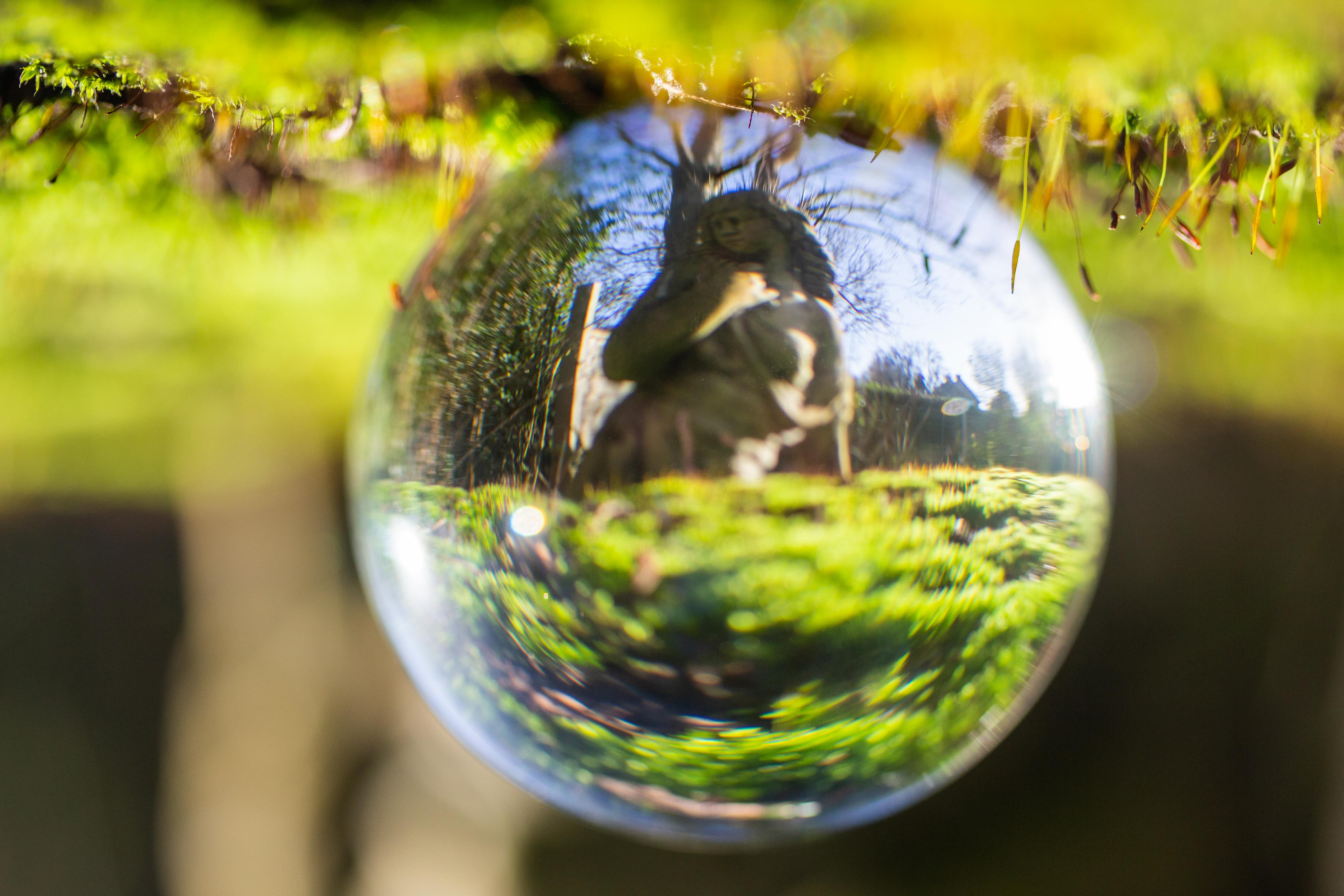
Alongside Masterclass, I’m making sure to continue my photography. For Christmas, I was given a “lensball”. For anyone who hasn’t seen these before, they are clear glass balls that can be used in photography to add a little refraction to the scene. I’m no expert yet, but if you align your camera so it’s level with the lensball, you can photograph the background within the ball, which brings some nifty new perspectives.

I tried out some shots in the garden earlier this week and discovered that it’s not as easy as it looks. You need to get the angle just right and – as always with macro photography – the focal point is key. These initial shots need a lot of improvement, but I already love what effects I can achieve with the lensball. Gardens don’t usually have the most groundbreaking scenery, so I’m looking forward to getting out in the wild to see what I can capture.

img_1103

So, the aftermath of university didn’t quite go as I may have planned, but I feel so optimistic about where this year will take me. I want to give myself the time I need to throw myself into writing and stretch my skills further. I can’t wait to see where I will be this time next year.

2018 Wrapped Up

December was quite a dry month for me in terms of inspiration, so I apologise for the distinct lack of posts over the past few weeks. It is high time for some fresh writing, but before beginning anything new in 2019, I wanted to reflect on the progress I made in 2018.

IMG_9823

Last year began with my first breakup. After having seen and spent time with a person almost every day and now suddenly being faced with the possibility of never seeing them again, I suffered quite a knock. My inspiration took a significant slump at a time when I needed it most: the launch of my final major assignment at university.

Determined not to let a relationship affect my work, I applied for a grant to help fund an expedition. I had a whacky idea about going to the Isles of Scilly, which at the time seemed a very far-off venture and logistically challenging to say the least. However, after presenting to a panel of judges I was granted enough money to completely cover travel and accommodation. It took a while to come to terms with the fact that the Scilly expedition was really happening.

IMG_0655

It was just the solution I needed for my slump. Spending six days in near-complete wilderness with a list of images to take was a perfect and rewarding distraction. I was filled with exciting ideas for my project – a study on the rare and unique flora of Scilly, including the dwarf pansy which is the size of a baby fingernail and found nowhere else in the UK. I was so fascinated by Scilly’s diverse wildlife and intriguing ecosystems, and I never wanted the trip to end. It is a place I will now treasure, as it helped me through a very difficult time, not to mention providing a huge boost to my confidence. I had funded, planned and carried out a full expedition single-handedly, and returned with a great story to tell. Following the trip was my last exhibition at university, and my project was received well. I even made some money from my photographs, which was an unexpected bonus.

IMG_1482-2

Before I knew it, it was time to finish my degree. I picked up my life in Cumbria and brought it back home to Hertfordshire, where I (foolishly) thought that I would land a job straight away. This wasn’t to be the case, but what followed instead was a truly life-changing experience: an internship in Florida.

I didn’t really know what to expect when I was invited for a two-month internship in America to work with SEZARC. I knew they worked with zoos to monitor their animals and help facilitate breeding, but I didn’t know where I would fit in with a media background. I went simply with the aim of learning as much as I could about a completely new field and enjoying the opportunity to contribute to wildlife conservation.

IMG_9548

I’d never been abroad on my own before, nor had I been outside of Europe before. Upon arrival, I was hit by extreme panic triggered by a strange new place, having to drive a car in a strange new place, and the fear that this had all been a terrible mistake. However, after a very careful car journey from the airport and arriving unscathed at my accommodation, I was filled with perhaps a disproportionately large sense of achievement. My small victory spurred me on, and after a few more shaky days, I found my rhythm.

IMG_1404

Two months later, I was torn between wanting to see my family and friends back home, and wanting to stay a little longer with my new friends in Florida. I had loved the work I did with SEZARC, which was varied and fascinating. I also fulfilled a dream of mine, even if just for a little while: I’d learned to ballroom dance, and met the most kind and welcoming people. Back home in England, I truly realised what an incredible time I’d had in America.

And it wasn’t over. Later in the autumn, I caught up with my friends at SEZARC and was asked to produce their annual report of their progress this year. It is work that I thoroughly enjoy, and I’m so pleased that SEZARC want to keep me involved.

IMG_0051

So, moving forwards. The past year has taught me so much, not just about work but also about myself. In all honesty I have no idea what 2019 will bring. I’m hoping a job, but in the meantime I want to continue writing and learning new things (next up is the guitar!) I have the tendency of being anxious without a strategic plan, but after this year I’ve discovered that you just can’t know where twelve months will take you. A year ago today, I had no idea I would soon be journeying to America by myself, nor was I remotely aware that my relationship was about to end. All through school it’s easy to know what’s next: the following year up. There is no mystery, not even after you finish school. For me, the choice was easy and I was going to university. Now that’s over too, and I’m trying not to be daunted by the unknown because as I’ve found out this last year, the unknown can be incredible.