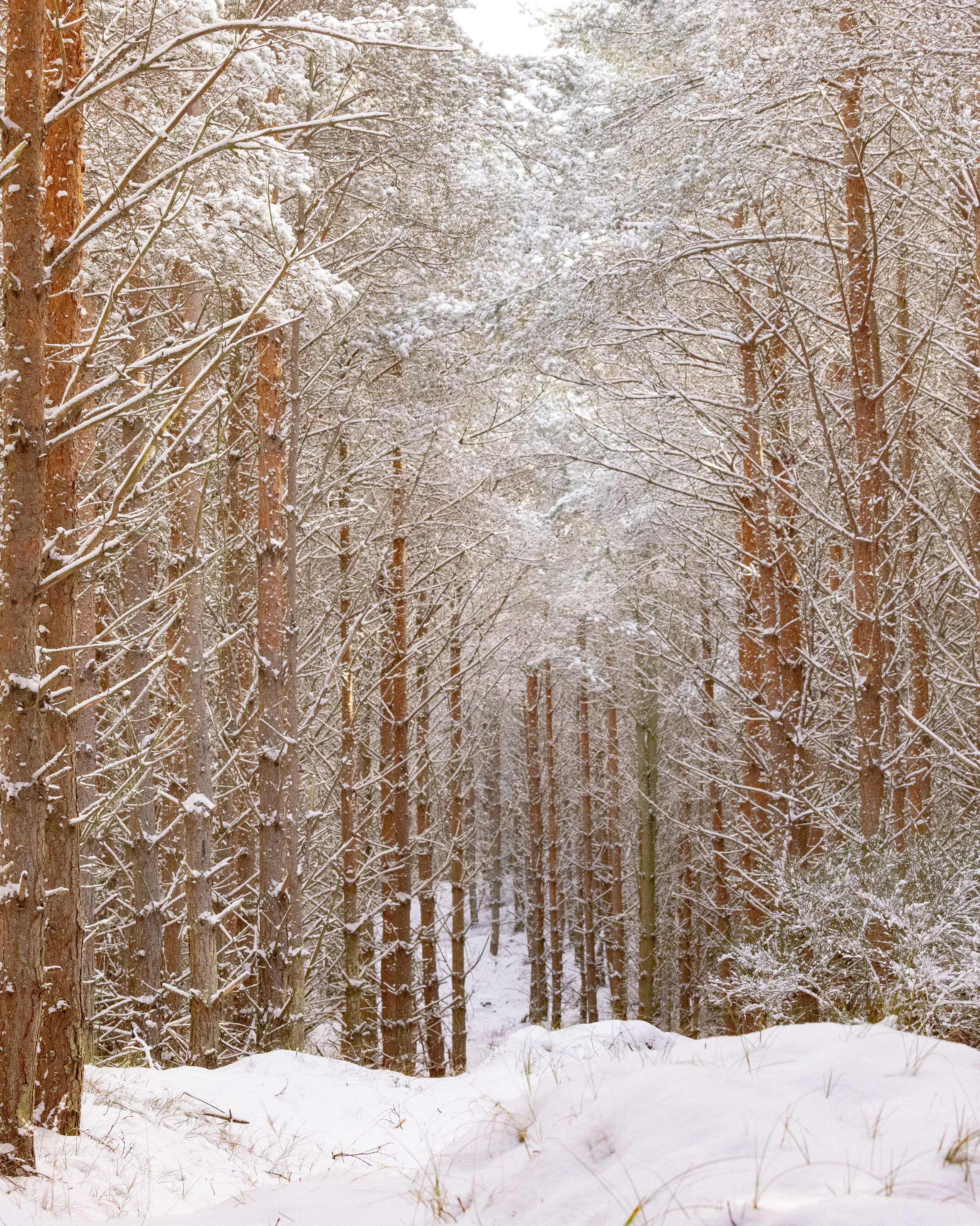
My plan had been to photograph boxing hares. According to the (notoriously unreliable) forecast, it was going to be a cloudless sunrise, so you can imagine how nettled I was to find myself in a mild blizzard at 5:30am, barely able to see 100 yards past my nose.
And of course, that’s when four hares appear out of nowhere and start boxing, just as I’m pawing great hunks of snow out of my eyes. By the time the snowfall subsided the boxing match was over, but a solitary hare was still loitering in the open, just as crazy as I was.
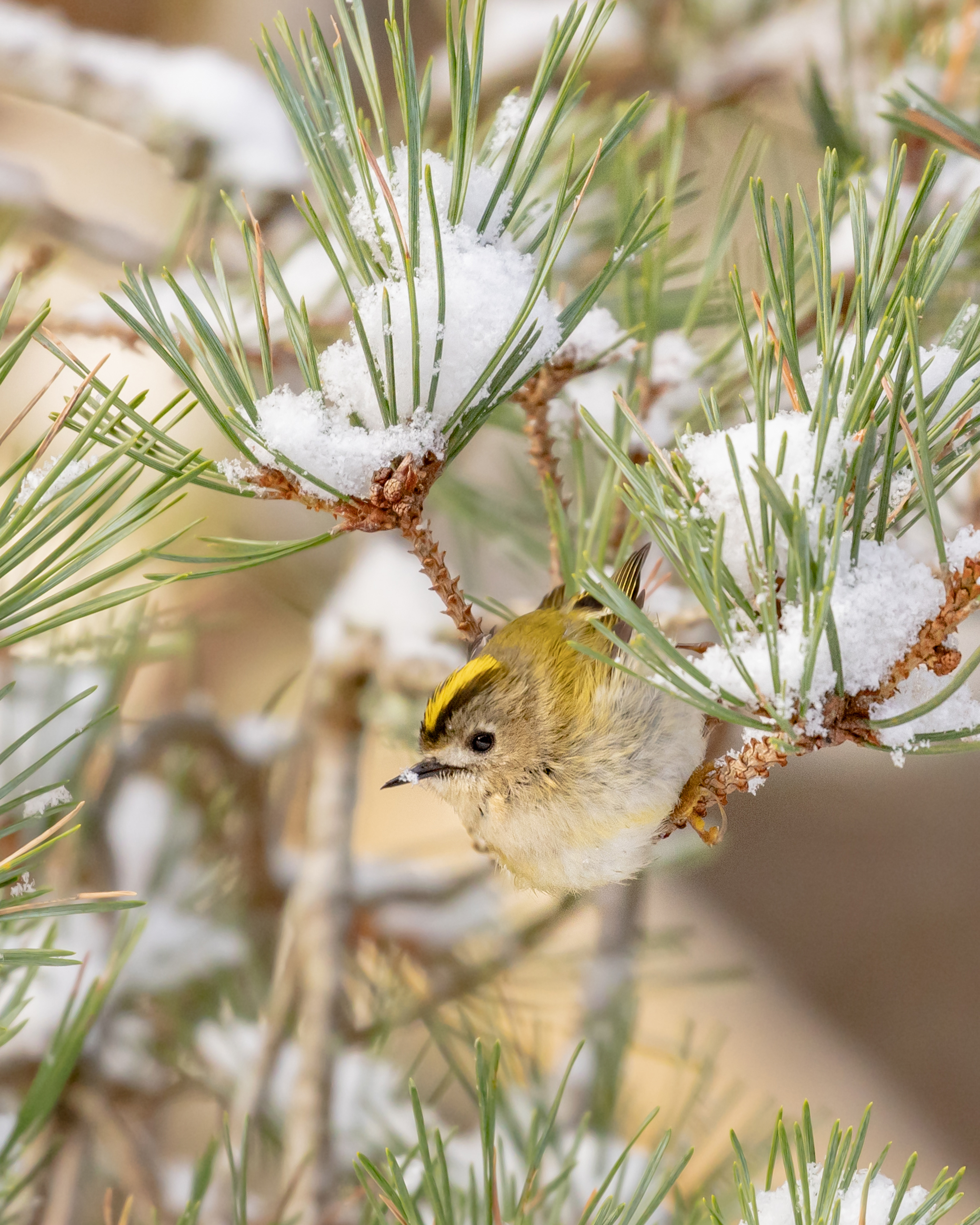
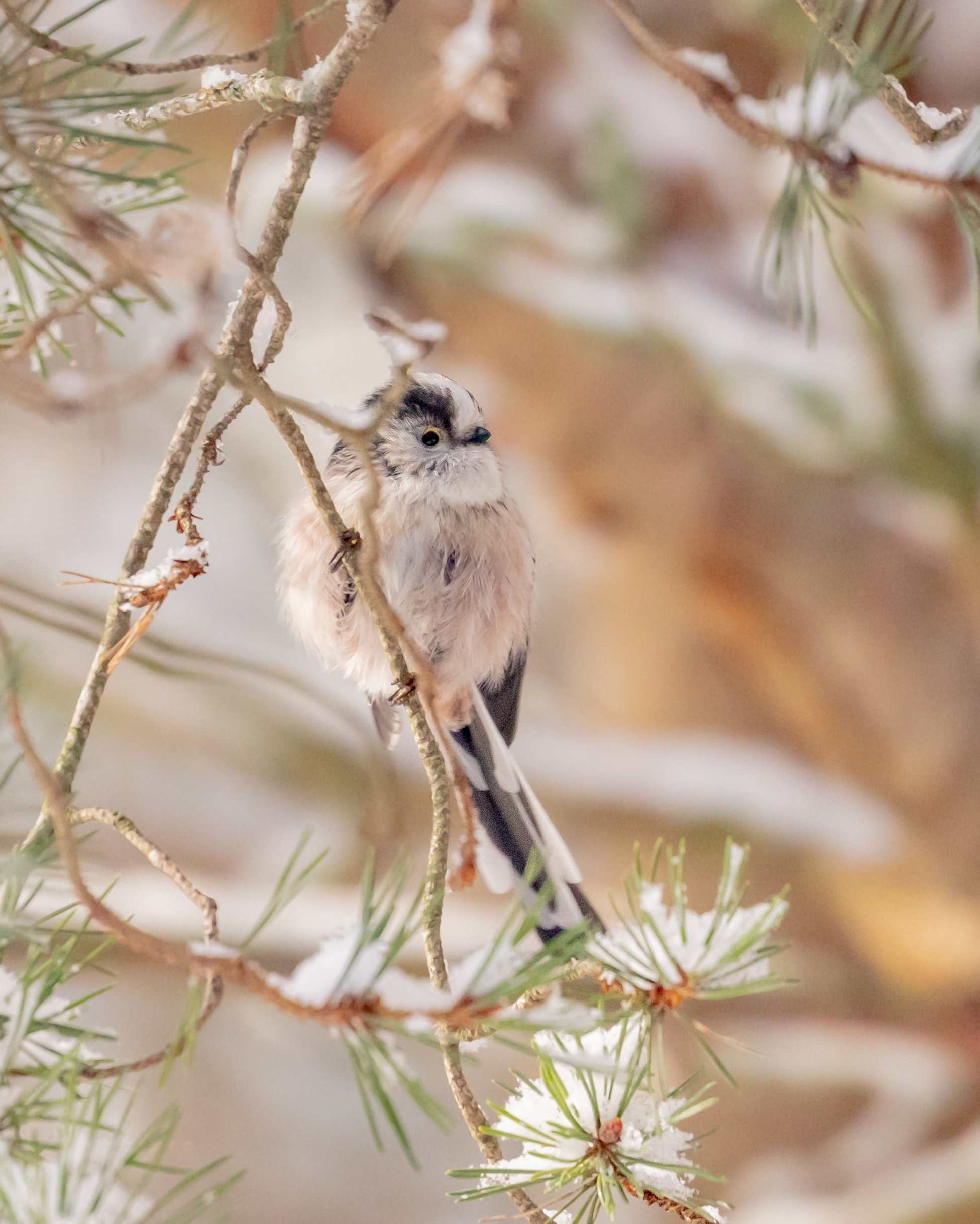
Determined to have more luck elsewhere, I ventured into the forest and found long-tailed tits and goldcrests. These tiny scamps really tested my reflexes, barely pausing for a second before flitting off to another branch.
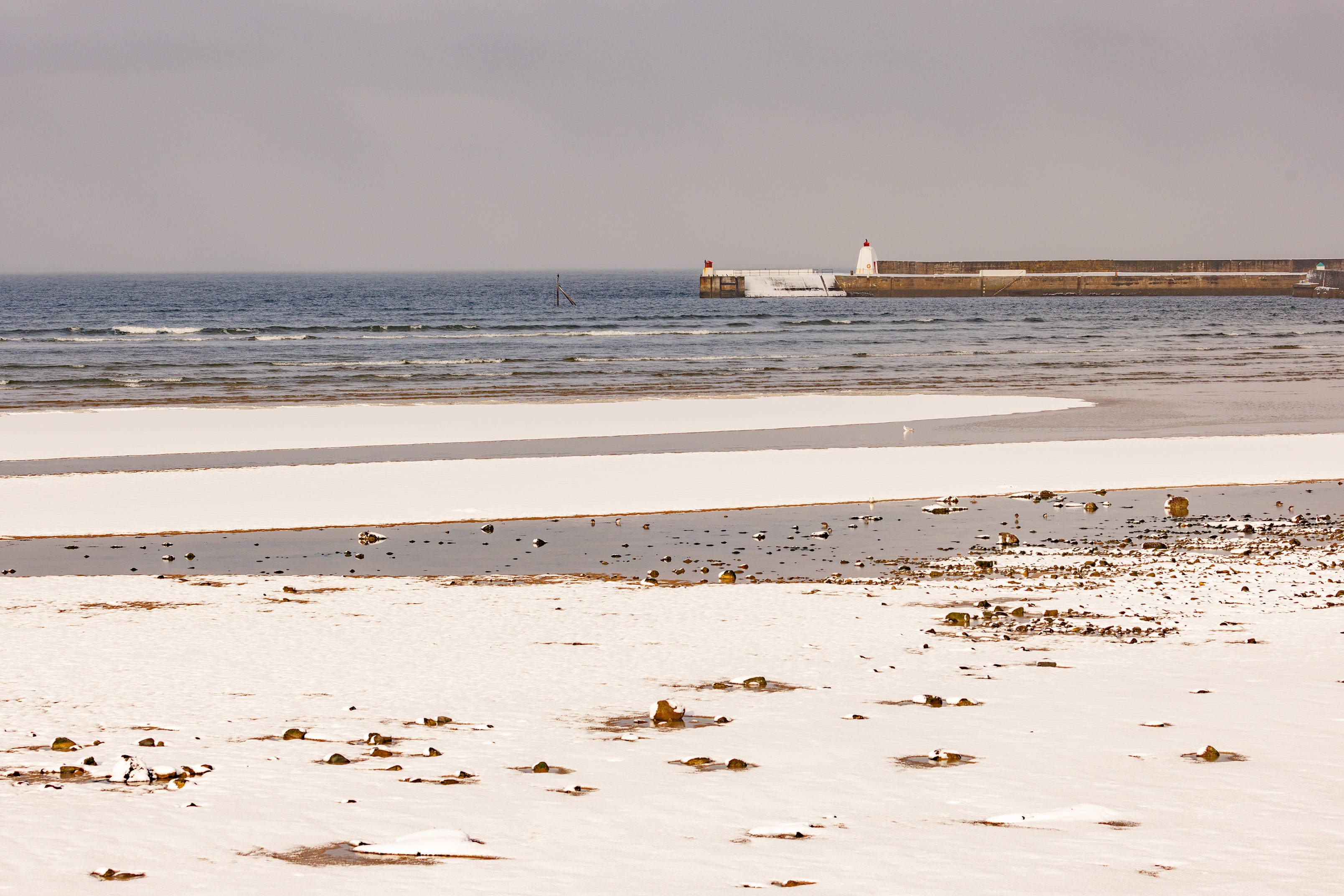
A few hours later my feet were sufficiently numb so I headed back home. I passed the beach on the way, which was just as white as everything else.
Nature is unpredictable at the best of times, let alone when snow is involved. I ended up really pleased with what I managed to photograph though, despite the shaky start to the day. Still, I’ll be back for those mad March hares soon…
The following article was featured in my latest issue of On The Wing magazine, which you can read here. I often see Aberdeen unfairly shrugged off as simply ‘The Granite City’. As with many urban places, there’s so much more to Aberdeen than grey buildings. Here are six of my favourite spots for nature enthusiasts to explore.
Tollohill Wood
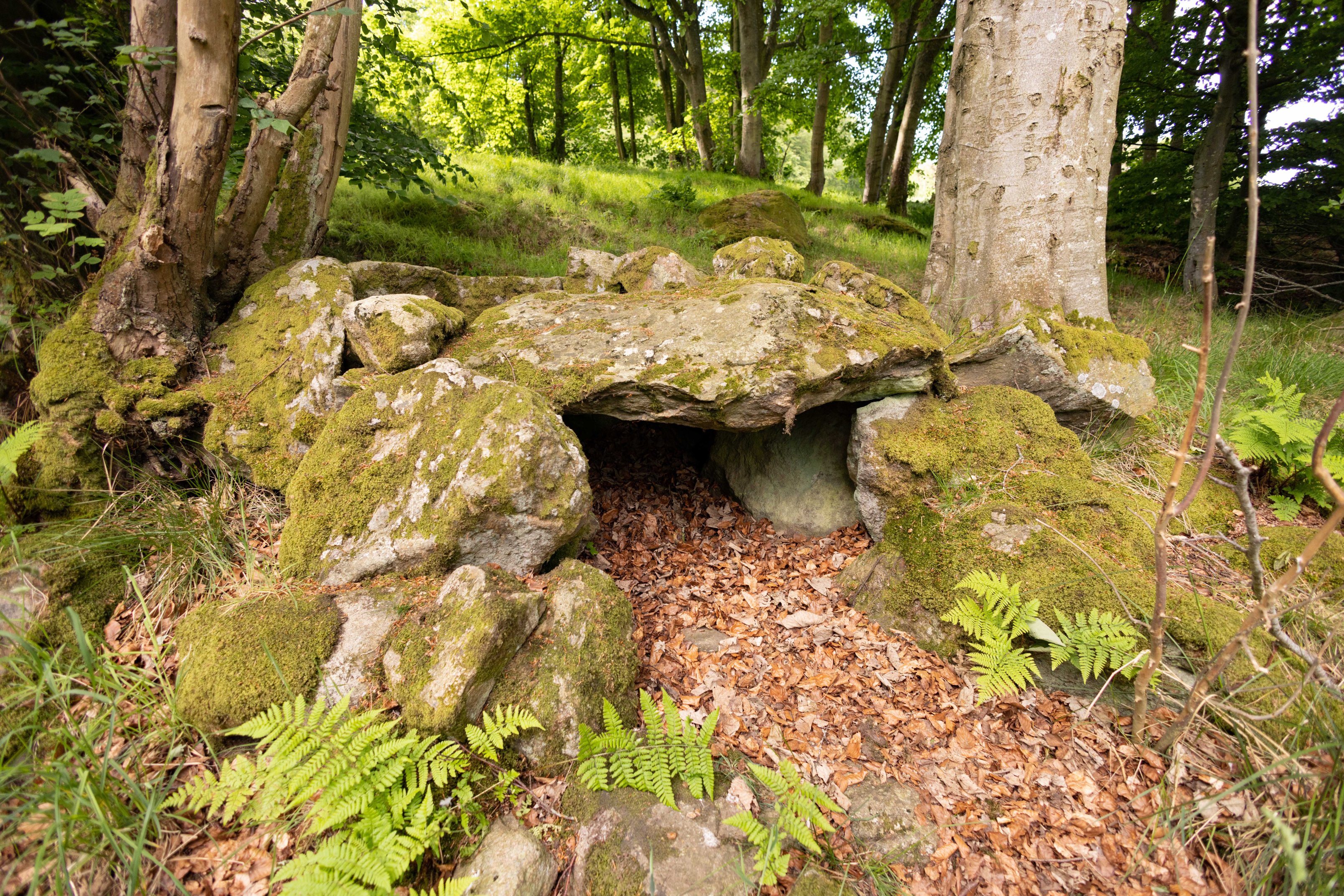
With its deep rocky dells and hip-high bracken, this is what I call a Jurassic forest because it doesn’t take much imagination to picture a dinosaur poking above the foliage. Beeches, birches and rowans line interweaving trails – look out for a Neolithic cairn and a stone monument hidden among the trees.
W3W: flute.saying.plans
Hazlehead Park
Like in all good parks, kids and dogs have open space to run around, but away from the play park area you can sit in a variety of gardens and hear nothing but birdsong. You can also explore Robert the Bruce stone cairns, a sculpture trail and Scotland’s oldest maze here.
Hazlehead Avenue, AB15 8BE
David Welch Winter Gardens
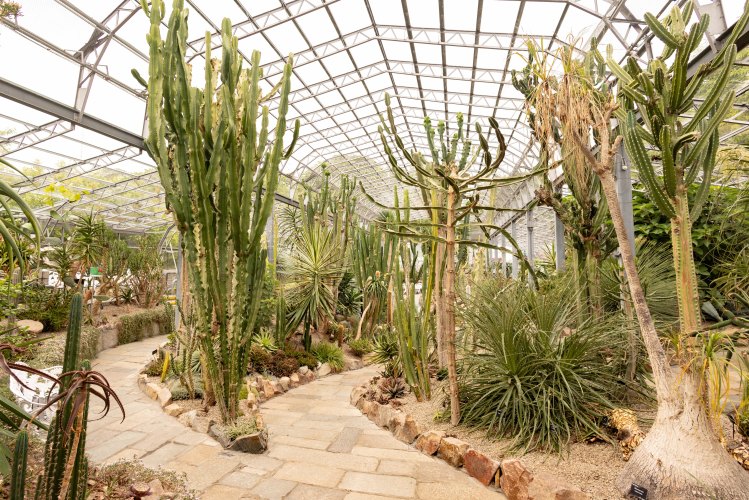
Within Duthie Park, this warren of greenhouses contains tropical flowers, roses, ferns and a squadron of carnivorous plants. I spent an unholy amount of time in the Arid House, where there’s every sort of cactus you could imagine. With more than 750 species, this collection is one of the largest in the UK.
Polmuir Road, AB11 7TH
Open: daily all year round
Entry: free
Greyhope Bay
This small headland forms a curved dell just past Aberdeen’s harbour. A range of seabirds gather in the shallows by the rocks and it’s a great spot to see bottlenose dolphins too. Watch in cosy comfort from the excellent Liberty Café, located within the historic structure of Torry Battery.
Greyhope Road, AB11 8QX
Seaton Park
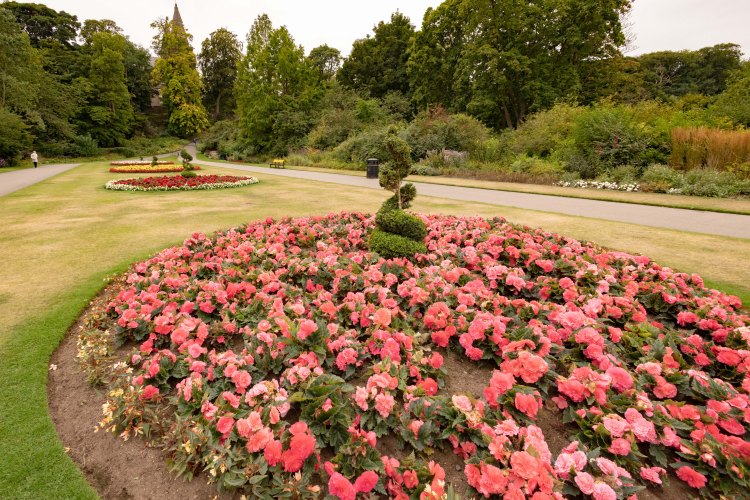
Sitting beside a dangling loop of the River Don, this is the largest green space in Old Aberdeen. Splashes of colour from dramatic flowerbeds, a high quality river footpath leading to a pedestrianised arched bridge, and several concealed features of historical interest make this more intriguing than your average park.
Don Street, AB24 1XS
University of Aberdeen Zoology Museum
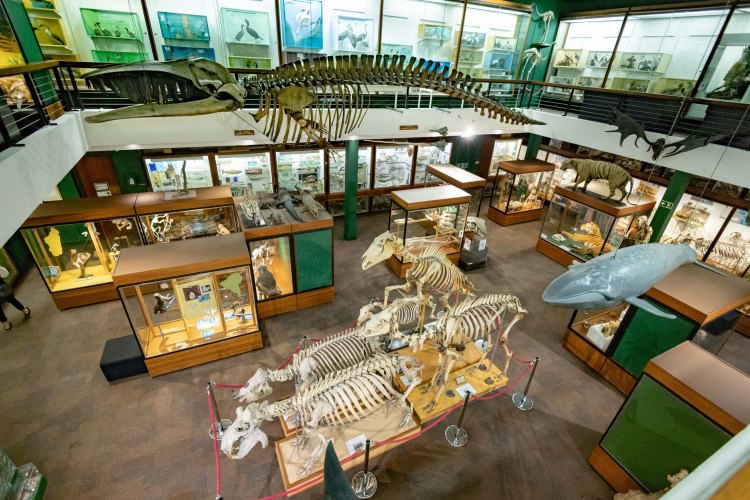
Scales and fur and feathers oh my! The lower gallery’s skeletons draw the eye first, but also make sure to check out minuscule amphibian bones, corals and a troupe of fish you wouldn’t want to meet down a dark alley. The upper gallery is an ornithologist’s delight, featuring everything from goldcrests to golden eagles.
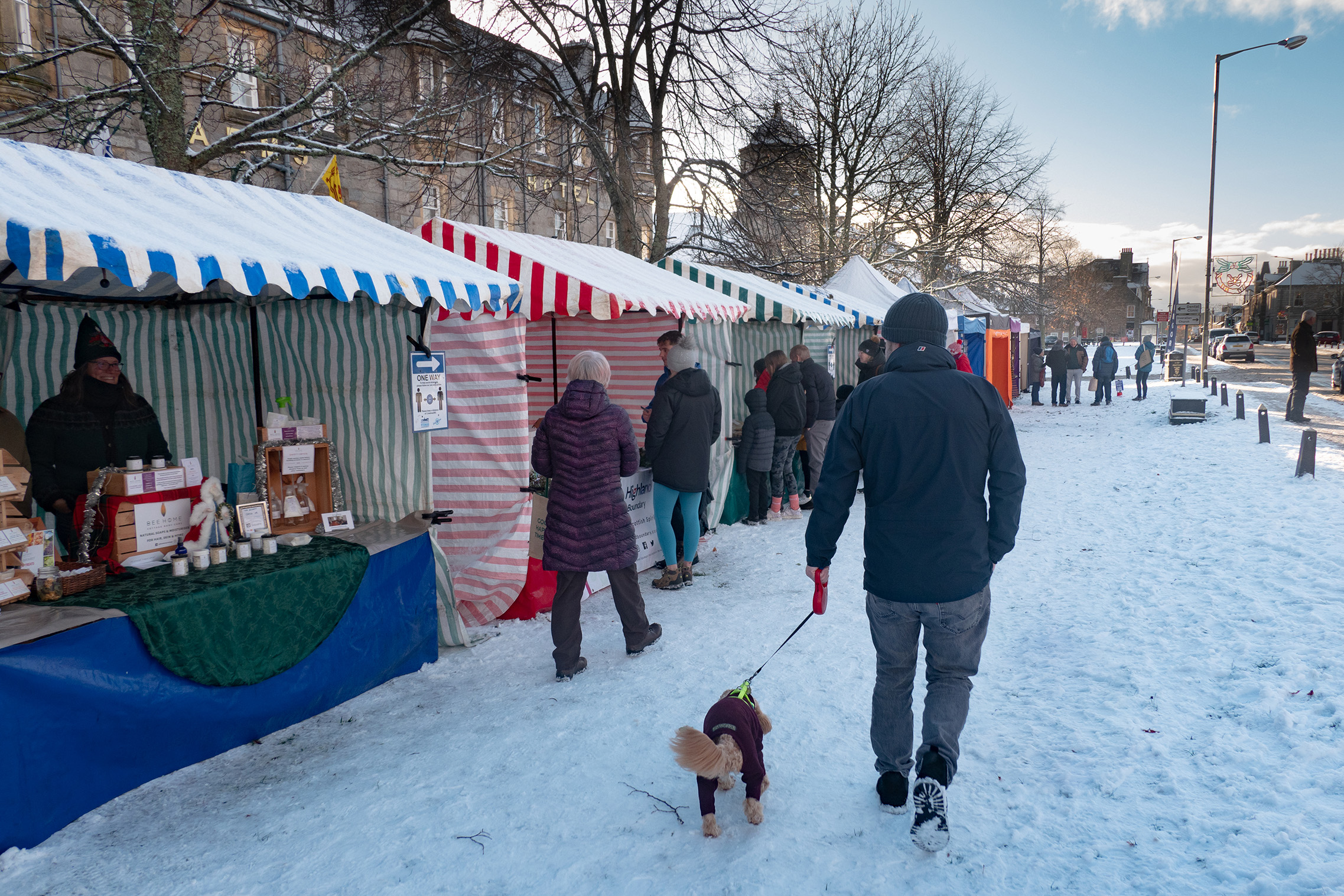
Typical. I lived in southeast England for 18 years and never had snow in November, but it seems like it was all over Britain this weekend! As I live on the coast snow is rare here, but after a 40-minute drive south to Grantown-on-Spey there was snow beneath my boots again.
A festive food market was in full swing along the main high street. We had a quick browse before heading down the aptly named Forest Road to one of my favourite wild places in Scotland: Anagach Woods.
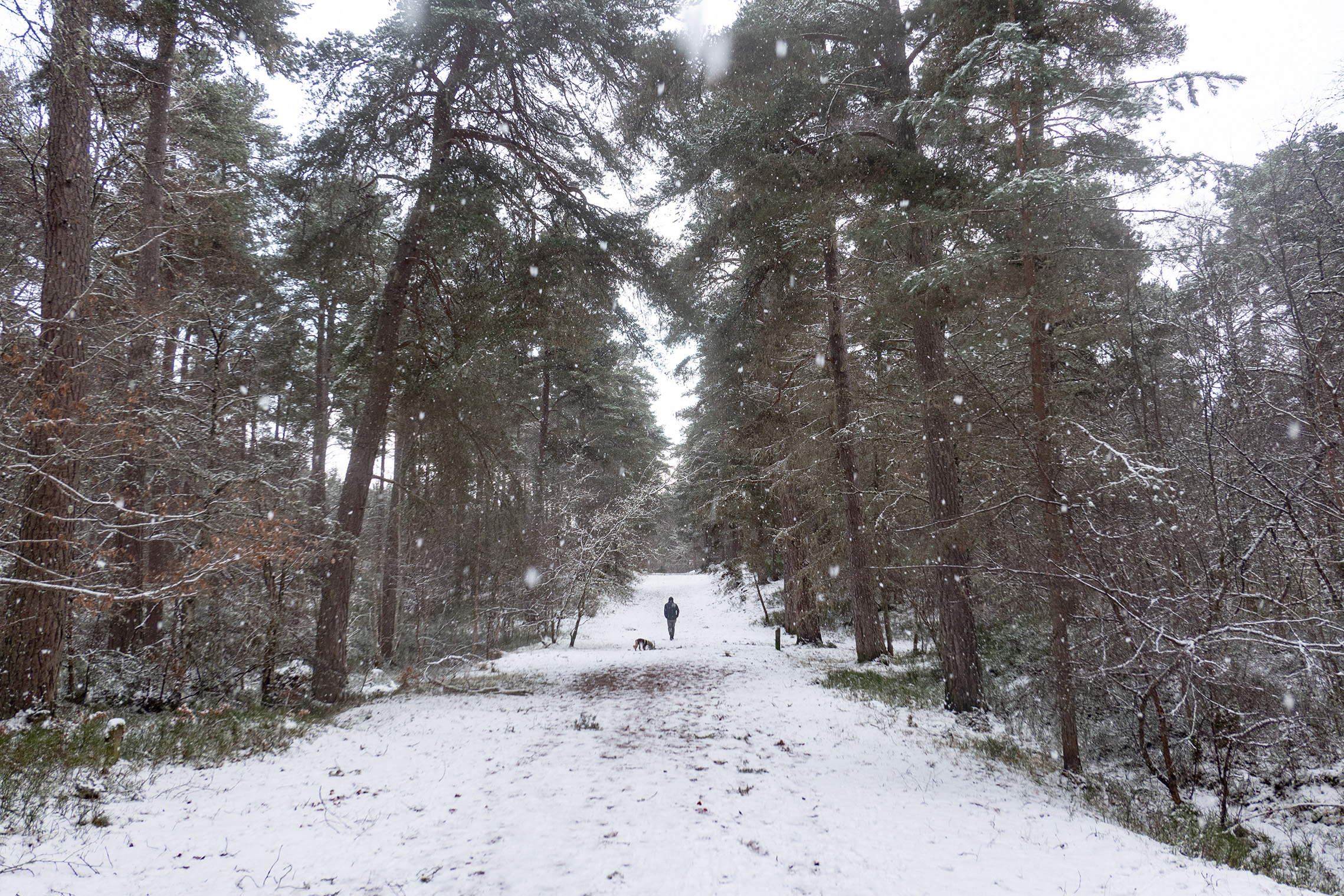
The last time I visited was on a sweltering afternoon in May. This time everything was coated in white, adding cartoon highlights to branches and trunks. Over the past couple of years I’ve become a real winter baby so I was in my element.
As we walked along a high ledge overlooking deep bowls of forest floor on either side, a chattery cackle overhead made me look up and jump for joy: a flock of fieldfares were flying over!
I’ve been longing to see fieldfares since they left for their breeding grounds in Scandinavia at the end of last winter. They’re one of my power five – along with bramblings, waxwings, redwings and long-tailed ducks – and I can’t wait to try and photograph them again this year.
Taken in February this year during heavy snow in my home town
There’s nothing like snow and fieldfares to get me even more in the winter mood!
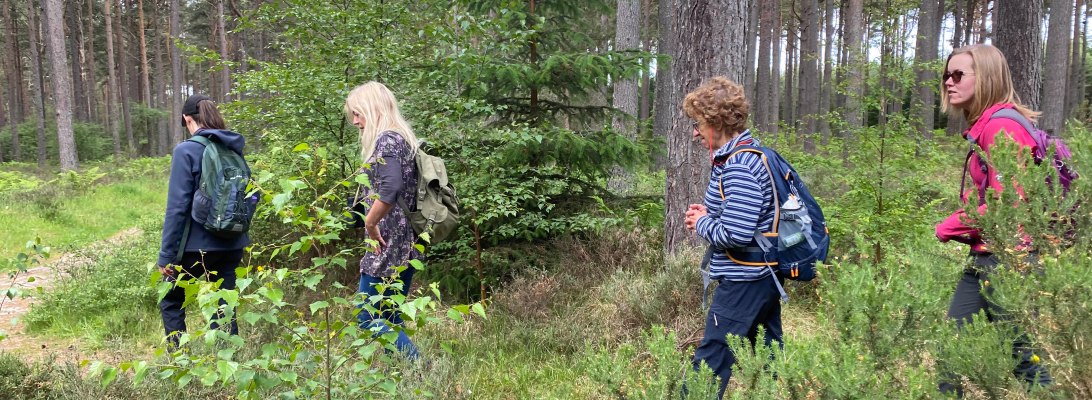
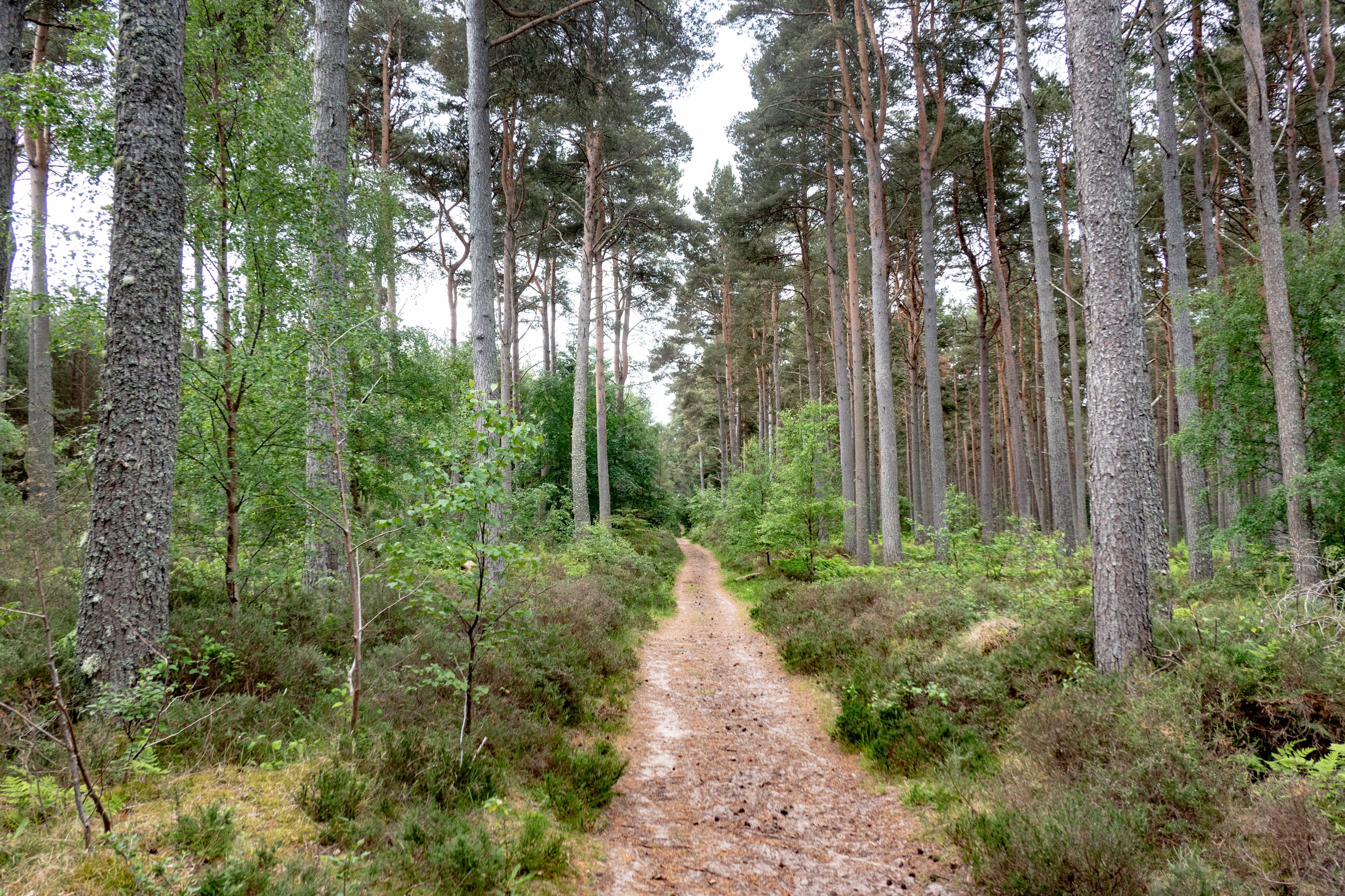
Day one of the Mindful Creative Retreat was a huge success and I was looking forward to kicking off day two with my own writing workshop. We met outside Roseisle Forest in Burghead and spent the morning wandering along winding trails within the 1700 acre Scots pine woodland. It was a boiling hot day so we kept to the shade beneath the trees.
For me, good nature writing uses all the senses. Although describing sights is the most obvious, incorporating sounds, smells and textures really brings a piece to life. I encouraged everyone to look down as well as up, noticing the way the sun shines on spiderwebs and pinecones scuff underfoot.
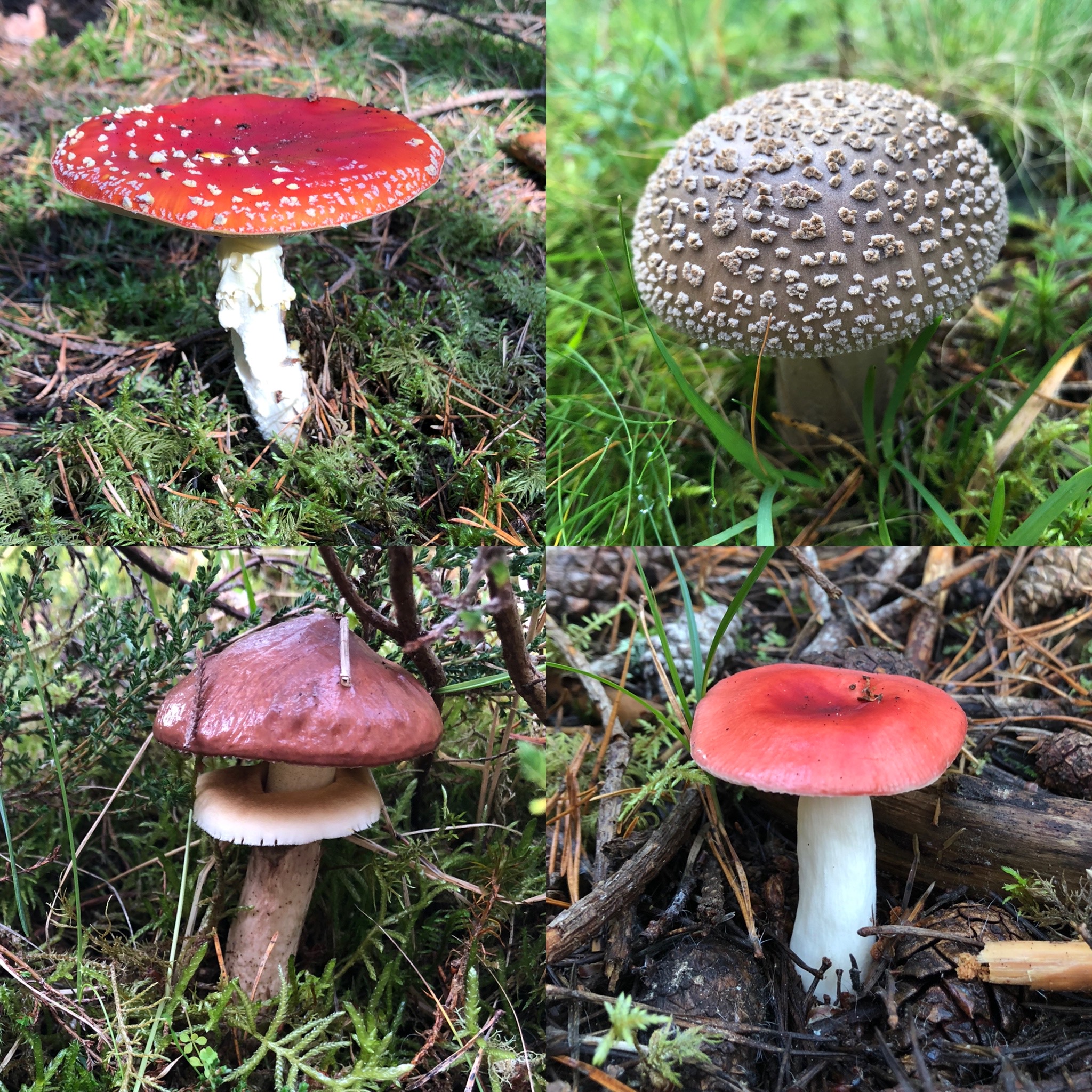
I was pleased to see the fungi in Roseisle was already abundant – a welcome reminder that autumn is nearly here. Beside every tree was a fungus of some sort, varying widely in colour, size and shape. We spent a lot of the morning crawling around on the ground getting photos!
Photo: Kim Grant
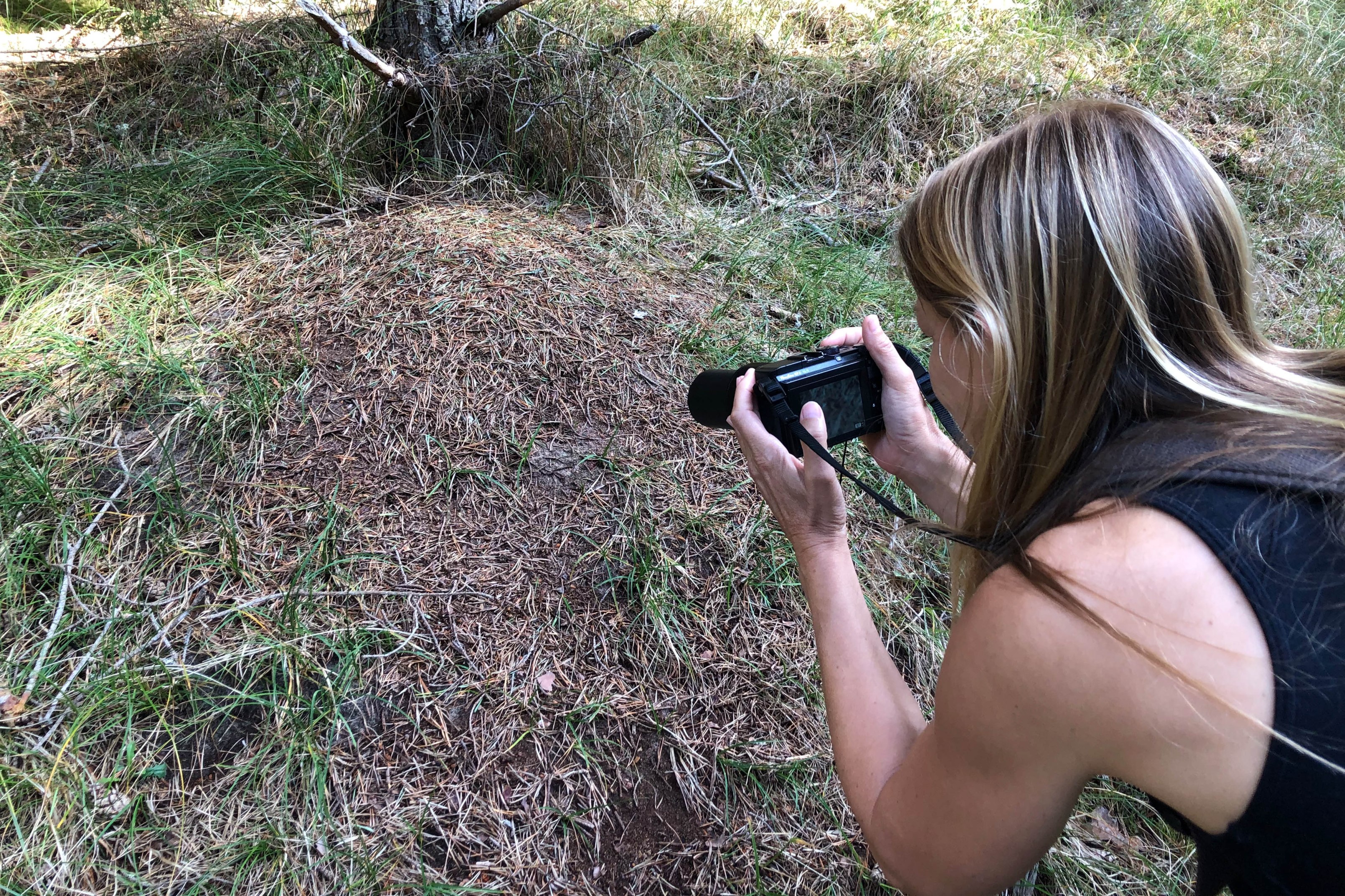
As well as fungi, we found a small wood ant nest right by the path. These red and black insects play an important role in the forest ecosystem, helping with seed dispersal, hunting damaging pests and acting as a food source for badgers and pine martens. Wood ants also provide a parasite removal service for birds, which deliberately scratch the surface of the nest to encourage the ants to spray their feathers with formic acid. This kills the birds’ parasites!
Wood ant nest
By midday the sun was scorching so we headed to the beach for a paddle. After cooling down, we sat on the sand to write about the morning’s discoveries.

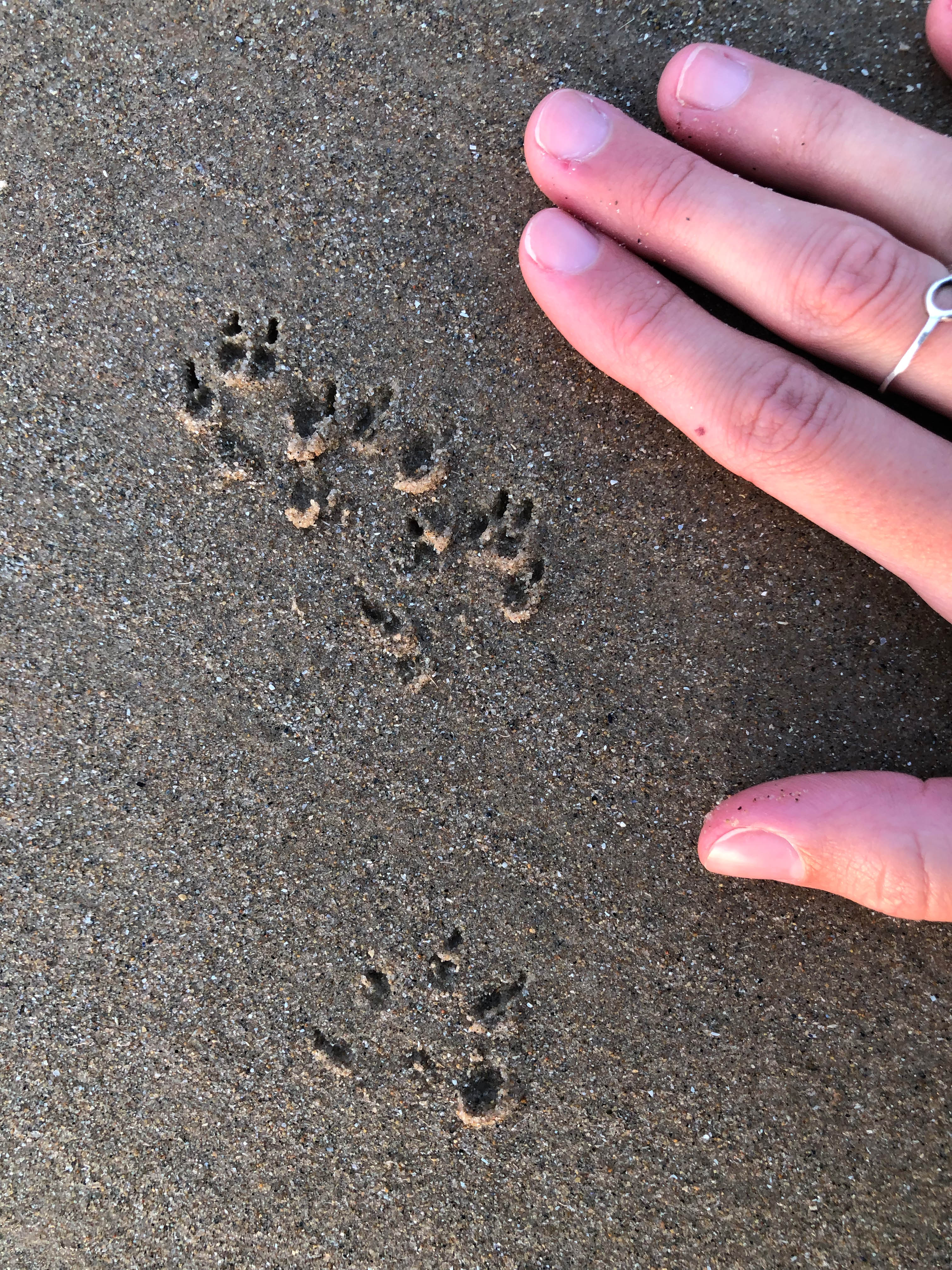
By evening the temperature had cooled and we met up in Hopeman for a walk along the coast. We were lucky enough to have another gorgeous sunset, which lit up the beach and turned the cliffs to gold. There were plenty of juicy blackberries to be plucked and we stopped for a rest in a sheltered cove. Here we enjoyed some rock pooling and I found some tracks in the sand. They were too big for rats so I guessed mink, which I’ve occasionally seen darting over the rocks.
We explored the cove until 9pm when the sun eventually set. Golden colours blended to corals and crimsons and we watched the exact moment the sun disappeared beyond the horizon. Jen commented that it was a special thing to witness because it was a rare occasion you could see the earth turning.
And so we reached the end of another full-on but rewarding day on the retreat. The third and final day featured even more creativity and mindfulness. Coming soon!
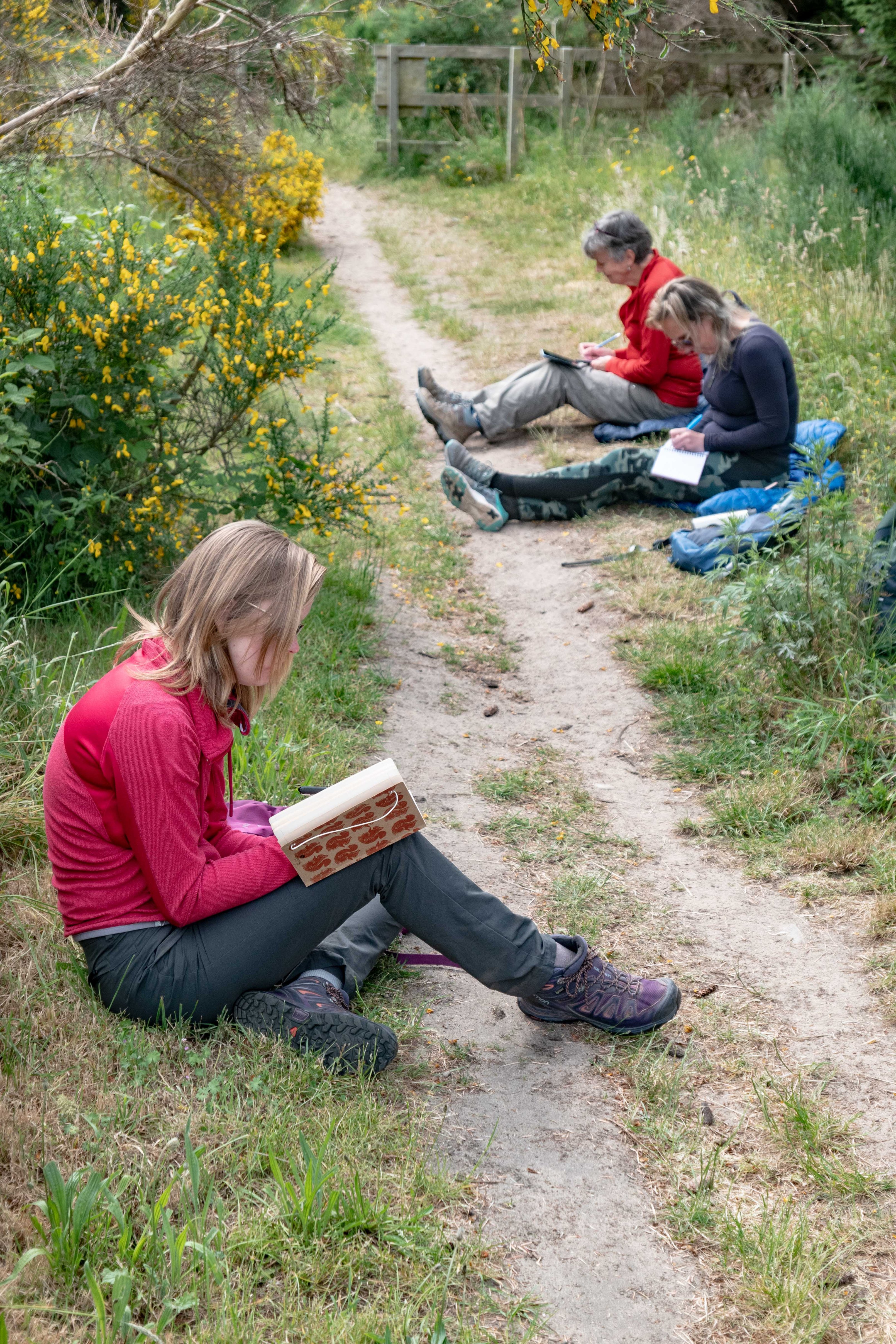
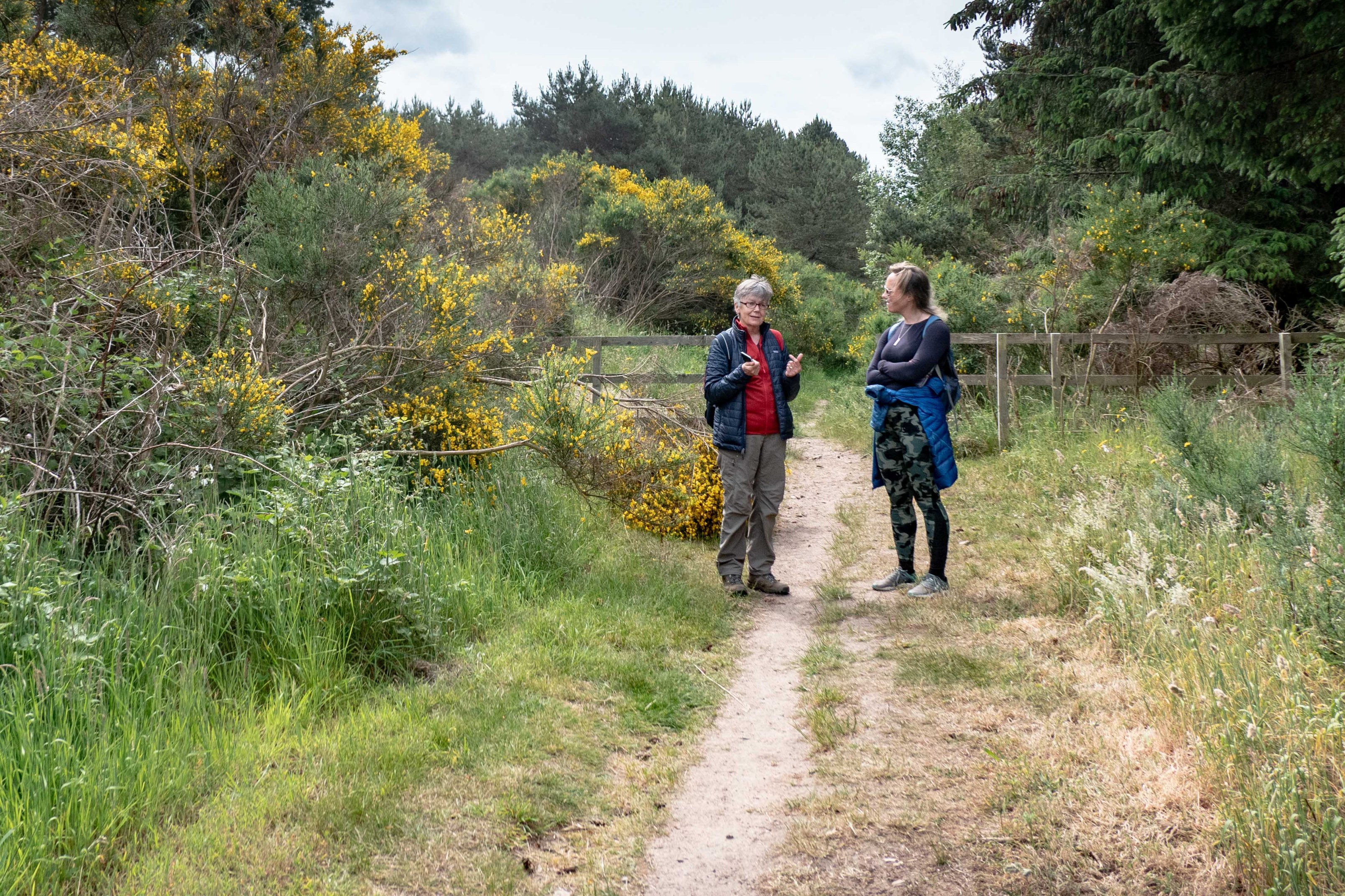
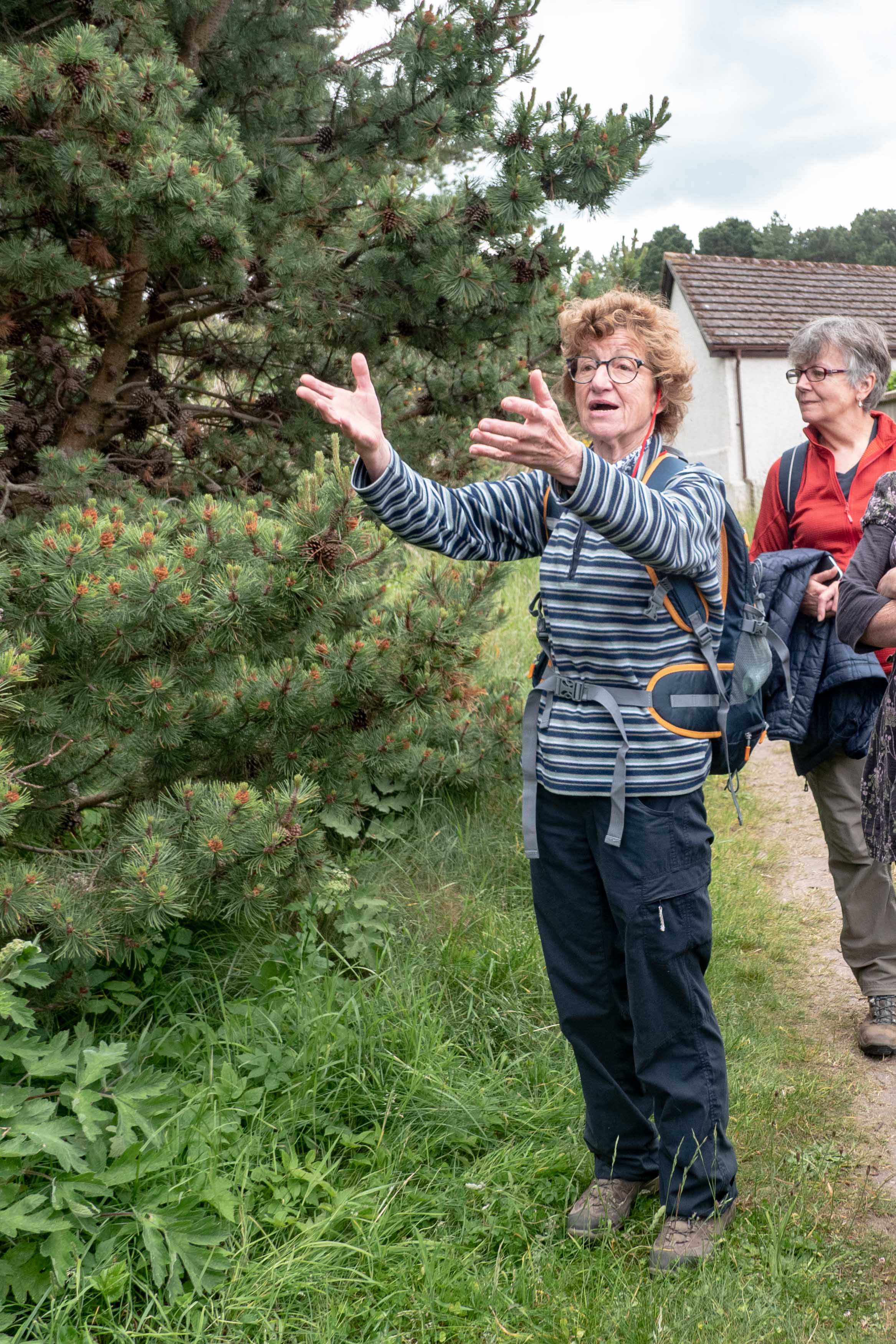
Last week I made my debut as a wildlife guide! As part of the Moray Walking and Outdoor Festival I hosted a woodland writing workshop in my local patch in Moray. My own writing is always enhanced when I incorporate all my senses so during the workshop I encouraged the participants to pick up on sounds, smells and textures as well as sights.
For three hours we roamed through the forest, which on that sunny morning was full of birdsong and the last few coconutty whiffs of gorse flowers. I think the highlight for all of us was spotting a wood ant nest right beside the path. On closer inspection, we saw an individual ant carrying a feather three times its size!
Kim, Suzy and Elizabeth reflecting on the forest walk
Liz checking her notes – it was lovely to hand write for a change!
I loved sharing my patch with new people and hearing some really beautiful writing. I was particularly pleased that two of the ladies, Suzy and Elizabeth, became completely immersed in their own conversation. Suzy has since spoken about the workshop and her chat with Elizabeth on her podcast.
Photo: Diane Smith
As this was my first guiding experience I was nervous about how it would go but I received some fantastic feedback. “I enjoyed your walk and workshop very much,” Elizabeth told me. “It was so good to slow down, listen to birdsong and look at trees and flowers. It was a memorable few hours.”
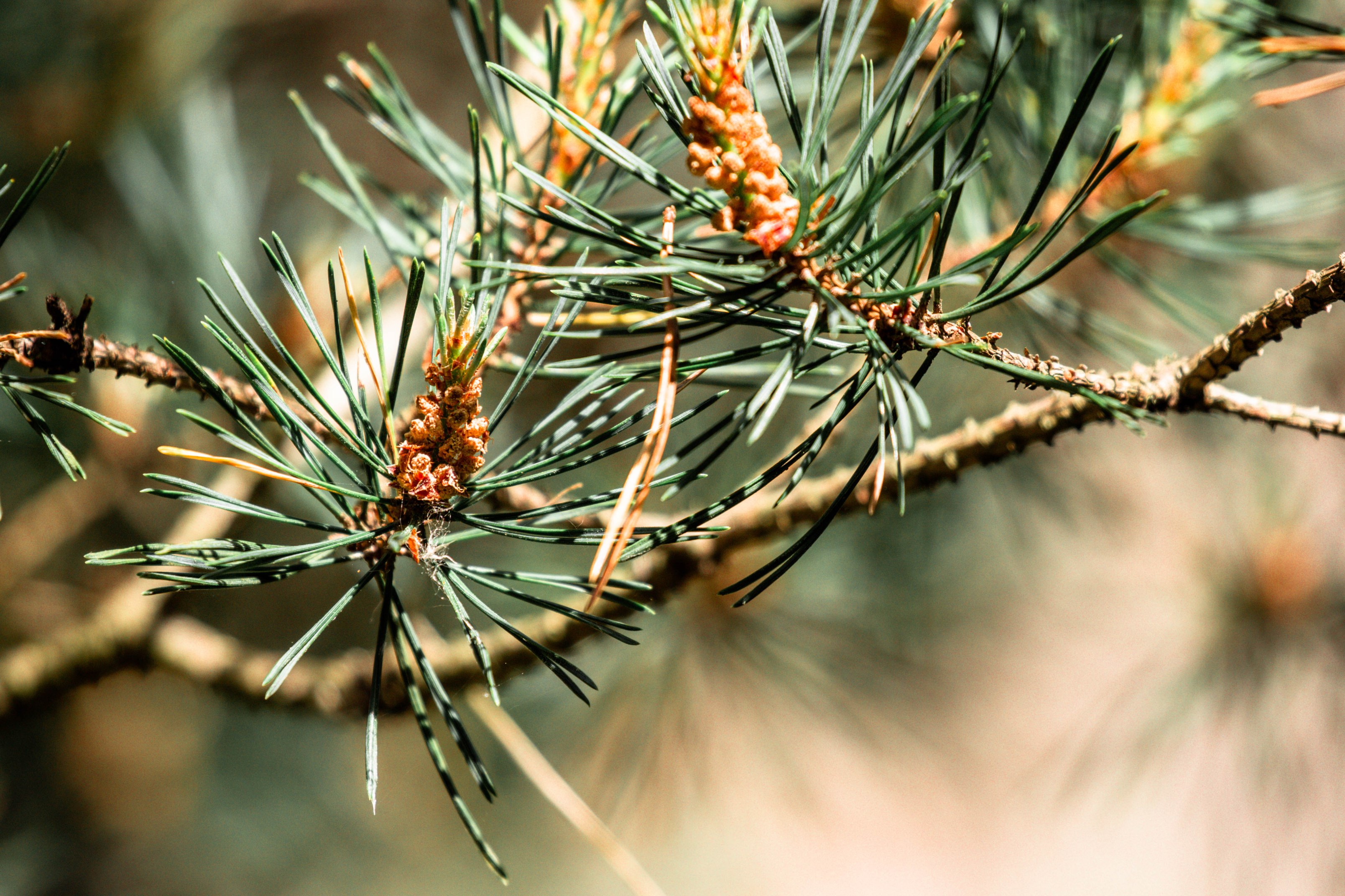
Elizabeth’s friend Martina also said that she felt absolutely no pressure when it came to the writing task, which I was delighted to hear. She described the new pine sprigs as “chandeliers”, and when she pointed them out to us it made complete sense! I think it’s far better for a writer to describe something they say in a way that’s unique to them, rather than a technical term that not everyone would know. When I see pine branches that look like this again I’ll think of Martina!
Martina and the “chandeliers”
I was thrilled that the workshop went so well. I shall be running similar events in the next festival, taking place in September. As a writer who spends a lot of time working alone, it was a refreshing change to wander with like-minded women and share work and perspectives. What a rewarding morning!
Once restrictions were eased in Scotland and I was given a precious piece of freedom to venture outside of my county of Moray, I planned a day trip to the Cairngorms. One of my favourite sounds is the whisper of a stream in a forest – it’s the epitome of fairytale magic for me. So when I arrived at Inshriach Forest on the western flank of the Cairngorm plateau and heard that incredible sound, I made a beeline for it. I passed other people heading up a rocky hill trail that would take them into the mountains. But I’m more forest sprite than mountain goat – my place is at ground level.
A very Scottish landscape!
Inshriach is part of one of the Cairngorms National Park’s eight National Nature Reserves. As well as ancient Caledonian pinewood it contains mountainous and heather moor habitats too. Scottish rarities such as crossbills, red squirrels and crested tits are found there. There’s also the possibility of seeing golden eagles over the mountains, but I had my eyes on the ground rather than the sky.
A trodden grass trail broke away from the main track and I followed it, only briefly distracted by chaffinches and a characteristically vocal wren. The sound grew louder until eventually I was close enough to see the water sparkling in the bright sun. It was gorgeous. Allt Ruadh it was called – a tributary of the River Feshie.
Dumping my rucksack, I knelt at the edge and dipped a hand. Just as icy as I suspected. I always feel an urge to swim in wild water or at least wade knee-deep, but even with the sun it was far too cold for me on this occasion. Still, just to see and hear all that stirring water was a treat. I settled on the bank and crossed my fingers for dippers.
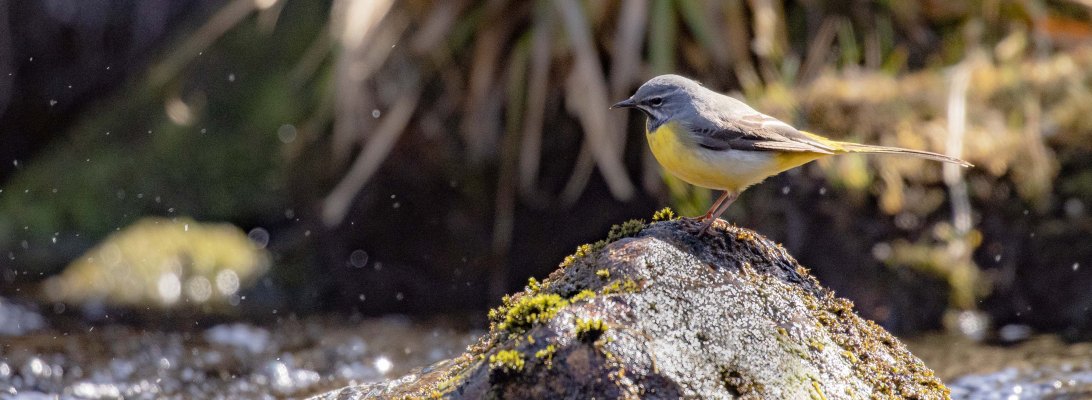
I spent several hours there, reminded of the time only by my rumbling stomach. As I leant back against the rocks with my soup flask and watched the rapids churn up white froth, my gaze caught on a flash of yellow. A grey wagtail! It was standing in the centre of the river, bobbing its tail and fluttering from rock to rock. After examining each one around me, it flew to the top of a Scots pine and began to sing. I’ve seen many different birds using treetops as a singing perch but never a wagtail, so it was both a surprise and a privilege. Its song was so loud I could hear it above the stream.
I suppose this is how I meditate. I can’t sit in a lotus pose, close my eyes and listen to drum music – my mind just wanders to deadlines and errands. But if I disappear into the wild and fill every one of my senses with nature, I forget all the admin and sink into the closest meditative state I can manage. It helps if there’s no service because it means my phone is useless. Having no connection to the material world could be scary I suppose, but if I stay safe and pack accordingly I can enjoy complete solitude and peace, if only for a morning.
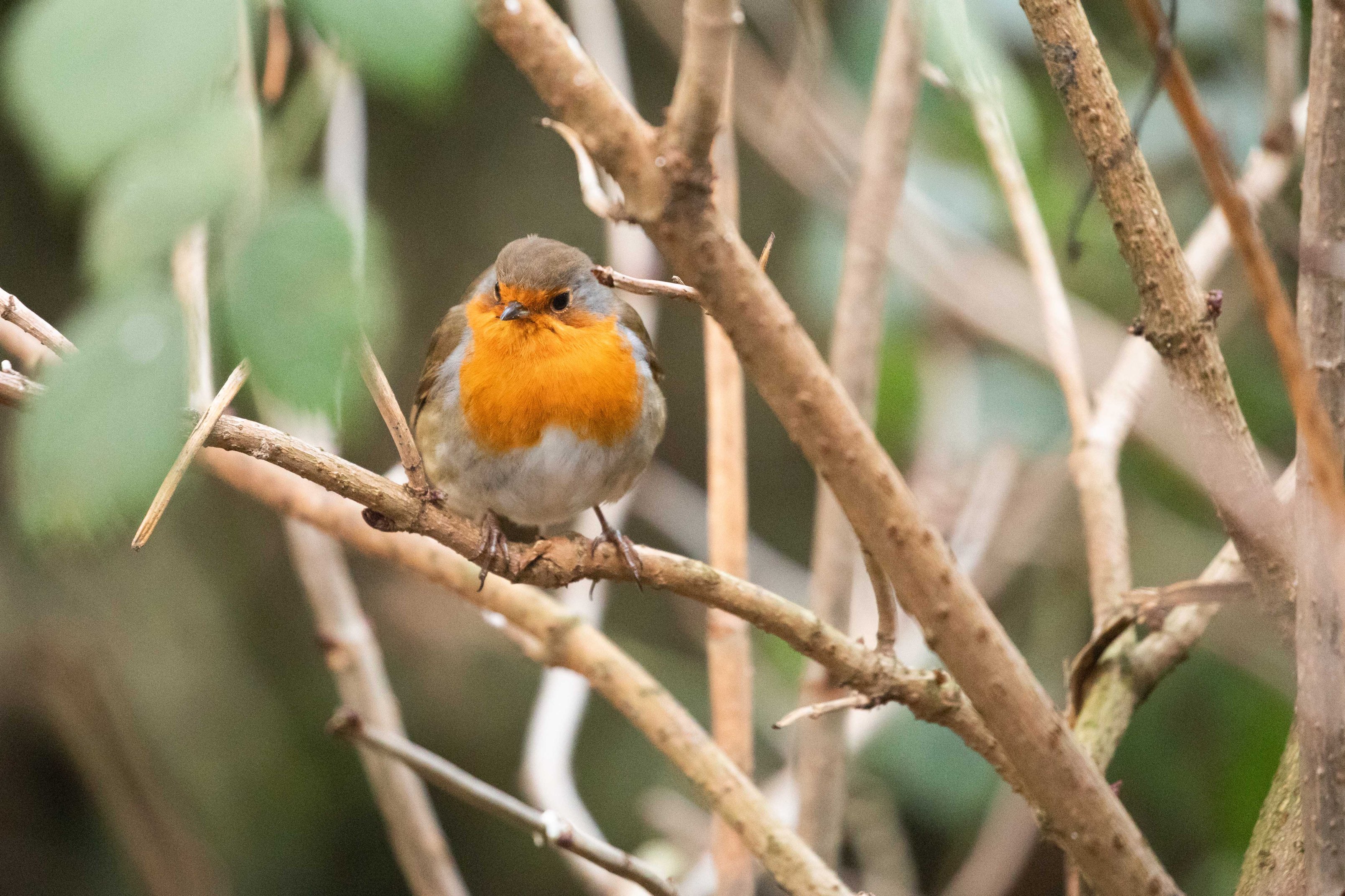
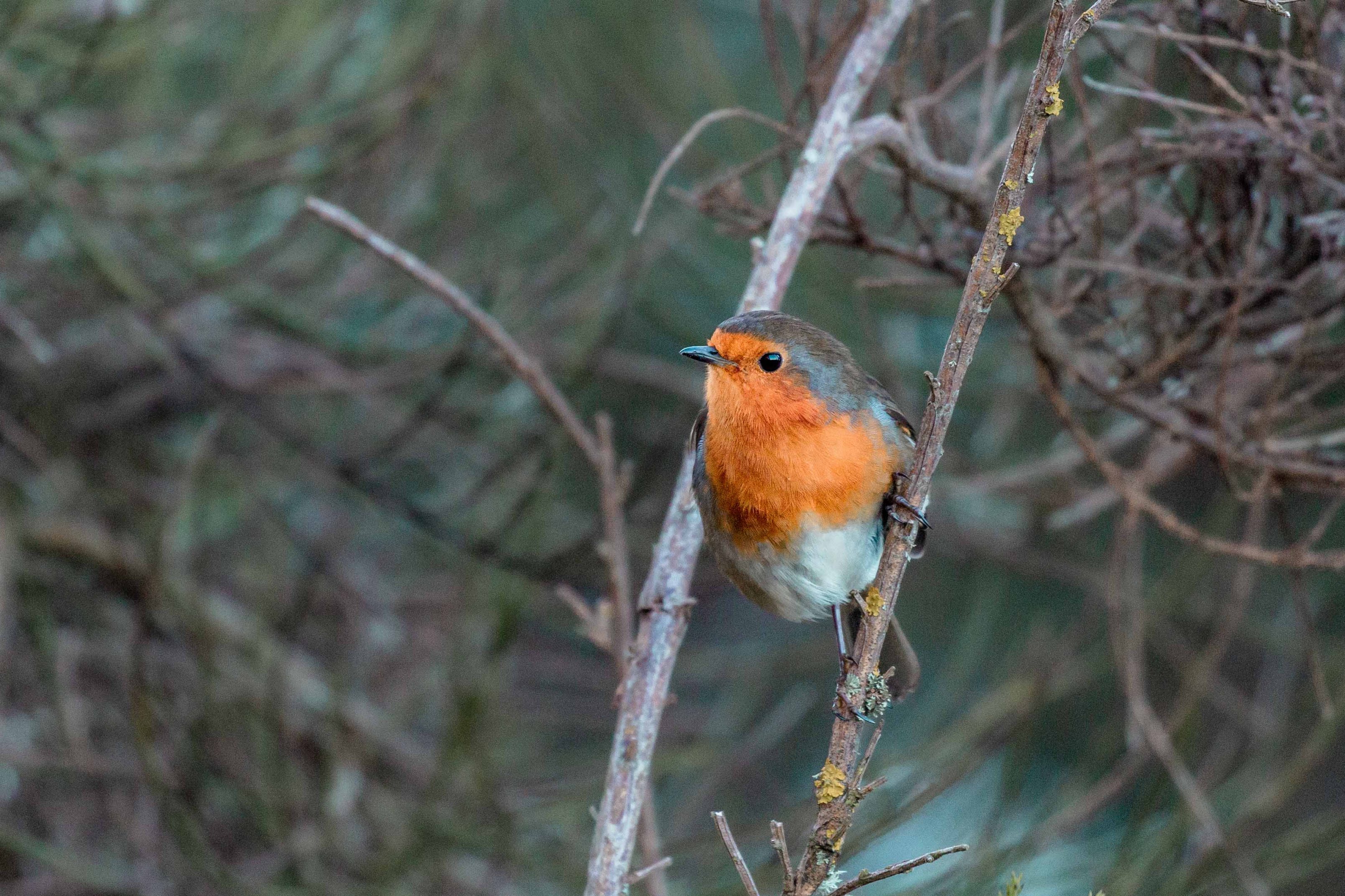
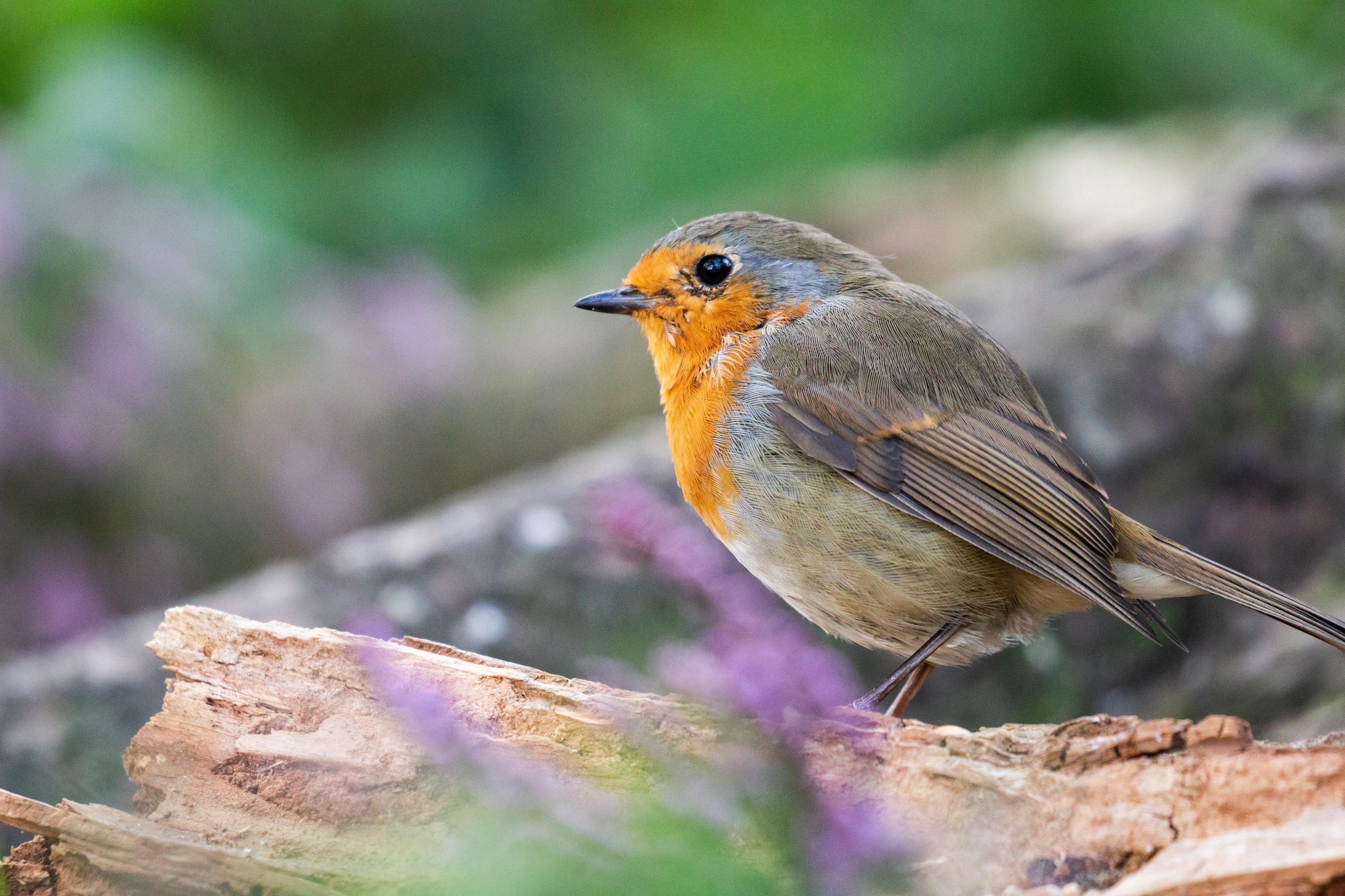
I was determined to make the first day of the year full of wildlife so I headed to my favourite woodland spot to try my luck seeing red squirrels. As usual I was met by a gust of coal tits, brazenly unafraid of me, and once I’d settled down the more timid characters began to emerge. There were blue tits, great tits, siskins, dunnocks and chaffinches. Blackbirds rustled beneath the trees and a plucky robin perched within arm’s reach of me, gazing with that analytical expression typical of its species. I was soon in my element: enjoying the peace and quiet, tucked up warm against the cold and surrounded by birds.
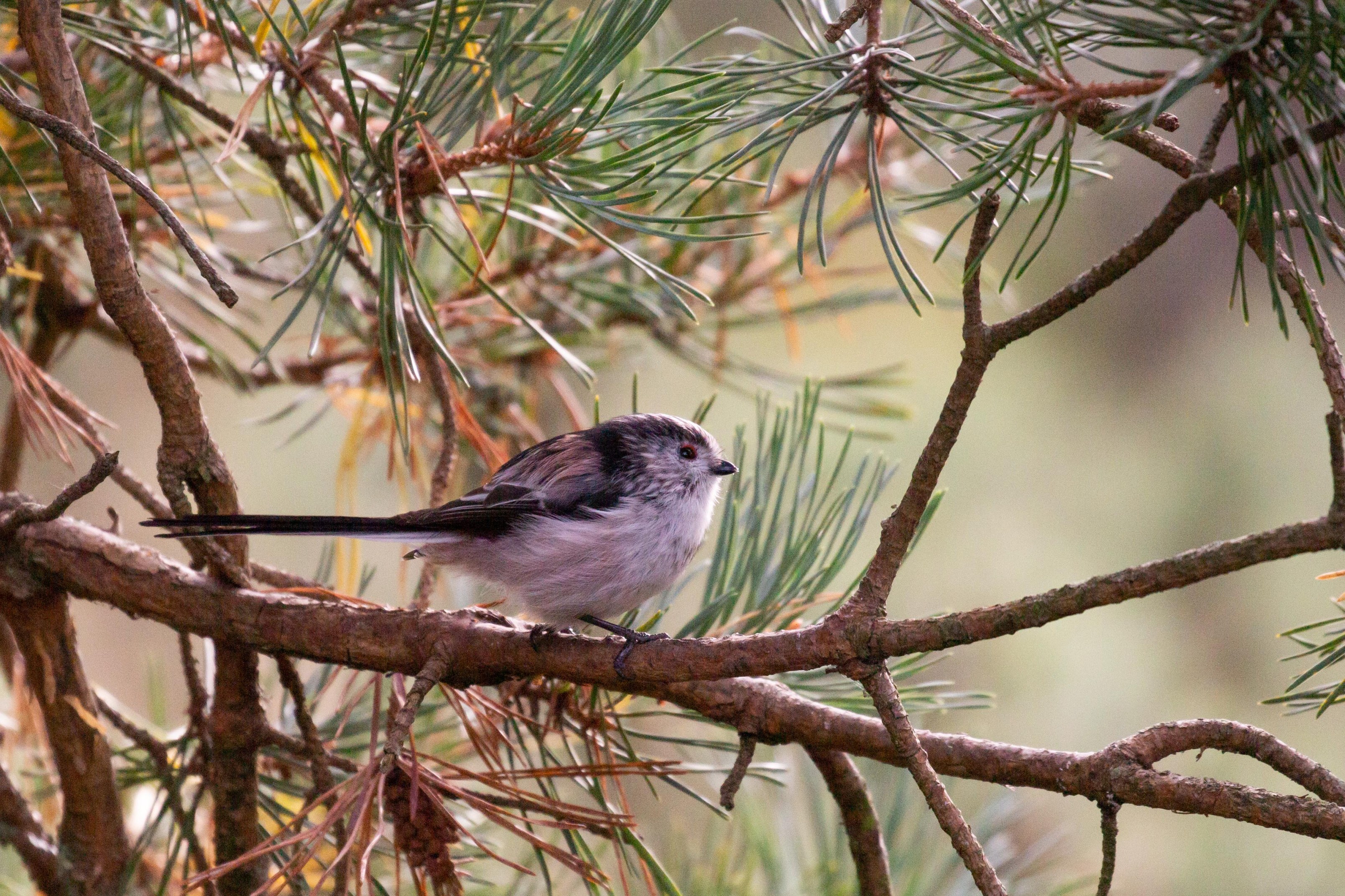
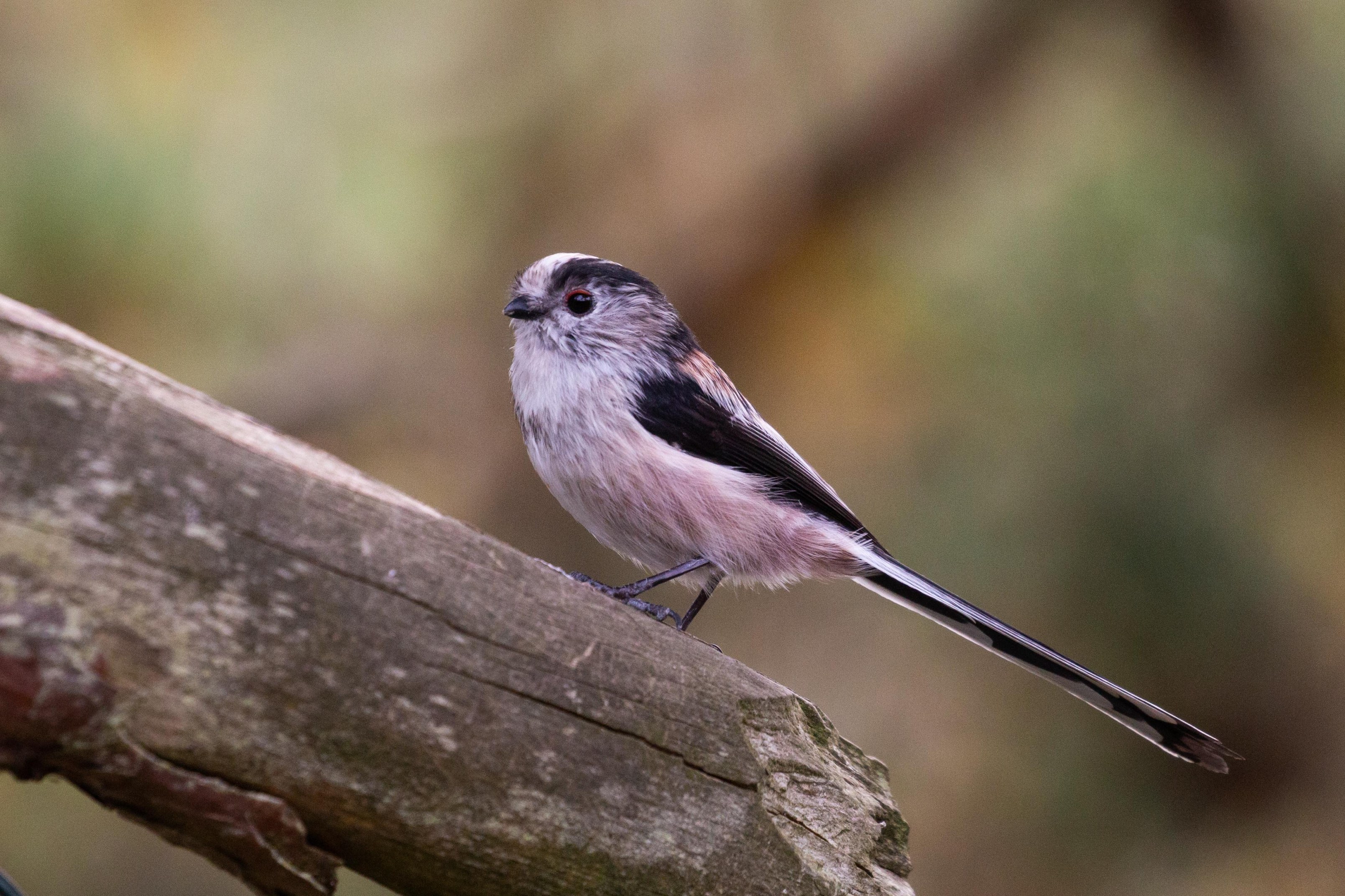
A black and pink troop of long tailed tits caught my eye as they appeared one by one, hanging together off the branches. Mike Tomkies described them as “flying crotchets escaped from nature’s music sheet”, which I think is an impeccable piece of writing. And so true – long tailed tits have crotchety proportions with a golf ball body and a huge staff of a tail. But what enchants me most about them is their tiny little faces. Eyes and beak are all crammed into the exact same place, giving them a ridiculously cute expression. I love how they always travel in packs too. Despite being such dainty looking birds they soon dominate a space with both sights and sounds. One of their calls reminds me of a raspberry being blown. The next time you see long tailed tits listen out for it. A cheeky raspberry from an even cheekier bird.
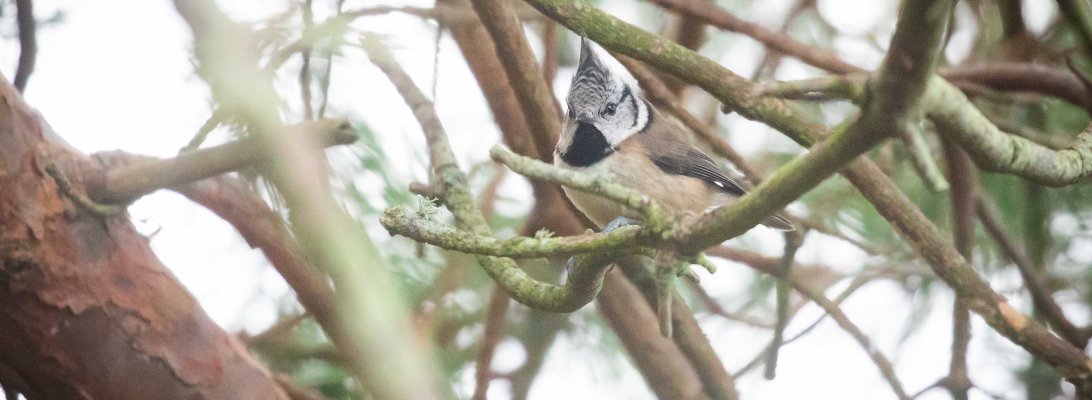
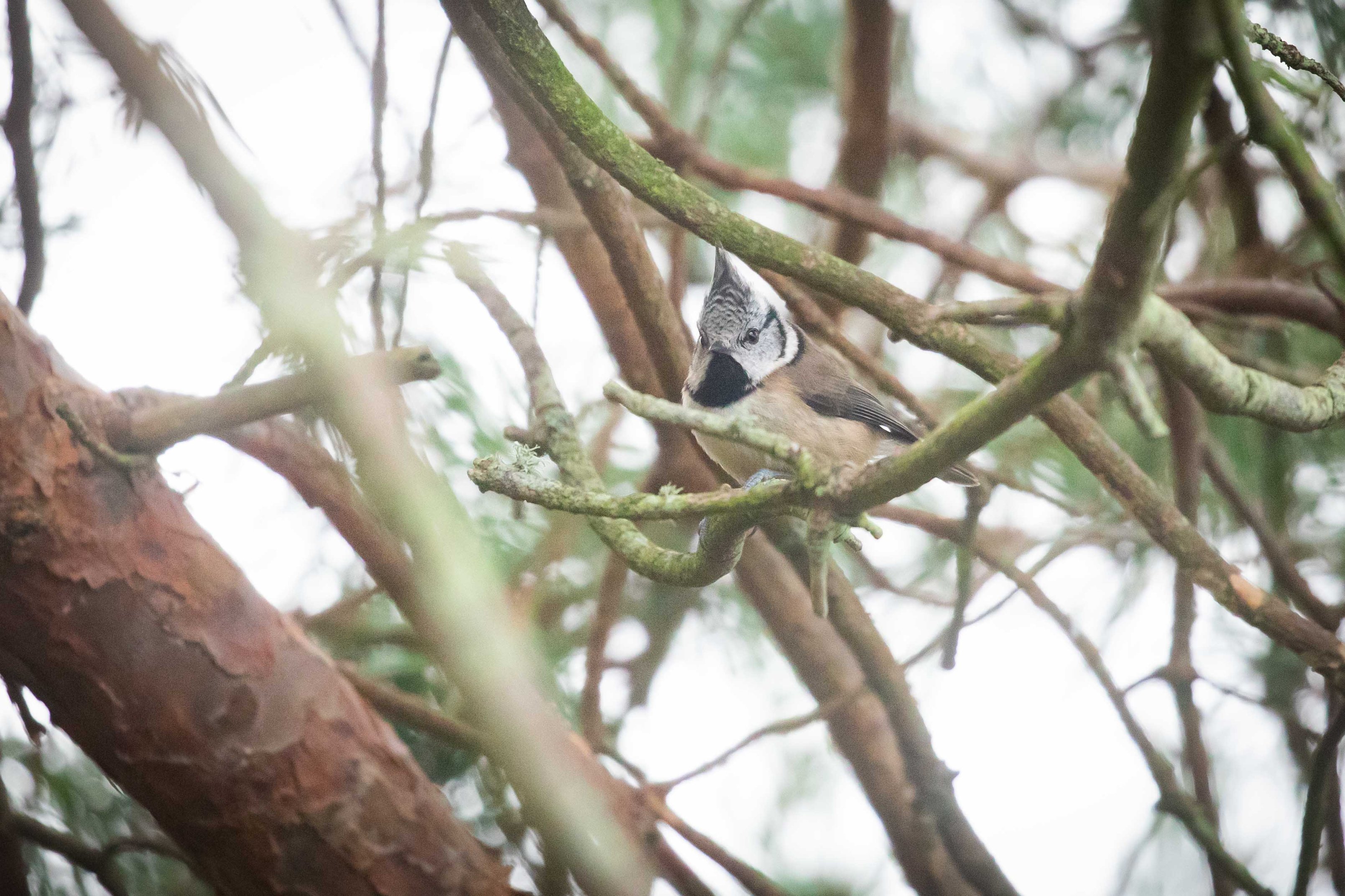
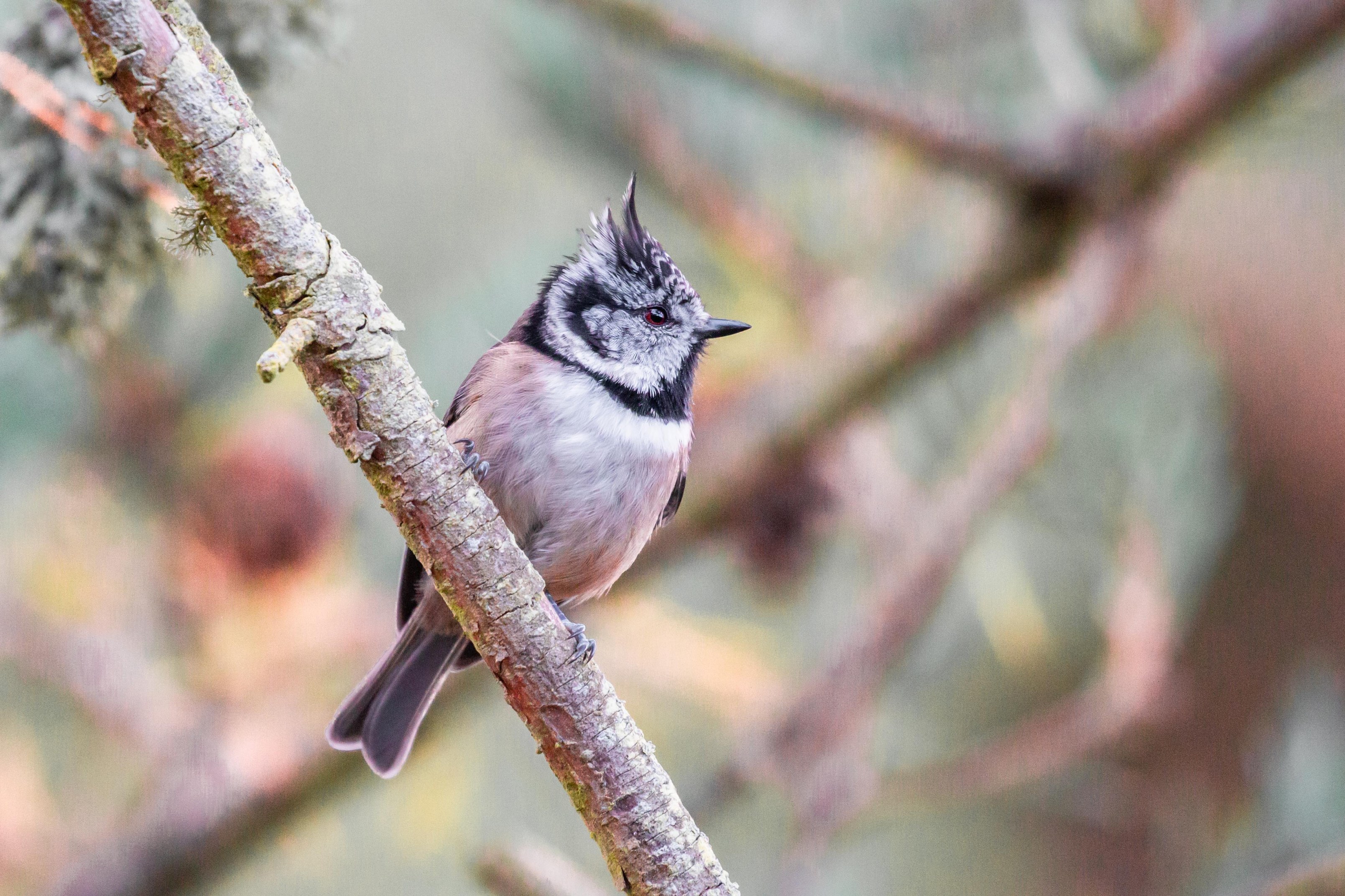
Then I heard a different snap of sound on the breeze: the trill of a crested tit. I’ve only recently learned what a crestie sounds like and now I hear it regularly, often in places where I would never predict them such as over the most heavily pressed forest trails. I don’t always see them, but the beauty of recognising birdsong is it gives you the ability to meet a bird without actually clapping eyes on it.
And suddenly there it was. I’m hesitant to use the word “icon” because it’s become a cliché, but in the case of a crested tit there’s no other word for it. Found nowhere in the whole of the UK apart from the Scots pines forests of the Highlands, it’s a really special bird. I find cresties are also a real challenge to photograph on account of the ants in their pants. I’ve got a few photos of them now, but I’m still waiting for THE crestie shot.
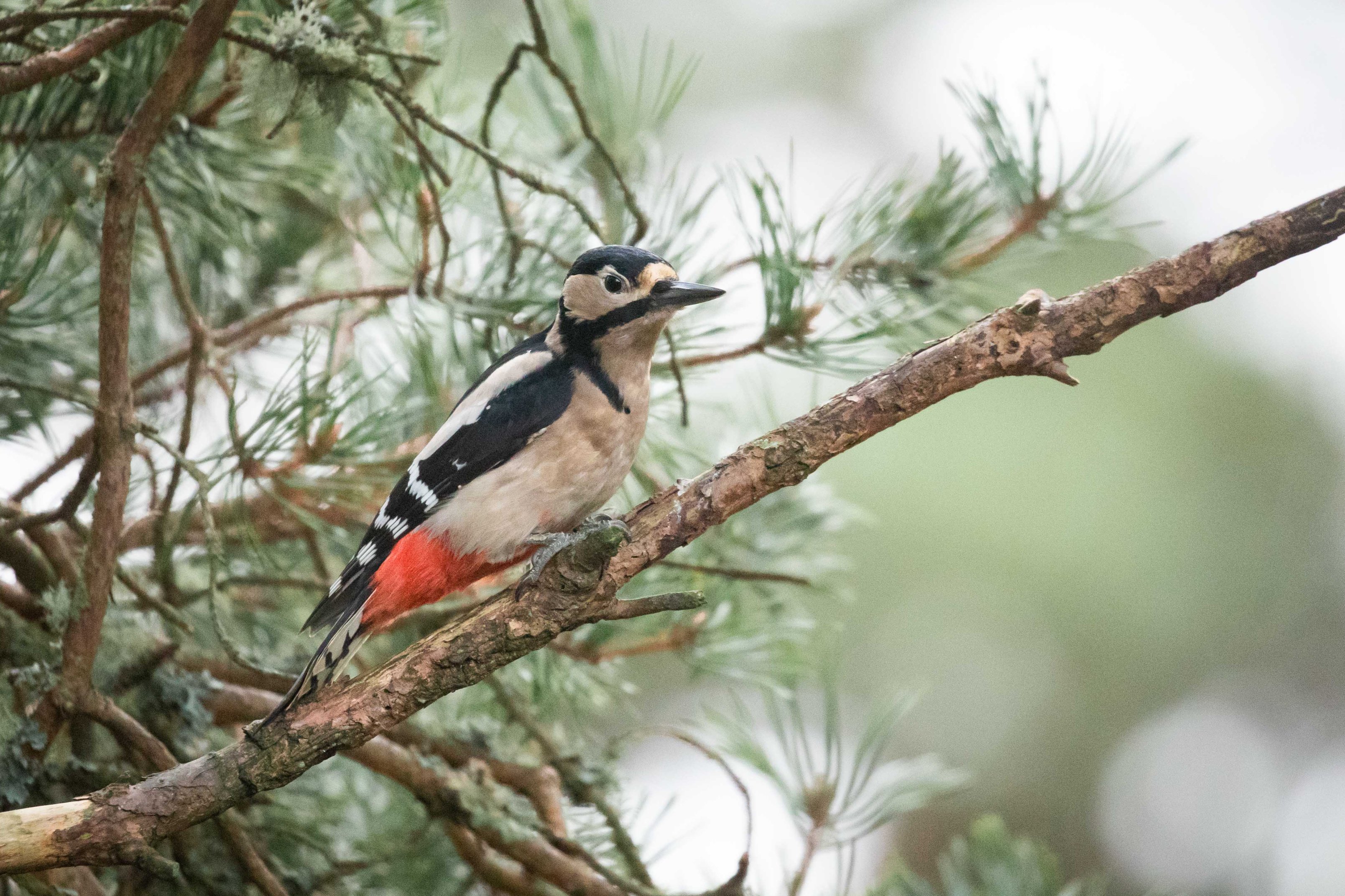
As I sat marvelling, a bigger bird appeared and I almost clapped with happiness. A great spotted woodpecker landed right there in the open, which I’ve never seen before. If they’re not fifty feet up a tree they’re concealed behind so many branches that there’s no hope of a decent photo, but it seemed that today was my lucky day.
Although of course I was pleased to see so many birds, I was secretly hoping for a glimpse of red fur too. I waited patiently, watching countless tits and finches come and go, until eventually I turned to see what I thought was the robin again but was actually a red squirrel, standing two feet from my boots. It hopped leisurely across the pine needles to the tree and shimmied up the trunk, pausing just long enough in the crook of a branch for a photo before heading off. A very fleeting visit, but I was thrilled. When wildlife comes to me (rather than the other way around) I get an overwhelming feeling of acceptance. Both squirrels and birds alike must trust that I won’t hurt them and feel relaxed enough to come close, and that is a really special thing.
It goes without saying that I had an incredible time in Norway. I love being by the sea – it’s part of the reason why I moved to the Moray coast. Although, I also have a strong love for forests, and during the first few months in my new home I found myself drawn away from the coast and towards the sprawling Scots pines. I walk the dog along tangled trails and she amuses herself with sticks while I gaze up into the trees, camera slung on my back. It’s not that I’ve lost touch with the ocean, but I lose all awareness of time in the forest and wander for hours until eventual hunger pulls me back. Trees and the creatures they shelter provide endless fascination to me – I become immersed in the forest in a way that I can’t by the sea without the hassle and expense of scuba diving.
So although humpback whales erupting out of the water and orcas cruising alongside the boat were encounters that I will never forget – and there was a tangible feeling of sadness among the group as we made our way back to the UK – I can’t deny that I sat quietly containing my excitement. I couldn’t wait to see how the forest had changed while I’d been away and how wintery it had become.
It took us two days to drive from Gatwick airport all the way back home and I watched with growing eagerness as barren fields blended into mountains. Unfortunately I was bogged down with deadlines for the first few days, but at the weekend I made time for my first forest walk in a month. I roamed for three hours, and was reminded yet again how nature can constantly surprise you.
The first bird I saw was a goldcrest, which was flicking to and fro through the undergrowth just out of sight. I crept forwards until a particularly irksome branch had shifted and I got a clear view, but I knew getting a photo would be next to impossible. Not only do goldcrests love staying concealed, but they also never stop fidgeting. I stood still and turned on my camera, realising my settings were still adjusted for the northern lights from earlier in the week.
The goldcrest leapt up and clung to a twig with its back to me – just enough light for a photo. I pressed the shutter, hoping it would turn and show me its face and crest, but naturally it bombed back into the shadows. I left it to its foraging and pressed deeper into the trees.
Sunset was at 3:30pm and at 1pm the light was already vibrant with gold, hitting the trunks low in diagonal shards. It was blinding in some places and almost dark in others. I heard the delicate bell’s chime of another goldcrest high above me and saw the bulkier bodies of their regular companions, the coal tits. To think I’d been watching willow tits in snowy Norway a few weeks before!
I hiked up one of the many sloping hills – mountains in miniature – and admired the view from the top. My breath tumbled upwards in a white cloud turned gold in the light. After following a narrow column for a few metres it was time to slide back down to ground level and my eye caught on a treecreeper as it crept up the trunk. What a perfectly named bird.
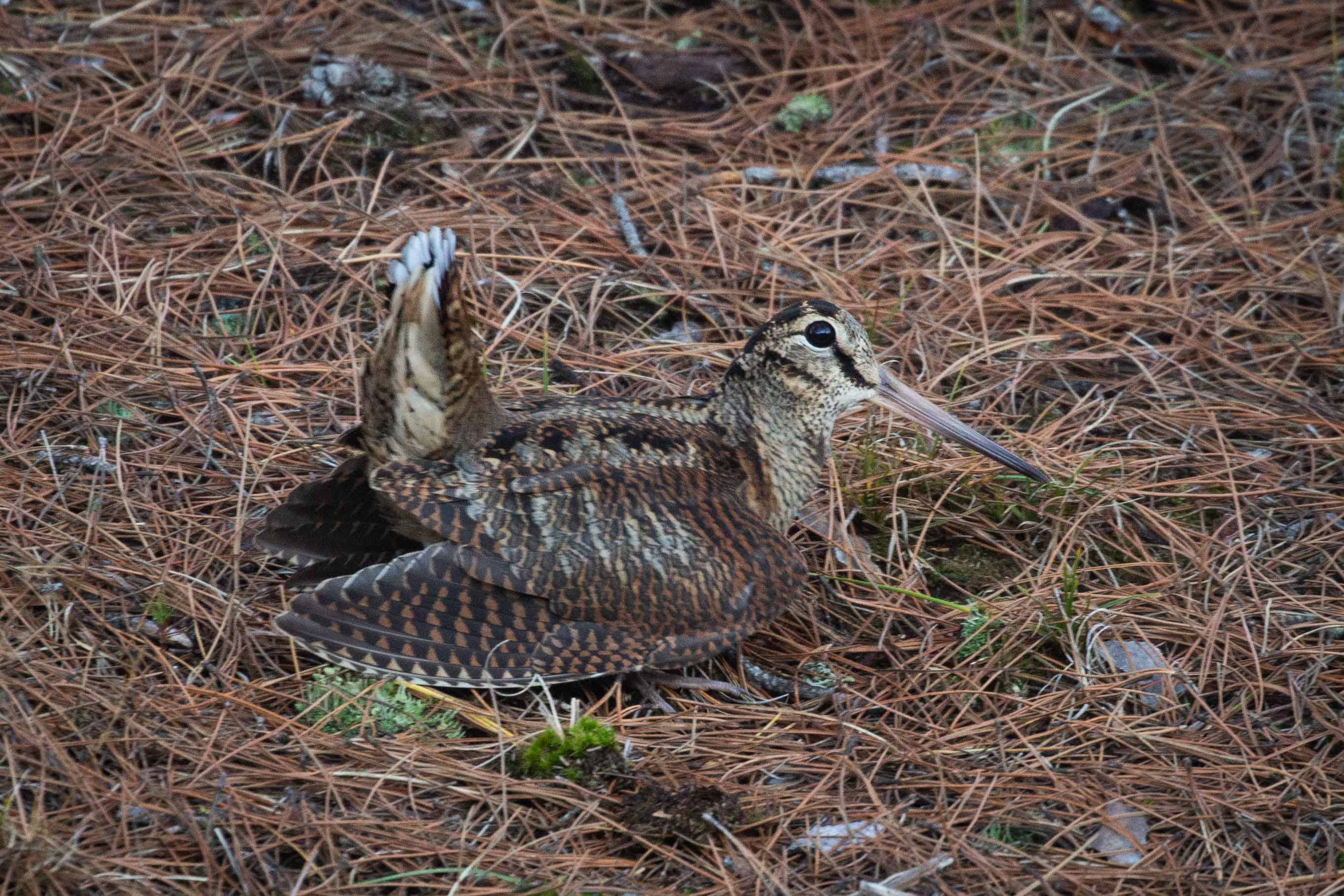
Up ahead was a clearing, which was especially lovely in the spring when full of yellow gorse but rarely revealed anything of real interest. The birds stuck to the protection of the trees. I stopped to push numb fingers into gloves when behind me I heard a sound like a plane engine at scarily close range. Startled, I spun round and saw a brown bird come rattling around my head and land with a crash on the ground.
Without a second thought I lifted my camera and just as I pressed the shutter the bird lifted its wedge tail and took to the air again, disappearing immediately. I quickly checked my photo and was relieved to see I’d caught it. A barred head, mottled brown plumage and wings that made a sound like something caught in a fan. My first woodcock!
I was stunned, barely believing what had just stormed in front of me and barrelled away again almost within the blink of an eye. The epitome of “right place right time”. Even the goldcrests and coal tits had suddenly gone quiet, as if equally surprised at the encounter. I felt the familiar flutter of excitement in my chest and was hooked all over again. It was good to be home.
It has become a running joke that I’m pretty unlucky when it comes to seeing certain species. Examples include otters, badgers and deer, despite the fact that I now live in Scotland, which is essentially the deer capital of the UK! But, if there’s one animal that I have an affinity for, it’s the red squirrel. There’s something irresistible about their fluffy tails, tiny hands and beady eyes. And of course they all have completely different personalities. I will never not be excited by red squirrels, no matter how many times I see one. I must have thousands of photos of them by now but I always take more, and this weekend was no exception.
My friend Steve and I visited Lossiemouth for some wildlife watching in a beautiful patch of coniferous woodland by the estuary. Within ten minutes of arriving I was gazing down my telephoto lens at a red squirrel as it clutched a monkey nut in its paws. Despite the flurry of coal, great and blue tits, I would happily have just watched the squirrels until a particularly special bird caught my eye: the crested tit. In Britain, these birds are mostly confined to the Caledonian forests and Scots pine plantations of Scotland. The punky hairdo is perhaps the most striking feature of the crested tit but their bright red eyes are pretty amazing too! I couldn’t believe I was so close to such an uncommon and beautiful British bird.
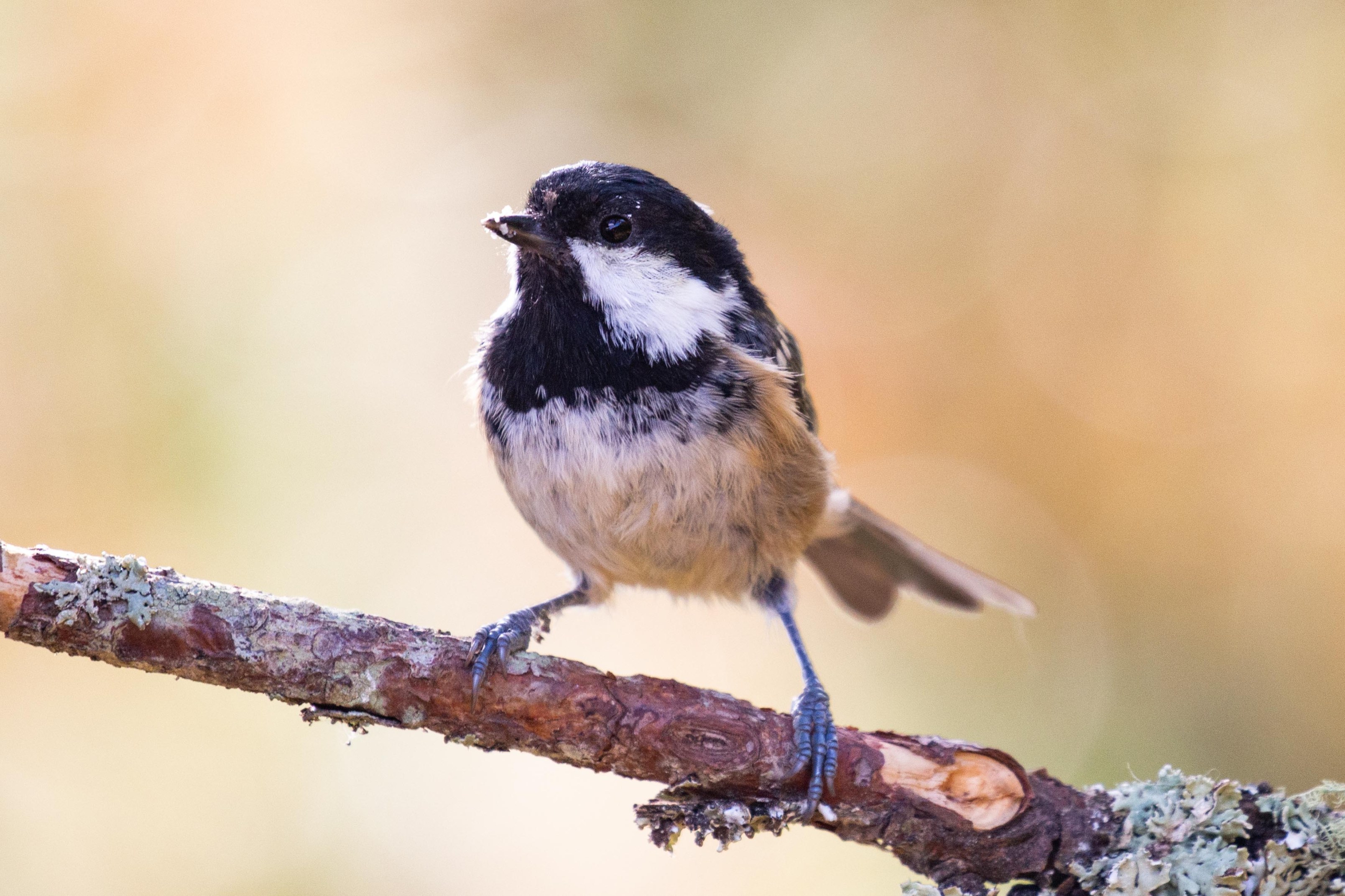
Coal tit
As well as squirrels and cresties, we were surrounded by dozens of other birds including another favourite of mine: the long tailed tit. The proportions of this bird are what I love most about them. They have a body like a golf ball with a spoon handle sticking out one end and the sharp nib of a bill out the other. What a bird! And where there’s one, there are nearly always more and I often hear them before I see them. Their alarm call sounds frog-like and the trees erupt with soft ribbits whenever I pass by.
I am in my element in the forest. It’s my favourite wild place to visit and I absolutely loved getting such close-up views of some fantastic species. After a couple of hours the afternoon sun began to fade and a chilly breeze had us packing up and heading home, though I’d definitely be back soon.






















 rebeccaonthewing.com