November Wildlife


In November, many mammals are preparing for hibernation while some new faces are arriving on the scene. In the latest instalment of my monthly series for Bloom in Doom magazine, I’ve shared some of the British wildlife highlights that can be seen during November.

Birds

Winter is an excellent time for birders because of all the overwintering geese, ducks and waders that have arrived. It is thought that around 50,000 barnacle geese travel from as far away as Russia to reach our shores, which may seem chilly but are far warmer in comparison!

All those birds attract the attention of raptors, so also keep an eye out for peregrine falcons and harriers which are looking for a possible meal. Short-eared owls also travel south for winter and are often seen near the coast. 
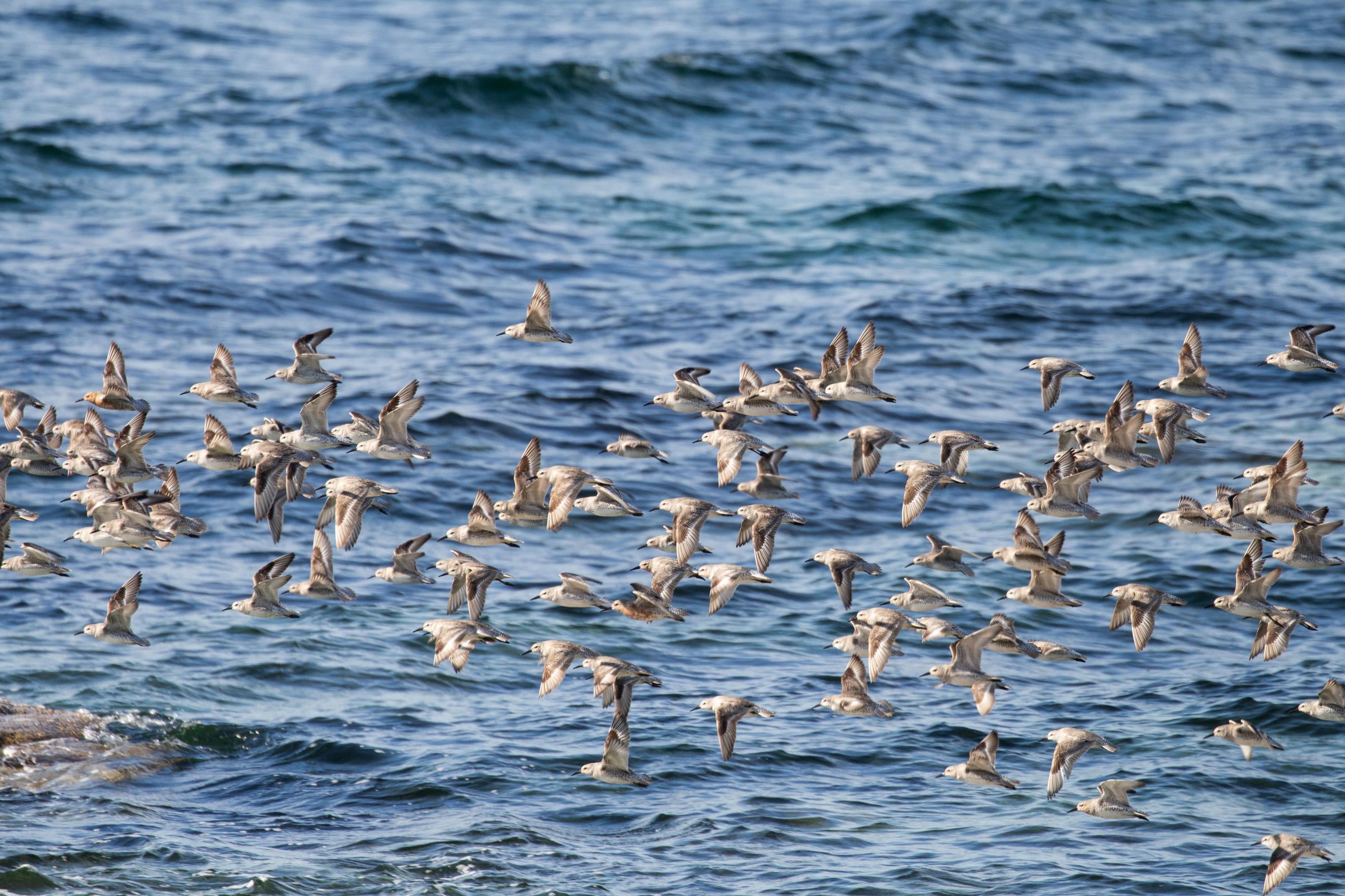
A flock of knot flying along the shore
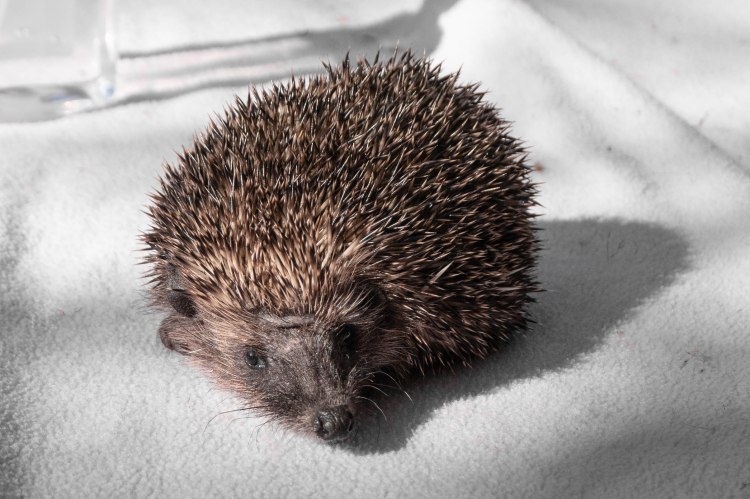
A recuperating hedgehog at Hornbeam Wood Hedgehog Sanctuary

Mammals

Many mammals are now looking to start their hibernation in November, including our special but now scarce hedgehogs. They search for large piles of branches and leaves, which sadly often include bonfires. Please always check bonfires for hibernating hedgehogs – the best thing to do is build it just before you light it. Also, it’s a good idea to leave fallen leaves on the ground instead of raking them up because they provide important hedgehog nesting material.

In November there are usually lots of baby hedgehogs handed in to wildlife rescue centres because they are born late and therefore too small to survive hibernation. For more information on what to do if you find an injured hedgehog, check out this link.

Fish

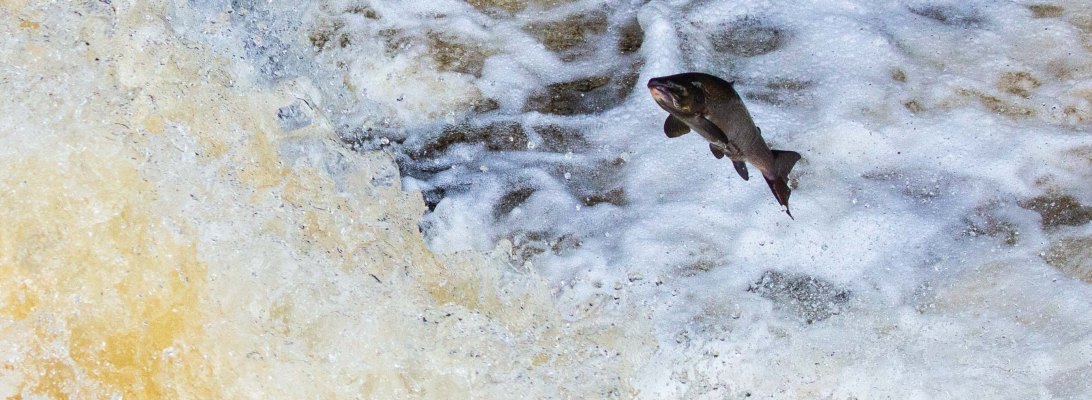
November is usually the peak of the salmon run – a dramatic and impressive feat. Mature fish are swimming upriver from the Atlantic to their spawning grounds, having waited in estuaries for the rains that raised the water levels enough to allow them to travel back to where they were born.

As if leaping several metres into the air to pass thundering water wasn’t impressive enough, during this time the salmon don’t feed at all and concentrate solely on their mission to breed.

Fancy Ceilings

I arrived at El Rastro flea market while the traders were just finishing setting up. It was the place to be in Madrid on a Sunday morning: before long the streets would be crawling with people, including pickpockets. I avoided the upcoming crush nicely and browsed at ease without having to clutch my bag too tightly.

It was very similar to Camden market; in fact some of the floral dresses and pendant necklaces were identical. There were also plenty of trademark Spanish items such as flamenco dresses and more fans than you could shake a stick at. Luckily there were some lovely items amongst the kitsch. I bought a silver-plated necklace with two inset pieces of labradorite, my favourite crystal. I indulged in a few beaded bracelets (a holiday tradition of mine) and found some other small gifts to take back home.

646F7F32-00FB-48F0-8D6D-F7B4B48EDF79

Once I’d done most of the circuit, the sun had cleared the surrounding buildings and the crowds had visibly swelled, so I decided to make my escape. I dropped into 100 Montaditos for lunch where tapas only cost 1€ each. I had adorable little mini brioche buns stuffed with potato omelette and hard-boiled eggs. The place had quite a rotary feel about it; orders were placed and paid for at the bar and food was called out over a microphone for diners to come and collect. Situated so close to El Rastro, I guessed that they were accustomed to being full to the rafters after the morning’s shop and thrived on efficiency. It wasn’t the place to relax but the food was good.

P1000133
Street art on the walk down to El Rastro

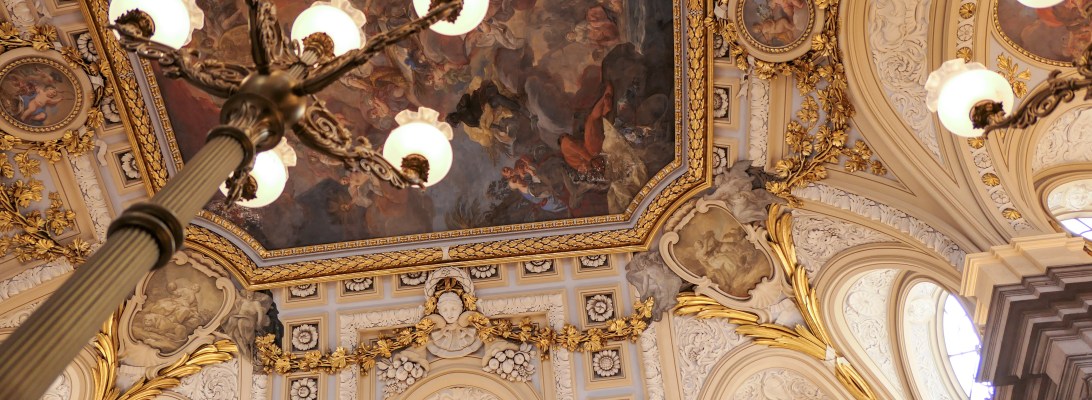
Later I ventured back past the Palacio Real and found there was no queue so I made use of the opportunity and paid for entry. I’ve never been overly fascinated by royals so for me it was more the case of ticking a box, but the interior was as stunning and regal as one would expect. I particularly enjoyed the Carlos III Chamber of Gasparini room, which was where the king performed the ceremony of getting dressed. It was designed by Matteo Gasparini in the Rococo style of ornamental and extravagant three-dimensional decoration. I wasn’t allowed to take photos in that particular room but there was a dramatic contrast between black, swirling filigree detailing and paler sections. It was far more gothic than a lot of the palace’s other rooms, where gold ceilings and weighty chandeliers took precedence.

P1000360 2
The ceiling over the staircase

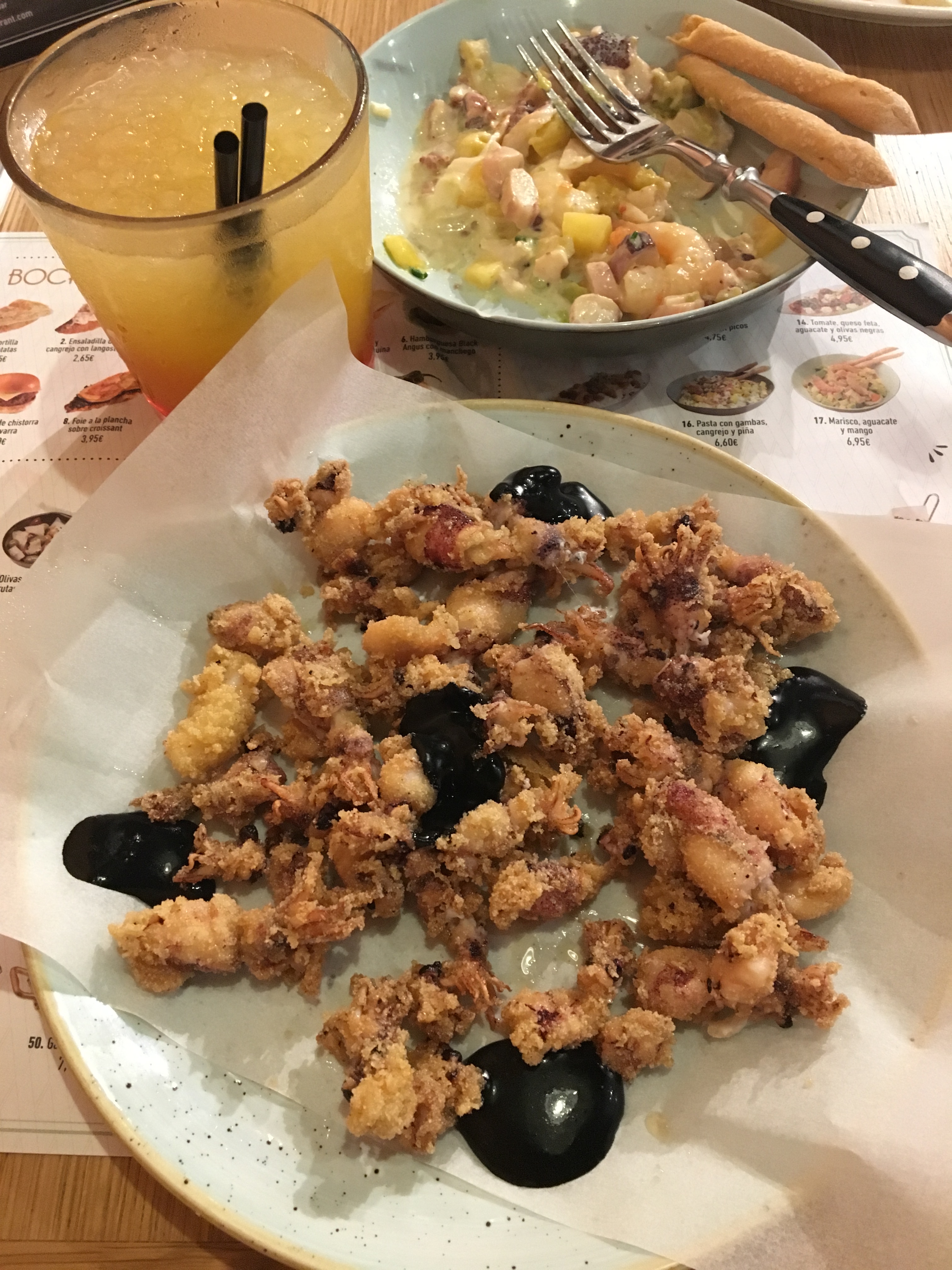
After getting my fill of royal luxury I continued along Calle de Bailén to La Basilica Grande de San Francisco to see a particularly lavish dome ceiling, but unfortunately the gates were locked and the doors shut. I’d checked the opening times beforehand but perhaps as it was Sunday, an unexpected religious ceremony had come up. I was pretty worn out anyway, so after a stop off at a bar for another granizado de limón I headed back to the hotel to freshen up before returning to Tapa Tapa for dinner, which had become my favourite eatery in Madrid. This time, as well as the langoustines, I had a portion of fried squid with its ink and salad made up of seafood, avocado and chopped mango. Once again, it was all delicious. I particularly liked Tapa Tapa because despite offering a wide range of choices, they seemed to excel at them all whether you chose seafood, bocadillos or vegetarian options.

IMG_3944
Seafood salad and langoustine skewers

IMG_3945
Fried squid with its ink

I thought about going for a spot of shopping while the air was cooler, but once I’d paid the bill and left the restaurant I was met by a raging thunderstorm. Obviously even Madrid had a temperature limit and as I huddled with other diners watching the rain thrum wildly on the pavement, a stream already gathering strength in the gutter, I hoped the storm would crack the enduring heat.

I decided against shopping, and when there was a slight lull in the onslaught, I made a dash back to Calle Mayor and watched the rest of the storm indoors.

Learning to Dive – Part One

The alarm went off at 6am and my stomach began to churn. Today was the start of Open Water weekend, and if all went well, I would earn my first diving certification. Having struggled with some of the skills in the swimming pool, not to mention the fact I was still getting used to all the kit, I couldn’t help feeling apprehensive as I pulled on my warmest clothes. I hastily gobbled a petrol station flapjack, which tasted like cardboard in my dry mouth. Knowing I shouldn’t be feeling so anxious, I tried to shake the nerves and triple-checked I had everything I needed.

Luckily, the site was only a five-minute drive from the hotel, and I arrived in plenty of time. Stoney Cove used to be a stone quarry that was used in the 1960s and 70s to train commercial divers and test underwater equipment used in oil fields. Now, Stoney Cove has conference rooms, shower facilities, a shop and – most importantly after a tiring dive – a pub called Nemo’s. The actual quarry is a multi-level city of shipwrecks and aquatic life, split up into areas of different depths for divers of all abilities. As this was our first open water dive, we stayed safely in the 7m limit, which still contained a submarine and an aircraft cockpit. Although, I was more interested in the crayfish, perch, roach and pike that called Stoney Cove home.

It was a cold but clear day, with sunlight pouring weakly onto the water. No rain at least, though I suppose rain shouldn’t really be a concern for divers. As I stood at the quarry’s edge watching seagulls floating on the surface, I couldn’t quite believe I would soon be diving several metres beneath it.

Soon it was time to start kitting up. We assembled in buddy pairs and helped each other don scuba kits just like every week at the pool. This time, however, we also had hoods, gloves, compasses and a dive computer. We made our way down to the ramp, where several divers were already in the water. For dive one all we had to do to enter the water was stand on the edge and sit gently back, floating out into the quarry.

Ungainly as always with my cylinder and weights, I felt like a tortoise on its back as I tried to strap on my fins. Eventually I was ready, and made my way hesitantly to the edge of the ramp. I turned, squatted and leaned back. The shock of freezing cold water rushing into my wetsuit wasn’t exactly comfortable, but in a strange way it was exhilarating. This was it, time to dive.

Once everyone was in the water, we began our first descent. As more of my body became submerged, I soon grew numb to the cold and instead focussed on the underwater world we were entering into. I descended to the bottom, making sure to equalise my ears to the increasing pressure, and looked around. The visibility wasn’t superb and the only features I could make out were other divers, but the murkiness only added to the suspense. It still felt strange not to have to work to stay down in the water, instead floating effortlessly.

The instructors led us on a swim, past the Nautilus submarine to a wooden platform where we would perform our skills. An underwater classroom surrounded by shipwrecks and fish; it was quite extraordinary.

After each taking turns to carry out the skills, we started our ascent. For the first time on the dive I looked up, and the sight was breathtaking. Sunlight streamed through the water in slanted shards that lit up our bubbles as they cascaded upwards. I still hadn’t got my head around being able to breathe underwater. It had been a dream of mine as a child, pretending to be a dolphin in the local pool. I wasn’t quite a dolphin yet, but I was closer to the underwater world than ever before.

Coming soon: day two of Open Water weekend!

Carna – Day Four

Species seen:

  • Barn Owl – Tyto alba
  • Bladder-wrack – Fucus vesiculosus
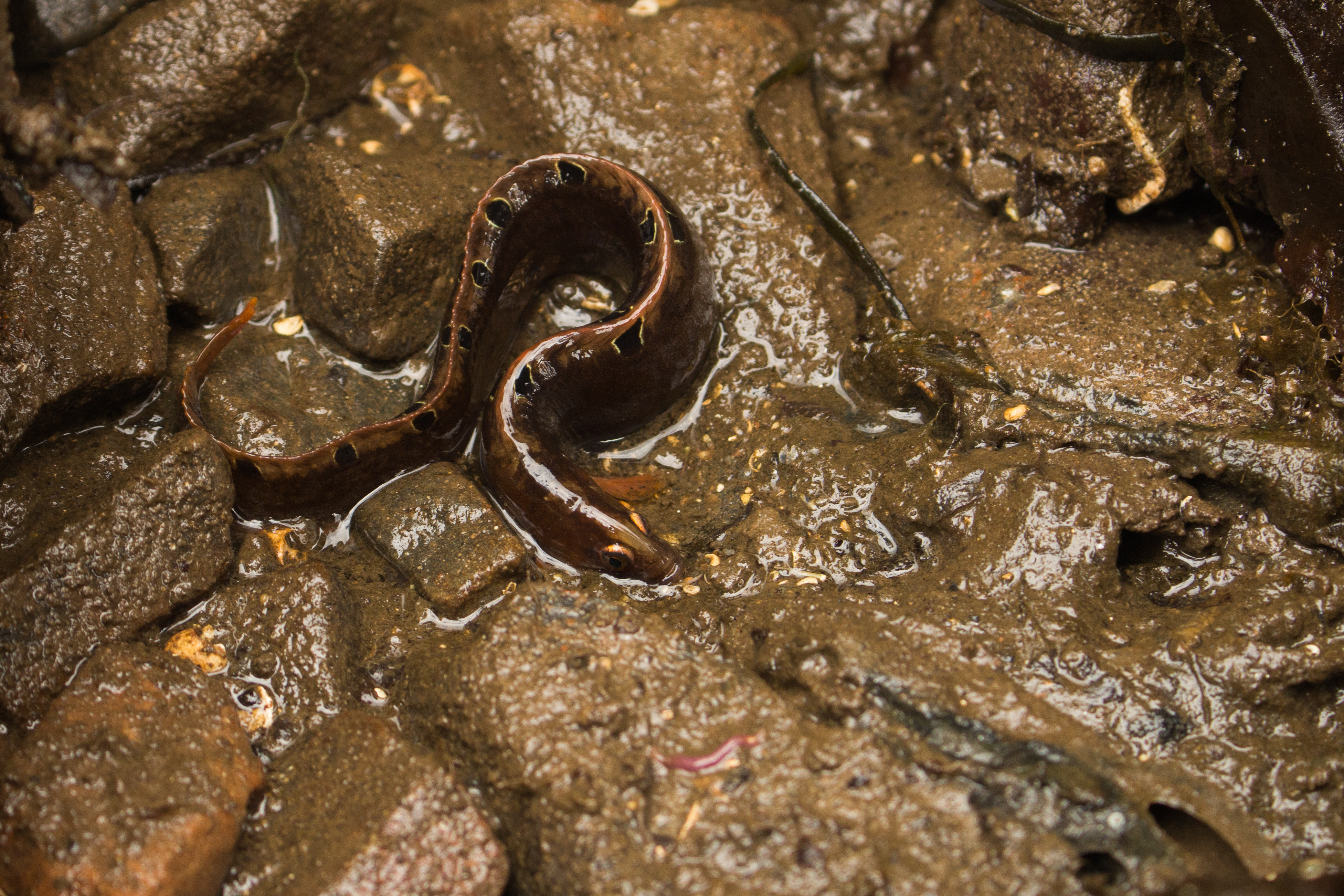
  • Butterfish – Pholis gunnellus
  • Chaffinch – Fringilla coelebs
  • Common Blenny – Lipophrys pholis
  • Common Hermit crab – Pagurus bernhardus
  • Common Pipistrelle – Pipistrellus pipistrellus
  • Common Sandpiper – Actitis hypoleucos
  • Common Tern – Sterna hirundo
  • Eurasian Otter – Lutra lutra
  • Eurasian Rock Pipit – Anthus petrosus
  • Flat-wrack – Fucus spiralis
  • Grey Heron – Ardea cinerea
  • Hare’s Tail – Lagurus ovatus
  • Hooded Crow – Corvus cornix
  • Knotted-wrack – Ascophyllum nodosum
  • Lesser Redpoll – Acanthis cabaret
  • Saw-wrack – Fucus serratus
  • Sea-mat – Victorella pavida
  • Serpulid worm – Serpulidae
  • Shore crab – Carcinus maenas
  • Small winkle – Littorina littorea
  • Song Thrush – Turdus philomelos
  • White-Tailed Eagle – Haliaeetus albicilla
  • Willow Warbler – Phylloscopus trochilus
  • Wren – Troglodytes troglodytes
  • (Cuckoo – Cuculus canorus)
  • (Robin – Erithacus rubecula)

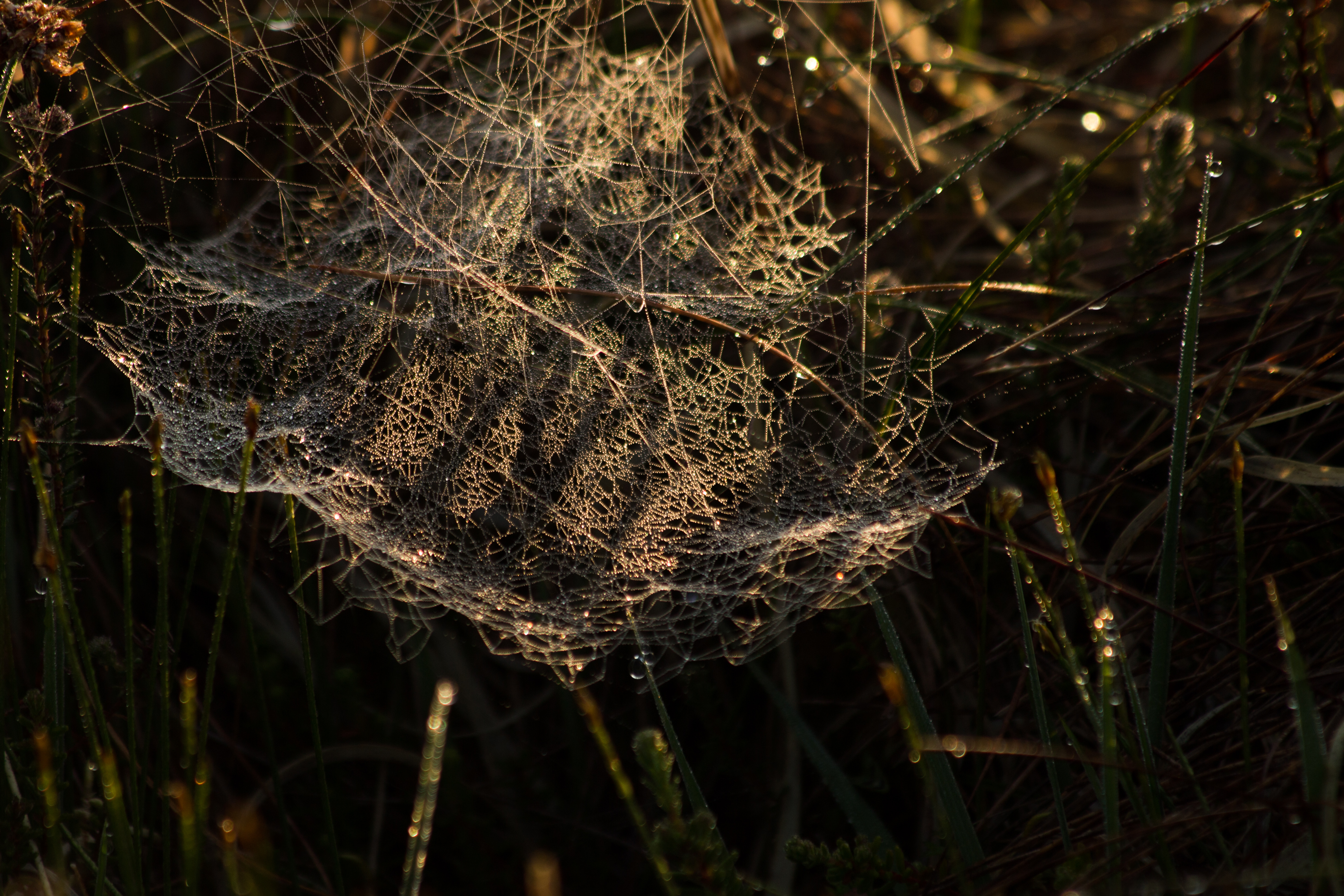
We were woken at the tender hour of 5am this morning for a wander through the dew-soaked grass. Tiny droplets clung to the hare’s tail and made them look like teasels instead of their usual fluffy tops. There was a fine mist rolling over the hills which looked beautiful with the weak sunlight shining through. We spent some time listening to birdsong and trying to untangle the many different voices. Cain described the descending tone of the willow warbler and the drilling call of the lesser redpoll. I would love to improve my knowledge of birdsong; it’s at the very centre of the morning routine for all wildlife.

IMG_6118IMG_6122IMG_6124IMG_6125IMG_6143

IMG_6157
A willow warbler high in the trees

After a break we began the scramble up Crachan Chárna, the tallest hill on Carna standing 170m tall. Once again the sun was shining, which we certainly shouldn’t be ungrateful for, but the heat made the climb just that little bit more challenging. Luckily the path up was well trodden, so we didn’t have to battle through knee high bracken or wade through too many sodden swamps.

Partway up we came across a muddy puddle stuffed with grey and black feathers, clearly the scene of a crime. Cain explained how he knew the culprit was a bird not a mammal. When foxes feed they chew the feathers off the carcass, splintering the feather shafts. Birds of prey pluck the feathers so leave them relatively undamaged. It was then a case of determining the exact species; this involved identifying the prey. When viewed in direct sunlight the black feathers glimmered, the dark green sheen of a shag. The size of this bird meant the predator had to be an eagle; a buzzard wouldn’t have the size over seabirds such as shags. It was so interesting deducing what happened based on the evidence; I’m noticing so much more now I’ve got some field knowledge.

IMG_6170

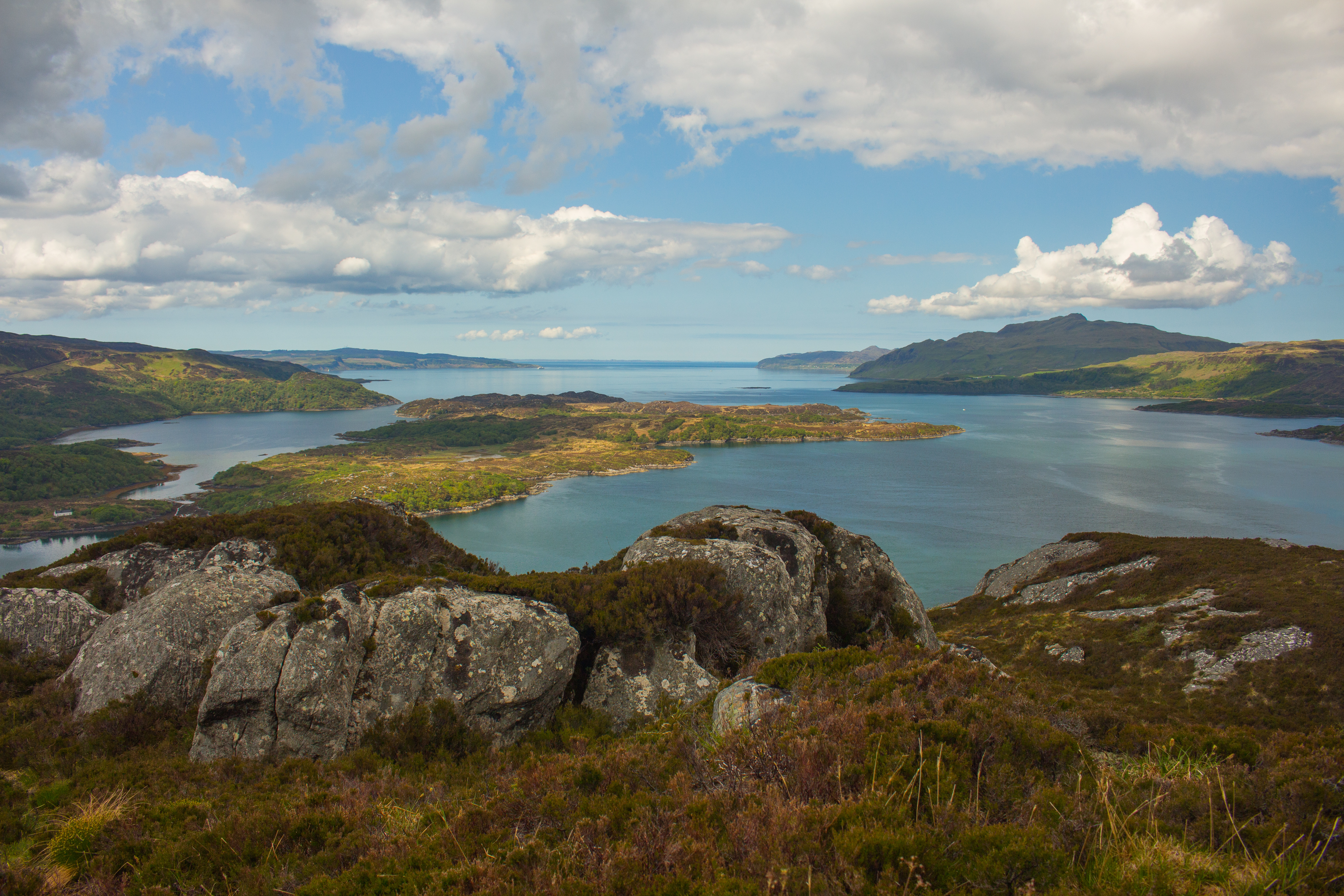
In less than half an hour we’d reached the summit, only stumbling a handful of times. After we’d caught our breath we could fully appreciate the beauty of the island. For miles in every direction sprawled the surrounding isles, smaller patches of rocky terrain jutting out of the loch and the open sea to the west. We spent a long time at the summit, eating lunch and twisting and turning to see every view. Common terns swept overhead, turning into the wind and flapping furiously. Far down below a heron stood poised, neck braced to strike. After enjoying some lunch we made our slow descent back to the ground.

IMG_6206

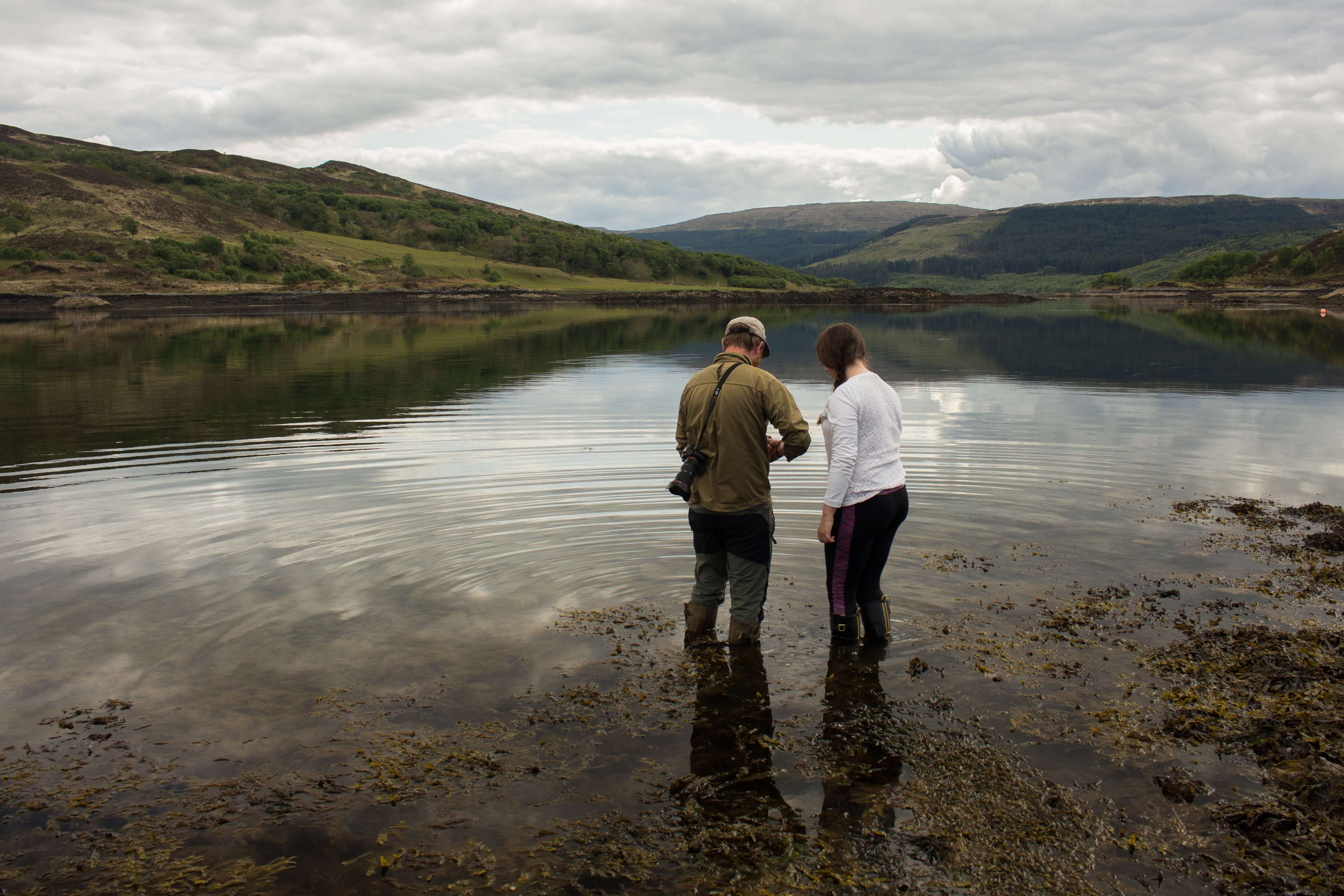
In the afternoon we spent time exploring the coast outside the house. While the tide was out we could forage the seaweed to our heart’s content. I discovered many different species including bladder wrack, sea mat and flat-wrack. In addition we saw many creatures beneath the weed-choked rocks such as edible winkles, barnacles and shore crabs. As well as this we saw butterfish, common blennies, whelks and starfish. We all lay on our fronts on the pontoon and watched a common hermit crab creep along the lakebed.

IMG_6216
Butterfish

IMG_6222
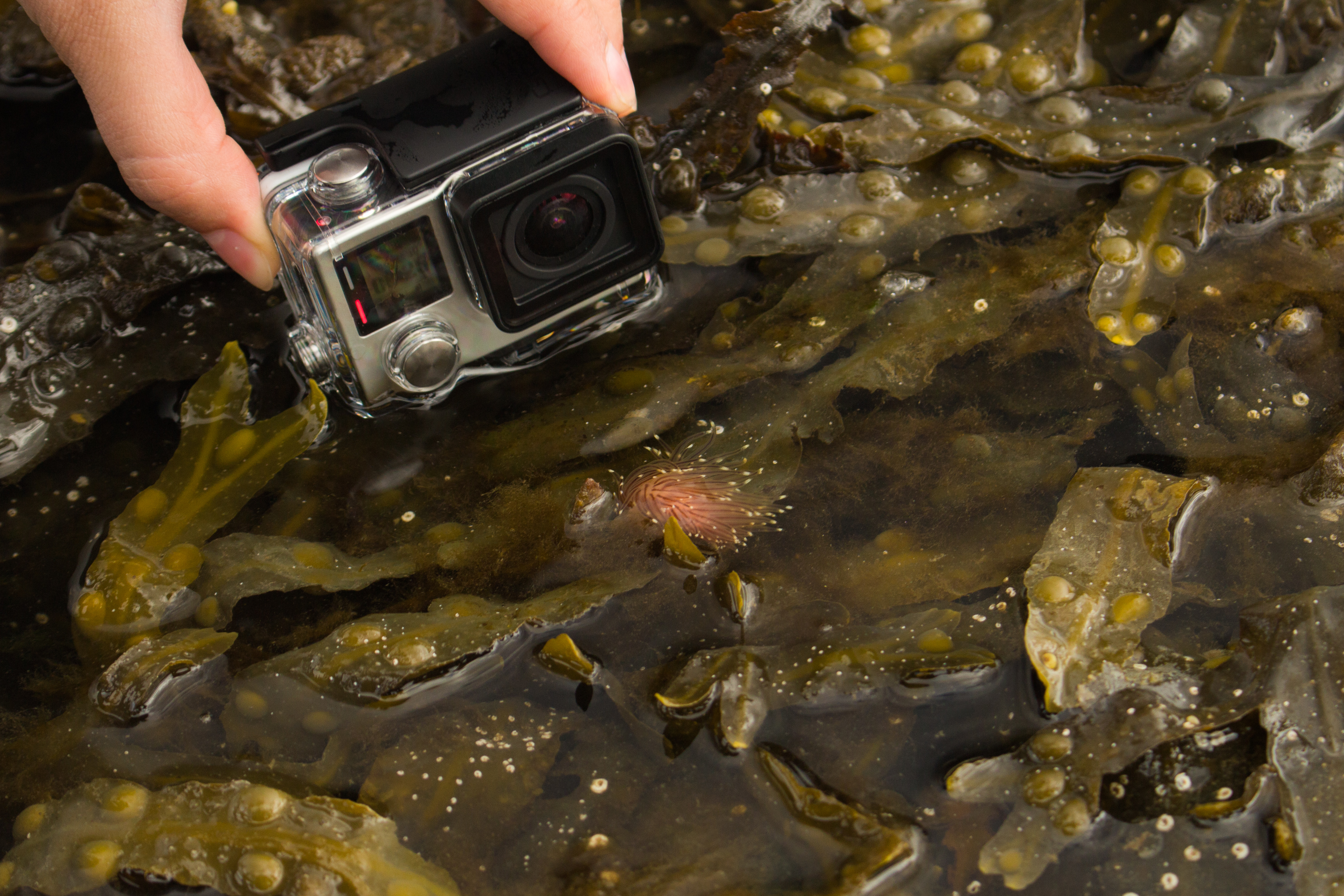
A species in the mollusc family, specifically Nudibranchia

IMG_6228
A whelk feeding on a crab carcass

IMG_6237

IMG_6245
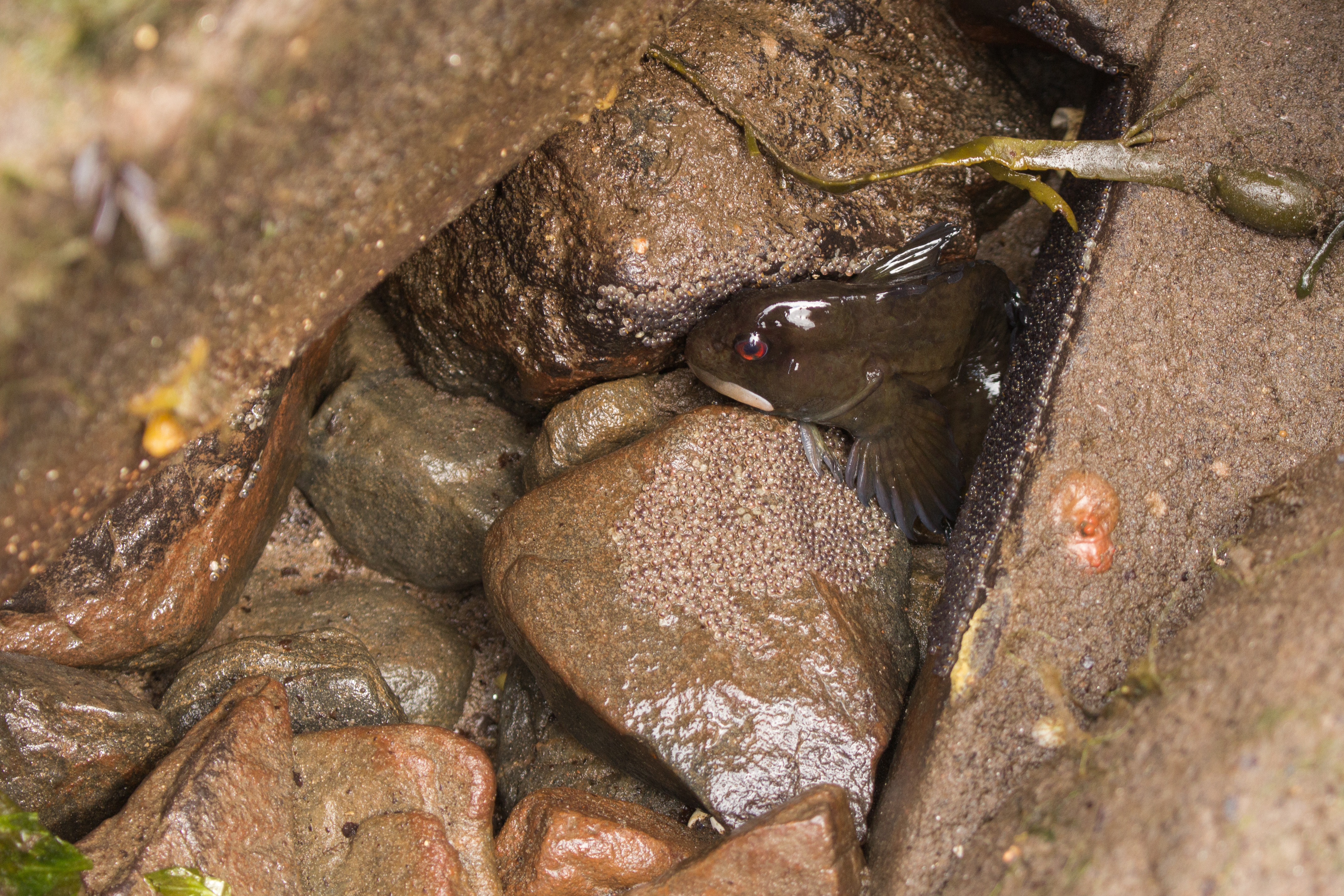
A common blenny with eggs

Later, once the sun had finally set, we headed out to see if we could pick up any bat calls on the detector. We could determine the species by what frequency their call was recorded at. After only a short walk the detector picked up a series of clicking calls at 45Hz, and sure enough a tiny black bullet shot through the night, leathery wings beating the air. Once we’d consulted the identification key we discovered that the common pipistrelle was picked up at 45Hz, so concluded that this was the bat we’d found.

We wandered on and picked up another common pipistrelle further down the path, then suddenly Verity noticed a flash of white above and we all celebrated in hushed tones as the barn owl swept over our heads. By now it was late so we headed back to the house, pleased we’d got the opportunity to use such great tracking equipment.