The Blues Brothers

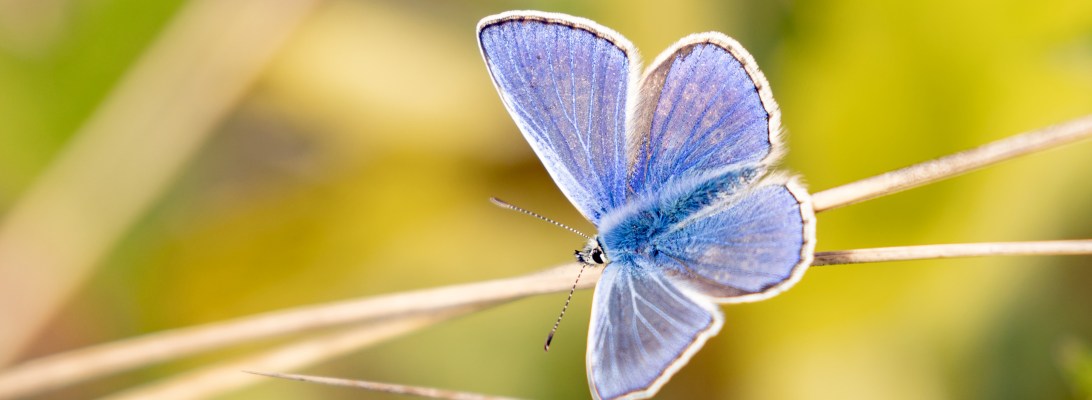
During the recent heatwave I went off in search of one of my favourite butterflies: the Common Blue. I found one but it only settled for a moment before flickering off, and I was too drained by the heat to hunt for it. I returned to the same spot this week in much cooler temperatures, hoping this meant the butterflies would be more lethargic.

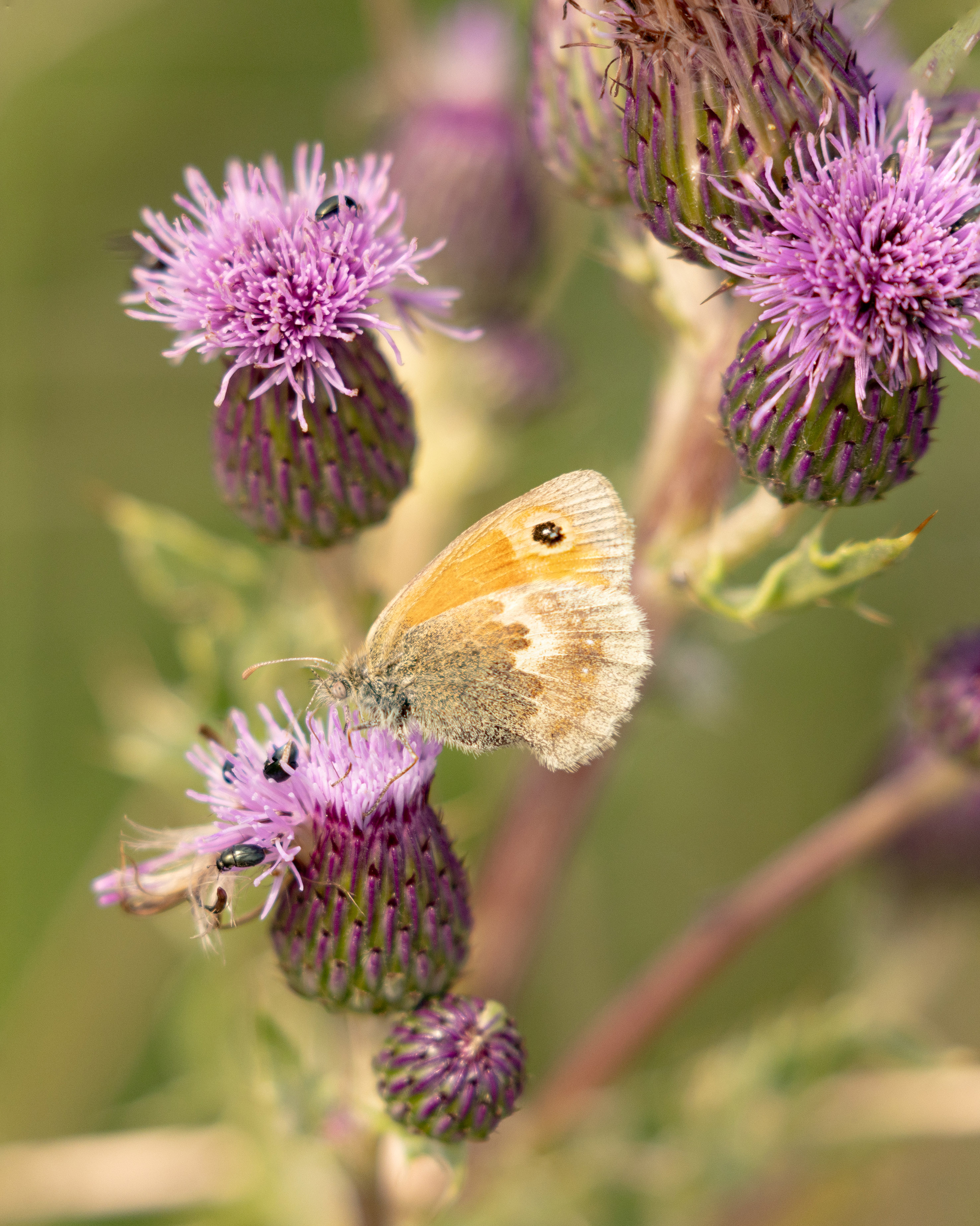
Meadow Brown
Small Heath

Almost straight away I crossed paths with half a dozen Meadow Browns and Small Heaths, which was a reassuring start. I spent an hour photographing them on various perches, but as the morning wore on I began to wonder when (or if) the Blues would make an appearance.

As so often happens, I was just nibbling my elevenses when I passed a clump of valerian growing out of the long grass, and perched on its white flowers were two male Common Blues.

I had my usual response: excitement at finding what I’d come to see and panic that they’d fly before I could get photo evidence. Luckily the morning was still cool, so they stayed put as I crawled around the valerian stalk and photographed them from every angle.
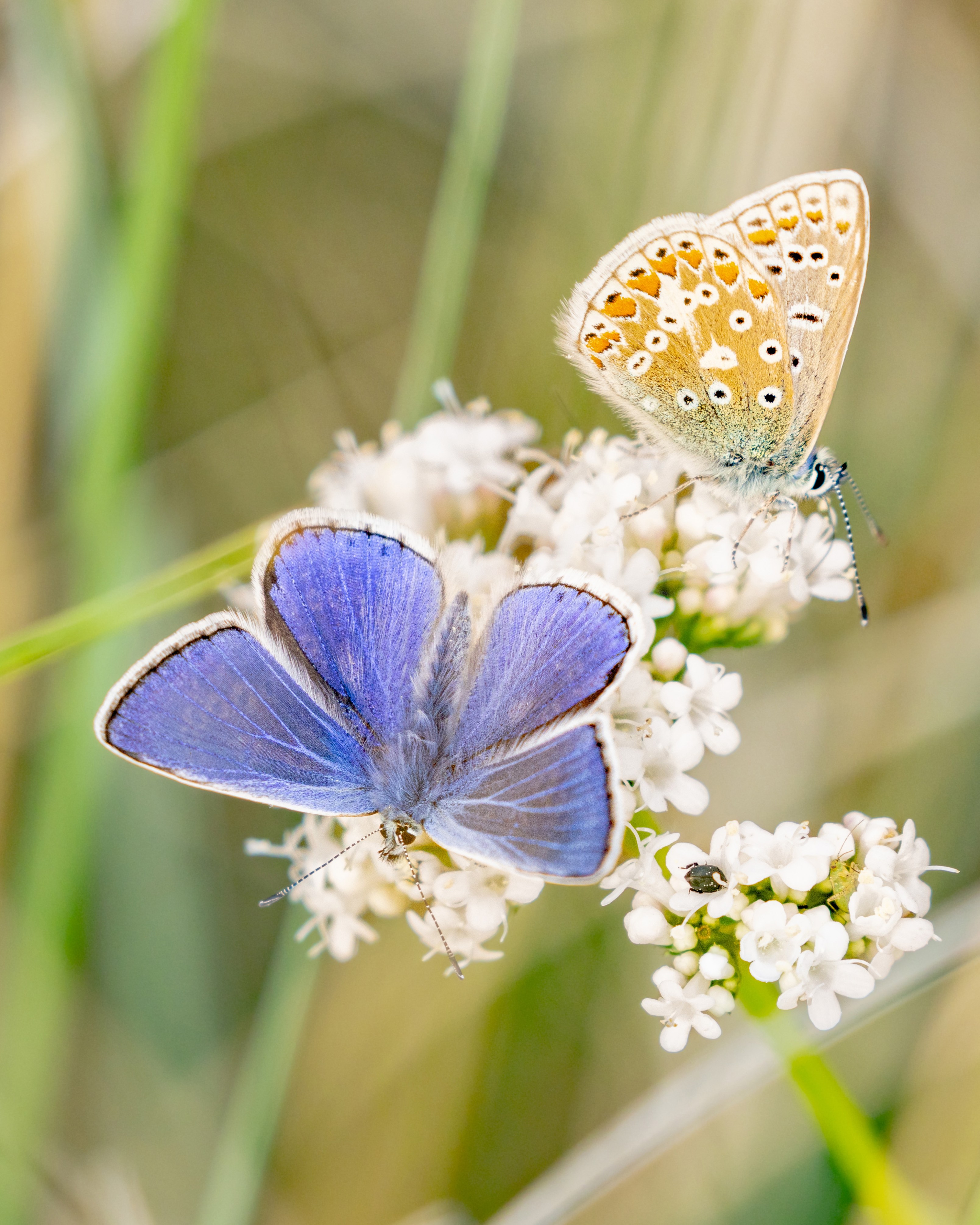
They’d initially had their wings closed, showing a row of orange flecks above a shimmery blue base. As they moved around the petals, their wings slowly opened, revealing upper wings so shockingly blue I couldn’t help a little dramatic gasp escaping. How can something be so tiny yet so magnificent?!

Of course, we have plenty of brightly coloured wildlife in Britain, but I can’t help thinking these azure beauties look like they’ve wandered across the Atlantic from sticky South American jungles.

I didn’t know where these two had suddenly emerged from, but after they lifted from the valerian I easily kept track of their sapphire wings as they fluttered along the dune path.  

As the sun climbed higher and broke through the clouds, the Blues Brothers gained more energy and were soon zipping around quicker than I could follow. I decided to bow out and head home, delighted with the morning’s catch.  
Review: ‘The Stranding’

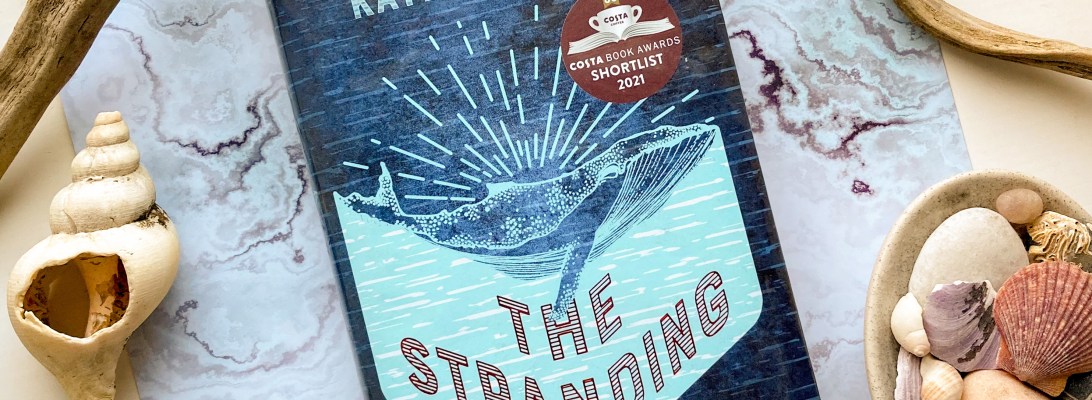
We’re told not to judge a book by its cover but we all do it, at least in the literal sense. Why else is Waterstones full of vibrant, juicy covers begging to be picked up and admired? So, when I saw a whale on the front of this book, it enticed me enough to read the blurb. And what a hook: “Far from home and with no real hope of survival, Ruth finds herself climbing into the mouth of a beached whale alongside a stranger.” Without wanting to sound like a T-Bird, tell me more.

Ruth’s life has become a hamster wheel of alcohol, bed hopping and a sense of something missing. When her latest relationship becomes claustrophobic, she decides to break the monotonous cycle she’s found herself in and travel to New Zealand. Here she hopes to fulfil a childhood dream of working with whales, but apocalypse strikes as soon as she arrives – don’t you hate it when well-laid plans get disrupted? Together with a stranger she meets on the beach, Ruth climbs into the mouth of a beached whale just before the blast hits. This saves her life, but now she has to figure out how to continue living.

This is only half the book, though. Alternating between chapters set in post-apocalyptic New Zealand are fragments of Ruth’s old life and the events that led to her trip. Somehow, there were close parallels between a dystopian world and the everyday routine of a young woman living in London, made sharper by the interwoven timelines. Like all good protagonists, Ruth has many flaws, and this makes her feel real. She makes human mistakes, and despite also building a shelter from whale ribs and making clothes from dried deer hides, her story resonates.

For me, part of this connection came from the book’s setting. I’ve never been to New Zealand, but “the breeze from across the water” and pulling “the salt-stiffened collar of the fleece towards her ears” were familiar sensations. Rather than obvious seaside description, Kate Sawyer uses thoughtful observations of a coastal landscape that essentially apply to any sandy beach in the world. Although my life in England wasn’t nearly so troubled as Ruth’s, I know exactly how being pulled somewhere feels; in her case it was to the whales she’d studied as a child in London’s Natural History Museum. The wonder of that place is something I can definitely relate to.   

Dystopian stories have never interested me much, but I loved The Stranding because it was so much more than that. In fact, the apocalypse element was a back-seat theme for me. I felt that the backbone of the story was a woman’s pursuit of happiness and finding the courage to break a cycle and start a better life. And in Ruth’s case, it’s a life she could never have predicted.


YOU MAY ALSO LIKE

Review: ‘If Women Rose Rooted’

Mindful Creative Retreat – Day 2

Day one of the Mindful Creative Retreat was a huge success and I was looking forward to kicking off day two with my own writing workshop. We met outside Roseisle Forest in Burghead and spent the morning wandering along winding trails within the 1700 acre Scots pine woodland. It was a boiling hot day so we kept to the shade beneath the trees.

For me, good nature writing uses all the senses. Although describing sights is the most obvious, incorporating sounds, smells and textures really brings a piece to life. I encouraged everyone to look down as well as up, noticing the way the sun shines on spiderwebs and pinecones scuff underfoot.

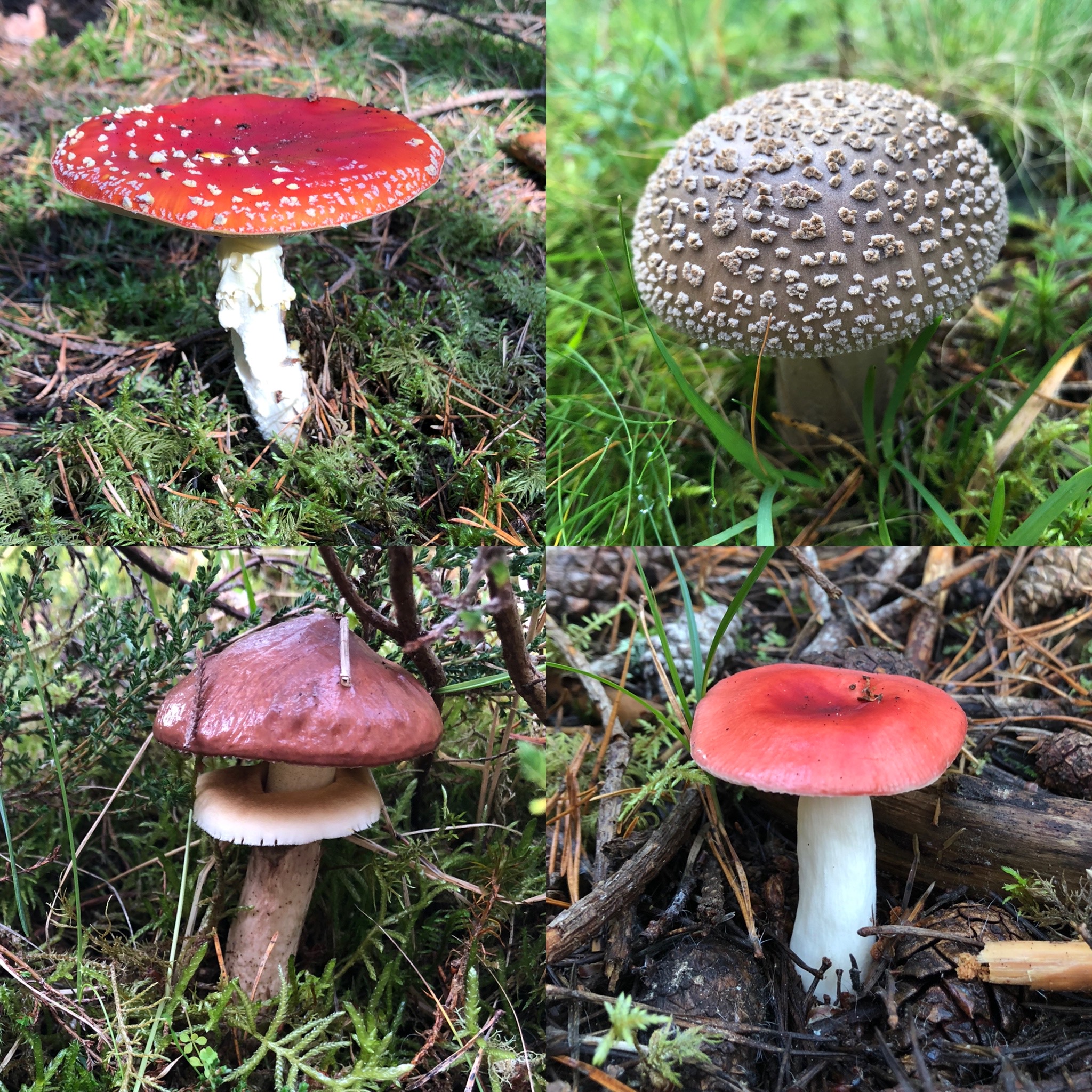
I was pleased to see the fungi in Roseisle was already abundant – a welcome reminder that autumn is nearly here. Beside every tree was a fungus of some sort, varying widely in colour, size and shape. We spent a lot of the morning crawling around on the ground getting photos!

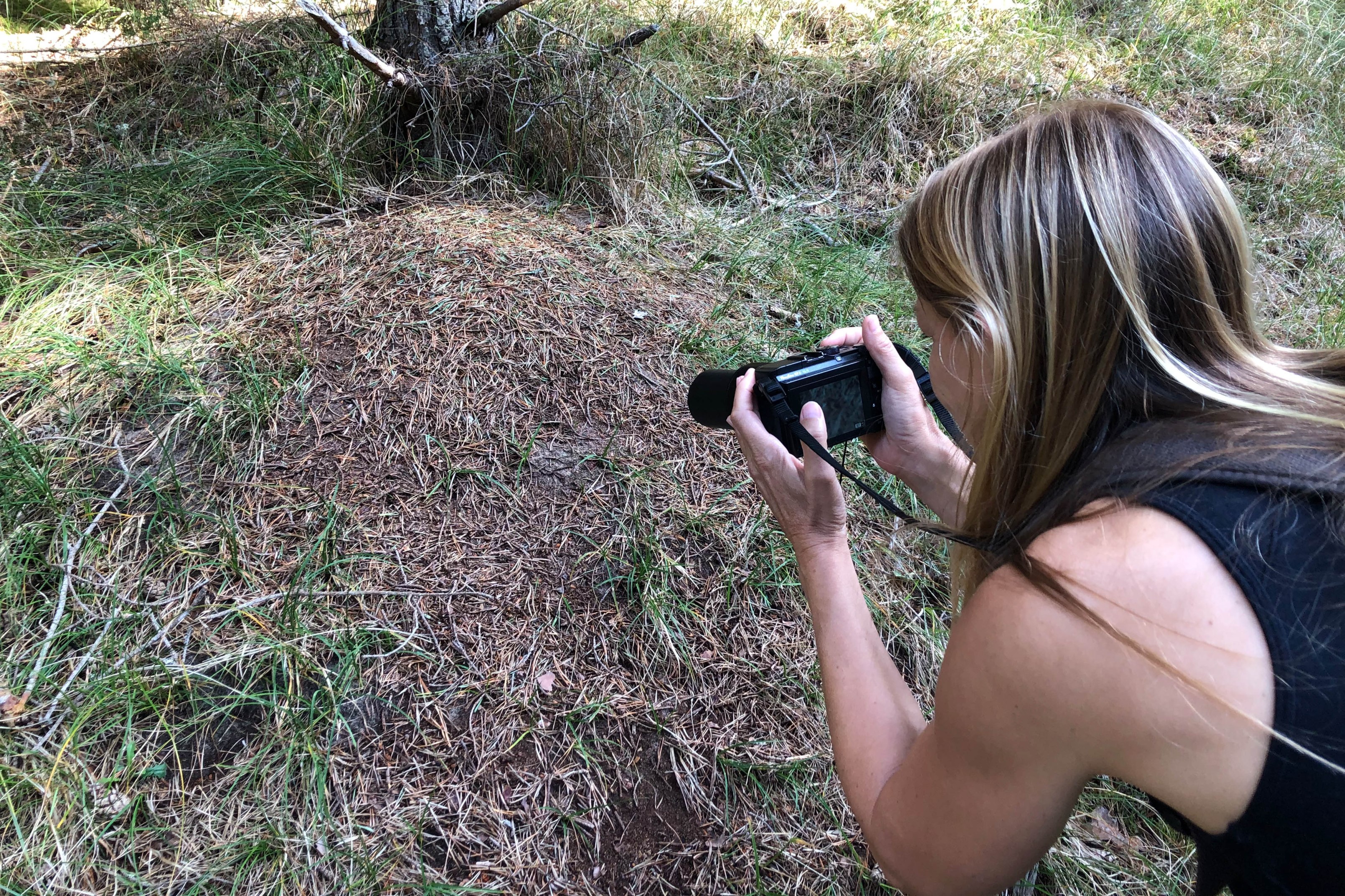
Photo: Kim Grant

As well as fungi, we found a small wood ant nest right by the path. These red and black insects play an important role in the forest ecosystem, helping with seed dispersal, hunting damaging pests and acting as a food source for badgers and pine martens. Wood ants also provide a parasite removal service for birds, which deliberately scratch the surface of the nest to encourage the ants to spray their feathers with formic acid. This kills the birds’ parasites!

Wood ant nest

By midday the sun was scorching so we headed to the beach for a paddle. After cooling down, we sat on the sand to write about the morning’s discoveries.


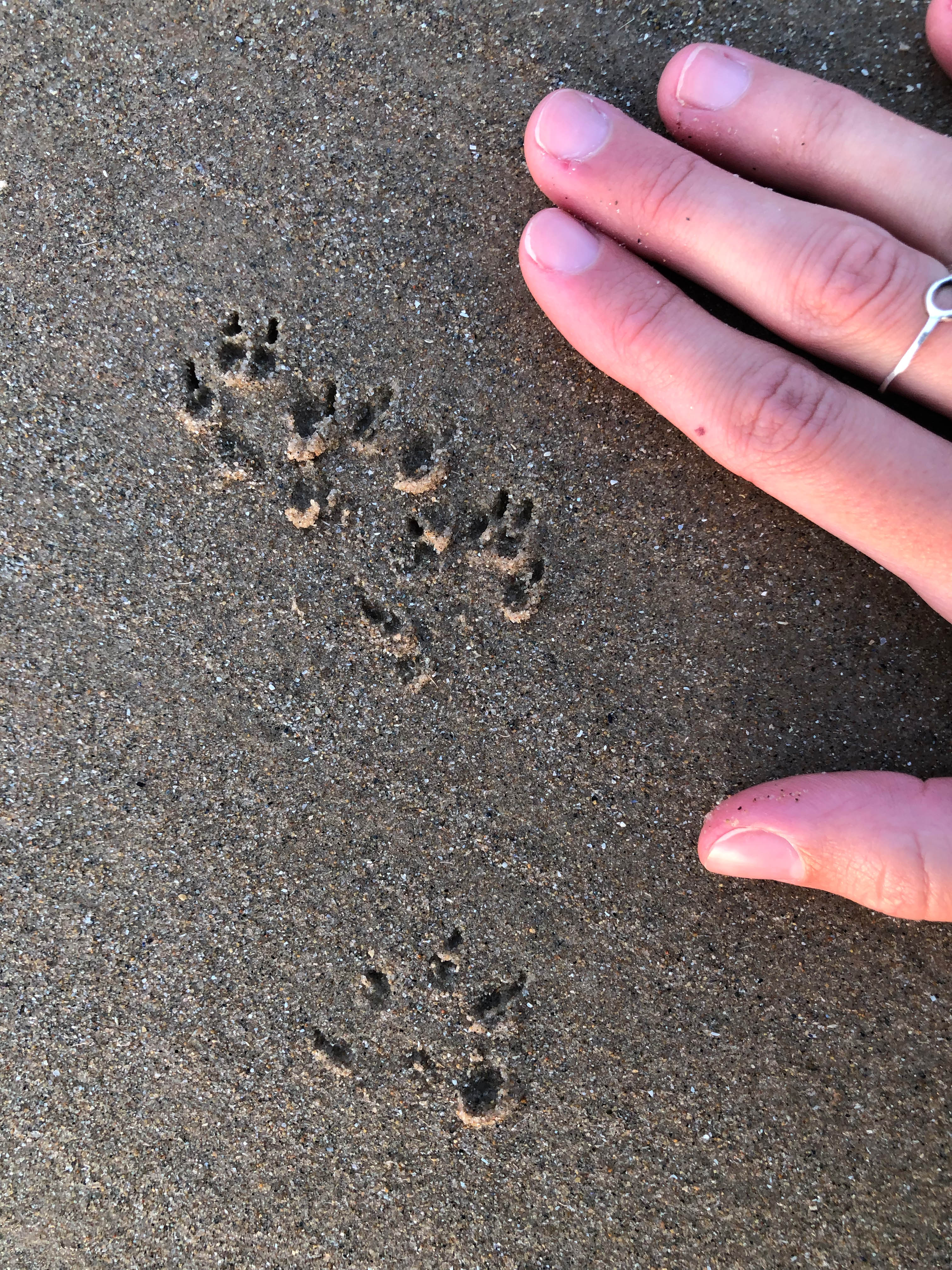
By evening the temperature had cooled and we met up in Hopeman for a walk along the coast. We were lucky enough to have another gorgeous sunset, which lit up the beach and turned the cliffs to gold. There were plenty of juicy blackberries to be plucked and we stopped for a rest in a sheltered cove. Here we enjoyed some rock pooling and I found some tracks in the sand. They were too big for rats so I guessed mink, which I’ve occasionally seen darting over the rocks.

We explored the cove until 9pm when the sun eventually set. Golden colours blended to corals and crimsons and we watched the exact moment the sun disappeared beyond the horizon. Jen commented that it was a special thing to witness because it was a rare occasion you could see the earth turning.

And so we reached the end of another full-on but rewarding day on the retreat. The third and final day featured even more creativity and mindfulness. Coming soon!

Harbour Happenings

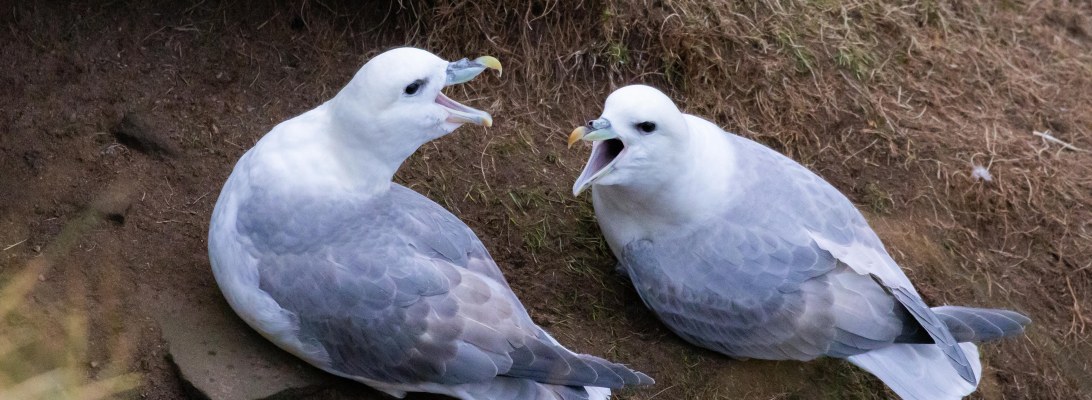
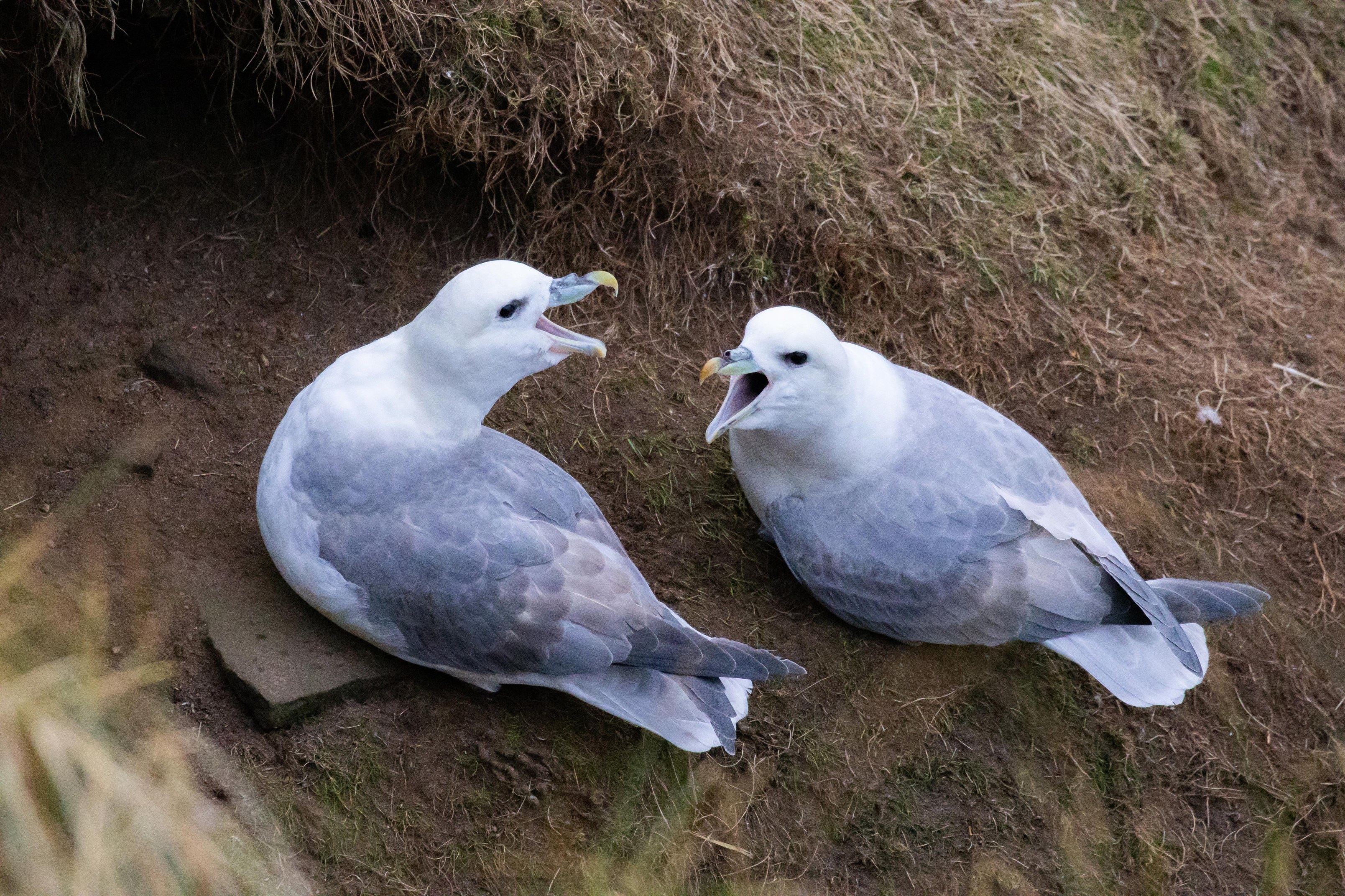
Last week on one of my many coastal walks I glanced down to see a pair of fulmars perched on an earthy shelf on the headland. Fulmars are one of my favourite seabirds so I was delighted that there was a possible mating pair setting up shop on my daily walking route. They were cackling to each other and looking like adorable mini albatrosses. I got a couple of shots but the light was fading so I decided to return when I had a little more sun.

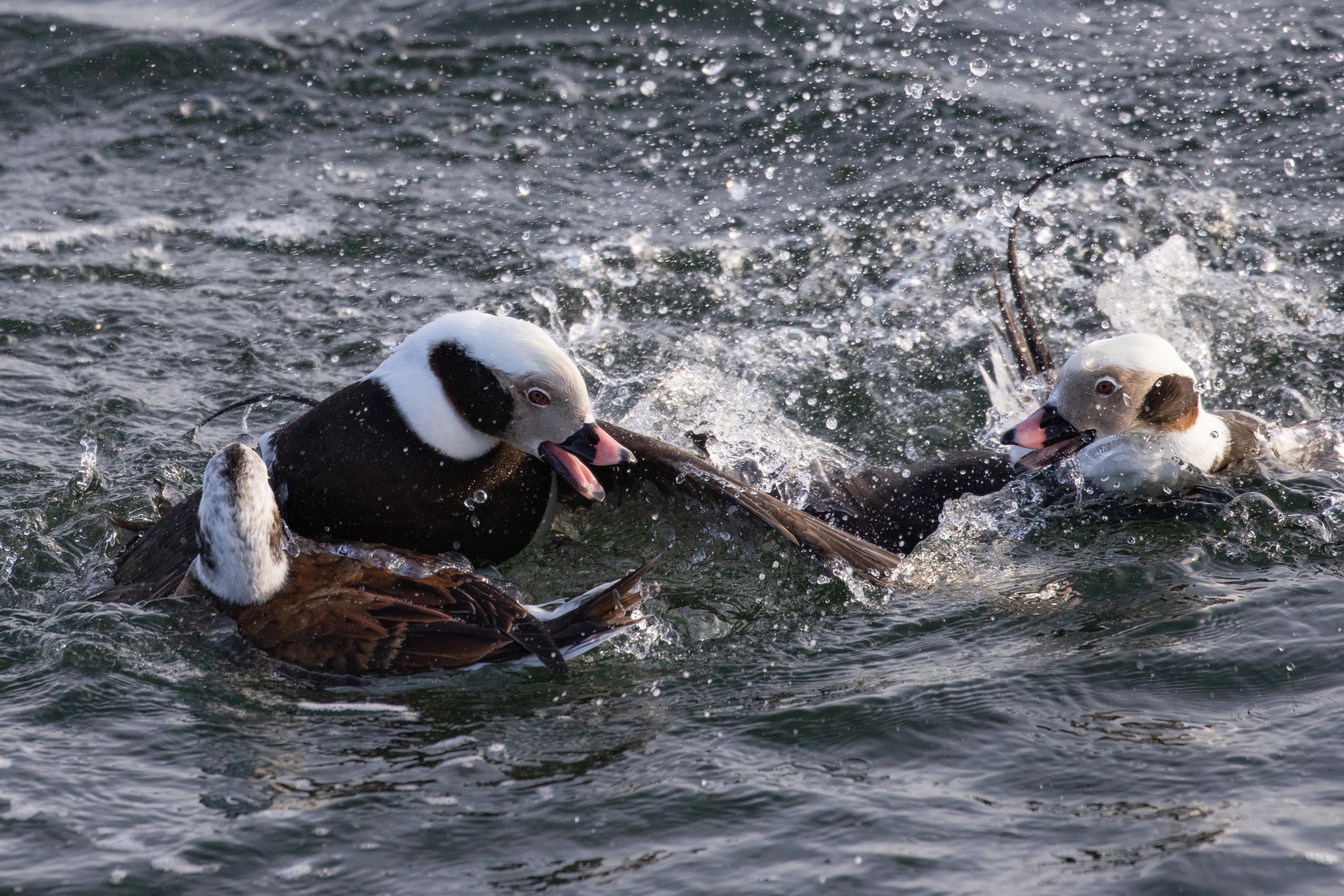
The next day I wandered back to the spot but they were gone, perhaps on a fishing trip or maybe they’d decided on another nesting spot. Not wanting to waste the trip out, I scanned the water for dolphins and birds. Just at the mouth of the harbour was a group of dots too small for herring gulls. On closer inspection through the binos I discovered they were long tailed ducks – another favourite of mine!

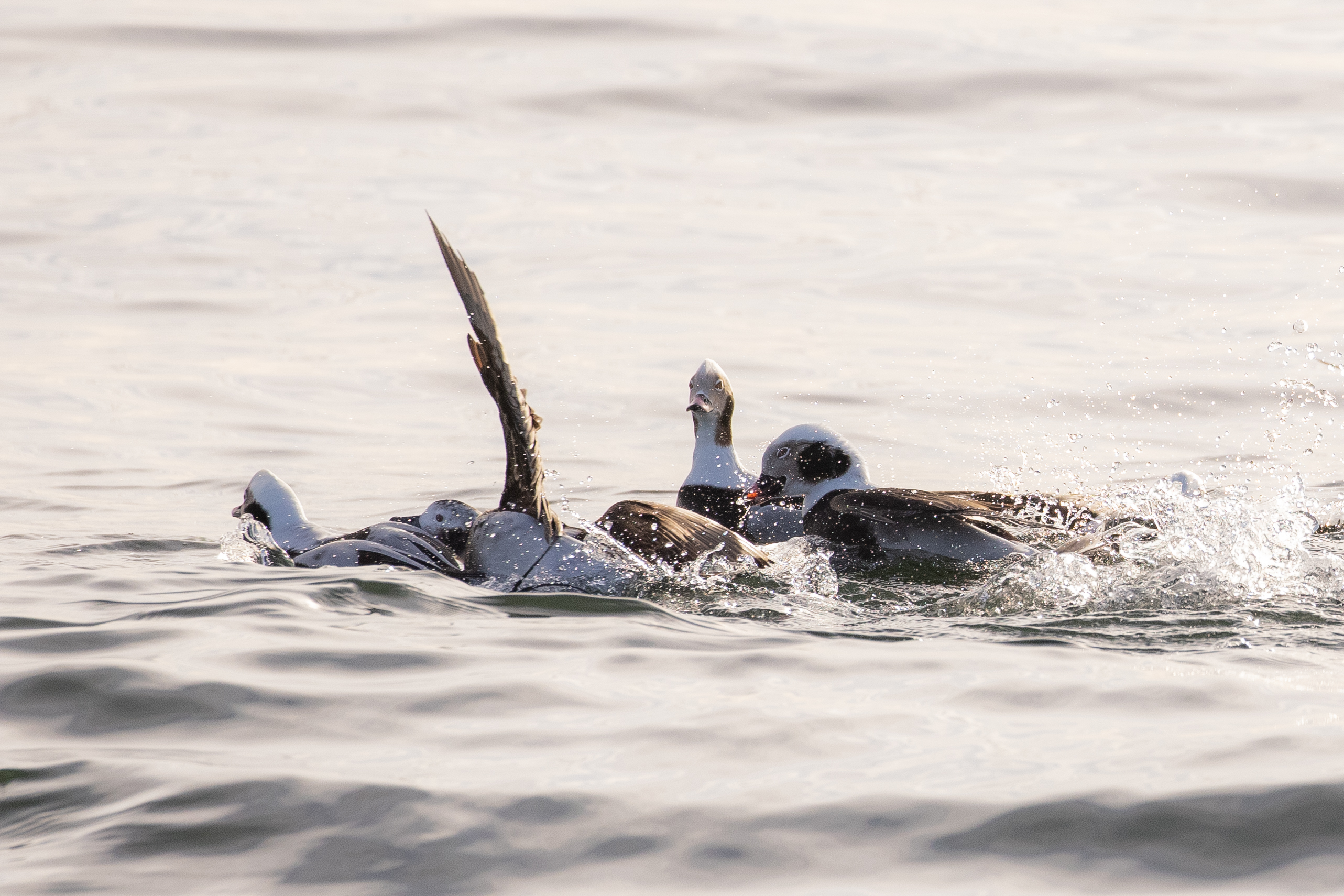
I hurried down from the headland and made a hasty loop around the harbour, peeping over the wall to see where they’d got to. I’d never seen more than a pair together before, and now I was out of the wind I realised they were making an absolute racket! There was a single female among all the males and she was flapping her wings and whipping the males into a frenzy. All the while a constant stream of three-note quack calls overlapped each other as the males jostled and squabbled around this one female.   

The long tailed ducks near me are usually shy little cuties, but today there really was something in the water. By the looks of the female’s upturned bill and the twinkle in her eye it seemed as though she was egging the boys on! Well, we all need to let our hair down every now and then, and at least the long tails are allowed to have a party right now…

Elsewhere in the harbour there was more activity. Up until very recently the only redshanks I’d seen were far out and nearly impossible to photograph without the risk of breaking my leg on the slippy rocks – something I actually saw happen last year! I noticed a gathering of both redshanks and turnstones hanging out on top of the sea wall. Knowing they could be skittish, I stayed still and watched.

After a while another redshank popped up from behind the wall, surprising both me and the gang already stood on the edge. There was a great flurry of wings and I had the camera pointed at just the right spot to capture the near collision!

My intention had been to look for fulmars and I’d nearly headed in the other direction to walk further along the coast path, but after such a dramatic (and noisy) display I was relieved I’d stayed where I was! I love those surprises in nature.