

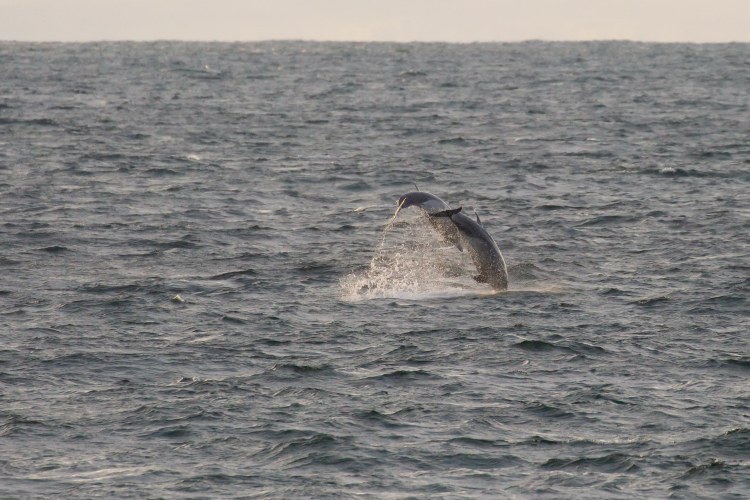
I had just finished dinner after a fairly uneventful day when I received a tip off from Steve – wildlife photographer, skipper and all-round marine mammal wizard – who told me there were bottlenoses on the way. I jumped into a down jacket and grabbed my camera. Luckily my daily walk can include a long stretch of rocky shoreline, which is infamous for its wildlife including the Moray Firth dolphins. Half a minute later I was slammed by an unexpected wind and I regretted not grabbing a hat on my way out. Although, I wasn’t sure how fast the dolphins were going and another half minute could be the make or break.
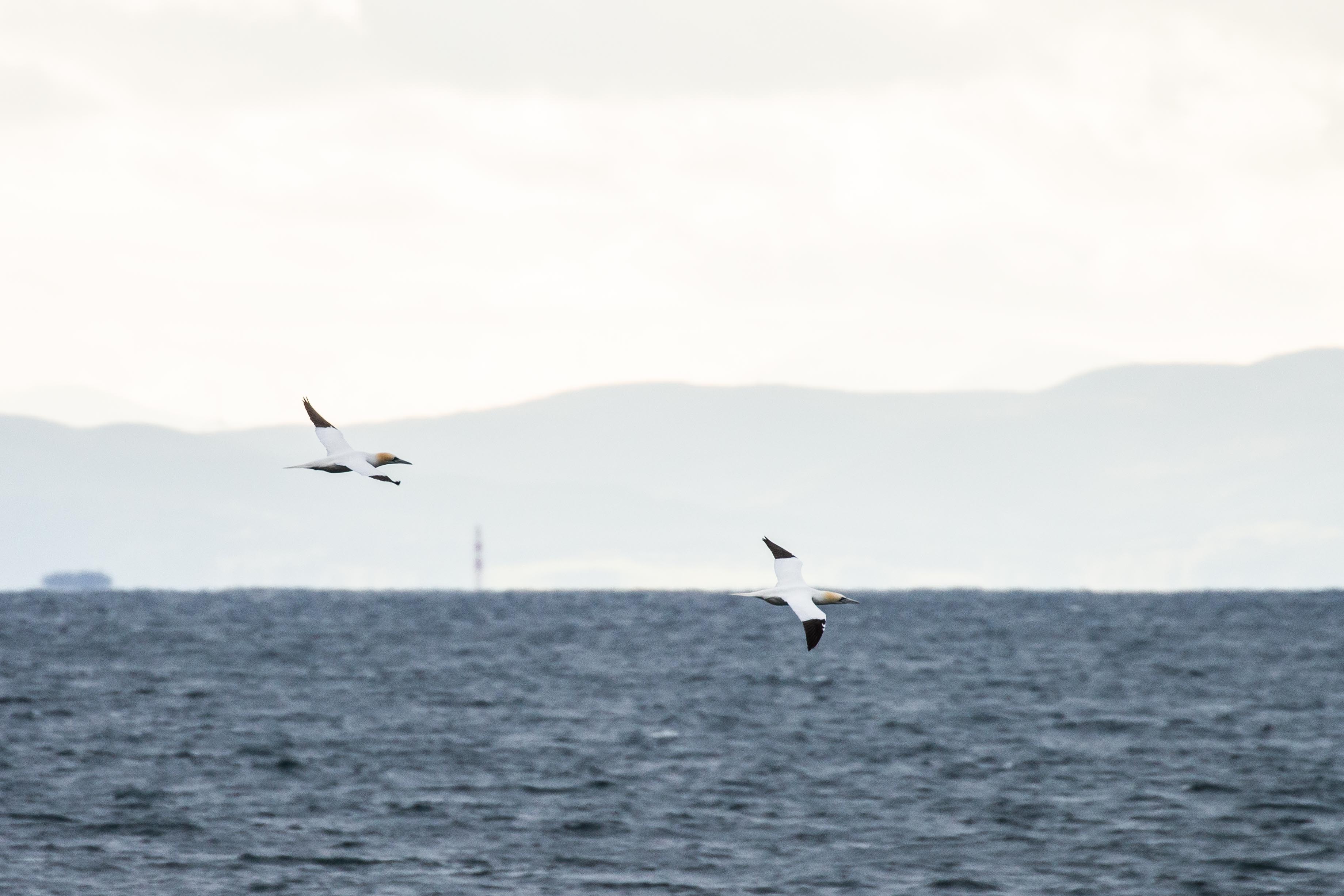
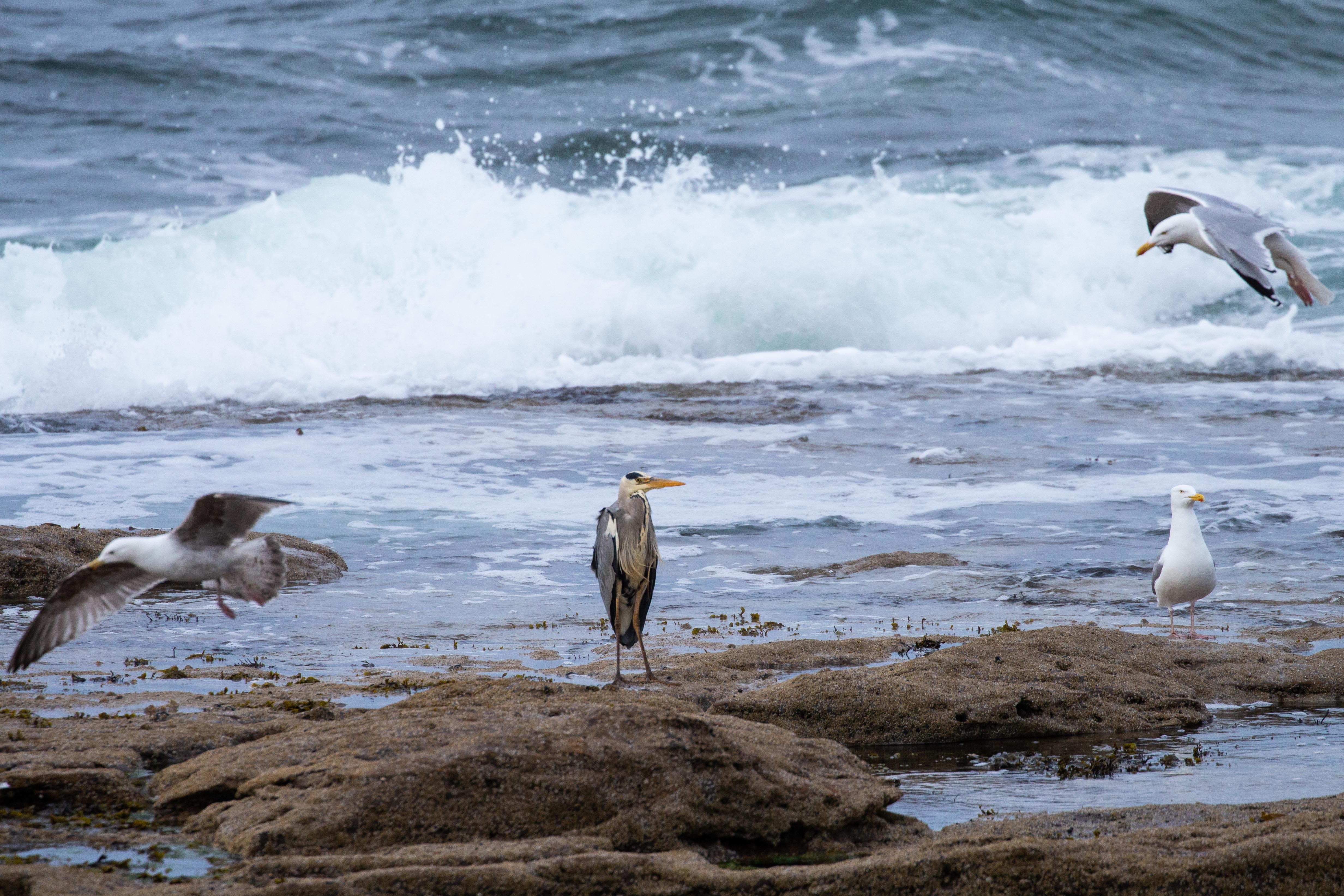
Keeping my two metre distance from Steve, we started scanning the water. He spied them far out, almost level with the next town, but we stayed put. If they didn’t turn north and swim further away, they would follow the coast and come straight past us. There was still lots to photograph while we waited. Groups of gannets – easily one of my favourite birds – were diving just offshore and a grey heron was settled hunch-shouldered on the rocks, surrounded by the usual mob of herring gulls and oystercatchers.
Suddenly the dolphins appeared again, much closer this time. They began to breach, leaping one, two or even three at a time. Photographing them felt a bit like playing Whack-a-mole – just when I thought I’d caught one, it had already landed with a splash and another had sprung up somewhere else. Once, two jumped together in perfect synchronicity, and no sooner had they landed than another pair took their place in the air. As so often happens, I was trying so hard to get the shot that I occasionally missed some of the action. But, when animals bigger than most grown humans are flinging themselves out of the water and performing acrobatic stunts, it’s almost impossible not to lift the camera and watch through the viewfinder. I find there’s nothing more enjoyable about wildlife photography than the unpredictability.
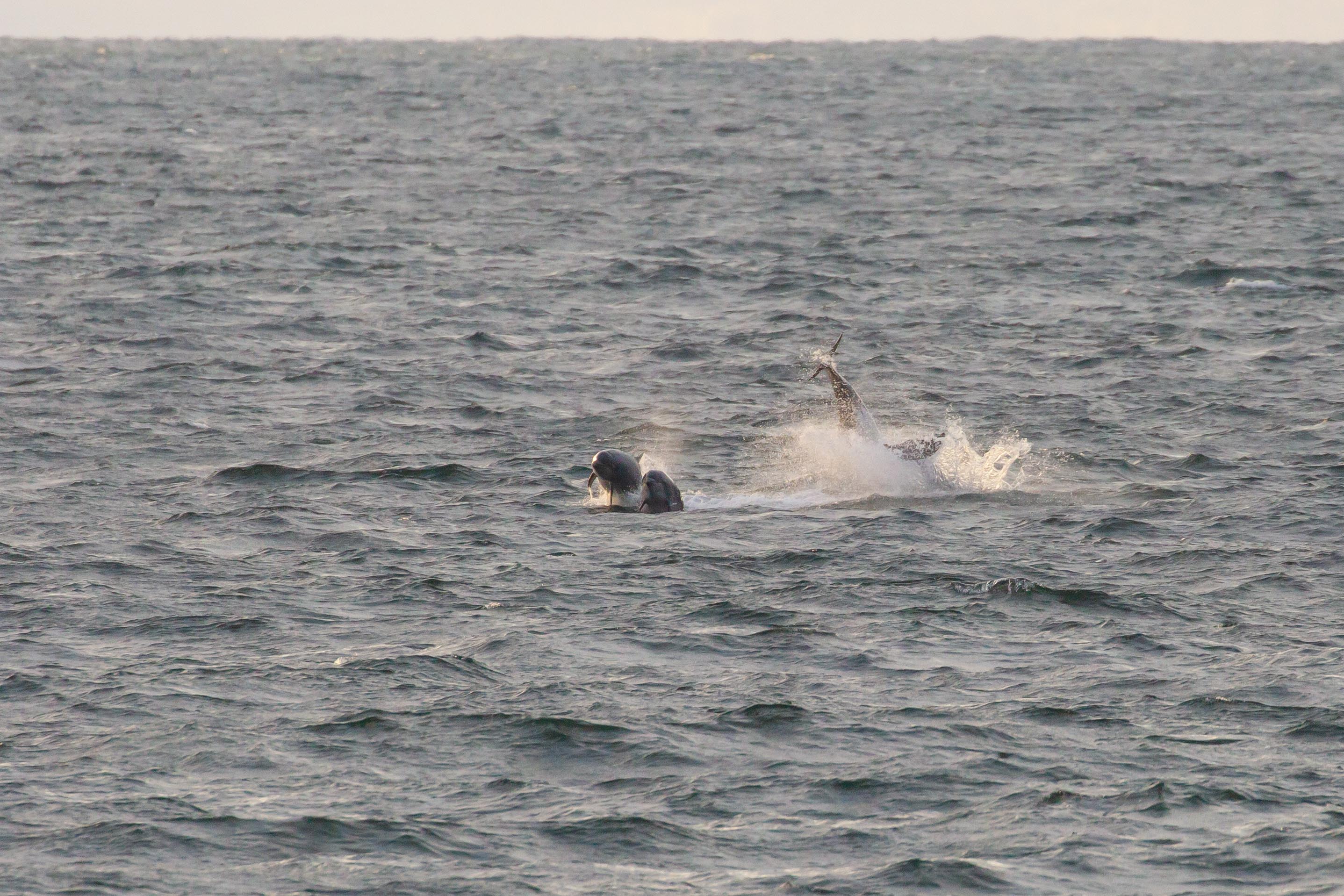
The cold was nibbling my face but there was no way I’d go home for my hat now. Dolphins were jumping in multiple directions, and all of them heading towards the sunset. We hiked up to the headland for a higher vantage point. As the dolphins got closer to the sun, the water streaming from their bellies mid-leap turned golden. Even with the naked eye you could spot them between waves from the clouds of shimmery spray erupting from their blow holes. Every so often there’d be a breach, but they were gradually heading further out. Still, Steve had never known them to linger for so long in one place. I was pleased not just to watch them but to know there was plenty of food to keep them there.
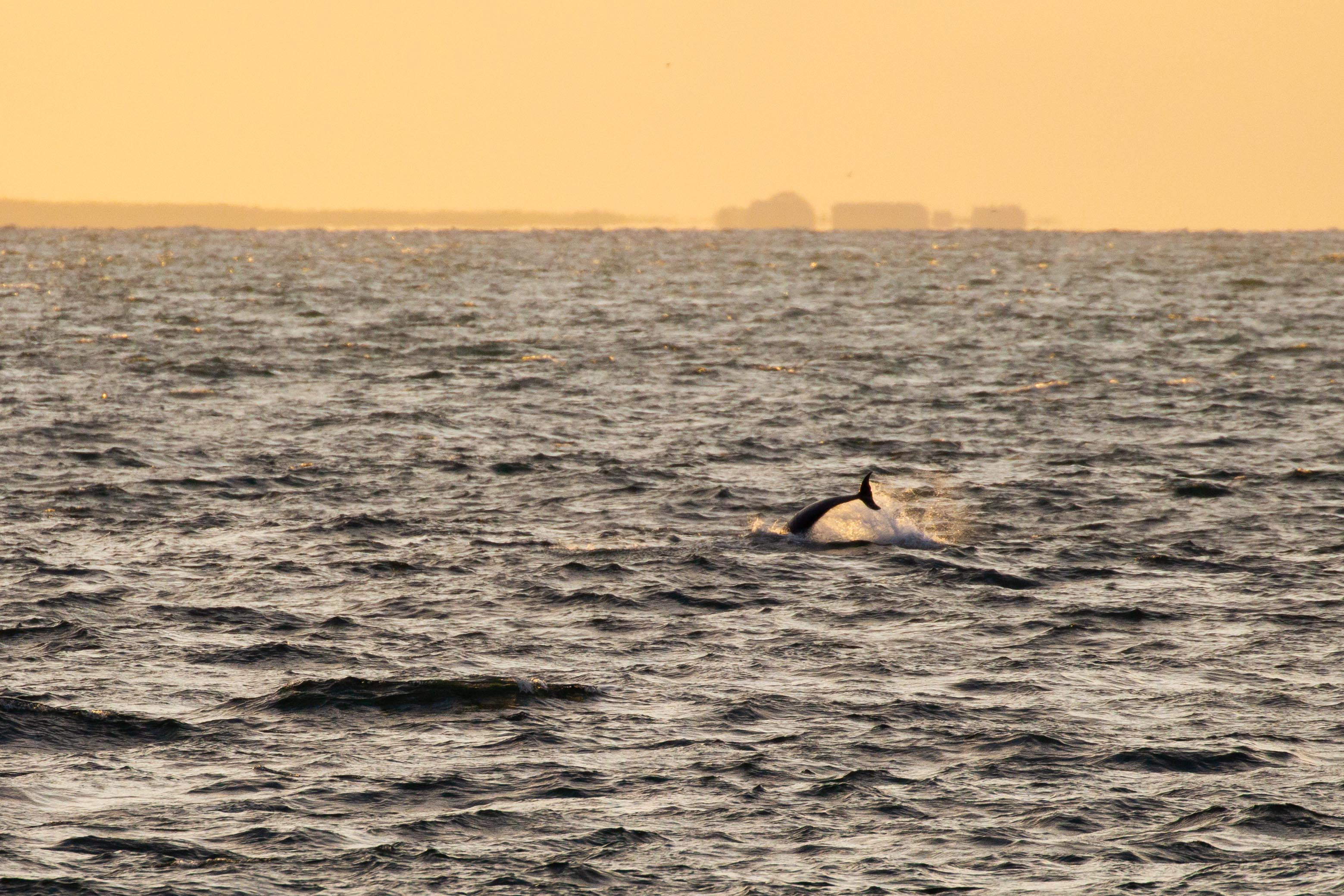
The sun finally set, casting a bright orange glow over the water. It was moments like that when I knew I’d made the right decision to move to Scotland. Sitting on the grass, shivering in the cold and watching dolphins breaching out at sea.


 rebeccaonthewing.com