The Freeze

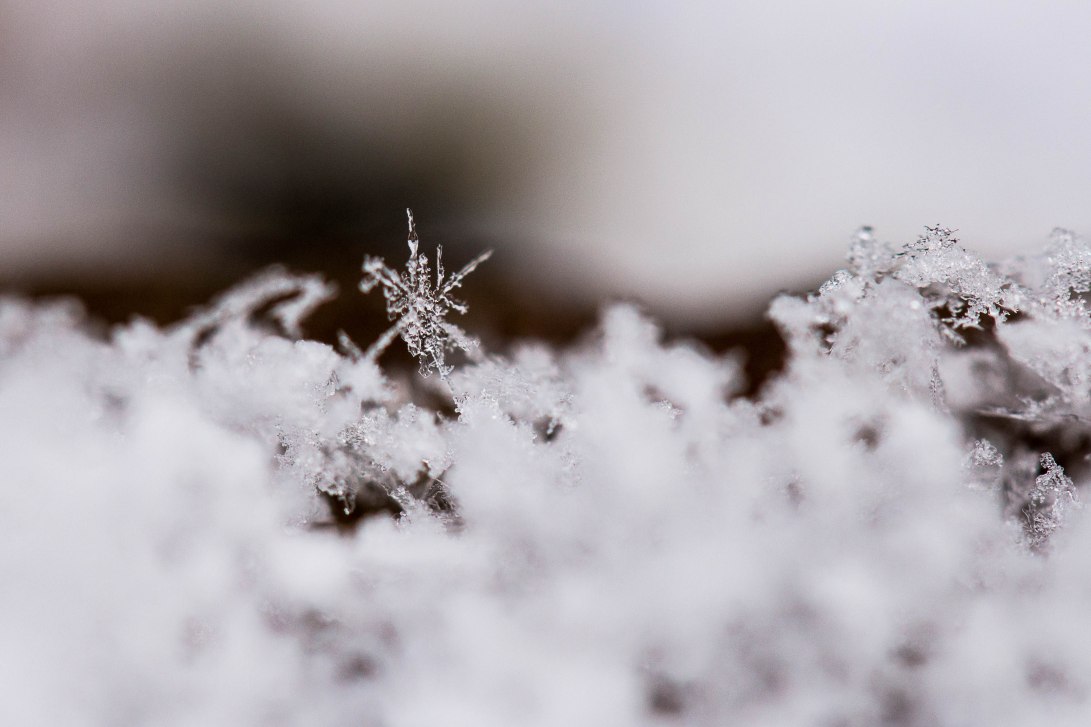
The snow was here again. It descended from the skies in heavy drifts, flakes swirling as they came to rest. All through the night the snow fell, dramatically silent, and when morning came everything was smothered in pristine white icing: irresistible.
IMG_9050

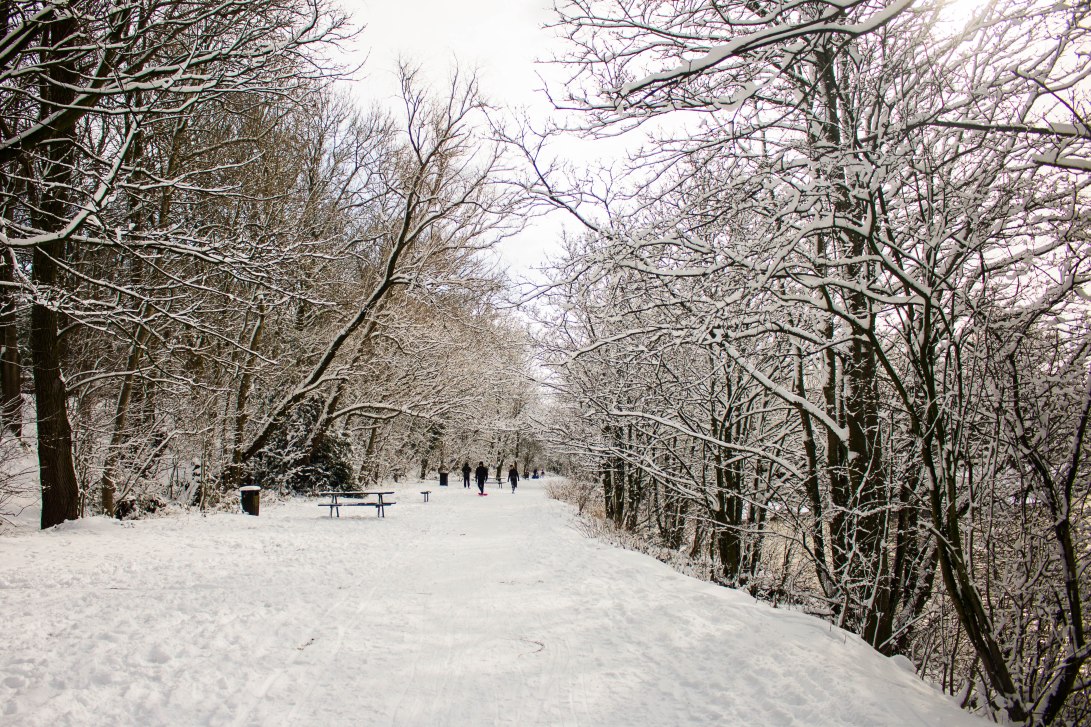
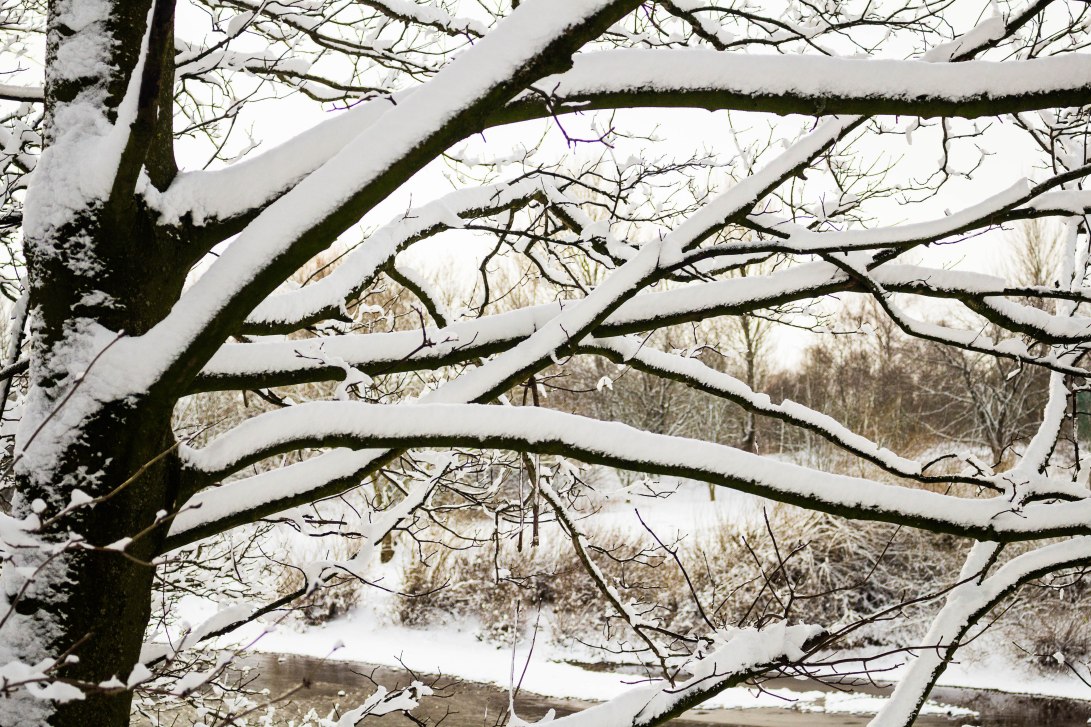
Outside there was a chill that tightened the lungs, so cold was the air that even breathing in felt like getting smothered in snow. Each branch was cloaked, giving the impression of an overly enthusiastic artist splashing every bough with thick white highlights. Undisturbed snow on the sides of the track glistened, catching the light and sparkling with wintery luminescence. On the cusp of March, it was more of a spring wonderland than a winter one, and yet it could have easily been Christmas morning.
IMG_9046

Up in the trees, a whisper of falling snow betrayed the presence of a blackbird, sending tremors up the branch that dislodged loose flakes. A male, black feathers stark against his festive background, spotted with rich red berries and the undersides of dark leaves. He chirruped softly, his song more melancholy than it should be.

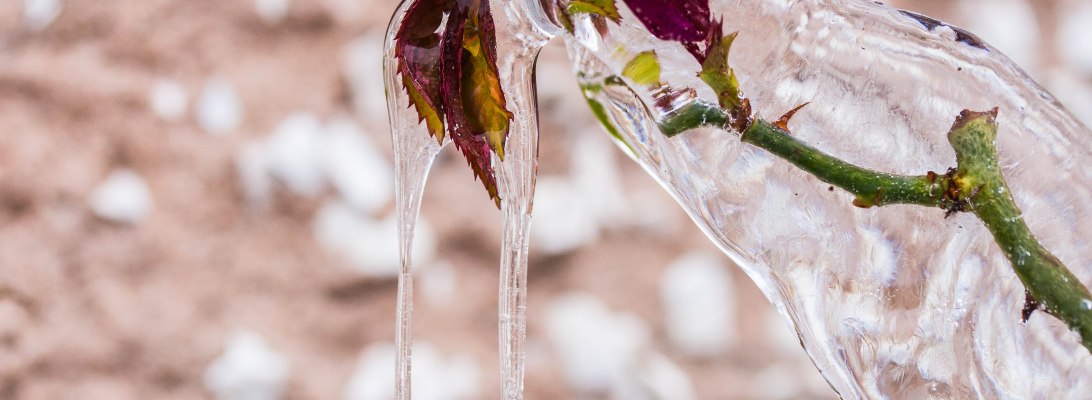
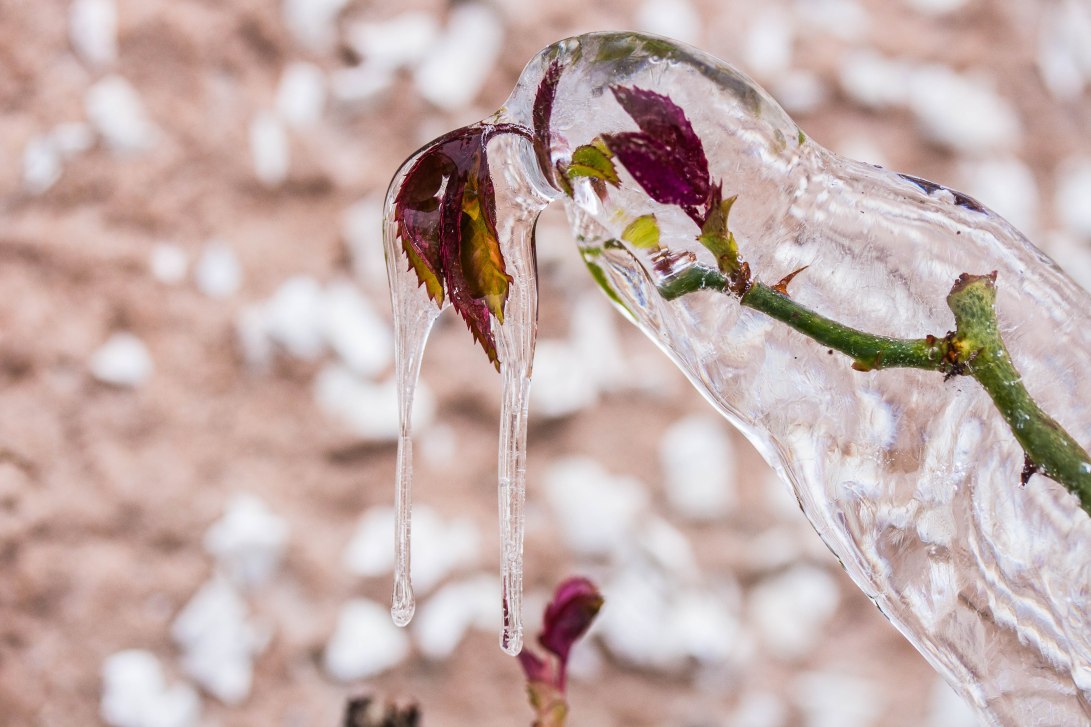
A man passed me on his bicycle, his tyres crackling like static feedback that faded as he disappeared. The landscape quietened again, a deafening silence only found with snow, when the world stops and waits with baited breath for this unexpected phenomenon to pass. It is a time when even nature stands still. Water is stopped in its tracks, defiant of gravity’s pull.
IMG_9063-2

Sloping down the bank to the river was a series of deep tracks, dogs mingled with hopping birds. The ever-falling snow began to repair the damage, forming undulations of half-hidden footsteps with softened edges. A wren sped past, trilling its bold song that seemed too big for its tiny lungs. What must the birds think? Have they anticipated this, read some sign in the climate to help soften the blow? The already challenging task of finding food in winter just became more trying, a test of strength and endurance in such temperatures.
IMG_9012

After a while my feet began to grow numb and my stomach rumbled. As I trudged back up the track, curving away from the coursing, white-framed river, I thought how I would snuggle up in my warm house with something to eat. I glanced back over my shoulder and saw a song thrush foraging. It had a snail pinned in its beak, and was cracking the shell hard on a rock. Such work the birds put in, when all I needed to do was open a can of soup and I’d be warm.

Back at the house, I peered outside and saw the feeder swinging empty again. Thinking of the blackbird, wren and diligent thrush, I hurried into the garden and replenished the feeder with rich fatty seeds, sprinkling some on the ground for those too heavy or timid to feed from the plastic perches. The birds needed all the help they could get.
The Beginnings of Winter

Before I’d even got to the hide there was a chirruping in the bushes and I turned to see a group of juvenile yellowhammers mobbing their parents, hopping between branches for attention. Three birds flew past overhead and I caught the triangular shape of starling wings as they soared over me.

The lake was quiet – a pair of mallards floated in circles on the far side, while mute swans waddled along the bank. Once I was settled inside, they appeared by the feeders, accompanied by the juvenile swans I’d seen last time. The whole family loitered beneath the swinging seed canisters, mopping up anything dropped.

The feeders themselves were a flurry of activity. As usual, the nearby bushes were full of house sparrows, fighting to snatch a mouthful. Blue tits and great tits waited in the queue and I was particularly excited to see a lone greenfinch among the group too; back home in Hertfordshire these birds are becoming scarcer and scarcer.

After watching the birds feed for a while, I wandered on. It was a lot colder than usual – dew covered the grass but it wasn’t quite cold enough to freeze it, though perhaps this may soon be the case on early mornings. There were other signs of winter too; bursts of red berries and a fat robin perched on the fence. Even though these birds are around all year, somehow a day in early winter feels like Christmas is a lot closer when you spot one.

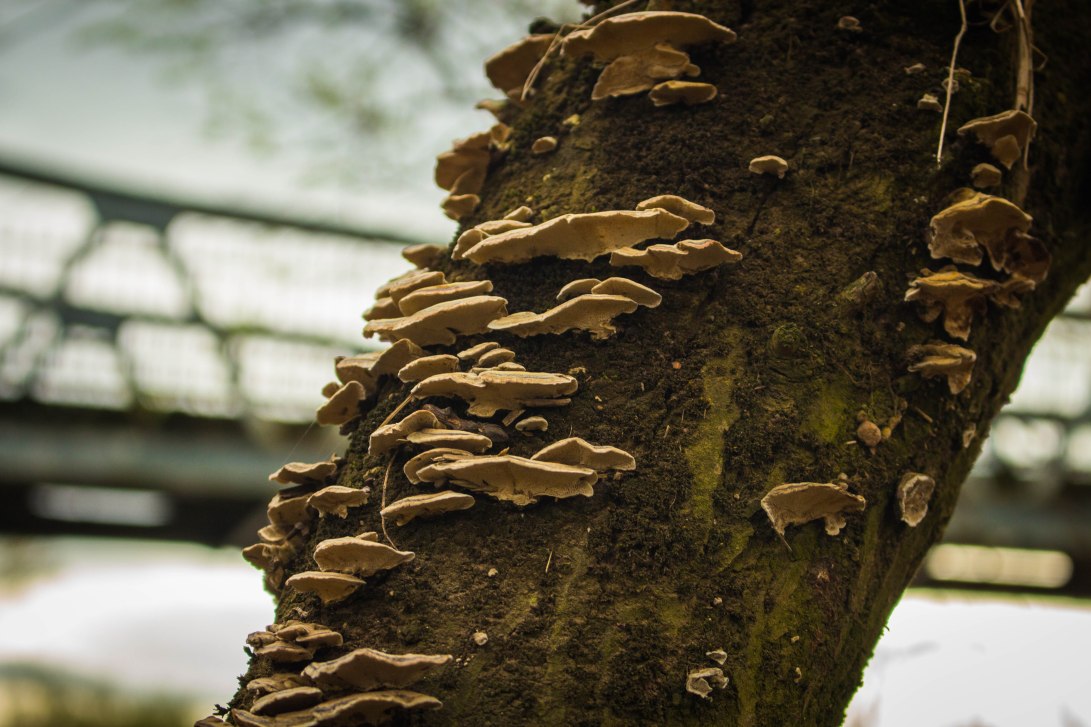
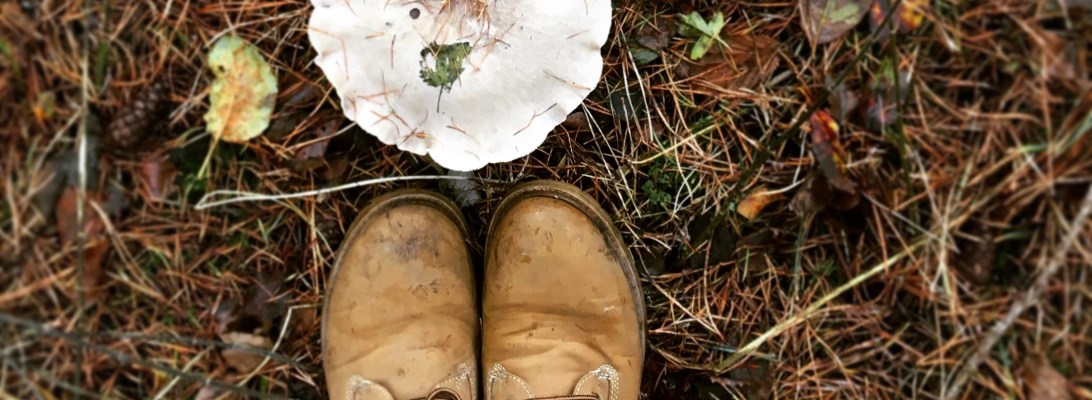
As I made my way to the wood the only sound was the usual “whizz-burr” of the turbines as they swung. There was a break in the clouds and beautiful streaks of sunlight shone through at jaunty angles. The forest was gloomy but still inviting, and as I walked round I scanned both sides of the path to see if any fungi were sprouting up. The ground was boggy in places, and when drops of water fell in the puddles, the reflected trees twitched.

IMG_9019

Suddenly, just as I was looping back round to the gate, a woodpigeon exploded out of the trees and made me jump a mile. Why do pigeons love doing this? It must give them a wicked satisfaction to see me clutch my chest and try to get my breath back to normal.

Once I was back in the open, the chill was even stronger. I wrapped my coat tighter around myself and hurried back to the cafe to warm up.


Exped in Miniature

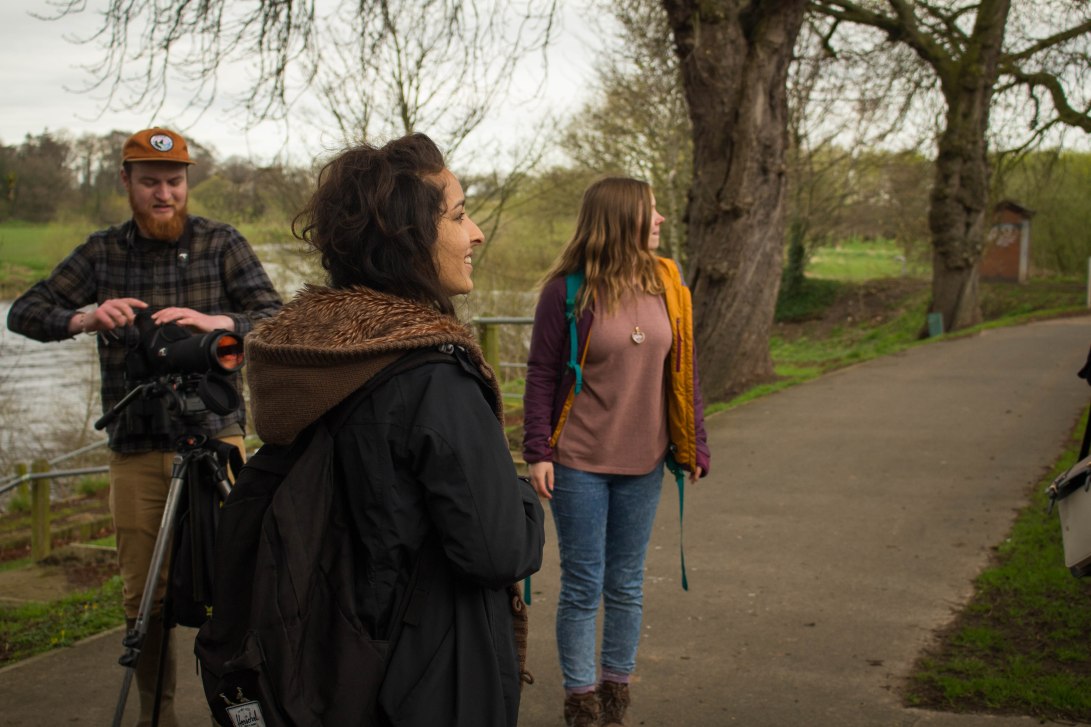
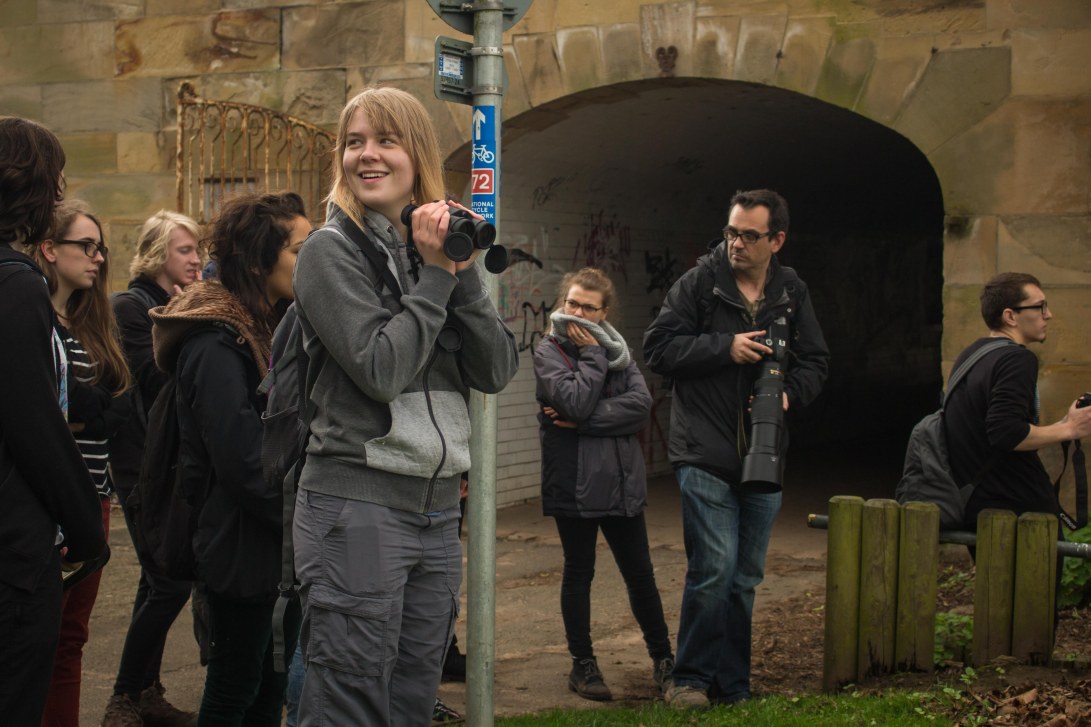
Last week Heather and Cain dropped into uni for a mini exped around the local area. I welcomed any chance to learn more fieldcraft from them and it was also good to spend time with Zoology and other Wildlife Media students – there are fewer and fewer of us wildlies out there so it’s great to meet up every once in a while!

IMG_1587

We began following the river through the park, spotting the first sand martins of the year swooping over the water. A jay darted into the small wooded copse in front of us and cormorants zoomed up the river, wings flapping furiously.

IMG_1579

As cities go, Carlisle is one of the few that still has many pockets of wilderness nestled amongst the urban landscape features. It’s that combination of having everything I need close by but still being able to escape to a new wild place is what attracted me to studying here. I never thought I could see roe deer with a Virgin train zooming past in the background, but I’ve been proved wrong by wildlife encounters like these all year.

IMG_1620IMG_1570

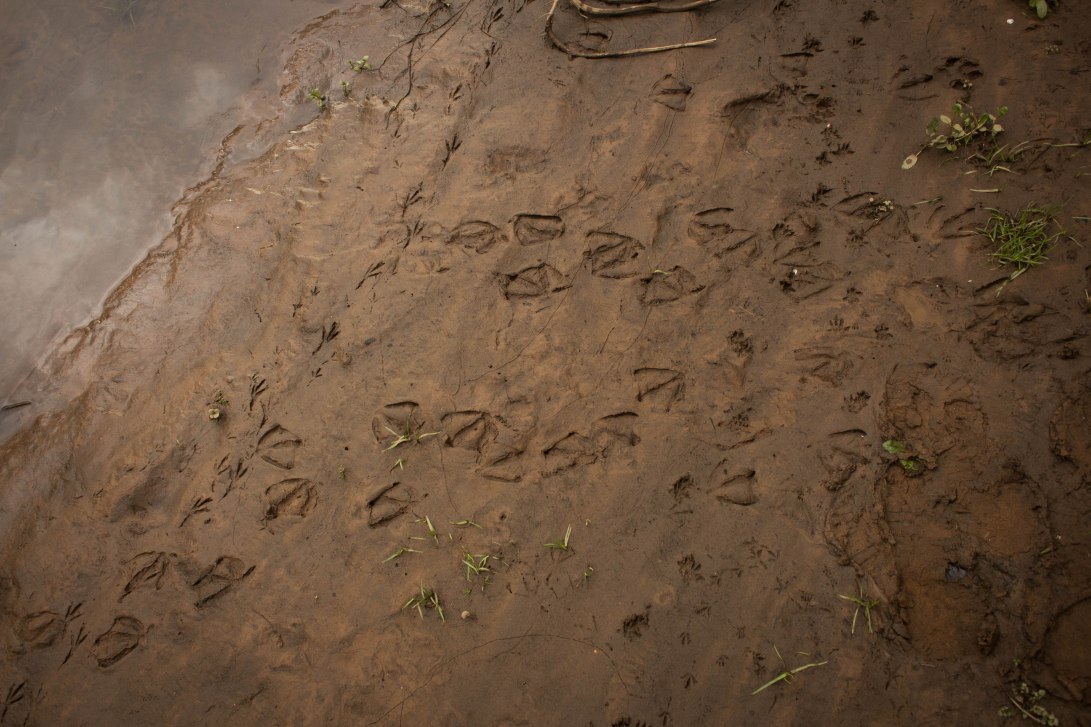
We carried on, walking along the Eden as it snaked through the golf course and reached the suspension bridge. Here we went off-road and found some truly amazing discoveries. On a sand bank tucked away from the heavy footfalls of regular dogs and their owners, we found a wildlife metropolis. There in the sand, perfectly imprinted, were dozens of tracks, bird and mammal alike. There were the broad irregular squares of mallards, tiny pin lines of grey wagtails, even tinier fingers of brown rats and the very dog-ish prints of otters! I practically jumped down into the sand to photograph them – not only were there prints but also a lonely otter spraint, deposited in full display of every visitor as an indication that this territory was claimed. It was fascinating to see just how many species had paid this relatively small sand bank a visit. I vowed to return very soon with a camera trap and see if I could get better acquainted with them!

IMG_1633IMG_1622

Whale Bones and Walking Stones

As usual, I trundled to Tullie House Museum for my weekly volunteer shift. Right now everything is focussed on the whale project. Following the discovery of a 16m fin whale skeleton on a beach in Cumbria, Tullie House now has the makings of a smart new welcome feature in their entrance hall. The bones are being taken away for professional cleaning in less than a month now. There’s still a lot to be done before that happens, so it’s all systems go!

Today I was joined by a new volunteer called Will, who turned out to be a fascinating character. As we set to work on scrubbing dried whale flesh off vertebrae the size of my hips, we got chatting about wildlife. Turns out, he’d travelled to some stunning places for expeditions, something I was incredibly jealous of. One one expedition in Abu Dhabi, he had the chance to excavate fossilised camel skeletons as part of his master’s degree in zoo archeology. Once they reached the ribs, the guide assured them there would be nothing of interest to investigate. Will decided to convince him otherwise and together they found an ancient spearhead embedded in the bone. The small discovery prompted a thousand questions: who killed this camel? For what reason? It was fascinating.

Soon, Will is heading off the to the Far East, but he’s done a lot of work in East Greenland. Highlights from his trips here included a sighting of a polar bear jumping through an enlarged seal breathing hole and into the ocean below, and a herd of very intimidating musk oxen, as well as polar wolves, snow white relatives of the grey wolf. On one encounter, Will’s team heard a distressed ringed plover and glanced out the window of their lodgings to see an arctic wolf mere feet away.

As amazing as these stories were to hear (as I sat on the floor scraping white fat off whale bones), my favourite was the tale of the walking stones. Will described how, when rocks fall onto a glacier, they create a natural phenomenon. While the ice around the rock melts under the sun, the patch directly beneath it is kept sheltered. After many hours, the rock is “lifted” by its ice pedestal as the rest of the glacier melts away. Soon though, even the elevated platform succumbs to the sun’s heat and the rock falls onto a patch below, beginning the whole process again. The result is a very slow game of slinky, but one that fills me with such joy that nature is so beautifully playful.