Birds at the bottom of the garden

As of today, I’ve been living in my new house a week! It’s not the biggest or the most glamorous, but it’s certainly enough to feel like home. There is also a generously sized garden that oozes potential. Currently, the grass is several feet high and tickles the midriffs of the two apple trees, but I’m determined to make it a spot both we and our neighbouring wildlife can enjoy.

Zahrah and I have already had debates over whether the grass should be cut at all. While she favours the truly wild, I prefer neat and tidy with areas that the wildlife can still feel at home in. My plan is to cut the majority of the lawn but leave a wild patch at the bottom, so all kinds of creatures can still seek sanctuary in its grassy depths.

I’ve noticed several species of garden bird already, namely robins (Erithacus rubecula), blue tits (Cyanistes caeruleus) and great tits (Parus major), but I’m sure we can attract more with a range of bird feeders – millet for dunnocks (Prunella modularis) and finches and sunflower seeds for the tits and hopefully greenfinch (Chloris chloris). As well as this, we could fit some nest boxes to the apple trees to encourage nesting birds to stay.

Now we have such a secure garden, Zahrah suggested setting up a camera trap to see what nocturnal wildlife we play host to. In an urban area, it’s possible we have hedgehogs (Erinaceus europaeus) and maybe red foxes (Vulpes vulpes), something I’d be thrilled to see. After managing to photograph a wood mouse (Apodemus sylvaticus) at Kingmoor Sidings nature reserve not far from here, I’m optimistic we’ll get to see a lot more once we’ve set some tasty bait.

As for the lawn itself, I’d love to create a winding path out of the stray slabs we’ve found lying around. The garden is large enough for a compost heap too, something else that would attract a range of species. I’d love to cultivate a pond, but feel like this may be beyond my skill set! However, it would be lovely to plant some flowers and inject some colour into the otherwise very green garden. Although not the prettiest, stinging nettles are well known for being excellent attractors of the red admiral (Vanessa atalanta), comma (Polygonia c-album) and small tortoiseshell (Aglais urticae). Other good plants for butterflies include garlic mustard (Alliaria petiolata) and marjoram (Origanum vulgare).

All in all, I see some exciting things on the horizon for our little garden! After living in halls for a year and the only green space being the faded carpet of my room, I can’t wait to unleash my inner gardener and make our patch the perfect wildlife haven.

Carna – Day Five

Species seen:  

  • Chaffinch – Fringilla coelebs
  • Common Porpoise – Phocoena phocoena
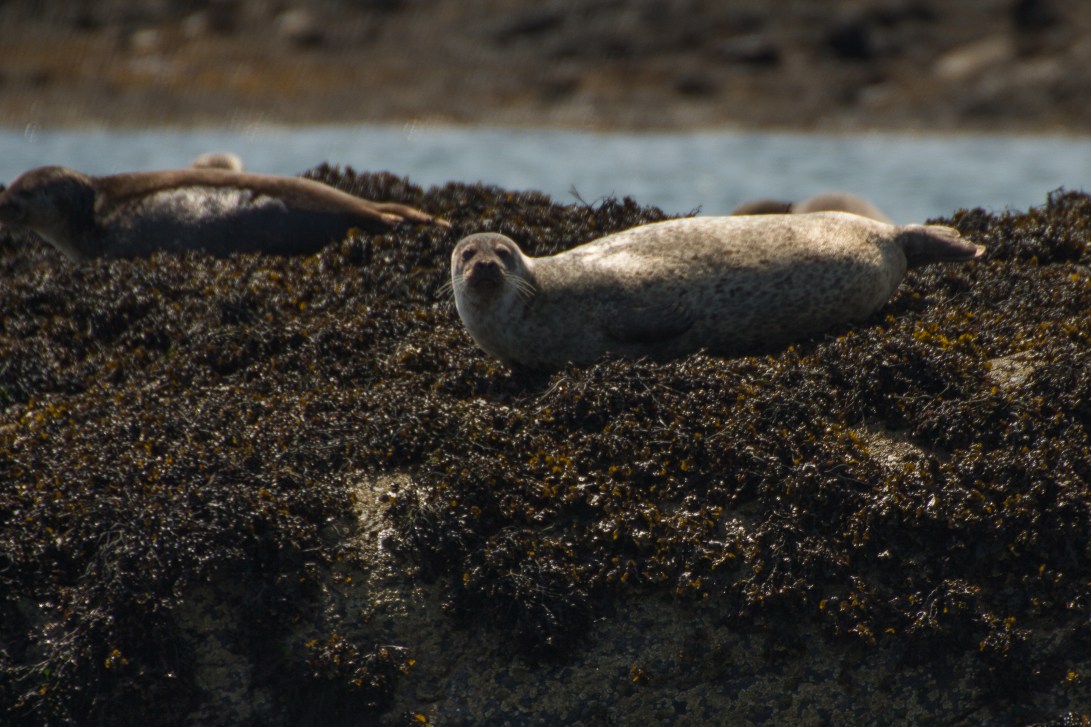
  • Common Seal – Phoca vitulina
  • Common Shag – Phalacrocorax aristotelis
  • Common Tern – Sterna hirundo
  • Golden eagle – Aquila chrysaetos
  • Grey Heron – Ardea cinerea
  • Herring Gull – Larus argentatus
  • Hooded Crow – Corvus cornix
  • Lesser Redpoll – Acanthis cabaret
  • Oystercatcher – Haematopus ostralegus
  • Song thrush – Turdus philomelos
  • White-tailed eagle – Haliaeetus albicilla
  • Wood mouse – Apodemus sylvaticus

This morning Heather woke us all up with a real treat; last night the Longworth trap had caught a wood mouse. As quietly as we could, we took some brief photos then sexed the animal. The nipples were clearly visible, meaning our mouse was a breeding female.

IMG_6260
Heather assured us the use of a plastic bag was standard procedure and it was held open for the very short time the mouse was inside. After releasing the animal back at the trap site, it scuttled away safely and unharmed.

After a few more hours sleep we visited what Heather described as a ‘sweet shop’. The shed beside the house was full of barn owl pellets which we had the opportunity to dissect. After some initial apprehension we got to work and I found myself enjoying pulling apart what a barn owl regurgitated many months previously. In my pellet I found both a mouse skull and a vole’s skull, as well as numerous minuscule jaws and ribs. It was yet another new experience for me and it was fantastic to analyse what an owl on Carna had been eating.

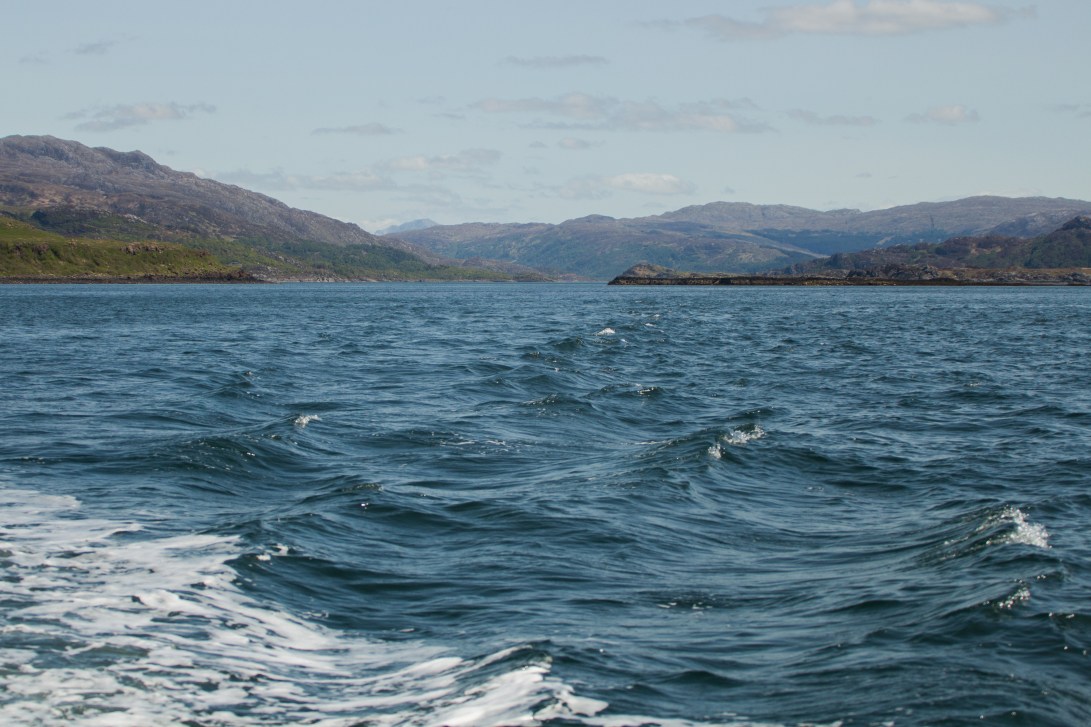
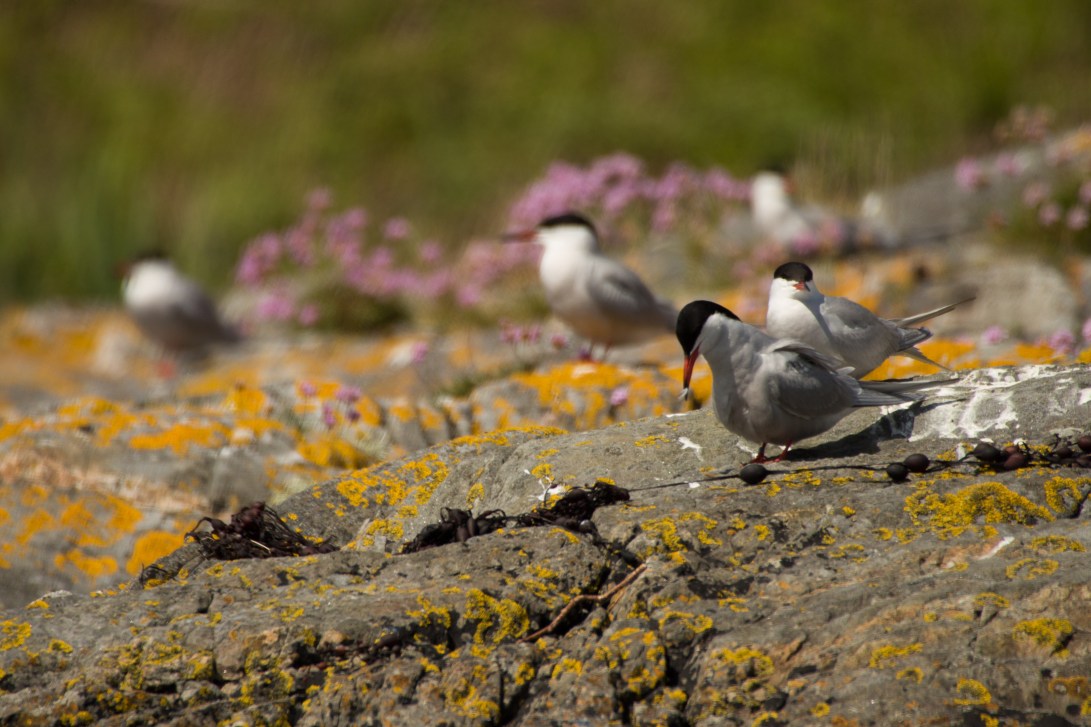
Shortly after we’d finished with the pellets Andy came to pick us up on the boat for a trip around the islands. Unbelievably we had another fantastic day of sunshine, so conditions were great for photography. For a while we watched common terns mating, and their stark white feathers contrasted with the rich colours of the moss clinging to the rock.

IMG_6277

IMG_6304

Once in open water we saw two more porpoises breaking through the waves. The tide was choppy and negotiating tripods and telephoto lenses while the boat tilted from side to side was a challenge we had to overcome. Once again Lequane was first to notice the white-tailed eagle far up in the sky, but almost immediately after we noticed a different bird above the hills. As it descended and came within binocular range we saw the rich hazel hue of the golden eagle’s wingspan. It dipped low and landed amongst the trees so we lost it, but this bird was near the top of my wish list and it was so satisfying ticking it off.

IMG_6293IMG_6320

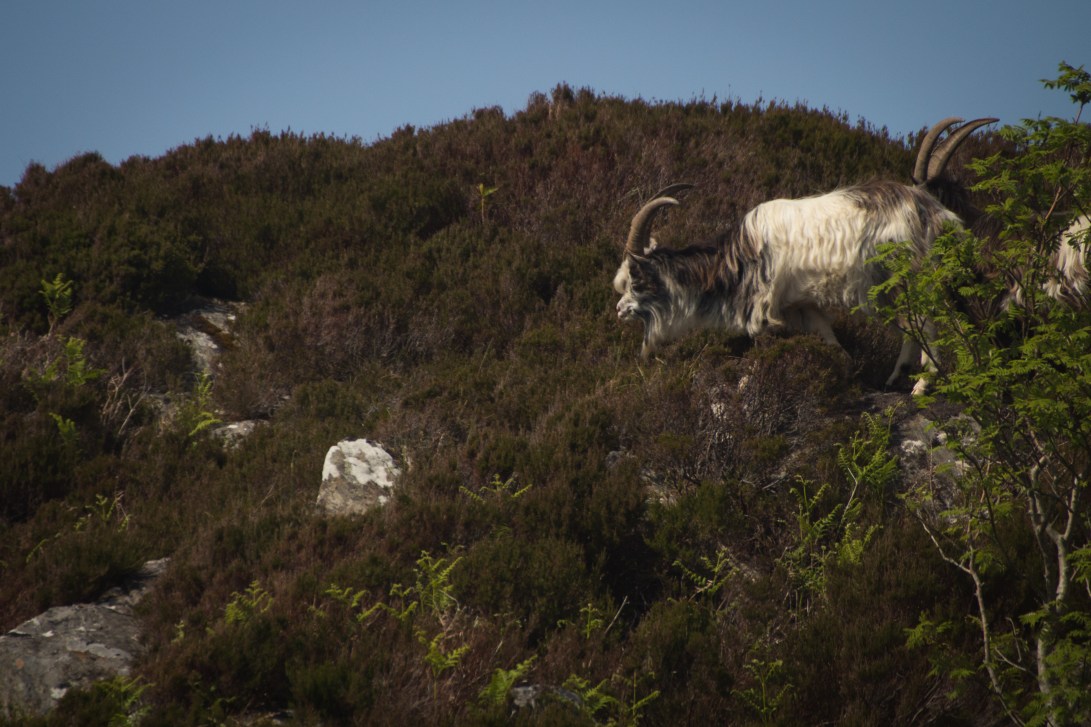
On the way back to the house we spotted some of the wild goats that had made the rocky coast of Carna their home. We also stopped off at the shag’s nesting site again. Not many people are aware of these birds but I find them extremely handsome with their sharp yellow eyes and the green sheen in their feathers.

IMG_6357IMG_6365

When we got back Cain and Heather had gone to pick up the camera traps and we all gathered at the kitchen table to see what we’d captured. It was nothing short of a success. In the first trap we had several clips of an otter trotting in and out of a small cave mouth and sprainting at the entrance. In the same spot a few hours later the whole frame was filled with two pricked up ears and a pair of antlers that were unmistakably a roe deer’s. Heather and Cain informed us that this was the first official footage of a roe deer on Carna so this was fantastic news. By using the camera traps we can find out new information about just how diverse Carna is.

Footage from the next trap showed a vole that we were unable to identify. It could have been either a bank vole or field vole sub-species. Either way, it was great watching the rodent feast on the apple and seeds we’d left, although it did manage to shift the trap so we could no longer see anything but out of focus rock.

Yet more treats were to follow. The next trap had been set in the bluebell wood and a fox had visited late one night. Though it didn’t linger, we still got to see the mammal’s gorgeous fluffy tail as it trotted through the bracken.

Seeing the wildlife on the Isle of Carna on the camera traps was a great end to an unforgettable experience. In only four and a half days I have learnt so much about tracking and field craft and got an insight into the ecology of an island rich in wildlife. It was so refreshing being around people who get as excited as I do when I hear a cuckoo or glimpse an otter swimming across the loch. By being separated from technology I have had the chance to enjoy the outdoors even more. I’ve been out of breath on numerous occasions during our hikes and scrambles but it’s been worth it every time. I even did some sketching, a pastime I haven’t enjoyed in years.

Everybody should spend time in a place like Carna, especially those who don’t fully appreciate the natural world. Sharing a loch with seals, otters and porpoises is something everybody should experience. While I am the last person to criticise books, sometimes the best way to learn about wildlife is to be a part of it. Get your hands dirty lifting rocks to see the starfish underneath, wade ankle deep in mud to set a camera trap and get a crick in your neck gazing at eagles. It really does change you.