Monday was the perfect combination of winter chill and dazzling sunshine, so I decided to take my mum and the dog to two of my favourite wild spots down in the Cairngorms.
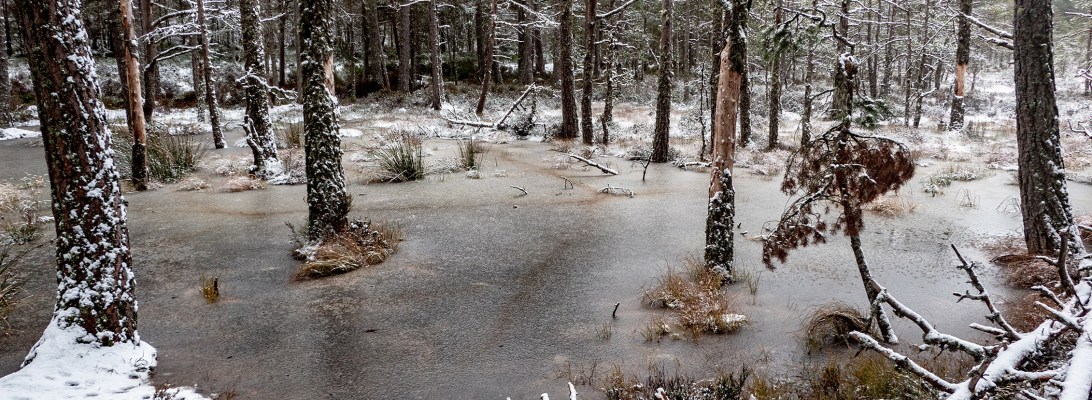
Looking like a blue pawprint when seen on a map, the Uath (pronounced ‘wah’) Lochans are four small pools bordered by pines. Their surfaces are sometimes wobbled by goldeneye ducks but they mostly stay mirror-steady, reflecting the trunks standing around them.
There are two short waymarked trails that can easily be combined into a meandering loop. One threads between the lochans, following compacted earth paths and sections of boardwalk over boggy pools. The other climbs a brief incline, offering an eagle’s eye view over carpets of pine and further into the mountains.
Less than three miles north, the Frank Bruce Sculpture Collection is a series of artworks that have been carved into wood and stone, destined to eventually rot and fade back into their woodland surroundings.
Because the carvings are natural, they have excellent camouflage and some are trickier to find than others. It takes a while for your eyes to adjust before you can pick out sculpted faces and hands among all the other trunks. A needle in haystack situation!
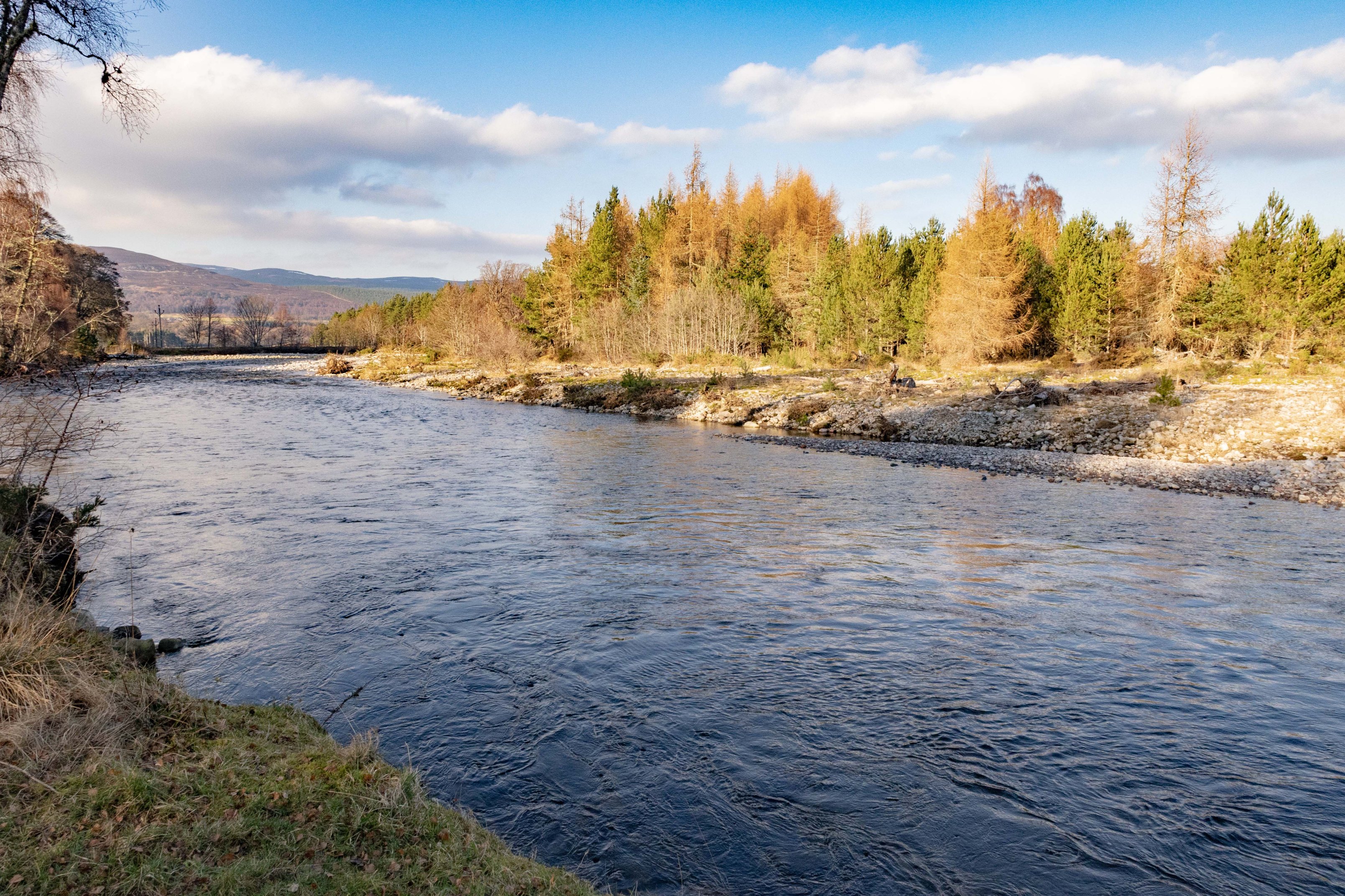
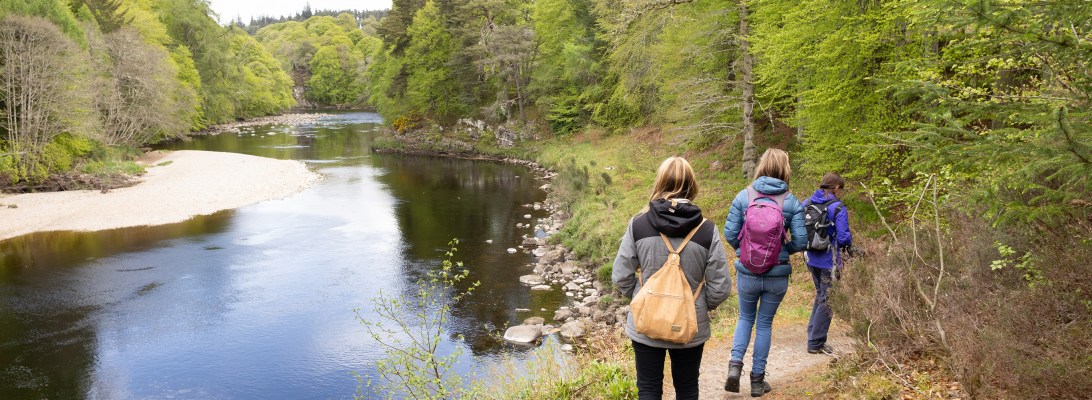
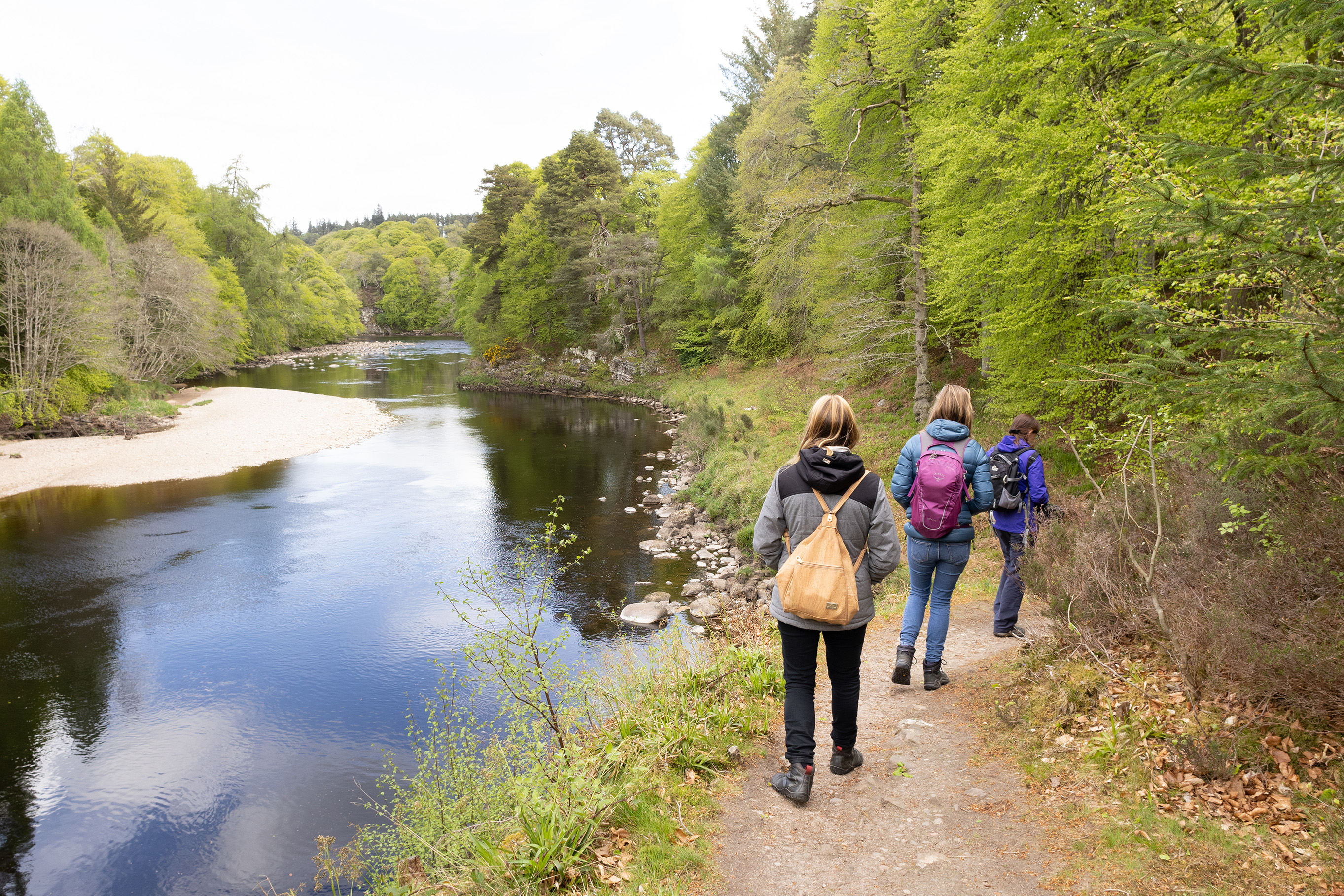
It’s possible to walk a small loop here too, following a stretch of the River Feshie as it tumbles over pale shingle. The river sparkled and the trees beyond shimmered in the winter sunlight.
Although the sun was boiling as it streamed through the car windows, outside was a different matter, so once the chill began to seep through our clothes we returned home. The winter light persisted until the very last moment and I wandered up to the headland to watch the sun set. It’s not often I spend a day without looking at screens, so it was a welcome treat.
Good weather may not be as forthcoming during winter, but I’d argue that winter light is the best of the year, if you can find a break in the clouds.
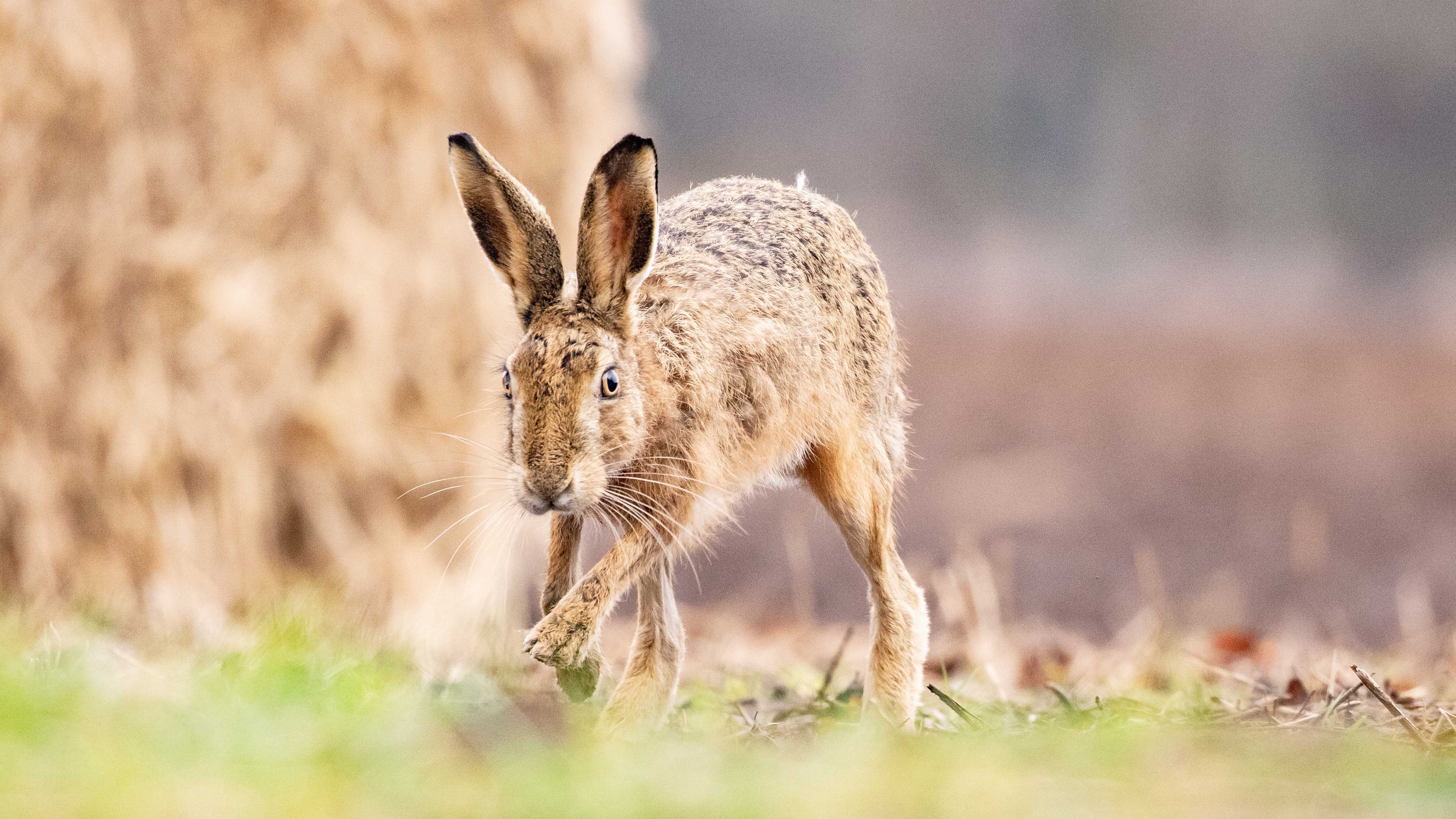
I checked the forecast and saw a long line of sun symbols, so I donned my thermals and headed out to see what wildlife I could photograph. First I tried for hares at sunrise, but they were otherwise engaged. Frustratingly, golden hour was flaring bright and I was itching to get photos of something, anything, in those syrupy hues.
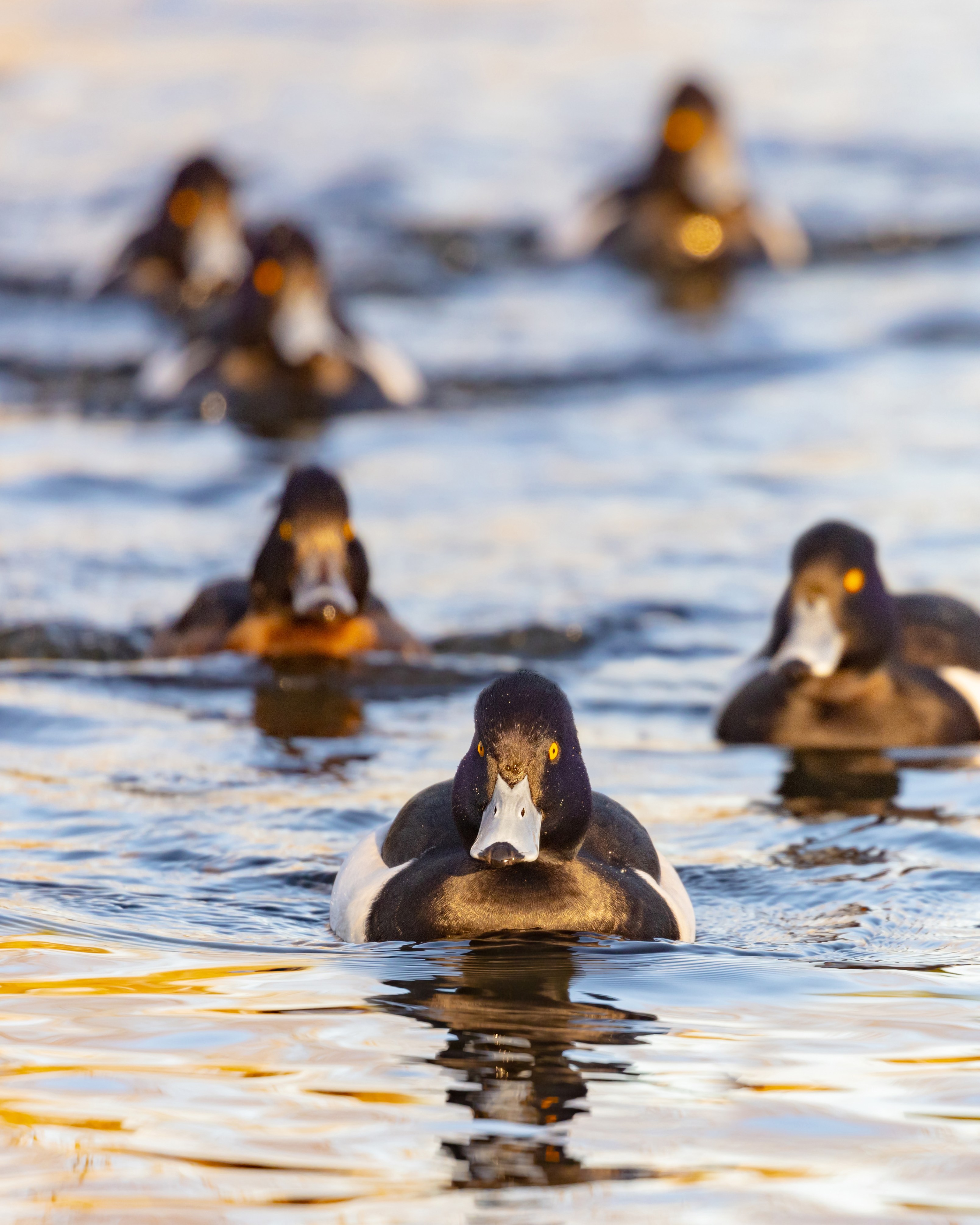
After several hours with a numb bum, looking at diddly squat, I visited the library to return a book and warm up. When I came out, a flock of tufted ducks were bobbing in the city pond. The light was still fantastic, so I lay on the ground and got snapping. Like mallards, tufties have stunning iridescence if you catch them in direct light. I hadn’t set out for ducks, but it was a happy accident and I loved photographing something so closely for a change.
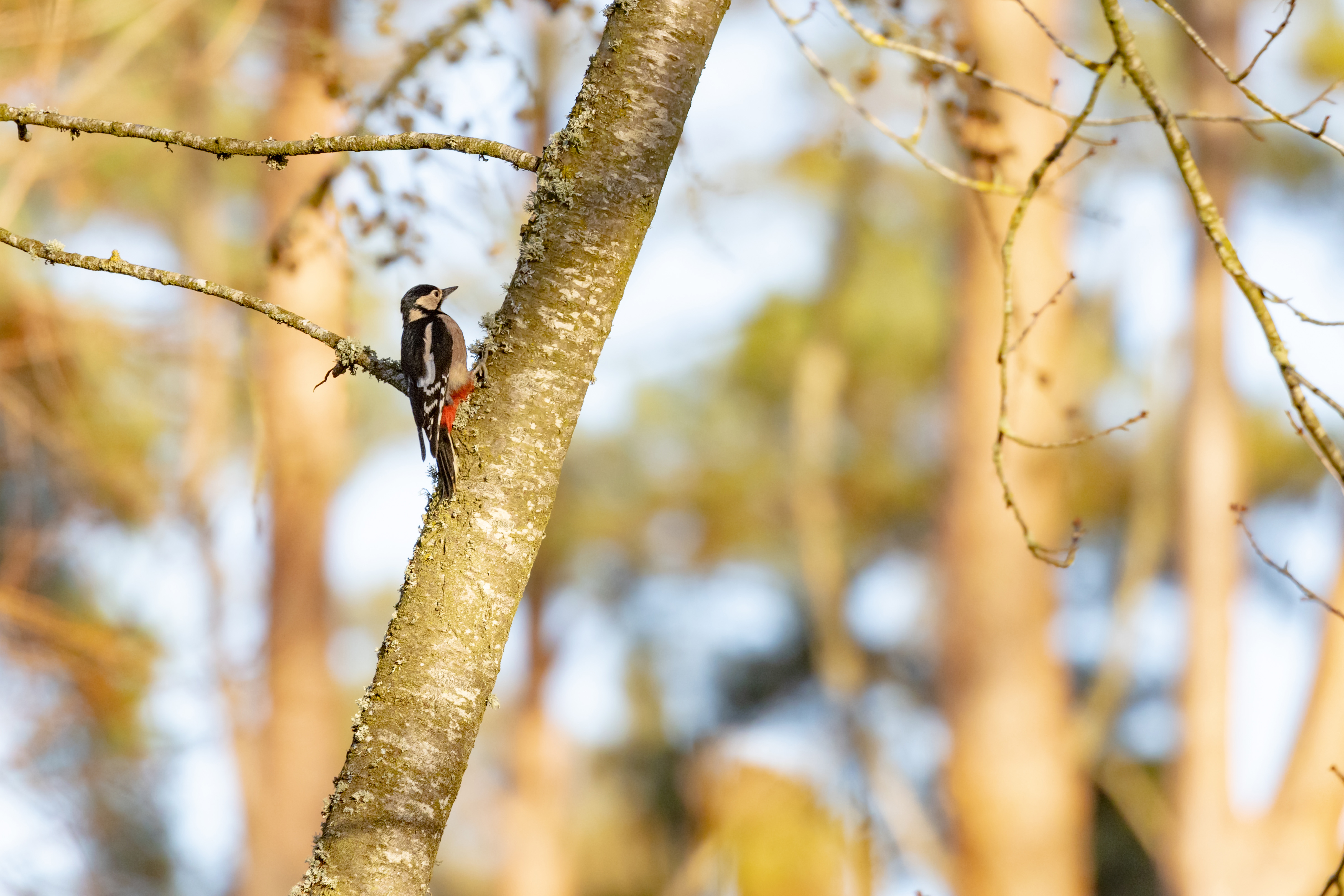
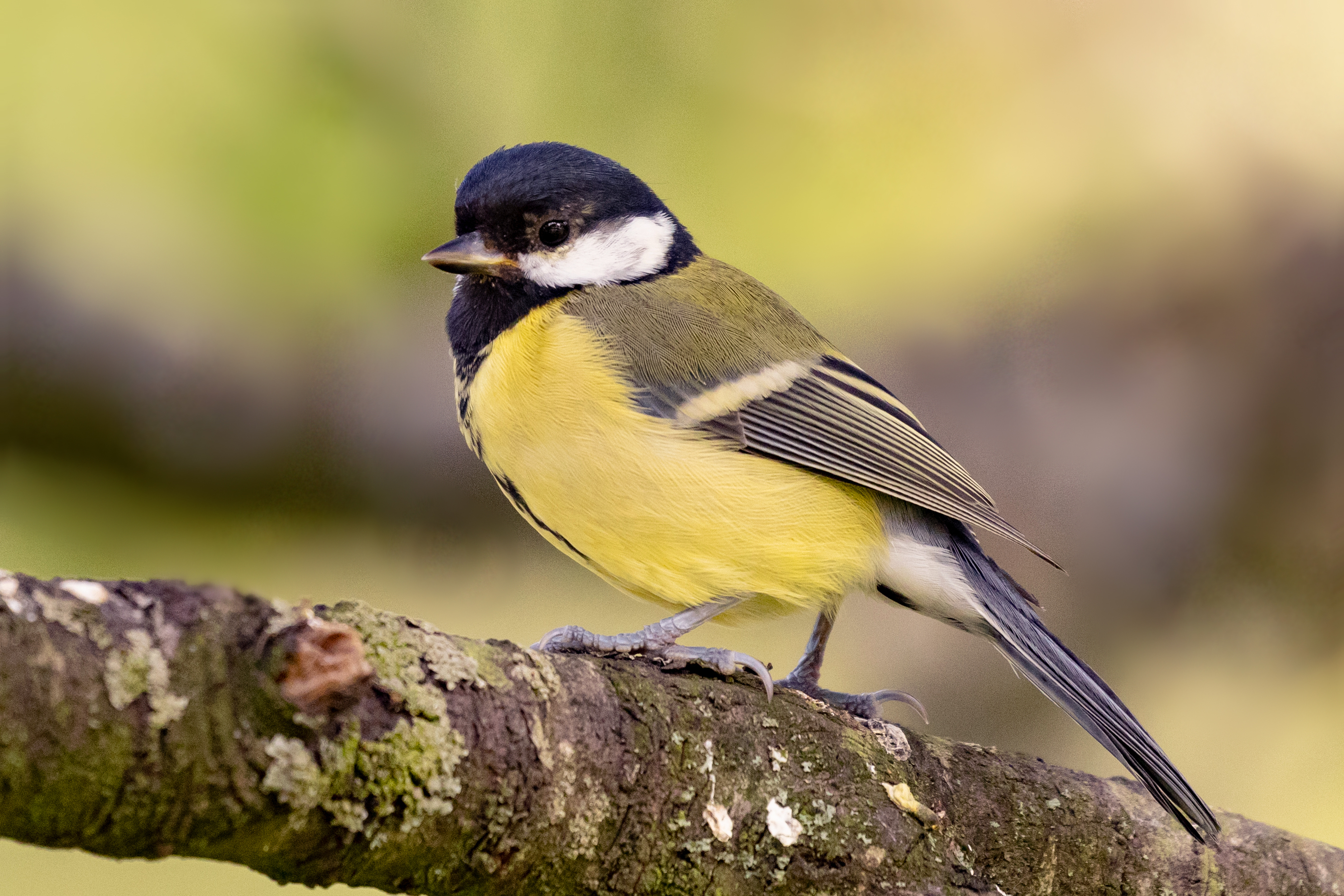
Rejuvenated by my unexpected success with the ducks, I moved on to one of my local lochs, where there’s always some sort of activity. As usual, the feeders were swept up in a feather storm: chaffinches, dunnocks, robins, great tits, long-tailed tits, blackbirds, woodpeckers and song thrushes all muscled in in for a mid-morning snack.
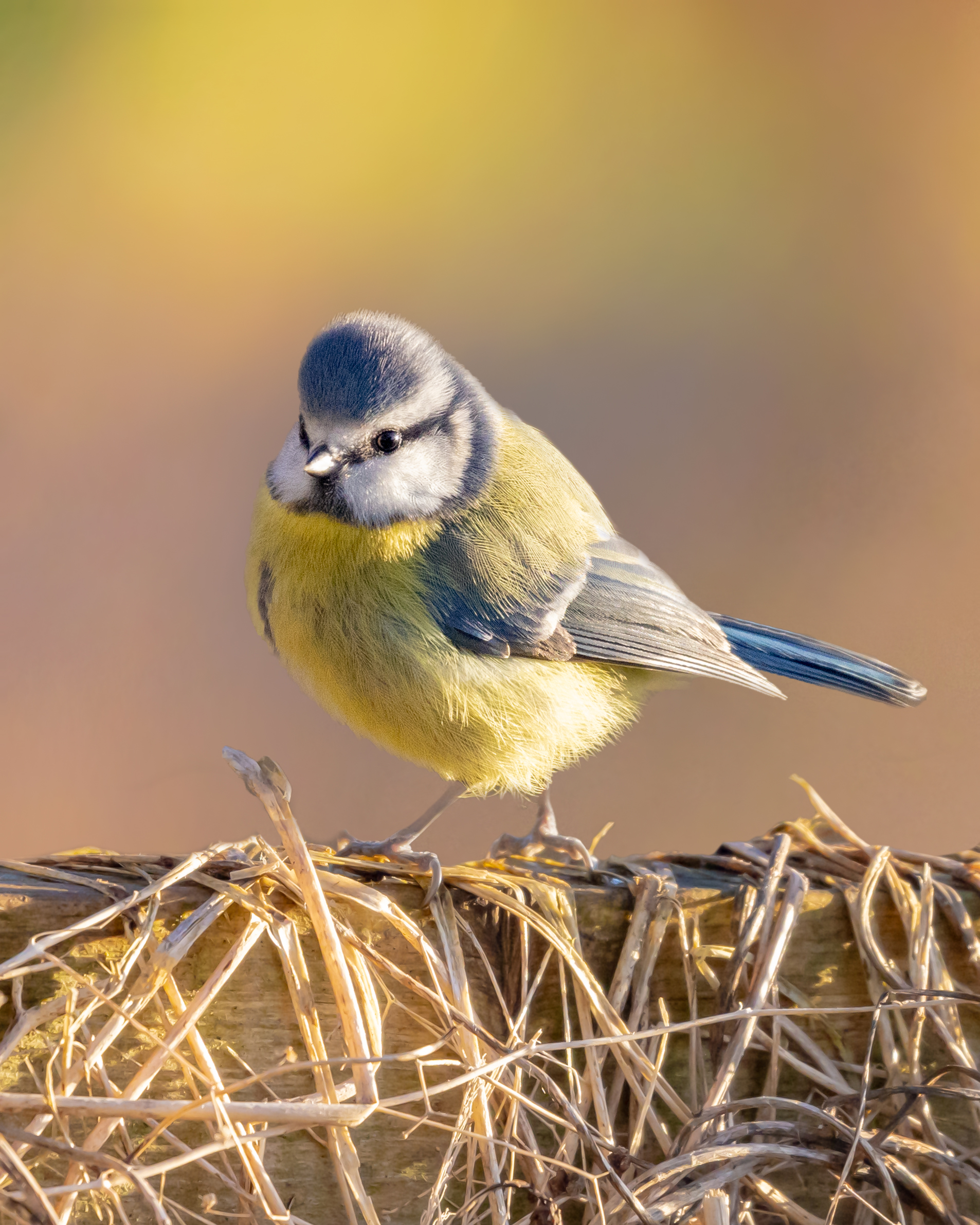
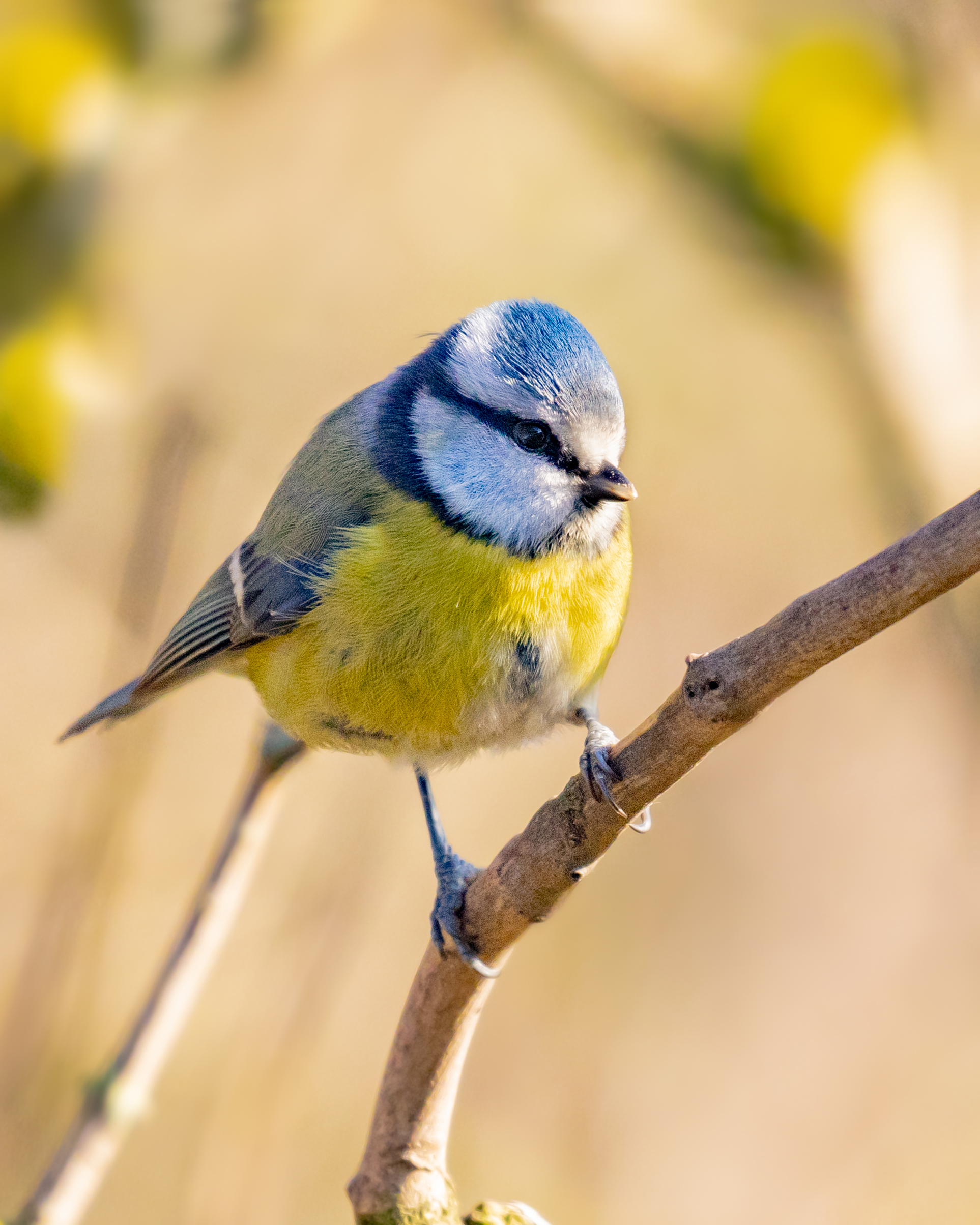
As my eyes snagged on each passing bird, I realised I couldn’t remember the last time I photographed a blue tit. I’m always looking for rarities and don’t appreciate common birds as much as I should. When I actually paid attention to the blue tits that were zinging in the bright sunshine, I appreciated just how multi-coloured they are. A British bird of paradise!
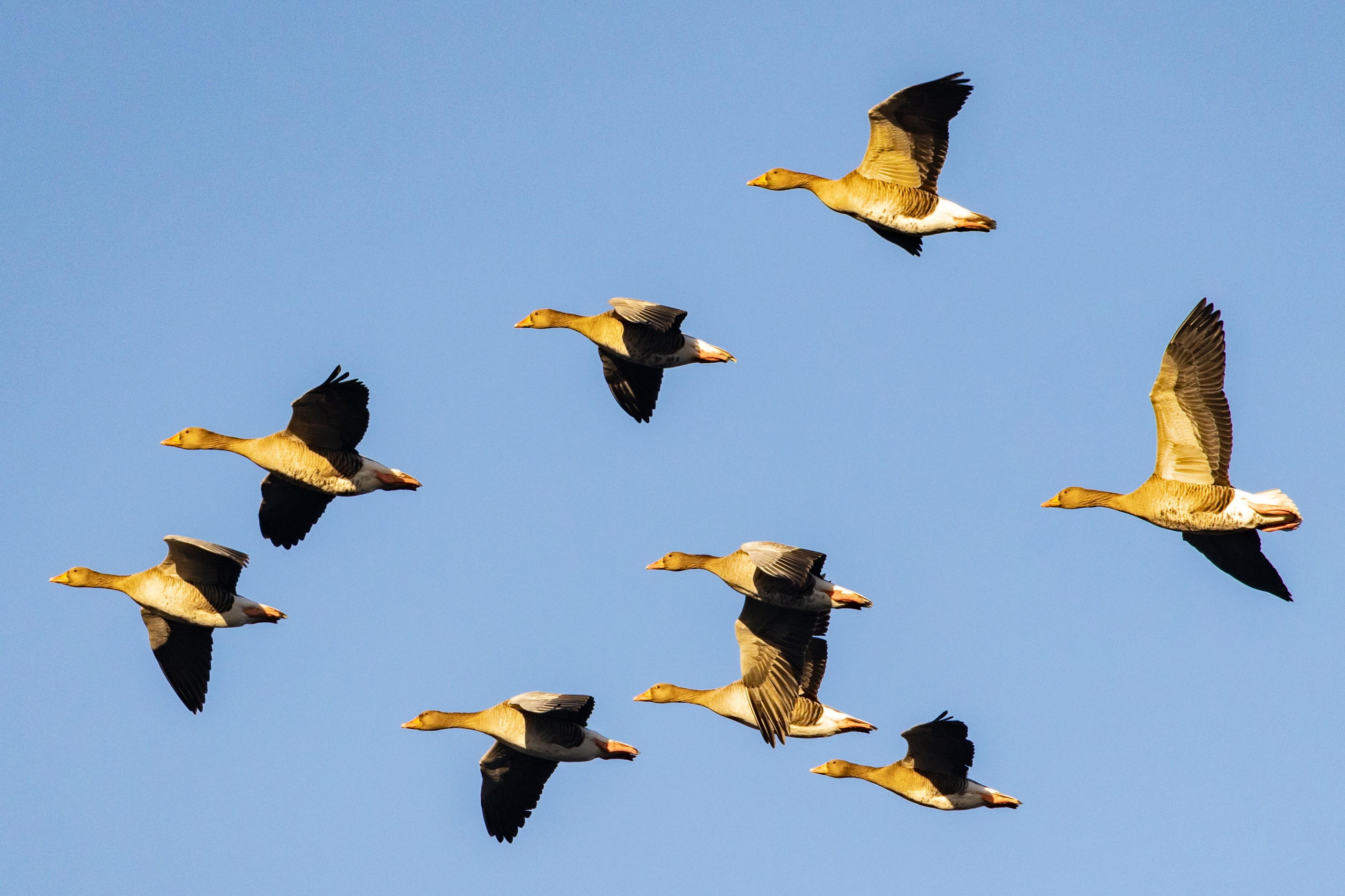
The sunlight may look warm in my photos but it didn’t feel it, and after a while I was ready to retreat for tea. Before I headed home, a small gaggle of greylag geese swept over the loch, dipping in flight until they skidded to a halt on the surface. Luckily for me they were facing the sun, so I caught some high-contrast shots of their smooth landing.
After an uncertain start, my trip became a common bird appreciation day, which I probably needed. I get blinkered looking for the rare and exotic, but with winter light as special as this, every bird looks superb.
Winter is the time to reflect. I love looking back on what I’ve done over the year, and once again I’ve put a summary of my work projects into my own mini magazine. I did this for the first time during lockdown when I was painfully idle and needed a project to distract me. It turned into something I was proud to share and this is now my third issue.
Between research trips for my book, I’ve been busy working on other projects including another mindful creative retreat at home on the Moray Coast, a design commission inspired by Thumbnail Nature, and my second wildlife calendar.
Today was the first day I’ve missed my woolly hat while out walking. I should have anticipated this from the sound of the moaning wind down the chimney, but I saw diluted sunshine and overestimated its efforts. We’ve hit that indecisive time between summer and autumn, when dressing for a walk becomes a series of deliberations.
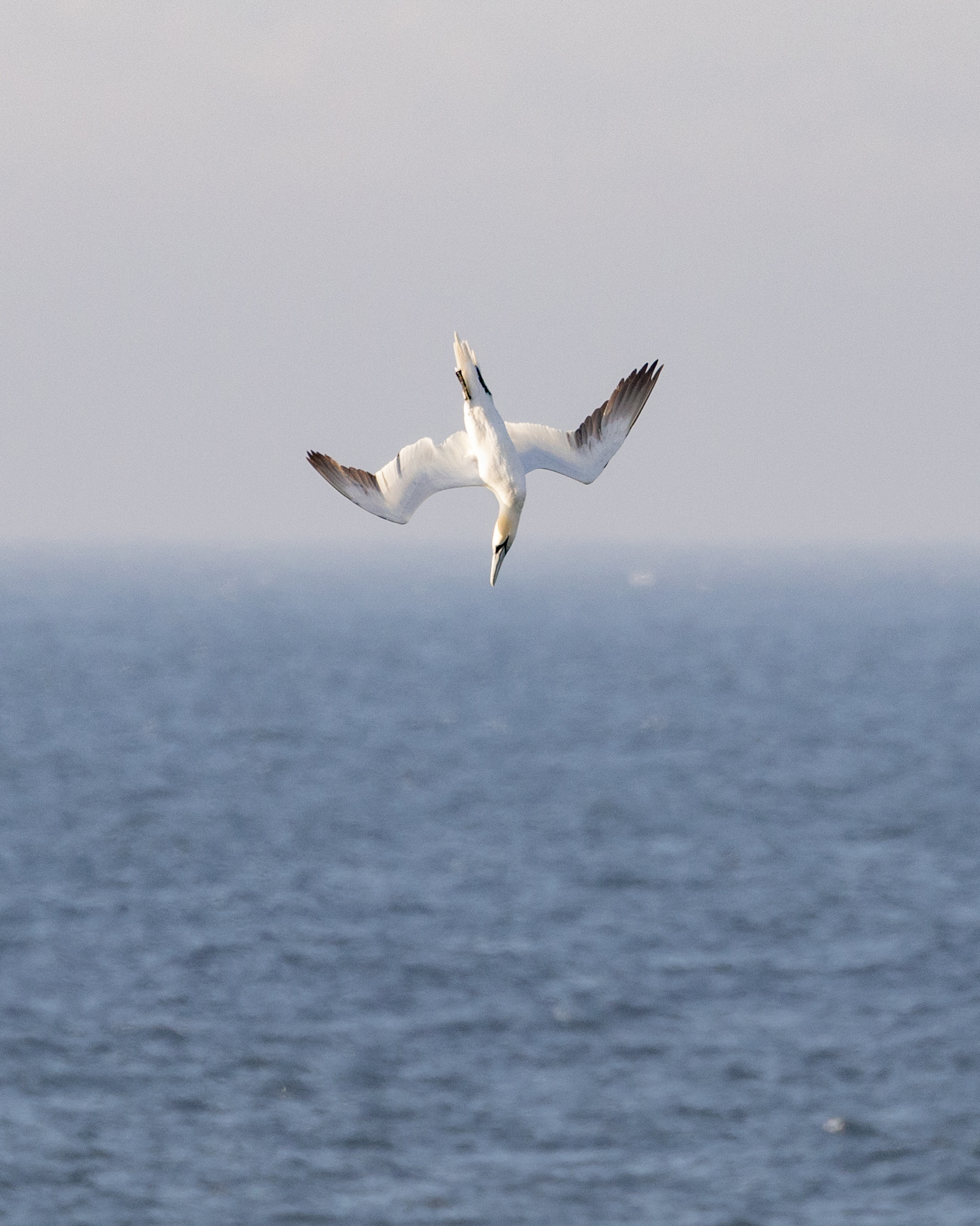
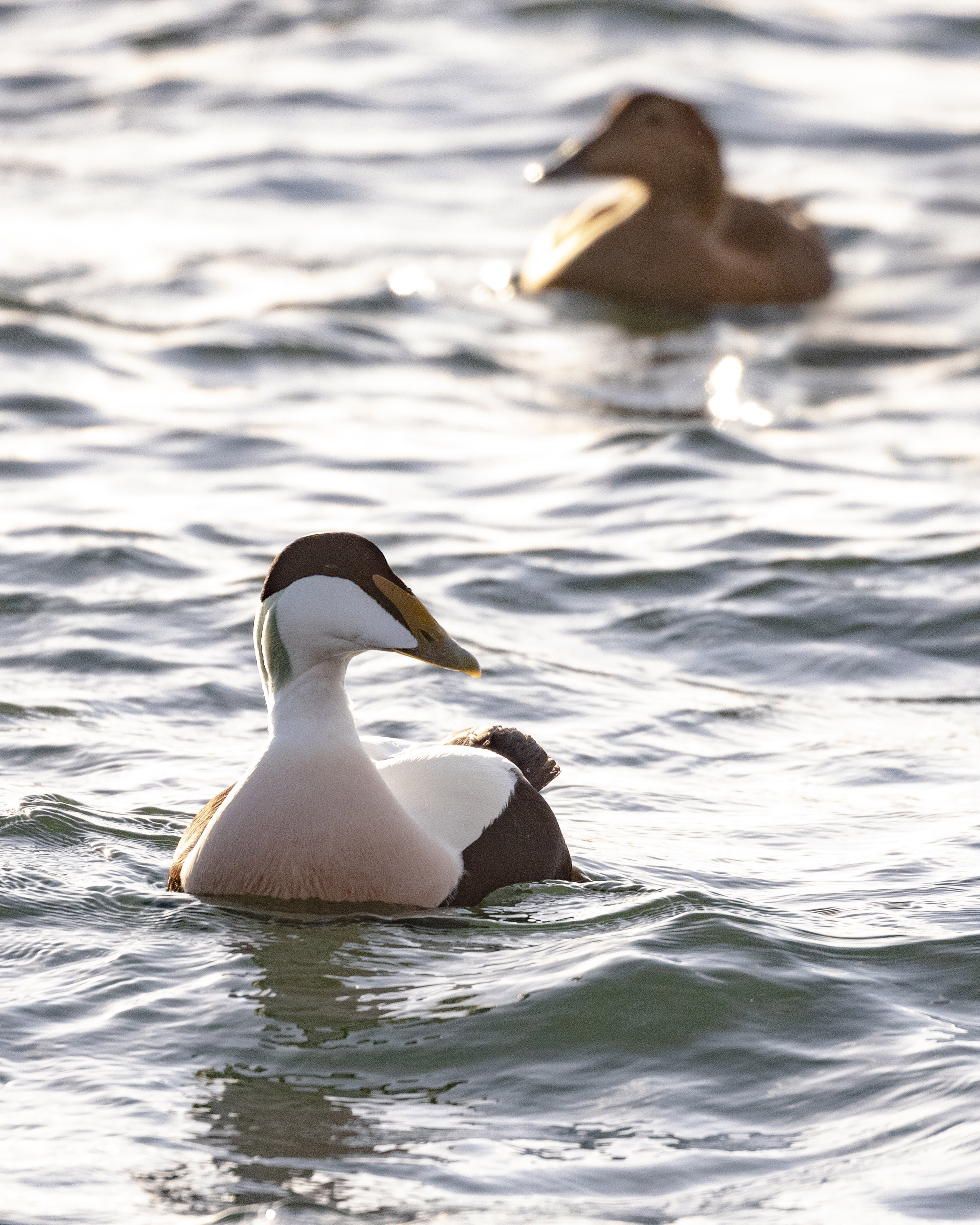
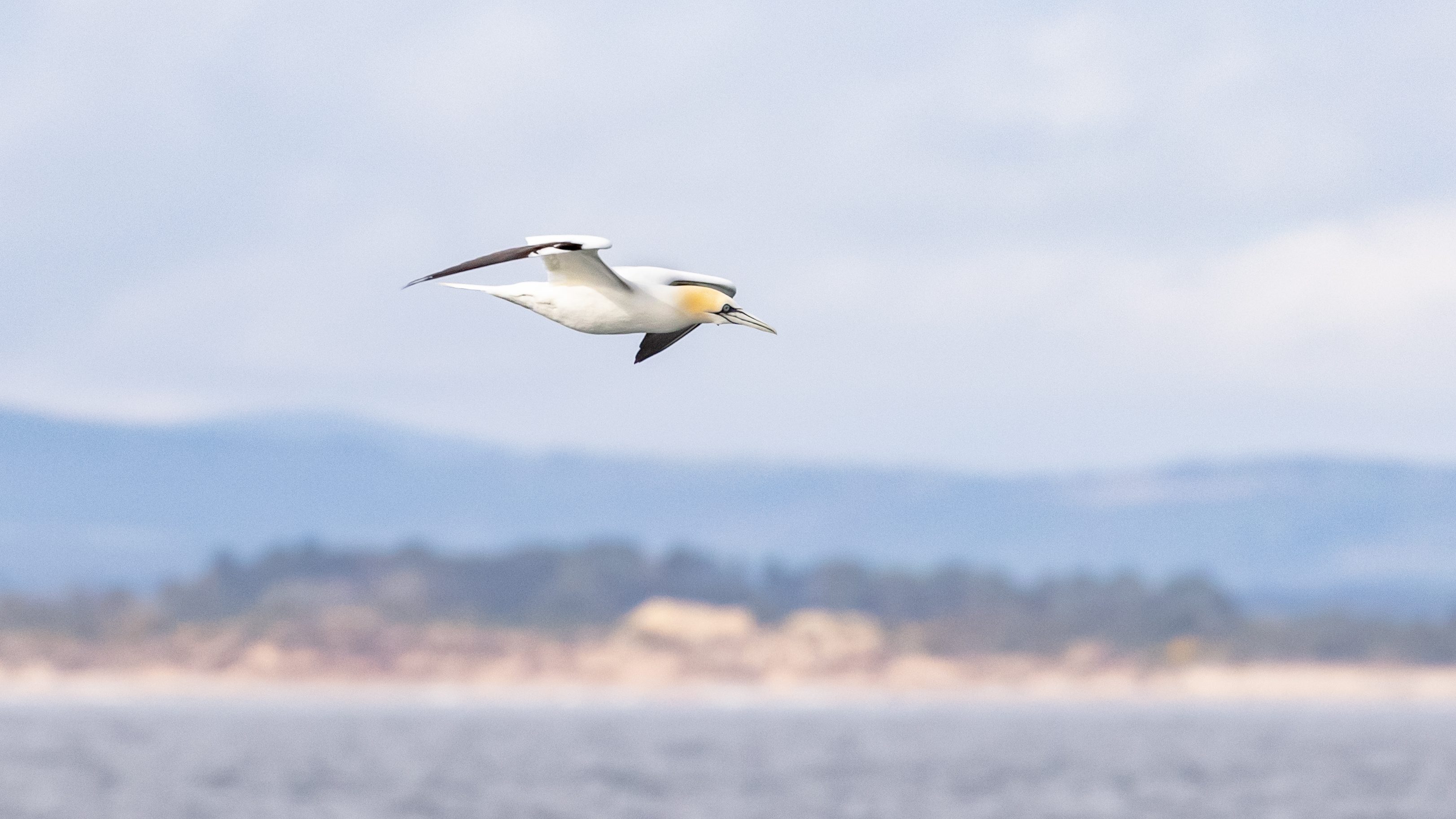
This morning I saw a couple of swallows swirling over the shore, still lingering after their long summer holiday. Further out, a couple of white flicks were diving in the choppy swell. Even from an anonymising distance I could tell they were gannets straight away, recognising the stiff beats of their black-tipped wings. As I withdrew further into my coat with hunching shoulders, another flash of white caught my eye. This was the clincher, a sign I’d been waiting for. A flock of eider ducks meant autumn was coming.
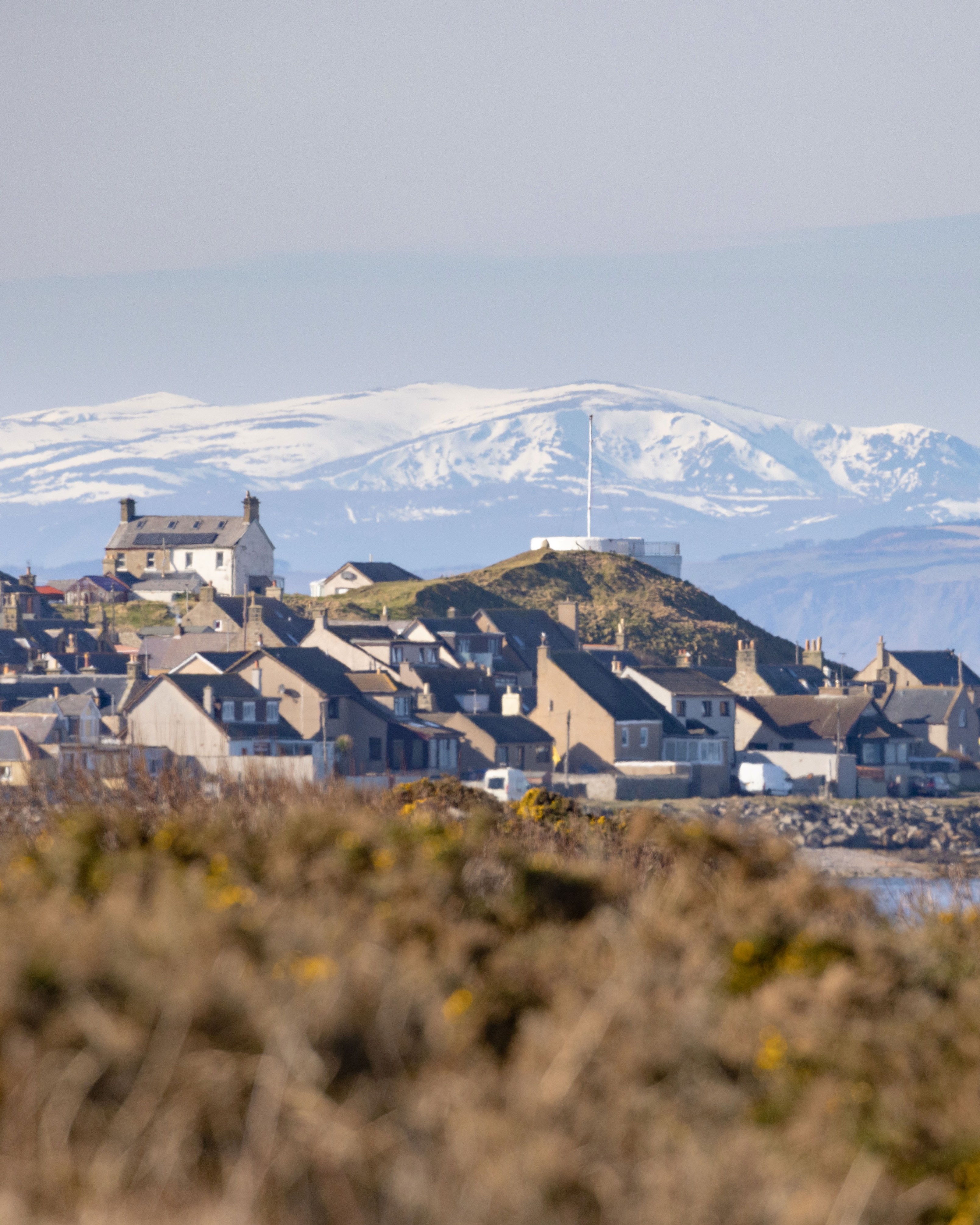
Hazy Burghead
Gannet mid-dive
Eider ducks
Summer isn’t my favourite season by a long way, and this year it was made particularly insufferable by a 40°C heat surge that coincided with my first case of Covid. Still, I can look back and say this summer has been both productive and great fun. Most of it was taken up by research for my book, which is now due in six weeks. I’ve explored Aberdeen, Portsoy, Glenlivet, Ballater, Braemar, Banchory, Dufftown and Carrbridge in the last two months alone, filling the last gaps in my Slow Travel Guide to North East Scotland.
Sitting at the top of Clachnaben, south of Banchory
After spending so much time walking outside, I was pleasantly surprised to find tan lines beneath my rings and watch strap. I mostly write at my desk, so I loved having the opportunity to stretch my legs and assure myself that spending days on end walking through forests and wandering around coastal villages was in fact work. Putting this book together has tested my organisation, self-discipline and resolve, but I’ve now emerged with a complete manuscript. All that remains is the entire editing process.
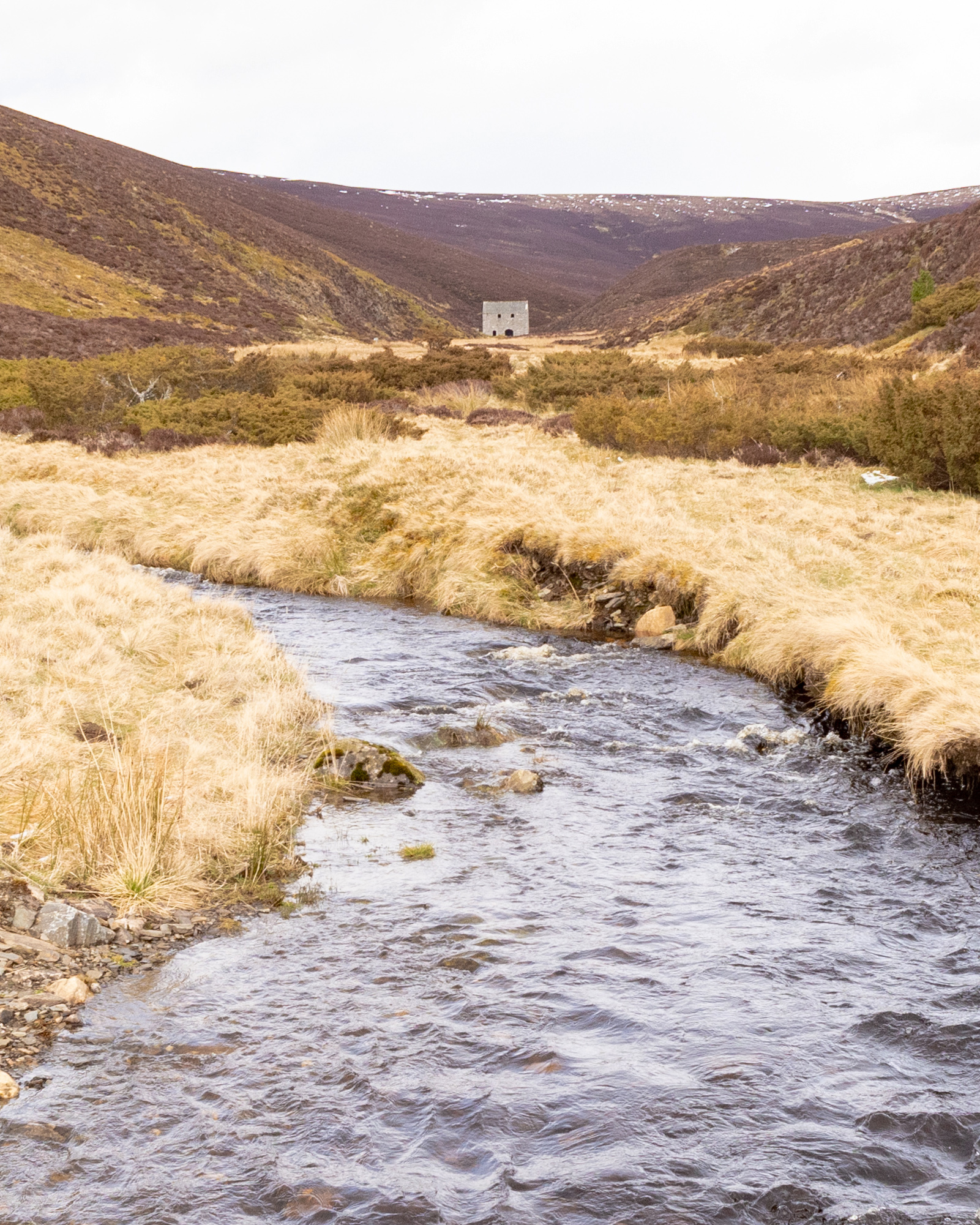
The Lecht Mine, near Tomintoul
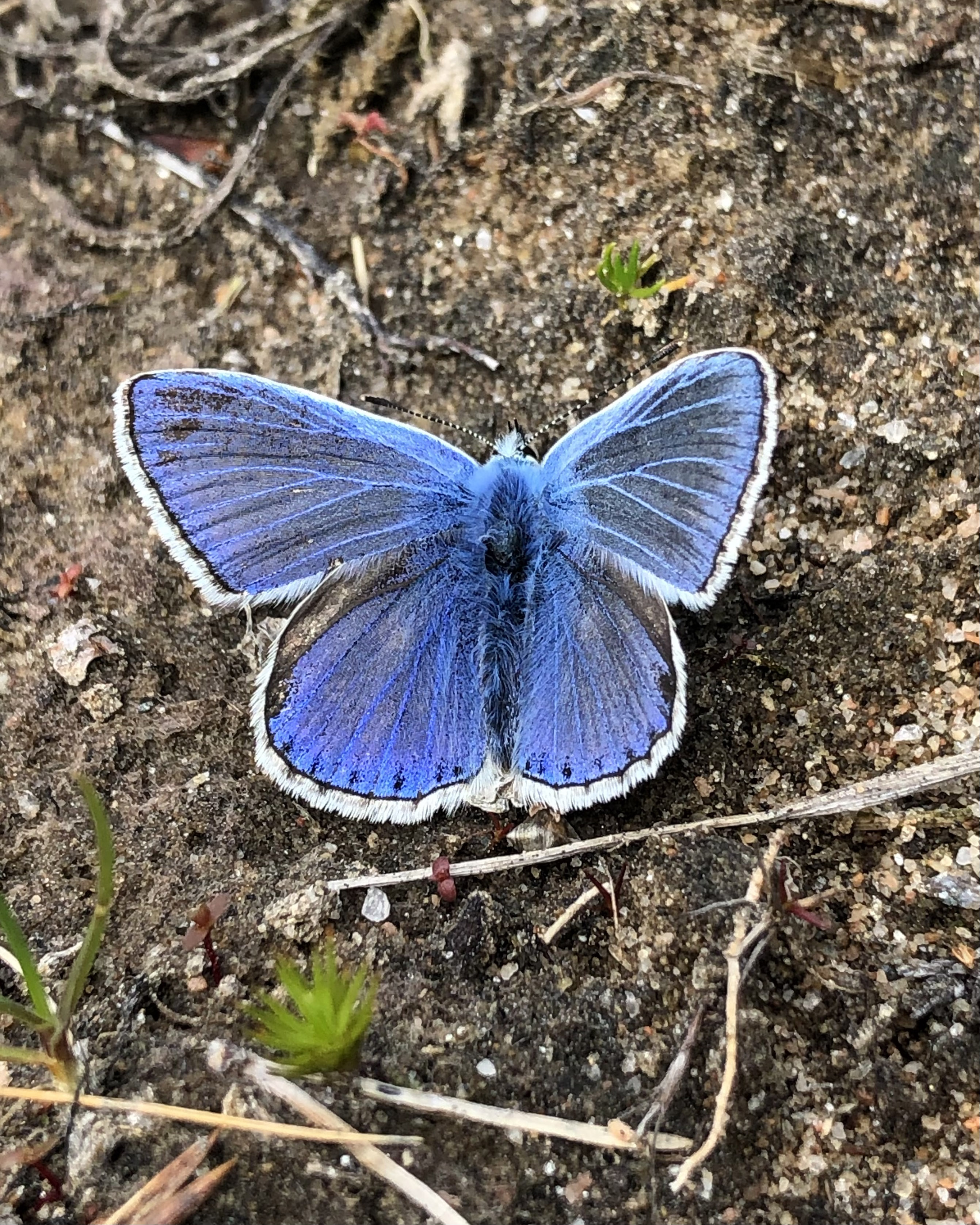
During my research trips I’ve been learning more about butterflies. Birds and mammals have been favourites of mine for years, but insects in general have never been my strong suit. This summer I thought I’d make use of not being able to birdwatch as much, and expand my nature knowledge in another area. I found it fascinating, stopping frequently to crawl on the ground for a closer look at a red admiral, peacock or, on two wonderful occasions, a common blue.
Common blue
Small pearl-bordered fritillary
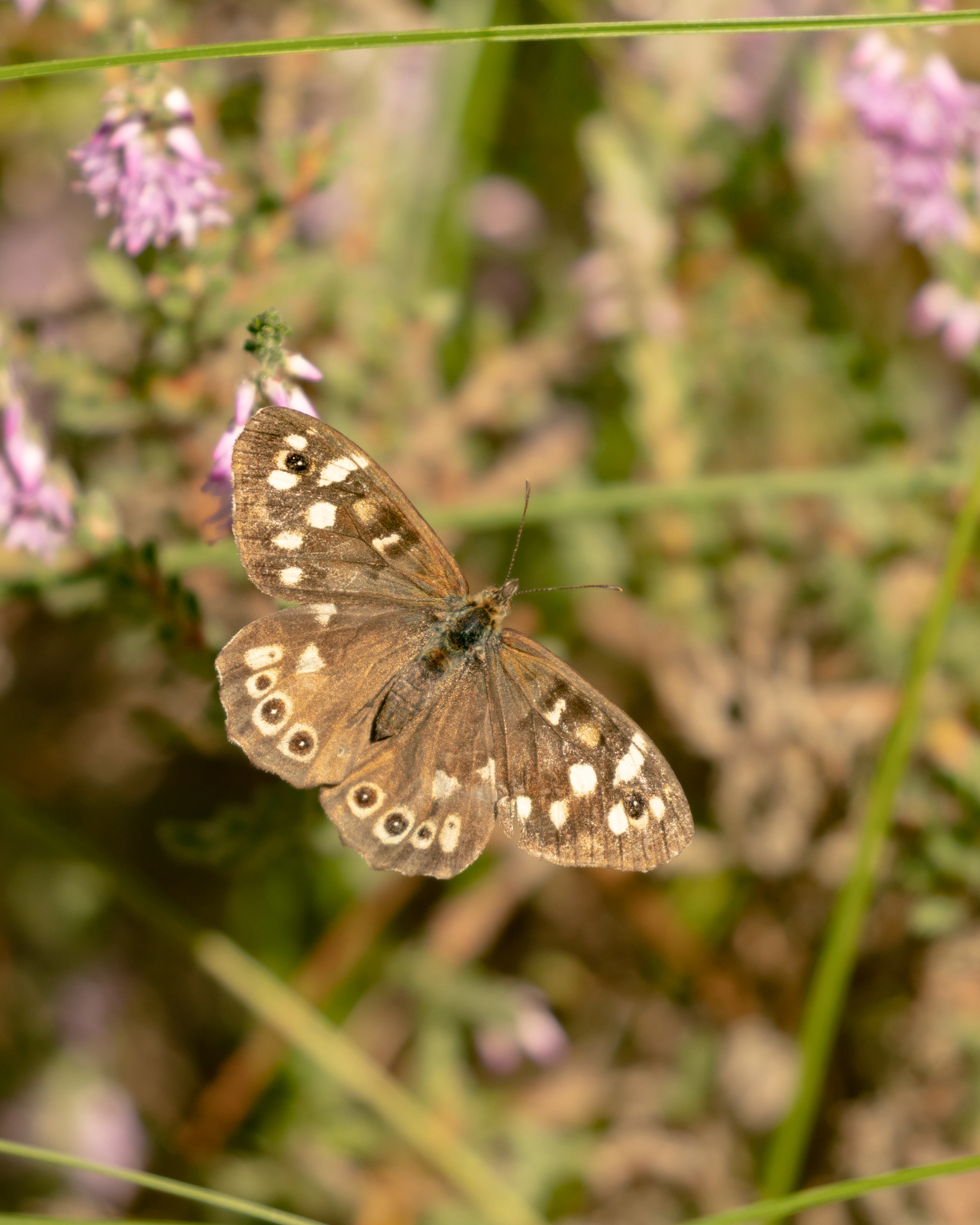
Speckled wood
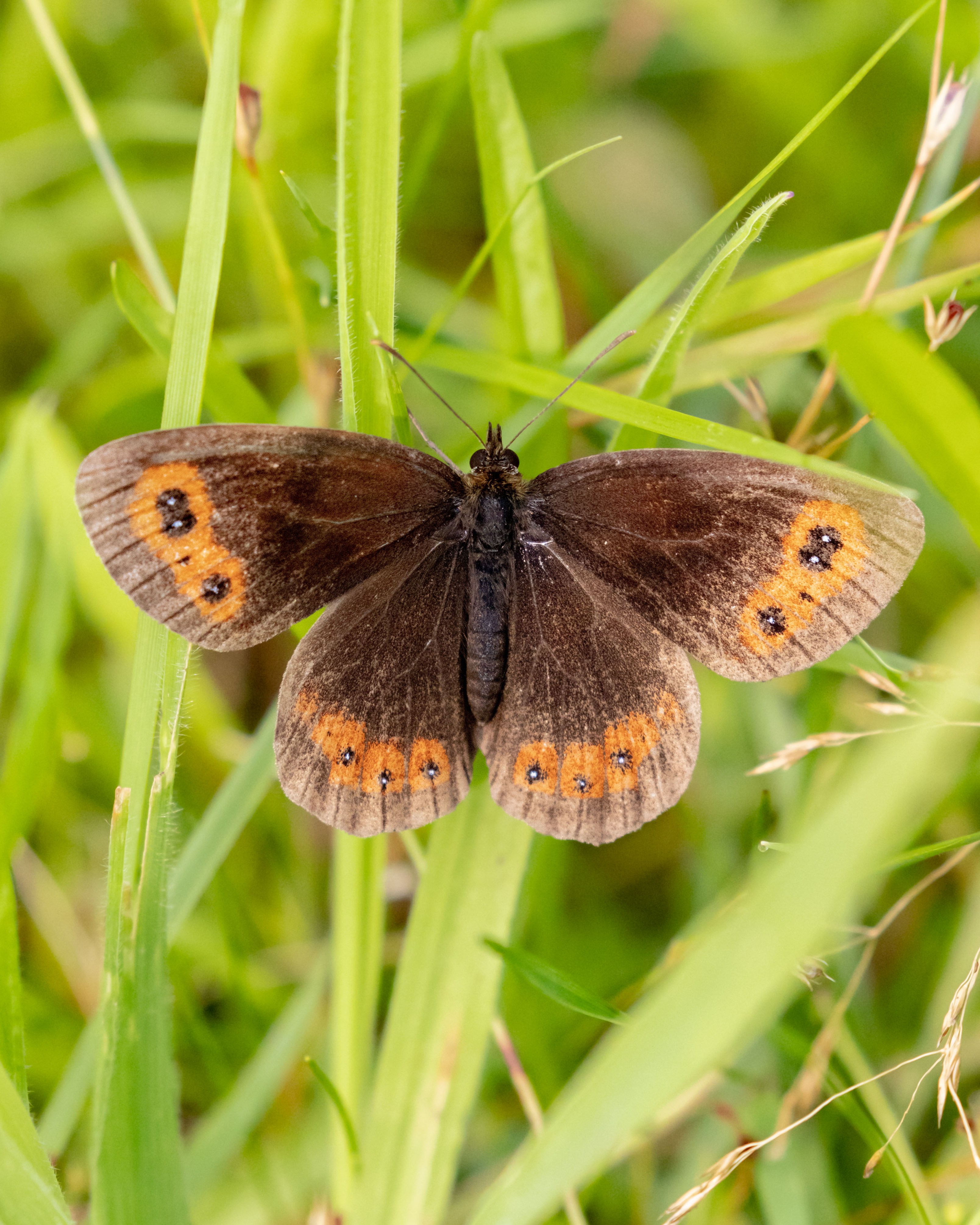
The butterfly I saw most was Scotch argus, which has made my English friends jealous. Many of them have never seen one, let alone several on just a short walk. It’s been a fantastic learning experience and one that I’ll continue next year.
Scotch argus
Now, however, as both summer and my time working on my first book draws to an end, I’m looking forward. Fly agarics are popping up in the forest and eiders are rushing past over slate grey waves. I know it won’t be long before some of my favourite birds – fieldfares, redwings and long tailed ducks – make their reappearance. That chill in the air is the sign that autumn is waiting in the wings, and I can’t wait.
I’m currently writing a Slow Travel Guide to North East Scotland, which will be out next spring. The thing about writing this book is I’m spending every working moment on it but won’t have anything to show for my efforts until it’s published. Until then it looks like I’ve fallen off the face of the earth. As we’re almost at the end of spring, I thought I’d finally resurface and reflect on what I’ve been up to over the past couple of months.
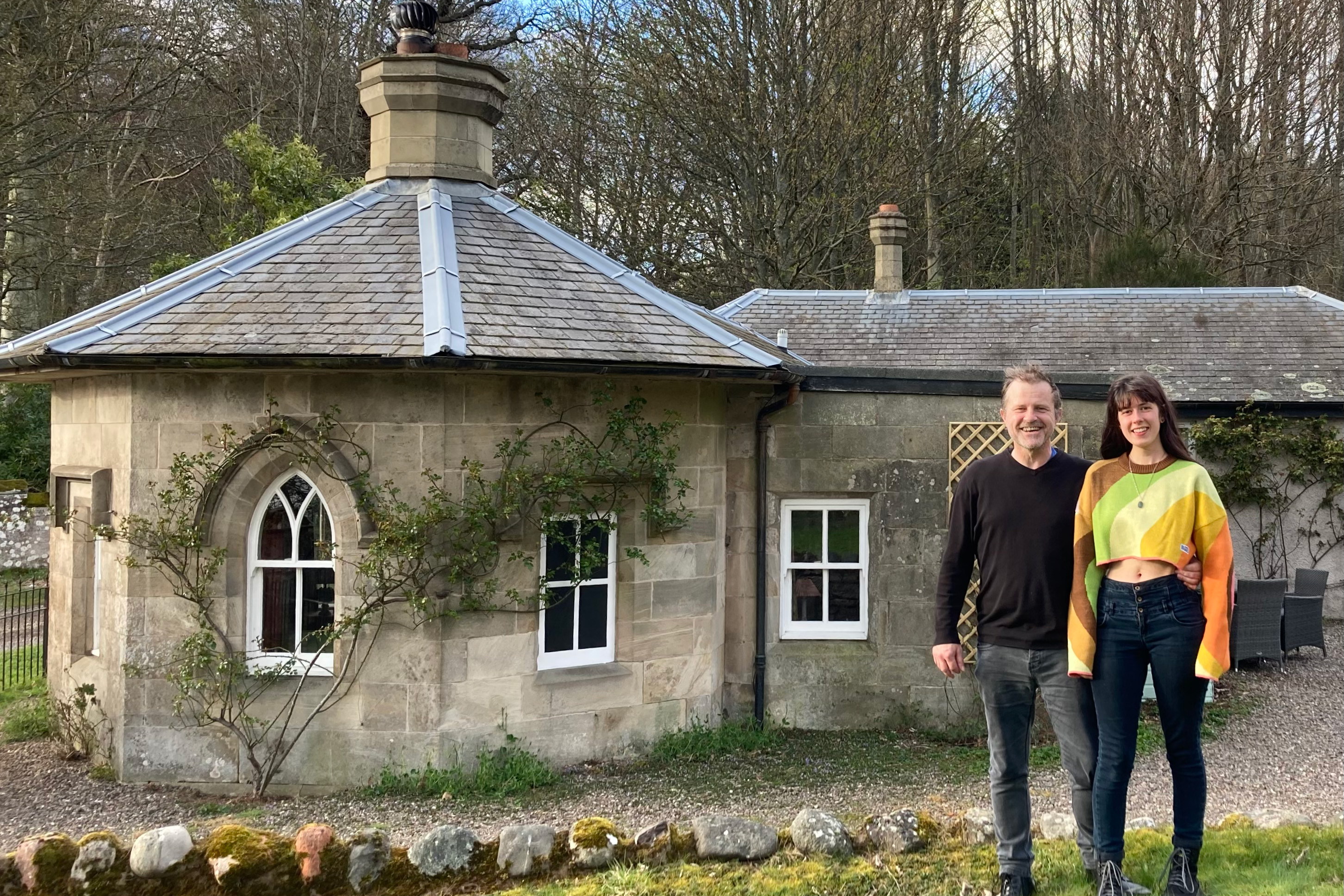
Inchrye Lodge
At the start of April I travelled down to Fife for a week. This was a particularly special holiday as I returned to the same cottage in the first part of Scotland I ever visited, back when I was eight years old. It was fantastic to be back and I realised just how much my wildlife knowledge has improved since that first visit. During my time in Fife I also visited the Audubon exhibition in Edinburgh, one of my favourite cites, and the incredible Topping bookshop in St Andrews.
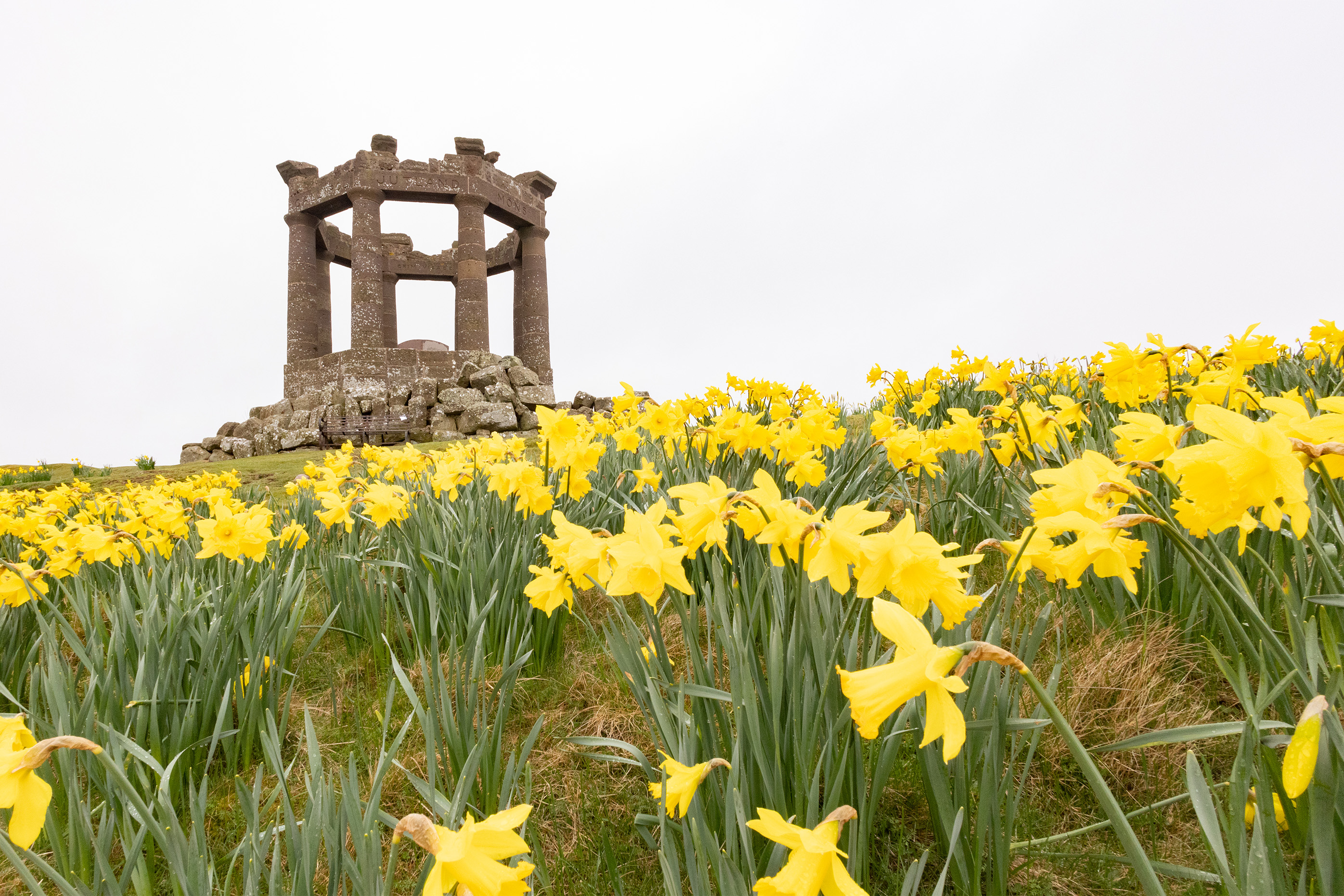
Stonehaven
On my drive back up from Fife I got into Book Mode again and stopped off in Stonehaven, a beautiful harbour town south of Aberdeen. I walked around the harbour and along the coast path and found a stone igloo decorated with thousands of shells hidden within Dunnottar woods.
Cairngorms Trip
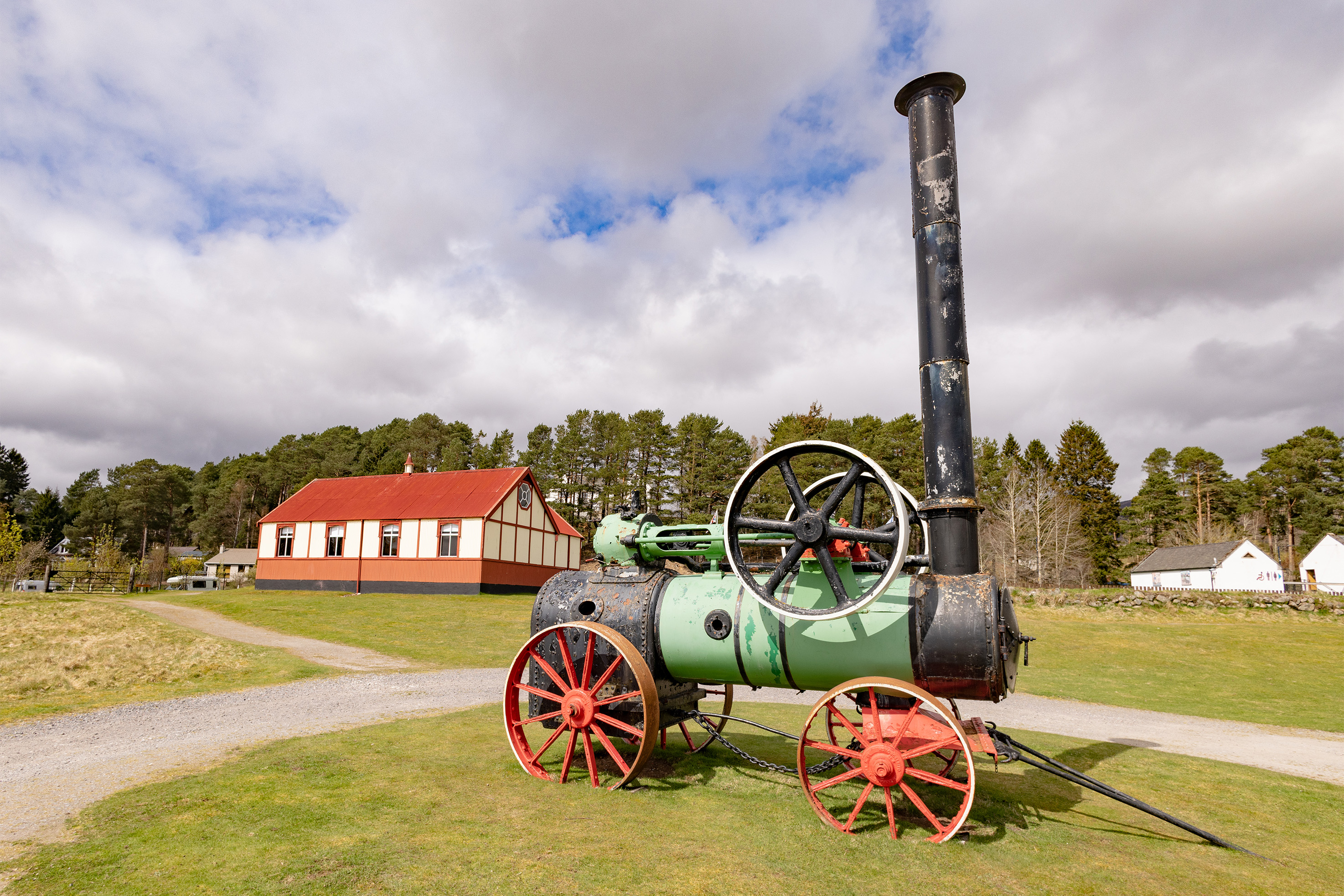
At the end of April I was off on another book trip, this time back to the Cairngorms. This has been my favourite section to visit and write about so far. Although I’m very attached to my home in Moray and have been so impressed by Aberdeenshire’s coastline, it’s the ancient Caledonian pine forests of the Cairngorms that have really taken hold of me. During my time in Boat of Garten and Newtonmore I visited the amazing Highland Folk Museum, discovered the Green Lochan – so named because the fairies wash their green clothes in the water – and had an incredible hide encounter with four badgers!
Mindful Creative Retreat
At the start of May I had a brief break from book writing to take on another exciting project. Last summer I co-hosted a Mindful Creative Retreat on the Moray Coast. It was a great success so we held another one this year. The guests really enjoyed unwinding from their own work and commitments and dedicating time to nature writing, mindful photography, breath work and even outdoor yoga each morning. I benefitted from the experience too and found the process of slowing down and being in the present moment so rewarding.
Peterhead
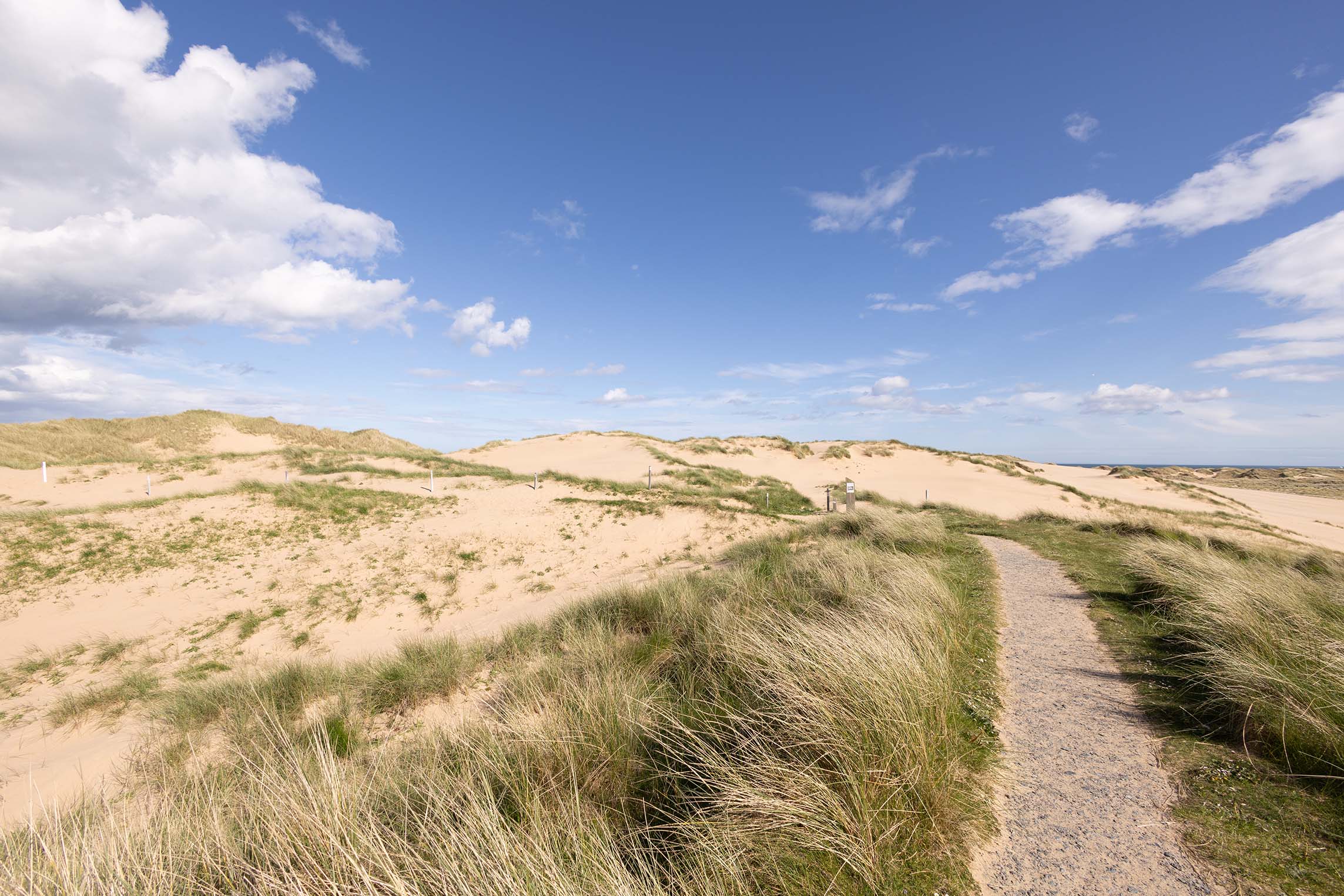
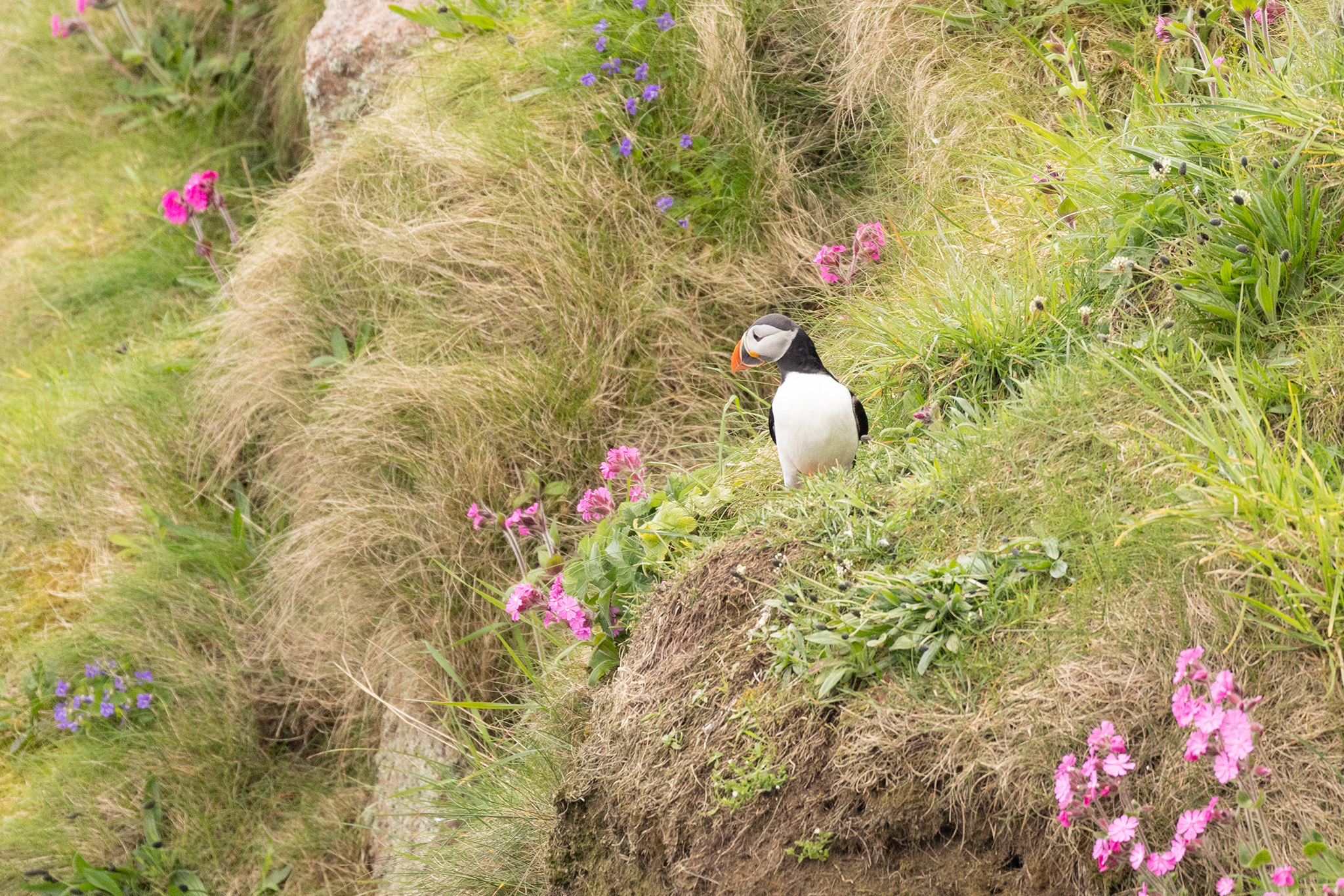
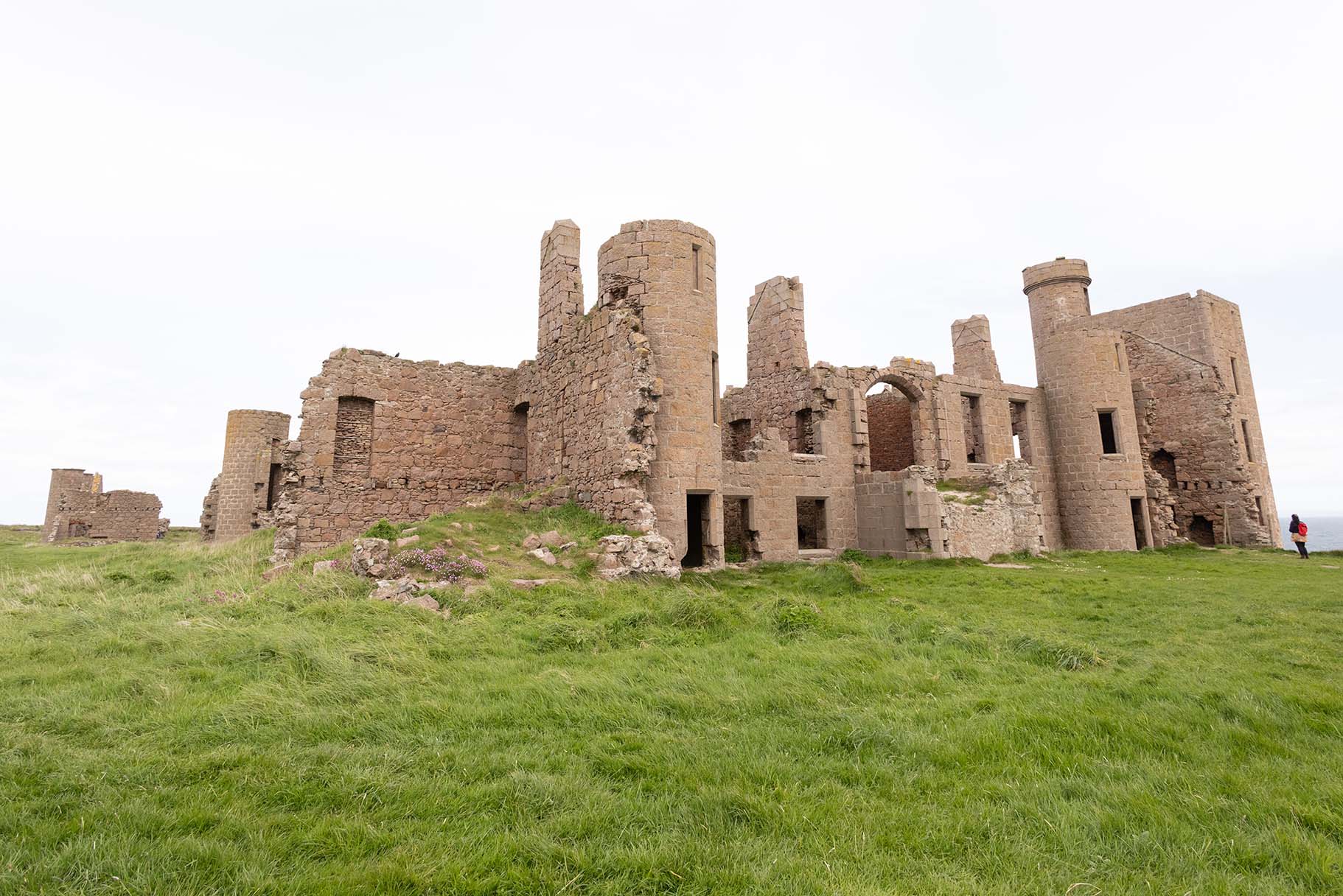
And finally, last week I had another book trip back to Aberdeenshire. My friend Kim, who I co-hosted the retreat with, kindly offered me a place to stay in Peterhead, which was a great base for exploring more of my new favourite coastline. I visited Peterhead Prison Museum and Slains Castle (which was inspiration for Bram Stoker’s Dracula castle), walked barefoot through the wind-sculpted dunes of Forvie and even managed to see a couple of distant puffins.
As we move into summer and I carry on beavering away with my book, I hope I can maintain the mindful practices I explored during the retreat and make them a regular part of my routine.
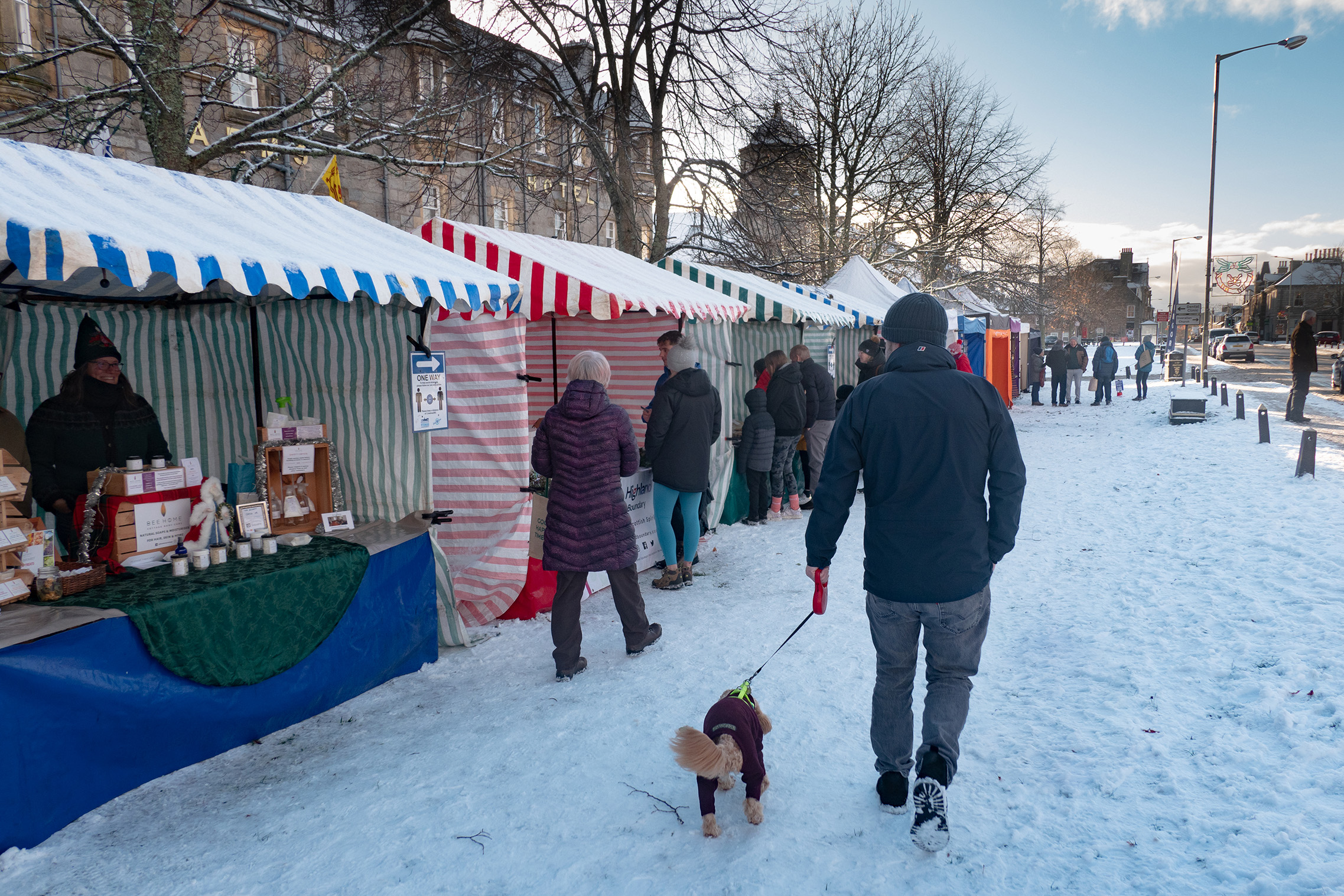
Typical. I lived in southeast England for 18 years and never had snow in November, but it seems like it was all over Britain this weekend! As I live on the coast snow is rare here, but after a 40-minute drive south to Grantown-on-Spey there was snow beneath my boots again.
A festive food market was in full swing along the main high street. We had a quick browse before heading down the aptly named Forest Road to one of my favourite wild places in Scotland: Anagach Woods.
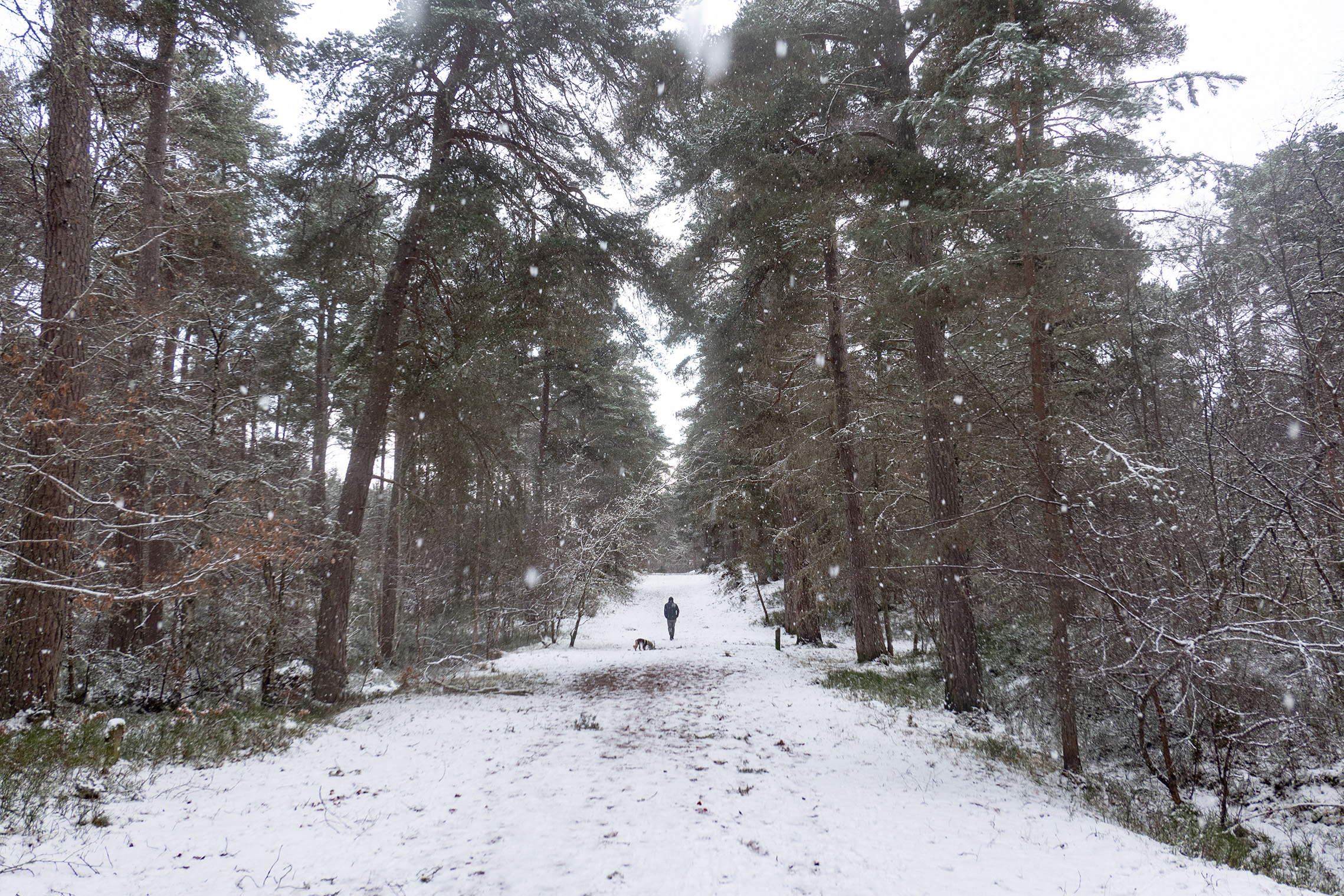
The last time I visited was on a sweltering afternoon in May. This time everything was coated in white, adding cartoon highlights to branches and trunks. Over the past couple of years I’ve become a real winter baby so I was in my element.
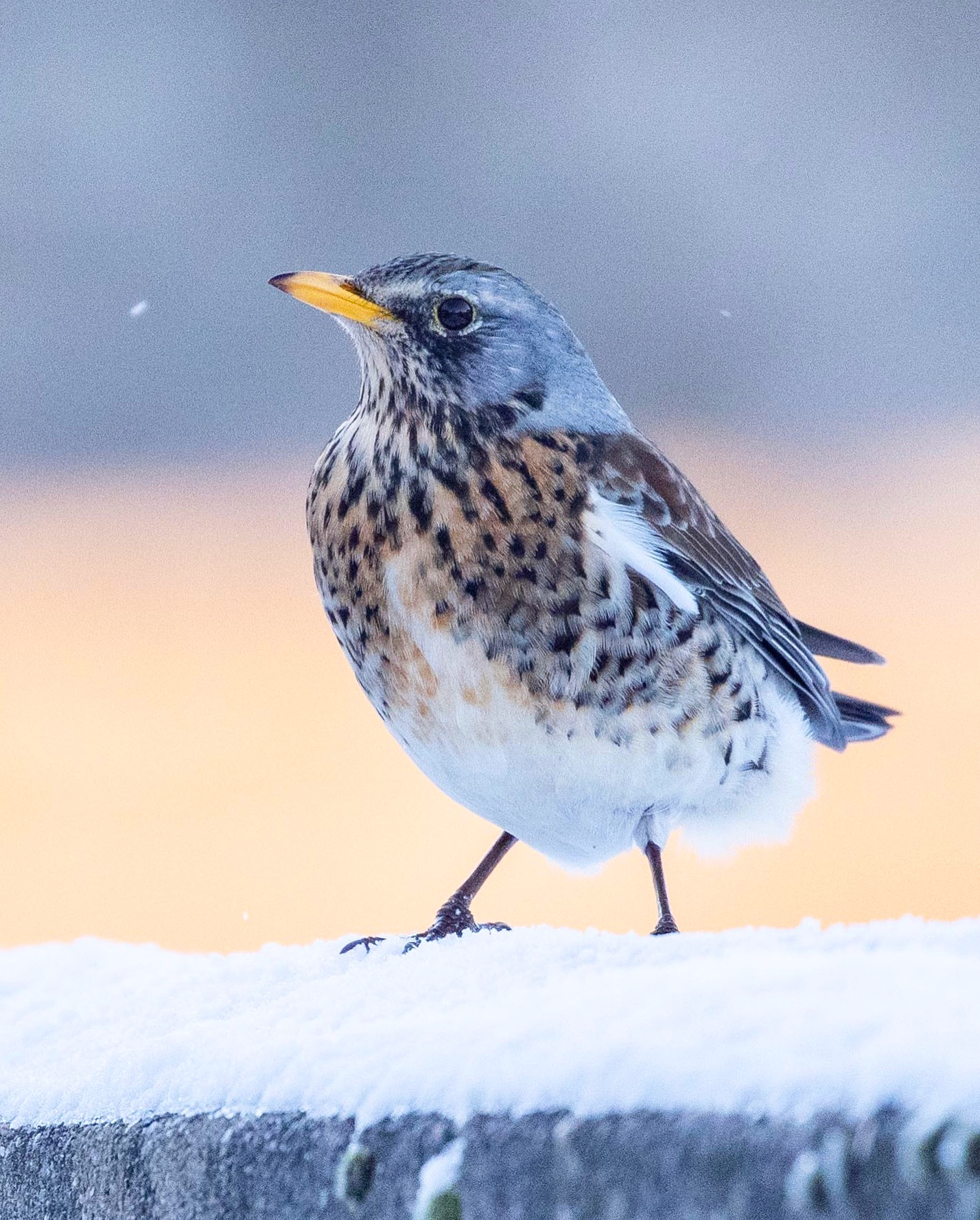
As we walked along a high ledge overlooking deep bowls of forest floor on either side, a chattery cackle overhead made me look up and jump for joy: a flock of fieldfares were flying over!
I’ve been longing to see fieldfares since they left for their breeding grounds in Scandinavia at the end of last winter. They’re one of my power five – along with bramblings, waxwings, redwings and long-tailed ducks – and I can’t wait to try and photograph them again this year.
Taken in February this year during heavy snow in my home town
There’s nothing like snow and fieldfares to get me even more in the winter mood!
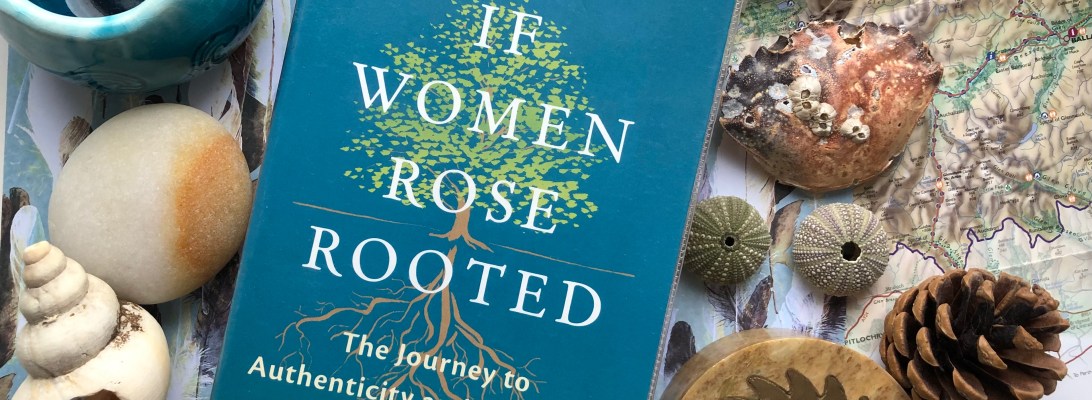
I couldn’t help a slight eye roll when I read the shower of adjectives on the cover reviews of this book: “powerful… inspiring… mind-blowing…” But it actually ended up being all of those things for me, even the last one.
If Women Rose Rooted is a combination of three topics I care strongly about: nature, women and Celtic mythology. I’ve been directly involved in the first of those since childhood – the natural world is the basis for everything I do, both professionally and personally. But the other two have slowly gained momentum in my mind since moving to Scotland.
In 2019 I was earning minimum wage in the town I grew up in. It was where I’d gone to school, met my best friends and spent every weekend, but I didn’t belong there anymore. I didn’t realise just how much I didn’t belong there until I stayed with my parents for a week in their new house in Moray, northeast Scotland.
After days spent walking along beaches and through forests, spotting red squirrels, stonechats and grey seals, I returned to England with a crash. Scotland had shone a harsh and revealing light on the current state of my life. My writing had dried up, the camera was gathering dust, and most importantly I wasn’t happy.
One morning before work I sat in my car in a multi-storey car park and cried. Proper ugly sobs. I splashed my face with cold water to stop my eyes puffing up in front of the customers.
I felt a toxic mix of emotions: disappointment about leaving university and returning to the same place I was in before; physical and mental discomfort from spending eight hours a day staring at the same four walls, not making any progress in my career whatsoever; longing for a place currently out of reach; and shame that my situation was a lot better than some and I should be grateful I had work at all.
But I couldn’t shake the feeling of displacement, like I wasn’t where I was supposed to be. Scotland was beckoning and each day the pull grew stronger. I made a playlist of inspiring songs and that worked for a while, but I knew in my gut I had to move.
And the universe, being its freaky-deaky self, confirmed that for me when the shop I was working in closed and we were all let go. Everything in me lifted – I swept up my belongings and bolted north.
The effect was immediate. Words flowed out of me, I took hundreds of photos and I walked for hours through my new home. Now, 21 months later, I feel rooted to land for the first time in my life. I’ve developed a fierce love for the place I’m in and the inspiration I soak up from it. I’ve found my home.
Last month I saw If Women Rose Rooted in the library, its back to the wall so its front cover faced me as I browsed. It had been on my list for a while so I gave it a go. Several pages in I felt the strange sensation of someone I didn’t know seemingly talking about my own life.
“I am sitting in a car,” the author Sharon Blackie writes, “outside an ugly office building in a small town… for which I have absolutely no affection. I have no affinity for this part of the world; my internal compass points north and west, and my feet literally feel as if they are in the wrong place.”
It’s in this moment that Sharon hears the Call. Unfortunately for her it comes in the form of a panic attack, but it was this experience that beckoned her to change her life. A year after that incident, she spent two weeks in Ireland and writes: “For the first time in my life I felt as if my feet were in the right place.” The parallels with my own situation were undeniable.
Memories of my own Call came flooding back. I count myself extremely fortunate that my own experience of what Sharon calls the Wasteland was mild and brief compared to hers. I’m grateful that I recognised what I needed to do and was able to do it a lot sooner.
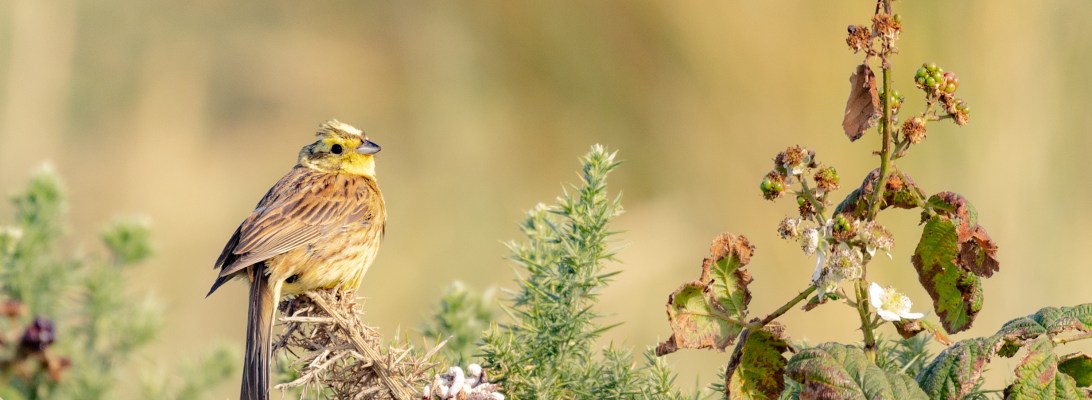
So my new roots continued to grow in Scotland. I was in a place I felt I belonged to – one that resonated with me. After walking the same trails over and over, I picked up on seasonal changes happening around me. I followed the rhythm of the tides and learned where yellowhammers might be and what time of year to expect long-tailed ducks. I tuned into this amazing new place, and that is the essence of Sharon’s book.
“Once up a time,” she writes, “the people of our Celtic nations knew that our fate is inseparable from the fate of the land we live on… There is a Gaelic word for it. In Irish, the word is dúchas; in Scottish Gaelic, dùthchas. It expresses a sense of belonging to a place, to a certain area of land; it expresses a sense of rootedness, by ancient lineage and ancestry, in the community which has responsibility for that place.”
I was born and raised in England but I have both Irish and Scottish lineage and feel drawn to wild Celtic places. I was pulled north to the windswept coast of Moray and I already feel fiercely protective of it. I spend every day working on something to do with nature, whether it’s writing, photography or filmmaking, but I still feel a sense of helplessness that I’m not doing enough. Our planet is sick and I want to do more, but I don’t know what.
Once again, Sharon Blackie leaned out of her book and seemed to speak directly to me. One of the many incredible women she interviews is Scilla Elworthy, who founded an NGO to initiate effective dialogue between nuclear weapons policy-makers, and co-founded Rising Women, Rising World – an international community intent on building a world that works for everyone. She’s been nominated three times for the Nobel Peace Prize.
When speaking to Sharon about her work with Rising Women, Rising World, Scilla says this: “Investigate what breaks your heart. Then ask yourself whether that is where your passion lies, think about what your key skills are, marry the two – then you have your initiative.”
When hearing the Call, leaving the Wasteland and restoring balance to your work, health and daily life, it’s important to find the unique part of yourself that you can bring back to the world.
“It is easy to get disheartened,” Sharon says. “So many of us go through stages of feeling helpless, or believing there’s nothing that can be done. But there’s always something that can be done, no matter how small… The Journey is about accepting that we each have a responsibility for the way we live our lives, for our footprint on the planet.”
Reading that was another comfort, especially as COP26 is still present in my mind. No single person can save the world, but we can all make small changes and inspire others to do the same.
Author and needleworker Alice Starmore, another of the women Sharon talks to, says: “It’s hard to care for what you don’t know.” I aspire to educate and inspire people through words and images, and I will continue to use them to celebrate and encourage the protection of nature.
And even though I’ve been watching and studying wildlife in some form for most of my life, there are obviously still things I don’t know as well. The world of plants and trees is still largely a mystery to me, as are moon cycles, stars and geology. To set my new roots even firmer in the ground, I need to continue learning about the land I belong to and share it with others.
In all the Celtic myths and legends Sharon shares in If Women Rose Rooted, the women knew the land and were deeply connected to it. In our pursuit of progress, we’ve forgotten the importance of being rooted and we’ve lost touch with our heritage.
There are many cyclical elements to Celtic tradition and these circles still surround us today – day and night, the lunar cycle, seasons and tides. Instead of a circle, we’re currently living on a straight line which cannot be maintained. Rediscovering our history and stories will help curve that line back into a circle.
I didn’t expect so much to come pouring out of me when I started writing this. It’s rare for a book to affect me so deeply, but with so many parallels between Sharon Blackie’s Calling and my own, I found myself stunned at many moments while reading this book. I would recommend it to any woman who has lost her way or recently found where she needs to be. We all have work to do, but with each small step we can make change.
It’s about this time of year that I turn into an excitable child again. The moment we cross into November, my mind’s full of frost, knitwear and Christmas. I think it’s linked to the clocks going back. While getting up before the sun can be horrid, I love that my afternoon walks are in the dark now. I’m sure it won’t be long before Christmas lights start appearing up and down the village.
Last winter I was spoilt rotten with over a week of thick, persevering snow. It was unheard of in Burghead, seeing as we jut out into the Moray Firth and the salt air usually prevents anything more than frost from settling. I know I shouldn’t expect another wonderland like that again this year, but the aforementioned excitable child has her fingers crossed!
The natural world is stunning throughout the year but in winter I believe it becomes even more special. Here are some of the things I love most about the silver season.
Frost and ice
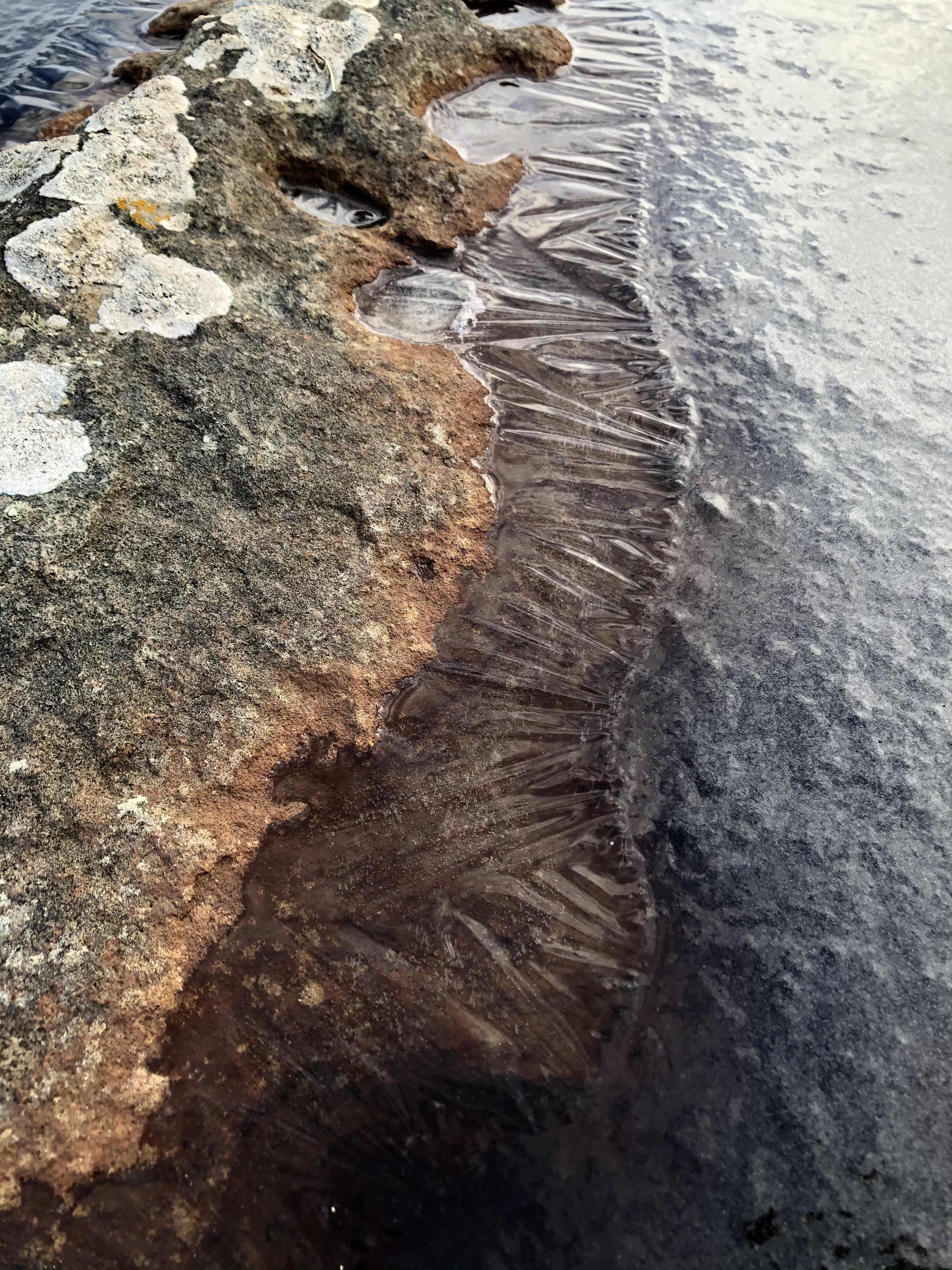
Frost is what first got me interested in macro photography. The sparkly sheets covering the ground look pretty even from afar, but getting right up close to shards of microscopic ice is completely addictive.
It’s not all sharp and jagged either – in the past I’ve photographed a huge range of shapes including swirls, ribbons and bubbles.
Winter sunsets
At this time of year the sun takes on a milky, diluted glow which is just delicious to photograph. I’m not much of a landscape photographer, but on my recent trip to Portknockie I spent hours on the beach capturing Bow Fiddle Rock as the light dimmed.
Initially the rock was bathed in gold but once the sun sunk below the horizon, the sky behind Bow Fiddle glimmered with pinks and blues. It’s a chilly image and I’m really pleased with how it came out.
Northern lights
I count myself extremely lucky to live in a part of the UK where the northern lights occasionally show up. The displays here aren’t as elaborate as they are in Norway or Iceland and they can be tricky to make out with the naked eye, but last weekend there was a particularly good show and I managed to catch a few pillars on camera.
The northern lights remind me of His Dark Materials, which remind me of witches and animal dæmons and all that good stuff. I also believe the aurora is the closest thing to magic we can physically see, and it’s one of my ultimate winter highlights. Even if you don’t live in an aurora zone, you can still watch it real time on this Shetland Webcam. There’s the added bonus of not having to get freezing cold!
Migrant birds
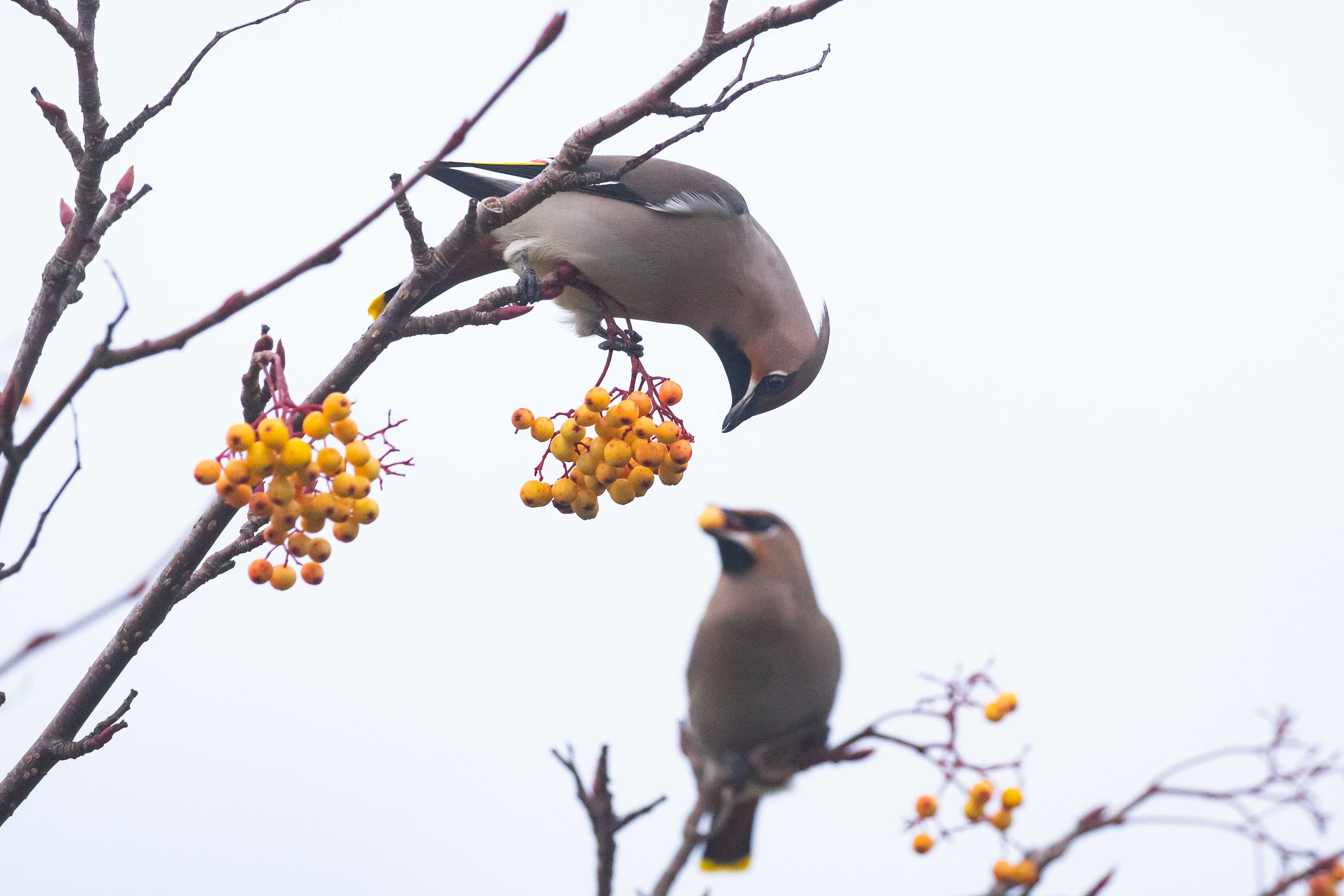
Summer and winter are great times to be a birder as there are new faces to see. While I love the ospreys, swallows and whitethroats that accompany long summer days, I have a soft spot for the winter migrants. I managed to see waxwings last year and I’ve got everything crossed that we’ll get another royal visit from them this time round, but some years they just don’t show. Even without waxwings, we have redwings, fieldfares, bramblings, eider ducks and long-tailed ducks on the cards. So many photo opportunities!
I know a lot of people struggle with the long nights during winter and this is definitely a challenge, but I hope this list will provide some wintery inspiration. There’s plenty still to enjoy in the dark half of the year.
Another hectic month! I’ve travelled more over the past few weeks than I have all year. At the end of June I drove down to Hertfordshire, where I’m now staying until mid-August. It’s so strange being in my home town again after a year away – the same old walks I used to do daily are fresh now and I’ve been so surprised how many different birds I’ve been hearing. Since learning a few more bird calls in Scotland I’ve realised there’s more wildlife around here than I thought – it’s just a lot harder to find!
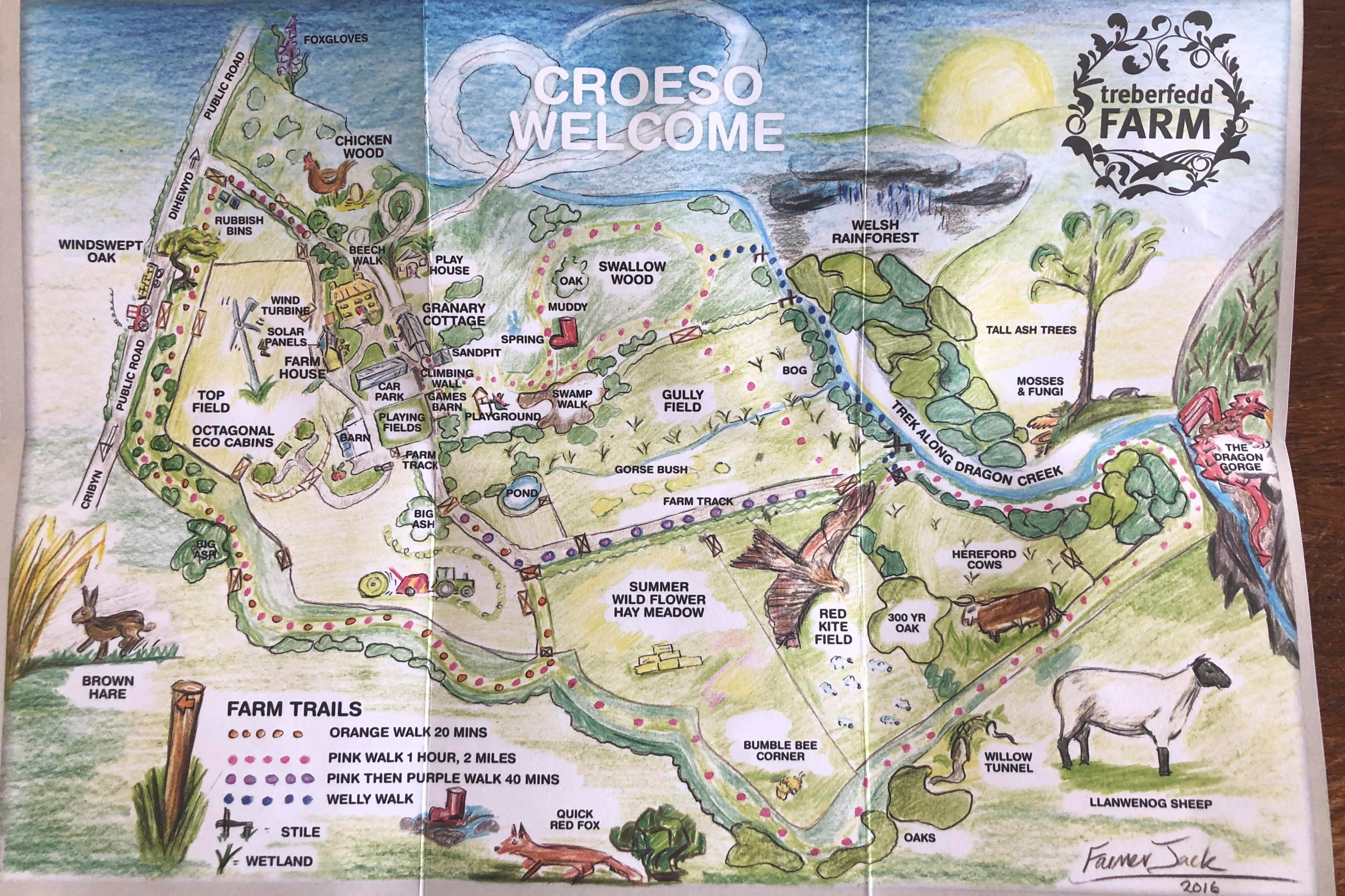
The day after I arrived in Herts I got on a train and headed west. My master’s degree has almost finished but we booked a short stay in Wales for our last residential. I stayed over with a friend in Bristol – seeing my first kingfisher of the year that evening – and the next morning we drove to Treberfedd Holiday Cottages in Lampeter, west Wales – our home for the next five days. This was my first time in Wales so I was excited to see what wildlife was around.
View from The Farmhouse
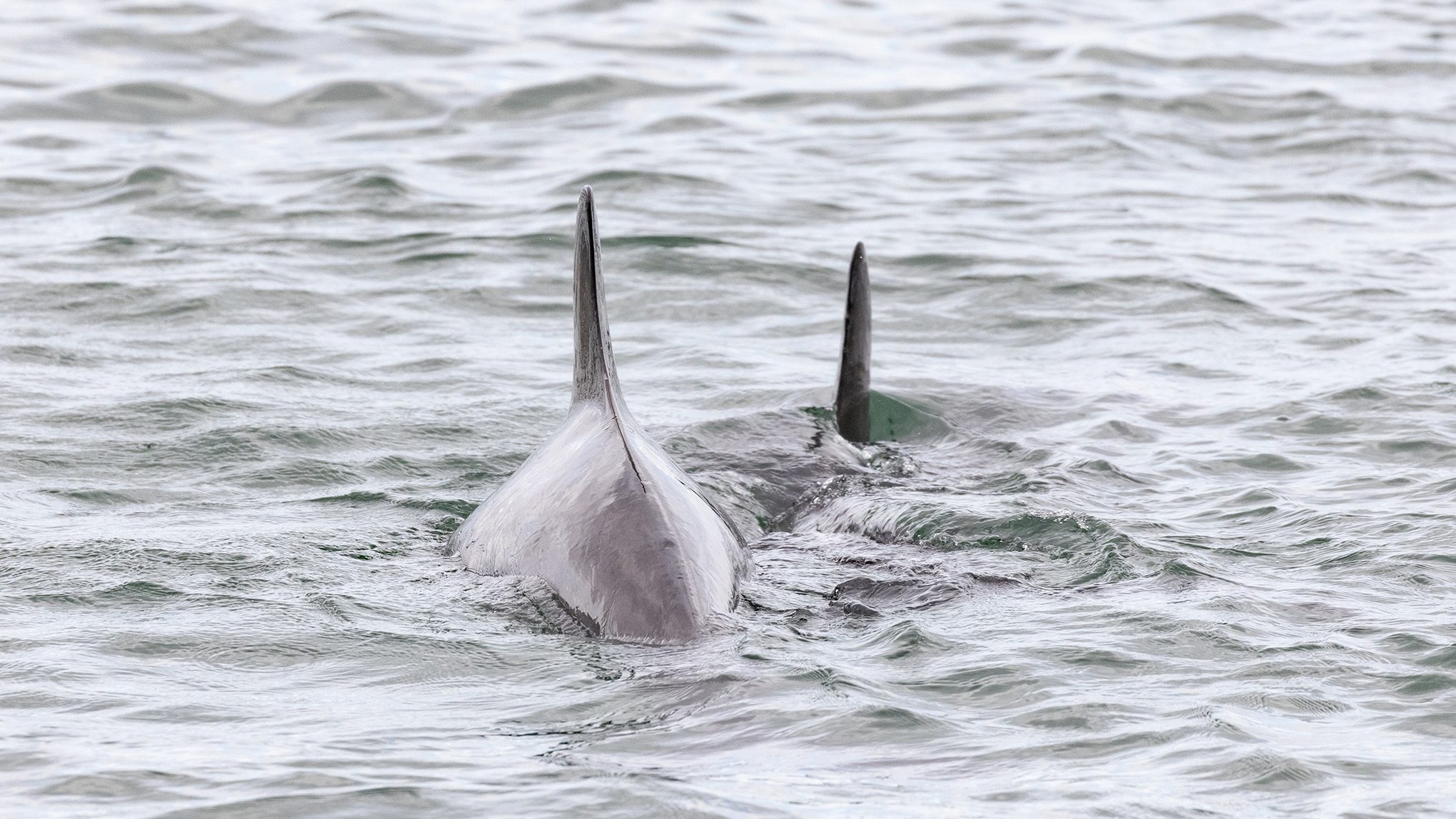
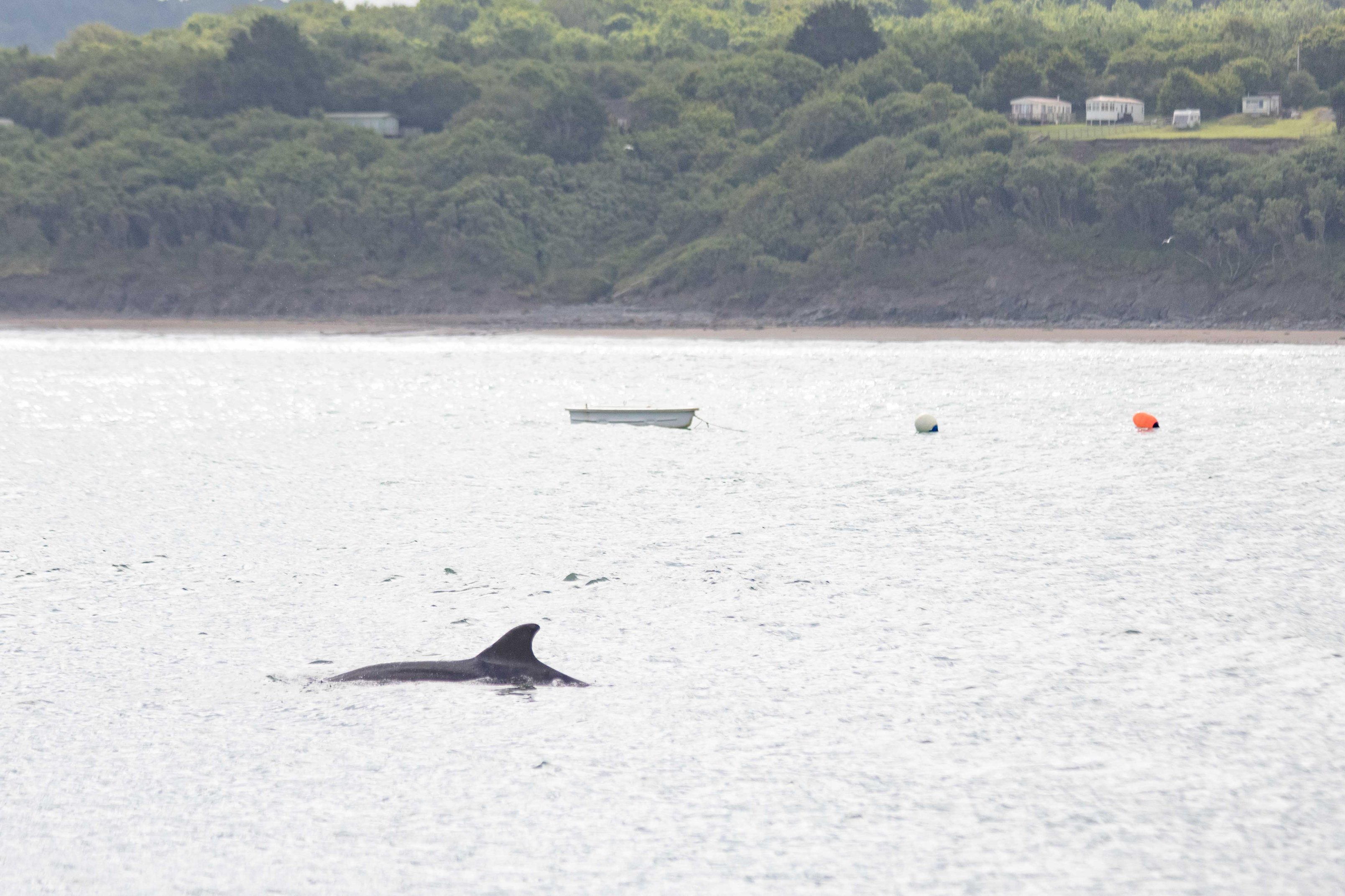
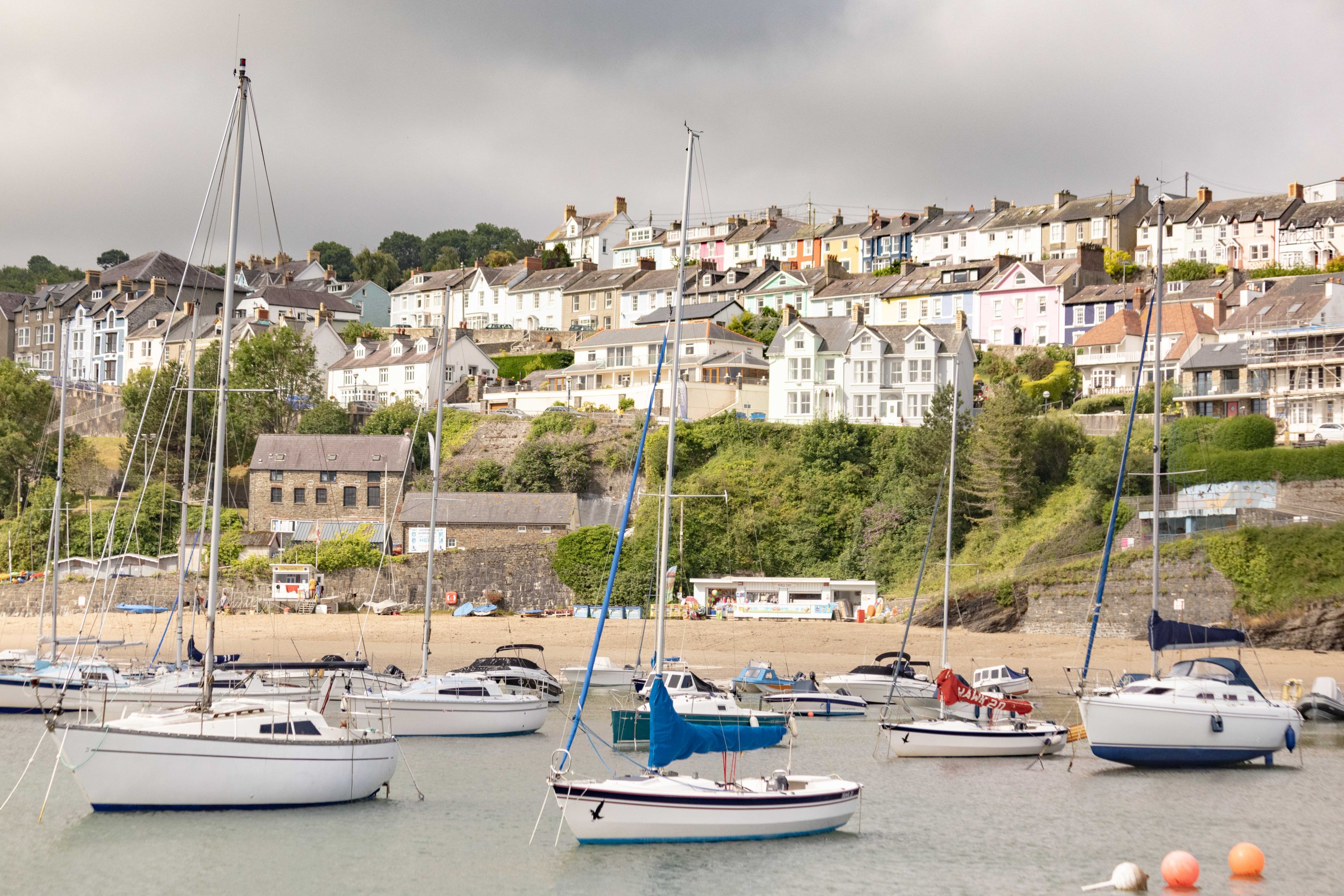
On one of the days we visited the seaside town of New Quay (not Newquay). We’d booked onto a dolphin watching boat trip, but as we stood waiting for the boat to return I spotted a dolphin right next to the harbour! It surfaced leisurely every few seconds and hung around for ages. It was strange to think this was the same species I spot from home, over five hundred miles north. It was great to see everyone else so excited.
Sadly I should have stayed at the harbour… During the boat trip we didn’t better the views we got from land and I had an unexpected bout of seasickness that nearly ruined everyone’s afternoon. I can’t believe how awful on boats I’ve become! I got a case of ‘green face’ in Norway last year, and now I can’t even go an hour on a sightseeing boat without feeling queasy. Note to self: I’m a landlubber now.
New Quay Harbour
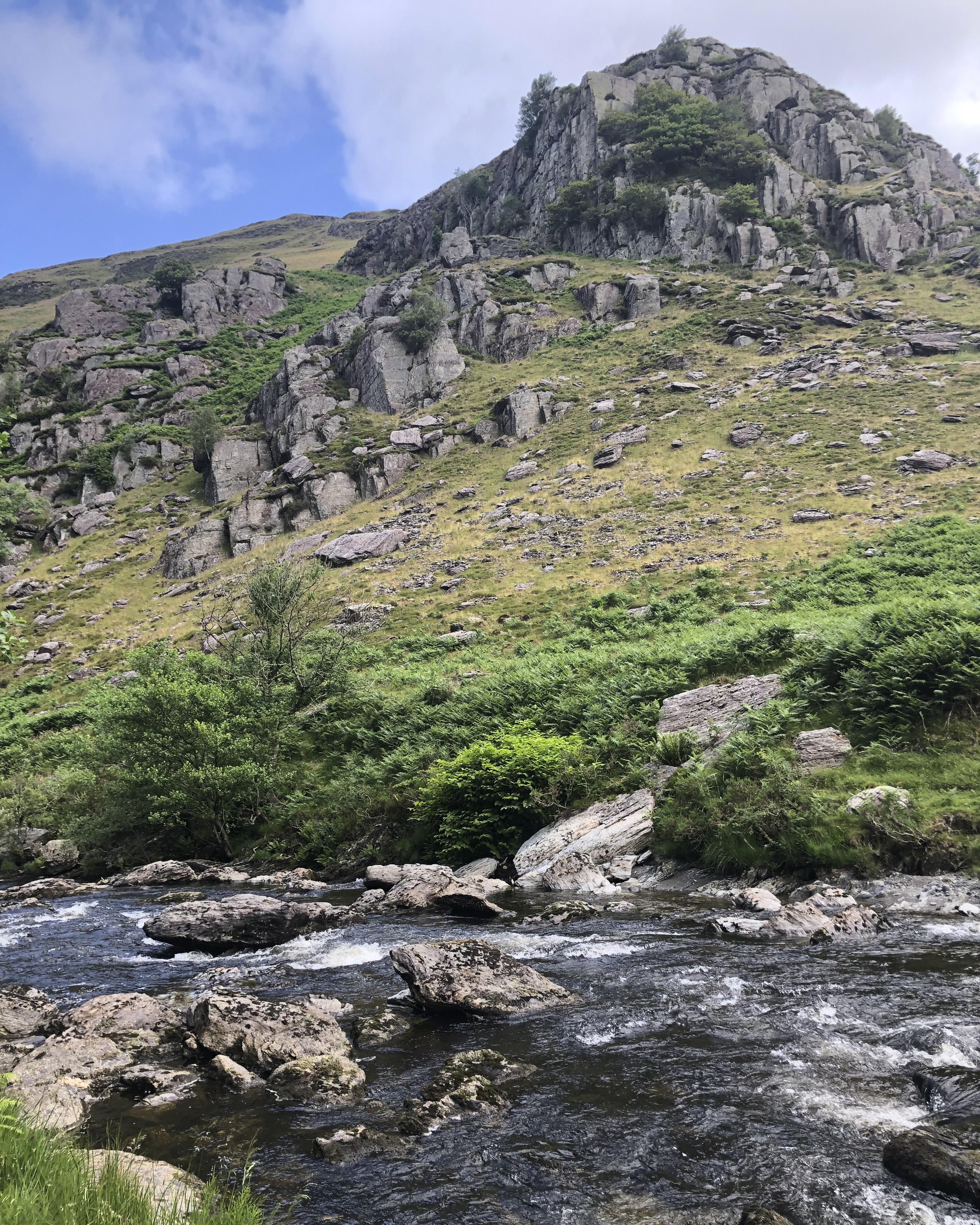
Another of our outings suited me far better. We visited a stunning area of Celtic rainforest called Gwenffrwd-Dinas. Surrounded by steep-sided valleys and threaded through with winding rivers, this was essentially my ideal home and all I needed was a wood cabin. I visited a Celtic rainforest during my time on the west coast and I didn’t realise just how incredible they are. I was dubious about the use of the word ‘rainforest’ but it describes the habitat perfectly – everything is that lush green you expect to see in the Amazon, just with willow warblers instead of howler monkeys.
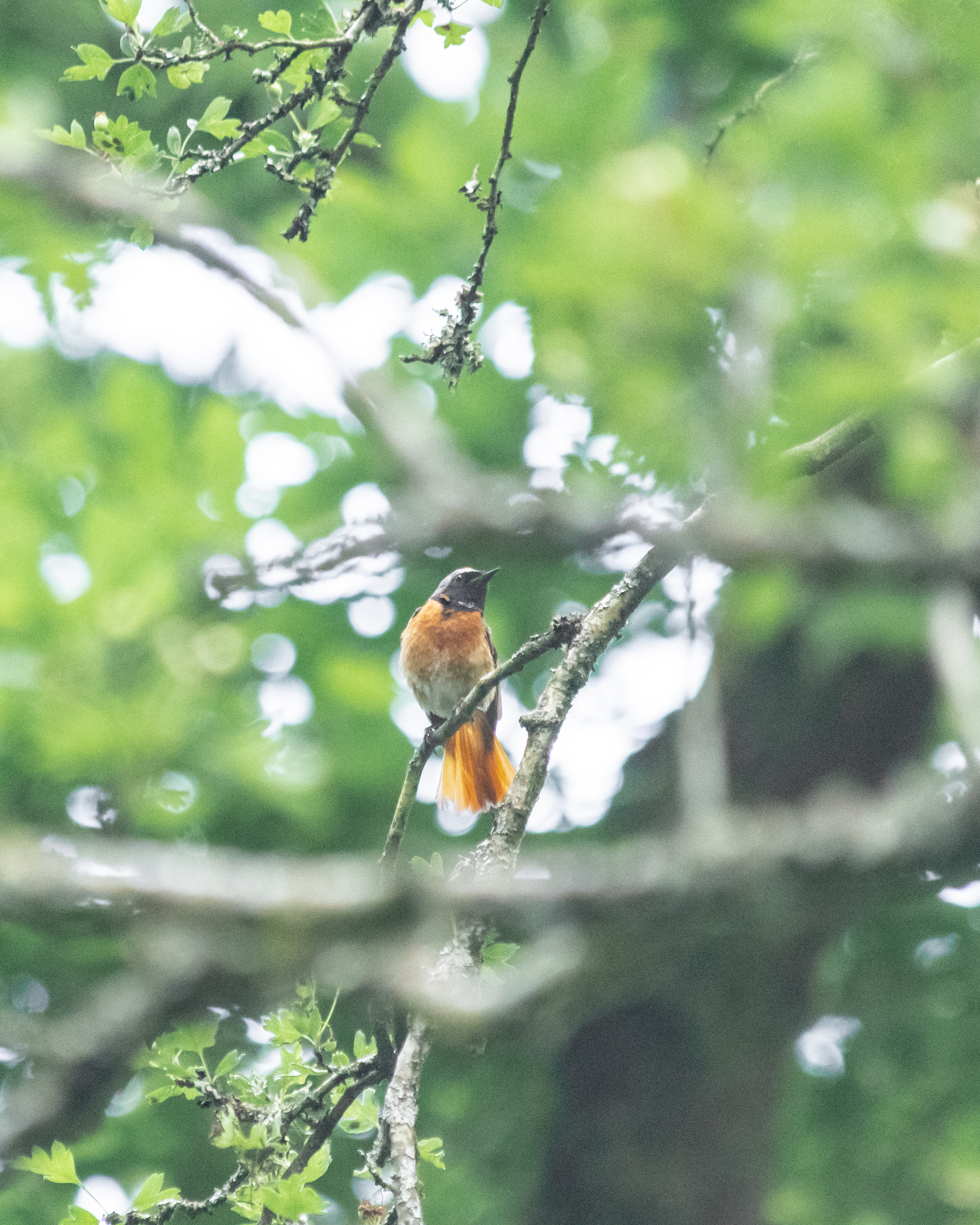
We followed a board walk beside the river – spotting a dipper and a family of grey wagtails along the way – and then clambered up steep rocks embedded in the earth, eventually looping back around. We’d been keeping our eyes peeled for redstarts, which are special summer visitors to the UK that I hadn’t seen before.
With no luck throughout the walk I was ready to accept defeat, but as so often happens we saw a flash of scarlet just before the car park, and there was our redstart! Two in fact – male and female taking it in turns to carry insects into a tree nest hole. I was thrilled to see them both, especially the vibrant male. After one drop-off he flew directly overhead and perched in a perfect gap in the trees. The sun shone through his slightly fanned feathers and I had to bite back a whoop.
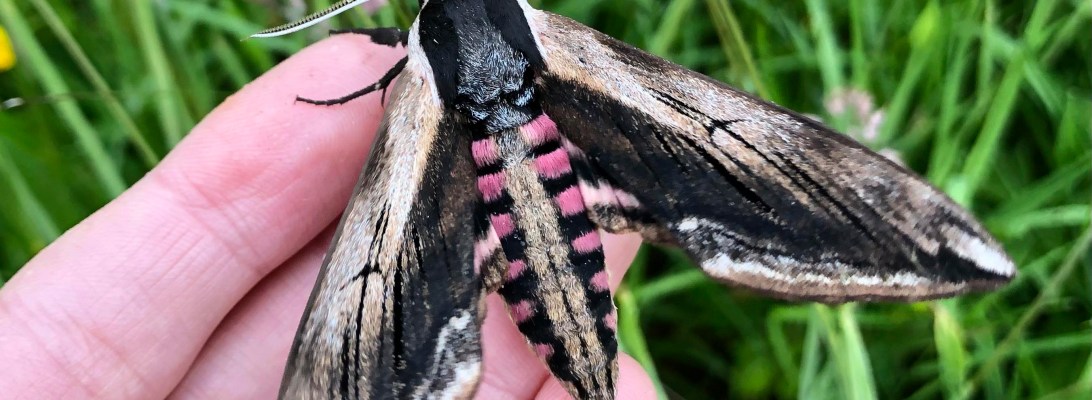
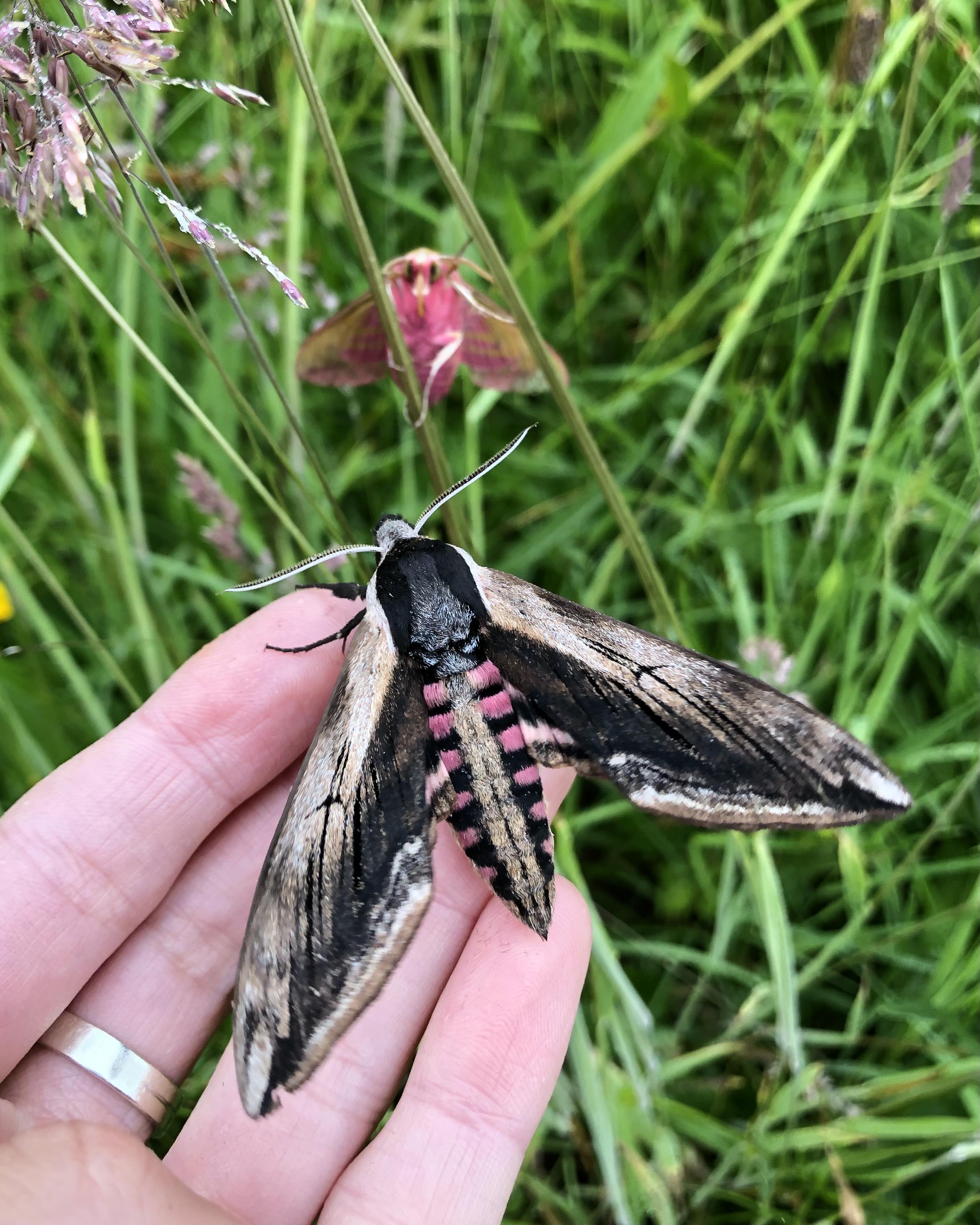
The redstarts were exciting, but my favourite part of the trip came on the last morning. My MA tutor had set a moth trap the previous night, and we headed over first thing to see what he’d managed to get. And what an incredible haul! With the help of the books we identified Blood-vein, Brimstone, Buff ermine, Garden tiger, Green arches, Peach blossom, Peppered, Plain golden Y and three of the most majestic creatures in existence: Poplar hawkmoth, Elephant hawkmoth and Privet hawkmoth. What gorgeous insects! The bubble-gum pink of the Elephant was stunning enough, but my favourite was the Privet.
Privet hawkmoth (with Elephant hawkmoth behind)
I couldn’t believe how big it was as it clung to my hand with sticky feet, flickering wings revealing a black and pink-striped body. After goggling it for several minutes, I was just about to put it carefully into the hedgerow when it took off, fluttered against my face for a few seconds then completely disappeared. Up until now I haven’t been much of an insect person but the hawkmoths gave me a whole new perspective. I left Wales feeling refreshed and with a load of new species to add to my list!






























 rebeccaonthewing.com