
Bringing Nature Indoors


As someone who likes to potter around outside for hours while I write and watch the world go by, I’ve had to adjust drastically to my new lockdown routine. I describe my writing style as “immersive storytelling” – I go out and write about what I see to inspire other people to connect with their local wildlife. Over the past few weeks, it’s safe to say that I’ve struggled to stay creative. Although the restrictions are starting to ease in various locations, it is still difficult to get the access to nature that we all want and need.

It has been proven that being in green space benefits all aspects of our wellbeing. In 2018, a team from the University of East Anglia studied how the health of people living in urban areas compared to those who had more access to green spaces. They found that spending more time in nature “reduces the risk of type II diabetes, cardiovascular disease, stress and high blood pressure”.

BinD 1 IMG_3518-2

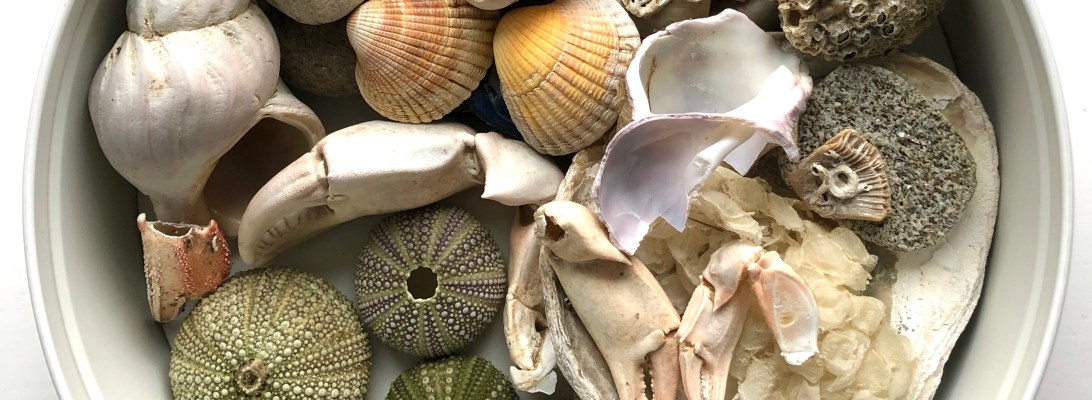
While cooped up indoors, I began to think of ways to stay connected to nature despite having to spend the majority of my time away from it. I’ve found that one of the best ways to do this is by bringing it indoors. I don’t mean catching birds or dragging in trees, but gathering small mementos. I’m lucky enough to live by the coast and I make a habit of collecting natural objects that I find on my daily walks. Together with other bits and pieces that I’ve collected from different habitats over time, I’ve made a nature table in my home that brightens up a room and provides a bit of wildness while I’m indoors.

Whatever habitats you have access to, there will be something that would make a good addition to a nature table. The great thing about wildlife is that everyone has a different relationship with it. My favourite things to collect are animal skulls – a male roe deer skull is pride of place on my nature table. Every item jogs a different memory in my mind. As well as being pretty to look at, a nature table is great for other senses too. I enjoy the tactile textures of frosted sea glass and rough sea urchin shells. Simply picking up these objects lifts my mood.

BinD 1 IMG_9202-2

Author and illustrator of “The Wild Remedy” Emma Mitchell has struggled with anxiety and depression for most of her life, but insists that nature plays a huge part in helping her feel better. In a recent Instagram TV upload she shared the surprising healing power of plants for improving mental health. Plants produce oils called phytoncides which help the plant fight pathogens, but these same oils can benefit us too. When we inhale or touch these oils, our blood pressure, pulse rate and levels of cortisol (a stress hormone) go down. These small reductions can help us feel more relaxed and lift our mood. As well as house plants and garden flora, this also works with pots of supermarket herbs on the windowsill!

While plants appeal to our senses of smell and touch, one of the best senses for exploring nature is sound. A study at King’s College London found that listening to natural sounds such as birdsong improves mental wellbeing for over four hours. Recording snippets of audio on a phone during a daily walk is a great way to bring nature inside. Whether it’s woodland birdsong or crashing waves, natural sounds provide a relaxing background soundscape and, in my case, inspire creative thinking. For writers, it’s also useful to record any thoughts and observations you have while outside, so the details are fresh when you come to write them down later.

BinD 1 Rebecca Blue Tit-2

For those who can’t leave the house but have access to a garden, setting up some feeders will encourage more birds to visit and fill the air with their songs and calls. Another option is the brilliant Birdsong Radio app from the RSPB. This was launched after the huge success of the single “Let Nature Sing”, which for those who haven’t heard is a musical arrangement of some of Britain’s most loved but also threatened birds. As well as providing peaceful background noise, it’s a great tool for learning different bird calls. To listen to what specific species sound like, the RSPB website has small recordings on each bird’s profile.

The lockdown has forced us to change our usual routines and this has certainly brought its challenges. However, there is great enjoyment to be found in aligning ourselves to nature’s slower pace and exploring our local surroundings more closely. Despite the uncertainty, nature provides an opportunity to look after ourselves.

This article was originally published on Bloom in Doom magazine as part of my role as Nature Editor. 
The Avian Orchestra

There is an overwhelming quiet that comes with winter; a hush descends over the landscape that only adds to the bracing chill. As the season turns, the first few tentative voices break the spell of silence and before long there is an overpowering variety of diverse voices filling the air. While in the height of spring there can be hundreds of songs reverberating through the trees, there are a select few who can be heard again and again, reliable as the seasons. I took it upon myself to begin to tune in to this soundscape, a treat for the ears. Learning to birdlisten not only unlocks the ability to distinguish birds by song, but is also very useful as advanced warning for the reveal of the bird itself.

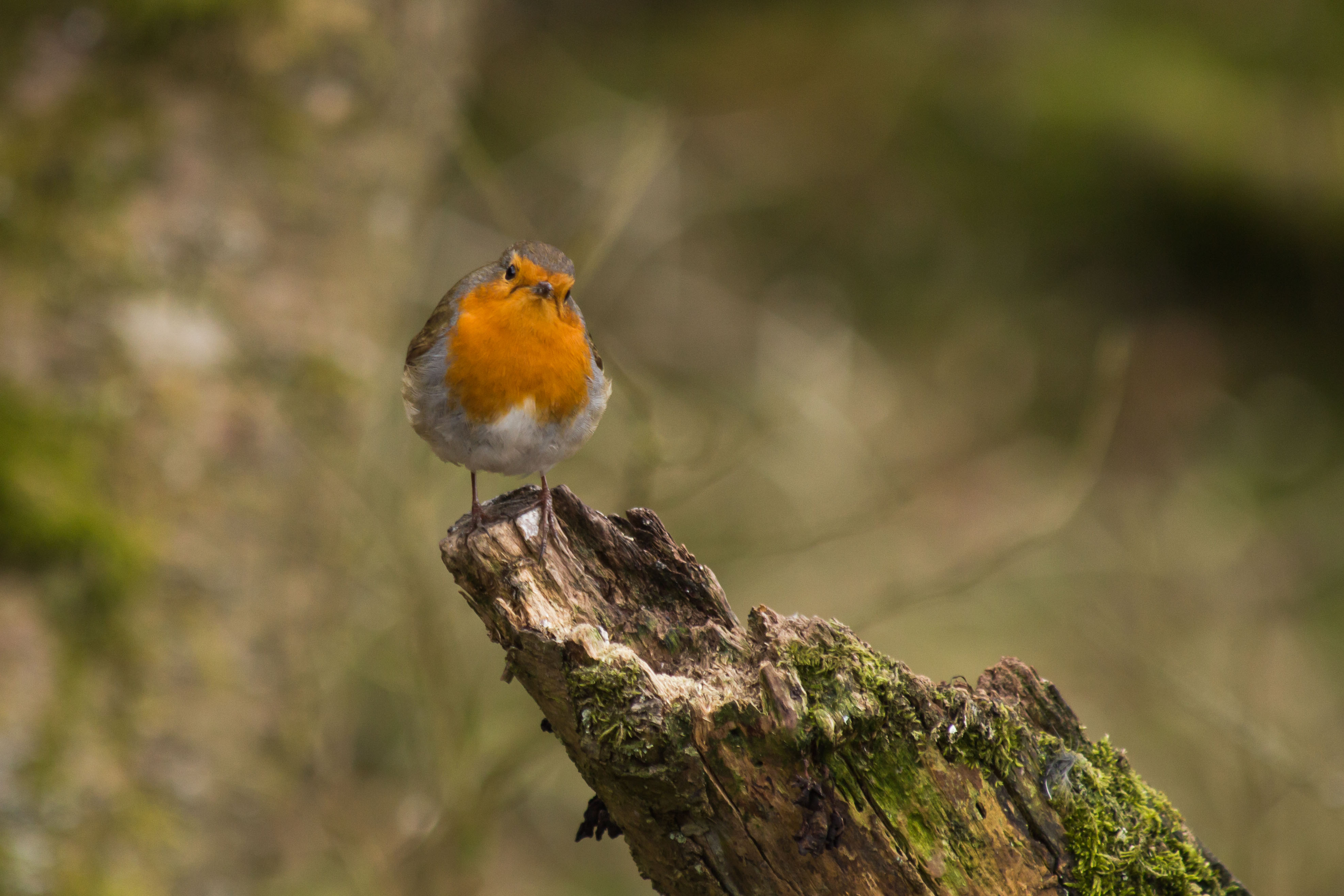
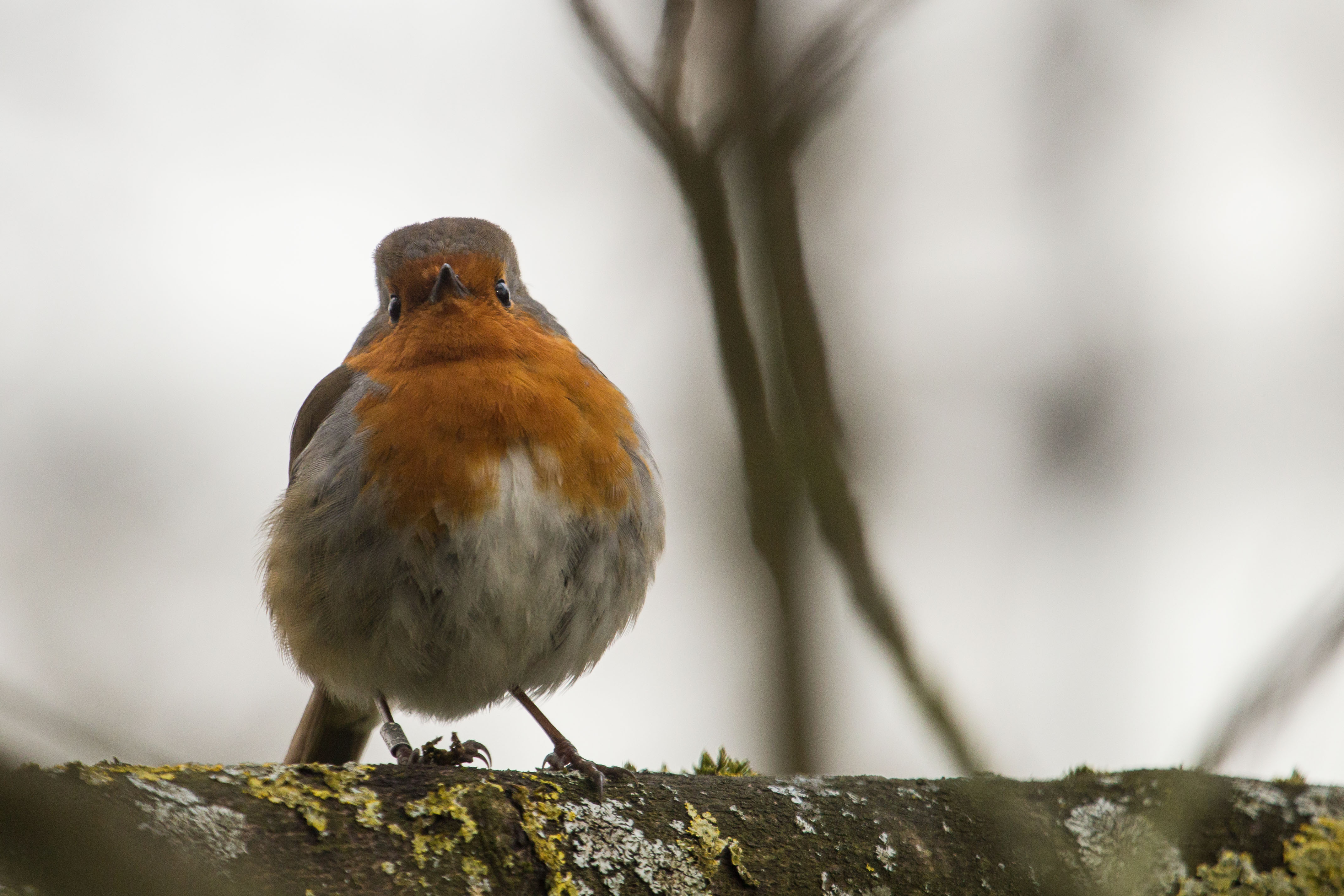
Robin (Erithacus rubecula)

Perhaps the most significant voice is that of the robin, mainly because he never left the scene when other, less hardy birds took off for warmer climes. Even through the dark, bitter winter the robin endures, his lone song often the only consistent sound during the colder months. In spring males and females pair up and defend their breeding territory, often the first to start singing and the last to finish.

The robin’s song is a delightful melody; a high, twittering burble heard from all around. Although varied in its range and tempo, the robin’s voice is almost unmistakable – high, thin and soft but still richly diverse. Hear the robin and he won’t be far away, perching in plain sight and puffing up his red breast as he fills it with air. He is a proud bird, often chasing other robins from his patch, but with a voice as pretty as his, who can blame him?

IMG_9114

Wren (Troglodytes troglodytes)

Another commonly heard voice belongs to a rowdy bird that makes up for small size by belting out a piercing song for everyone to hear. The wren can often be seen speeding bullet-like through knee-high bushes. The wren sings like it’s scolding somebody; a furious round of high, loud chirrups with a distinctive trill at the end of some phrases that sounds like a miniscule machine gun. If you hear a very loud song wait for the trill, as it will inevitably come sooner or later and you’ll know you have your wren. Scan the lower branches and before long a stout brown bird holding its tail up like a stiff flag will appear, giving you a fierce reprimanding for something or other.

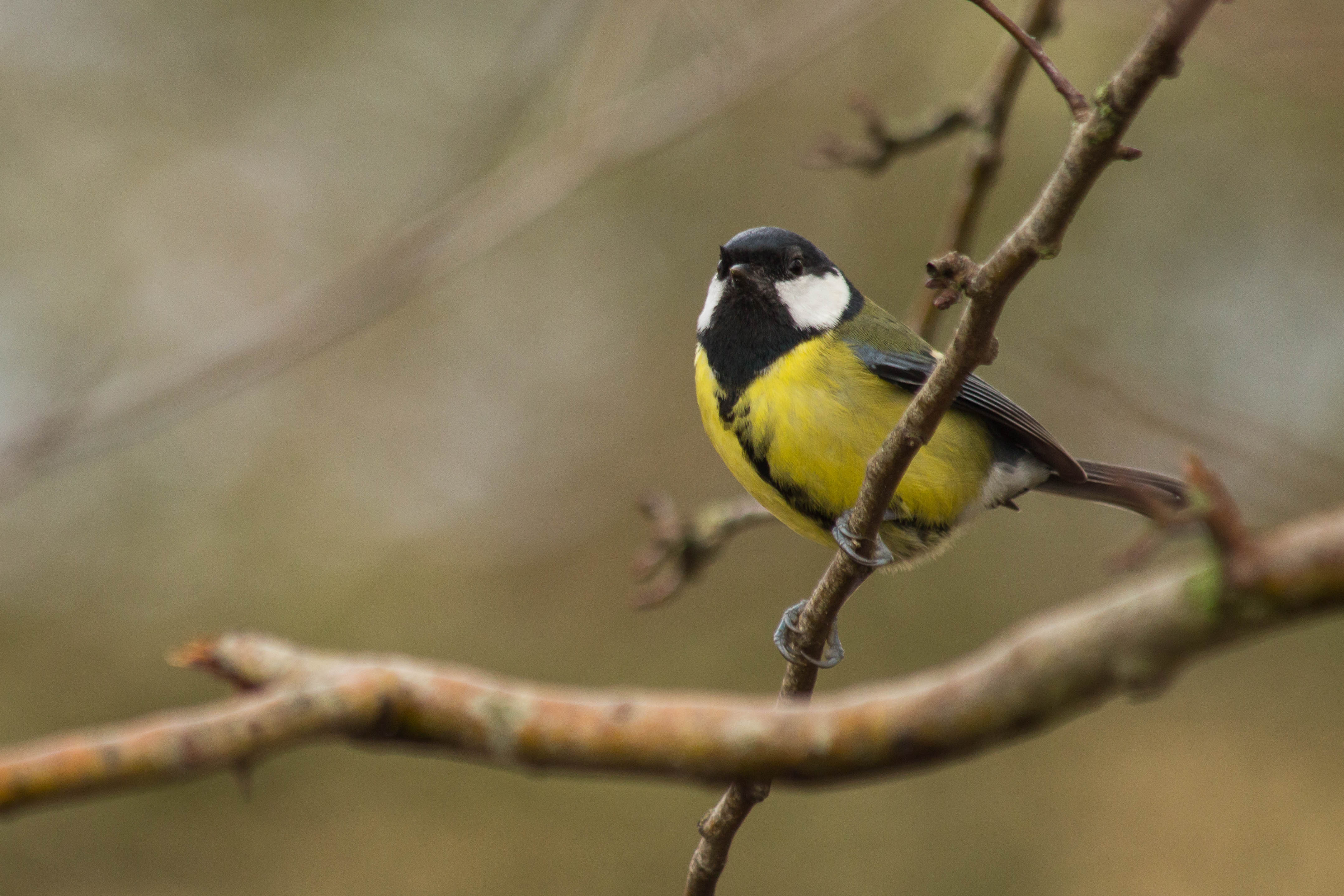
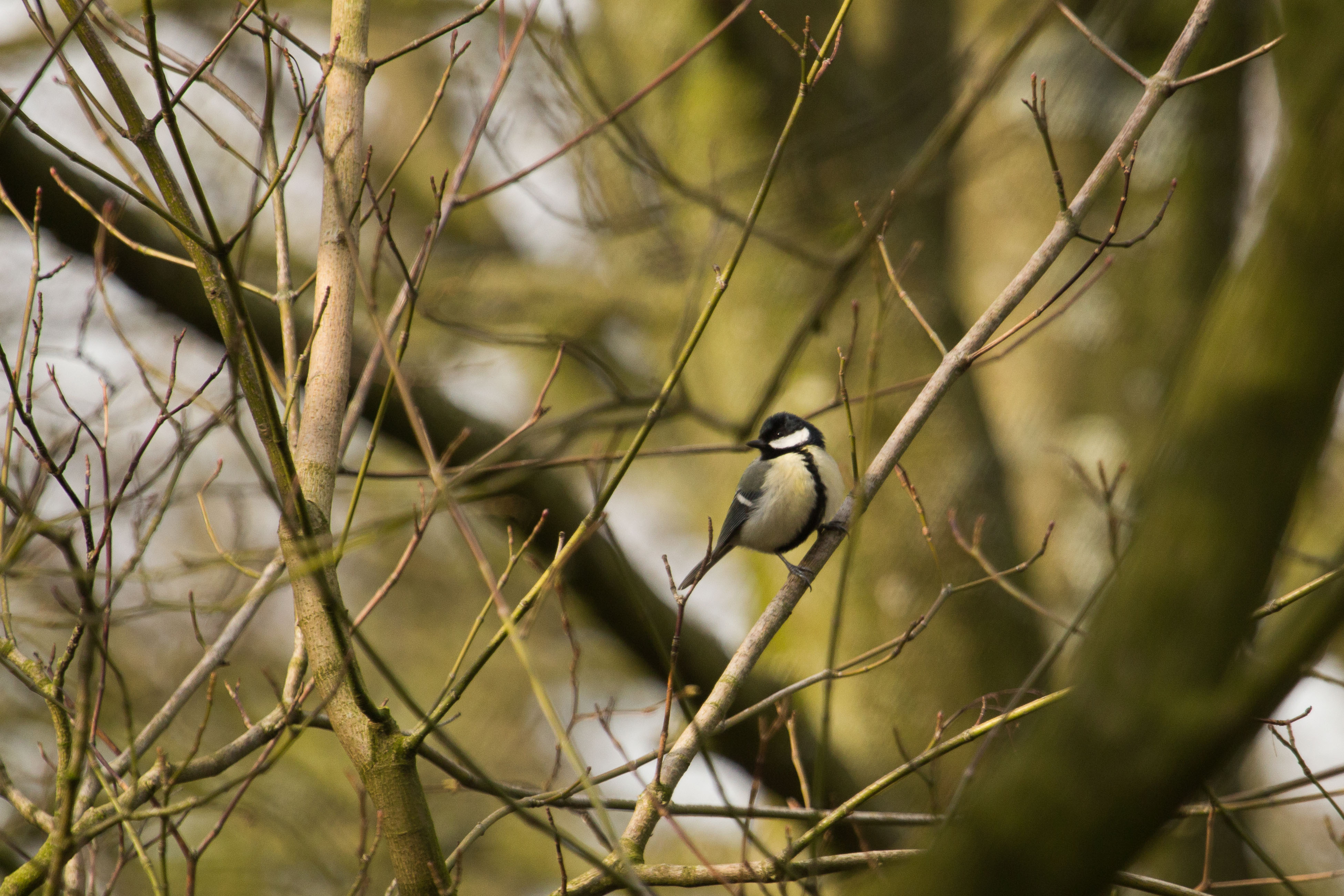
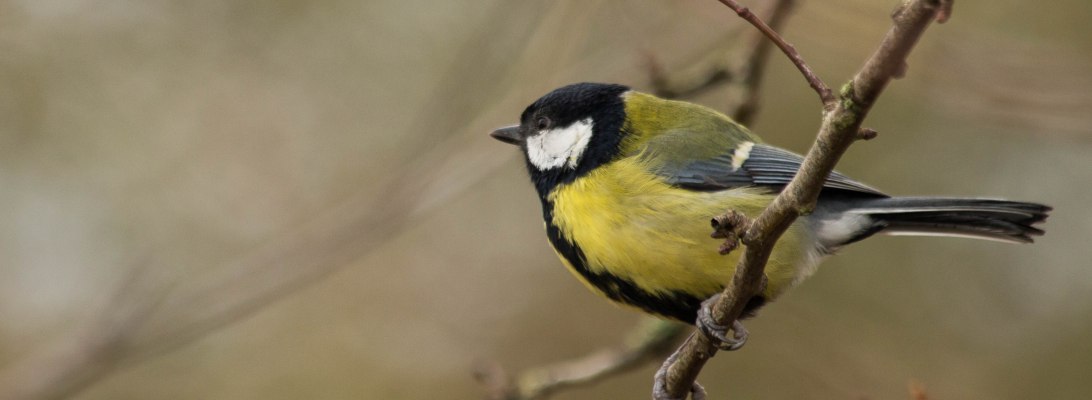
Great Tit (Parus major)

If robins and wrens are violins in the avian orchestra, the great tit is percussion; not quite as dazzling but just as important. In early spring, a two-toned call can be heard among the other singers, with emphasis on the first syllable. I like to think of it as the sound of a saw – effort on the forward stroke, then quieter on the draw back. After a few strokes of the squeaky saw there is a pause, and then the great tit sings it again, very resiliently as if rousing the troops to join in.

The great tit has other songs in its repertoire, including a “churr” call that reminds me of the chatter of a magpie, but a little faster and far gentler. This is the great tit’s alarm call, a sign of agitation that indicates something has disturbed it.

IMG_8751

Blue Tit (Cyanistes caeruleus)

With a lot of birdsong, it can help to adopt a Morse code approach when it comes to deciphering the rhythms of some particular species. Take the blue tit. A common little bird with splashes of blue, green, yellow and white with a fetching black goatee. The blue tit’s song is similar in tone to the great tit but gentler. Among its quite varied repertoire is a particularly distinctive melody, consisting of two clearly separated notes followed by two or three much faster ones. In dots and dashes it would look something like this:

– – . . .

Imagine, perhaps, that the bird is saying “I’m. A. Pretty Bird”, putting particular emphasis on the first two words.


If you like this, have a read of this post and find out where my inspiration to start birdlistening began.

Spring Beginnings

For many wildlife enthusiasts, spring is perhaps the most eagerly anticipated season of the year, especially for birdwatchers. Migrants arrive from their wintering areas and settle back into their breeding grounds. After the cold of winter there is suddenly a buzz of activity, especially for males hoping to attract a female.

While some bird displays leave something to be desired, other individuals put in great effort. As we move into March, birdsong is elevated both in volume and intensity. Greenfinches have a particularly impressive display that involves large bursts of activity. The male, dressed in his finest vivid green plumage, circles in wide loops with emphasised slow wing beats, looking more like a butterfly or a bat than a bird. During these theatrical acrobatics, the males constantly call out to the females with twittering phrases that finish with a long, nasal “dzweee”. If the female is won over, the new pair often perch high in the trees, with the male always in the open to ward off any other potential new suitors.

The arrival of March also brings in the sand martins, one of the UK’s earliest arriving migrants. The smallest of the European hirundines (swallows and martins), sand martins have arrived from Africa, crossing the Sahara desert to reach their nesting colonies and excavate tunnels in sandy vertical banks. Over the past fifty years, populations of sand martins have crashed twice because of drought in their African wintering grounds, which makes protecting their breeding sites in Britain even more important.

Elsewhere in the arrivals gate are chiffchaffs, and from late March to April these plain-looking birds can be heard calling their name in woodland copses and shrubby undergrowth. A tiny warbler no larger than a blue tit, chiffchaffs have spent the winter in the Mediterranean and western Africa. Breeding begins in April to May, when the female builds a domed nest that lies very close to the ground. Incubating eggs and rearing the chicks are solely the female’s responsibility. Chiffchaffs usually leave the UK in September, heading south towards France and occasionally on to West Africa.

Despite the recent snowfall that has smothered the emerging snowdrops and crocuses, keep an eye and ear out for the arrival of spring migrants who will hopefully find some warmth as they prepare to settle in for the breeding season.

Learning to Birdlisten

Today marks the beginning of a new project: learning to birdlisten. It’s a much-used cliché but I have been an avid birdwatcher since I was a child. I’d sit out in the garden, hold as still as I possibly could, and after a while birds would begin to show, hopping out from under bushes and descending slowly from the treetops. This gradual emergence, the steady drip-drop of birds, was so exciting to me. The species would usually be very common – robin, dunnock, blackbird – but occasionally a blue tit or great tit would appear, and to my amateur eye these were very special indeed.

As my knowledge gradually improved, I began to notice more species and although the trusty robin and dunnock never grew boring, they lost their shine among more colourful or charismatic varieties. One by one I added birds to my repertoire, and although I didn’t notice my mental list growing, soon I could identify a wide range of species. Although waterfowl and waders had their charm, my favourites were always the passerines, or “perching birds”.

Passerines include a subgroup of species we call songbirds but are more accurately named oscines – birds that establish their territories by means of musical vocalisations. It never occurred to me why the singing birds attracted me most, until I turned my attention to listening for birds instead of looking for them, and then it became abundantly clear.

Birdsong is the soundtrack of nature. Even for me, a keen bird enthusiast, birdsong had blurred into the background of my time spent outdoors, nothing more than a pleasant backing track that accompanied my attempts to birdwatch. Why on earth did I let birdsong become such an unimportant feature of the landscape, no more significant than hold music? It was high time that I paid more attention to it, instead of letting it wash over my ears without acknowledgment. It is so true that we see but don’t observe, but it is also the case that many of us hear but don’t listen.

IMG_8860

Author of “Birdwatching With Your Eyes Closed” Simon Barnes points out that understanding birdsong allows us to see around corners. There’s a bird hidden up in the canopy somewhere, but unless you know its song you’ll never know what it is. I’ve had this frustration many times, when I see the distorted outline of a bird but no characteristic features that give it away. If I hadn’t neglected my auditory senses, I wouldn’t have been disappointed when the bird hopped further out of view.

And so begins my journey to learn the language of birdsong. It seemed a daunting prospect at first; to my untrained ear all chirrups and whistles sounded identical. However, like any problem, it is imperative to break it down, and that makes it far less intimidating.

I have already made progress. First was the robin: an unmistakable bird in appearance, and a good place to start when learning birdsong because of its presence all year round. During the usually hushed winter months, the robin still sings, an isolated soloist filling cold air with thin, gentle melodies. Spring is by far the most frustrating time to begin birdlistening, so to hear the robin on a chilly February morning with no other avian distractions allows us to begin to tune into this new world I for one took for granted.

IMG_8893

The wren also sings in winter, but has a far louder song bordering on rowdy. For such a small bird, the song bursts out of hedgerows, with a telltale trill at the end of some phrases, like a twirl of icing atop a cake. Then there is the two-note song of the great tit, like the squeak of a saw being pulled back and forth.

And so on. Already my ears are filling with birdsong and I’m really listening this time. Acquiring the skill of understanding this rich and varied language will not only help me become a better birdwatcher, but it will pave the way to a clearer understanding of nature as a whole – appreciating nature’s vibrant soundtrack.

IMG_8853