Wild Intrigue Blog

Back in 2017, I spent the year as the Creative Content Developer intern for Wild Intrigue. As well as teaching me a huge amount about British wildlife, Wild Intrigue founder Heather gave me my first experience writing for a client. During my year with her and media director Cain, I wrote blog posts, took photographs and was able to attend incredible rewilding expeditions in Northumberland, Cumbria, Perthshire and the stunning Isle of Carna on Scotland’s west coast. I learnt how to use camera traps, bat detectors and Longworth traps, which are used to humanely survey small mammals.

Heather and I have stayed in touch regularly since I graduated. Now the coronavirus lockdown is interfering with small businesses and preventing companies like Wild Intrigue from running face-to-face events, I was keen to help out at a distance with a guest blog post. During these strange times, it’s so important to remember that nature is right outside the window and we don’t need to miss out. In my post I share intriguing insights into some common garden birds: blackbirds, blue tits and robins. I hope readers will learn something unexpected about these often overlooked species and be inspired to discover their local wildlife.

You can read my guest blog post here. To find out more about the amazing work Wild Intrigue does, check out their live video from last week where they share camera trap footage and reflect on their past projects and expeditions.


My Top Wildlife Sites

Last night I had a lovely meal at the Grant Arms Hotel in Grantown-on-Spey before seeing a talk by Iolo Williams. Despite current news and hysteria, the lecture room was full to the rafters and extra chairs had to be squeezed into gaps.

Iolo’s new book is called “The UK’s Top 40 Nature Sites” and highlights natural gems up and down the country from the Lizard Peninsula in Cornwall all the way up to the Shetland Islands. Naturally, Iolo said that every site in England, Scotland and Ireland paled in comparison to those in Wales, “God’s own country”.

Iolo is such an inspiring speaker, sharing his stories with the confidence and laid back attitude of someone chatting in a pub. His passion is palpable and easily transfers to his audience. As well as golden eagles and puffins, Iolo was keen to highlight smaller and lesser known species. I learnt what the lion’s mane fungus looks like, and discovered just how beautiful the marsh fritillary butterfly is.

As I sat listening to Iolo’s favourite wild places, I realised that I’d actually been to quite a few of them myself. It gave me the idea of gathering my own list. Some of them are in Iolo’s book but some are my own additions. I’ve chosen places that offer almost guaranteed sightings of a particular species or the opportunity to get lost in secluded wildness. Either way, I hope people discover and fall in love with them as I have.

Anagach Woods

Iolo included Anagach in his book but I had to as well. I visited a few times when I was staying at the Grant Arms for the Wildlife Book Festival last spring and was absolutely captivated. I’ve never been in such a vast area of woodland. Although you will often see dog walkers at the edge of Anagach, as soon as you press further in and choose one of many winding trails, you quickly forget about cars, roads and people. Anagach is full of wildlife, from common coal tits and relatively easy to spot red squirrels to far rarer Scottish icons such as pine martens. Listen for crossbills flying over and look for the elusive but gorgeous crested tit, which is only found in the Caledonian pine forests of Scotland. One of my favourite sounds is a trickling stream running through a forest and I indulged my love for it in Anagach – perching on a rock watching water bubble past me between the trees. Unsurprisingly, it is easy to get lost in this sprawling forest, but that’s half the fun.

IMG_1509
Goldcrest
IMG_1473
Treecreeper


Farne Islands

The Farne Islands off the Northumberland coast are notorious for grey seals and I had the privilege of snorkelling with them in June 2018. It was during this visit that I had a seal swim up to me and wrap its front flippers around my leg, which is something I wish I’d photographed but will still never be able to forget.

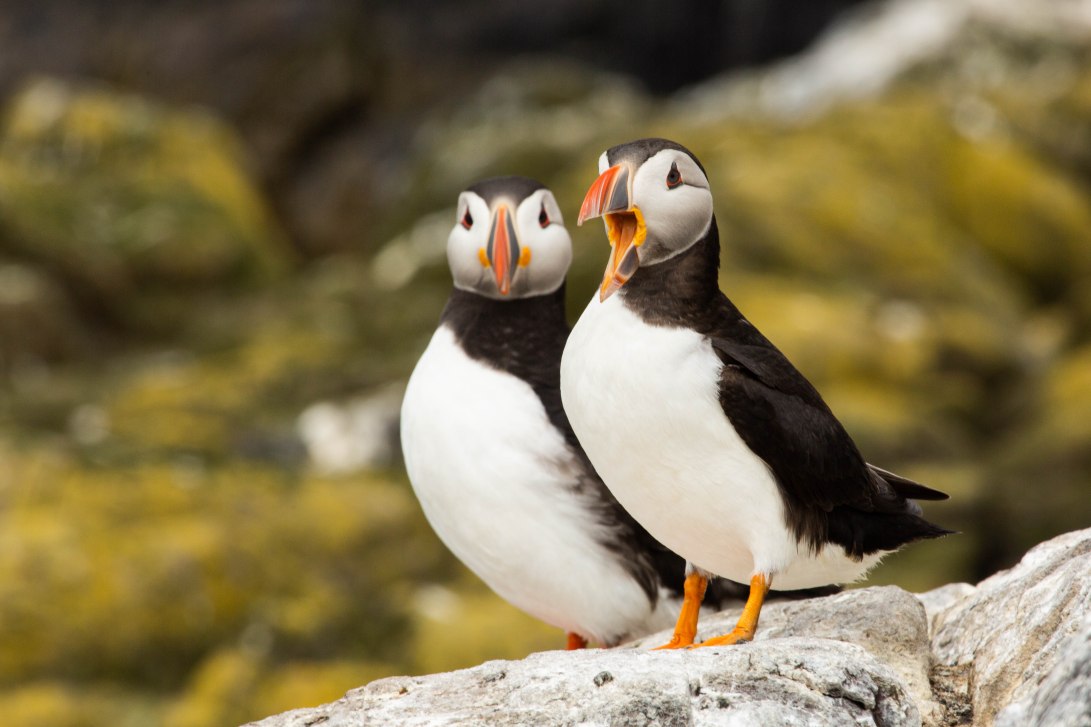
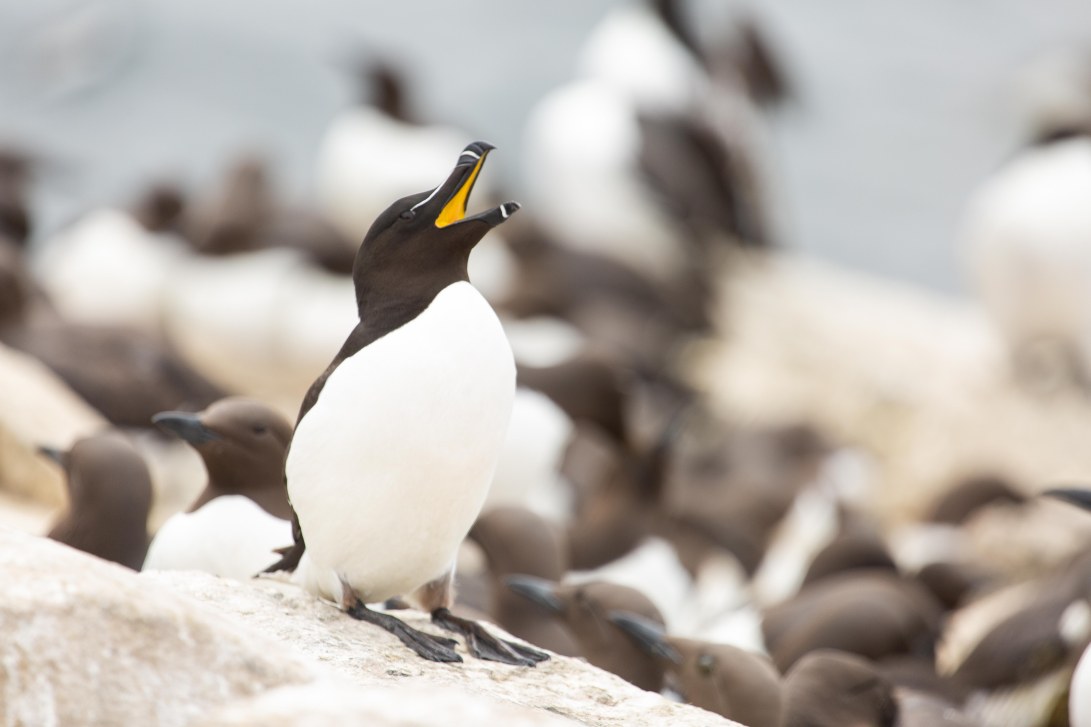
But despite the excellent views of seals, I’ve chosen the Farnes for their astonishing bird life. Moments after disembarking from the boat we were carefully weaving around nests positioned just off the path, our ears slammed with the onslaught of squawking from razorbills, guillemots, cormorants and everyone’s favourite, the puffin. I’d seen glimpses of puffins between waves before, but on the Farnes you can watch from a front row seat as they go about their business of hunting sandeels and dashing into burrows. For anyone wanting to see their first puffin, the Farnes are the place to go.

29
Puffins
O12C4258-2
Razorbill


Burghead Backshore

It is only recently that I’ve discovered just how special the Burghead Backshore is for wildlife. In just two weeks of living on this small peninsula jutting into the Moray Firth, I’ve seen plenty of cars parked along the bank with binocular-clad birders clambering out to scan the shore. People come from all over, including paying customers on Highland Safaris from Aviemore.

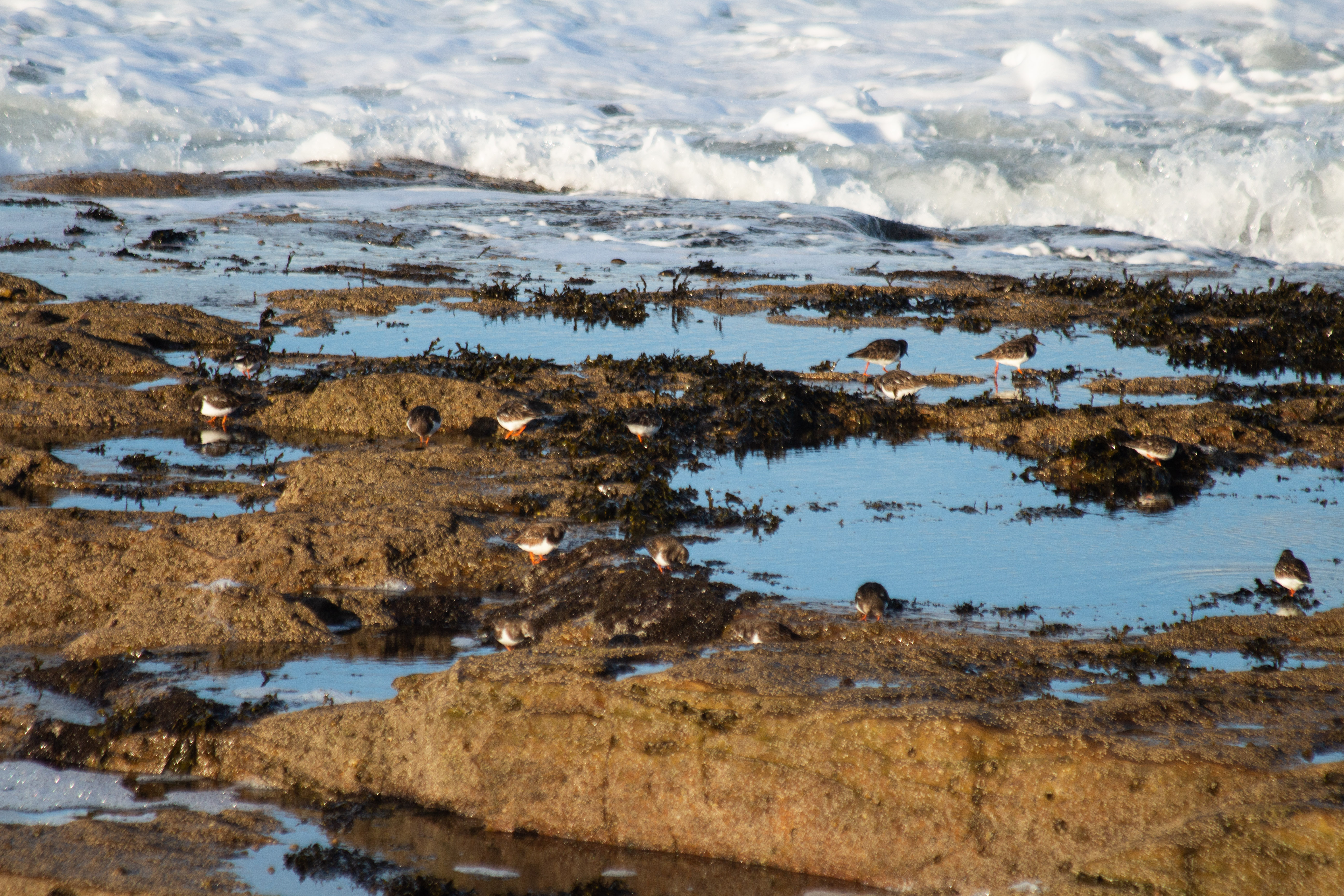
I can’t speak for every season, but so far during late winter I’ve had almost daily sightings of goldeneye, long-tailed duck, eider, red-breasted merganser, turnstone and redshank. For such a small area, the Backshore is bursting even during the lean winter months.

And of course, there are more than birds to be found around Burghead. The Moray Firth is one of the best places in the UK for bottlenose dolphins, and basking sharks and minke whales have also been seen, as well as grey seals. I can’t wait for the proper dolphin season to kick off in May, as I haven’t managed to spot any yet. This weekend I’m going to Inverness to become trained as a Shorewatch volunteer for Whale and Dolphin Conservation, so I can carry out official cetacean surveys in Burghead. I can’t wait to learn more about my local marine wildlife and contribute to conservation.

IMG_2404
Cormorant
IMG_2492
Redshank


Isle of Cumbrae

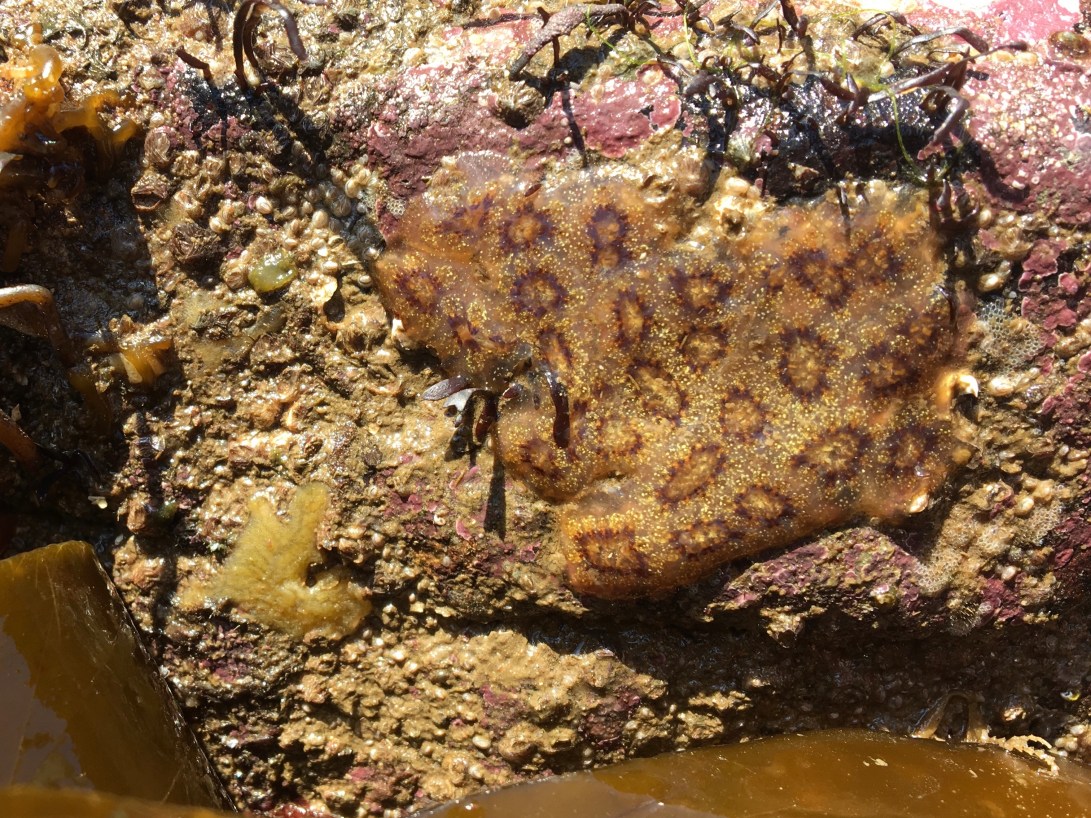
In May 2018 I attended a Field Studies Council weekend course on the Isle of Cumbrae in Ayrshire. It was a jump into the unknown that I didn’t fully appreciate until I was standing spread-legged in the shallows peering down into rockpools and glancing at a sheet of paper I didn’t really understand. The course taught us how to identify biotopes – the combination of a physical habitat and the biological community that lives in it – and although I certainly enjoyed staring down microscopes and poring over textbooks that weekend, the highlight for me was spending two full days on the beach looking for creatures in rock pools. We saw beadlet anemones, a stunning dahlia anemone, acorn barnacles, hermit crabs and common prawns. Every rock revealed a different discovery. Despite spending plenty of summer days at the beach in the past, I’ve never done so much rock pooling before and the FSC course started a new fascination for marine wildlife that I’m hoping to return to now I’m living on the coast.

IMG_0607
Beadlet Anemone
IMG_0570
Star Ascidian (a type of sea squirt)

Arrival

I’ve finally done it. After feeling for the past year that I’ve been in the wrong place, and experiencing a far greater satisfaction every time I visit Scotland, I’ve finally moved there. Last weekend I drove 568 miles and upon arrival collapsed exhausted, filling the house with bags and suitcases. But over the past few days it’s finally started to sink in that I live here now.

The reason I can tell I’m in a much better place is I already feel a connection to the landscape, so much so that I’ve assigned myself a local patch for the first time. Back in Hertfordshire I never felt closely attached to any wild place, and even if I had there was nothing within walking distance of where I lived. Now I can walk for less than two minutes and reach the sprawling north side of the Burghead peninsula, known by the Brochers (Burghead residents) as the backshore. This is my new patch. Not only is it teeming with birds – attracting twitchers from across the Highlands as a result – but it is home to many species I don’t know, which will make the process of monitoring my patch even more rewarding. Having never been in regular contact with marine and coastal habitats before, my knowledge of gulls, ducks and waders is almost non-existent. I’ve been visiting my patch for three consecutive days now and have already learned to recognise six new birds: turnstone, redshank, rock pipit, goldeneye, curlew and long-tailed duck. When I stand on the bank scanning the waves, I think I see around a thousand dolphins breaking the surface, but the ocean is known for playing tricks. As the old saying goes, the harder you work the luckier you get. There are around 130 resident bottlenoses in the Moray Firth, and I’m determined to see some on my patch soon.

IMG_2547
A well camouflaged curlew

Having a local patch is a great way to get to know an area intimately. By regularly recording not only the species but also the weather conditions, time and date of visits, you begin to detect changes and ultimately learn wild animal behaviours. On Sunday I went at 4pm and watched waders and gulls foraging amongst the rocks. Yesterday I went at 11am and the tide was completely in, so the waders were absent but there were still ducks and cormorants diving in the shallows. A marine patch is particularly intriguing because it changes drastically in a short space of time. In just a few hours the habitat is transformed, and new birds appear to take advantage of the conditions.

IMG_2492
The backshore is full of redshanks

I’ve already met other birders at the backshore, including Steve Reddick from Highland Wildlife and Birdwatch Safaris, who had the added benefit of a scope. He was keen to see purple sandpipers, which are often here during the winter. I learnt most of my six new birds from Steve, and now wish he could help me with a mystery diver I keep spotting. It’s too far away to make out clearly through binoculars, and to my untrained eye the three species of diver seen here – red throated, black throated and great northern diver – all look very similar in winter plumage. Hopefully with a few more sightings I’ll learn the differences and be able to identify them with confidence. I’m particularly looking forward to seeing their summer plumage, which is not only easier to recognise but also stunningly beautiful!

IMG_2542
Turnstones are notorious for fidgeting, but it would be nice if they all looked up every now and then!

It’s fantastic to have my passion for birdwatching renewed. I’ve been in a slump for months, so to finally be in a place that inspires and challenges me is both a relief and a privilege. I can’t wait to discover new species this year, not only on the backshore but all over the Moray coast.

Avian Meditation

I’ve never been able to meditate. I’ve tried it before, frustrated and envious of those people who can sit still and completely disengage from the distractions around them. For a start, I can’t even sit up straight without getting uncomfortable. I know you can meditate lying down, but then I just fall asleep. If I finally do find a comfortable position, I inevitably can’t stop thinking. “Focus on breathing”, all the books and videos say, and I focus on the first three inhalations wonderfully, but soon my mind wanders to my shopping list, deadlines, or reminding myself to put the bins out. I’ve discovered that meditation is just something that not everyone can do, in the conventional way at least.

The other day I went to Rye Meads Nature Reserve in Ware, Hertfordshire. I have quite a lot of things to do at the moment with my MA and the move to Scotland later this month, but I needed some time outside. I find it a real challenge to make time for walks, so I fought my better judgement and put work on hold to sit in a hide and watch birds. I don’t do this much – when I’m out and about I’m either on my way somewhere or keeping an eye on the dog to make sure she’s not getting into mischief, so it was a real indulgence to spend an entire morning ambling around a nature reserve.

I sampled each hide in turn, following muntjac prints in the mud as I walked, and eventually settled in one that overlooked a lake speckled with birds. A group of thirty lapwings were soaring over the water, swinging in a single mass from left to right. Each time they twisted the sunlight caught their backs, illuminating that iridescent green also concealed in magpies and starlings. I watched their display through the binoculars, captivated by the pendulum-like movement. Unlike a lot of wings that end in sharp points, these birds have wings that are loosely shaped like tennis rackets.

Eventually one bold individual decided that was quite enough flying, and as it swooped down to the water its companions followed until the air was empty again. They settled on the rocks alongside a pair of shelducks, shovelers, gadwall and a lone cormorant. The strips of pebbles cut the lake into wedges, separating midnight blue from slate grey. Ripples from bobbing coots sent tiny waves onto the shingle.

“Have you seen the green sandpiper?”

The voice made me jump after such a long silence. It was a member of RSPB staff, brandishing both binoculars and an impressive scope. Shimmying along the bench, I peered down the scope and watched the wader as it scoured the shingle for food on its skinny green legs. I’d have never spotted such a well-camouflaged bird without help. In fact, the green sandpiper was a species that I may have looked at but not noticed many times before.

The man with the scope carefully lowered the window cover and hitched the scope onto his back, heading back out into the sunshine. I carried on watching the lapwings, now foraging with their spiky hairdos fluttering. It occurred to me then that birdwatching was a form of meditation. You have to sit still, as quietly as possible, and often go for hours without speaking. My phone was on silent, buried at the bottom of my bag underneath gloves, sketchbooks and biros. The only connection I had was with the birds. Sure, I was hoping for bitterns, kingfishers and otters (none of which showed), but I found satisfaction in the more common residents. There is undeniable beauty in a young blue tit’s downy feathers, the tight curl of a cormorant’s dive and the vibrancy of a mallard drake’s head, which almost shines yellow in the right light. Maybe I’d denied myself the pleasure of birdwatching too long, but sitting in the hide looking out onto calm water felt like meditating. My work was back at the house and I was in the reserve sharing space with birds.

Winter Walks in Hertfordshire


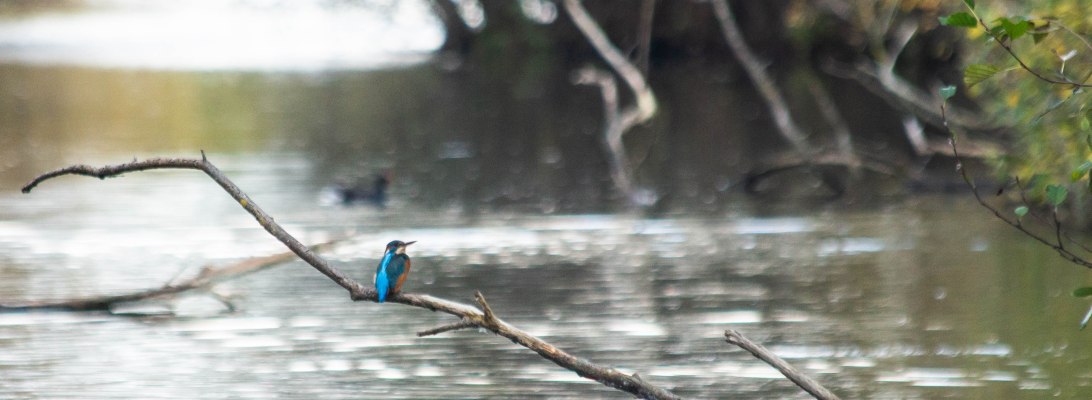
I am so pleased to announce that I have another article published in Hertfordshire Life magazine. This piece was inspired by wintery walks around the county and focussed on three Herts and Middlesex Wildlife Trust sites in particular: Lemsford Springs, Amwell and Stocker’s Lake. During my visit to Stocker’s Lake, I was treated to an incredible kingfisher sighting – my first glimpse of the bird that wasn’t just a zoomy blue blur dashing up the river. I also spent the afternoon watching great crested grebes, ring-necked parakeets and shovelers.

IMG_2252

Other avian highlights at these reserves include green sandpipers, fieldfare, redpolls and spew, a particularly striking bird that overwinters from Russia and Scandinavia. I learnt so much researching this article and it’s such a thrill to see it in print. For anyone living in Herts, get yourself a copy and get inspired during these chilly winter months!

6) Herts Life Jan 1

Doe, A Deer

The first wildlife I encountered when I crossed over the bridge into Tring Park was the grasshoppers. They were everywhere, their electric buzz sounding from every direction. The pale grass in which they were concealed was jungle-thick with a million places to hide, but a particularly noisy individual drew me in and I knelt on the grass and studied the ground intensely. Suddenly I found the culprit, rubbing its legs together with fierce ferocity. I just managed to take a few quick photos before the insect propelled itself into the air, leaving the leaf bouncing with the impact.

IMG_4112

As stunning as the open parkland was – with butterflies flitting through the grass and red kites wheeling in slow circles overhead – I sought the shade of the forest, already beginning to perspire in another bout of sweltering August heat. The cooling cover of the trees was instantaneous and I made my way up the hill. Sloping overhead from left and right, the trees sighed as a breeze whistled through them. The canopy was a blend of greens, browns, oranges and, where the sun was shining, molten gold. Further up the hill I found a small clearing speckled with sun and shade and set down my blanket. Blue tits churred up in the trees and a distant jay screeched into the silence.

The first activity came from two grey squirrels who came darting at full pelt straight through the clearing. One continued right past me but the second wasn’t nearly so trusting. Hopping onto a nearby tree, the squirrel studied me intensely. After a few moments’ deliberation, it decided to take the long way round and shimmied up the tree in fragmented bursts, pausing every so often to stare again, bushy tail twitching. I’d obviously plonked myself in a squirrel playground and this one was making sure I knew it.

P1000474

After the branches had stopped shivering from the squirrels’ antics, the forest fell silent. My eyes kept catching on long lines of spider web that sparkled each time the sun touched them. They were mesmerising; delicate gossamer threads lifted by the breeze. Behind them, voices permeated through the forest and a group of dog walkers marched past, each dog’s nose on overdrive with all the enticing aromas. Another squirrel foraged close by, exploring the leaf litter in small hops and tail twitches.

Every so often a single leaf would fall, twirling slowly to the ground like confetti. It seemed that no animal had disturbed it, so it must already be the beginning of autumn. Soon, the leaves would explode into warm colours and tumble to the ground before the first frost.

P1000495

There was another rustle to my right and I glanced up, expecting to see another dog walker or jogger. An involuntary gasp escaped and I watched in disbelief as a female roe deer headed straight towards me. She briefly disappeared behind a tree and when she emerged suddenly spotted me, stopping dead in her tracks three metres from where I was sat. For several long moments we stared at each other, both equally incredulous. I willed her not to be scared of me but she was naturally rigid with unease. My camera lay right next to me within easy reach, but I knew the second I moved she would bolt. So I ignored my photographer’s instinct and stayed frozen.

We continued to gaze at each other and I took the opportunity to admire her beautiful face with its large, black nose and literal doe eyes. Eventually she skirted around me, falling back to a safer distance and emerging onto the path, her elegant legs moving in long strides. As she retreated I grabbed my camera and snapped just before she disappeared, although of course my real photo opportunity was long gone.

P1000510
Proof that it happened!

There comes a time when an encounter is worth not getting the picture and I believe that was one of those times (or so I kept telling myself afterwards). Not only would reaching for my camera have startled the deer unfairly, but it would have undoubtedly shortened my time with her. For those few precious seconds I ignored all distractions and savoured the thrill of engaging with a wild animal, especially one as naturally wary as a deer. Experiences like that don’t happen every day and sometimes it’s best to simply be in the moment, even if you pass up the possibility of a killer Instagram post.

Long after the deer had gone I buzzed with excitement. The afternoon was warm but goose bumps had risen on my arms as I sat relishing the encounter. I’d always been captivated by the elegance and composed beauty of deer. In a way I found them near mythical. Despite their supposed abundance I very rarely see them, so to experience one so unexpectedly close and without any warning was exhilarating.

A Bird in the Hand

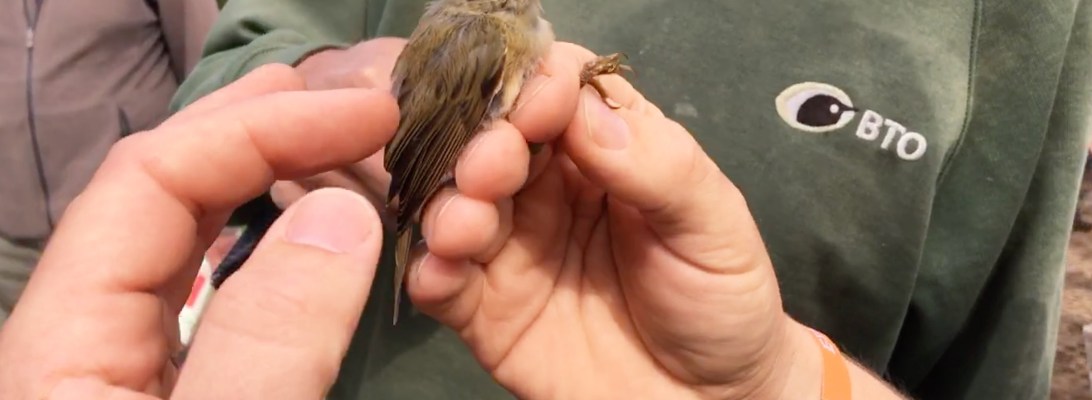
On the last day of Birdfair, I was keen to escape the bustle and crowds of the marquees and explore the surrounding reserve. On my way out to one of Rutland Water’s many hides, I was drawn to a small crowd gathered around the BTO bird ringing tent, where a demonstration was in full swing. As I got closer, I saw two chiffchaffs poking their tiny heads out of the ringers’ gentle hands. One was a mature adult with smart plumage; the other was a scruffy juvenile, two thirds of the size of its companion. The ringers held out the birds’ wings, displaying a delicate and powerful fan of primary feathers. Both chiffchaffs sat still and quiet in the hand – if it hadn’t been for their blinking beady eyes they could have easily been mistaken for taxidermy specimens.

After all the measurements had been taken, the ringers asked for two volunteers to release the birds. To my surprise only two hands went up, one of which was mine, so I followed the ringer to an open spot away from the marquee. He told me to hold my hand in a loose claw then he gently placed the juvenile chiffchaff into my palm, its tiny head nestled between my index and middle finger. I closed my hand slowly and the bird wriggled. I couldn’t believe I was holding something alive and yet so small. Its body was warm and unbelievably soft. Carefully, I put the hand holding the chiffchaff down onto my other open palm and slowly released. For a moment the bird rested there and then launched itself into the air, disappearing almost immediately over the trees.

I felt what could only be described as a surge of pure joy as I released the chiffchaff back into the wild. It was a real Snow White moment and in that fraction of time I felt exceptionally close to nature. Getting to hold such a tiny and wild thing in my hand was such a privilege. As I made my way to the hide I noticed there was a minuscule downy feather stuck to the tip of my finger and I quickly stashed it in my phone case. Wherever that chiffchaff wandered now, I had a small piece of it with me.

Reptiles in the Park

I bought a ticket for the Madrid City Bus Tour from hotel reception and hopped on at Plaza Mayor. With such intense heat, I thought it would be a good idea to explore the city in the comfort of an open-top bus, where I could jump on and off wherever I pleased. First stop was Puerta del Sol with the bear and strawberry tree statue, and then we headed east into the Retiro district, which was probably best known for its trio of world-famous museums. As I’d anticipated, the queues to get inside were eye-watering even at late morning, so once again I was content just admiring the exterior. As much as I quite liked wandering through art galleries, I wasn’t willing to spend an hour waiting to get in. Besides, on a weekend day you wouldn’t have seen the art for the tourists anyway.

P1000388

I was far more interested in what lay beside the museums and I hopped off the bus. El Parque de Buen Retiro was a vast and beautiful park spanning 350 acres. I began at the north end and made my way leisurely past elaborate fountains and sprawling trees. One of the trees was the oldest in Madrid, but there was no shortage of vast leaved giants, which provided much-needed shade for tourists and locals alike. While some people were lolling on the grass with food or books, others were jogging and walking dogs. It was a hive of activity and yet seemed extremely tranquil, similar to how I felt in Plaza Mayor. Despite a population of several million, the city didn’t feel cramped or overcrowded the way London does. The pace of life in Madrid was far more relaxed and I was keen to savour it. The only signs of congestion were from the parakeets perched in every treetop, whose disgruntled calls sounded like trainers on a squeaky floor.

P1000241

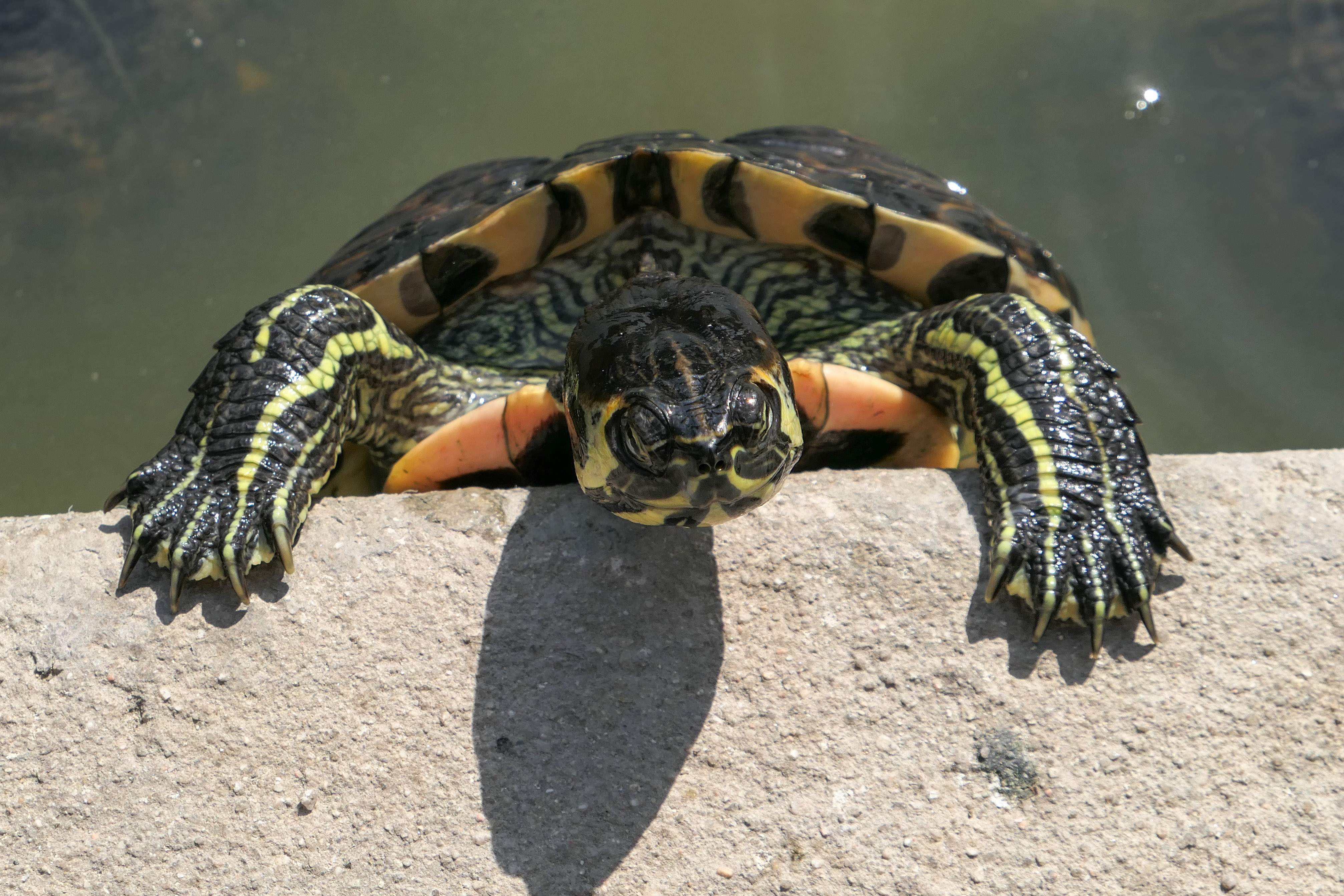
In almost the very centre of the park was El Palacio Cristal – a beautiful glass building overlooking a lake where ducks and a lone black swan were swimming in lazy circles. Surrounding the water were dramatic sprays of white blooms, rosebushes as tall as trees and a miniature waterfall cascading over a rocky outcrop into the lake below. I sat down on the stone steps of the palace to see the ducks a little closer and was surprised to find the water full of tiny terrapins. While their shells remained submerged, their black and yellow-striped heads poked out of the water, eyes blinking up at the child beside me who was throwing popcorn. On the steps, feral pigeons and sparrows tussled for the prizes, while in the water the terrapins were joined by ducks and the occasional gaping lips of a fish. The black swan came gliding over for a look too.

P1000282

One terrapin made the monumental effort of grasping the side with its broad claws and heaving itself up. For a few surreal moments we gazed at each other before it realised I wasn’t the one with food and plopped back underwater. Meanwhile, a pigeon strolled nonchalantly across my foot in pursuit of an unclaimed kernel, while others exploded into flight around my head, their wing beats sending a welcome burst of fresh air.

P1000293
P1000278
Terrapin v pigeon face-off!

Beside me on the step I could hear the child with the popcorn munching. “One for you, one for me” was obviously in play. When the bag was empty, birds and reptiles slowly dissipated until the next snack arrived.

I wanted to sit and watch the terrapins a bit longer, but the steps were in direct sunlight and I was beginning to fry. I left the diverse gaggle of creatures behind and headed out of the park, but not before passing through La Rosaleda (rose garden) for a few photos. A dozen other young female tourists were posing for shots, no doubt gathering new ammunition for Instagram.

P1000325
La Rosaleda

All along the downward slope leading back to the museums were small wooden huts overflowing with books, which I made a beeline for. It was La Cuesta de Claudio Moyano bookstalls. Nearly all were in Spanish but there were a couple of titles I recognised. I couldn’t help buying “Harry Potter y la piedra filosofal”, which would probably be challenging enough for my rusty Spanish.

For lunch I had a bocadillo de calamari (squid ring sandwich) from El Brillante – another Lonely Planet recommendation that fell short of the mark for me. The calamari itself was good, with just a thin layer of batter, but when sandwiched in a dry baguette it had me gasping for a drink. It seemed that the Spanish didn’t use sauces much in their cooking. The bacon bits and bare bread at Casa Revuelta had been the same. Perhaps the locals just washed it all down with a few cervezas, but I was left wanting after El Brillante.

P1000342
Gran Vía

Later in the evening, after a full circuit on the bus and hopping off on Gran Vía, the hub of central Madrid, I walked back towards Plaza Mayor and a sign for “Tapa Tapa” caught my eye. I ignored the guidebooks and had dinner in a place I knew nothing about, which was an excellent decision. I chose four cheese croquettes, mini portions of Iberian ham and mozzarella toasted sandwiches and langoustine skewers, which were all absolutely delicious. To drink I had a mocktail called San Francisco, which was bursting with the flavours of orange, peach, pineapple and blackcurrant juices. It was an extremely satisfying end to a long day exploring the park. Tomorrow I had a real Madrid tradition to look forward to: the infamous El Rastro flea market.

Golden Hour

The light was still faint as I drove through fields of green. Cars tore past in a work-fuelled rush, while I cruised leisurely in the opposite direction. My focus was on the forest today – my only objective to walk through trees and listen to wild sounds.

A flash of copper caught my eye and a stunning red kite appeared in the sky, wheeling over the rolling hill as it hunted for unsuspecting mice. I pulled over in a layby – the mud sticky before the sun reached it – and spotted three more circling in large, overlapping loops. Occasionally there was a squabble, and two birds would tussle in the air, cascading downwards and surging back up. It was easy to forget that bounty hunters and egg collectors almost pushed the red kite to extinction only a few decades ago. Now, you could drive down most country roads in Hertfordshire and see at least one. I had never seen four so closely together, and savoured the opportunity to watch such an inspiring conservation success story in the flesh.

Soon the kites drifted further off, reduced to dark flecks in the sky. I left them to their hunt and drove on, arriving at the edge of the forest before anyone else that day. As lovely as dogs were, I didn’t need their boisterous presence this morning. I pulled on hat and gloves and slung camera and binoculars around my neck, then crossed the road towards the woods.

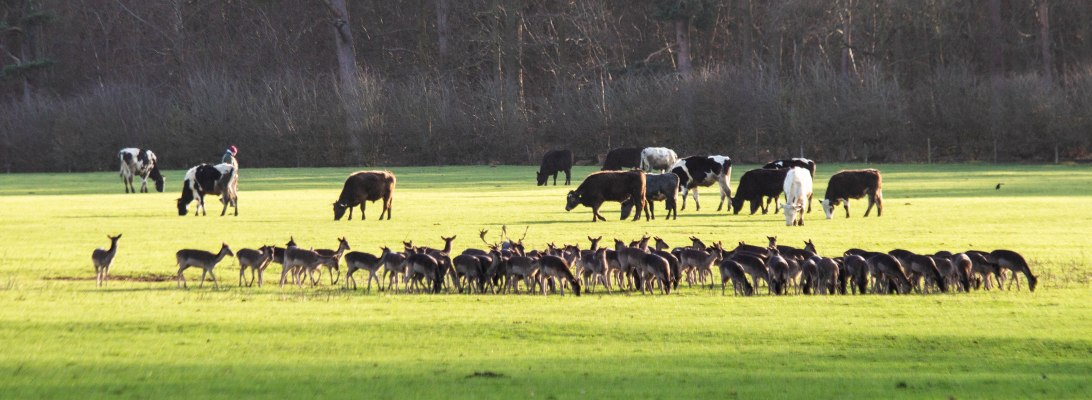
To my delight, the species I’d come to see was already here in abundance. Grazing in a field beside the cows was a herd of fallow deer around seventy-strong. I have always been fascinated by the variation in fallow deer pelts. When I first saw deer at this site, having previously seen photos of white-spotted Bambis, I had thought they were a different species altogether. These fallows were two-tone; dark brown on the top half and a lighter brown on the bottom half, as if they had waded flank-deep in mud. I hastily took to the cover of the trees, creeping as quietly as I could along the fence to get a closer look.

However, these deer were no fools. The next time I stopped and snuck a look through the binoculars, there were several faces turned my way, ears pricked upwards and eyes gazing down the lenses. My cover was blown. I decided to carry on with my approach, heading diagonally and pausing behind each tree. Ears twitched, and after a few more moments of studying me, the herd moved off, first at a trot then at a gentle canter. Among so many deer, there were only two males; as the herd bounded in loose procession across the field I watched two sets of antlers bobbing among dozens of ears.

I continued deeper into the forest, dulling the sound of passing cars with birdsong and wind-rustled leaves. The trees were gently swaying, creaking eerily like squeaky doors. The breeze played tricks on me, sending leaves skittering across my path in a perfect imitation of birds. The thrum of a woodpecker echoed through the cold air. A buzzard called faintly in the distance.

Suddenly there was an invasion of grey squirrels, bounding over the leaf litter and across fallen logs. Two of them darted in a reverse helter-skelter up a thick trunk, their claws scratching wildly in the chase. Another was saving his energy, choosing instead to perch and chew on a shrivelled leaf, twisting and turning it in his tiny hands.

I left the squirrels to their play and headed further along the fence, glancing between the trees to see if the deer might have come back. They hadn’t, but there was a sprinkling of brown birds foraging in the grass, dotted among the cows. For a few moments I couldn’t figure out what they were. Speckled like thrushes, but I’d never seen a large group of thrushes before. Just then the sun appeared, illuminating bright red patches on the birds’ sides. Redwings! My first this winter, and what a show. There were around forty of them, hopping around in the grass. They were too far away for a decent photo, but close enough to watch through the binoculars.

After a while, a startling screech made me jump. The only culprit I could think of was a barn owl, but I was sure they would have finished their night’s hunt by now. I followed the voice further down the trail. It was an ungainly, dinosaur-like squawk that sounded deafening in the tranquil forest. Suddenly, as I was scanning the canopy overhead, a crow-sized bird with white, brown and grey feathers shot out of the leafy cover. I hadn’t seen a jay once when I’d lived in Cumbria, so it had been about four years since my last sighting. I was desperate for a good photo of a jay but this one wouldn’t be cooperating. It darted from tree to tree, pausing only for a few hoarse shrieks before taking to the air again, soon disappearing completely from view. Undoubtedly the prettiest of the corvids, but not the sweetest singer.

Soon the forest was nearly silent again, with just the gusts of wind disturbing the trees. The morning was rolling on, and golden hour had arrived. Between breaks in the cloud, rich yellow light illuminated the trunks, throwing their gnarled, twisted bark into stark relief. It was a glimpse of magic that only lasted until a cloud muffled the sunlight and the forest fell back into shadow.

The cold was beginning to bite my fingertips, and I could already hear the first dog walkers. It was a good time to turn back. I made my way slowly through the woods, past the field and the squirrel tree, looking forward to warming up back home. I was just scanning the trees one last time for any small birds when my eye caught on two more pairs of ears sticking up. The deer were perfectly camouflaged, and after we stood watching each other for a few more moments, the doe stepped out from her hiding place and began picking her way through the foliage. The buck took one more look at me before following her, just as the sun emerged again and made their brown fur shine gold.
There was something undeniably magical about watching deer in a forest. They were elegant and beautiful animals, their habitat just as serene. As I stood watching them stride away out of sight, I felt a strong connection to the forest and the creatures that lived within it. Although I didn’t truly belong here, for just a few short hours I felt at home.