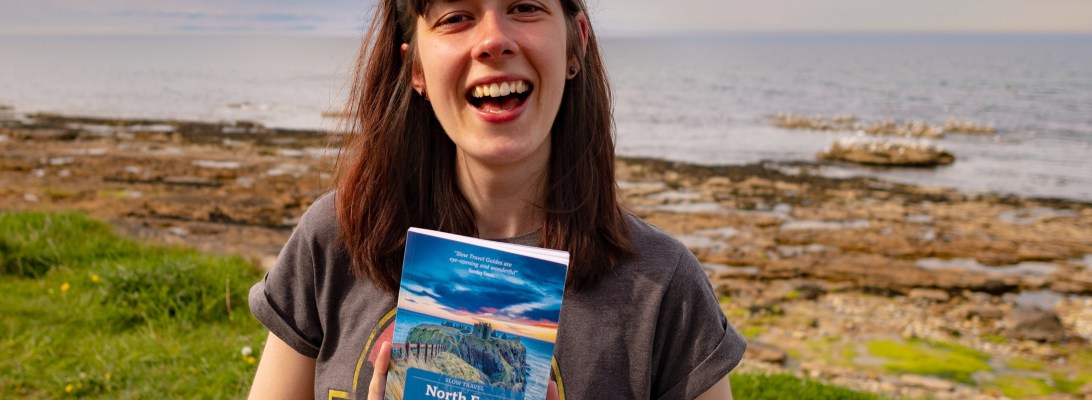
This bun has been in the oven for three years and two months and now she’s finally here.
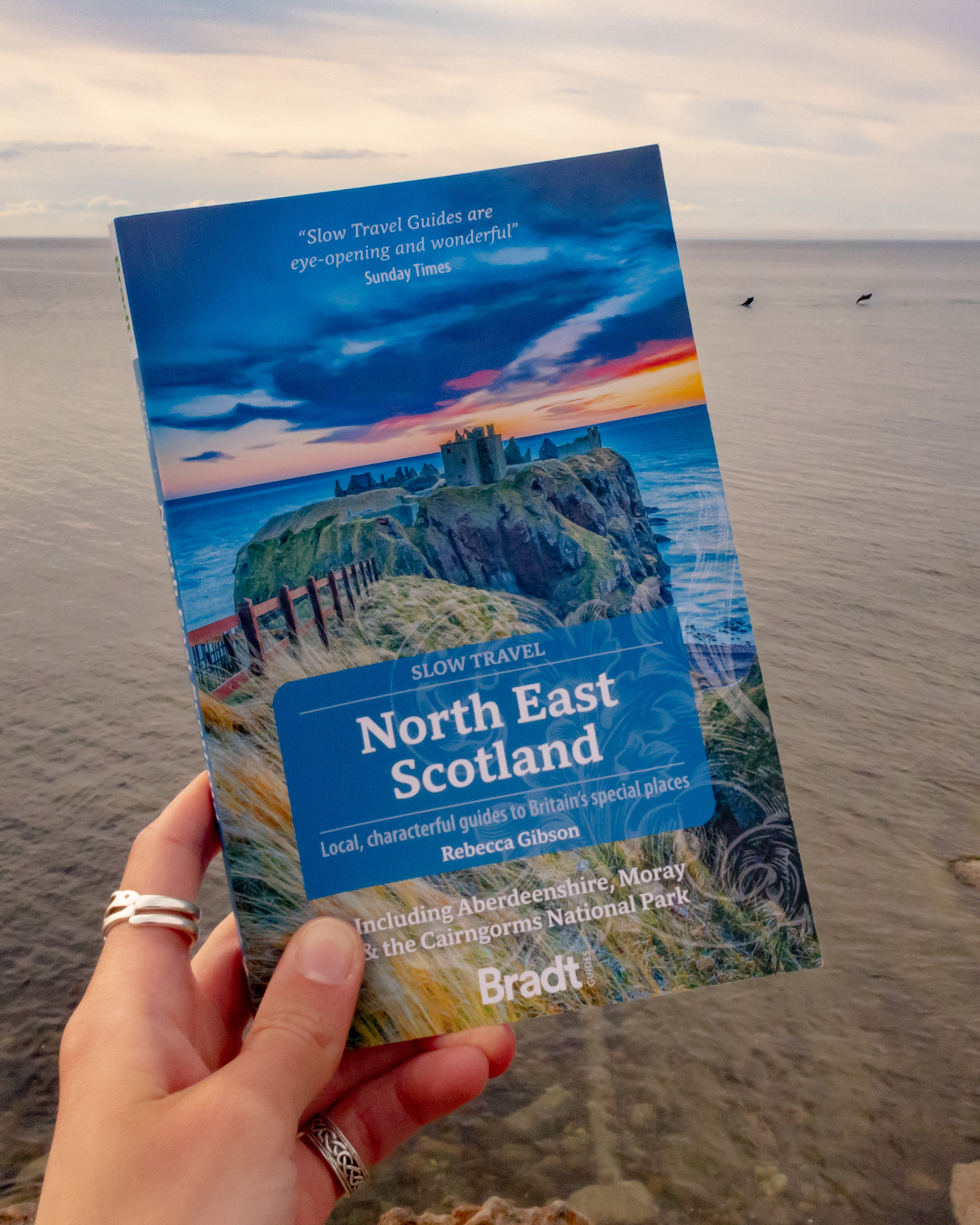
My book is written as though I’m walking along with you, dropping in history, folklore and other nuggets along the way. There are castles, stone circles, museums, distilleries and also plenty of opportunities to eat cake.
Slow travel is about taking the time to find lesser known spots and really connect with the places you visit. I’m proud of how much I’m crammed into these 328 pages, and I hope that whether your interest is wildlife, whisky or waterfalls, you’ll discover something special. Incidentally, it’s the perfect size to slot in your rucksack and take out and about.
Today I’m thinking back to a little girl who loved writing so much that she thought maybe she could be an author when she grew up. Well, she did it.
Yes those are dolphins jumping in the background – I’m just that good!
The Scots Magazine has a photo feature each issue written by a famous Scot about their favourite places in the country. They can be locations with personal memories attached to them or just spots they enjoy visiting. It got me thinking about which places I would choose, so this week’s blog is my ‘My Scotland’.
Burghead
This narrow village on the Moray Coast, surrounded on almost all sides by ocean, brought about a huge shift in my life. Those who have followed me for a while will know that I grew up in south east England, and once I began exploring Scotland I realised I didn’t belong in my home country anymore.
It was Burghead that introduced me to north east Scotland and this in turn led to my first book, so it will always be a meaningful place for me. I’ve also seen a humpback whale, orcas, basking sharks and the northern lights from its rocky shore, so that scores it plenty of points!
Edinburgh
Edinburgh was the first city I visited in Scotland, and every time I go there I’m on holiday so it reminds me of Fringe shows and the Christmas market no matter what time of year it is.
Its centre is old and graceful, with everything you expect to see in a city but with cobbles, narrow closes and plenty of steep staircases. It’s also the home of Hendersons, an amazing vegetarian restaurant where I’ve had my favourite ever meals.
Image: Aleks Michajlowicz
Assynt
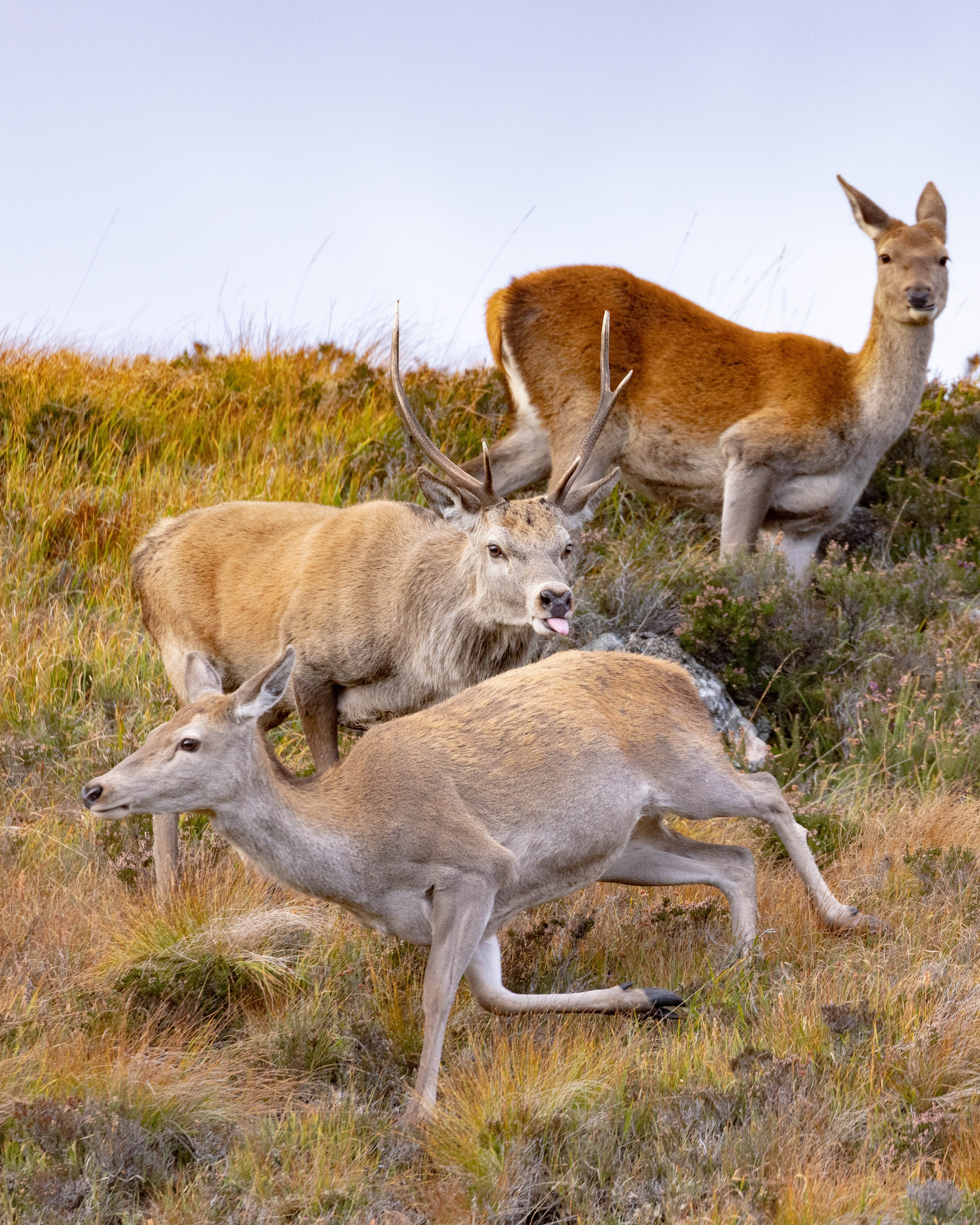
Since moving to Scotland I’ve made a pilgrimage to the west coast every year. Usually this is in autumn to coincide with rutting red deer and leaping salmon, but I’ve also been in summer and seen great northern divers, white tailed eagles and even pine martens in daylight, when it’s not truly dark until nearly midnight.
It’s also where I broke my lifelong curse and got my first otter photos. The wilderness of Assynt has given me countless wildlife memories and as soon as I leave I’m thinking about when to go back.
Aberdeen
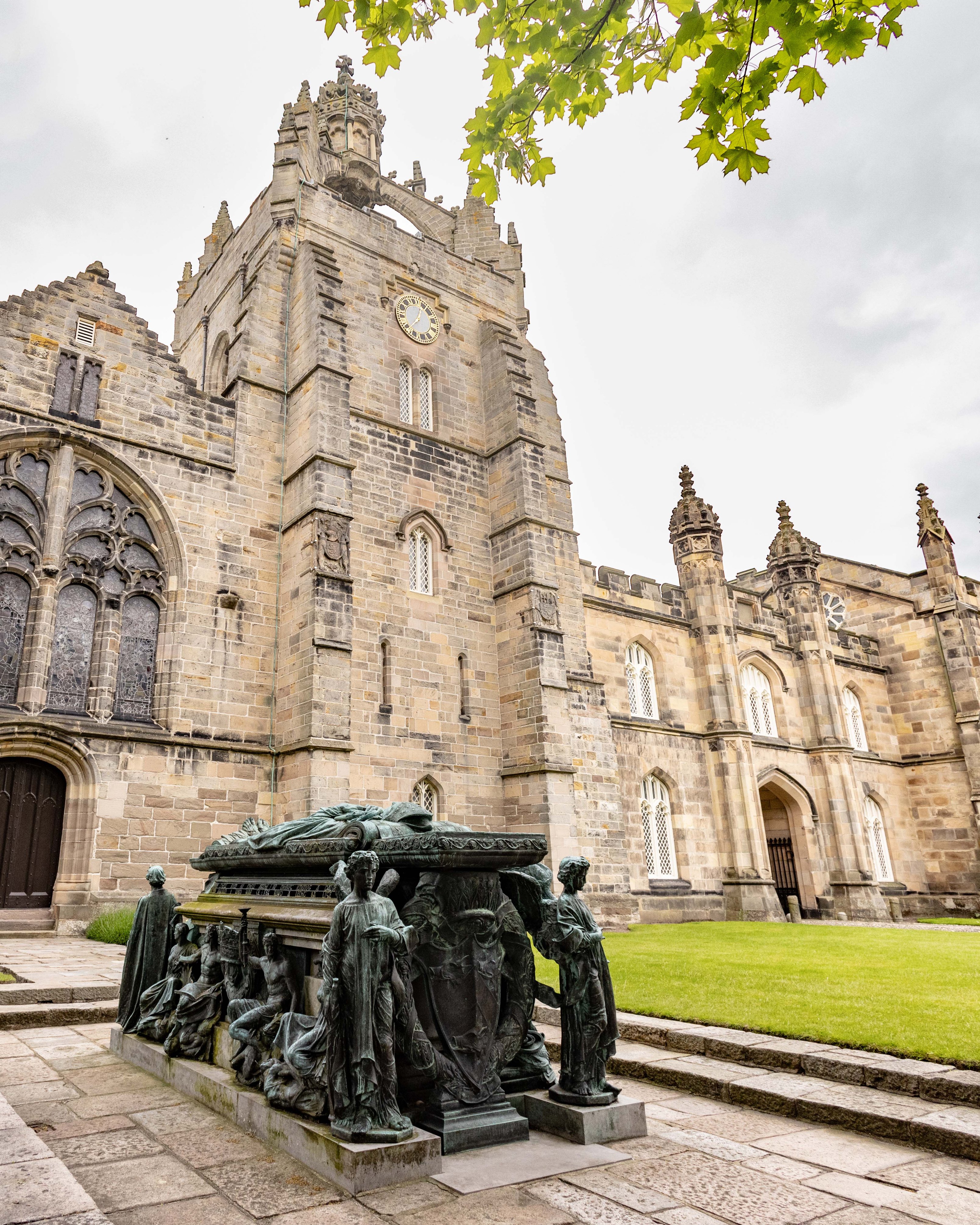
I’m not much of an urban dweller and much prefer the stillness and seclusion of rural habitats, but I connected to Aberdeen straight away. Scotland’s third largest city is hugely varied and this is perhaps most evident in its architecture, where a single street has large stone block buildings, ornate granite colleges and transparent office blocks.
Despite its size Aberdeen is easily walkable, with museums, gardens, restaurants and artworks in just a couple of miles. It has loads of character.
Uath Lochans
I love the Cairngorms National Park in general, but this spot in particular had me obsessed from my first visit. I rarely use the word ‘magic’ because there isn’t much that justifies it, but the Uath Lochans do.
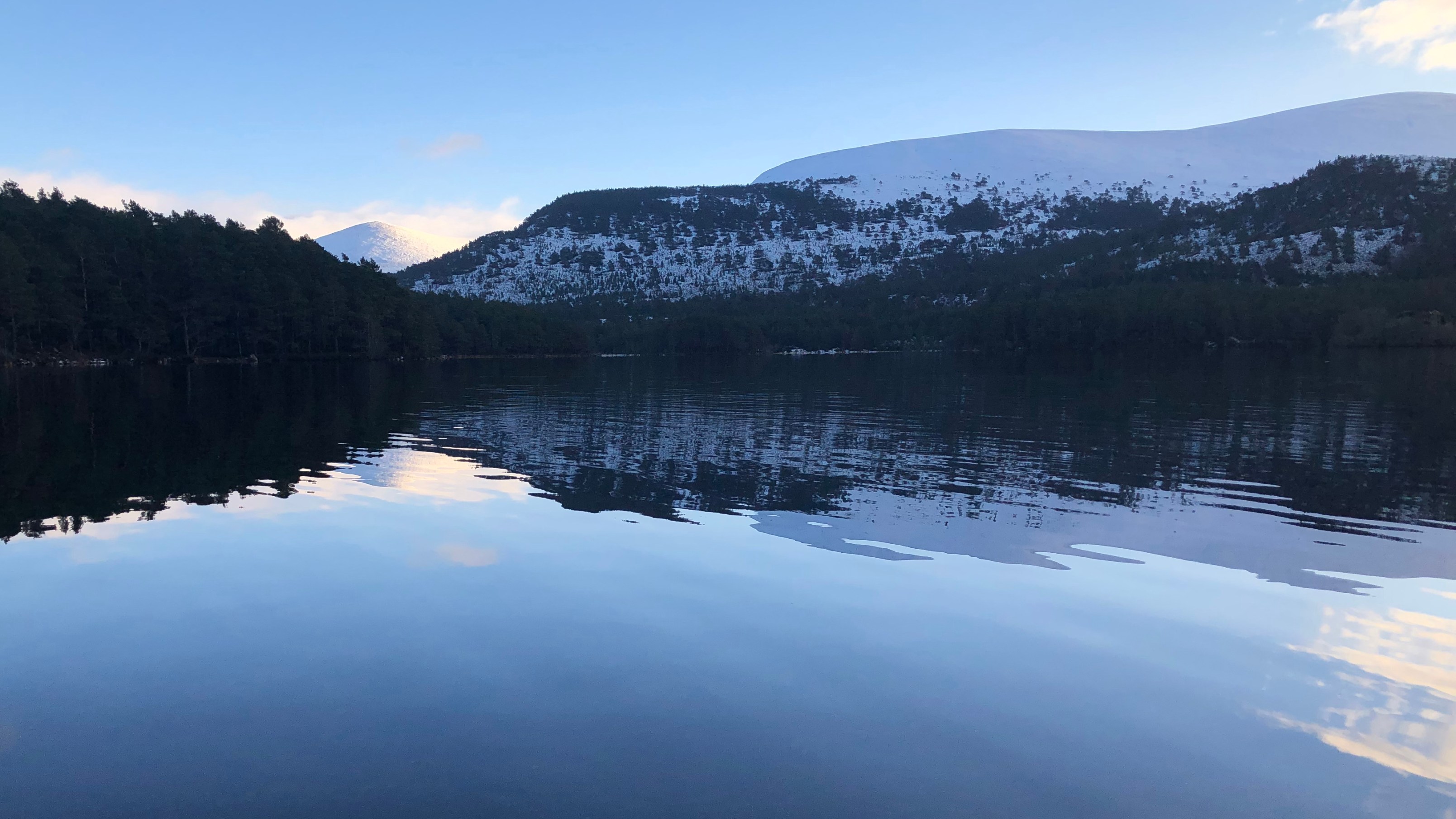
Submerged in pine forest not far from Aviemore, these four small lochs sparkle like they emit their own light. On a still day in summer, their surfaces create perfect reflections of the heathery hills beyond, disturbed only by the feet of dragonflies.
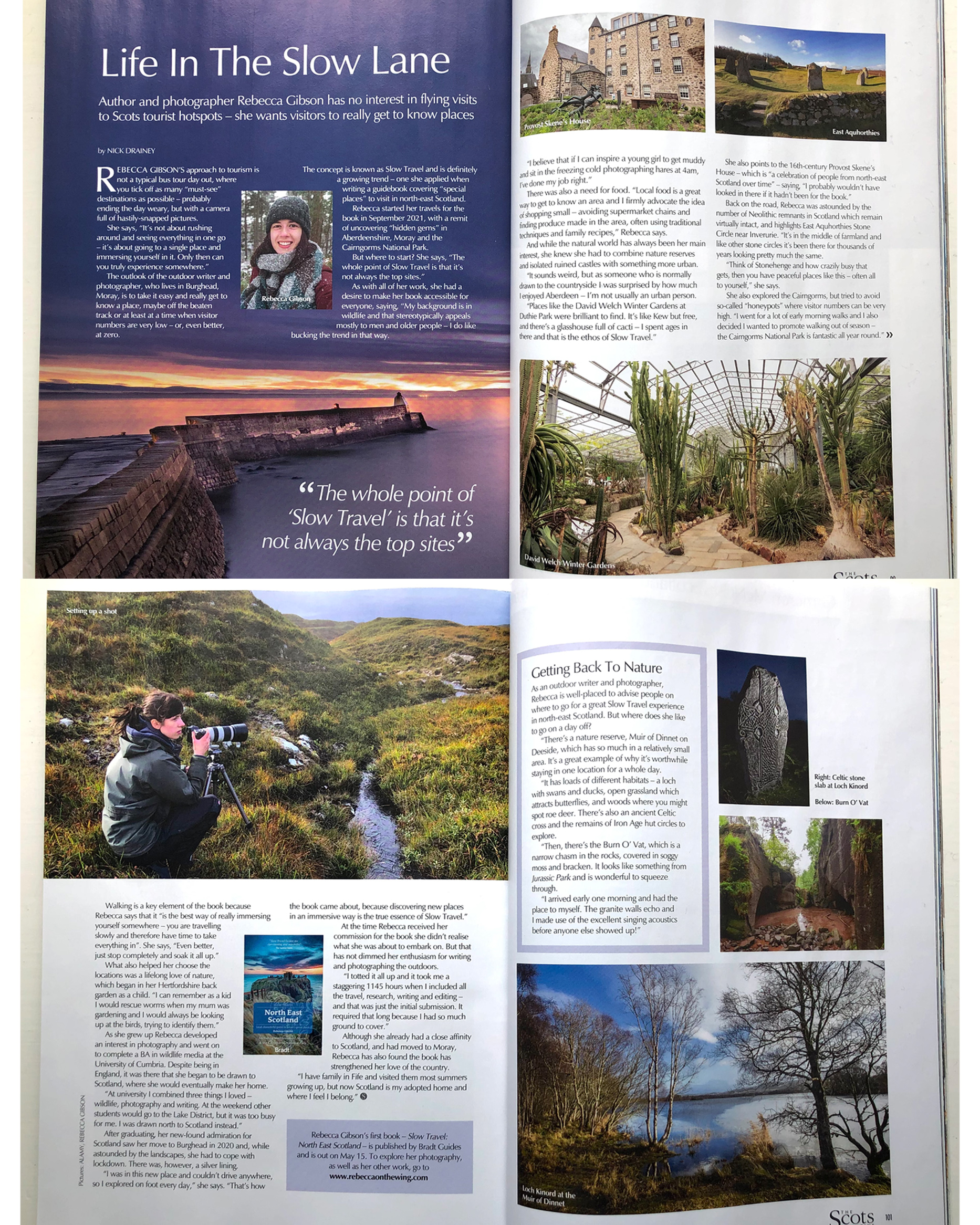
My book will be published one month today, and I can’t believe I’m writing this but there are two double page spreads about it in the latest issue of The Scots Magazine!
At the end of last year I was interviewed by journalist and outdoor enthusiast Nick Drainey. Although our main topic was my book, we had a great chat about Scottish walking, nature and travel in general.
I loved having the opportunity to talk about Slow travel and my experience writing the guide, but it was also really special to reflect on where my love of Scotland began. I think Nick’s done a wonderful job and I’m proud to be a small part of such a great Scottish publication.
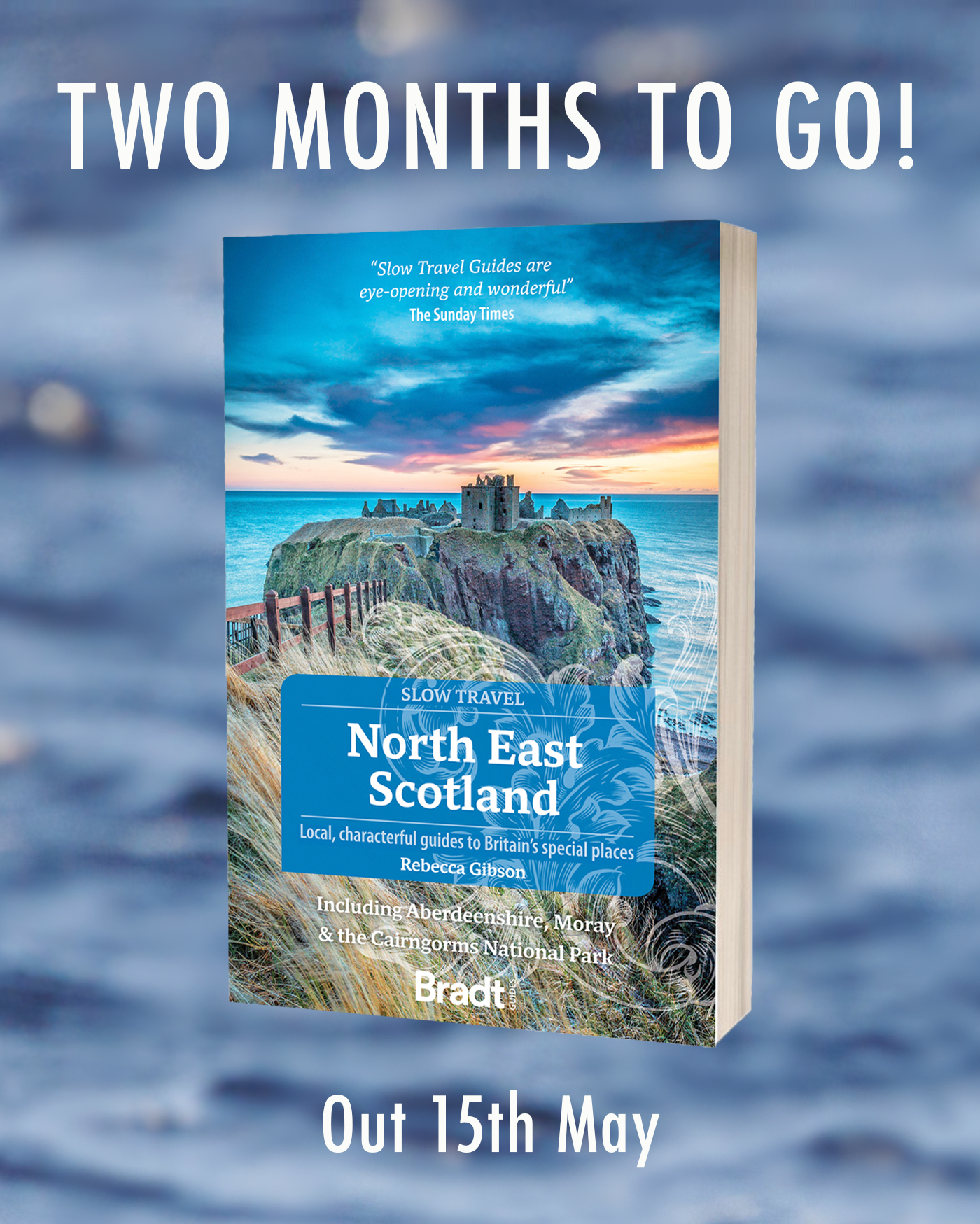
‘Slow Travel: North East Scotland’ is out 15th May
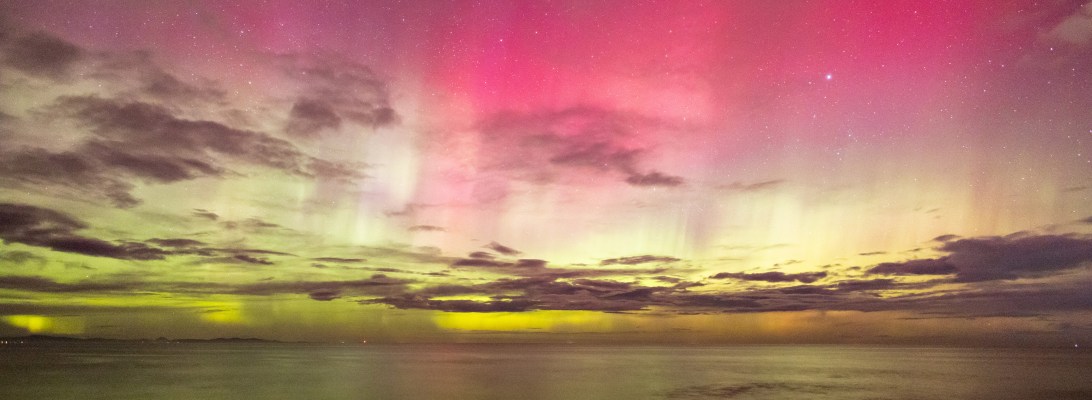
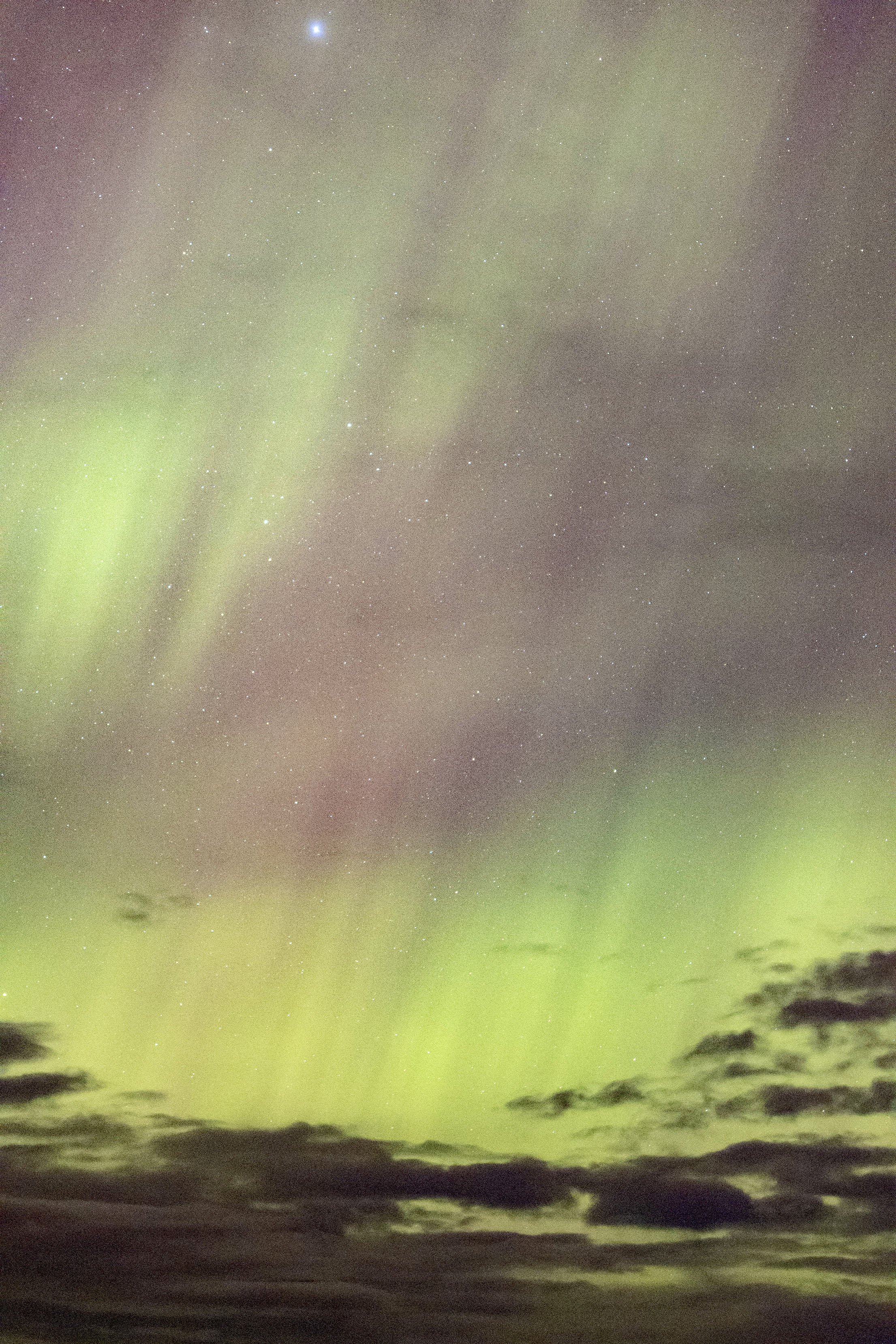
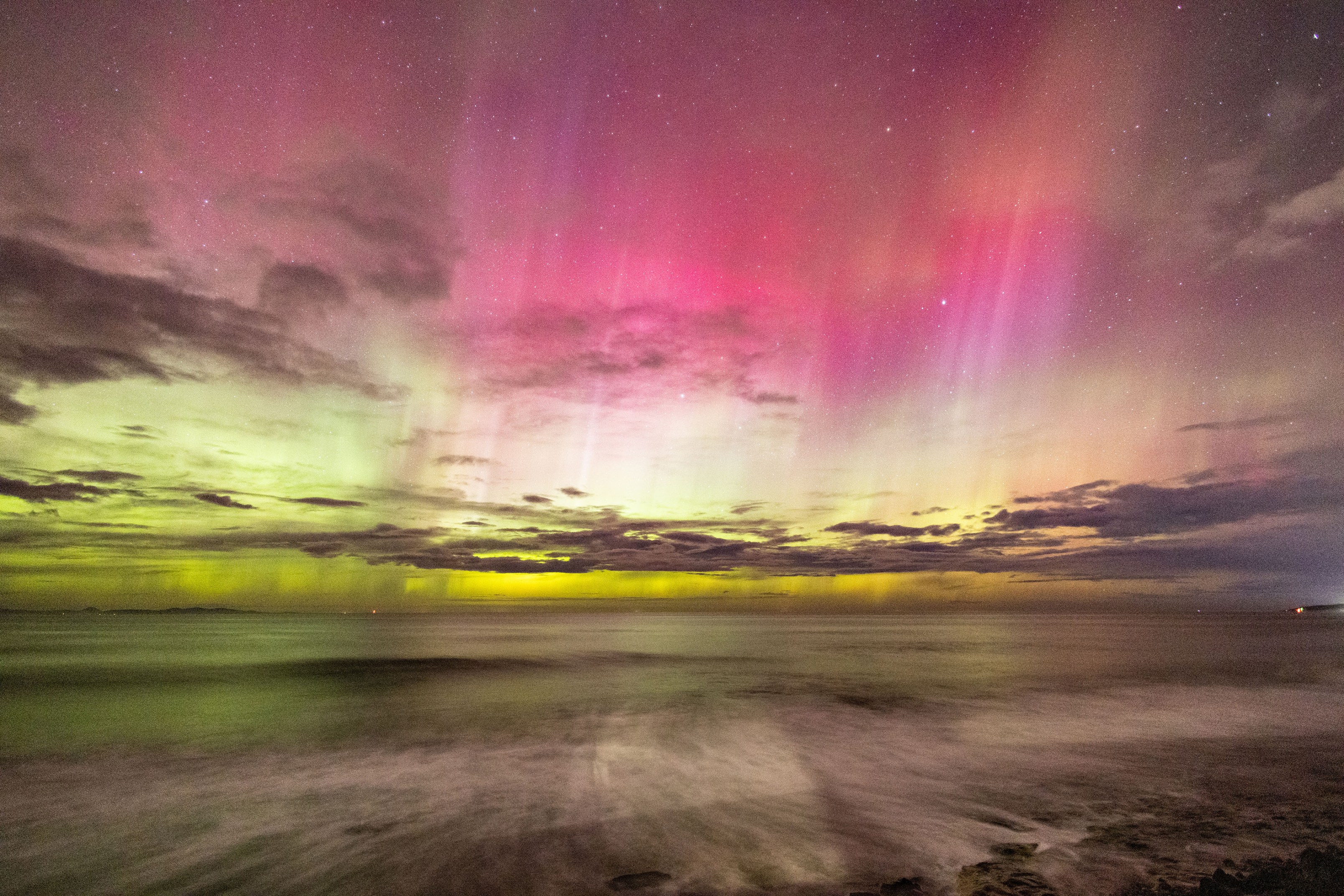
I couldn’t be less of a night owl. Unless something exceptional is happening, I’m tucked up by 11pm and asleep minutes later. This means that I routinely miss the northern lights, which appear in the sky above my village several times each winter and early spring, and I wake up the following morning kicking myself at the missed opportunity.
So naturally, when the alert came last week I was already in pyjamas. Luckily I hadn’t yet nodded off, so I scrabbled for thermals, camera and tripod and legged it outside. I could already see pillars of aurora even through the streetlights, so I felt the familiar dread that I’d missed the peak of activity. Still, I was grateful to be seeing this crazy phenomenon that I so often sleep through.
At 23.22 something caught my eye right over my head. I thought it was either a shooting star or one of my extensive collection of eye floaters, but when it didn’t stop I realised it was the aurora. Bizarrely for Scotland, the beams had stretched all the way up the sky and were flickering in so many different directions that I couldn’t look at them all at once. A massive diagonal column slanted to the side of me and a narrow band pulsed above me every few seconds.
In my bleary-eyed confusion, I’d grabbed a lens that was a bit too cropped for landscapes, and while I got some interesting close-up shots of the pillars, I was keen to photograph the whole sky. So I gallantly ran home (up a very steep hill I might add) to switch lenses. I arrived back just as the sky turned raspberry. I couldn’t see that colour of course, but my camera picked up a vivid blush across the entire horizon, layered above the more usual green aurora.
Some folk say they can see the colours but I’ve never been able to, not even when I watched the northern lights in Arctic Norway. I don’t mind seeing silver instead though – what I love most is the movement. Wisps of light being blown by an undetectable wind is the most surreal thing I’ve ever witnessed, and I jumped up and down in the pitch black with my hands clapped over my mouth until well after 1am.
I said I didn’t stay up late unless something exceptional was happening, and that display qualified. I was a wide-eyed night owl at last.
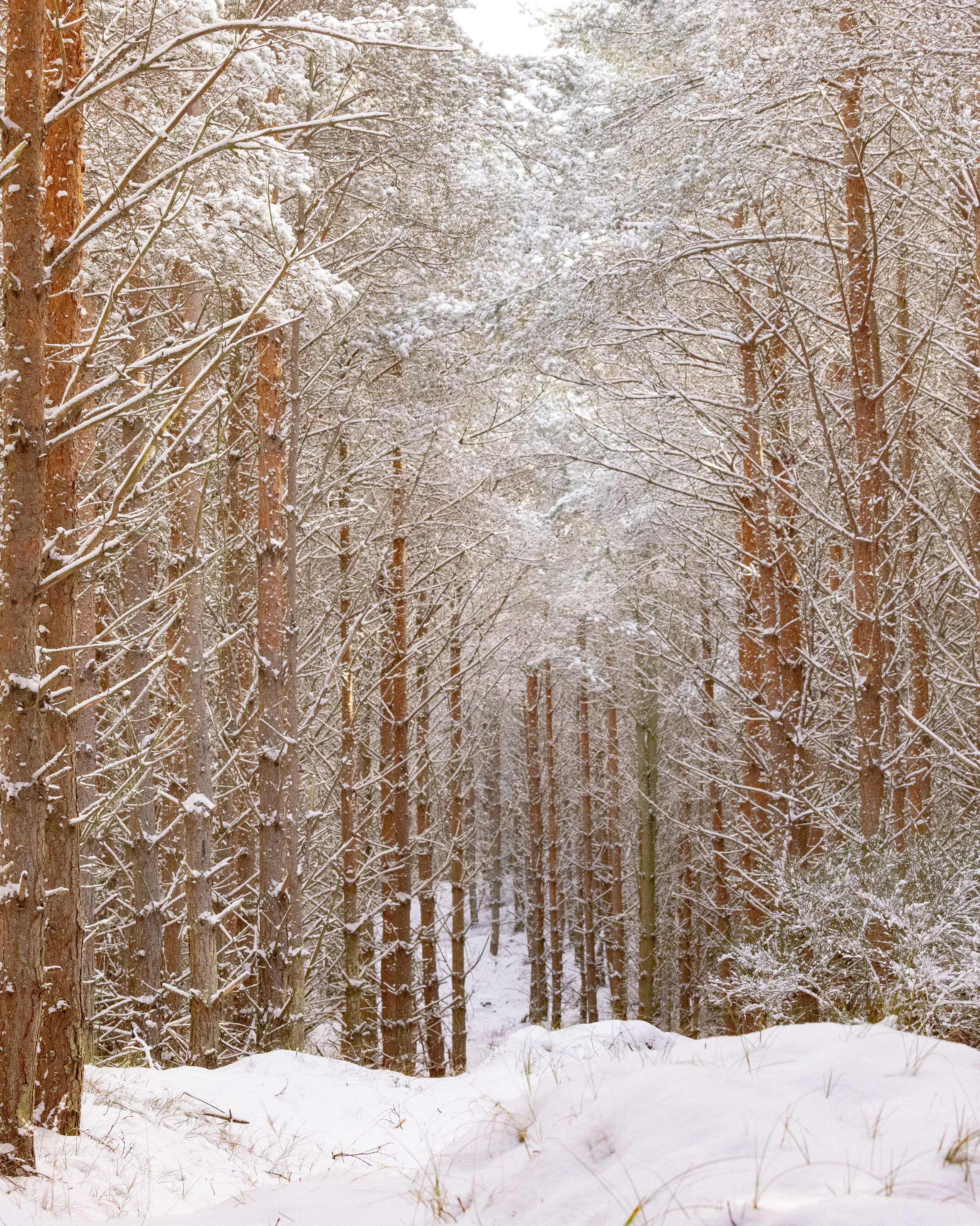
My plan had been to photograph boxing hares. According to the (notoriously unreliable) forecast, it was going to be a cloudless sunrise, so you can imagine how nettled I was to find myself in a mild blizzard at 5:30am, barely able to see 100 yards past my nose.
And of course, that’s when four hares appear out of nowhere and start boxing, just as I’m pawing great hunks of snow out of my eyes. By the time the snowfall subsided the boxing match was over, but a solitary hare was still loitering in the open, just as crazy as I was.
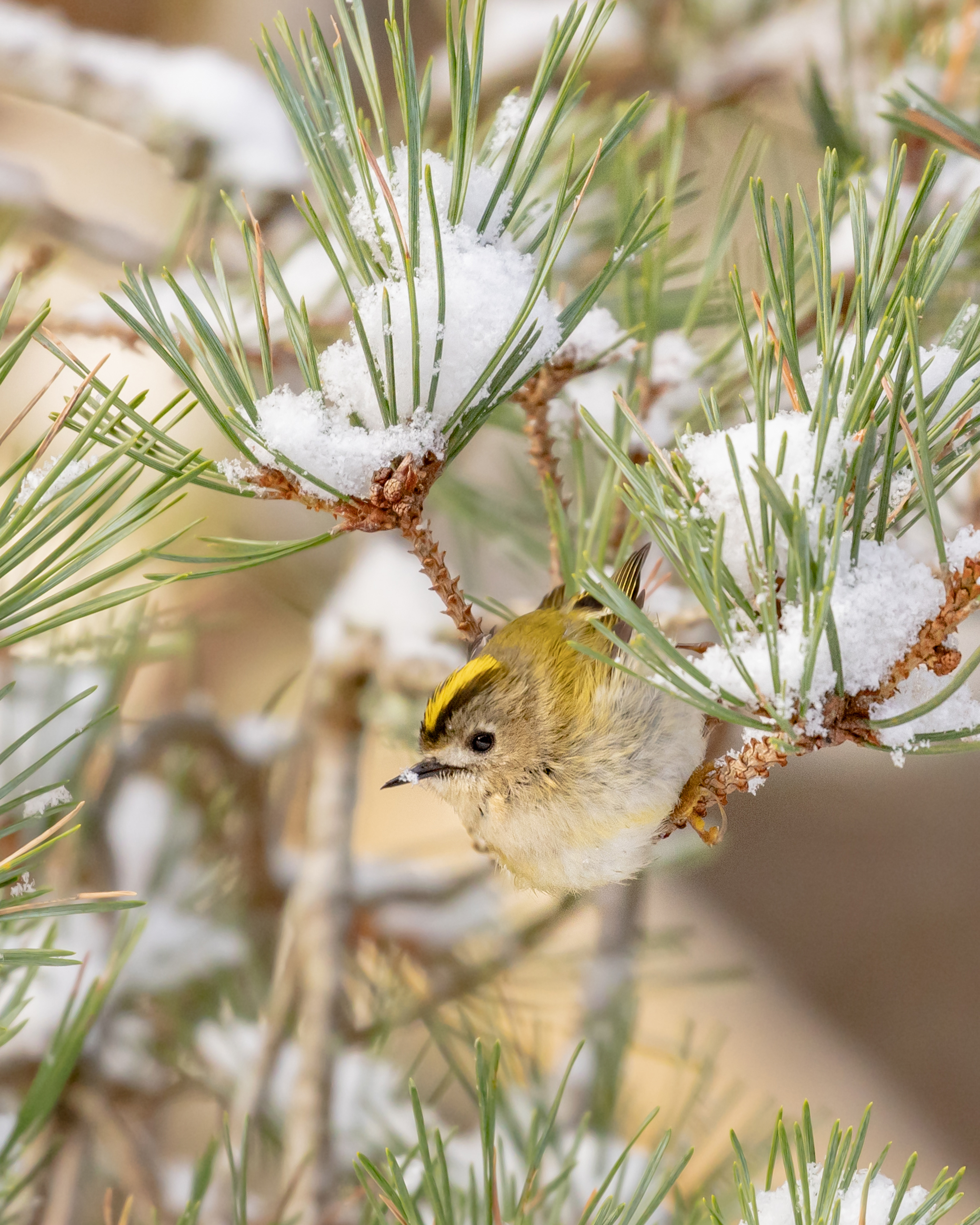
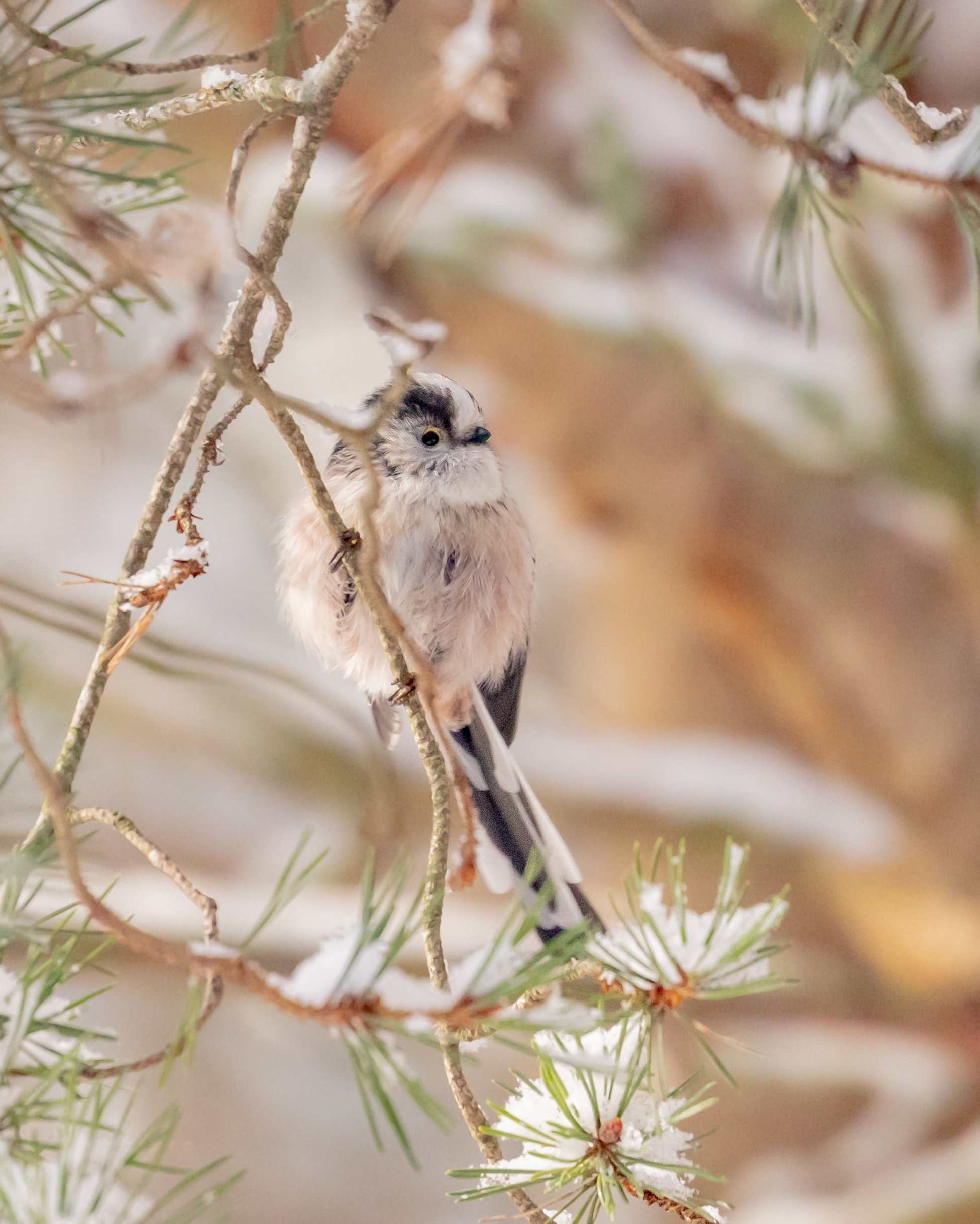
Determined to have more luck elsewhere, I ventured into the forest and found long-tailed tits and goldcrests. These tiny scamps really tested my reflexes, barely pausing for a second before flitting off to another branch.
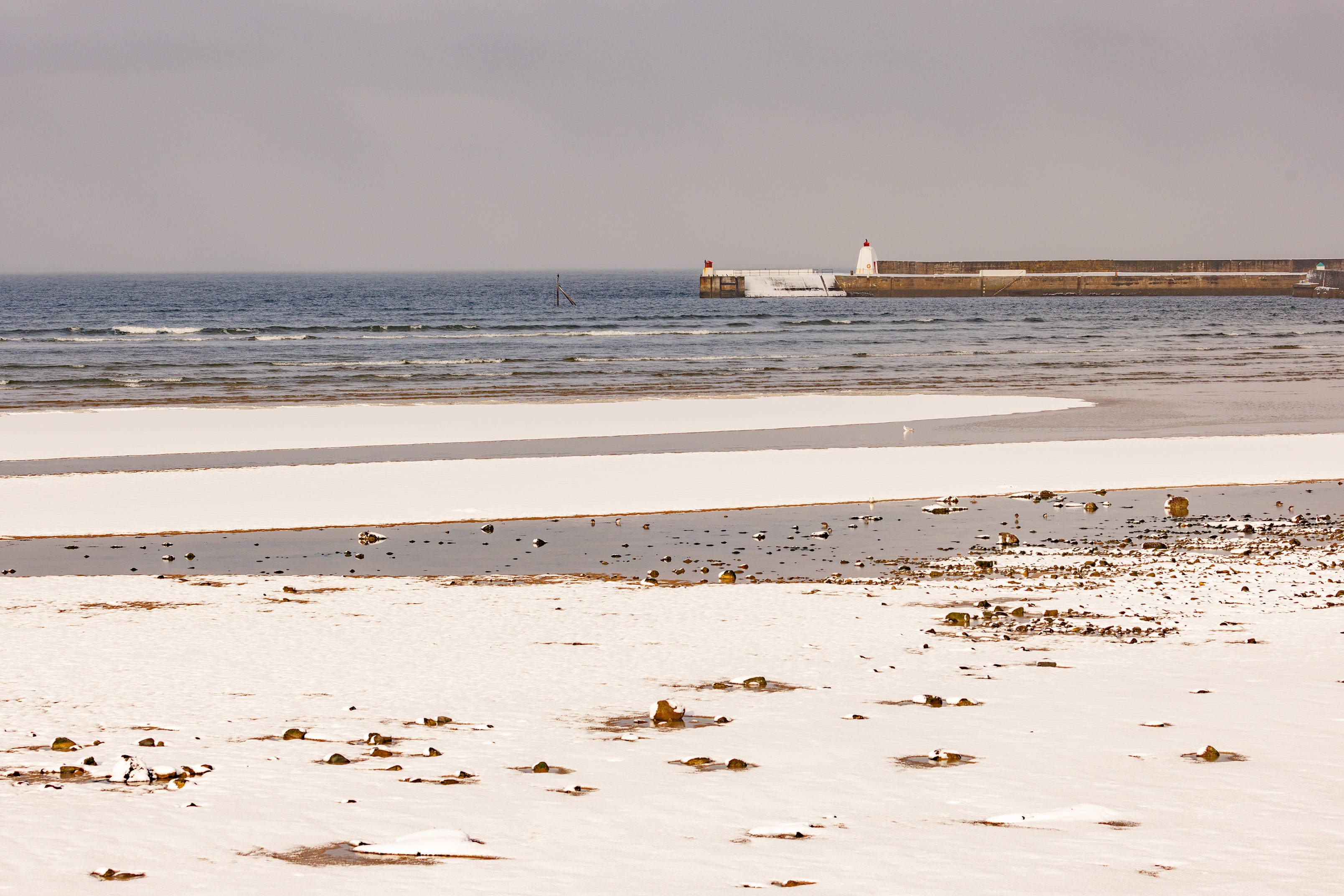
A few hours later my feet were sufficiently numb so I headed back home. I passed the beach on the way, which was just as white as everything else.
Nature is unpredictable at the best of times, let alone when snow is involved. I ended up really pleased with what I managed to photograph though, despite the shaky start to the day. Still, I’ll be back for those mad March hares soon…
My Slow Travel Guide to North East Scotland will be published exactly two months today! To celebrate what I’m considering to be the start of The Final Countdown (cue Europe), here’s an exclusive sample from the book about the town of Banchory, 18 miles west of Aberdeen.
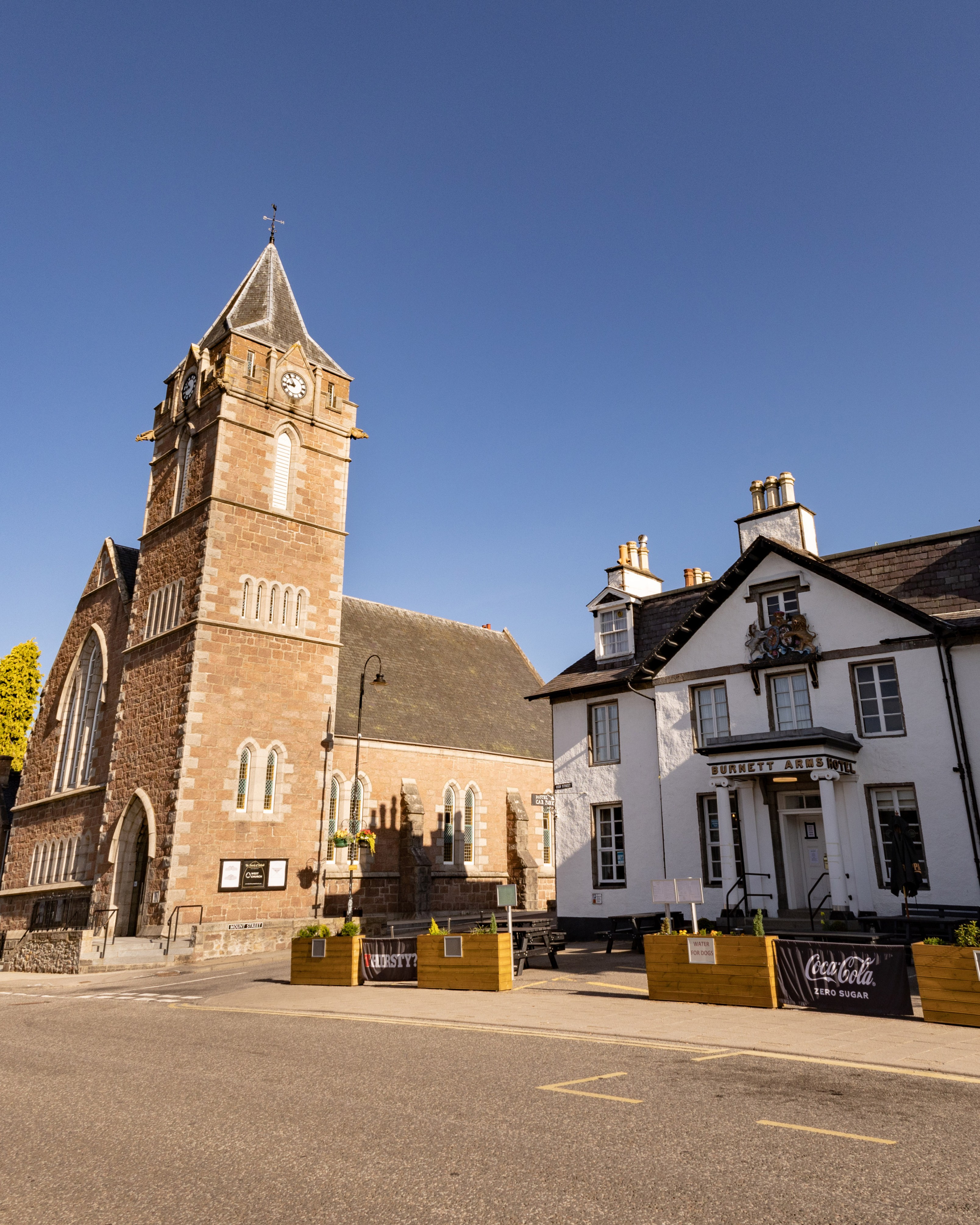
Banchory is the last major town before you move across the boundary into Aberdeen City, hanging in a hammock of the River Dee as it flows east. Close to neighbouring villages and with the granite torr-topped hill of Clachnaben nearby, Banchory is a handy base for exploring this part of Aberdeenshire. It’s also your best bet for shopping, with a range of gift shops lining High and Dee Streets.
High Street
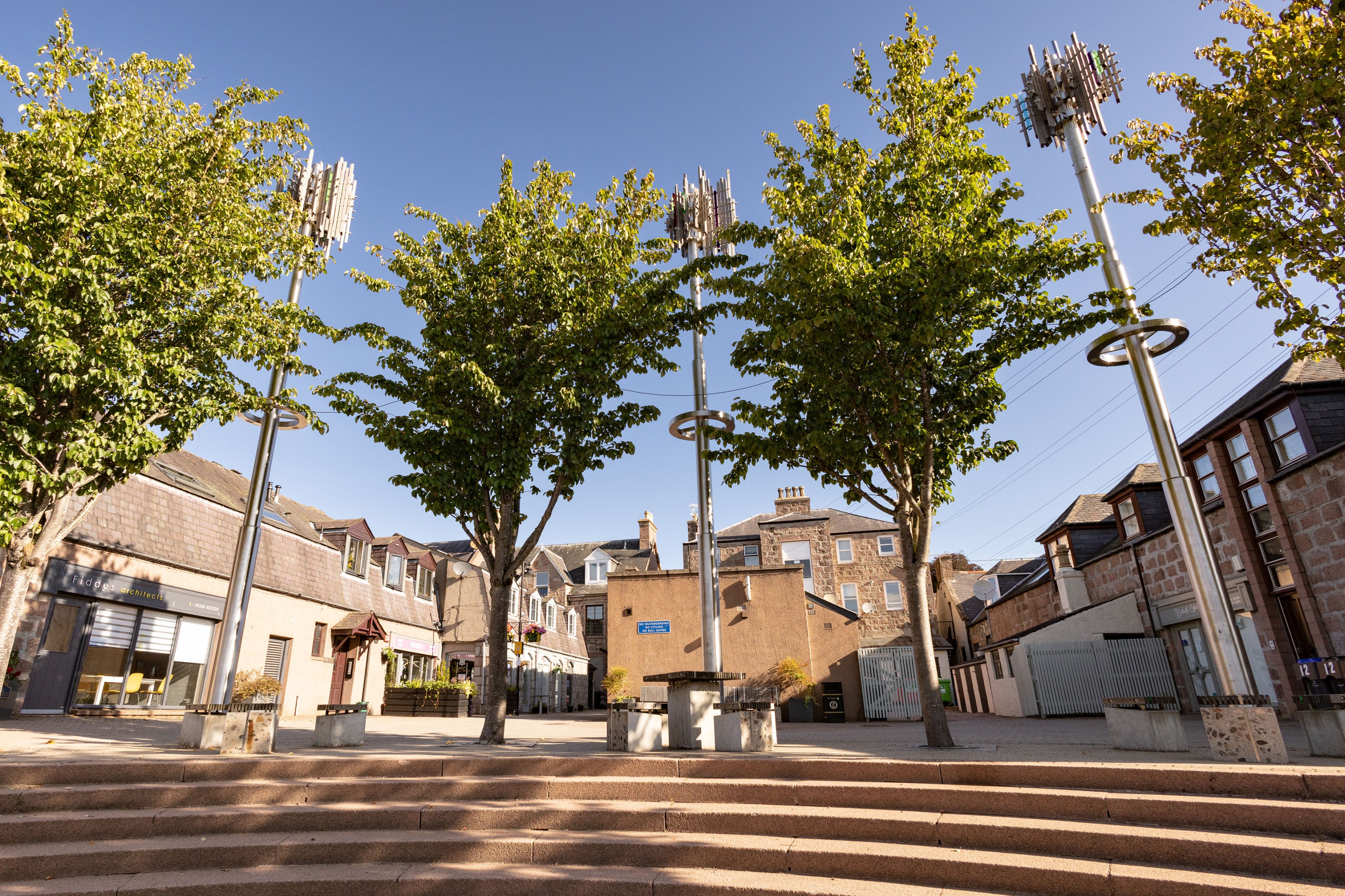
By happy accident, I found my favourite part of Banchory while tracking down the library, located within the pedestrianised Scott Skinner Square. Named after one of the greats of Scottish fiddle music, James Scott Skinner, the square contains a selection of small businesses arranged around a mini amphitheatre of steps.
Scott Skinner Square
James Scott Skinner was born in Banchory in 1843. By the time he was eight years old, he was playing the cello at dances across Deeside. Cello playing wasn’t the only string to Skinner’s bow though (pun unashamedly intended). He also trained as a dance teacher and was even invited by Queen Victoria to teach the children of Balmoral Estate in 1868.
In the square is a tiny garden with woven sculptures of a fiddle and treble clef musical note, created by Ayrshire-based willow and steel artist David Powell. One of Skinner’s most famous pieces, ‘Bonnie Banchory’, inspired the creation of three abstract columns around the square’s amphitheatre. On the top of each is a stack of different-sized rods, representing the sound waves of this song.
Woven sculpture by David Powell
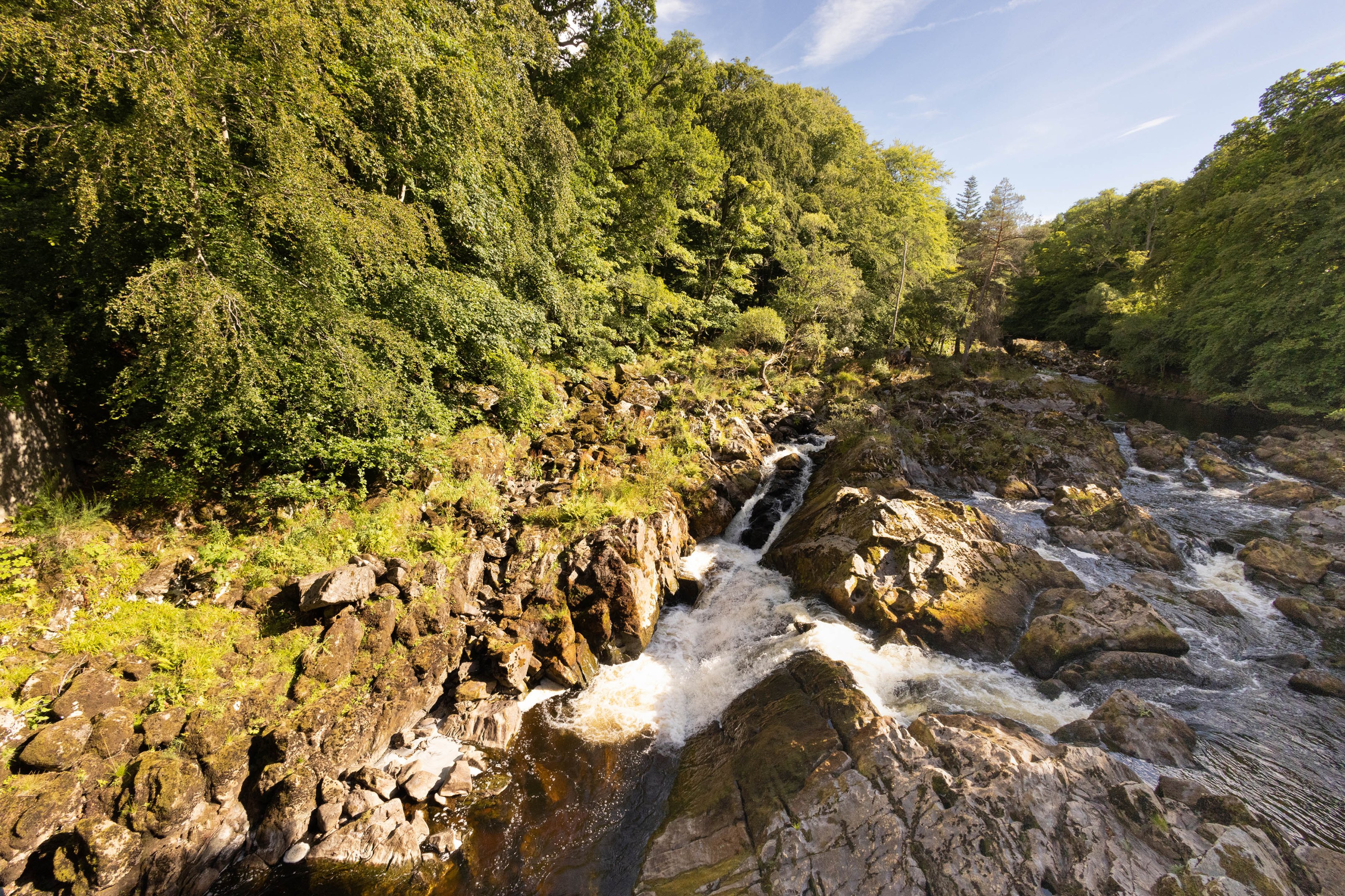
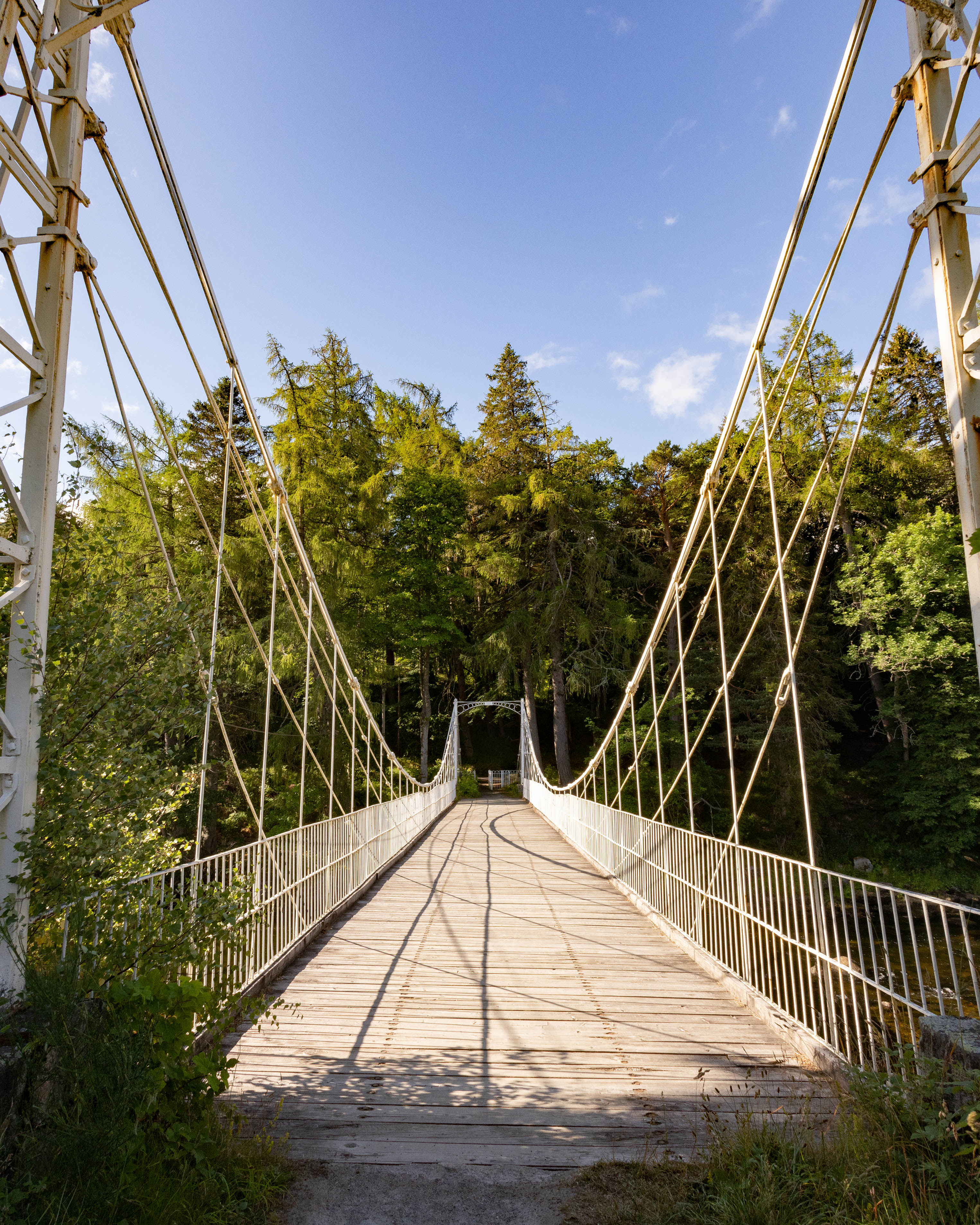
If you walk south on Dee Street you’ll soon cross the river. Half a mile further along is a T-junction, where the left branch passes over the Water of Feugh. Running parallel to the stone road bridge is a newer footbridge where you can peer down at the Falls of Feugh below. The water surges in two channels around rocky contours before crashing into a slower pool and continuing under the bridges. In autumn, this is a good spot to look for leaping salmon.
Falls of Feugh
Five miles south of Banchory is Nine Stanes Stone Circle, conveniently close to an unnamed road passing through a Sitka spruce plantation. There are six standing stones, a chunky horizontal recumbent and two wonky flankers, making up the nine stones in its name.
When I visited, I’d just experienced an assorted delight of road closures, cafés shut when they shouldn’t have been and insufferable August heat (I have about the same heat tolerance as a Mars bar). I arrived at Nine Stanes a sweaty, irritable mess and, although sitting in the middle of the circle with grasshoppers boinging around my feet didn’t make me any less sweaty, it was a serene way to end the day. Stone circles are good at that.
This one was arranged some 4,000 years ago, used as a burial place and to mark the movement of the moon throughout the year. Its stones now have mossy beards and grassy feet, but after all that time they’re still standing.
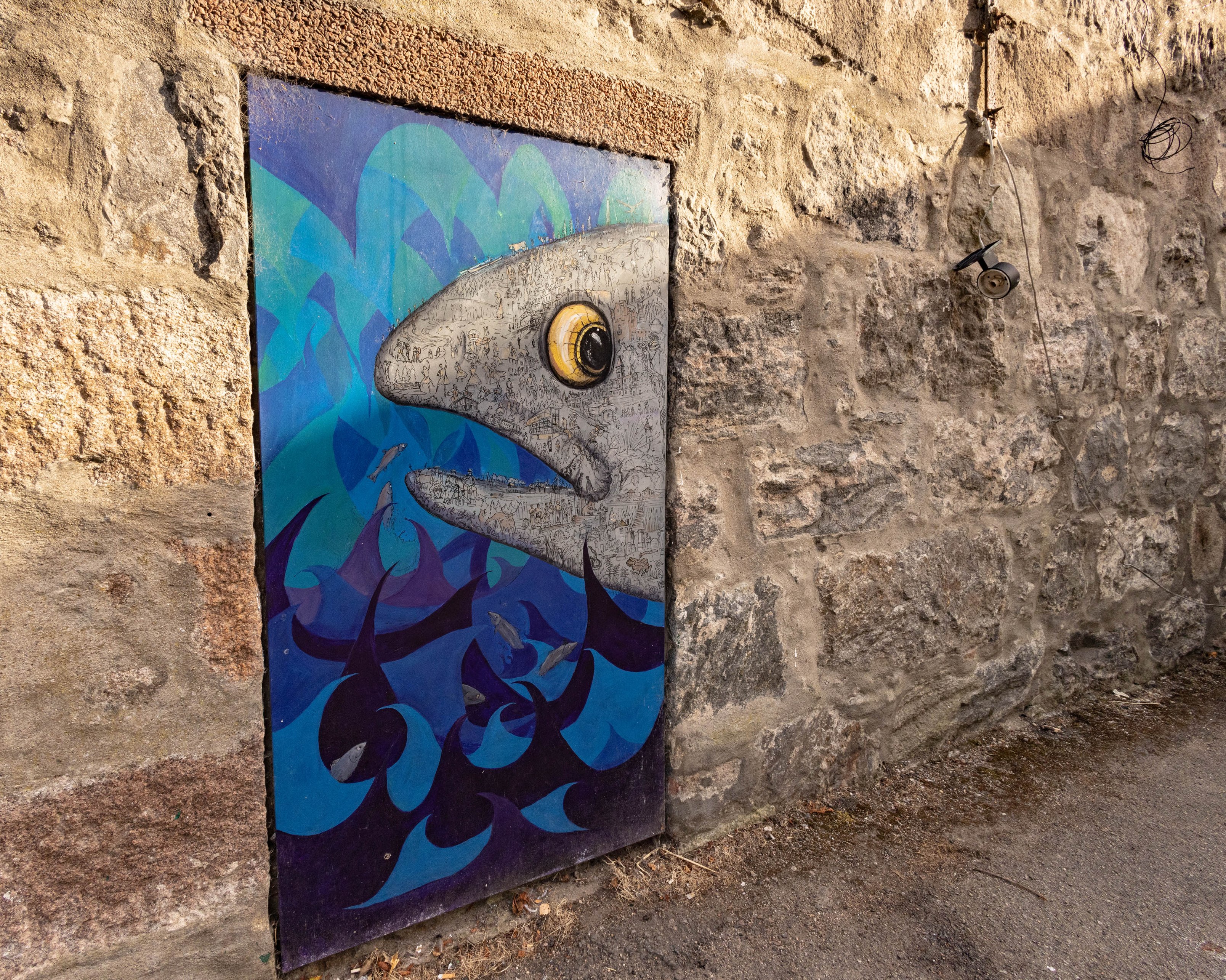
Banchory street art by Shona Macdonald
As you can see from this sample, Slow guides are just that: leisurely, and written as if the author is walking around with a person wearing a blindfold. I’ve loved writing in such immersive detail, as it’s given me the opportunity to really dive into the nuances of each location I’ve featured in the book. There’s a lot of nature and wildlife, which shouldn’t come as a surprise, but this particular entry gives you an idea of the variety of other things I explore too.
I’m so excited to share the biggest project of my career so far with you all. I’m currently working through the proofs and seeing the pages take shape, so it won’t be long until I can finally hold my first book in my hands.
Extending from Moray’s western border near Nairn, along the Moray Firth and all the way around the right-angled wedge of Aberdeenshire, the North East coast of Scotland covers over 200 miles of coastline. Read on for my top five beaches along this stretch, from west to east, where you can spend the day foraging for shells, watching wildlife or just soaking it all in.
FINDHORN
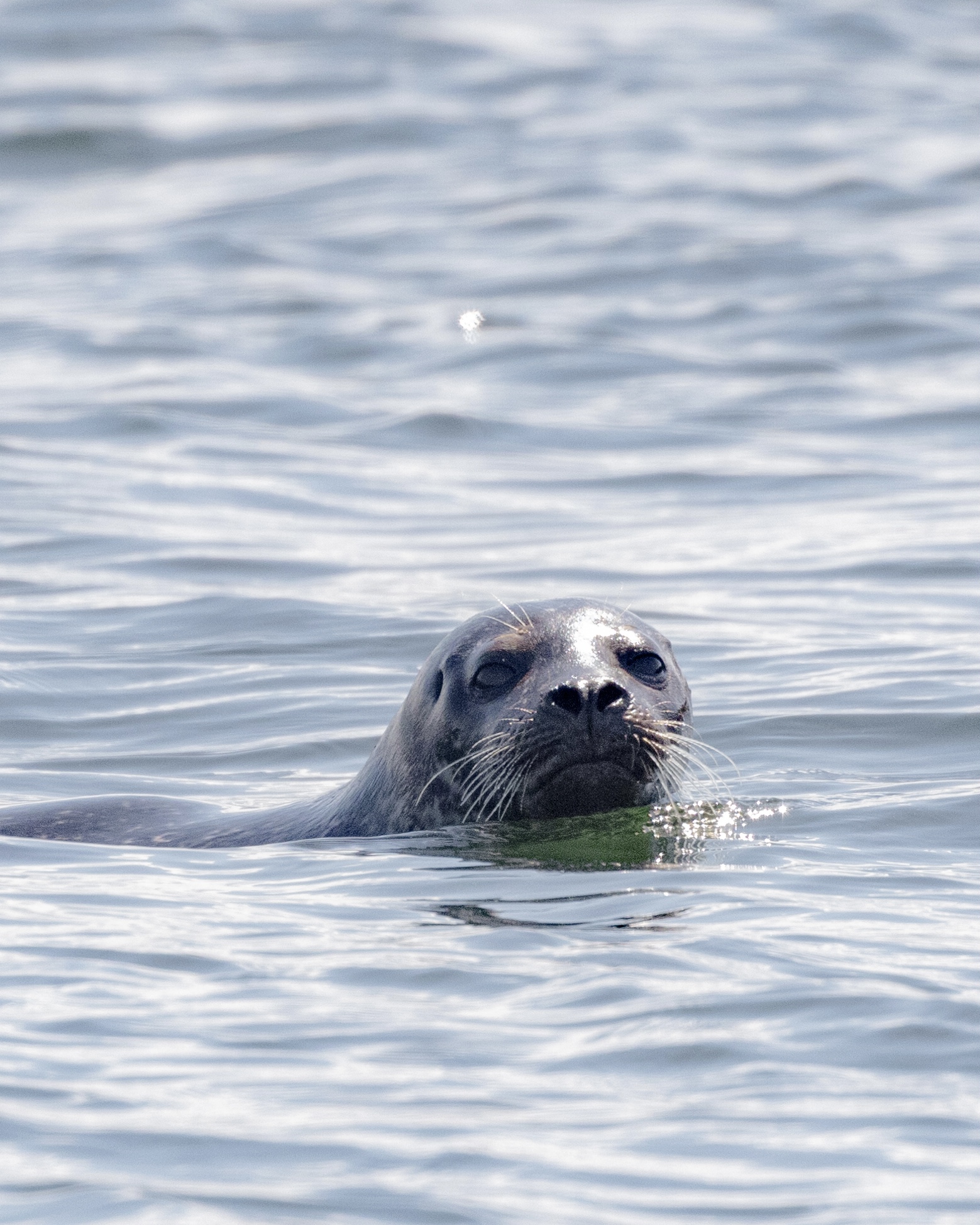
Findhorn has a beach of two halves. Surf down a steep shingle bank onto an expanse of fine sand, revealed at low tide. The bay here is known for its seals – depending on the tide they might be hauled out on the beach (if so then keep your distance) or bobbing in the shallows.
Covesea
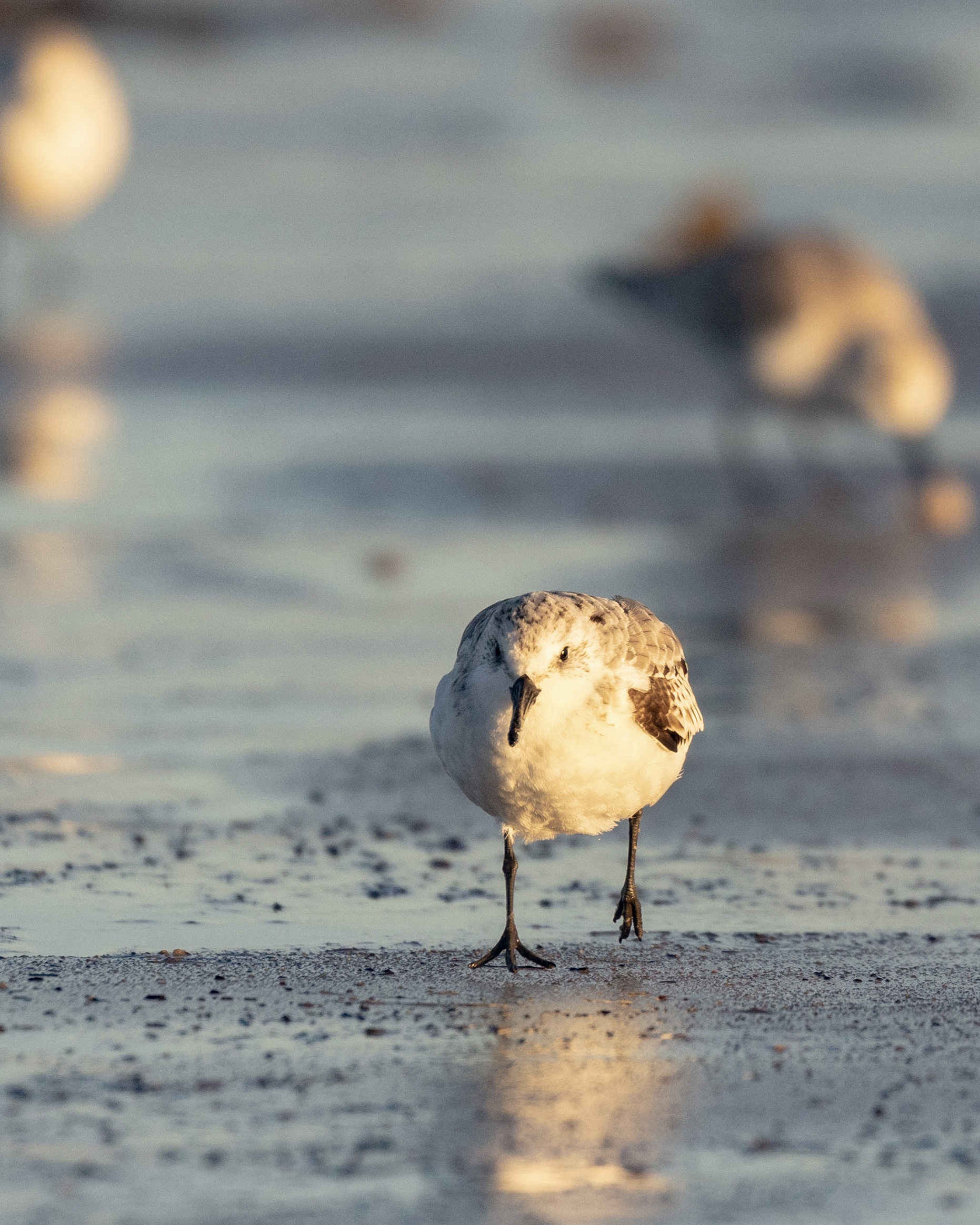
At the foot of Covesea Lighthouse is another sandy beach, running to nearby Lossiemouth. As the tide recedes on quiet winter days, you might see sanderlings feeding here. They move in sudden bursts like a breeze has swept them up.
Sunnyside
A lesser-known spot, Sunnyside is close to the ruin of Findlater Castle. Perch on the hip-high bank or roll your trousers up and explore the rockpools that collect among the geometric rock formations.
St Combs
The fishing village of St Combs, five miles southeast of Fraserburgh, has a curved beach facing east, making it a good sunrise location. The sand is the colour of Biscoff even on an overcast day, threaded with narrow water channels trickling into the bay.
Forvie
Forvie National Nature Reserve is 13 miles north of Aberdeen and famous for its magnificent shifting sand dunes. Watch seals and a variety of birds on the River Ythan or venture north along the beach and join walking trails through mixed heather and marram grass.
Yesterday I attended a conference in Kingussie, down in the Cairngorms National Park, about Scottish community tourism. It was hosted by SCOTO, a collaborative group of community tourism enterprises from all over Scotland.
One of my favourite speakers was Calum Maclean – a presenter, writer and Gaelic language activist who’s probably best known for his wild swimming. He’s just been voted the most influential Scot on TikTok, surpassing the likes of Lewis Capaldi.
What resonated with me about Calum was his enthusiasm. He spoke about ‘the power of localness’ and exploring past the obvious to get a deeper understanding of the places we visit. He also said to go ‘beyond the guidebooks’ that tend to gloss over the juicy, undiscovered places you’d only know about if you were a local, in favour of overpopulated tourist hotspots.
After his talk, I chatted with Calum about my Slow guide and how it was important to me to write a guidebook that included some of those undiscovered locations. I had the privilege of meeting lots of local people during my research and travels, and their contributions have made my book far richer. To reinforce the importance of this kind of immersive travel even more, Slow Travel is the theme for May in VisitScotland’s 2023 marketing calendar – impeccable timing for the release of my book that same month!
Recently, there’s been a surge in awareness of ‘sustainable tourism’. Initially that might make you think of the environment, and how visitors should respect wildlife and wild places while travelling. This is essential of course, but the sustainable mindset also relates to people. Supporting independent businesses instead of big chains, and making an effort to learn the heritage of new places as well as appreciate their beauty, are just as important as being mindful of campfires and taking your litter home.
Again, these are things that a good Slow guide should cover, and I consciously shopped small while I was travelling for my book, discovering fantastic small businesses that gave the places I visited even more colour.
Another excellent speaker at the conference was Scotland blogger, itinerary consultant and podcast host Kathi Kamleitner. Like Calum, Kathi’s passion was infectious and she spoke about connection as an emotional benefit of tourism. This connection can be with those you travel with, those you meet while travelling, and also with yourself.
Currently, one of the biggest travel trends is an interest in ‘localism and authentic experiences’. This links to the ‘staycation’ idea, which became even more prevalent during the pandemic. It was reassuring to see that my book links to this trend – I’ve highlighted many local people and hopefully conveyed enough immersive detail in my descriptions of lochs, forests, castles and distilleries to inspire these memorable and authentic experiences that visitors are looking for.
I’m a huge advocate of Scotland as a travel destination and clearly so is Kathi, who launched her business Watch Me See to help other people discover and fall in love with Scotland just like we both did. I’m always looking to connect with other solo female travellers and it was so lovely to hear Kathi’s perspective.
March is Scottish Tourism Month, so the conference was well-timed. It was a whirlwind of conversations and ideas, not to mention a shock to my system after several years of professional interaction exclusively via Zoom! I left feeling inspired and even more excited about the release of my book, having reaffirmed my belief that Slow is the way to go.
I moved to Scotland three years ago today. It’s not that long really, but both my world and the actual world have changed a huge amount in that time. Nonetheless, my local patch has stayed exactly the same.
If you’ve been following my updates for a while, you’ll know that I grew up in southeast England and went to university in Cumbria, where I lived just a few miles from the Scottish border. While my fellow students spent their weekends in the Lake District, I was pulled north instead. During my degree, my interest in nature became a passion and it took on a decidedly Scottish flavour.
After graduation, I had the unpleasant ‘oh god what now’ realisation and returned home, hoping to figure out what to do with the very expensive piece of paper I’d worked so hard for. Less than a year later, it was apparent that I didn’t belong in southeast England anymore. Having experienced what Scotland had to offer a bird nerd like me, I needed to be back there. On 22nd February 2020 I drove 546 miles to my new home on the Moray Coast.
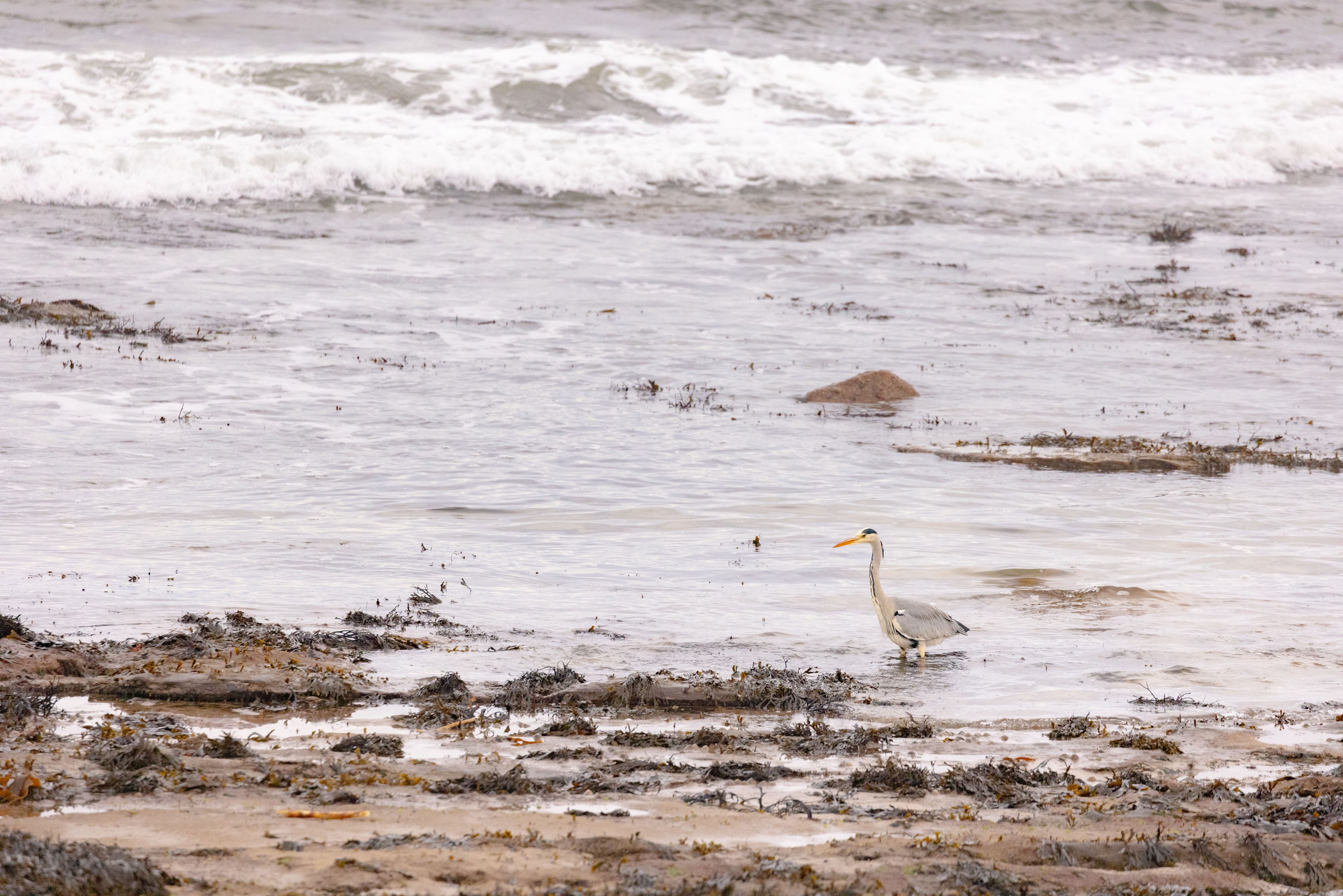
Grey heron
Of course I had no idea what would happen to us all some three weeks later, but even after the first lockdown hit I was fortunate enough to have wildness literally on the doorstep. When restrictions were at their tightest, I walked the same mile of coast path every day.
Because it followed a stretch of rocky shore, no two walks were the same. Sometimes the tide was out, revealing boulders both slick with kelp and crusty with barnacles. They were crowded with oystercatchers, redshanks, turnstones, ringed plovers, rock pipits, herons and bar-tailed godwits – I’d only seen most of these in books before that point. At high tide, deeper waves brought a legion of ducks closer to land including eider, goldeneye and long-tailed ducks, as well as cormorants, red-breasted mergansers and fulmars.
Fulmar
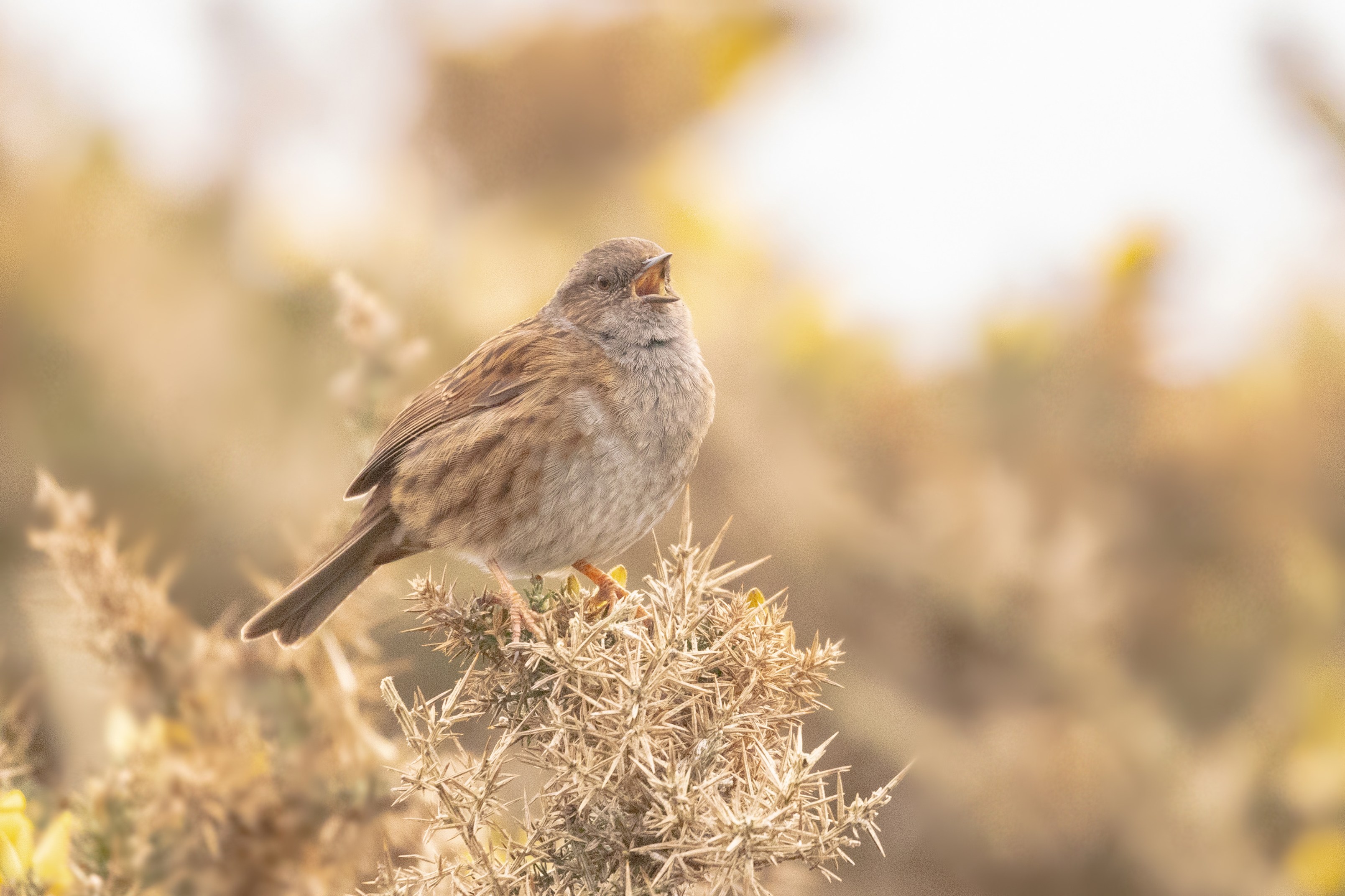
This was all going on in just one direction. If I swivelled to face south instead, my binoculars were full of yellowhammers, linnets, stonechats, dunnocks, wrens, goldfinches, reed buntings and song thrushes, all attracted by the dense shelter of gorse bushes and the stubble field beyond.
As my first spring in Moray became summer, these resident birds were joined by migrating visitors: whitethroats, willow warblers and chiffchaffs perched on the gorse while gannets, swallows and sandwich terns swooped over the water. I’d never seen so much birdlife in one small area, and the coast path remained my regular local patch even after restrictions eased.
Dunnock
However, my eyes naturally wandered and I ventured east into Aberdeenshire and south into the Cairngorms National Park. One thing led to another and less than eight months after moving to North East Scotland I secured a commission to write a book about it which, as you’ll probably know (because I never shut up about it), is what I’ve been grafting away on ever since.
While I was gallivanting all over the place researching my book, I neglected my little patch of coast path. I still walked the dog that way occasionally, but I couldn’t dedicate the same amount of time to watching the birds there as I could when I first moved.
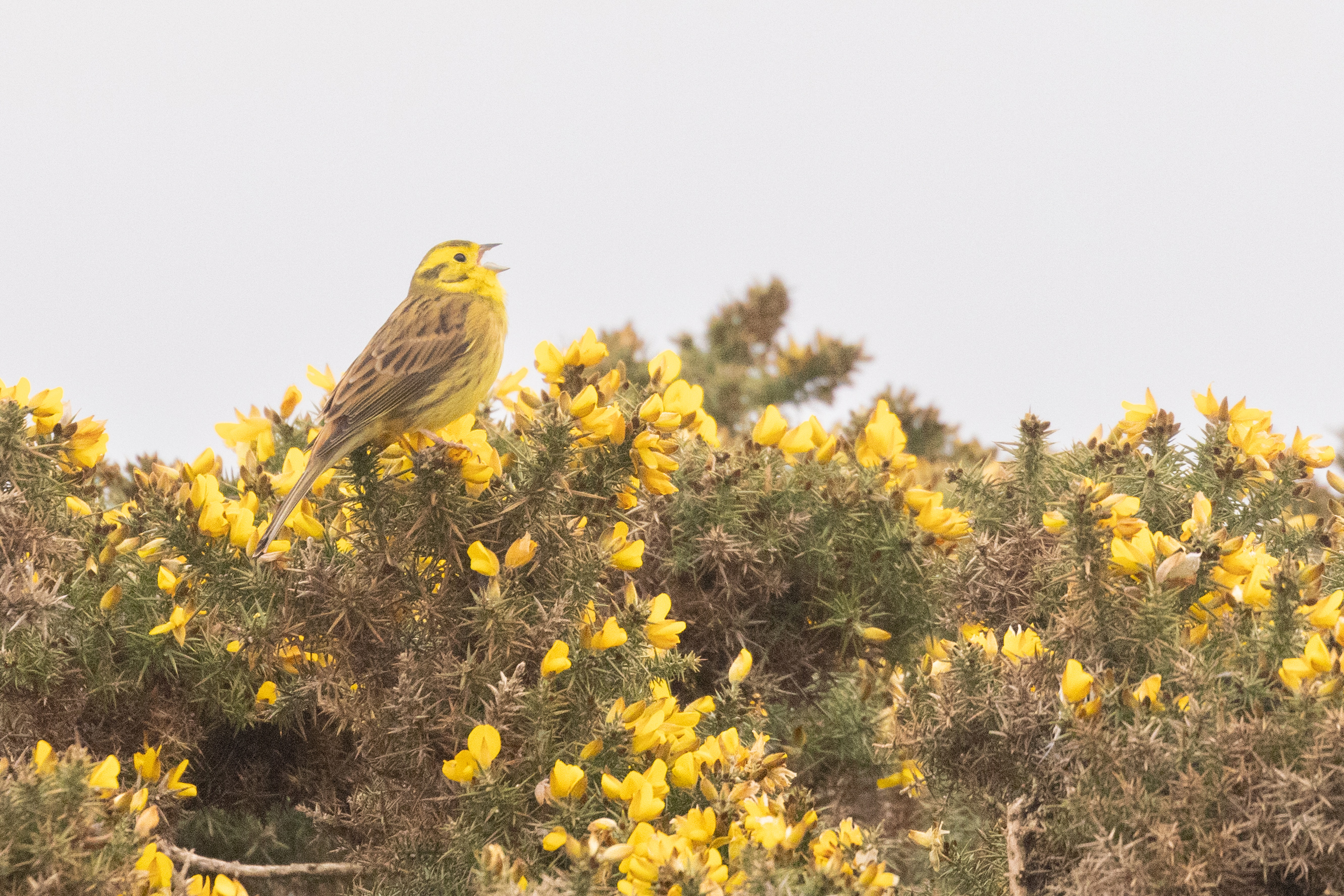
Yellowhammer
My book will be sent off to the typesetter in just over a week’s time, so aside from proofreads and final adjustments, this monumental task I’ve taken on is almost complete. Today, on my third anniversary in my new home, I walked the coast path again, dedicating a whole morning to wandering and watching.
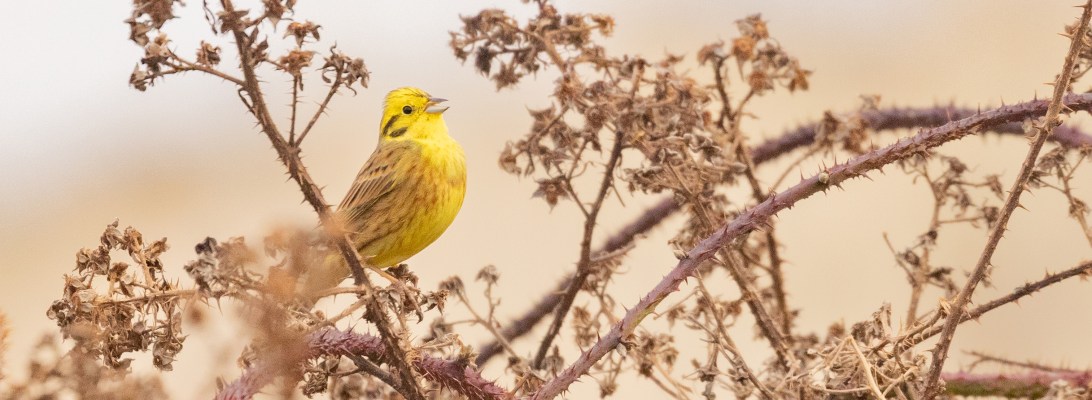
Although I couldn’t spot them all, I knew yellowhammers were everywhere because their distinctive song – ‘a little bit of bread and no cheese!’ – was bouncing around like a bullet in a cave. You wouldn’t think a luminous yellow bird could blend in, but when they’re perched on gorse flowers of a similar shade, they camouflage remarkably well.
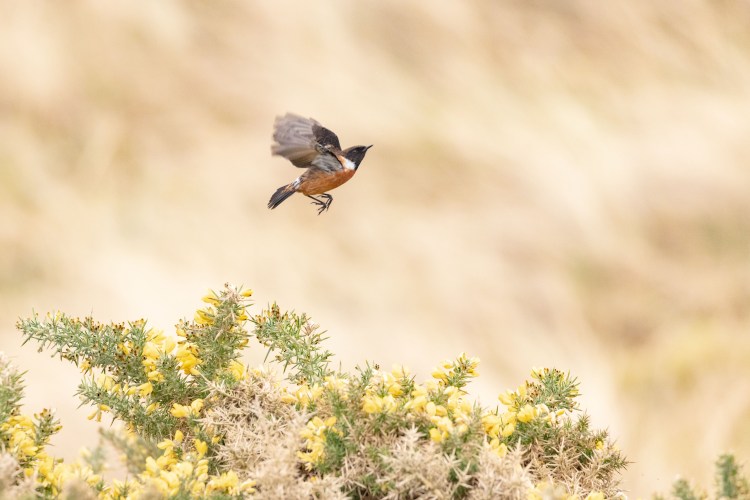
Elsewhere I saw a pair of stonechats on the tallest sprigs of a particular gorse bush, regarding me with a cock of the head and a bob of the tail. It’s fanciful thinking, but seeing as stonechats can live for a handful of years it’s possible that they’re the same ones, occupying the same territory, that I saw on my first forays in 2020.
In three hours, I spotted 33 different bird species – not bad for one mile of coastline before spring has even got going. Of that list, it was the yellowhammers and stonechats that I most enjoyed watching. They were two of the first birds I ever saw in my new home, so they’ve become familiar and even nostalgic – especially when I think back to the surreal times of only being allowed an hour’s outdoor time each day. Luckily for me, that one mile is as bursting with life now as it was back then.

























 rebeccaonthewing.com