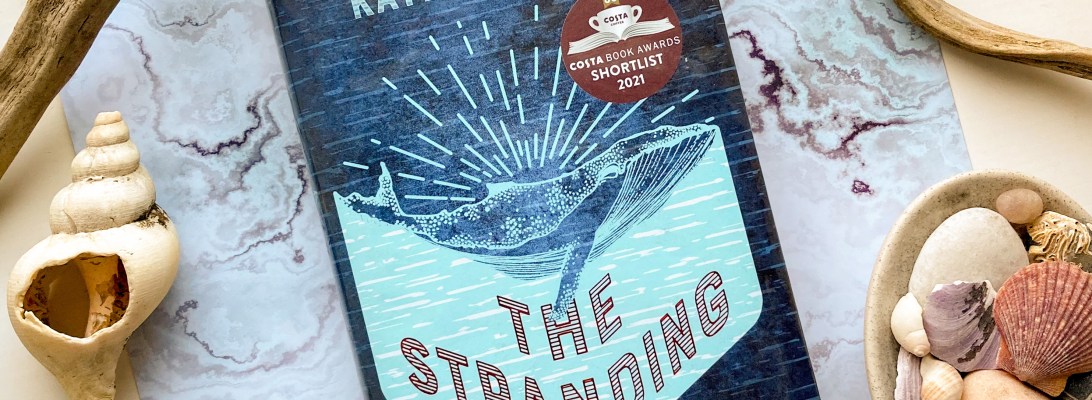
We’re told not to judge a book by its cover but we all do it, at least in the literal sense. Why else is Waterstones full of vibrant, juicy covers begging to be picked up and admired? So, when I saw a whale on the front of this book, it enticed me enough to read the blurb. And what a hook: “Far from home and with no real hope of survival, Ruth finds herself climbing into the mouth of a beached whale alongside a stranger.” Without wanting to sound like a T-Bird, tell me more.
Ruth’s life has become a hamster wheel of alcohol, bed hopping and a sense of something missing. When her latest relationship becomes claustrophobic, she decides to break the monotonous cycle she’s found herself in and travel to New Zealand. Here she hopes to fulfil a childhood dream of working with whales, but apocalypse strikes as soon as she arrives – don’t you hate it when well-laid plans get disrupted? Together with a stranger she meets on the beach, Ruth climbs into the mouth of a beached whale just before the blast hits. This saves her life, but now she has to figure out how to continue living.
This is only half the book, though. Alternating between chapters set in post-apocalyptic New Zealand are fragments of Ruth’s old life and the events that led to her trip. Somehow, there were close parallels between a dystopian world and the everyday routine of a young woman living in London, made sharper by the interwoven timelines. Like all good protagonists, Ruth has many flaws, and this makes her feel real. She makes human mistakes, and despite also building a shelter from whale ribs and making clothes from dried deer hides, her story resonates.
For me, part of this connection came from the book’s setting. I’ve never been to New Zealand, but “the breeze from across the water” and pulling “the salt-stiffened collar of the fleece towards her ears” were familiar sensations. Rather than obvious seaside description, Kate Sawyer uses thoughtful observations of a coastal landscape that essentially apply to any sandy beach in the world. Although my life in England wasn’t nearly so troubled as Ruth’s, I know exactly how being pulled somewhere feels; in her case it was to the whales she’d studied as a child in London’s Natural History Museum. The wonder of that place is something I can definitely relate to.
Dystopian stories have never interested me much, but I loved The Stranding because it was so much more than that. In fact, the apocalypse element was a back-seat theme for me. I felt that the backbone of the story was a woman’s pursuit of happiness and finding the courage to break a cycle and start a better life. And in Ruth’s case, it’s a life she could never have predicted.
I couldn’t help a slight eye roll when I read the shower of adjectives on the cover reviews of this book: “powerful… inspiring… mind-blowing…” But it actually ended up being all of those things for me, even the last one.
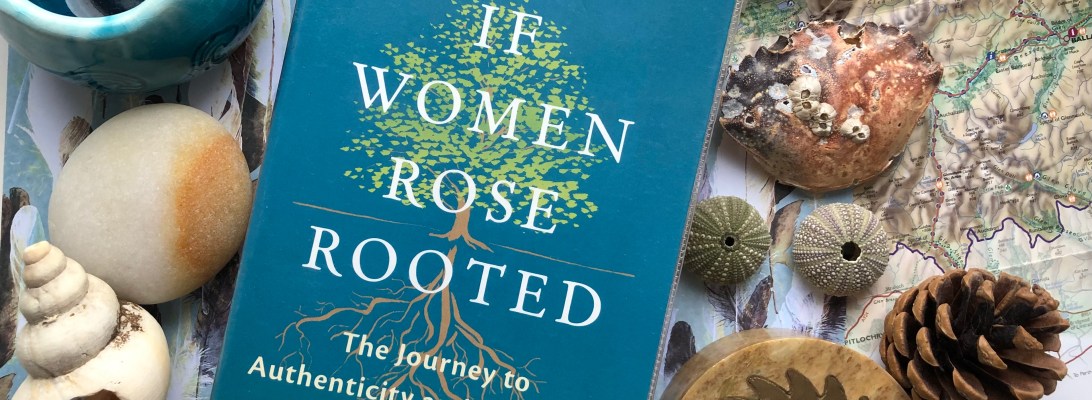
If Women Rose Rooted is a combination of three topics I care strongly about: nature, women and Celtic mythology. I’ve been directly involved in the first of those since childhood – the natural world is the basis for everything I do, both professionally and personally. But the other two have slowly gained momentum in my mind since moving to Scotland.
In 2019 I was earning minimum wage in the town I grew up in. It was where I’d gone to school, met my best friends and spent every weekend, but I didn’t belong there anymore. I didn’t realise just how much I didn’t belong there until I stayed with my parents for a week in their new house in Moray, northeast Scotland.
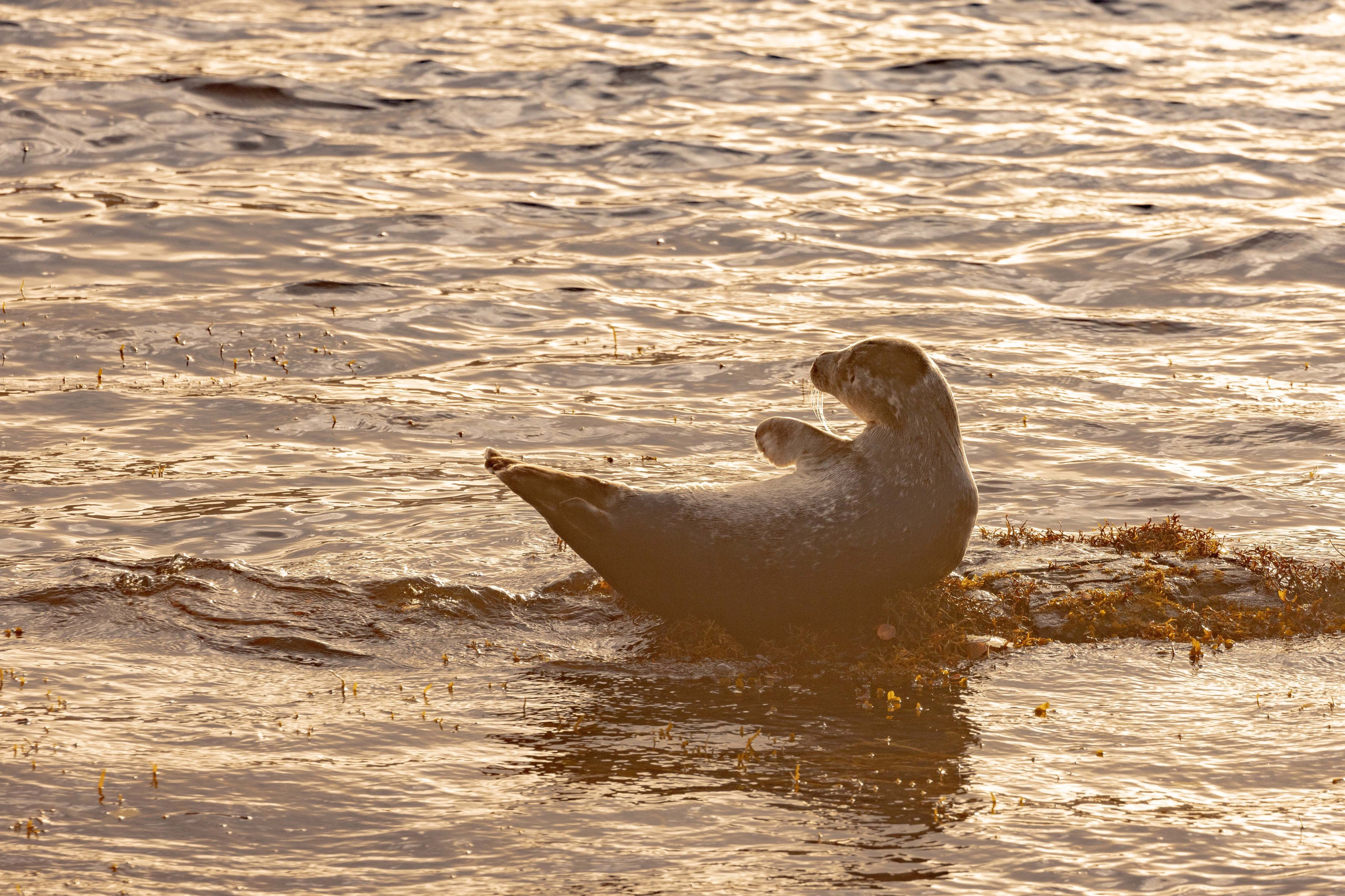
After days spent walking along beaches and through forests, spotting red squirrels, stonechats and grey seals, I returned to England with a crash. Scotland had shone a harsh and revealing light on the current state of my life. My writing had dried up, the camera was gathering dust, and most importantly I wasn’t happy.
One morning before work I sat in my car in a multi-storey car park and cried. Proper ugly sobs. I splashed my face with cold water to stop my eyes puffing up in front of the customers.
I felt a toxic mix of emotions: disappointment about leaving university and returning to the same place I was in before; physical and mental discomfort from spending eight hours a day staring at the same four walls, not making any progress in my career whatsoever; longing for a place currently out of reach; and shame that my situation was a lot better than some and I should be grateful I had work at all.
But I couldn’t shake the feeling of displacement, like I wasn’t where I was supposed to be. Scotland was beckoning and each day the pull grew stronger. I made a playlist of inspiring songs and that worked for a while, but I knew in my gut I had to move.
And the universe, being its freaky-deaky self, confirmed that for me when the shop I was working in closed and we were all let go. Everything in me lifted – I swept up my belongings and bolted north.
The effect was immediate. Words flowed out of me, I took hundreds of photos and I walked for hours through my new home. Now, 21 months later, I feel rooted to land for the first time in my life. I’ve developed a fierce love for the place I’m in and the inspiration I soak up from it. I’ve found my home.
Last month I saw If Women Rose Rooted in the library, its back to the wall so its front cover faced me as I browsed. It had been on my list for a while so I gave it a go. Several pages in I felt the strange sensation of someone I didn’t know seemingly talking about my own life.
“I am sitting in a car,” the author Sharon Blackie writes, “outside an ugly office building in a small town… for which I have absolutely no affection. I have no affinity for this part of the world; my internal compass points north and west, and my feet literally feel as if they are in the wrong place.”
It’s in this moment that Sharon hears the Call. Unfortunately for her it comes in the form of a panic attack, but it was this experience that beckoned her to change her life. A year after that incident, she spent two weeks in Ireland and writes: “For the first time in my life I felt as if my feet were in the right place.” The parallels with my own situation were undeniable.
Memories of my own Call came flooding back. I count myself extremely fortunate that my own experience of what Sharon calls the Wasteland was mild and brief compared to hers. I’m grateful that I recognised what I needed to do and was able to do it a lot sooner.
So my new roots continued to grow in Scotland. I was in a place I felt I belonged to – one that resonated with me. After walking the same trails over and over, I picked up on seasonal changes happening around me. I followed the rhythm of the tides and learned where yellowhammers might be and what time of year to expect long-tailed ducks. I tuned into this amazing new place, and that is the essence of Sharon’s book.
“Once up a time,” she writes, “the people of our Celtic nations knew that our fate is inseparable from the fate of the land we live on… There is a Gaelic word for it. In Irish, the word is dúchas; in Scottish Gaelic, dùthchas. It expresses a sense of belonging to a place, to a certain area of land; it expresses a sense of rootedness, by ancient lineage and ancestry, in the community which has responsibility for that place.”
I was born and raised in England but I have both Irish and Scottish lineage and feel drawn to wild Celtic places. I was pulled north to the windswept coast of Moray and I already feel fiercely protective of it. I spend every day working on something to do with nature, whether it’s writing, photography or filmmaking, but I still feel a sense of helplessness that I’m not doing enough. Our planet is sick and I want to do more, but I don’t know what.
Once again, Sharon Blackie leaned out of her book and seemed to speak directly to me. One of the many incredible women she interviews is Scilla Elworthy, who founded an NGO to initiate effective dialogue between nuclear weapons policy-makers, and co-founded Rising Women, Rising World – an international community intent on building a world that works for everyone. She’s been nominated three times for the Nobel Peace Prize.
When speaking to Sharon about her work with Rising Women, Rising World, Scilla says this: “Investigate what breaks your heart. Then ask yourself whether that is where your passion lies, think about what your key skills are, marry the two – then you have your initiative.”
When hearing the Call, leaving the Wasteland and restoring balance to your work, health and daily life, it’s important to find the unique part of yourself that you can bring back to the world.
“It is easy to get disheartened,” Sharon says. “So many of us go through stages of feeling helpless, or believing there’s nothing that can be done. But there’s always something that can be done, no matter how small… The Journey is about accepting that we each have a responsibility for the way we live our lives, for our footprint on the planet.”
Reading that was another comfort, especially as COP26 is still present in my mind. No single person can save the world, but we can all make small changes and inspire others to do the same.
Author and needleworker Alice Starmore, another of the women Sharon talks to, says: “It’s hard to care for what you don’t know.” I aspire to educate and inspire people through words and images, and I will continue to use them to celebrate and encourage the protection of nature.
And even though I’ve been watching and studying wildlife in some form for most of my life, there are obviously still things I don’t know as well. The world of plants and trees is still largely a mystery to me, as are moon cycles, stars and geology. To set my new roots even firmer in the ground, I need to continue learning about the land I belong to and share it with others.
In all the Celtic myths and legends Sharon shares in If Women Rose Rooted, the women knew the land and were deeply connected to it. In our pursuit of progress, we’ve forgotten the importance of being rooted and we’ve lost touch with our heritage.
There are many cyclical elements to Celtic tradition and these circles still surround us today – day and night, the lunar cycle, seasons and tides. Instead of a circle, we’re currently living on a straight line which cannot be maintained. Rediscovering our history and stories will help curve that line back into a circle.
I didn’t expect so much to come pouring out of me when I started writing this. It’s rare for a book to affect me so deeply, but with so many parallels between Sharon Blackie’s Calling and my own, I found myself stunned at many moments while reading this book. I would recommend it to any woman who has lost her way or recently found where she needs to be. We all have work to do, but with each small step we can make change.
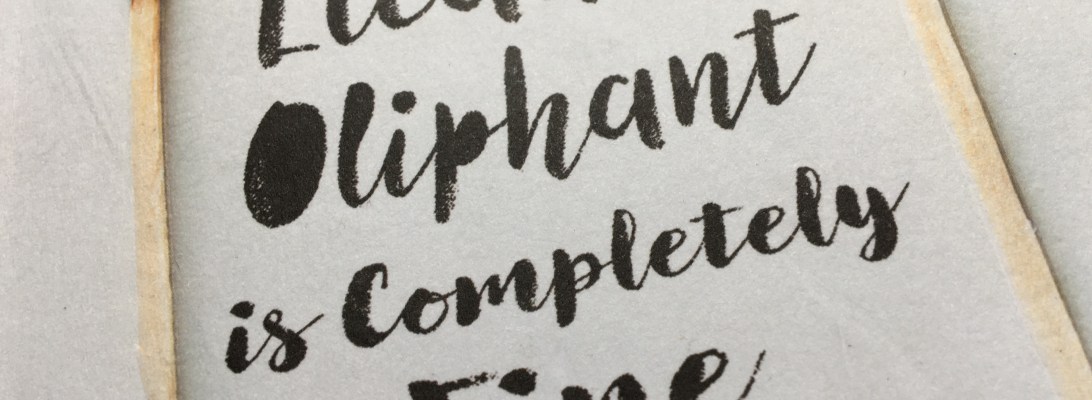
In 2017, 40-year-old author Gail Honeyman entered a story about a lonely and damaged young girl into a writing competition. Now winner of the Costa First Novel Award and scheduled to become Reese Witherspoon’s next film project, Eleanor Oliphant is Completely Fine has become a triumph for modern literature.
Our heroine, Eleanor, is evidently not at all fine. She often goes home from work on Friday and doesn’t speak to another person until she arrives at work on Monday morning. She is a source of amusement amongst her colleagues, and many modern advances are completely lost on her. “D’you like a smoky eye?” The makeup assistant at Bobbi Brown asks, to which Eleanor replies, “I don’t like anything to do with smoking.”
At the background of it all, her manipulative mother is an ominous presence looming at the end of the phone, hinting at a darkness in Eleanor’s past that may be the explanation for her isolation and uniqueness.
When Eleanor and Raymond, an IT consultant in her office, witness an elderly man falling unconscious in the street, an unlikely friendship begins to form between them. Somewhat hesitantly, Eleanor opens up to the possibility that people genuinely want to spend time with her, and with Raymond’s friendship comes a growing sense of self-assurance.
As we are introduced to Eleanor’s quirky persona, she initially appears very hostile to strangers and speaks her mind with seemingly no understanding of the consequences: “You’ll die years earlier than you would have otherwise, probably from cancer…you’ve already got the smoker’s characteristically dull, prematurely lined skin.” However, as we spend more time with Eleanor it becomes very clear that she has had nobody to help her align with societal norms – she was a confused child passed from carer to carer until university at seventeen. How can anybody blame her for reacting how many of us would were it not for our awareness of social politeness? Not only that, but being surrounded by unkindness and ridicule, it must be a natural reaction to close up and use that barrier of separation as a form of protection.
While Eleanor’s confidently naïve observations of the world can be enormously funny, the humour is threaded with heartbreak. At seeing her reflection after a new haircut she thanks the stylist for “making her shiny”. Having been surrounded by damaging and neglectful people all her life, becoming introduced to kind individuals is a foreign but welcomed concept for her.
Honeyman has created a character that is somehow completely fresh and new among literary heroines, and yet can be related to in countless ways. It has been commented that chronic loneliness is a very real problem for elderly people, but it never seems to be addressed among younger generations. Why must age be a contributing factor to a feeling of isolation? Eleanor has had a very troubled childhood and adolescence, but even those of us with caring families are capable of feeling lonely. In fact, according to a 2018 report by the Office for National Statistics, almost 10% of people aged 16-24 said they “always or often” felt lonely. This statistic was over three times higher than for those aged 65 or more.
This novel undoubtedly speaks to many young people, including myself. I have struggled with loneliness in the past – a desire for new friends coupled with fierce insecurity in social situations has made meeting new people a real challenge, and it is something I continue to struggle with. Loneliness can be incredibly upsetting, and is often hard to recognise in someone experiencing it. Honeyman has succeeded in raising awareness of the issue with her original and deeply moving novel, outlining the importance of kindness and compassion.








 rebeccaonthewing.com