2018 Wrapped Up

December was quite a dry month for me in terms of inspiration, so I apologise for the distinct lack of posts over the past few weeks. It is high time for some fresh writing, but before beginning anything new in 2019, I wanted to reflect on the progress I made in 2018.
IMG_9823

Last year began with my first breakup. After having seen and spent time with a person almost every day and now suddenly being faced with the possibility of never seeing them again, I suffered quite a knock. My inspiration took a significant slump at a time when I needed it most: the launch of my final major assignment at university.

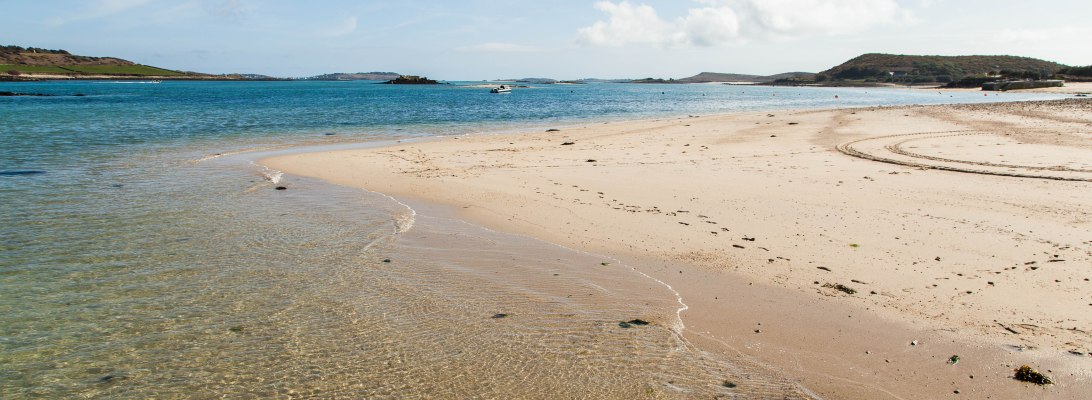
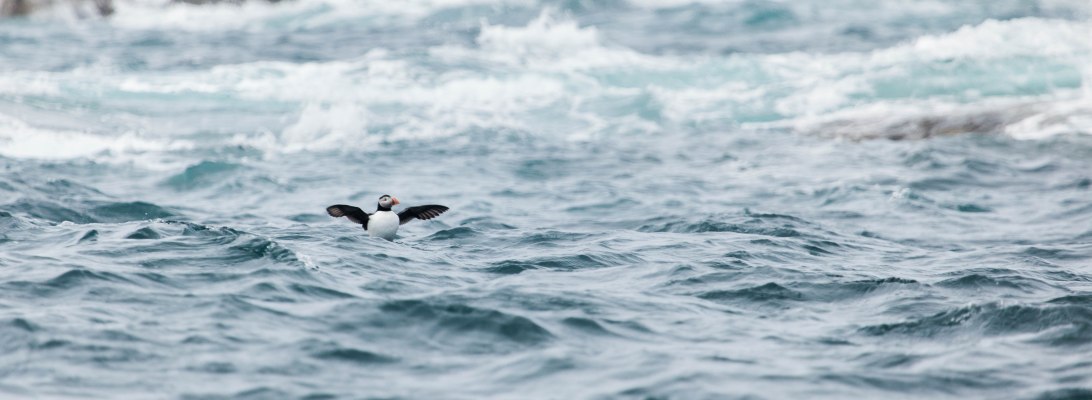
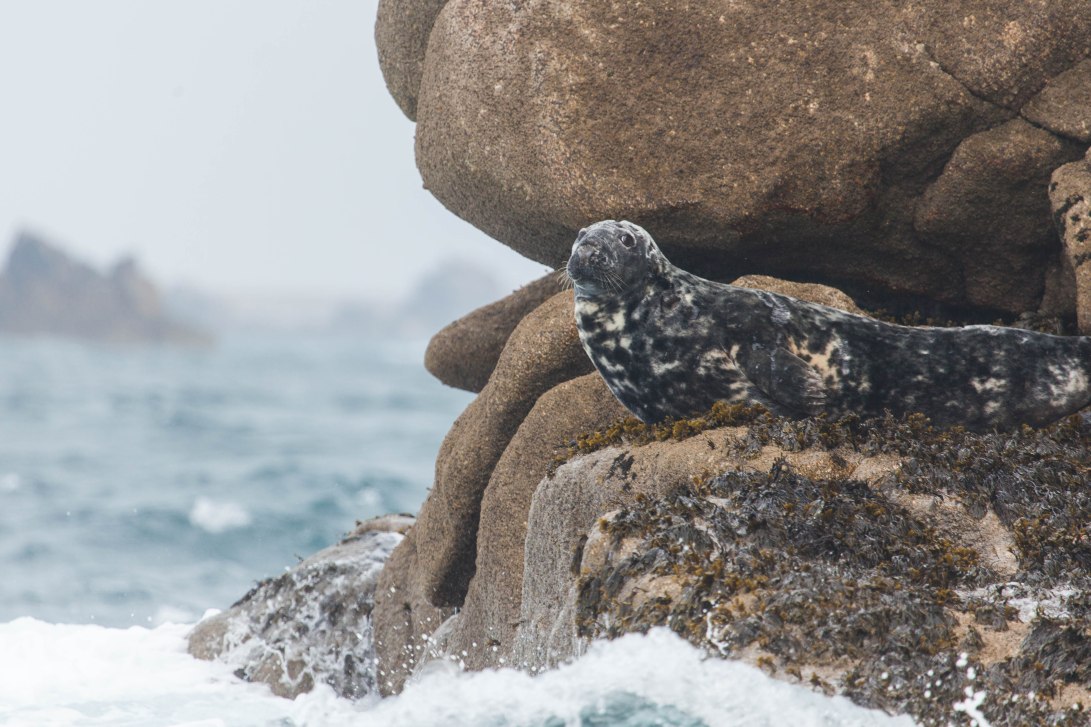
Determined not to let a relationship affect my work, I applied for a grant to help fund an expedition. I had a whacky idea about going to the Isles of Scilly, which at the time seemed a very far-off venture and logistically challenging to say the least. However, after presenting to a panel of judges I was granted enough money to completely cover travel and accommodation. It took a while to come to terms with the fact that the Scilly expedition was really happening.

IMG_0655

It was just the solution I needed for my slump. Spending six days in near-complete wilderness with a list of images to take was a perfect and rewarding distraction. I was filled with exciting ideas for my project – a study on the rare and unique flora of Scilly, including the dwarf pansy which is the size of a baby fingernail and found nowhere else in the UK. I was so fascinated by Scilly’s diverse wildlife and intriguing ecosystems, and I never wanted the trip to end. It is a place I will now treasure, as it helped me through a very difficult time, not to mention providing a huge boost to my confidence. I had funded, planned and carried out a full expedition single-handedly, and returned with a great story to tell. Following the trip was my last exhibition at university, and my project was received well. I even made some money from my photographs, which was an unexpected bonus.
IMG_1482-2

Before I knew it, it was time to finish my degree. I picked up my life in Cumbria and brought it back home to Hertfordshire, where I (foolishly) thought that I would land a job straight away. This wasn’t to be the case, but what followed instead was a truly life-changing experience: an internship in Florida.

I didn’t really know what to expect when I was invited for a two-month internship in America to work with SEZARC. I knew they worked with zoos to monitor their animals and help facilitate breeding, but I didn’t know where I would fit in with a media background. I went simply with the aim of learning as much as I could about a completely new field and enjoying the opportunity to contribute to wildlife conservation.

IMG_9548

I’d never been abroad on my own before, nor had I been outside of Europe before. Upon arrival, I was hit by extreme panic triggered by a strange new place, having to drive a car in a strange new place, and the fear that this had all been a terrible mistake. However, after a very careful car journey from the airport and arriving unscathed at my accommodation, I was filled with perhaps a disproportionately large sense of achievement. My small victory spurred me on, and after a few more shaky days, I found my rhythm.

IMG_1404

Two months later, I was torn between wanting to see my family and friends back home, and wanting to stay a little longer with my new friends in Florida. I had loved the work I did with SEZARC, which was varied and fascinating. I also fulfilled a dream of mine, even if just for a little while: I’d learned to ballroom dance, and met the most kind and welcoming people. Back home in England, I truly realised what an incredible time I’d had in America.

And it wasn’t over. Later in the autumn, I caught up with my friends at SEZARC and was asked to produce their annual report of their progress this year. It is work that I thoroughly enjoy, and I’m so pleased that SEZARC want to keep me involved.
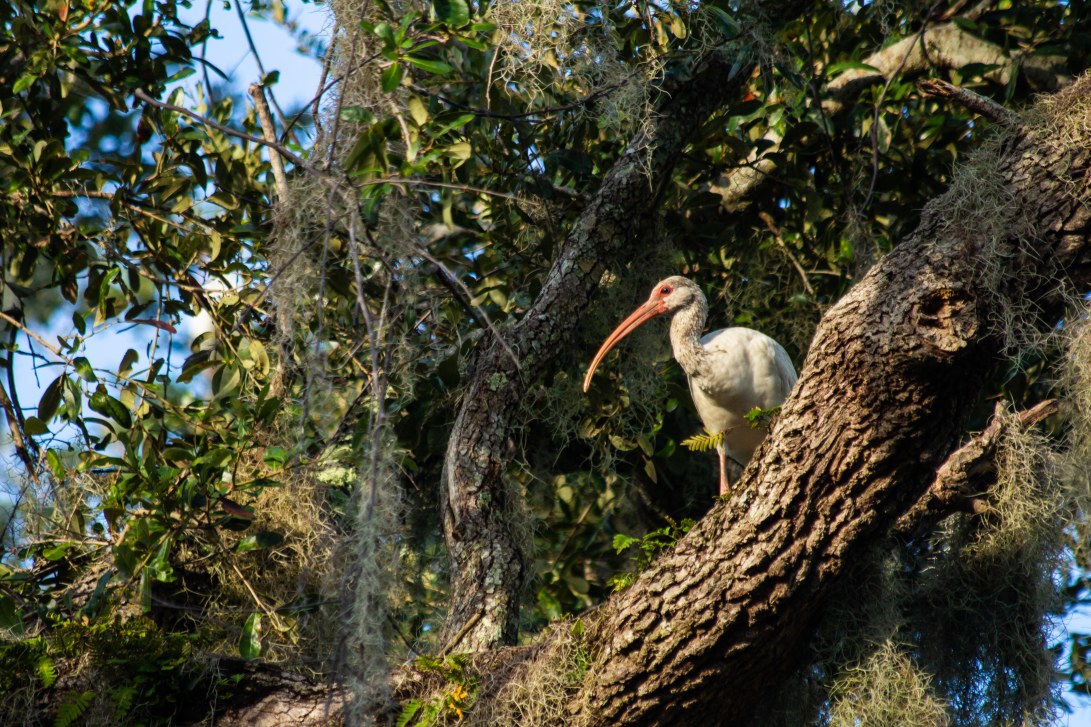
IMG_0051

So, moving forwards. The past year has taught me so much, not just about work but also about myself. In all honesty I have no idea what 2019 will bring. I’m hoping a job, but in the meantime I want to continue writing and learning new things (next up is the guitar!) I have the tendency of being anxious without a strategic plan, but after this year I’ve discovered that you just can’t know where twelve months will take you. A year ago today, I had no idea I would soon be journeying to America by myself, nor was I remotely aware that my relationship was about to end. All through school it’s easy to know what’s next: the following year up. There is no mystery, not even after you finish school. For me, the choice was easy and I was going to university. Now that’s over too, and I’m trying not to be daunted by the unknown because as I’ve found out this last year, the unknown can be incredible.

Waiting In Anticipation

Winter is one of my favourite times of year. Not only is there the excitement of Christmas (which at 21 years old is still very important to me) and my birthday, but also the stunning beauty of nature. Frosts, snow, diluted sunshine – it’s a photographer’s dream. I cannot wait for the first real frost to arrive, when once again I’ll be rummaging around in the garden on my hands and knees clutching my trusty macro lens.

As winter approaches, there is always a rush of social media posts about visiting migrant birds. Stunning images of waxwings, redwings and fieldfare dominate the birdwatching online groups. While I love to see rare visitors in the UK, there are more common species coming to the fore during the colder seasons too.

The long-tailed tit is easily recognisable, with a tiny body and unnaturally long tail. These charismatic birds are nearly always seen in groups, and with a weight of less than 10 grams, sticking together can be a lifesaver in the winter months. As temperatures fall during the night, long-tailed tits roost together in large groups of related birds, lining up on branches and huddling for warmth. Long-tailed tits are particularly known for their altruistic behaviours. If one pair loses their eggs, they will help a relative raise theirs. This behaviour is known as cooperative breeding.

Another bird that is more prominent in winter, but far less endearing than the long-tailed tit, is the great black-backed gull. This formidable animal is bigger than a buzzard, and bad habits including stealing food from some birds and eating others has given this gull a bad reputation. Nonetheless, great black-backs are impressive to watch, and during the winter months they are drawn inland by swelling migrant populations. This means now is a good chance to see this amazing species up close.

One voice that sings long into winter is that of the robin. This plucky redbreast is often thought of as a winter bird, when it is found all year round but simply stays put when other birds migrate during the colder months. Despite their beautiful song, robins are fiercely territorial. Who can blame them, when food and shelter is so scarce during the winter? Perhaps the epitome of Christmas is seeing a plump robin perched on a berry- and snow-strewn branch. It may be a controversial opinion, but I can’t wait for the snow to come. Seeing how bitterly cold it’s been recently, hopefully the wait won’t be too long.


Learning to Dive – Part Two

On the second day of Open Water weekend (read about Day One here), I awoke to the alarm feeling a lot more confident. We were halfway through, with two dives down and two to go. The weather had deteriorated slightly and as I waited for the morning briefing it began to drizzle, but hopefully that meant the day would be slightly warmer (I was clinging to any silver lining).

My wetsuit was still damp from yesterday, so dragging it up my legs was even more impossible than usual. It was the reverse of a snake shedding its skin, and as I hopped about and contorted my limbs I couldn’t help feeling extremely silly. Finally it was on, and I doused myself in hot shower water in a vain attempt to warm up before facing the quarry.

Dive three was the most daunting, as it required a longer list of skills, including the dreaded mask removal. Perhaps I was jittery from nerves, because as I began my descent pain shot through my right ear and I hovered, trying and failing to equalise my ears. As you descend, the increased pressure compresses air spaces in your ears, sinuses and mask. Failing to add air to these spaces can cause serious injuries. I eventually had to resurface until I could equalise, then made my way back down. It was a setback that I tried not to concentrate on, especially with my least favourite skill coming up.

We gathered on the platform and took it in turns to fully flood our mask and take it off. I disliked this skill so much because the air bubbles that gather underneath the nostrils feel like water shooting up your nose. When I attempted this in the pool I had the sensation of not being able to breathe; quite a daunting prospect when you’re seven metres underwater and definitely cannot shoot up like a cork to the surface. In preparation, I’d been putting my face underwater in the bath and breathing through a snorkel, and although it triggered several involuntary swallows I could just about manage it.

Taking a deep breath, I pulled the strap over my head and held my mask away from my face, placing it back over as soon as I was allowed. Feeling very pleased with myself, I ran a finger around my hood to check the seal and cleared the water out ready for the next skill. But as we made to swim off the platform, the mask flooded again. I cleared it, and water immediately trickled back in. I signalled to the instructor who checked the seal and couldn’t find the cause of the problem, so once again we surfaced and I made absolute sure I’d sorted it out.

As I descended for the third time on the same dive, I reflected that I’d encountered an unforeseen problem and dealt with it without panicking; I had made serious progress since my first session in the pool. The rest of the dive passed with no further mishaps, and as I had my fifth hot shower of the day I finally began to relax. Our fourth and final dive wouldn’t be full of tests and I could enjoy the experience of feeling weightless in water and exploring Stoney Cove.

After a brief time on the surface and a delicious cheeseburger at Nemo’s, we took a giant stride back into the quarry. We’d planned dive four ourselves, and led the instructors down to the aircraft cockpit and along the shelf that tumbled down to 22m on the other side. Staying firmly away from the edge, we swam across to the Nautilus again and back to the platform, where we gathered for the last time. Alan, the instructor, had an underwater notebook with him, and one by one turned it to face us. I don’t think I’d ever been so happy to read the words:

“You’ve passed. Congratulations!”


Why are Island Tortoises so Large?

New research has shown that giant tortoises may not be large because of their island lifestyle, as previously thought. A team of researchers has gathered extensive genetic data from both living species and fossils of extinct species to discover the truth of how tortoises have evolved, in an attempt to answer the question of how they have become such giants.

Tortoises are an extremely diverse group of animals, ranging in size from 8cm long to one metre long. The largest species is the Galápagos tortoise, which can weigh nearly 500kg. So why has gigantism evolved in tortoises? Despite studies on these fascinating animals since Darwinian times, the answer is still unclear. It was thought that, like many species, tortoises followed the “island rule”: a tendency of dwarfism among large animals and gigantism of small animals living on islands. For example, in mainland Florida the white-tailed deer is abundant, but in the Florida Keys – a tropical archipelago of islands off the south coast of the state – a dwarf version of the mainland deer is found, known as the Florida key deer.

It is thought that island dwarfism is caused by limited resources, while a reduced pressure from predators triggers island gigantism. However, in the case of tortoises, it was suggested that these animals were already large in size before colonising remote island habitats. With so many giant tortoise species now extinct, it is impossible to uncover the reason behind gigantism in these animals without using the fossil record.

Galapagos_giant_tortoise Matthew Field
A dome-shelled Galápagos giant tortoise (Credit: Matthew Field) http://www.photography.mattfield.com

Now, Dr Evangelos Vlachos from the Paleontological Museum of Trelew in Argentina and Dr Márton Rabi from the Martin Luther University Halle-Wittenberg put together the most complete family tree of both extinct and surviving tortoise species so far, in an attempt to piece together the reasons for their variation in size. Interestingly, it was discovered that gigantism occurred on the mainland too, in Africa, Europe, Asia, North and South America. Interestingly, all of these mainland species became extinct.

“The fossils highlight a great number of extinct mainland giant species and suggest that the evolution of giant size was not linked to islands,” says Dr Evangelos Vlachos, “We expect that warmer climate and predator pressure plays a role in the evolution of giant size but the picture is complex and our sampling of the fossil record is still limited.”

So what led to the extinction of these giant mainland tortoises, and why have their island variants survived? It is thought that predation and climate change contributed to these extinctions, but it is intriguing to think that the island rule may not be the overriding factor for giant evolution, calling for more research into what causes such variation in size among these animals.

Tortoises have roamed the planet for over 55 million years – they survived the mass extinction that wiped out the dinosaurs, but now face an even graver threat: people. Human-induced habitat loss is the most significant threat for tortoises today, and they face an uncertain future. Thanks to research such as Vlachos’ and Rabi’s, we are able to better understand how these successful animals have evolved, and will hopefully continue to evolve for many more years to come.

To read more on this research, visit Science Daily.

To Catch A Fly

Fly agaric, or Amanita muscaria, is perhaps one of the most recognised mushrooms in the UK. It is often used as perching posts for pixies and gnomes in storybooks, and can regularly be seen bringing a spot of colour to the forest landscape. With its blood red cap and white spots, it’s almost unmistakable. Fly agaric can be found from late summer throughout winter, dotted around birch, spruce and pine trees.

As is often the case in the natural world, pretty means dangerous. With a name derived from its ability to kill flies, fly agaric has been widely used as an insecticide. It is a poisonous mushroom known for its hallucinogenic properties but, despite this, it has been a part of religious tradition for thousands of years. In Hindu practice, fly agaric was supposedly used to produce a psychedelic drink called soma, taken as part of religious ceremonies to increase one’s awareness and evoke sensations of bliss, poetic inspiration and even immortality. However, there has been disagreement among modern scholars over the exact ingredients in this psychoactive beverage. Soma has been described as containing a plant with leaves and flowers, contrast to fly agaric.

Elsewhere in ancient history, fly agaric was consumed in potion-form by Vikings in the 8th century, allowing them to fight in battles with increased frenzy. And of course, Alice used the mushroom to change her size in Wonderland, after being instructed to do so by a smoking caterpillar with a ‘languid, sleepy voice’.

Though perhaps this wouldn’t be the recommended theme in modern children’s literature, it shows that the mysterious fly agaric has woven a complex and intriguing story through the ages. Now, as autumn descends, the fungi season is in full swing. Fly agaric sits radiantly among more drab varieties of mushroom, its vibrant colour a dangerous lure. It is a specimen that has fascinated us for centuries, and will continue to intrigue long into the future.

IMG_1026-2

A Silent Extinction

Giraffe have always been special to me. Even with long, gangly limbs, they move with unhurried poise and confidence, but still look endearing with their huge eyes and long eyelashes.

On TV this week there was a repeat of an episode in Attenborough’s Natural World series: Africa’s Gentle Giants. The story centred on Dr Julian Fennessy, Co-Founder and Co-Director of Giraffe Conservation Foundation. Fennessy has been working to conserve giraffe for more than 20 years, and is a true pioneer in research on this secretive and surprisingly little-known animal.

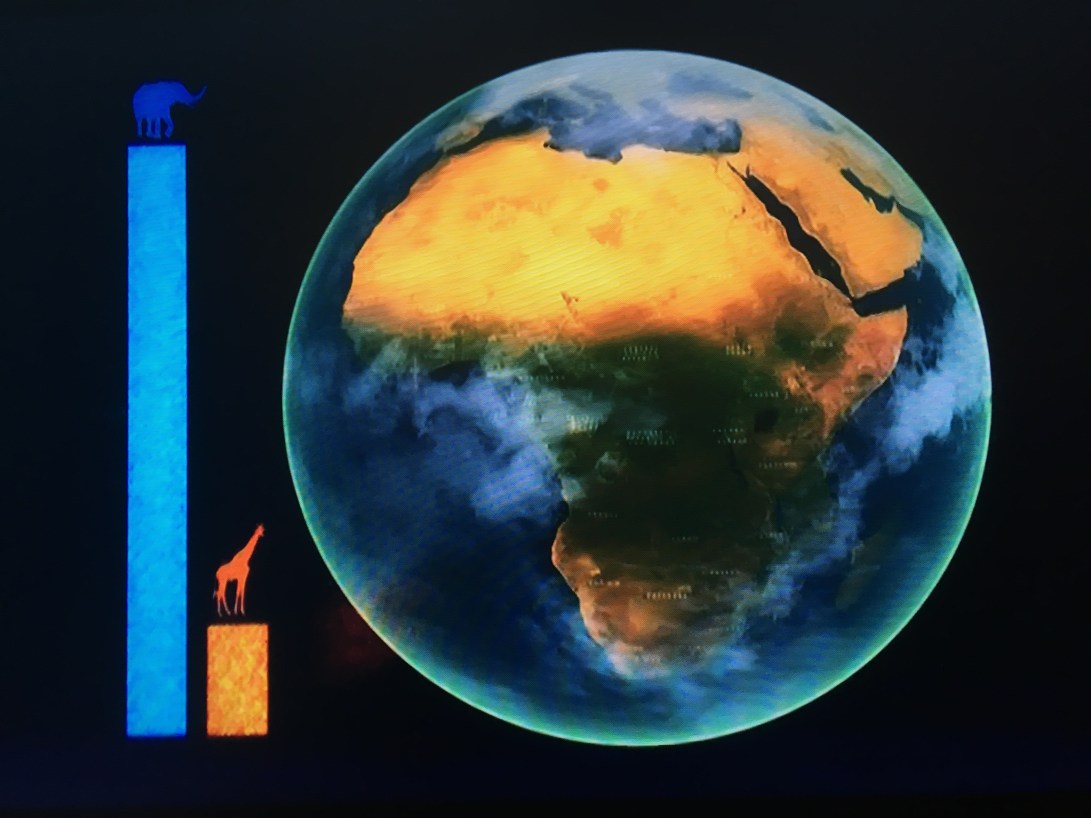
Many people, including myself until very recently, are naïve to the true situation that wild giraffe currently face. Among other African species such as elephants, gorillas and leopards, for some reason giraffe have taken a backseat in the public eye. While words like “beautiful” and “majestic” always spring to mind when we talk about giraffe, how many of us could confidently say how many there were? I was shocked to discover how wrong I was when giraffe statistics were presented alongside those of another African giant. Currently, there are around 500,000 African elephants left, but only 90,000 giraffe. For the first time ever, I doubted what David Attenborough was telling me. How could that be possible? I began to look online, but of course it was true. There are nearly five times as many African elephants than giraffe left on the planet. It’s a statistic that astounded me.

IMG_2107
Source: BBC*

Giraffe are not only unmistakable symbols of Africa and the tallest animal on Earth, but they are important to the ecosystem. Like bees, giraffe are excellent pollinators, and pass pollen from tree to tree as they graze. They also spread seeds in their dung, another vital part of maintaining a diverse and sustainable landscape. Conserving giraffe protects not only the animal but its environment, ultimately affecting so many other species that call Africa home.

In two decades, giraffe numbers have fallen by 40% and they have become extinct in seven countries. They are hunted for meat and their habitats are slowly disappearing. One of the most vulnerable populations – a group of less than a thousand Rothschild’s giraffe – lives in Murchison Falls National Park in Uganda. These animals are walking on a literal time bomb; beneath their feet lies 75% of Uganda’s discovered oil, and Fennessy knew that plans to drill would spell disaster for these endangered animals. His ambitious and dangerous mission was to relocate twenty giraffe from one side of the River Nile to the other, where it was hoped that these pioneering individuals would start a new population in a safer location.

As I watched the team of dedicated vets, rangers and scientists attempt to move one-ton animals whose kick could decapitate a man, I was filled with such admiration and respect. It is all very commendable to donate money to charity, but these people were out in conflict areas risking their lives for giraffe. As the mission progressed, I got quite emotional, not just because the threats these beautiful animals face are so unnecessary and unjust, but because I was completely unaware. What little chance these animals have if even wildlife enthusiasts like me don’t know their situation.

It wasn’t just the numbers of giraffe that I was unaware of; so much of their behaviour remains unseen to even experts like Fennessy who have studied them for a vast proportion of their lives. By the Hoanib River in northwest Namibia, he took a sensitive camera out to film giraffe at night. As he watched, a giraffe curled up on the exposed ground and fell asleep. It was something Fennessy had never witnessed before.

“In zoos they study it,” he explained, “Basically when their neck is down it’s REM sleep, so maybe these giraffe are dreaming. I’ve never seen that in the wild.”

IMG_9649

The fact that we don’t know how wild giraffe sleep says a lot about how overlooked they are. It seems there is the assumption that because we don’t hear about a particular animal as much, it must be doing fine. However, in the case of the giraffe this couldn’t be further from the truth. So why do we know so little about these animals? Perhaps it is because they are only listed as “Vulnerable” on the IUCN Red List of Endangered Species. An article published two years ago, at the time that this episode was first released, hopes that the work Fennessy is doing will help change the status of giraffe to “Endangered” or “Critically Endangered” and therefore encourage greater conservation efforts. Unfortunately, as 2018 draws to a close, the giraffe is still listed as “Vulnerable”. I can only hope that this change in status does come into effect to raise awareness of this silent and rapid extinction that is passing so many of us by, or soon it may be too late.


*Natural World “Giraffe: Africa’s Gentle Giants.” (2016) BBC. 23rd June.


Up in the Air

The plane roared to life and I experienced the age-old feeling of excitement whenever I fly. As we chased the runway and the plane slowly lifted, I pressed my face to the window to see the ground fall away. I will never tire of that feeling of utter weightlessness – the peculiar thought of something so bulky taking to the air.

I’d been invited onto my boss’s plane for a morning trip to Naples, a city in southwest Florida looking out onto the Gulf of Mexico. We were flying to break in a new engine, and planned to refuel in Naples before returning to Yulee. It was a whistle-stop state tour, a four hour round trip that would take twelve in a car.

Within moments of take-off we were over the beach – long piers stretched out into the sea like the teeth of a comb. At 9am on a Saturday the beach was almost deserted. It was a treat to see so much uninterrupted sand before the tourist tide came rushing in.

We curved back inland and passed over a maze of river and marshland that I had already explored by boat, but this time we were too high to look for egrets. The only movement was the white streak of a lonely boat as it navigated the watery trails. I wondered how many alligators were down there, then decided not to think about that.

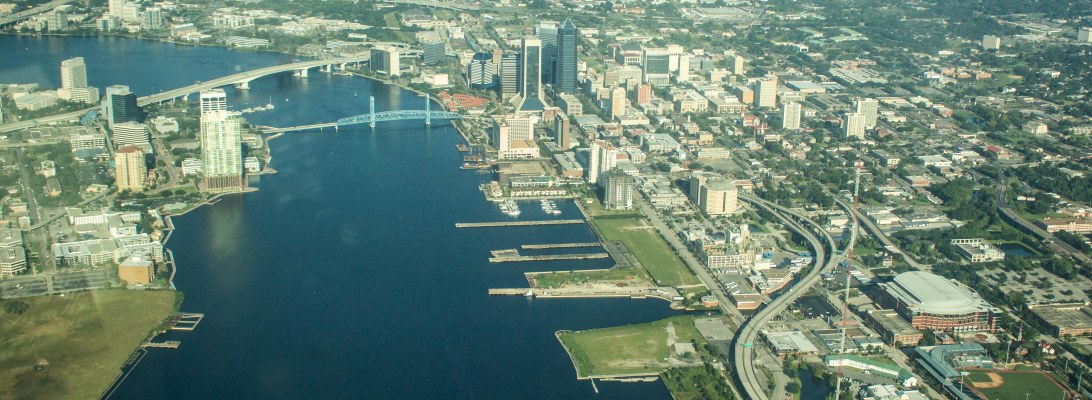
The marshy solitude of Amelia Island dissolved into towering office blocks, and I soon recognised downtown Jacksonville. There was the Landing, where I’d been just a week before the shooting. It had been enough to dissuade me from visiting downtown again, but I still had fond memories of the river walk, the MOSH museum and the topaz blue water of Friendship Fountain.

Leaving vast, sprawling Jacksonville behind, the landscape was soon dominated by trees again. Green was undoubtedly a primary colour in Florida – a patchwork quilt of field and forest stretched as far as the eye could see. In some places the trees were confined in tightly packed cubic parameters. In others, they were sprinkled sporadically. Criss-crossed over it all were the highways, dead straight lines in parallel and perpendicular.

Fluffy cumulus clouds were gathering, and a rather ominous feeling began to grow in my stomach as we bumped over them. Sunlight poured into the stuffy cabin, which did nothing to suppress my queasiness. Because of the new engine, we had no choice but to fly low. While the views were still stunning, I was somewhat distracted by the turbulent ride, and as Naples came into view I couldn’t help feeling slightly relieved that we’d be getting out of the clouds.

Once down on the ground, we stopped just long enough to stock up on drinks – fuel for the plane, a Gatorade for me – before taking off again, back through the spectrum of concrete jungles and green wildernesses.

Stop and Look

In our bittersweet digital age, it’s so easy to be lazy. As a photographer who has tried using film but undoubtedly prefers shooting digital, I have the ability to take thousands of photos of the same thing if I want to. Once I have a camera and hard drive, there are no other essential expenses or materials required. While I personally didn’t enjoy the process of developing film, I commend those who gather all that equipment and spend hours in the darkroom bringing their images to life. I’ll admit it is dedication beyond what a lot of digital photographers put in.

It got me thinking how I can see more when I explore my surroundings. I often leave my camera at home and just watch for a change, no longer distracted by adjusting settings and looking at yet another screen. But I still want a permanent memory of what I discover. An answer to this that I am trying to introduce into my routine is drawing.

I’ve always enjoyed art but never possessed any genuine talent for it, which is perhaps why it never became more than an occasional hobby. Whenever I see someone drawing or painting I feel an overwhelming urge to join in. I could do this at any time and yet never do. What starts as an “inspiring new project” eventually fades into a half-full notebook.

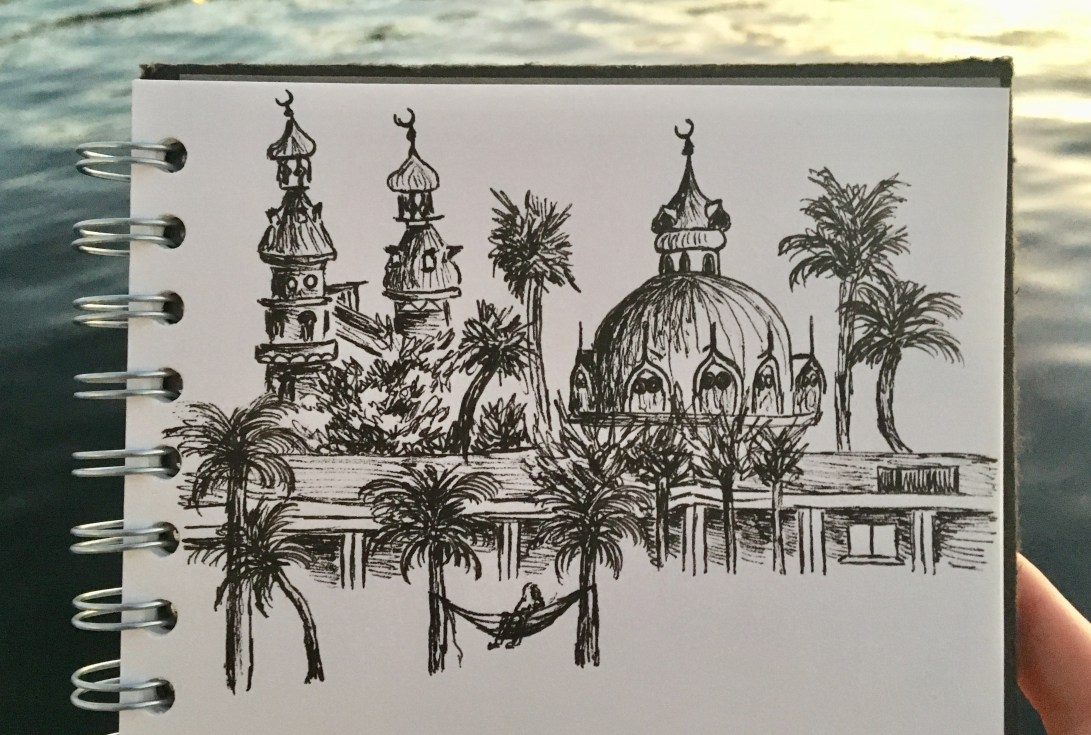
I was in Tampa this weekend visiting the Florida Aquarium, and I packed my (so far untouched) sketchbook and pens on a whim. On the first evening, I wandered along the riverside just as the sun was setting. Across the water I noticed an incredible building with bulb-like turrets and crescent moon decorations. It looked like an Indian temple; I had no idea what it really was but I retrieved my sketchbook and began to draw it.

Twenty minutes later I had drawn my impression of the scene: the turrets, a large gathering of palm trees and the restaurant in the foreground. During this time three different people approached and asked me about what I was doing. Copying as closely as I could provided an opportunity to observe a level of detail that is far harder to notice when taking photos. I finished with something I was quite proud of, not to mention a talking point with passers-by and a souvenir of my evening.

IMG_1900 (1)

I later discovered that the exotic building was the Henry B. Plant Museum. I was somewhat disappointed to find out that it wasn’t a museum full of plants as I had originally thought.

The Greenway

The Egan’s Greenway is an unexpected jungle in the middle of smoke-belching industry and deckchair tourism. The mundane sounds of traffic are deafened by the furious chatter of cicadas – enormous insects that seem prehistoric. Their strange call is like the sound of angry water sprinklers, growing louder and faster until it reaches an alarming tempo, then abruptly stops.

IMG_0497

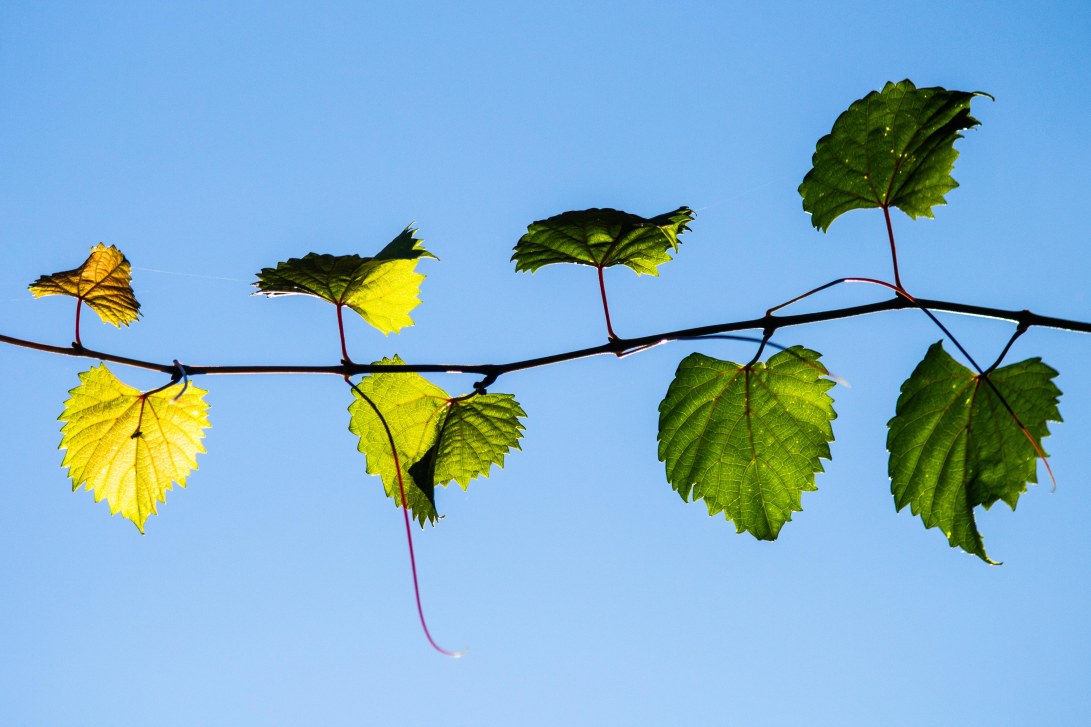
At first light the Greenway is sharply divided into light and dark. The dense, impenetrable forests are still cool – the trees in muted greens – but out on the marsh the grass is alight with fiery golds and oranges. Naked trees poke the sky with sharp limbs white as bone, while beside them sway lush evergreens. It is a land of stark contrast, a spectrum of vitality and decay. Time passes here with the tick of the cicadas.

IMG_0560

The day warms up, throwing a shimmer onto the surface of the creek. Here there be dragons, some cruising between reeds on transparent wings, others scrambling up trees with long claws. A flash of movement and then a disappearing act, they blend seamlessly into their surroundings. Just a flick of the beady eye will give them away, and then they will shoot off into the undergrowth.

IMG_0638

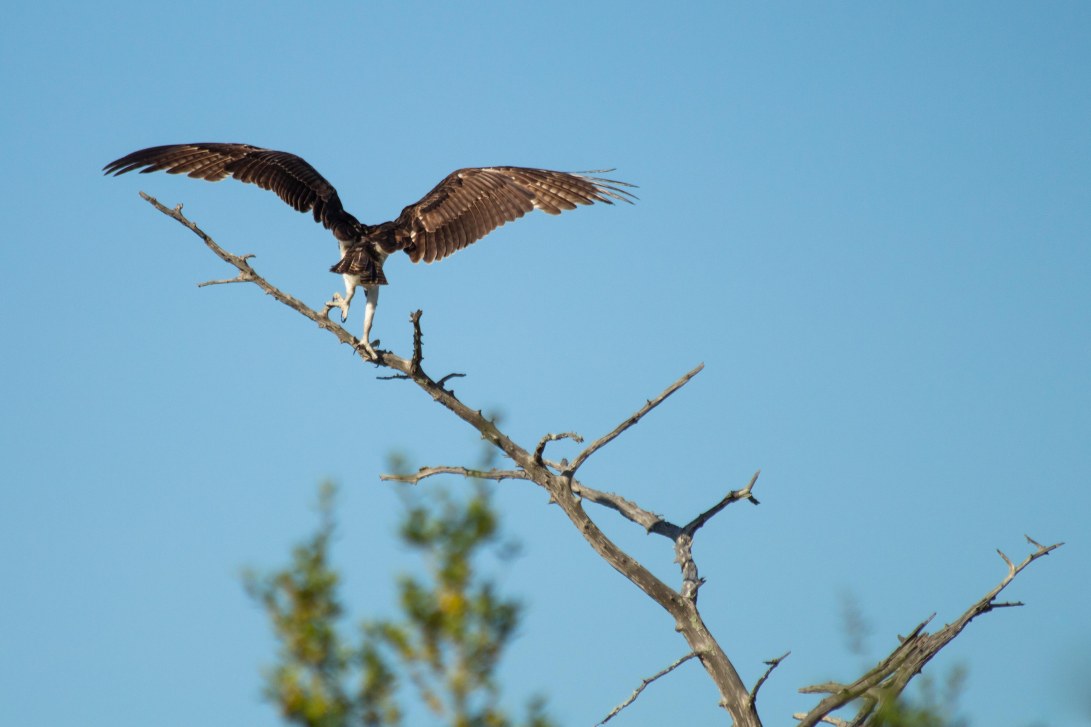
Other beasts can be found higher up. Perched on the skeleton fingers are ospreys, scanning the creek in every direction. One takes to the air and its mate follows. Together they wheel in deep circles, overlapping in smooth figures of eight. A wood stork, large enough to be unfazed by the raptors, joins their sky with dark wings barely flapping.

IMG_0582

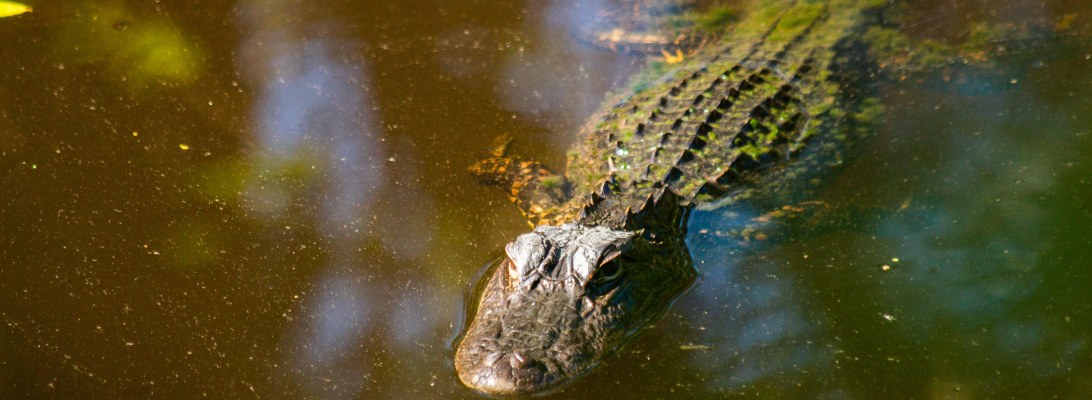
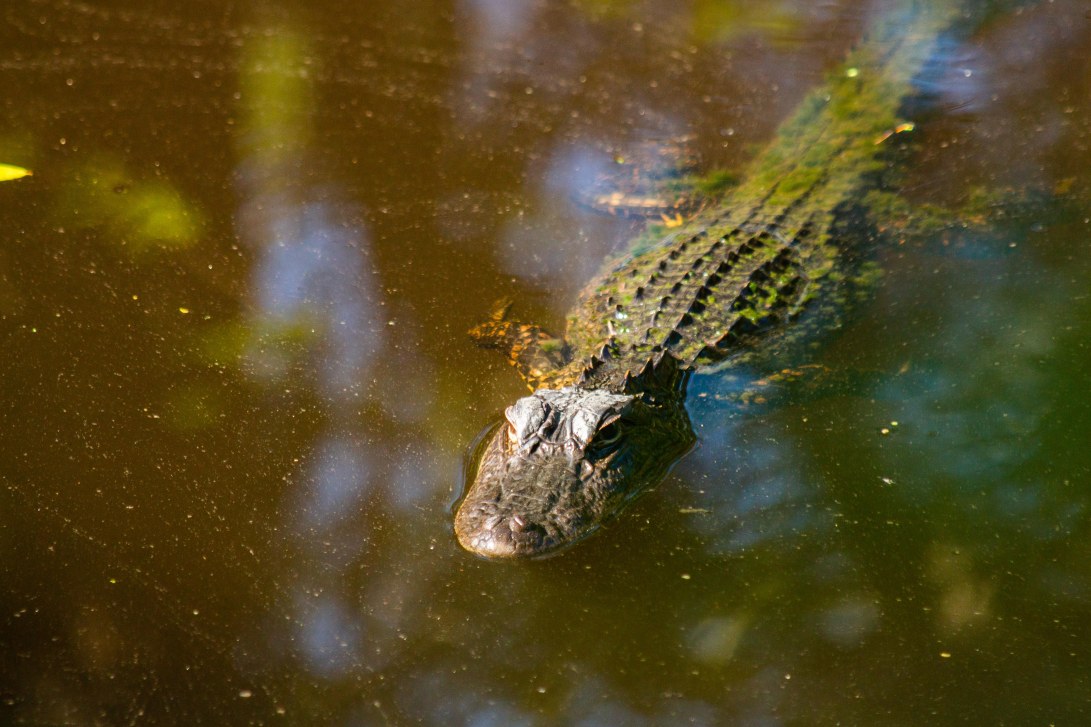
Then, a real dinosaur. A creature that survived what forty-metre sauropods could not, almost unchanged for millions of years. This one is only small, an arm’s length perhaps, but even so it floats beneath the water’s surface with the stealth of an adult, startling green eyes always watching. A glance away and back again and it has disappeared, moving across the creek without a sound.

Where is mum? Perhaps it is best not to stay and find out.

IMG_0656