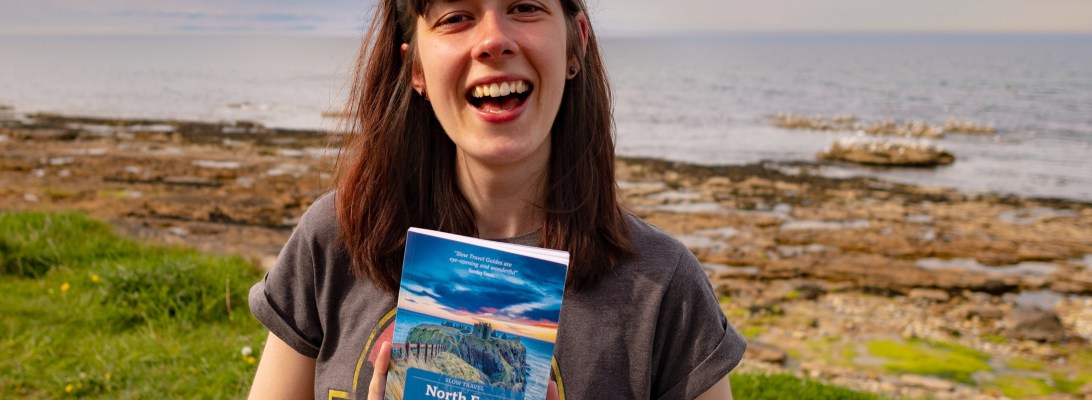
My book has been out in the world for just over a month and I’m thrilled with the feedback I’ve received so far. Knowing that people I don’t even know are reading what I spent three years putting together is such an amazing feeling.
Reviews are starting to trickle in and I wanted to share some here just because they make me unbelievably happy. In particular, I’m proud that even those who are familiar with North East Scotland are discovering places they didn’t know – that’s the true essence of a Slow guide so I’m really pleased I’ve succeeded in capturing it.
If you’d like a copy of Slow Travel North East Scotland, you can order through Amazon, Waterstones or directly from the publisher by clicking the button below.
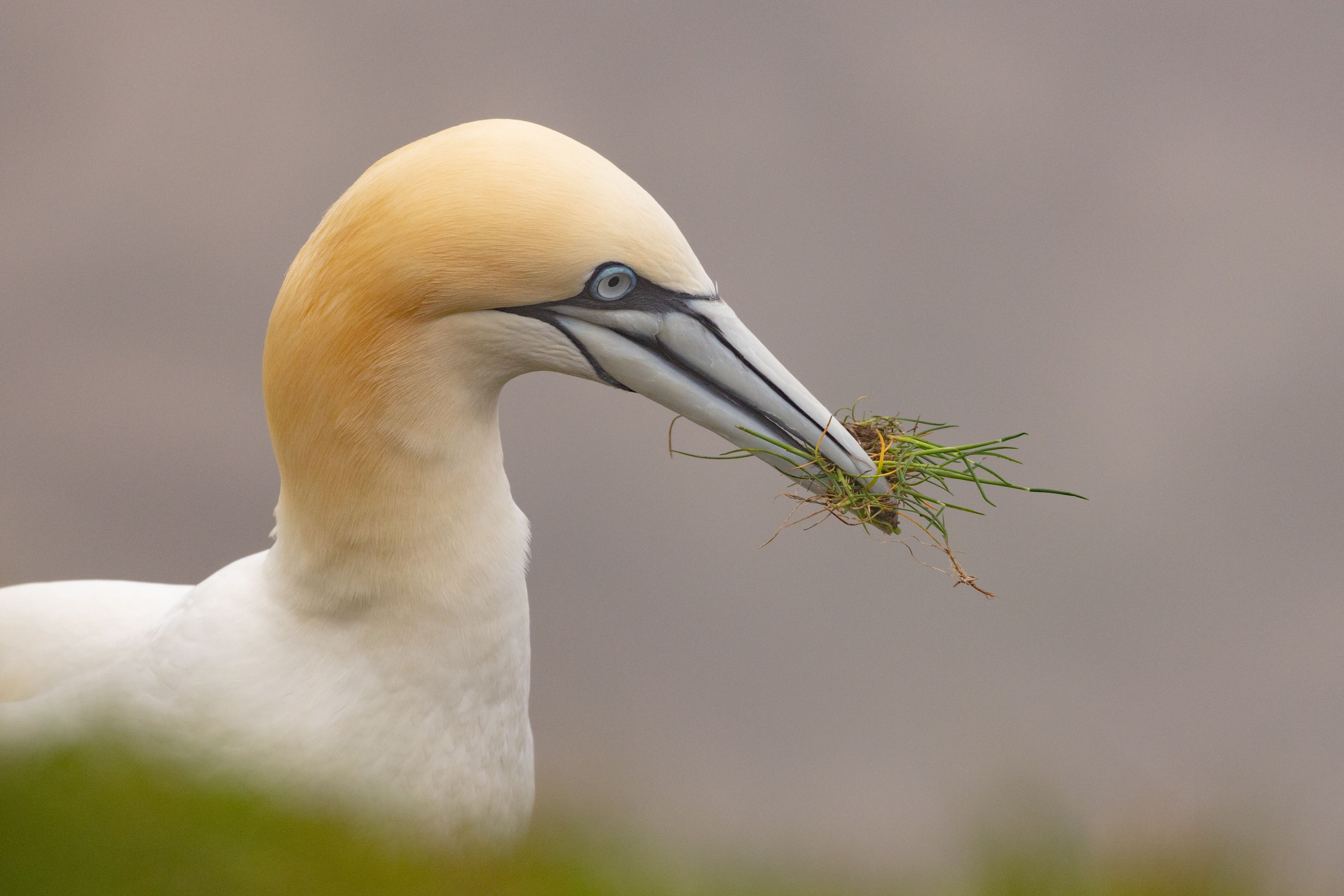
When I arrived at Troup Head I could barely see. The mist was so thick it obscured the sheep chatting away in a field less than 30ft away. Seeing as I was here to photograph gannets at their clifftop nesting site, visibility as poor as this suggested impending disaster.
Refusing to waste a journey, I geared up and set off on the coast path. I took the long route to the cliff in the vain hope that the mist would have cleared by the time I arrived. Sadly not. As I approached the nesting site I could make out the blurry outlines of gannets gliding past – white against slightly duller white.
I settled on the grass and propped my camera lens on my knees. The entire ocean had disappeared, but luckily a cluster of gannets were perched close enough for me to actually see them through the fog.
I already had huge respect for gannets, with their vast wingspan, dagger-like bills and ability to slam into water from a great height without injuring themselves. But watching them navigate a jumble of clifftops through what was essentially a white-out was even more impressive.
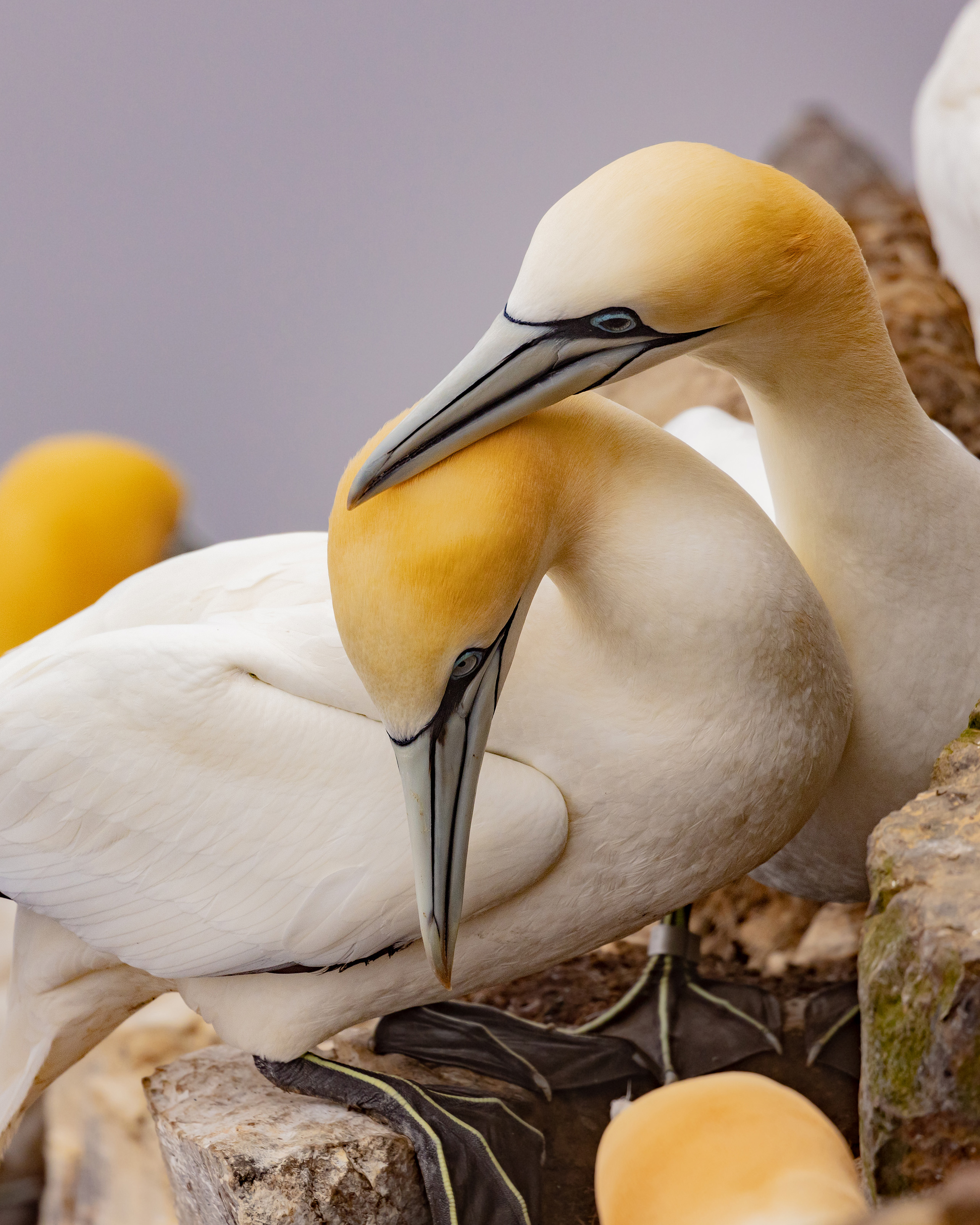
Despite the less-than-ideal conditions, after several hours I managed to get some shots I was happy with. Gannet goings-on continued as normal, and I watched bonding behaviours between mating pairs, grooming, and the occasional brawl when a neighbour shifted too close.
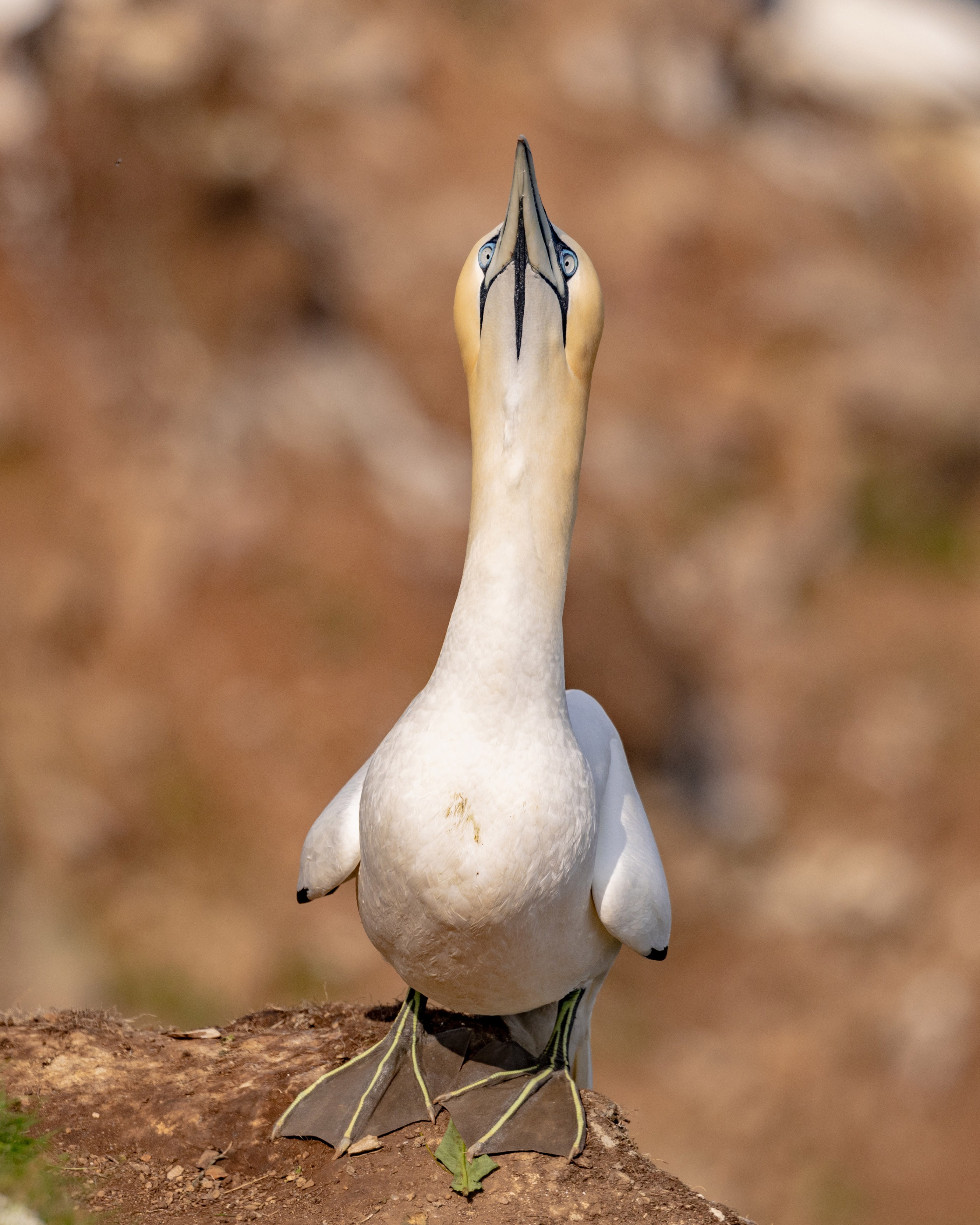
You can anticipate exactly when a gannet is going to launch itself off the cliff, as it takes several slow steps along the ledge with its bill pointed straight up, as if either limbering up for take-off or encouraging its companions to watch. It’s a bit of a showy thing to do and I love them for it.
By midday the mist hadn’t moved and my stomach was grumbling, so I called it a day and strolled back along the coast trail. Scottish weather is nothing if not predictable, but this means you usually don’t have to wait long for it to change.
Sure enough, when I returned the next day the sun was gleaming and the ocean was back. This time I could see gannets everywhere, swirling in the now cloudless sky as well as perching on their precarious ledges.
I’d taken lots of stationary shots the day before so I turned my attention to birds coming into land. This provided its own set of challenges – unlike their sky pointing routine before take-off, there was no warning before they popped up in a flurry of white wings.
It was a pleasure to spend time with such striking and charismatic birds and watch their daily routine from the lofty heights of the clifftop colony.
There are certain birds that I look forward to seeing every year. As the seasons shift, there’s a constant shuffle of some leaving the UK and others arriving. One particular spring/summer visitor who’s pretty much everyone’s favourite is the puffin.
Recently I set off on one of my annual pilgrimages to see these tiny seabirds at one of the clifftop nesting sites they share with guillemots, razorbills, fulmars and kittiwakes. They blend in well despite those luminous bills, often tucked away in their burrows and out of sight altogether. The key is to look for orange legs, which the other cliff inhabitants don’t have.
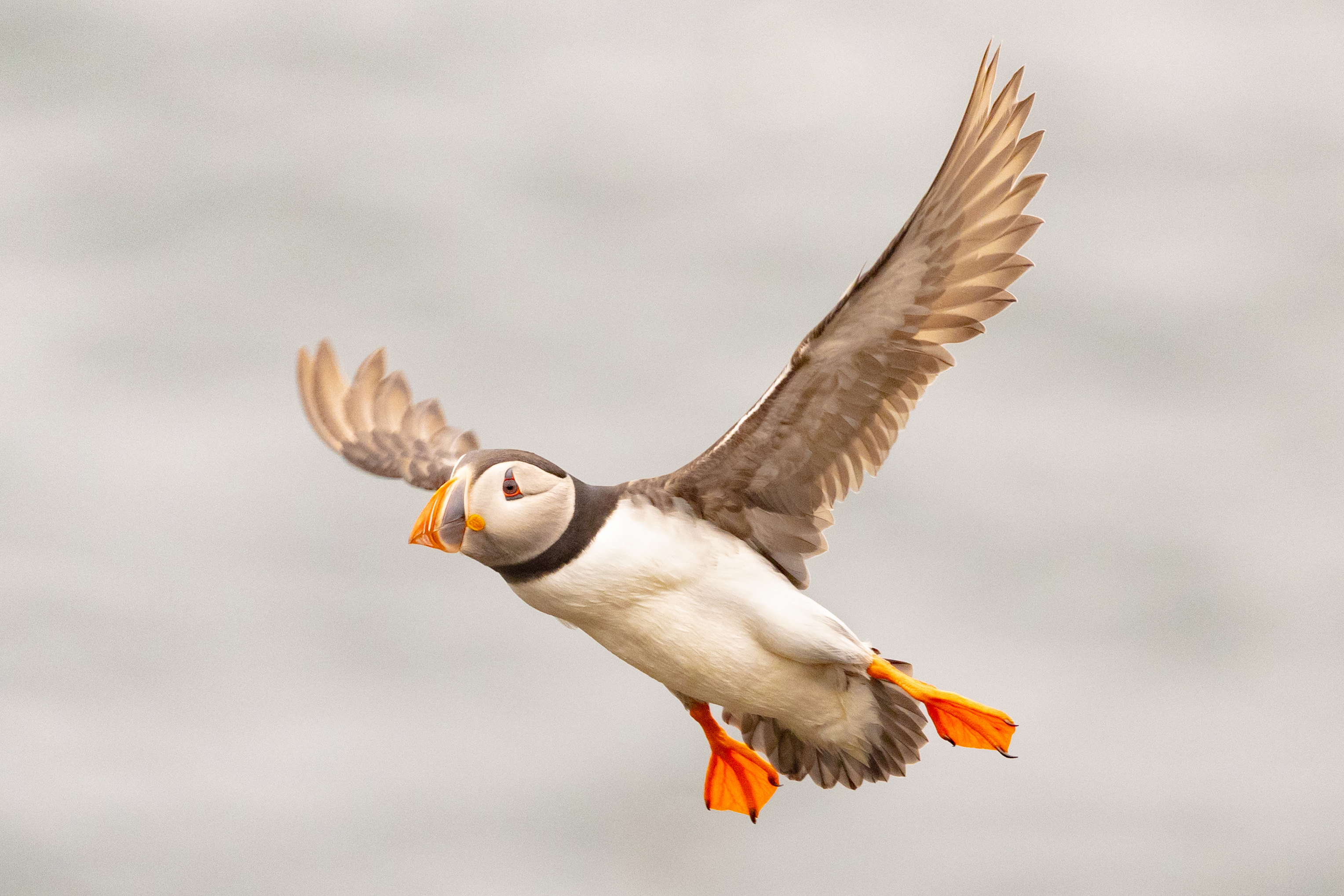
After a bit of fruitless searching I was just rummaging for some elevenses when a flash of orange made me abandon my search for chocolate. In a scrap of a second I’d seen a puffin fly past, curving around the cliff edge and back out towards the open sea. I hurried into position in case it returned and luckily for me it did, performing four rapid fly-bys with spectacular feet dangling.
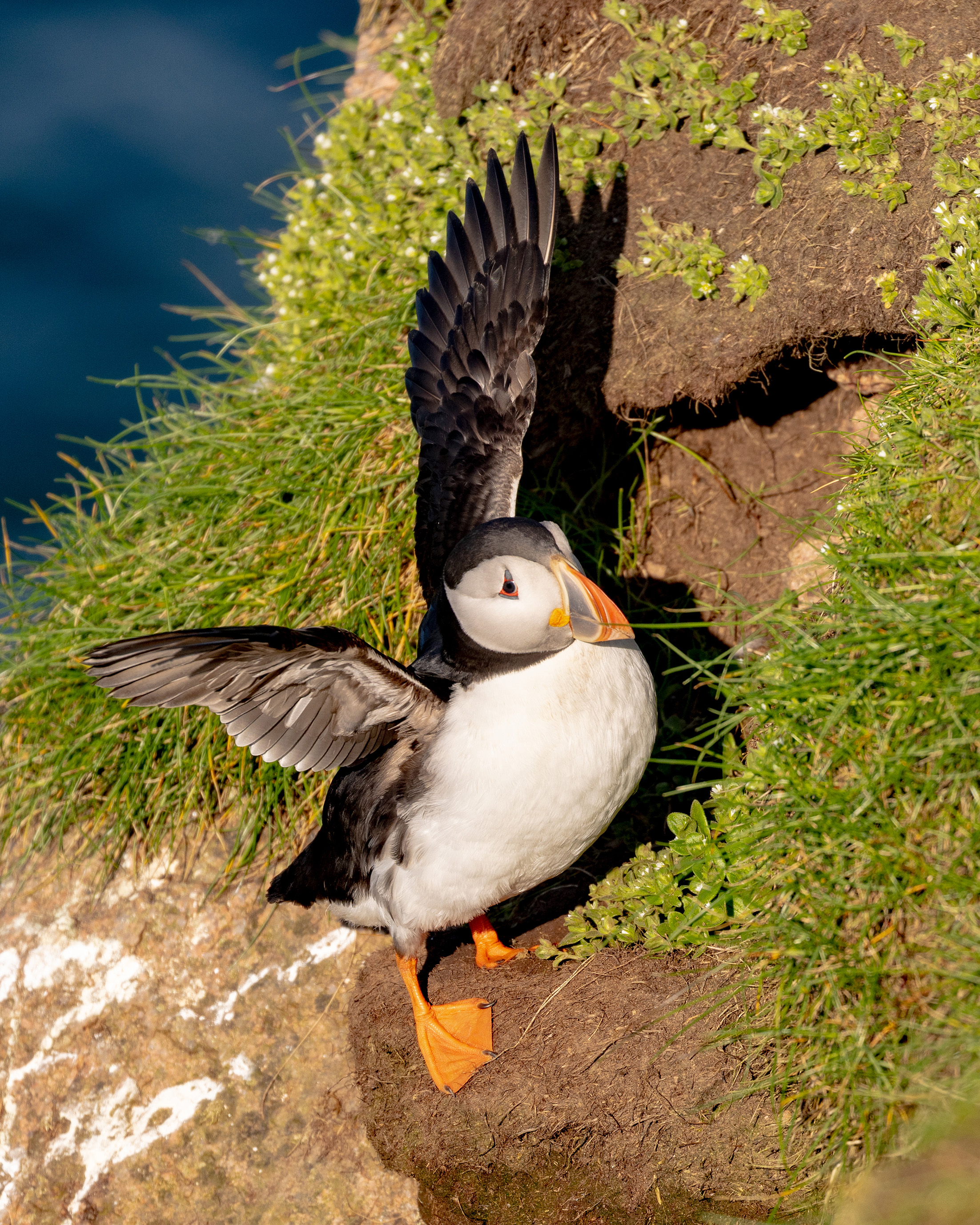
Later in the day I tried my luck at a different spot, settling in a cup of earth in view of several grassy burrows that looked promising. I got distracted by a puffin on the water, some 100ft down. Even from that distance I could spot orange legs beneath the clear surface, so I enjoyed watching it through my binoculars as it bobbed around with its larger neighbours.
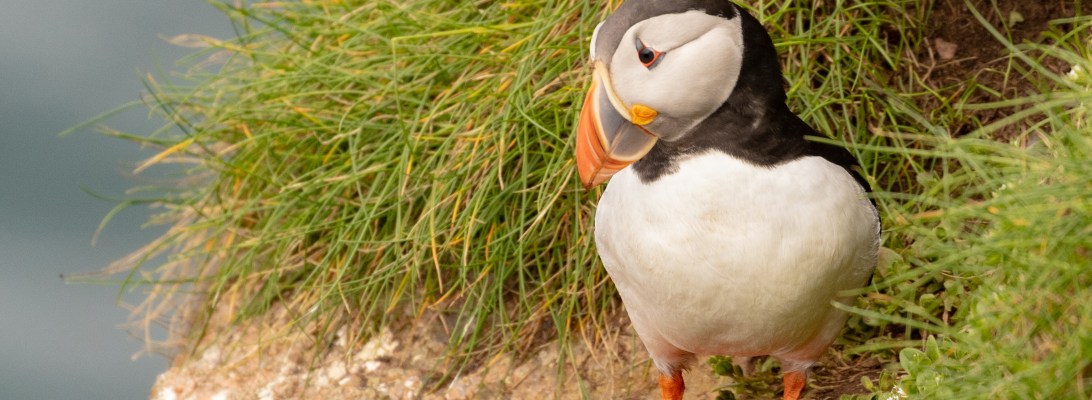
Birds are like buses in that they’re notoriously unreliable and just when you’ve waited long enough for one, two show up. Once I put down my binos, I found myself staring at another puffin perched 20ft from my lens. The little scamp! Luckily it had decided to take in the views before disappearing into its burrow, giving me a chance to make up for lost time and get some portrait shots.
Forty minutes later, a magic trick occurred and two puffins popped out. Either I’d missed the first one while I was ogling the water, or it had been hanging out inside the burrow the whole time. They lunged off the cliff together and I tracked them heading way out to sea, shrinking to black dots. Not ideal, as I had no idea how long a puffin took to fish.
Two hours, as it turns out. The sun had been screened by cloud all day but of course once I had no puffins to photograph it broke through and illuminated the burrow entrance like a theatre spotlight. By that point I’d spent seven hours on the cliff and evening was drawing on – I had a runny nose, numb bum and grumbling stomach and was ready to call it a day. But any superstitious photographer fears that as soon as you leave, the action happens. A combination of bird FOMO and my usual stubbornness made me stick it out a little longer.
Less than five minutes after I decided not to leave, the puffins returned, now looking radiant in the sun. A snaky pair indeed. Every minute spent staring at an empty burrow was suddenly worthwhile, and I finally left feeling ravenous yet thrilled with the day’s success.
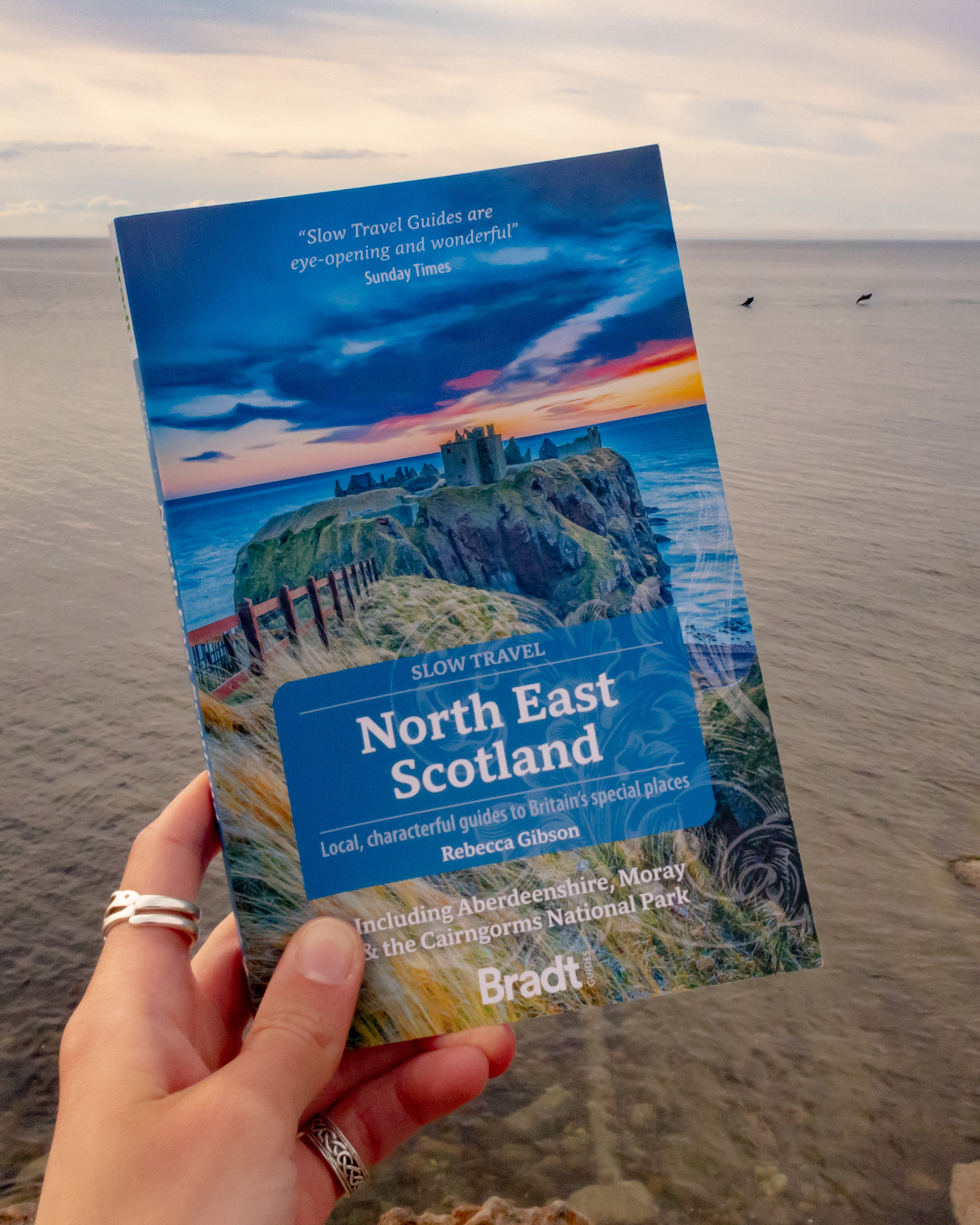
This bun has been in the oven for three years and two months and now she’s finally here.
My book is written as though I’m walking along with you, dropping in history, folklore and other nuggets along the way. There are castles, stone circles, museums, distilleries and also plenty of opportunities to eat cake.
Slow travel is about taking the time to find lesser known spots and really connect with the places you visit. I’m proud of how much I’m crammed into these 328 pages, and I hope that whether your interest is wildlife, whisky or waterfalls, you’ll discover something special. Incidentally, it’s the perfect size to slot in your rucksack and take out and about.
Today I’m thinking back to a little girl who loved writing so much that she thought maybe she could be an author when she grew up. Well, she did it.
Yes those are dolphins jumping in the background – I’m just that good!
The Scots Magazine has a photo feature each issue written by a famous Scot about their favourite places in the country. They can be locations with personal memories attached to them or just spots they enjoy visiting. It got me thinking about which places I would choose, so this week’s blog is my ‘My Scotland’.
Burghead
This narrow village on the Moray Coast, surrounded on almost all sides by ocean, brought about a huge shift in my life. Those who have followed me for a while will know that I grew up in south east England, and once I began exploring Scotland I realised I didn’t belong in my home country anymore.
It was Burghead that introduced me to north east Scotland and this in turn led to my first book, so it will always be a meaningful place for me. I’ve also seen a humpback whale, orcas, basking sharks and the northern lights from its rocky shore, so that scores it plenty of points!
Edinburgh
Edinburgh was the first city I visited in Scotland, and every time I go there I’m on holiday so it reminds me of Fringe shows and the Christmas market no matter what time of year it is.
Its centre is old and graceful, with everything you expect to see in a city but with cobbles, narrow closes and plenty of steep staircases. It’s also the home of Hendersons, an amazing vegetarian restaurant where I’ve had my favourite ever meals.
Image: Aleks Michajlowicz
Assynt
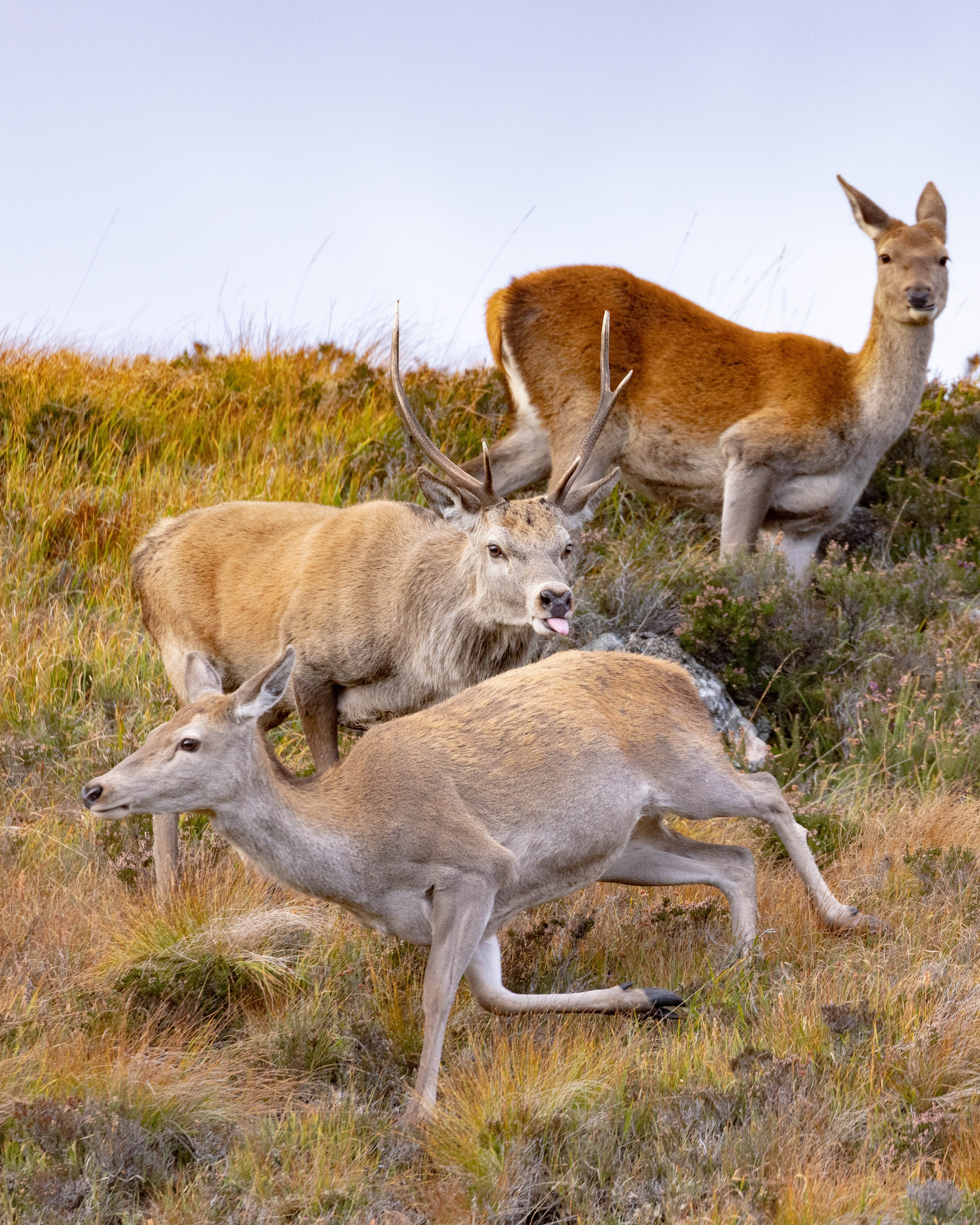
Since moving to Scotland I’ve made a pilgrimage to the west coast every year. Usually this is in autumn to coincide with rutting red deer and leaping salmon, but I’ve also been in summer and seen great northern divers, white tailed eagles and even pine martens in daylight, when it’s not truly dark until nearly midnight.
It’s also where I broke my lifelong curse and got my first otter photos. The wilderness of Assynt has given me countless wildlife memories and as soon as I leave I’m thinking about when to go back.
Aberdeen
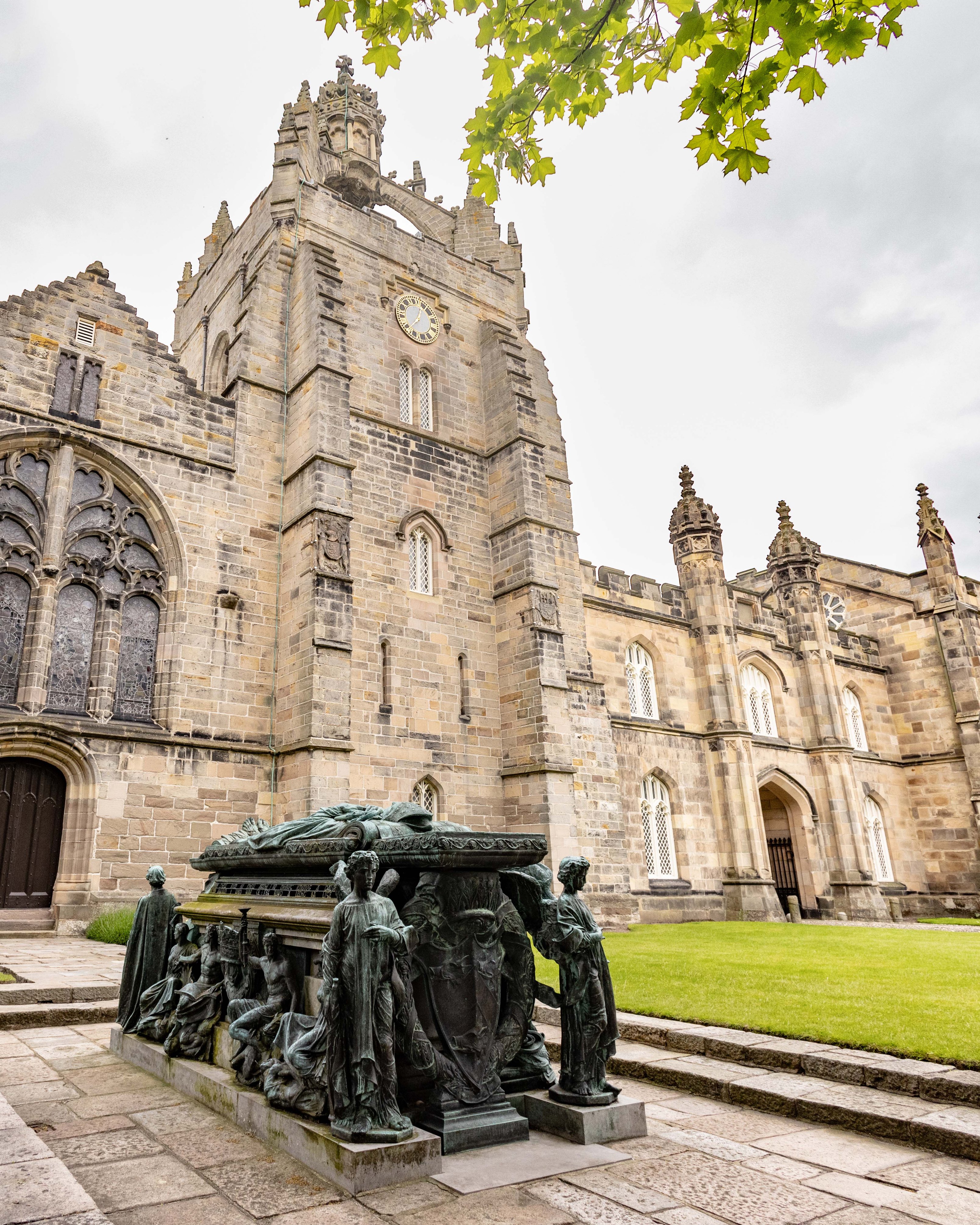
I’m not much of an urban dweller and much prefer the stillness and seclusion of rural habitats, but I connected to Aberdeen straight away. Scotland’s third largest city is hugely varied and this is perhaps most evident in its architecture, where a single street has large stone block buildings, ornate granite colleges and transparent office blocks.
Despite its size Aberdeen is easily walkable, with museums, gardens, restaurants and artworks in just a couple of miles. It has loads of character.
Uath Lochans
I love the Cairngorms National Park in general, but this spot in particular had me obsessed from my first visit. I rarely use the word ‘magic’ because there isn’t much that justifies it, but the Uath Lochans do.
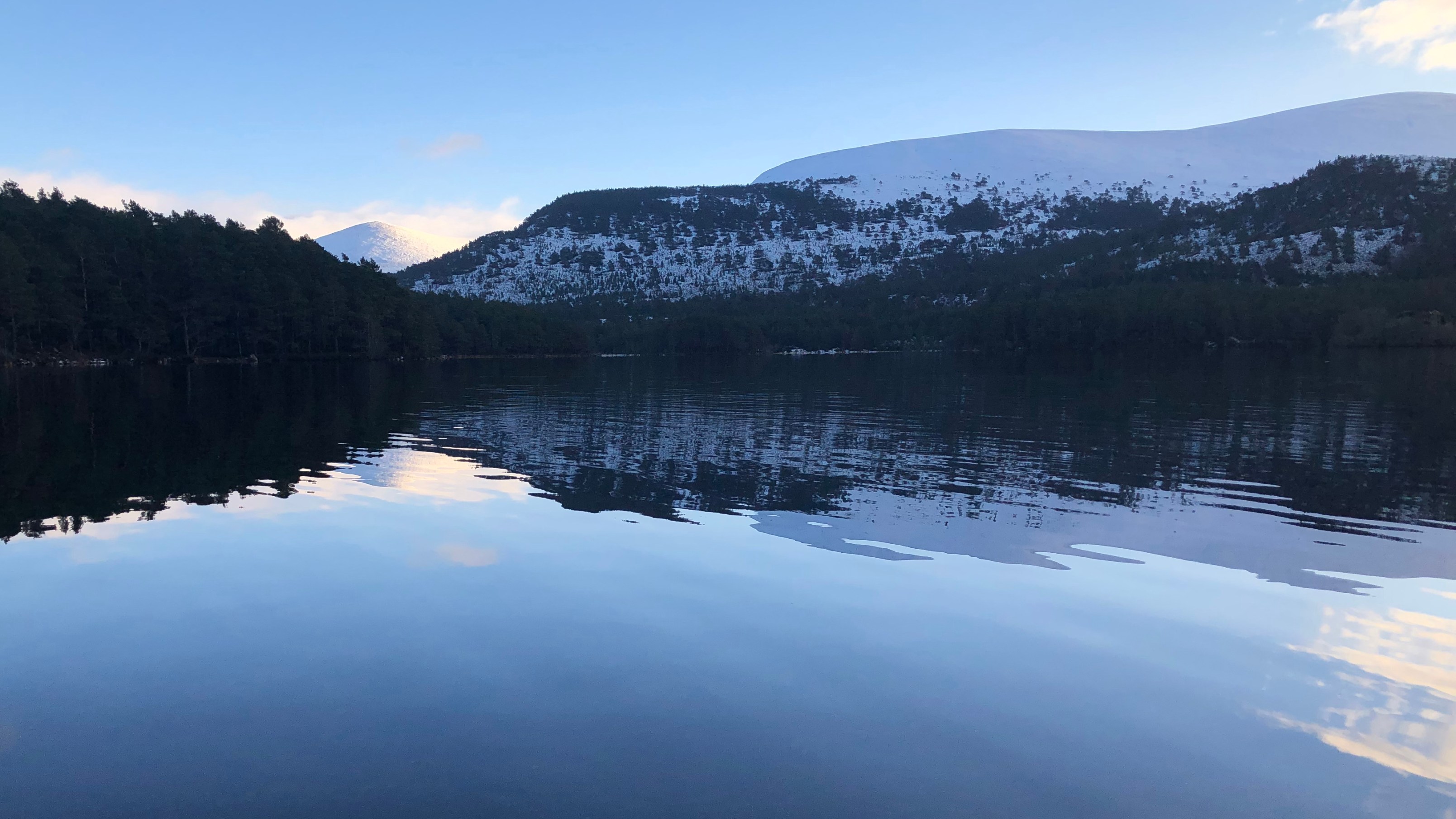
Submerged in pine forest not far from Aviemore, these four small lochs sparkle like they emit their own light. On a still day in summer, their surfaces create perfect reflections of the heathery hills beyond, disturbed only by the feet of dragonflies.
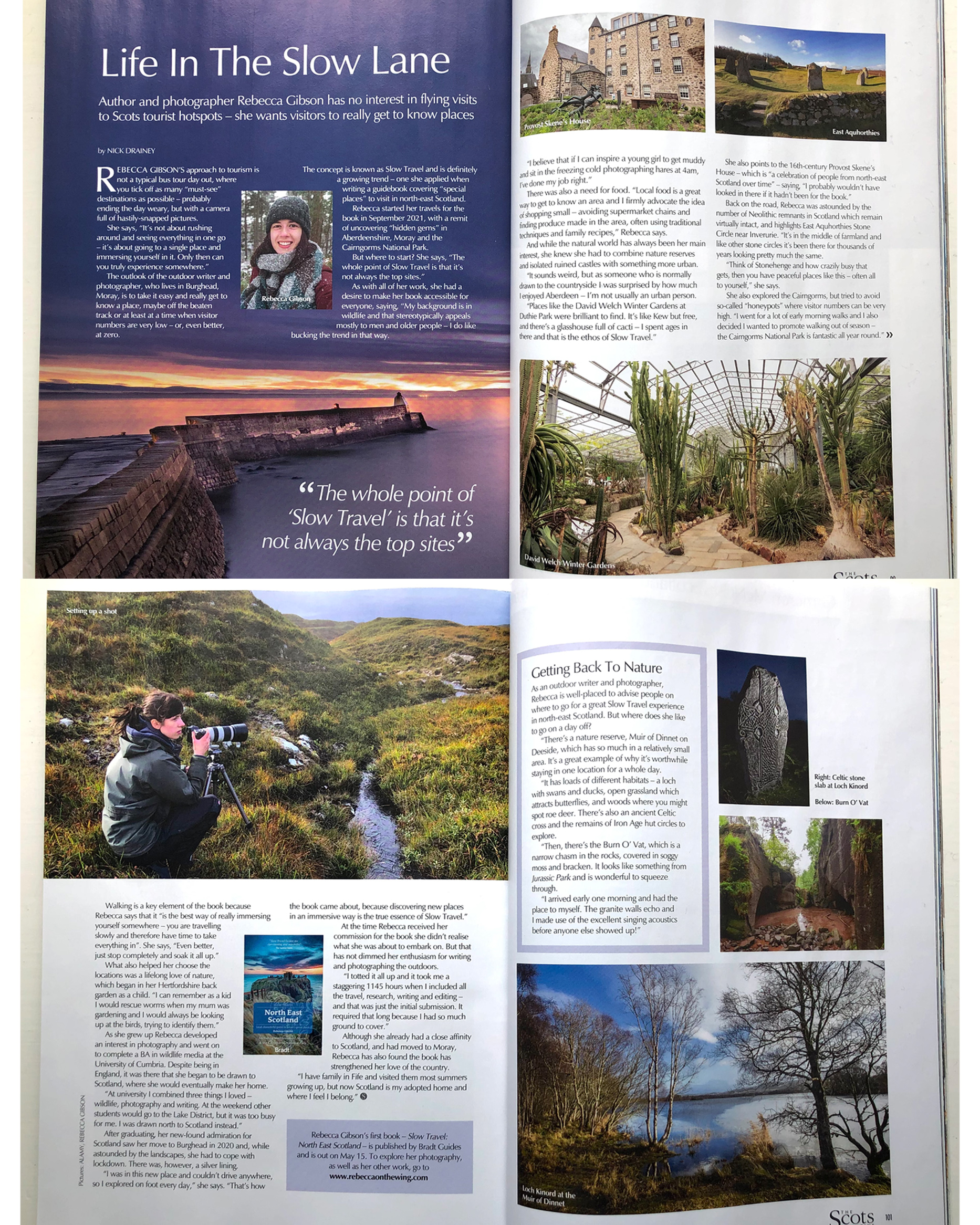
My book will be published one month today, and I can’t believe I’m writing this but there are two double page spreads about it in the latest issue of The Scots Magazine!
At the end of last year I was interviewed by journalist and outdoor enthusiast Nick Drainey. Although our main topic was my book, we had a great chat about Scottish walking, nature and travel in general.
I loved having the opportunity to talk about Slow travel and my experience writing the guide, but it was also really special to reflect on where my love of Scotland began. I think Nick’s done a wonderful job and I’m proud to be a small part of such a great Scottish publication.
‘Slow Travel: North East Scotland’ is out 15th May
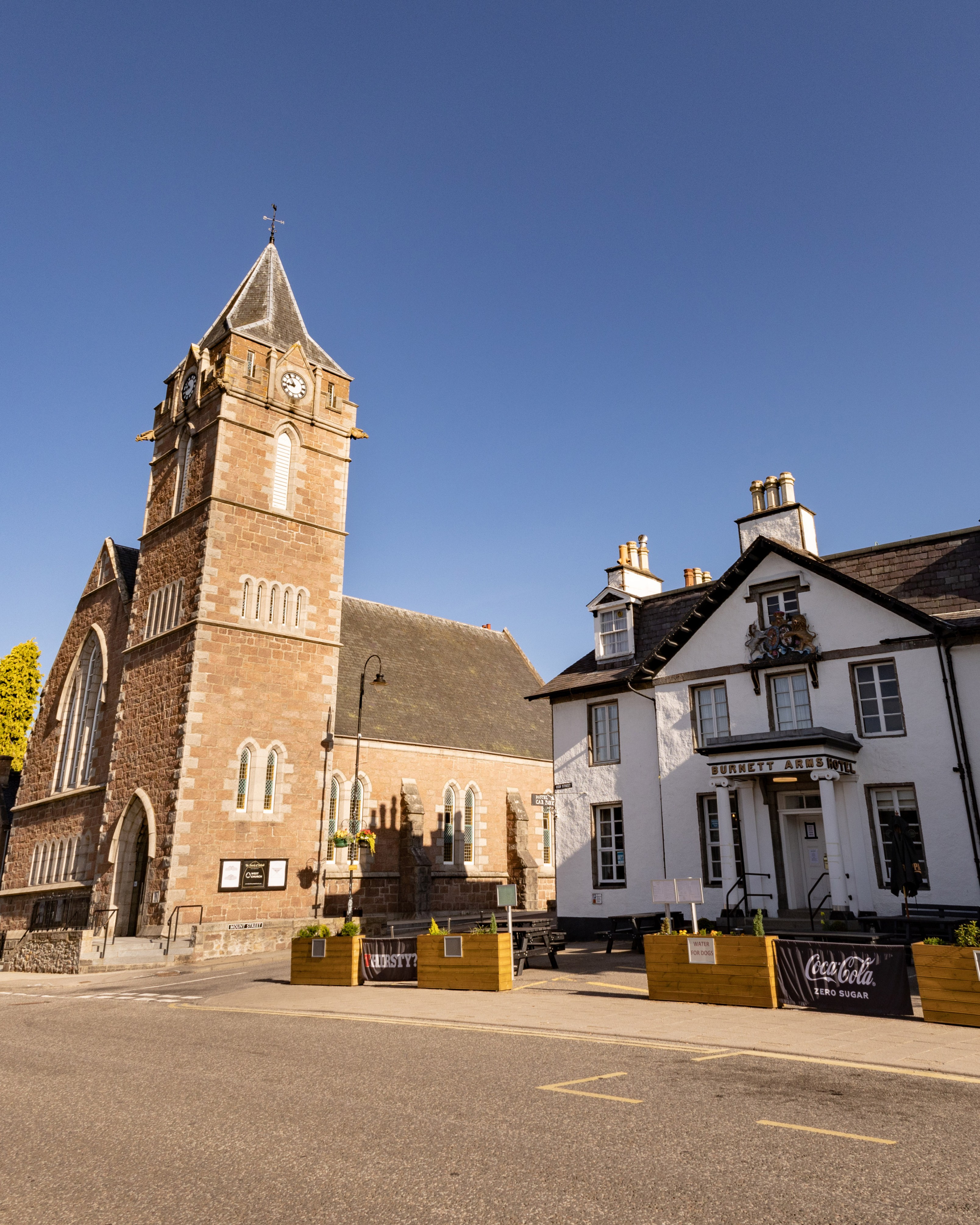
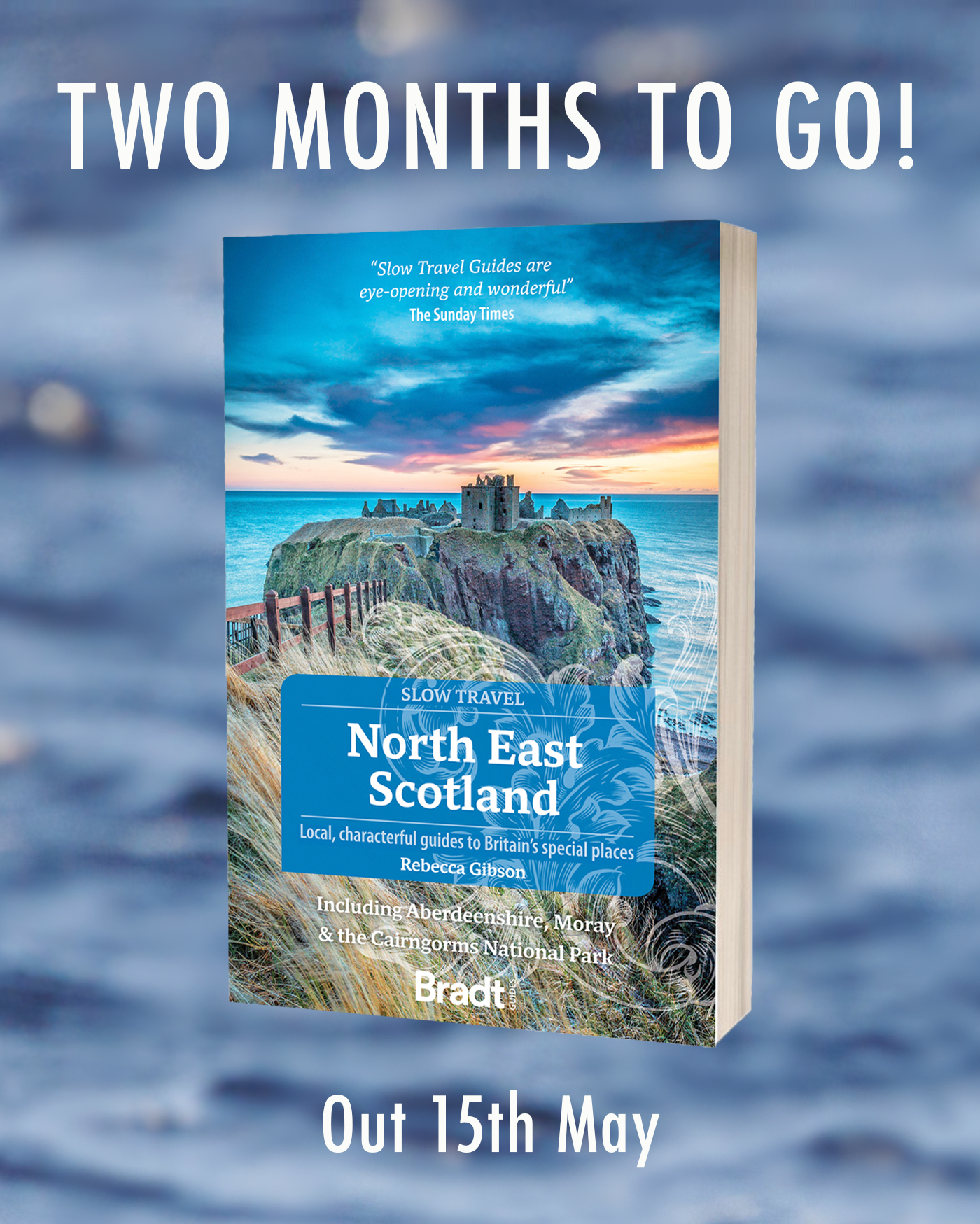
My Slow Travel Guide to North East Scotland will be published exactly two months today! To celebrate what I’m considering to be the start of The Final Countdown (cue Europe), here’s an exclusive sample from the book about the town of Banchory, 18 miles west of Aberdeen.
Banchory is the last major town before you move across the boundary into Aberdeen City, hanging in a hammock of the River Dee as it flows east. Close to neighbouring villages and with the granite torr-topped hill of Clachnaben nearby, Banchory is a handy base for exploring this part of Aberdeenshire. It’s also your best bet for shopping, with a range of gift shops lining High and Dee Streets.
High Street
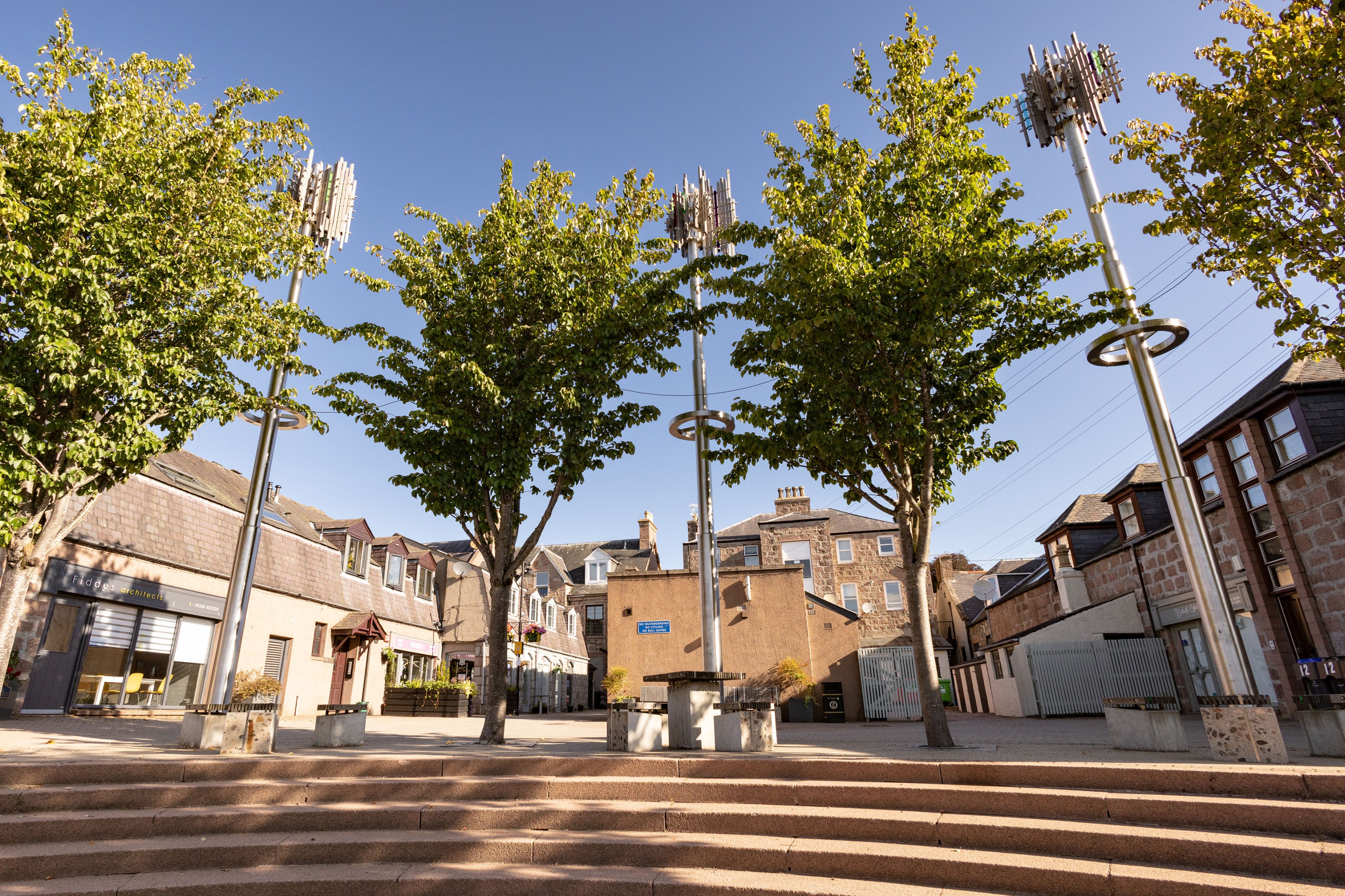
By happy accident, I found my favourite part of Banchory while tracking down the library, located within the pedestrianised Scott Skinner Square. Named after one of the greats of Scottish fiddle music, James Scott Skinner, the square contains a selection of small businesses arranged around a mini amphitheatre of steps.
Scott Skinner Square
James Scott Skinner was born in Banchory in 1843. By the time he was eight years old, he was playing the cello at dances across Deeside. Cello playing wasn’t the only string to Skinner’s bow though (pun unashamedly intended). He also trained as a dance teacher and was even invited by Queen Victoria to teach the children of Balmoral Estate in 1868.
In the square is a tiny garden with woven sculptures of a fiddle and treble clef musical note, created by Ayrshire-based willow and steel artist David Powell. One of Skinner’s most famous pieces, ‘Bonnie Banchory’, inspired the creation of three abstract columns around the square’s amphitheatre. On the top of each is a stack of different-sized rods, representing the sound waves of this song.
Woven sculpture by David Powell
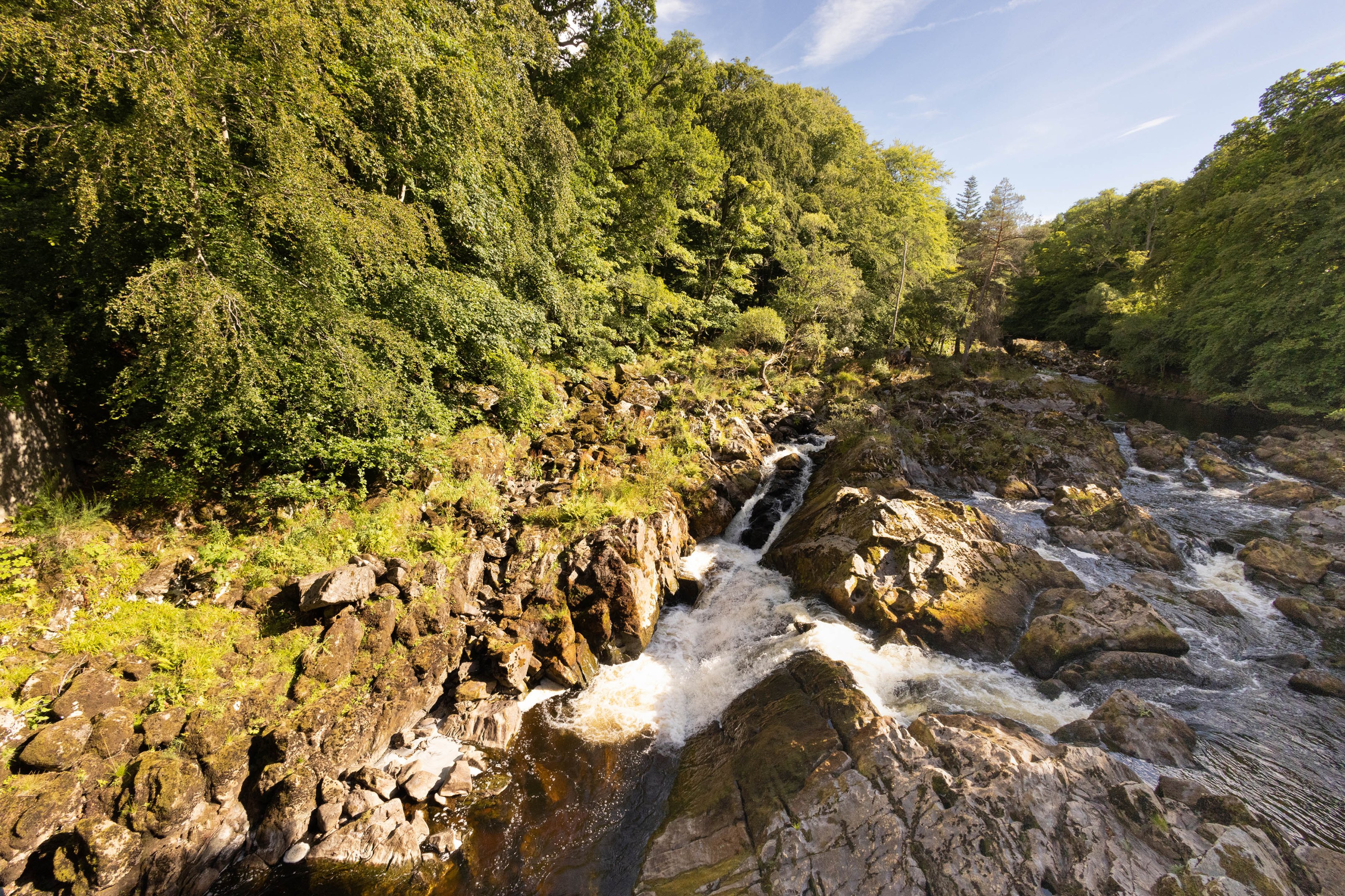
If you walk south on Dee Street you’ll soon cross the river. Half a mile further along is a T-junction, where the left branch passes over the Water of Feugh. Running parallel to the stone road bridge is a newer footbridge where you can peer down at the Falls of Feugh below. The water surges in two channels around rocky contours before crashing into a slower pool and continuing under the bridges. In autumn, this is a good spot to look for leaping salmon.
Falls of Feugh
Five miles south of Banchory is Nine Stanes Stone Circle, conveniently close to an unnamed road passing through a Sitka spruce plantation. There are six standing stones, a chunky horizontal recumbent and two wonky flankers, making up the nine stones in its name.
When I visited, I’d just experienced an assorted delight of road closures, cafés shut when they shouldn’t have been and insufferable August heat (I have about the same heat tolerance as a Mars bar). I arrived at Nine Stanes a sweaty, irritable mess and, although sitting in the middle of the circle with grasshoppers boinging around my feet didn’t make me any less sweaty, it was a serene way to end the day. Stone circles are good at that.
This one was arranged some 4,000 years ago, used as a burial place and to mark the movement of the moon throughout the year. Its stones now have mossy beards and grassy feet, but after all that time they’re still standing.
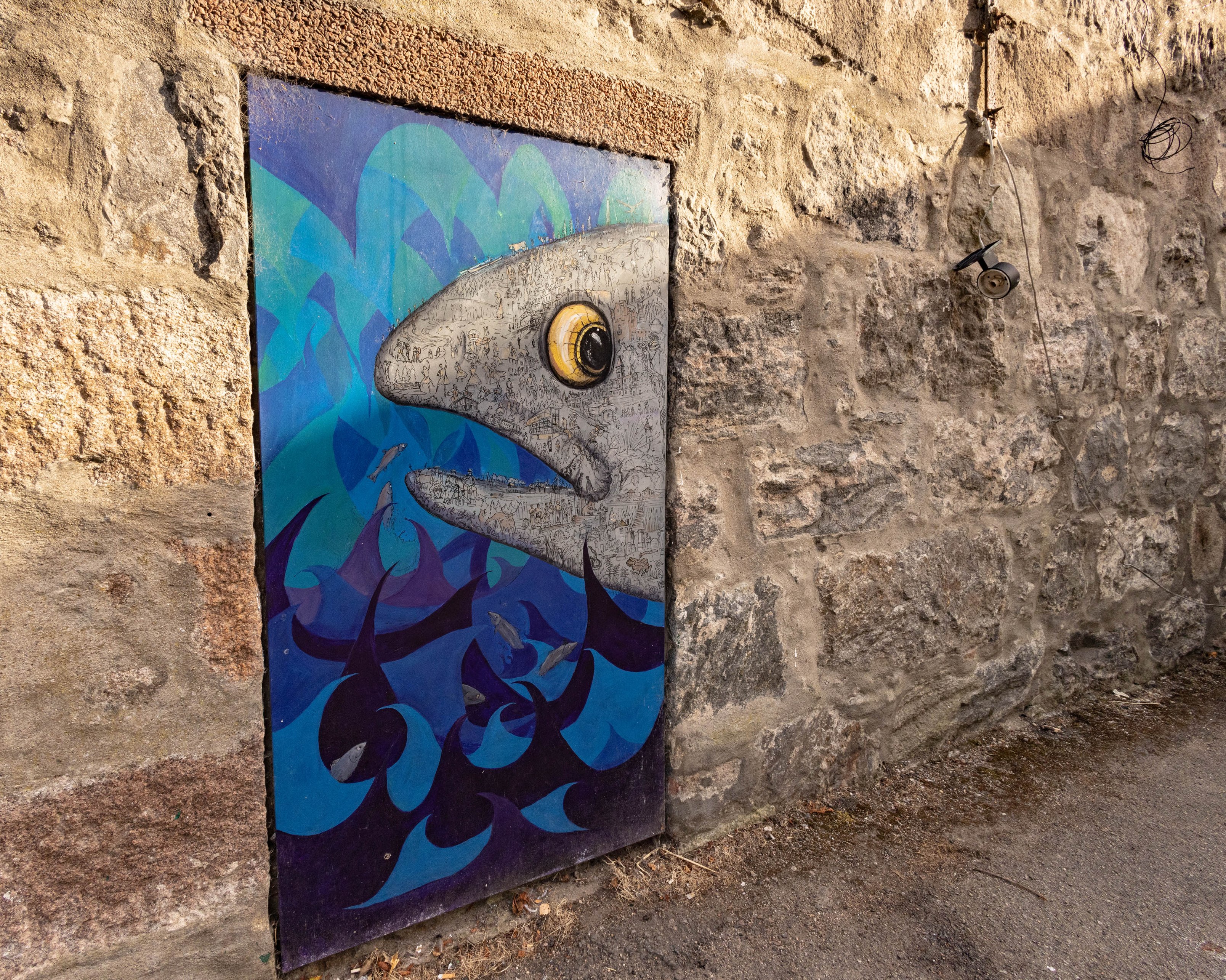
Banchory street art by Shona Macdonald
As you can see from this sample, Slow guides are just that: leisurely, and written as if the author is walking around with a person wearing a blindfold. I’ve loved writing in such immersive detail, as it’s given me the opportunity to really dive into the nuances of each location I’ve featured in the book. There’s a lot of nature and wildlife, which shouldn’t come as a surprise, but this particular entry gives you an idea of the variety of other things I explore too.
I’m so excited to share the biggest project of my career so far with you all. I’m currently working through the proofs and seeing the pages take shape, so it won’t be long until I can finally hold my first book in my hands.
Yesterday I attended a conference in Kingussie, down in the Cairngorms National Park, about Scottish community tourism. It was hosted by SCOTO, a collaborative group of community tourism enterprises from all over Scotland.
One of my favourite speakers was Calum Maclean – a presenter, writer and Gaelic language activist who’s probably best known for his wild swimming. He’s just been voted the most influential Scot on TikTok, surpassing the likes of Lewis Capaldi.
What resonated with me about Calum was his enthusiasm. He spoke about ‘the power of localness’ and exploring past the obvious to get a deeper understanding of the places we visit. He also said to go ‘beyond the guidebooks’ that tend to gloss over the juicy, undiscovered places you’d only know about if you were a local, in favour of overpopulated tourist hotspots.
After his talk, I chatted with Calum about my Slow guide and how it was important to me to write a guidebook that included some of those undiscovered locations. I had the privilege of meeting lots of local people during my research and travels, and their contributions have made my book far richer. To reinforce the importance of this kind of immersive travel even more, Slow Travel is the theme for May in VisitScotland’s 2023 marketing calendar – impeccable timing for the release of my book that same month!
Recently, there’s been a surge in awareness of ‘sustainable tourism’. Initially that might make you think of the environment, and how visitors should respect wildlife and wild places while travelling. This is essential of course, but the sustainable mindset also relates to people. Supporting independent businesses instead of big chains, and making an effort to learn the heritage of new places as well as appreciate their beauty, are just as important as being mindful of campfires and taking your litter home.
Again, these are things that a good Slow guide should cover, and I consciously shopped small while I was travelling for my book, discovering fantastic small businesses that gave the places I visited even more colour.
Another excellent speaker at the conference was Scotland blogger, itinerary consultant and podcast host Kathi Kamleitner. Like Calum, Kathi’s passion was infectious and she spoke about connection as an emotional benefit of tourism. This connection can be with those you travel with, those you meet while travelling, and also with yourself.
Currently, one of the biggest travel trends is an interest in ‘localism and authentic experiences’. This links to the ‘staycation’ idea, which became even more prevalent during the pandemic. It was reassuring to see that my book links to this trend – I’ve highlighted many local people and hopefully conveyed enough immersive detail in my descriptions of lochs, forests, castles and distilleries to inspire these memorable and authentic experiences that visitors are looking for.
I’m a huge advocate of Scotland as a travel destination and clearly so is Kathi, who launched her business Watch Me See to help other people discover and fall in love with Scotland just like we both did. I’m always looking to connect with other solo female travellers and it was so lovely to hear Kathi’s perspective.
March is Scottish Tourism Month, so the conference was well-timed. It was a whirlwind of conversations and ideas, not to mention a shock to my system after several years of professional interaction exclusively via Zoom! I left feeling inspired and even more excited about the release of my book, having reaffirmed my belief that Slow is the way to go.
Winter is the time to reflect. I love looking back on what I’ve done over the year, and once again I’ve put a summary of my work projects into my own mini magazine. I did this for the first time during lockdown when I was painfully idle and needed a project to distract me. It turned into something I was proud to share and this is now my third issue.
Between research trips for my book, I’ve been busy working on other projects including another mindful creative retreat at home on the Moray Coast, a design commission inspired by Thumbnail Nature, and my second wildlife calendar.






















 rebeccaonthewing.com