Reykjavik – Day 3

Today was probably the highlight of the trip for me – the blue lagoon. As we were waiting for the bus to pick us up it was spitting with rain, the first bad weather we’d had. However, if it was going to rain, I’d rather it did it while we were soaking wet and swimming anyway.

As it turned out, it stopped raining when we reached the lagoon. We were ushered inside and wandered off to our separate changing rooms. We were given strict instructions to put liberal amounts of conditioner in our hair because the salts in the lagoon water would dry it straight out.

img_8963

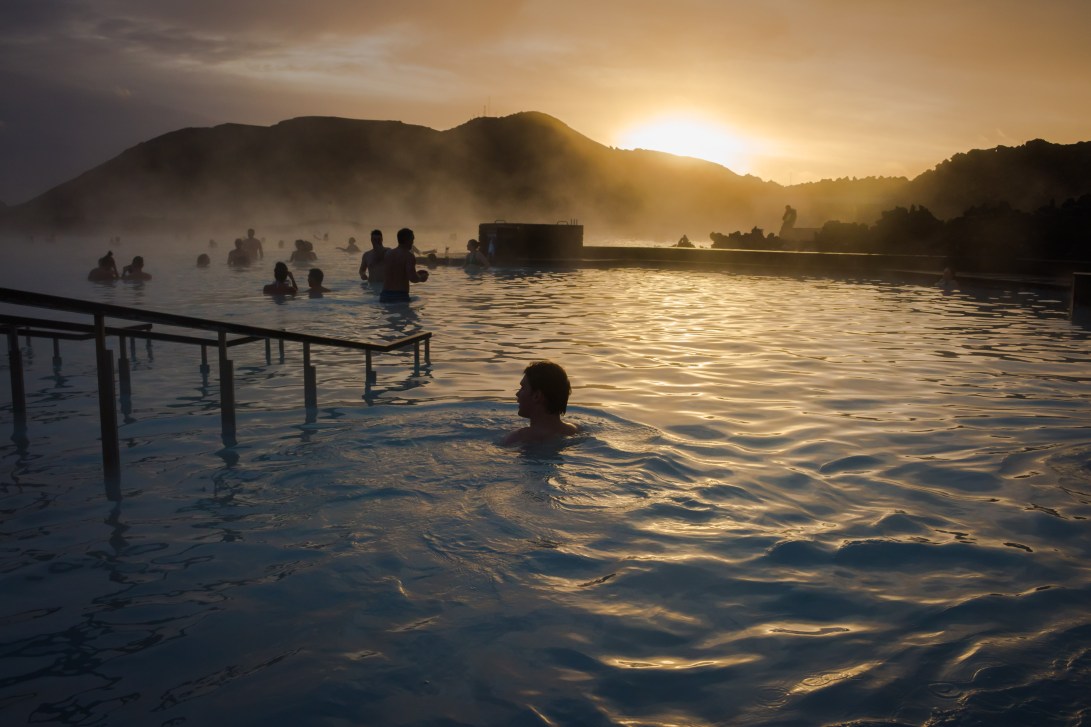
After only getting marginally lost we got out of the maze-like changing rooms and made it to the lagoon. I immediately fell in love. It was the most beautiful colour I’d ever seen, what I can only describe as candyfloss blue, spoiled only by the dark bobbing heads of other tourists. As I waded in, my body disappeared below the translucent surface and I found myself in nearly 40° water. If I closed my eyes I could have been in the tropics, but with my eyes open the hot steam meeting the cold air reminded me where I was.
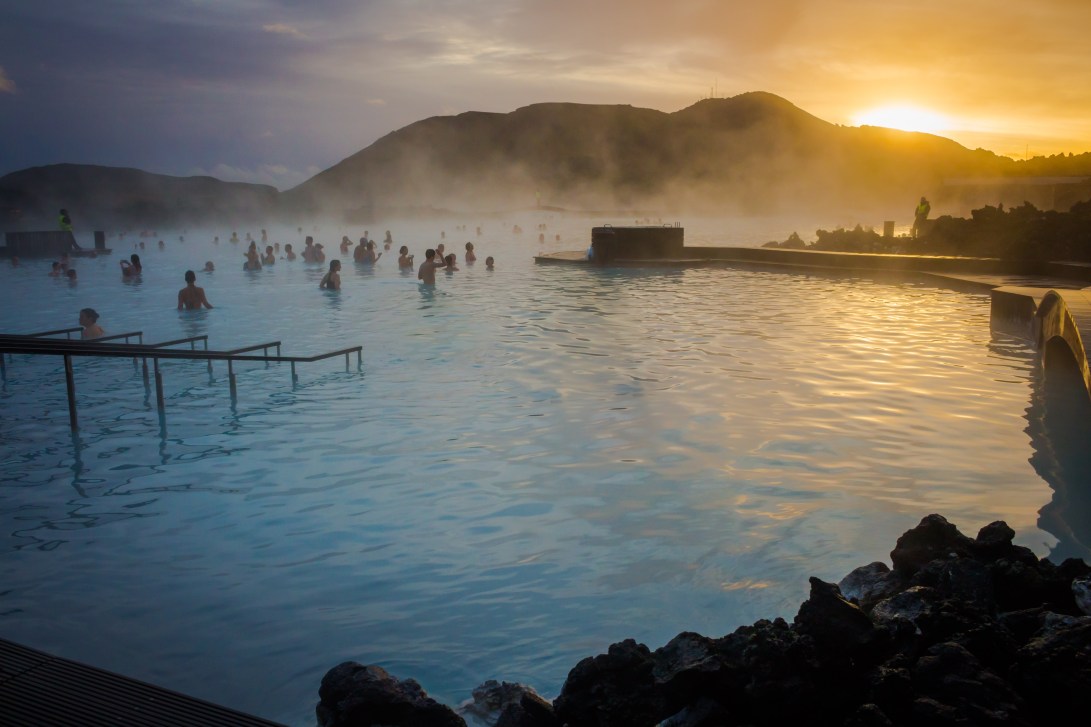
img_8933img_8955img_8944

It was one of the most romantic things I’ve done, swimming in one of the world’s wonders with the most special person in my life. I was initially reluctant to believe the lagoon had spiritual healing powers as I’d read, but as we bobbed about I felt the most relaxed I’d been in a long time.

There was a bar half-submerged in water, so you could lean on the counter and sip your drink while still floating chest-deep. We got cherry slushies, which were the tastiest I think I’d ever had. Mind you, in my state of ultimate chill anything would have tasted amazing.

Once excessively prune-like and ravenous, we showered and headed to the restaurant. Looking inside gave me a flashback to the Ritz – I’d got very lost one time – so we decided to get paninis from the much cheaper cafe instead, which were also very good.
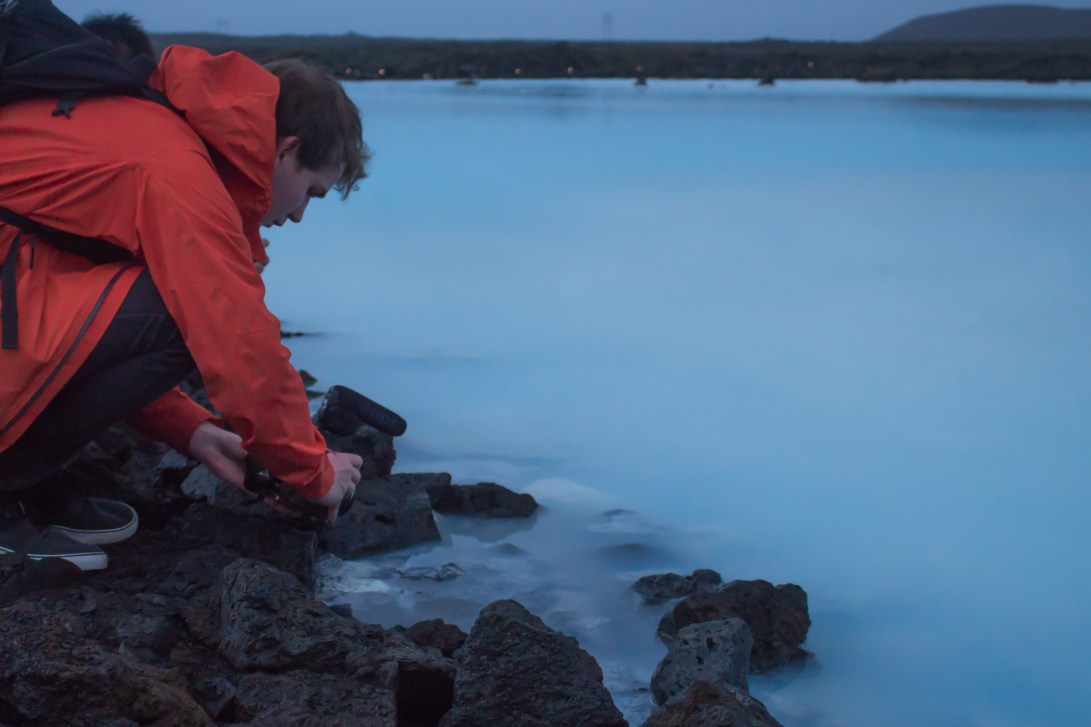
img_8970

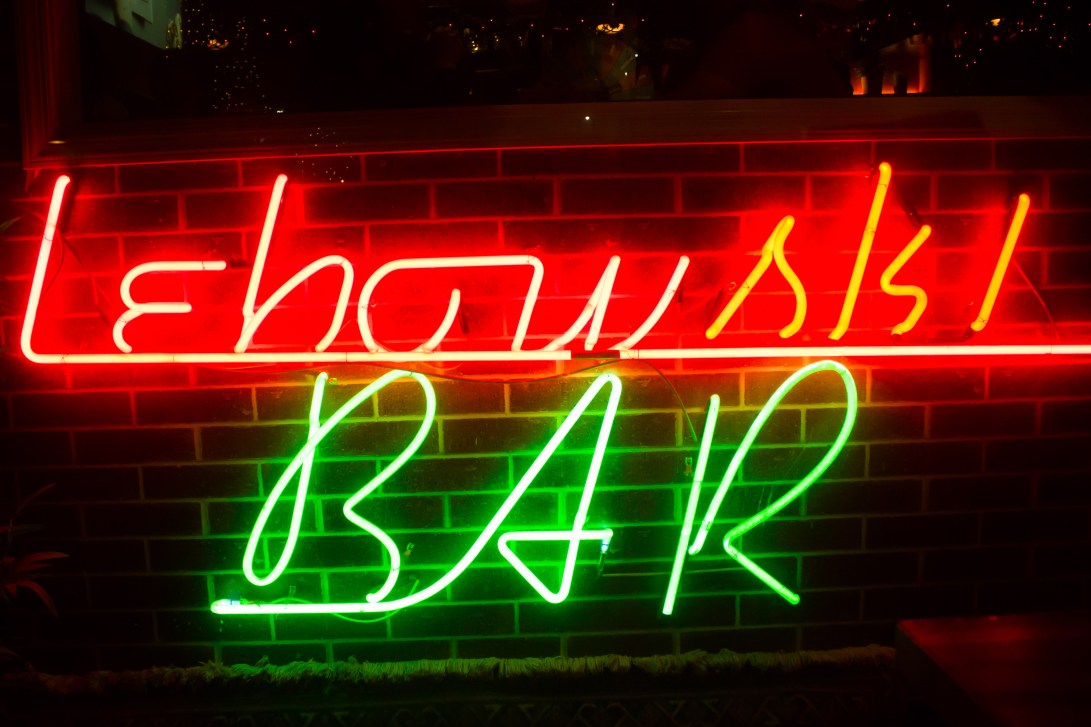
Once back in Reykjavik city centre, we headed to dinner at the Lebowski Bar, which boasted a broad range of burgers and White Russians as well as the Big Lebowski playing on loop. I tried a white chocolate White Russian, but wasn’t a huge fan. The burger however, honey-glazed bacon and cheese, was pretty special.
img_8987

The slight downer of the day was the email we received from Reykjavik Excursions saying that the Northern Lights tour had been cancelled tonight due to bad weather. Still, it’s a common fact that the aurora borealis are notoriously difficult to see, and much more experienced visitors than us hadn’t yet had the privilege of a sighting, so it was a long shot seeing in our first short visit. All the more reason to go back to beautiful Reykjavik!
 

Reykjavik – Day 2

When I looked out the balcony window this morning everything was blue. It turns out that Iceland is actually magical. With recharged camera batteries we headed out to explore.

img_8606

The plan was to go straight to the shops, but down a side street I glimpsed a mountain and the sea. It was decided instantly that we’d put shopping on hold and go explore.

The natural light of Reykjavik is beautiful. Even at 11am there were still the diluted pinks and blues of early morning. We walked over the rocks and photographed the mirror-still water. Curse Iceland for making a cliche the only appropriate way to describe it, but the dirty old ocean looked like milk as it rippled against the shore. It was stunning, especially with Sólfarið (The Sun Voyager, below) standing proud against the city backdrop.

img_8665

By this point we were getting peckish so we found a cute little creperie along the main street. Doused in Nutella, bananas and peanut butter, it filled the gap nicely.

Rejuvinated, we hit the shops. I bought gifts for family and friends then realised just how much money I’d spent. Iceland is expensive, as I’d been told many times over, but somehow being in such a beautiful part of the world made it all okay.

img_8722

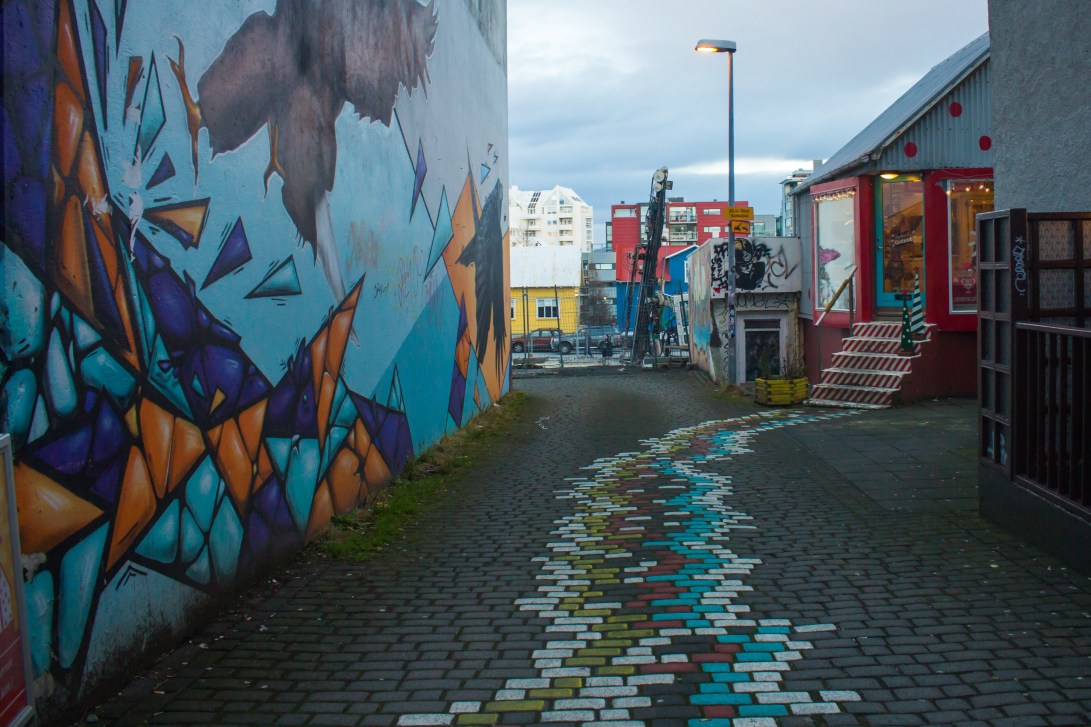
One thing I loved about Reykjavik was the street art. Nothing like the (mostly) ugly, scribbled graffiti that adorn the walls of London, Reykjavik buildings were covered in every colour imaginable. Giant painted eagles swooped overhead, while elsewhere a huge image of Frankenstein’s monster stood tall. It was a street photographer’s dream, and I couldn’t refuse the opportunity to capture my favourites.

img_8729img_8708img_8745

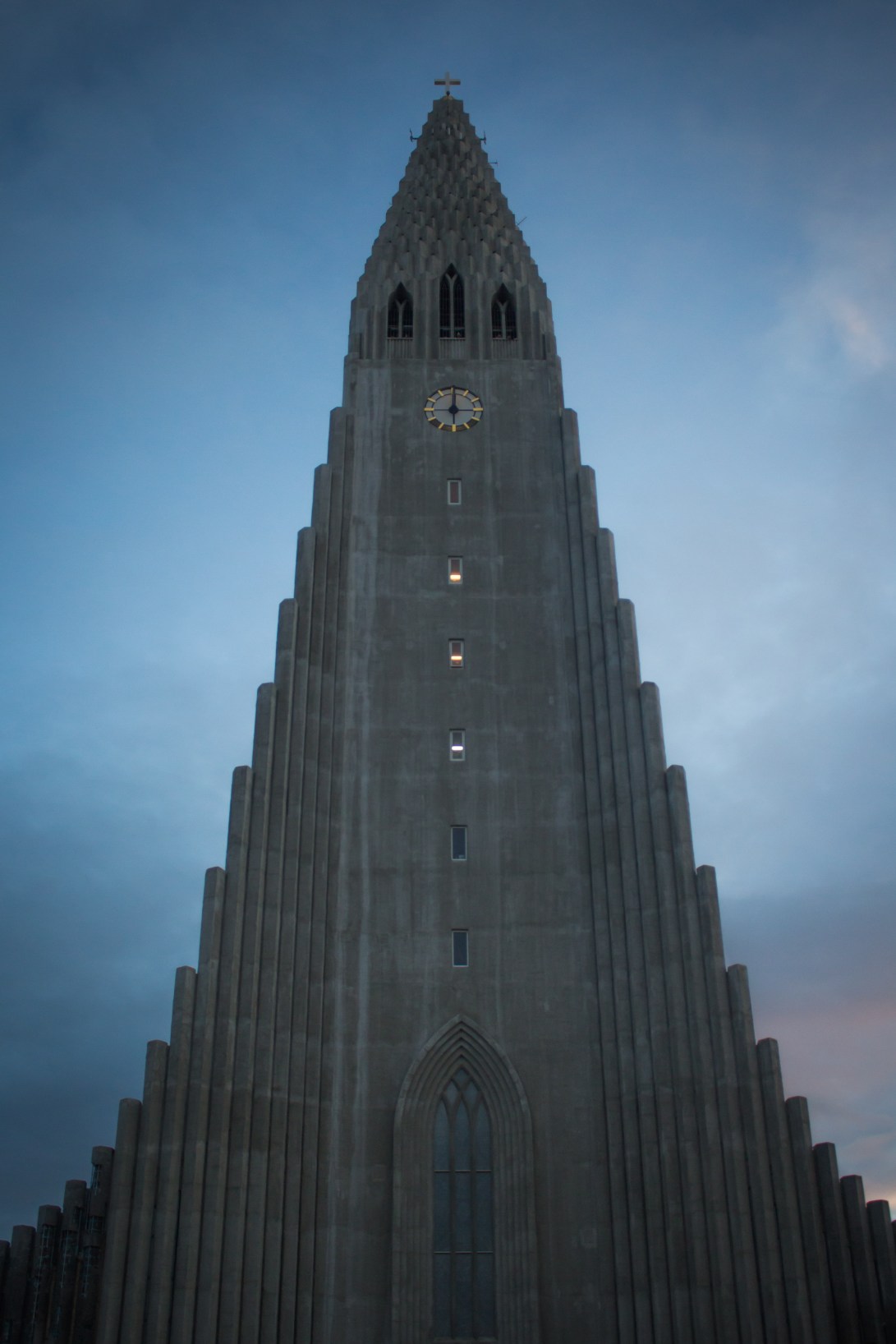
We’d glimpsed Hallgrímskirkja, the tallest church in Reykjavik that dominates its skyline, so decided to get a closer look. The colossal structure looked more like a spaceship than a place of worship, standing 73m tall. The sun was beginning to set so we stayed for some photos. Once the light had faded it began to get chilly so we headed back into town and, after stopping off at the Noodle Station for dinner, chilled out in the hotel room.

img_8795

Later on we went on one of our booked trips, to hopefully go and see the Northern Lights. We got all wrapped up and set off on the bus. For a while it was a struggle to find any breaks in the cloud, but we eventually got off in the middle of nowhere and set up tripods.

While we were waiting we got chatting to this lovely nurse from New York. She was interested in photography too, and we ended up talking about the migrating waxwings.

We waited eagerly for several hours but were eventually forced to abandon ship and get back on the bus. Naturally we were both pretty disappointed, but the Northern Lights are infamously sneaky and we can go again tomorrow night, so hopefully we still have a chance.

Reykjavik – Day 1

Taxi to the station, train to Glasgow, shuttlebus to Glasgow airport, plane to Keflavik and shuttlebus to Laugavegur, Reyjavik.

The journey to Keflavik airport was far quicker than I imagined – less than three hours from Glasgow. As soon as we stepped off the plane we were hit by a gust of Icelandic wind, but despite the cloud cover I was far from cold. Ironically, I was warmer here than in Carlisle.

I noticed immediately that I could take advantage of the beautiful light here. Although the sun rarely shone directly and there were few hours of daylight, the sky always seemed to have a pastel filter over it – sometimes pink, sometimes blue. It was beautifully wintery and I couldn’t wait to go and explore.

After a walk downtown and a traditional dinner of Plokkfiskur, otherwise known as “fish mash” (something I would definitely have again), we headed back to the hotel ready for our first busy day.

img_8531

Whale Bones and Walking Stones

As usual, I trundled to Tullie House Museum for my weekly volunteer shift. Right now everything is focussed on the whale project. Following the discovery of a 16m fin whale skeleton on a beach in Cumbria, Tullie House now has the makings of a smart new welcome feature in their entrance hall. The bones are being taken away for professional cleaning in less than a month now. There’s still a lot to be done before that happens, so it’s all systems go!

Today I was joined by a new volunteer called Will, who turned out to be a fascinating character. As we set to work on scrubbing dried whale flesh off vertebrae the size of my hips, we got chatting about wildlife. Turns out, he’d travelled to some stunning places for expeditions, something I was incredibly jealous of. One one expedition in Abu Dhabi, he had the chance to excavate fossilised camel skeletons as part of his master’s degree in zoo archeology. Once they reached the ribs, the guide assured them there would be nothing of interest to investigate. Will decided to convince him otherwise and together they found an ancient spearhead embedded in the bone. The small discovery prompted a thousand questions: who killed this camel? For what reason? It was fascinating.

Soon, Will is heading off the to the Far East, but he’s done a lot of work in East Greenland. Highlights from his trips here included a sighting of a polar bear jumping through an enlarged seal breathing hole and into the ocean below, and a herd of very intimidating musk oxen, as well as polar wolves, snow white relatives of the grey wolf. On one encounter, Will’s team heard a distressed ringed plover and glanced out the window of their lodgings to see an arctic wolf mere feet away.

As amazing as these stories were to hear (as I sat on the floor scraping white fat off whale bones), my favourite was the tale of the walking stones. Will described how, when rocks fall onto a glacier, they create a natural phenomenon. While the ice around the rock melts under the sun, the patch directly beneath it is kept sheltered. After many hours, the rock is “lifted” by its ice pedestal as the rest of the glacier melts away. Soon though, even the elevated platform succumbs to the sun’s heat and the rock falls onto a patch below, beginning the whole process again. The result is a very slow game of slinky, but one that fills me with such joy that nature is so beautifully playful.

Sunset Sunday (on Tuesday)

Yesterday my lovely boyfriend cooked me sausages and the most incredible fried bread for breakfast because the horrid lurgy that had been lingering menacingly had finally reared its ugly head. For the majority of the day we watched Sherlock and ate the cake we were up until 2am making the previous night, while I wheezed and sniffed.

By evening I was up for a walk, so we decided to head out to Talkin Tarn Country Park in Brampton, Cumbria. It was a spot I’d heard good things about but never been to, and it was truly beautiful. As the day faded and the sun sunk into shadows, the rich blue evening sky illuminated the water, ruffled occasionally by the passing rower. A wind nipped my fingers and I pulled on my gloves with slightly exaggerated enthusiasm; I couldn’t wait for winter to make its appearance so I could dig out my finest wooly scarves and bobble hats. For now though, all I needed was my trusty Berghaus jacket to keep me warm as we made our way round the lake.

img_7187

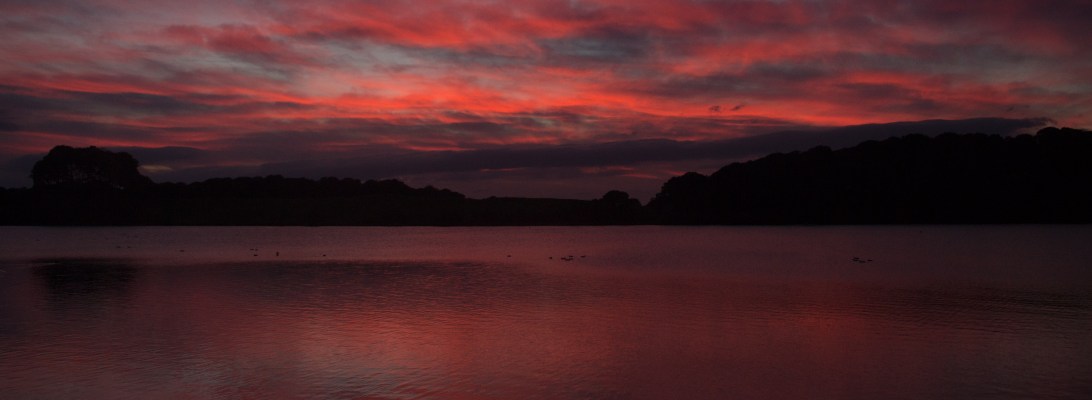
The sunset crept up on us. One moment the sky was blue, the next it was a vivid red, like a furious blush across the horizon. The water, now still and smooth as glass, took on a beautiful pink hue as the clouds rolled over it. Ducks, geese and swans alike settled to roost. One Canada goose honked into the silence, finishing his argument before succumbing to sleep.

We wandered on and perched inside a bird hide for a while, craning out the window for creative angles of the paint-splashed lake. In minutes the colours had drained and all that remained were grey water and an ever-darkening sky. We made our way back around the lake to the car, feeling very grateful to have witnessed such a visually stunning end of the day.

img_7209

Nick Baker at Birdfair

Two weeks ago, Birdfair was held at Rutland Water Nature Reserve from Friday to Sunday. As we were on holiday in Scotland, we could only make the third and final day, but I am so glad we managed to experience this fantastic event.

Upon arrival we were greeted by an explosion of colour and noise. I bought a map and discovered I was in one of eight marquees lined on both sides with stalls and things to buy. A lot of them were selling wildlife holidays, so I couldn’t help but enter a few competitions, as well as buy some wildlife art.

One talk we attended was ‘Building a Naturalist’ by Nick Baker, a naturalist I’ve admired for many years. His topic of discussion was getting more children interested in the natural world. In a way, he was preaching to the converted by delivering his speech to an audience of wildlife enthusiasts, but it appears as if the responsibility of making nature a focus for children lies with us, the people who understand its importance.

What I love about Baker is his heart-warming enthusiasm for wildlife. He described his first white plume moth (Pterophorus pentadactyla) sighting as “like looking at fairies at the bottom of the garden”. He learnt a great deal about newts by collecting them and watching them in tanks – he made a point of saying that this was long before the Wildlife and Countryside Act 1981 when the handling of British newts became illegal – and read up on them to broaden his knowledge.

“Experience is everything,” he explained, and I agree entirely. The only way to understand the natural world is to be out in it. As much as it pains me to say, reading books will only get a naturalist so far; by spending hours searching the coast or wandering through the forest, they can become a part of the world they’re passionate about.

Baker shared some alarming statistics. In a study of 8-15 year-olds, 53% had never seen a flock of starlings (Sturnus vulgaris) in the UK. Baker described this as “extinction of experience”. Our mentors are becoming an endangered species; with less interest in nature, where are the passionate naturalists who will teach and inspire the next generation? Baker’s mentor was his dad, without whom he may not have had the experiences that brought about his interest in wildlife. For me, my mentor was my mum, and for her it was my grandad. There must be a link between each generation to keep the passion alive.

There will come a time when I get to show my children how incredible the natural world is. I will buy them all the books I can afford and take them on walks through woodland and meadows. We will sit silently in hides and lay on our fronts watching aquatic life in ponds. All this brings such joy to my life, and to the lives of many others. Unfortunately, we are the rare few. It means a great deal to me to watch and study wildlife, but I am no longer the youngest generation. Children are walking sponges and will soak up everything around them; it’s up to us nature folk to ignite their imaginations with trees and birds, as well as TVs and computers.

“It’s innate in all of us. We are born curious… all it takes is a spark of curiosity.” Nick Baker

Our Day On May

When the May Princess left Anstruther harbour the sun was at its highest, so as we headed out into open water we were slowly baking but not daring to complain in case the rain came back. As I watched my fellow passengers slap on the sun cream, I was geographically disorientated, not quite believing I was in Scotland and not Spain.

IMG_6949IMG_6957

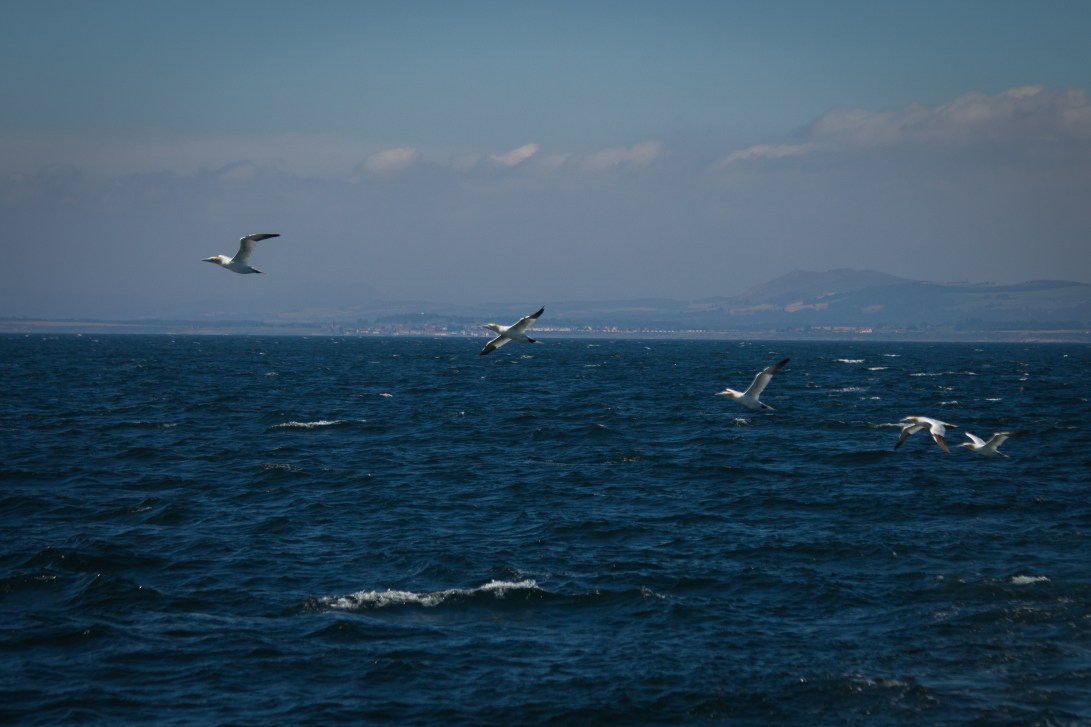
The water was choppy but that added to the fun. I was once again having to negotiate a tumbling boat and a telephoto lens to desperately try and capture the moving seabirds in focus. Many of my attempts were 96% sapphire sky and 4% wing tip in the corners of the frame. With gritty determination, I managed to photograph a few gannets (Morus bassanus) alone and in their strings of multiple individuals. Gannets happen to be my favourite seabirds. Capable of diving at speeds of 60mph, they hit the water with incredible force in their attempts to catch fish. When I saw my first gannet on the voyage to the Isle of Arran I fell in love with their striking face stripes and lightly tinted brown heads. To me they’re the coolest bird in British seas.

IMG_6963IMG_6983IMG_7004-2

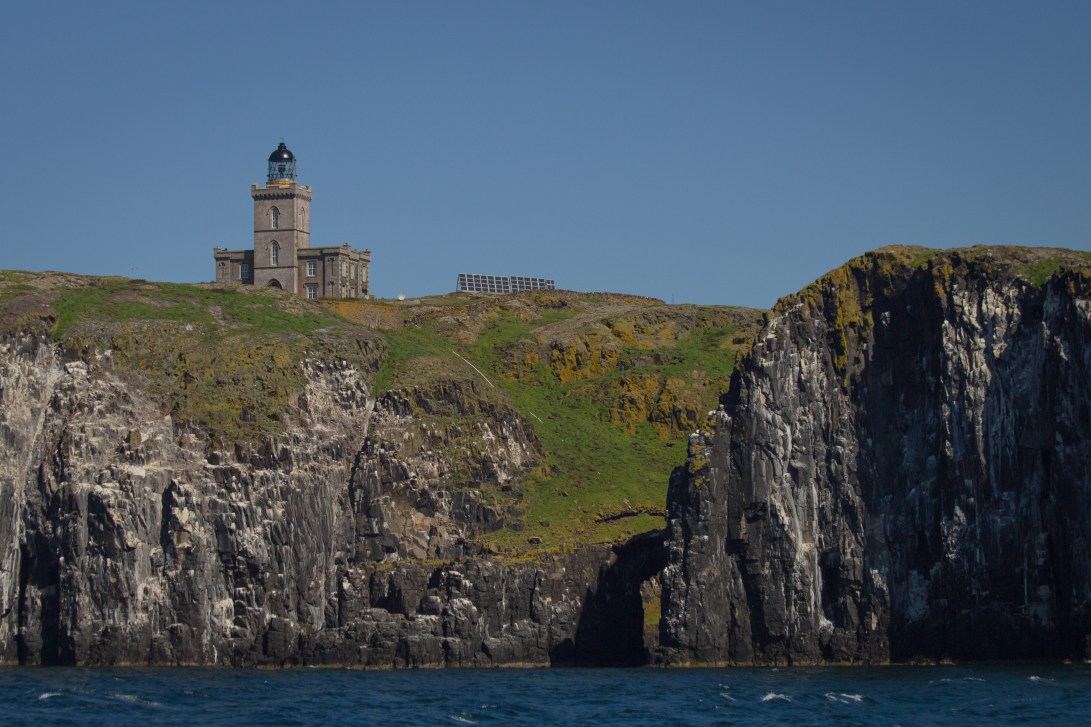
Before long the Isle of May appeared on the horizon, illuminated beautifully under the intense sun. The cliffs and crag faces oozed drama with their harsh black and white, thrown into sharp relief by the light. The few buildings were dotted around and looked very out of place amongst the grass and rocky shores, just how I liked it.

IMG_7000-2IMG_7027

Once we’d all disembarked and received a welcoming talk by a volunteer from Scottish Natural Heritage, we were allowed to explore. Visitors branched off in different directions; we decided to head up Fluke Street, past the Bath House and Main Light to the very tip of the crag. Beyond was Rona and North Ness, areas closed to the public for research. While we admired the view, we spotted a lone grey seal (Halichoerus grypus) wallowing in the shallows, snout resting on the rocks as it dozed.

IMG_7037

IMG_7040

IMG_7118

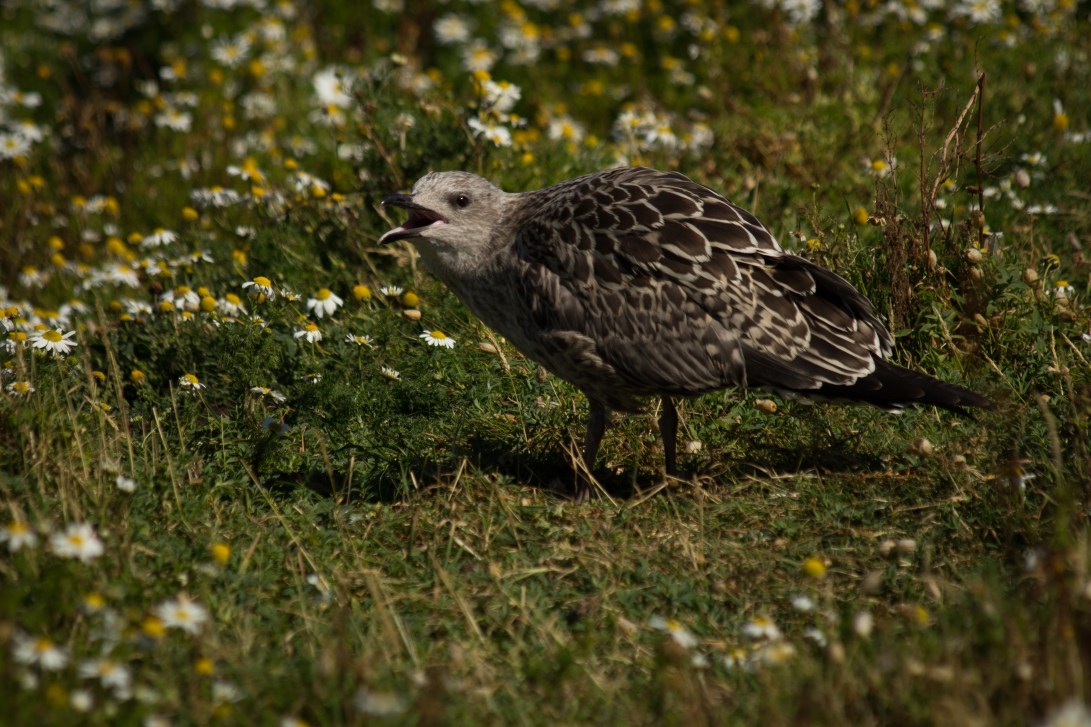
The seal was accompanied by the odd gull swooping through, but otherwise the island was mainly deserted. We hadn’t timed our trip quite right as most of the seabirds had left, including the elusive puffin (Fratercula arctica) that is high on my tick list. However, aside from the beautiful gannets we still managed to see a few kittiwakes (Rissa tridactyla), cormorants (Phalacrocorax carbo) and a lone juvenile guillemot (Uria aalge), a new bird for me.

IMG_7067IMG_7073IMG_7080

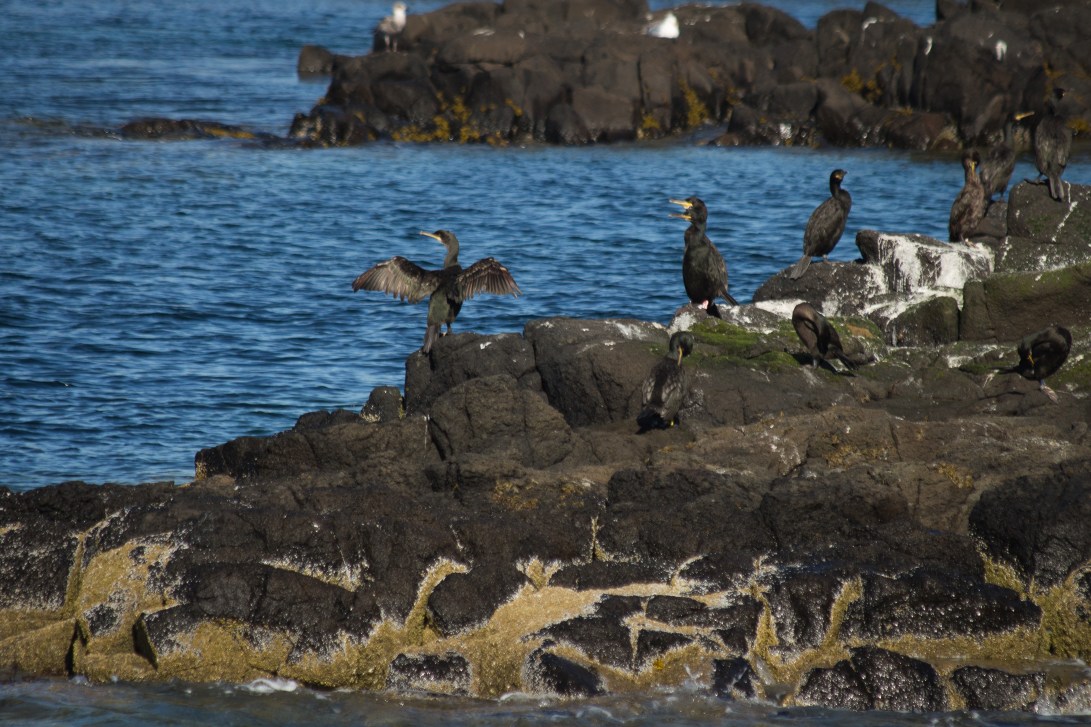
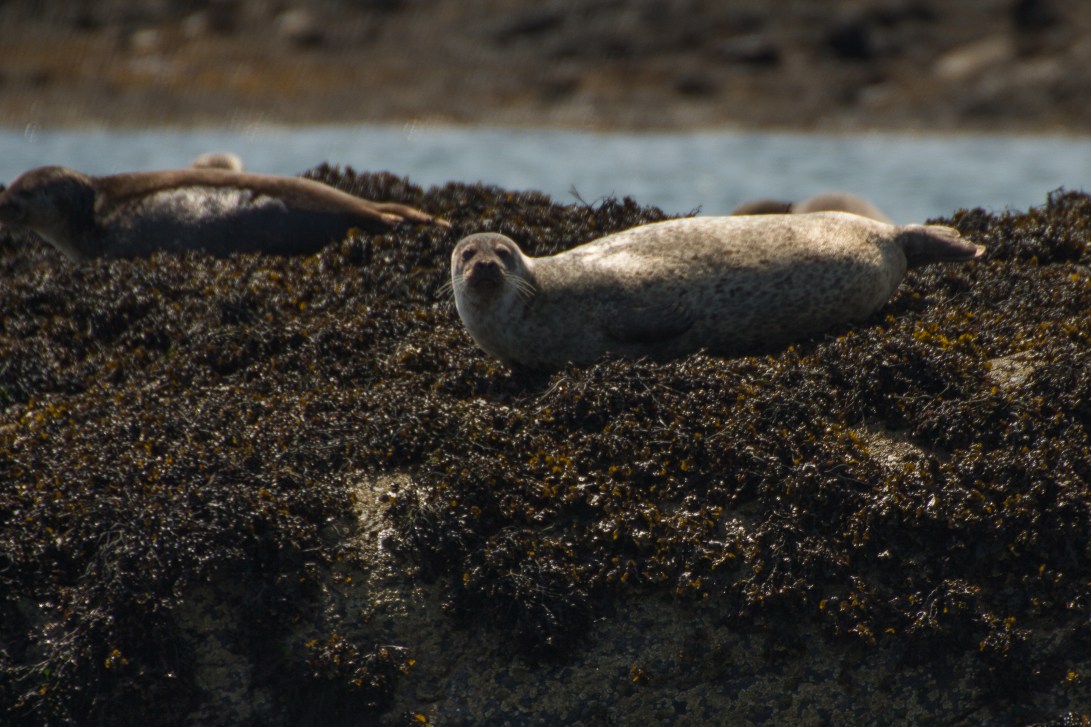
All too soon our time on the island was at an end, and we made our way back to the boat. Just as we were leaving, a grey seal – perhaps the one we’d seen earlier – bobbed out of the water as if waving us off. We thought he’d been our only seal sighting that day, but around the corner we were treated by a large colony, splashing each other and gazing at us with huge black eyes. Cormorants basked in the sun, wings spread as if inviting a hug, and once again the gannets swept over our heads. As the Isle of May grew smaller, my nose grew redder, and when I got home I realised I’d acquired a vicious sunburn. It was worth every moment!

Carna – Day Five

Species seen:  

  • Chaffinch – Fringilla coelebs
  • Common Porpoise – Phocoena phocoena
  • Common Seal – Phoca vitulina
  • Common Shag – Phalacrocorax aristotelis
  • Common Tern – Sterna hirundo
  • Golden eagle – Aquila chrysaetos
  • Grey Heron – Ardea cinerea
  • Herring Gull – Larus argentatus
  • Hooded Crow – Corvus cornix
  • Lesser Redpoll – Acanthis cabaret
  • Oystercatcher – Haematopus ostralegus
  • Song thrush – Turdus philomelos
  • White-tailed eagle – Haliaeetus albicilla
  • Wood mouse – Apodemus sylvaticus

This morning Heather woke us all up with a real treat; last night the Longworth trap had caught a wood mouse. As quietly as we could, we took some brief photos then sexed the animal. The nipples were clearly visible, meaning our mouse was a breeding female.

IMG_6260
Heather assured us the use of a plastic bag was standard procedure and it was held open for the very short time the mouse was inside. After releasing the animal back at the trap site, it scuttled away safely and unharmed.

After a few more hours sleep we visited what Heather described as a ‘sweet shop’. The shed beside the house was full of barn owl pellets which we had the opportunity to dissect. After some initial apprehension we got to work and I found myself enjoying pulling apart what a barn owl regurgitated many months previously. In my pellet I found both a mouse skull and a vole’s skull, as well as numerous minuscule jaws and ribs. It was yet another new experience for me and it was fantastic to analyse what an owl on Carna had been eating.

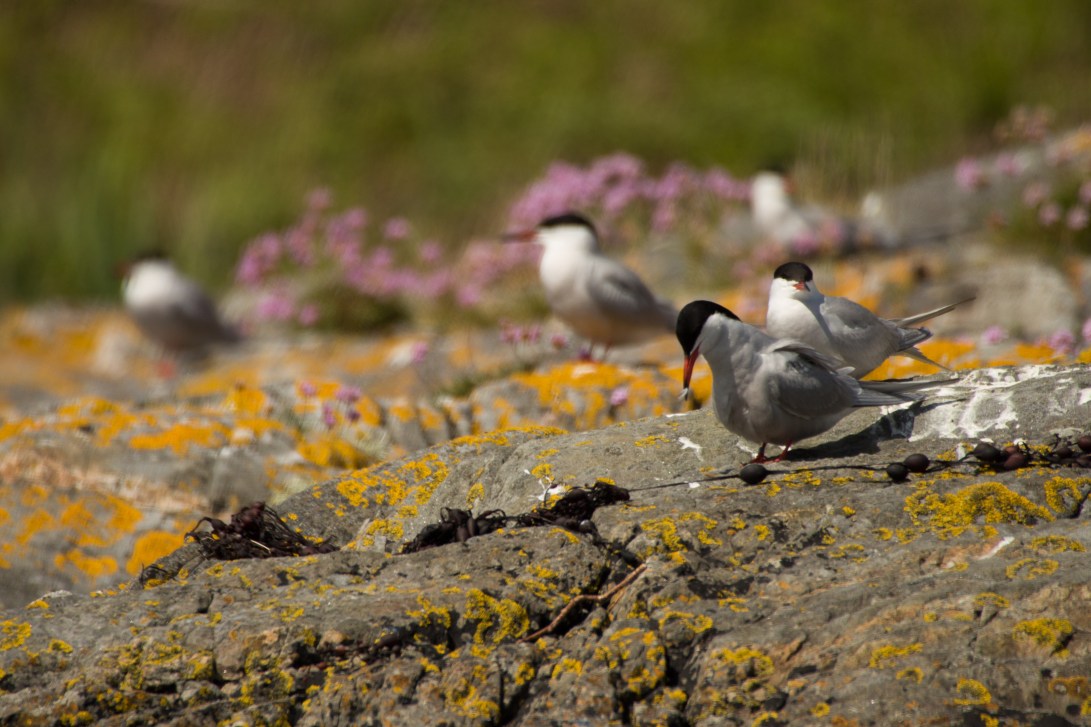
Shortly after we’d finished with the pellets Andy came to pick us up on the boat for a trip around the islands. Unbelievably we had another fantastic day of sunshine, so conditions were great for photography. For a while we watched common terns mating, and their stark white feathers contrasted with the rich colours of the moss clinging to the rock.

IMG_6277

IMG_6304

Once in open water we saw two more porpoises breaking through the waves. The tide was choppy and negotiating tripods and telephoto lenses while the boat tilted from side to side was a challenge we had to overcome. Once again Lequane was first to notice the white-tailed eagle far up in the sky, but almost immediately after we noticed a different bird above the hills. As it descended and came within binocular range we saw the rich hazel hue of the golden eagle’s wingspan. It dipped low and landed amongst the trees so we lost it, but this bird was near the top of my wish list and it was so satisfying ticking it off.

IMG_6293IMG_6320

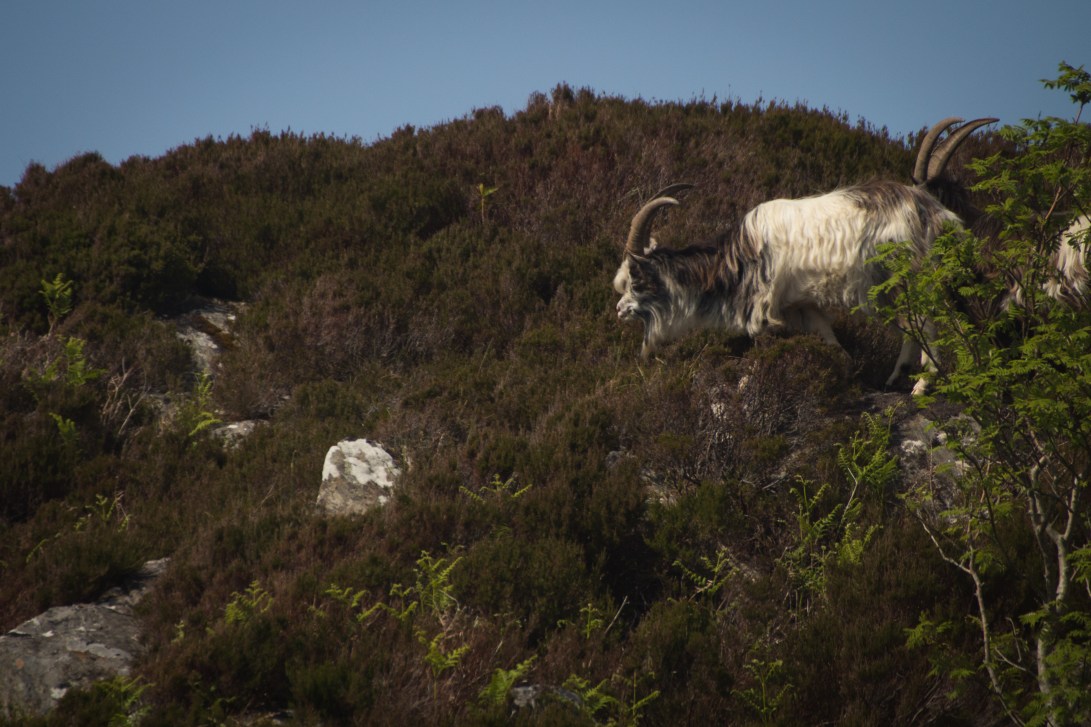
On the way back to the house we spotted some of the wild goats that had made the rocky coast of Carna their home. We also stopped off at the shag’s nesting site again. Not many people are aware of these birds but I find them extremely handsome with their sharp yellow eyes and the green sheen in their feathers.

IMG_6357IMG_6365

When we got back Cain and Heather had gone to pick up the camera traps and we all gathered at the kitchen table to see what we’d captured. It was nothing short of a success. In the first trap we had several clips of an otter trotting in and out of a small cave mouth and sprainting at the entrance. In the same spot a few hours later the whole frame was filled with two pricked up ears and a pair of antlers that were unmistakably a roe deer’s. Heather and Cain informed us that this was the first official footage of a roe deer on Carna so this was fantastic news. By using the camera traps we can find out new information about just how diverse Carna is.

Footage from the next trap showed a vole that we were unable to identify. It could have been either a bank vole or field vole sub-species. Either way, it was great watching the rodent feast on the apple and seeds we’d left, although it did manage to shift the trap so we could no longer see anything but out of focus rock.

Yet more treats were to follow. The next trap had been set in the bluebell wood and a fox had visited late one night. Though it didn’t linger, we still got to see the mammal’s gorgeous fluffy tail as it trotted through the bracken.

Seeing the wildlife on the Isle of Carna on the camera traps was a great end to an unforgettable experience. In only four and a half days I have learnt so much about tracking and field craft and got an insight into the ecology of an island rich in wildlife. It was so refreshing being around people who get as excited as I do when I hear a cuckoo or glimpse an otter swimming across the loch. By being separated from technology I have had the chance to enjoy the outdoors even more. I’ve been out of breath on numerous occasions during our hikes and scrambles but it’s been worth it every time. I even did some sketching, a pastime I haven’t enjoyed in years.

Everybody should spend time in a place like Carna, especially those who don’t fully appreciate the natural world. Sharing a loch with seals, otters and porpoises is something everybody should experience. While I am the last person to criticise books, sometimes the best way to learn about wildlife is to be a part of it. Get your hands dirty lifting rocks to see the starfish underneath, wade ankle deep in mud to set a camera trap and get a crick in your neck gazing at eagles. It really does change you.

Carna – Day One

Species seen (heard):

  • Barn Owl – Tyto alba
  • Common Frog – Rana temporaria
  • Common Tern – Sterna hirundo
  • Eurasian Otter – Lutra lutra
  • Hooded Crow – Corvus cornix
  • Lesser Redpoll – Acanthis cabaret
  • Red-Breasted Merganser – Mergus serrator
  • (Cuckoo – Cuculus canorus)
  • (Snipe – Gallinago gallinago)
  • (Tawny Owl – Strix aluco)

From May 21st to 26th, I joined four other Wildlife Media students for an unforgettable expedition to the Isle of Carna, a beautiful remote island on Loch Sunart on the west coast of Scotland. Our aim was to rewild ourselves by taking part in conservation activities like conducting bat surveys, setting up camera traps and recording wildlife using journals.

By mid afternoon we arrived at Ardnamurchan Charters, eager to see the island where we’d be spending the next five days. Andy Jackson, owner of the Charters, met us with his dog Tag and we began loading our kit onto the boat. There was a surprising amount for such a small group!

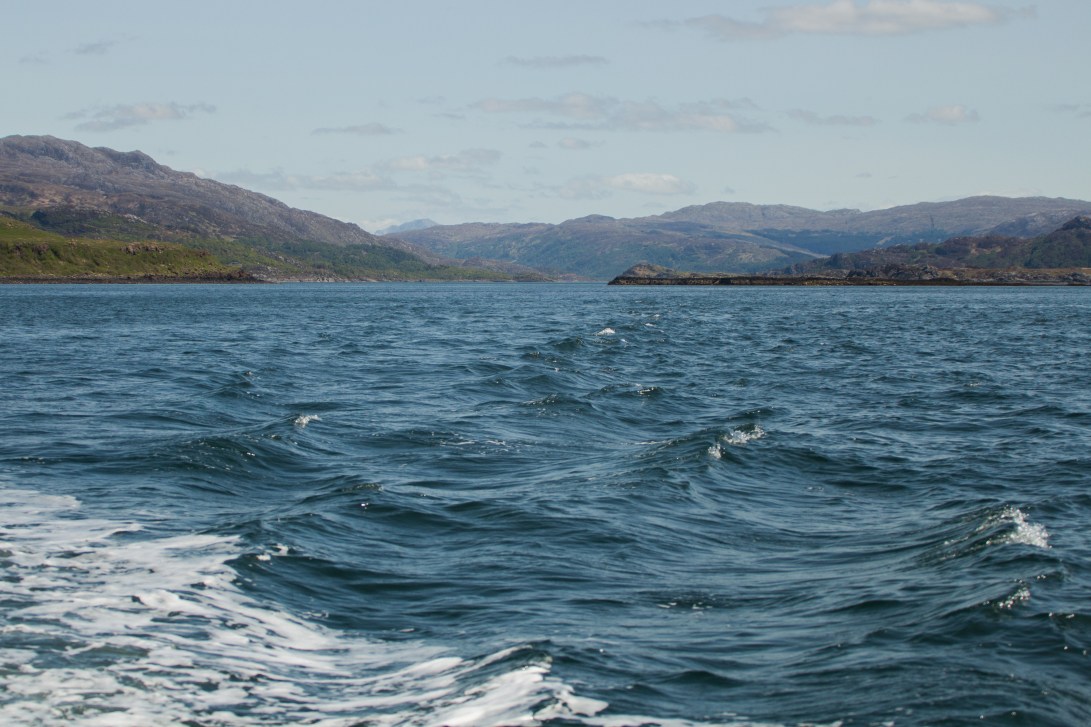
The day was overcast but Carna still looked impressive as we sped towards the island. The cottage came into view, a quaint white building with a conservatory that we knew would be perfect for observing wildlife on the loch. Sure enough, in the first few hours we saw red-breasted mergansers, chaffinches, song thrushes and a lesser redpoll.

IMG_5585
Loch Sunart
IMG_5591
The pontoon where we waited for Andy

After settling in, we noticed how beautiful the evening sky was and armed ourselves with cameras and binoculars, eager to find out what we would see when the sun went down. After capturing a radiant pink sunset we retrieved the camera traps Heather and Cain had previously put out. The first was at the end of the pontoon, and immediately we saw evidence of otter sprainting, a sign of territory marking. Otters will use their faeces in this way to make their presence known to others in the area. At the pontoon there were several patches, so we were hopeful that the camera had caught the night-time visitor.

The second camera was in a wooded area up the hill. We knew the long grass would be full of ticks, but we’d bought tweezers and knew this was one of the many sacrifices a wildlife enthusiast has to make! Eventually we found the camera and made our way back down the hill.

A peculiar sound made us stop and listen. Heather quietly told us they were snipe, which make an extraordinary drumming noise with their tail feathers. Although we never saw them, they must have been wheeling around our heads, as the noise reverberated in every direction. Amongst the snipe’s commotion, we also heard the distant calls of a tawny owl and a cuckoo.

IMG_5602
Carna at dusk

Just as we were heading back to the cottage, Cain and I decided to check the pontoon with our binoculars. I made out a black blob in the gloom and suddenly the blob moved. As silently as possible, we alerted the others and watched the otter wander across the pontoon. This was my first ever wild otter so I was thrilled to see one on my first night here. I was so excited I almost missed a barn owl swoop across the loch, screeching into the night.

IMG_5615
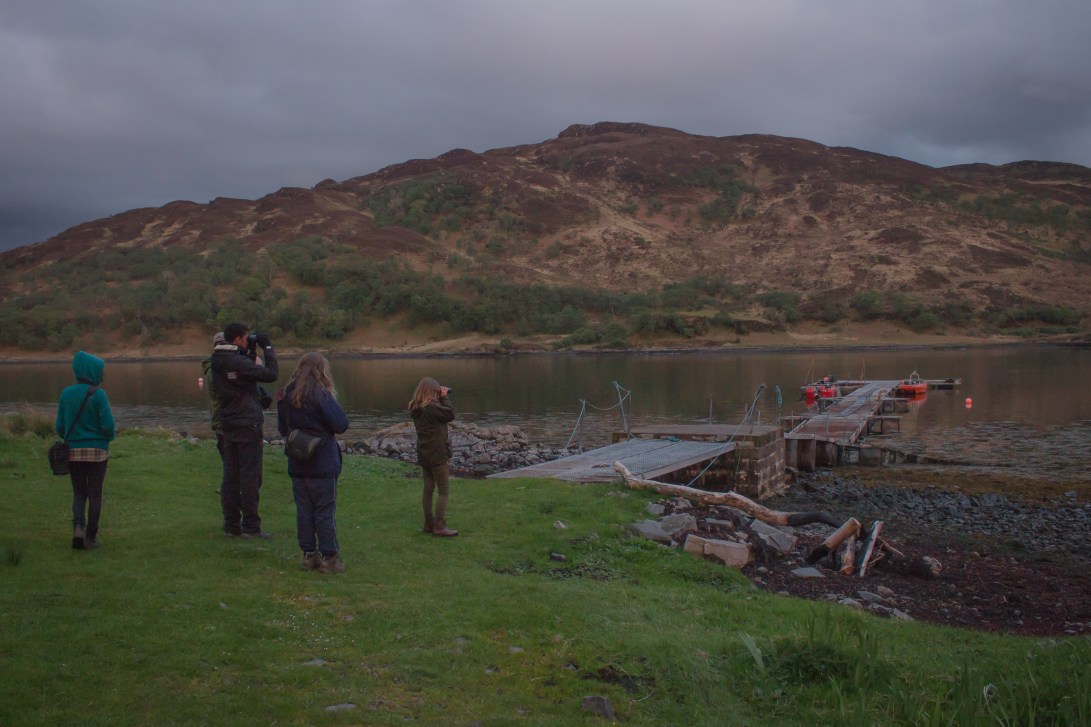
Studying the water for otters

I couldn’t believe how much we’d managed to see in the first night alone. I got into bed tired after the long journey but excited for the following days.

IMG_5623
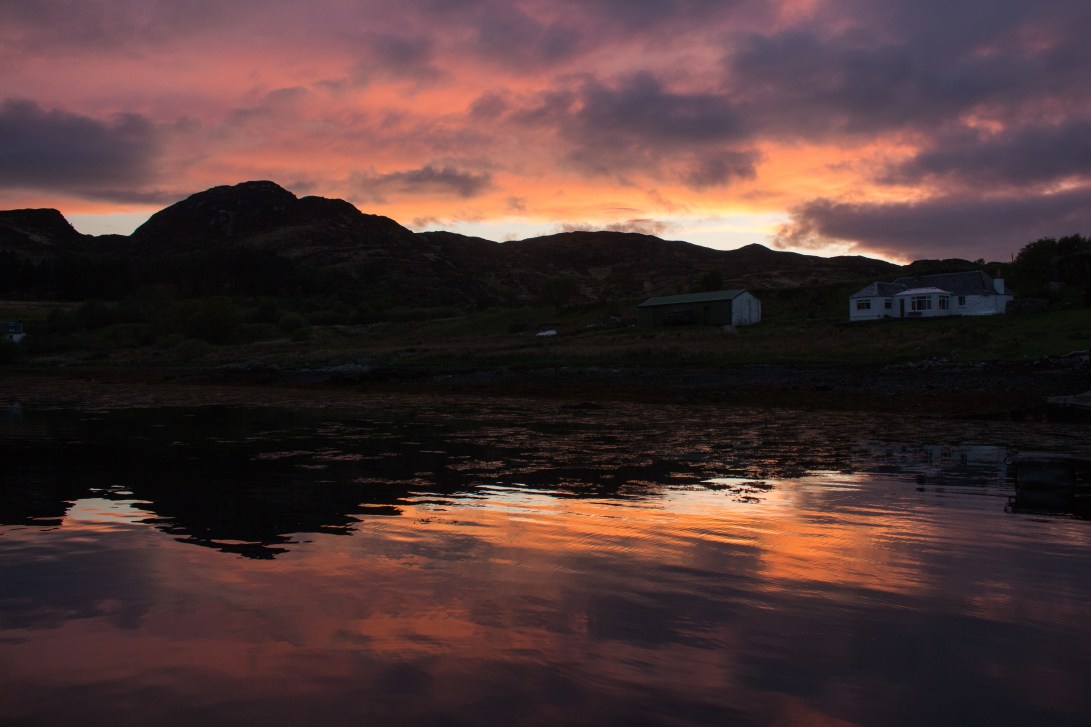
Stunning sunset