Wild Film Fest Scotland

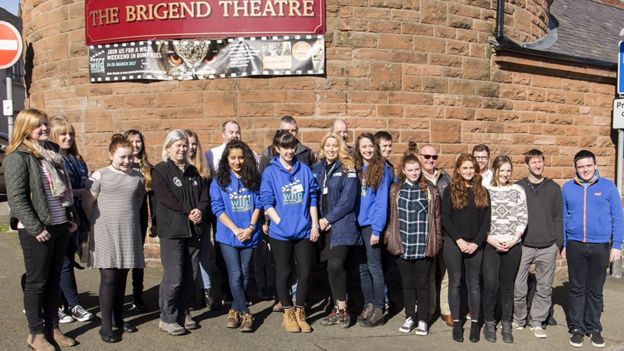
Last weekend was the first Wild Film Festival Scotland, which took place in beautiful Dumfries and Galloway. Myself and a few other Wildlife Media students were lucky enough to volunteer during the event, which involved some amazing talks and a rather fetching cobalt blue volunteer hoodie.

I headed up to Dumfries on the train and arrived mid afternoon. As I stepped onto the platform I realised what the niggling feeling I’d had was about: no pyjamas. To prevent severe embarrassment at the studio flat I was sharing with Zahrah later on, I made a quick dash up the high street then wandered down to the Theatre Royal to catch a talk from photographer Gordon Rae about his work. He told us about a trip to Churchill in the Canadian Arctic, where there were more polar bears than people, something I found incredible.

Later on was one of the festival headliners: Simon King. Excitedly, Zahrah and I joined the other volunteers and spent the next two hours hearing some extraordinary bird noises. Simon King is a real impressionist; I’d heard some of the animals he impersonated in the wild, and his versions were truly uncanny.

The next morning I headed down to the theatre for my induction, donning my hoodie and making my way to the Robert Burns Centre for my first shift. I welcomed visitors and clocked them in with the clicker, something I found more entertaining than perhaps I should. In between shifts I managed to catch a lot of films and talks, learning some amazing things about the natural world. Being at an event like Wild Film Fest with some professional naturalists made me realise just how much I still have to learn. It’s a blessing and a curse; of course I’d love to be a wildlife connoisseur overnight, but at the same time it’s exciting know how much there is still to find out.

The weather this weekend was stunning. During my lunch breaks I sat by the river and watched the goosanders dive and the mallards struggle against the current. I bumped into Cain, who told me there were otters on the river, but not while I was looking for them. The only wild otters I’ve seen were on the Isle of Carna – by the time I graduate I want to at least see them in Carlisle, where apparently the world and his mother have seen them.

Sunday night was Iolo Williams. The theatre was packed – after checking tickets and doing the headcount, I nipped up to the balcony and watched the talk with a bird’s eye view. Iolo is a great naturalist and a real entertainer. I asked him what he thought about the re-introduction of wolves in the UK, and he replied that the best place to release a pack would be the Houses of Parliament. Like all good naturalists, it was clear he had passion.

In seemingly no time the weekend and the festival were over. After a very nice bolognese at Hugo’s restaurant, we headed to the train station and made our way back to Carlisle, leaving behind a beautiful crimson sunset. It was a brief but really great weekend. Volunteering at the first ever Wild Film Fest Scotland is something I’m proud of, and hopefully next year’s will be an even bigger success.
_95329269_wffsyoungfilmakers26.03.17
Standing centre stage in front of one of the festival’s venues!


Puffballs, Prints and Pellets

Due to a lecture cancellation, Zahrah and I seized the day and paid Watchtree Nature Reserve a second visit. As the sun was actually shining, we made haste before the English climate returned to its usual cheeriness.

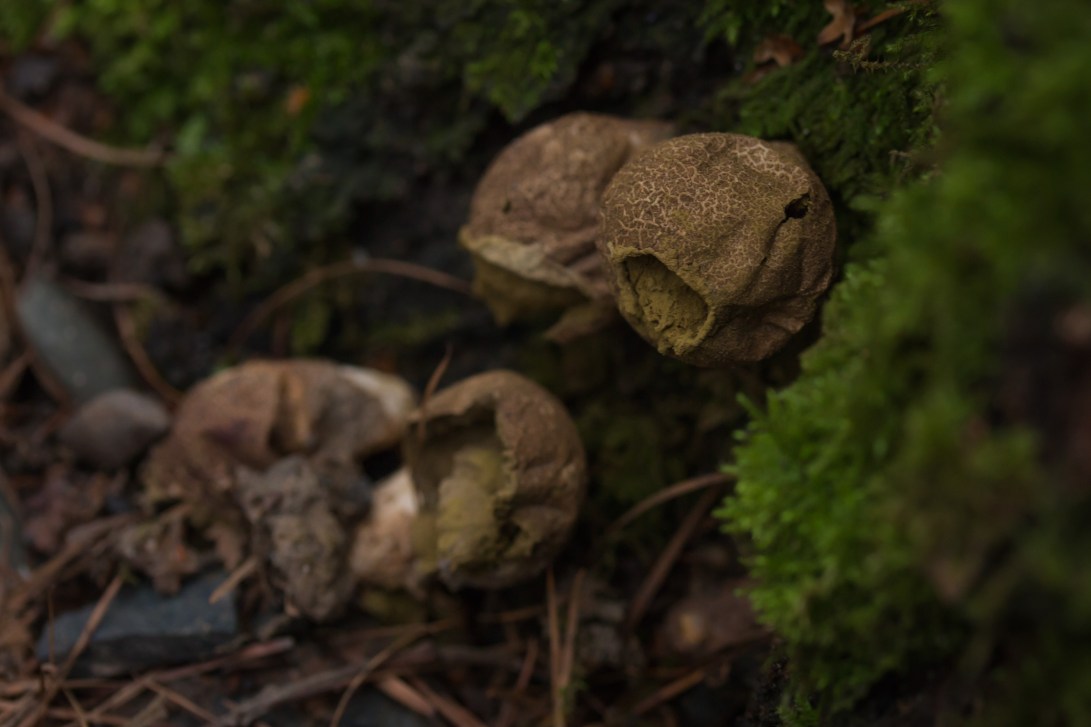
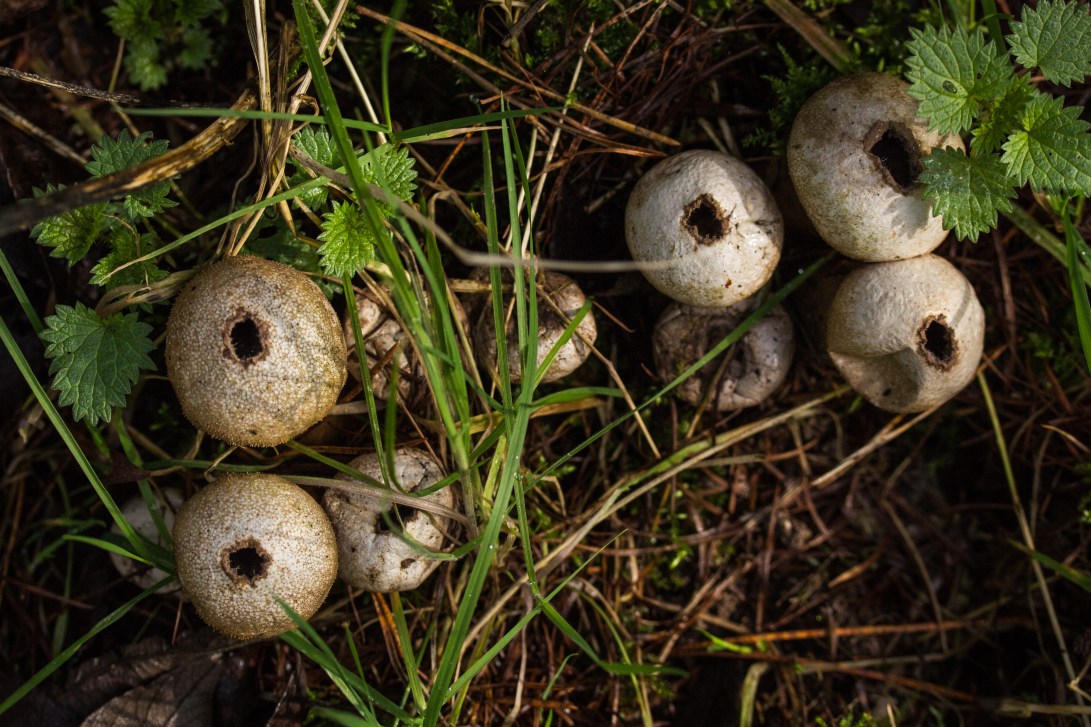
As we’d found several roe deer skulls at the reserve last time, we headed straight to Pow Wood and began to forage. My first find was a cluster of puffballs (Lycoperdon sp.). I find these little guys are extremely difficult to identify, but they’re always fun to see and remind me of terrestrial sea urchin shells.

img_9893

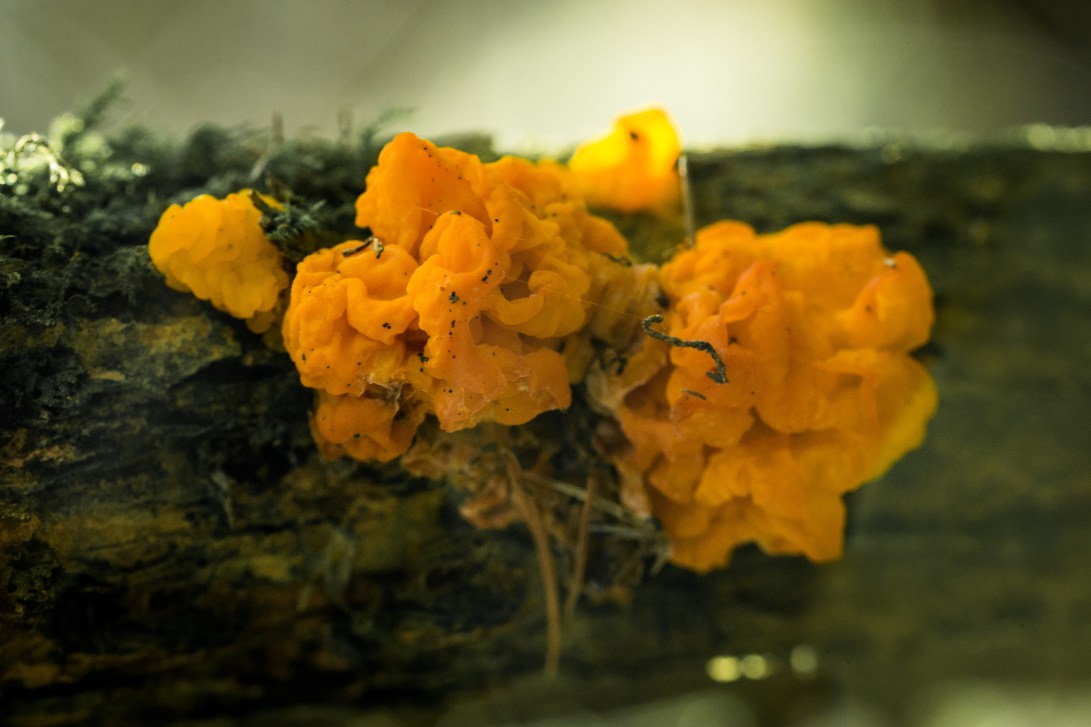
Further into the wood I was extraordinarily excited to identify more fungi. This ID lark is slowly getting easier! I found a patch of jelly ear (Auricularia auricula-judae) on some dead wood, and wrestled for some time with said dead wood to get close enough for my macro lens to work its magic.

img_9935

Shortly afterwards, I found several violent red blooms amongst the green foliage. The only scarlet elf cup (Sarcoscypha austriaca) I’d seen before was the size of my little fingernail, so to see some two inches wide was fabulous.

img_9955

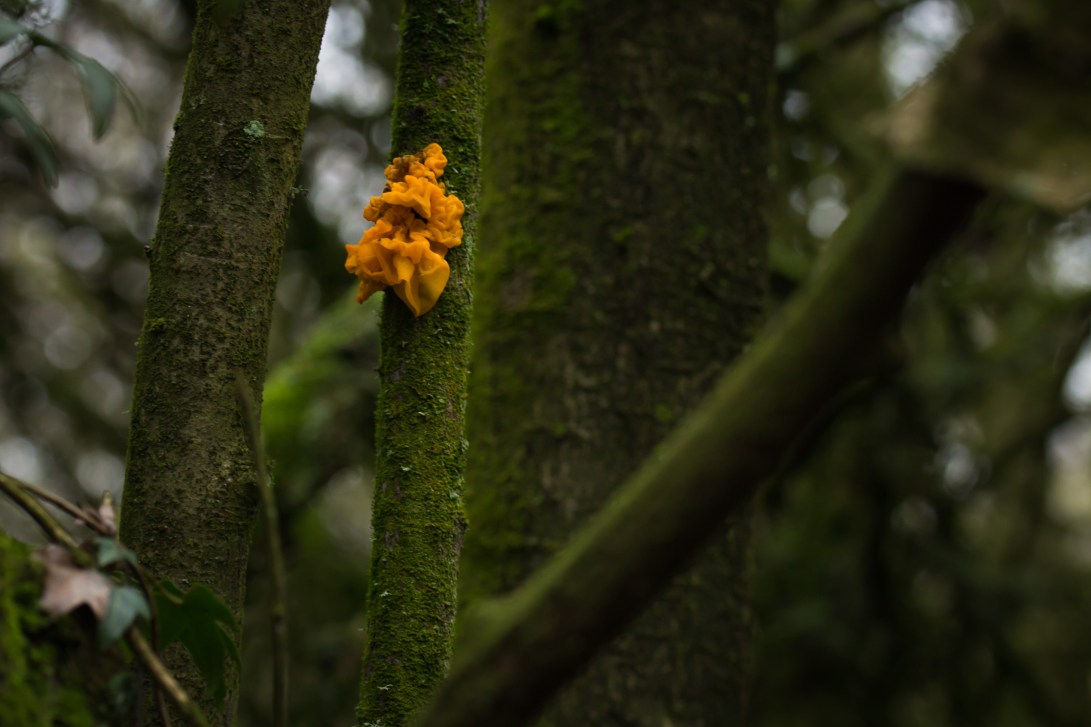
Finally, my eye caught on a bright patch of yellow as we untangled our clothes and hair from the low-hanging branches of the pine trees and, completely forgetting my wildlife voice, I shrieked “witches’ butter!”. In my defence, Tremella mesenterica is a really intriguing fungus and it’s the first I’ve seen up close.

img_9971

In addition to our success with fungi, we also did some pretty good tracking. Putting the tricks we’d learned from Alex to the test, we found some deer tracks in the mud. As we found roe deer (Capreolus capreolus) skulls in Pow Wood on our last visit, we deduced that the same species had left these prints. Our suspicions were confirmed when we saw a flash of white and watched as three female roe deer darted into the forest, white bob tails stark against the brown and green of the trees.

img_9979-2


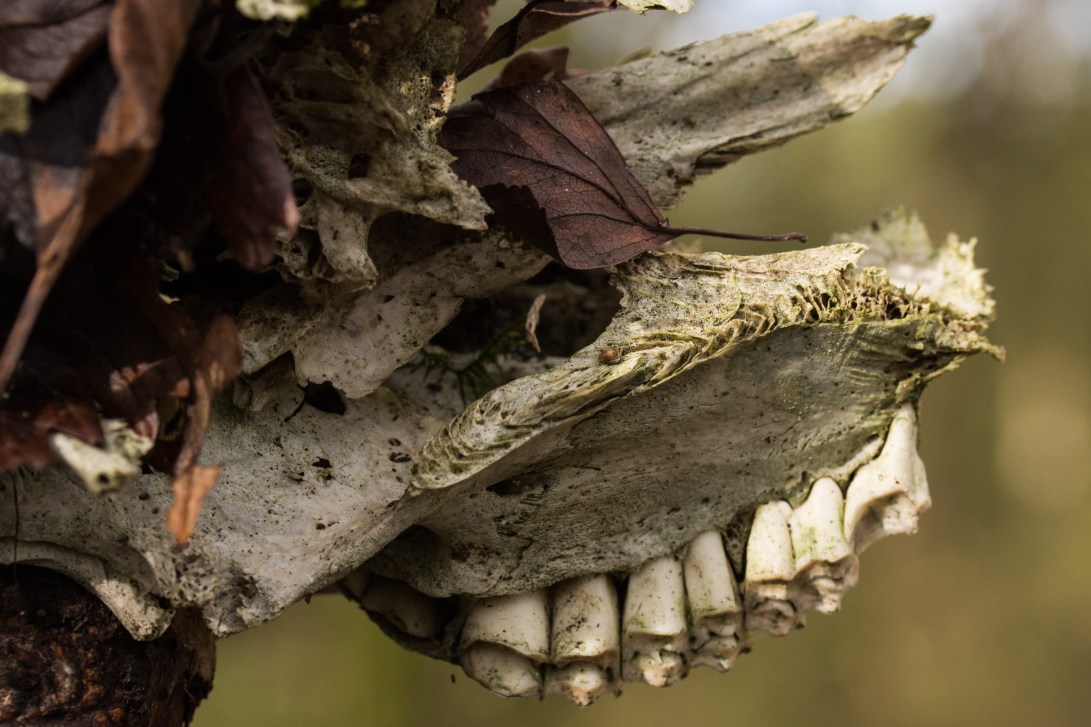
Incidentally, I didn’t realise that I was on a walk with Hawkeye. In just a few hours, Zahrah found two roe deer skulls, what we suspect was a sheep skull, and a headless skeleton with beautifully pristine white vertebrae. I guess I’d been too distracted by the fungi. We scooped up the bones into a plastic bag, ready to douse them in hydrogen peroxide when we got back home.

img_9947

Despite my ineptitude at finding skulls, I did find a collection of pellets at the foot of a tree along with a discarded white egg shell. The combination of these two signs suggested that the tree was home to a nest. After some research, I discovered that barn owls (Tyto alba) are known for their stark white eggs and dark, charcoal grey pellets, so perhaps this was our bird.

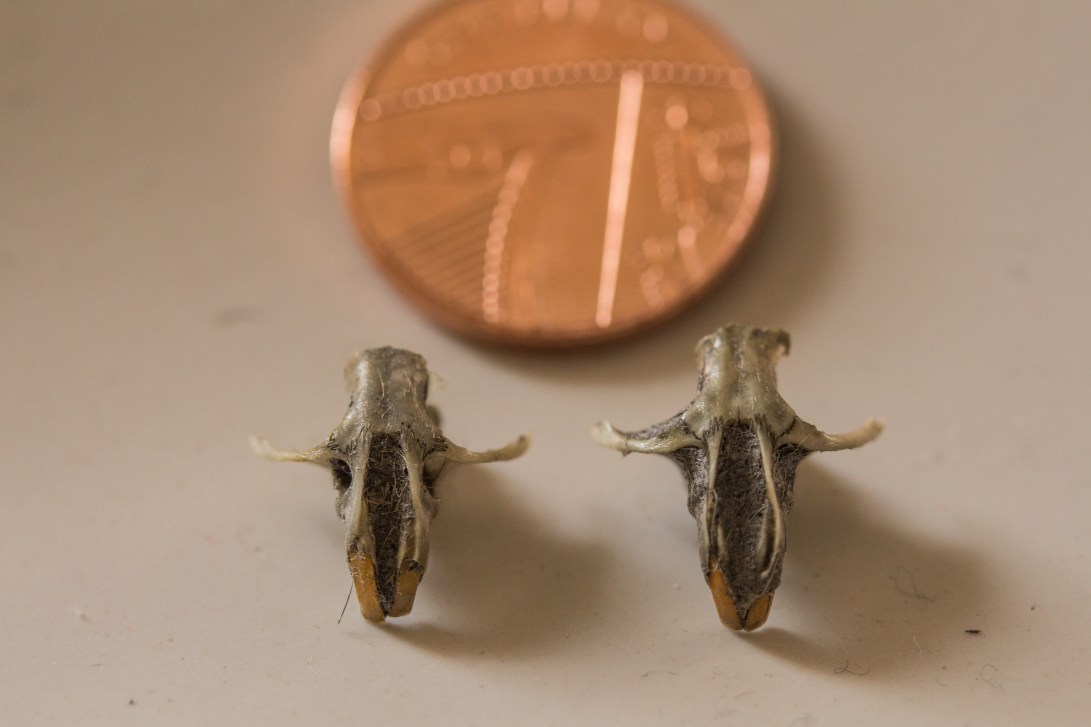
Back at the house, I dissected the pellets and in just three I recovered the remains of six rodent skulls, seven mandibles (lower jaws), several loose rodent incisors and a variety of leg bones. I attempted to identify who the skulls belonged to, but sadly they all looked the same. Still, it was fascinating to see how many kills the owl had made; there were at least two skulls in each pellet. This indicates that the bird was hunting regularly, as a barn owl usually regurgitates 1-2 pellets each night (Barn Owl Trust).

In addition, the egg shell I found had no yolk, suggesting the chick hatched naturally and wasn’t predated. If this were the case, the edges of the shell would have been pushed in and parts of the membrane would still be visible.

img_0005img_0007img_0002

In short, it was a very successful day’s foraging! It’s amazing how much you can see when you know what to look for.

Hiding Under Toadstools

It had been way too long since Zahrah and I last went on an adventure, so on a grey, cloudy Friday morning we headed out to Kingmoor South and North nature reserves for a wander. The aim was to train our senses and become expert animal trackers. We had our hopes on finding owl pellets and maybe even the fabled “Beast of Cumbria” – I share George Monbiot’s rather pessimistic opinion on a black panther stalking sheep in the Lakes but that’s a whole other blog post.

img_9258
Common Puffball (Lycoperdon perlatum)
img_9304
Frothy Porecrust (Oxyporus latemarginatus)
img_9266
Yellow Brain (Tremella mesenterica)

Sadly our adventure was pellet-less, but what we did find was a lot of fungi. I’ve been really interested in macro photography recently, and have subsequently been spending a lot more time crawling on the floor finding tiny things to photograph. I never realised quite how extraordinary fungi could be – so many shapes, sizes and colours. Like every naturalist I’d love to be a wild forager and have a nibble on the safe varieties, but after trying to name the ones I’d found I discovered it was dangerous territory. Take Morel (Morchella esculenta) for example, an egg-shaped cup fungus that apparently tastes wonderful. Then take its almost-twin, False Morel (Gyromitra esculenta), which can be fatal and even after careful preparation is believed to cause cancer. Nature is a cruel mistress indeed!

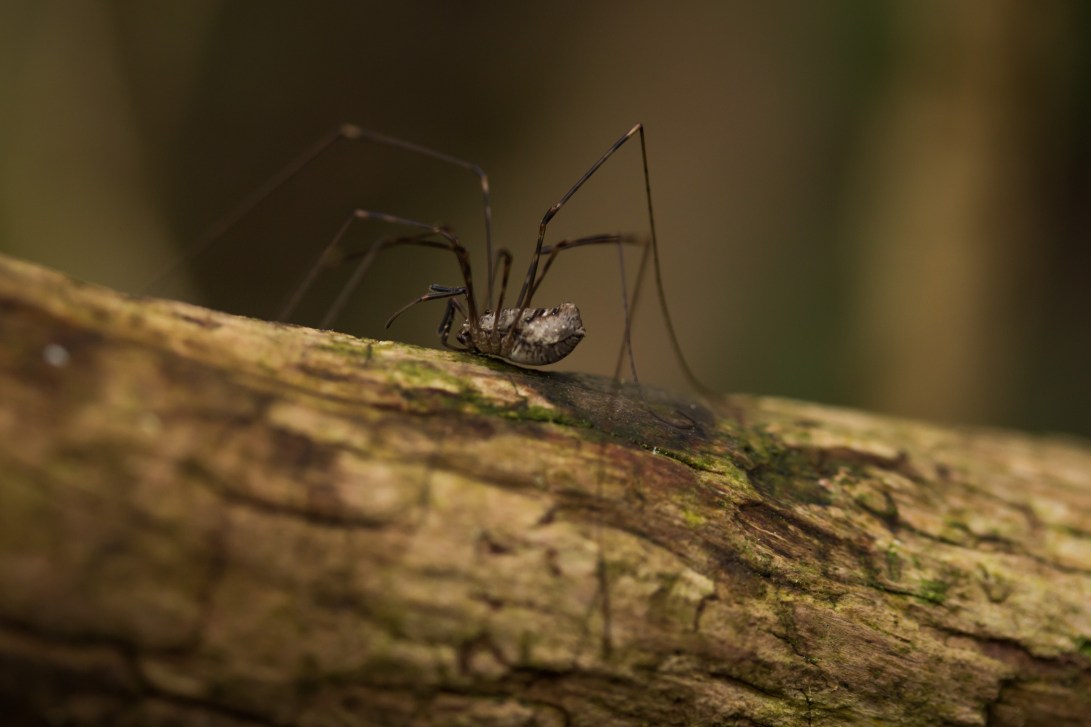
So we decided against finding a snack and stuck to taking photos of the fungi we found. Zahrah graciously held a branch up while I crawled underneath to photograph a group of Jelly Ears. I was mid shot when I heard “aw look at this little spider” over my head and regretted every decision I’d made getting to the Jelly Ears. The little critter was a harvestman (Opilione), and luckily he was only small so I was even brave enough to take a shot of him before he scuttled away.

img_9293
Harvestman (Opilione)
img_9285
Jelly Ear (Auricularia auricula-judae)

We ate our lunch on a bench nestled amongst the vast oak trees, the forest floor covered in a crunchy bed of orange and brown. It was eerily quiet, even for a forest landscape. I can’t wait for the spring when the air will be alive with birdsong again. Winter has its own magic, but it can’t be denied that spring is when nature truly shines.

img_9115
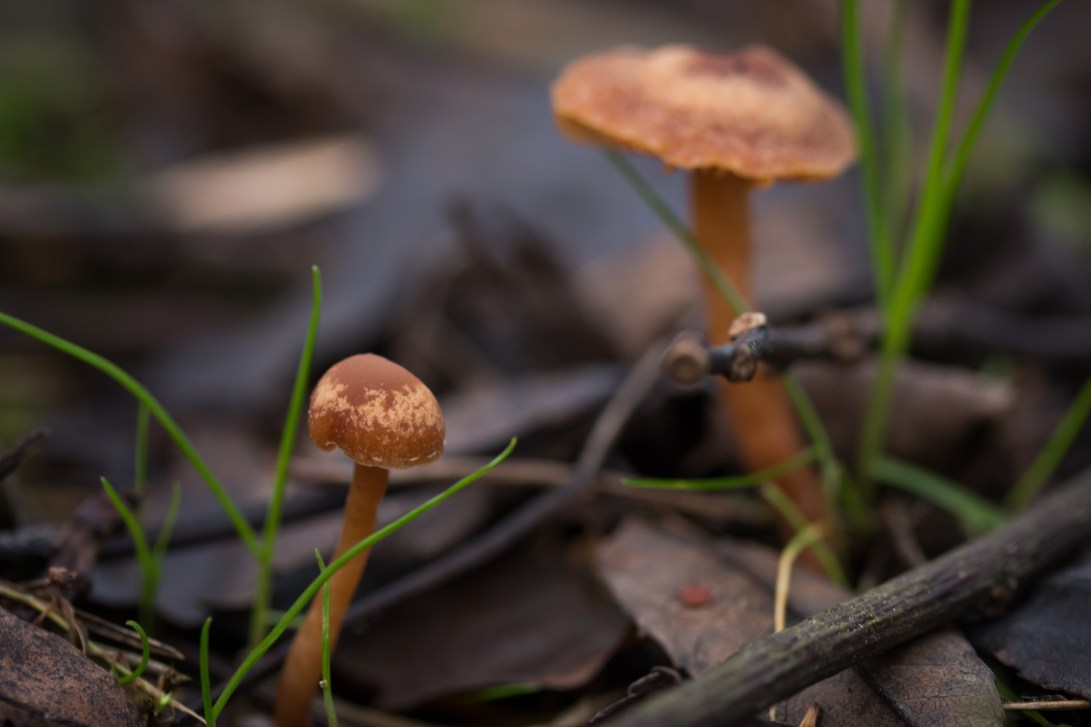
Brown Mottlegill (Panaeolina foenisecii)
img_9100
Candlesnuff Fungus (Xylaria hypoxylon)

Birds at the bottom of the garden

As of today, I’ve been living in my new house a week! It’s not the biggest or the most glamorous, but it’s certainly enough to feel like home. There is also a generously sized garden that oozes potential. Currently, the grass is several feet high and tickles the midriffs of the two apple trees, but I’m determined to make it a spot both we and our neighbouring wildlife can enjoy.

Zahrah and I have already had debates over whether the grass should be cut at all. While she favours the truly wild, I prefer neat and tidy with areas that the wildlife can still feel at home in. My plan is to cut the majority of the lawn but leave a wild patch at the bottom, so all kinds of creatures can still seek sanctuary in its grassy depths.

I’ve noticed several species of garden bird already, namely robins (Erithacus rubecula), blue tits (Cyanistes caeruleus) and great tits (Parus major), but I’m sure we can attract more with a range of bird feeders – millet for dunnocks (Prunella modularis) and finches and sunflower seeds for the tits and hopefully greenfinch (Chloris chloris). As well as this, we could fit some nest boxes to the apple trees to encourage nesting birds to stay.

Now we have such a secure garden, Zahrah suggested setting up a camera trap to see what nocturnal wildlife we play host to. In an urban area, it’s possible we have hedgehogs (Erinaceus europaeus) and maybe red foxes (Vulpes vulpes), something I’d be thrilled to see. After managing to photograph a wood mouse (Apodemus sylvaticus) at Kingmoor Sidings nature reserve not far from here, I’m optimistic we’ll get to see a lot more once we’ve set some tasty bait.

As for the lawn itself, I’d love to create a winding path out of the stray slabs we’ve found lying around. The garden is large enough for a compost heap too, something else that would attract a range of species. I’d love to cultivate a pond, but feel like this may be beyond my skill set! However, it would be lovely to plant some flowers and inject some colour into the otherwise very green garden. Although not the prettiest, stinging nettles are well known for being excellent attractors of the red admiral (Vanessa atalanta), comma (Polygonia c-album) and small tortoiseshell (Aglais urticae). Other good plants for butterflies include garlic mustard (Alliaria petiolata) and marjoram (Origanum vulgare).

All in all, I see some exciting things on the horizon for our little garden! After living in halls for a year and the only green space being the faded carpet of my room, I can’t wait to unleash my inner gardener and make our patch the perfect wildlife haven.