Spring Beginnings

For many wildlife enthusiasts, spring is perhaps the most eagerly anticipated season of the year, especially for birdwatchers. Migrants arrive from their wintering areas and settle back into their breeding grounds. After the cold of winter there is suddenly a buzz of activity, especially for males hoping to attract a female.

While some bird displays leave something to be desired, other individuals put in great effort. As we move into March, birdsong is elevated both in volume and intensity. Greenfinches have a particularly impressive display that involves large bursts of activity. The male, dressed in his finest vivid green plumage, circles in wide loops with emphasised slow wing beats, looking more like a butterfly or a bat than a bird. During these theatrical acrobatics, the males constantly call out to the females with twittering phrases that finish with a long, nasal “dzweee”. If the female is won over, the new pair often perch high in the trees, with the male always in the open to ward off any other potential new suitors.

The arrival of March also brings in the sand martins, one of the UK’s earliest arriving migrants. The smallest of the European hirundines (swallows and martins), sand martins have arrived from Africa, crossing the Sahara desert to reach their nesting colonies and excavate tunnels in sandy vertical banks. Over the past fifty years, populations of sand martins have crashed twice because of drought in their African wintering grounds, which makes protecting their breeding sites in Britain even more important.

Elsewhere in the arrivals gate are chiffchaffs, and from late March to April these plain-looking birds can be heard calling their name in woodland copses and shrubby undergrowth. A tiny warbler no larger than a blue tit, chiffchaffs have spent the winter in the Mediterranean and western Africa. Breeding begins in April to May, when the female builds a domed nest that lies very close to the ground. Incubating eggs and rearing the chicks are solely the female’s responsibility. Chiffchaffs usually leave the UK in September, heading south towards France and occasionally on to West Africa.

Despite the recent snowfall that has smothered the emerging snowdrops and crocuses, keep an eye and ear out for the arrival of spring migrants who will hopefully find some warmth as they prepare to settle in for the breeding season.

Learning to Birdlisten

Today marks the beginning of a new project: learning to birdlisten. It’s a much-used cliché but I have been an avid birdwatcher since I was a child. I’d sit out in the garden, hold as still as I possibly could, and after a while birds would begin to show, hopping out from under bushes and descending slowly from the treetops. This gradual emergence, the steady drip-drop of birds, was so exciting to me. The species would usually be very common – robin, dunnock, blackbird – but occasionally a blue tit or great tit would appear, and to my amateur eye these were very special indeed.

As my knowledge gradually improved, I began to notice more species and although the trusty robin and dunnock never grew boring, they lost their shine among more colourful or charismatic varieties. One by one I added birds to my repertoire, and although I didn’t notice my mental list growing, soon I could identify a wide range of species. Although waterfowl and waders had their charm, my favourites were always the passerines, or “perching birds”.

Passerines include a subgroup of species we call songbirds but are more accurately named oscines – birds that establish their territories by means of musical vocalisations. It never occurred to me why the singing birds attracted me most, until I turned my attention to listening for birds instead of looking for them, and then it became abundantly clear.

Birdsong is the soundtrack of nature. Even for me, a keen bird enthusiast, birdsong had blurred into the background of my time spent outdoors, nothing more than a pleasant backing track that accompanied my attempts to birdwatch. Why on earth did I let birdsong become such an unimportant feature of the landscape, no more significant than hold music? It was high time that I paid more attention to it, instead of letting it wash over my ears without acknowledgment. It is so true that we see but don’t observe, but it is also the case that many of us hear but don’t listen.

IMG_8860

Author of “Birdwatching With Your Eyes Closed” Simon Barnes points out that understanding birdsong allows us to see around corners. There’s a bird hidden up in the canopy somewhere, but unless you know its song you’ll never know what it is. I’ve had this frustration many times, when I see the distorted outline of a bird but no characteristic features that give it away. If I hadn’t neglected my auditory senses, I wouldn’t have been disappointed when the bird hopped further out of view.

And so begins my journey to learn the language of birdsong. It seemed a daunting prospect at first; to my untrained ear all chirrups and whistles sounded identical. However, like any problem, it is imperative to break it down, and that makes it far less intimidating.

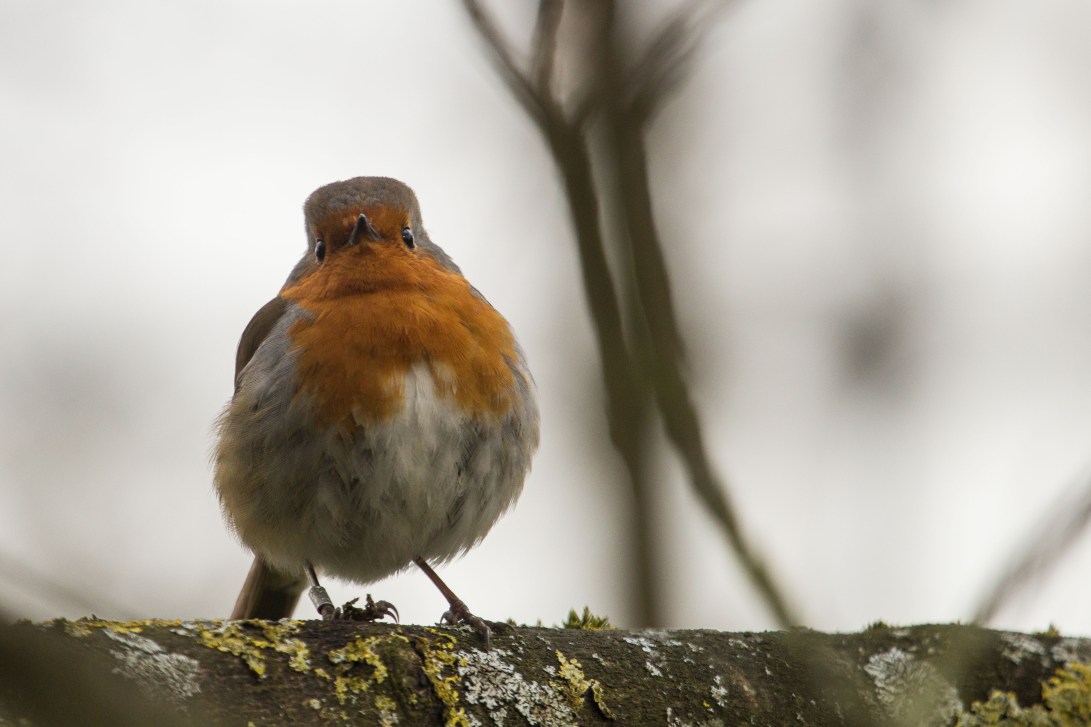
I have already made progress. First was the robin: an unmistakable bird in appearance, and a good place to start when learning birdsong because of its presence all year round. During the usually hushed winter months, the robin still sings, an isolated soloist filling cold air with thin, gentle melodies. Spring is by far the most frustrating time to begin birdlistening, so to hear the robin on a chilly February morning with no other avian distractions allows us to begin to tune into this new world I for one took for granted.

IMG_8893

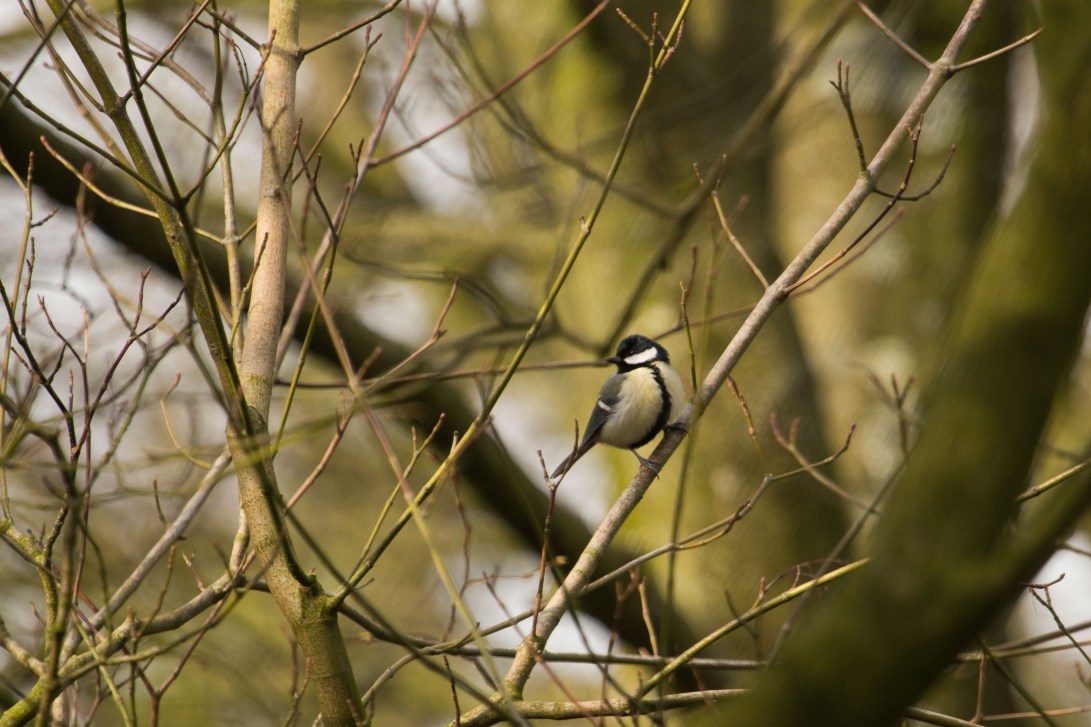
The wren also sings in winter, but has a far louder song bordering on rowdy. For such a small bird, the song bursts out of hedgerows, with a telltale trill at the end of some phrases, like a twirl of icing atop a cake. Then there is the two-note song of the great tit, like the squeak of a saw being pulled back and forth.

And so on. Already my ears are filling with birdsong and I’m really listening this time. Acquiring the skill of understanding this rich and varied language will not only help me become a better birdwatcher, but it will pave the way to a clearer understanding of nature as a whole – appreciating nature’s vibrant soundtrack.

IMG_8853


The Freeze

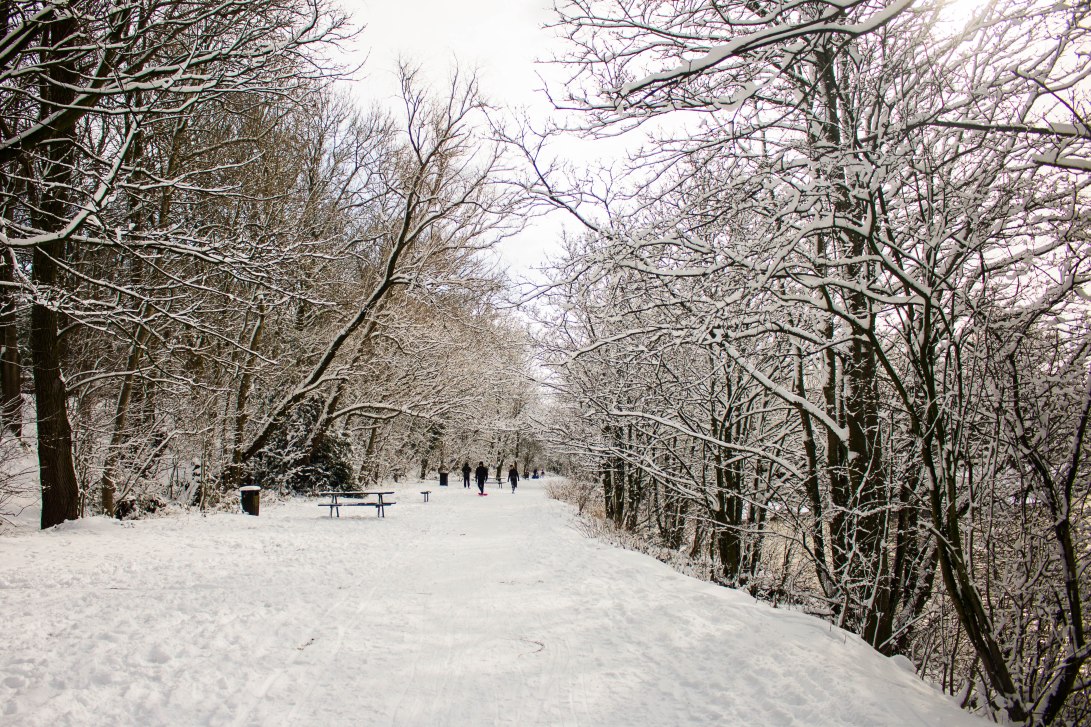
The snow was here again. It descended from the skies in heavy drifts, flakes swirling as they came to rest. All through the night the snow fell, dramatically silent, and when morning came everything was smothered in pristine white icing: irresistible.

IMG_9050

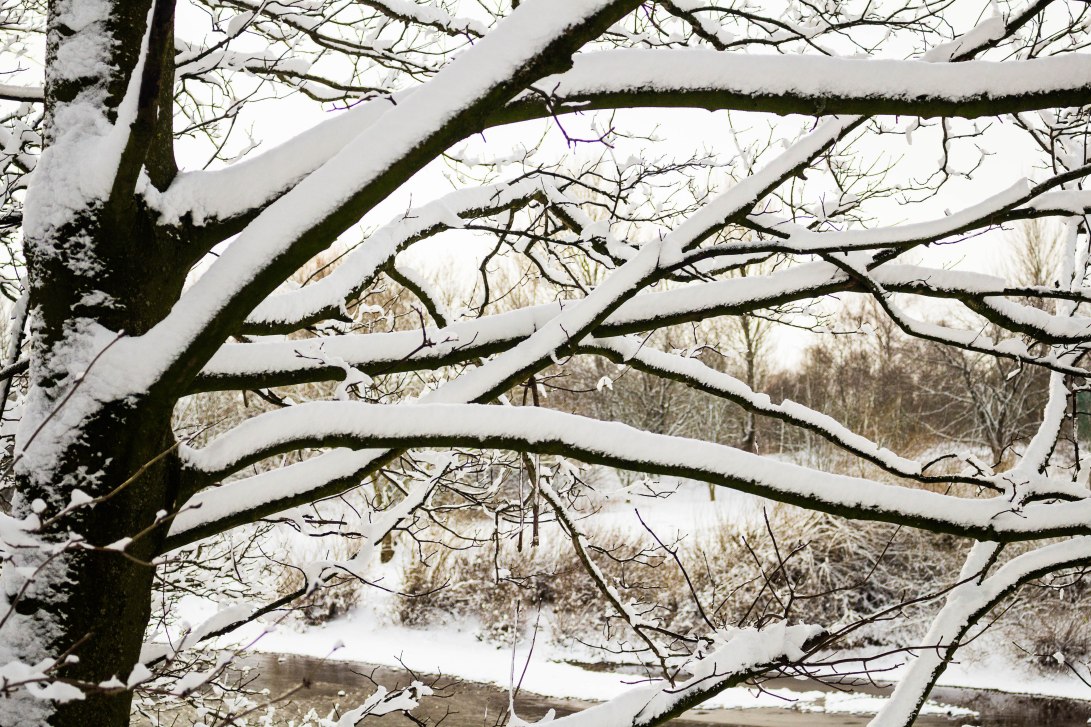
Outside there was a chill that tightened the lungs, so cold was the air that even breathing in felt like getting smothered in snow. Each branch was cloaked, giving the impression of an overly enthusiastic artist splashing every bough with thick white highlights. Undisturbed snow on the sides of the track glistened, catching the light and sparkling with wintery luminescence. On the cusp of March, it was more of a spring wonderland than a winter one, and yet it could have easily been Christmas morning.

IMG_9046

Up in the trees, a whisper of falling snow betrayed the presence of a blackbird, sending tremors up the branch that dislodged loose flakes. A male, black feathers stark against his festive background, spotted with rich red berries and the undersides of dark leaves. He chirruped softly, his song more melancholy than it should be.

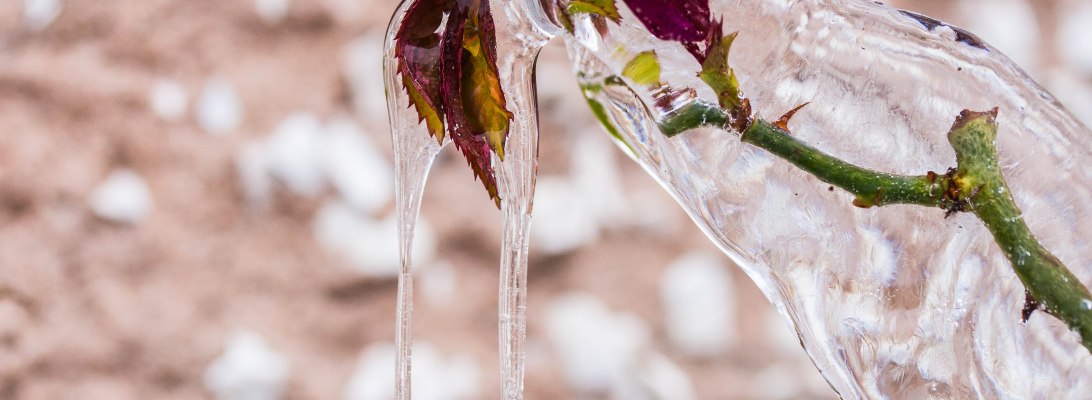
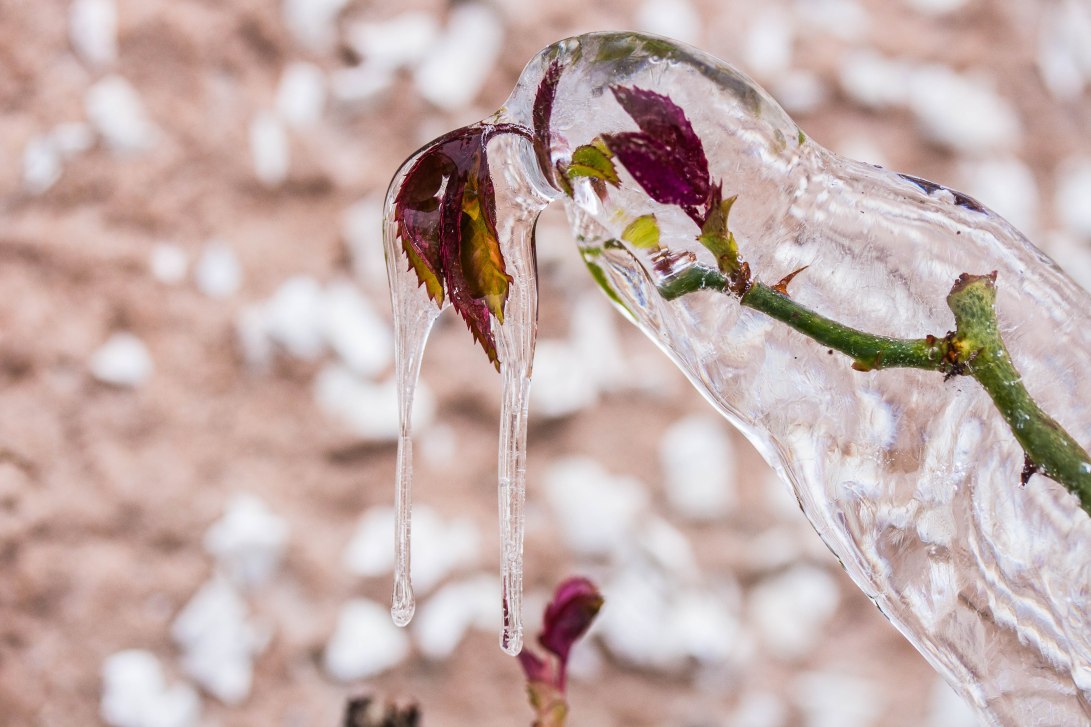
A man passed me on his bicycle, his tyres crackling like static feedback that faded as he disappeared. The landscape quietened again, a deafening silence only found with snow, when the world stops and waits with baited breath for this unexpected phenomenon to pass. It is a time when even nature stands still. Water is stopped in its tracks, defiant of gravity’s pull.

IMG_9063-2

Sloping down the bank to the river was a series of deep tracks, dogs mingled with hopping birds. The ever-falling snow began to repair the damage, forming undulations of half-hidden footsteps with softened edges. A wren sped past, trilling its bold song that seemed too big for its tiny lungs. What must the birds think? Have they anticipated this, read some sign in the climate to help soften the blow? The already challenging task of finding food in winter just became more trying, a test of strength and endurance in such temperatures.

IMG_9012

After a while my feet began to grow numb and my stomach rumbled. As I trudged back up the track, curving away from the coursing, white-framed river, I thought how I would snuggle up in my warm house with something to eat. I glanced back over my shoulder and saw a song thrush foraging. It had a snail pinned in its beak, and was cracking the shell hard on a rock. Such work the birds put in, when all I needed to do was open a can of soup and I’d be warm.

Back at the house, I peered outside and saw the feeder swinging empty again. Thinking of the blackbird, wren and diligent thrush, I hurried into the garden and replenished the feeder with rich fatty seeds, sprinkling some on the ground for those too heavy or timid to feed from the plastic perches. The birds needed all the help they could get.

To Spy a Hawfinch

After our great grey shrike stood us up last week, I was determined to tick a bird off my wishlist. I did some digging and found there were a few good spots for hawfinches down in Kendal. Zahrah and I picked the best day of the week and headed down, this time with Kacper. As usual, when the alarm sounded I was struck by an overwhelming urge to leave the hawfinches to their business and dive back under the covers, but when I snuck a glimpse out the window and saw the bright promise of a beautiful day, I knew we had to go for it.

Despite the rather vibrant sun, a sharp chill met us as we left the warmth of the car, reminding us it was still February. Clutching my fists together in my Sealskinz gloves, we made our way up the track, away from people and towards wilderness. The path wound through a small wood, dappled by sunlight filtering through overhead. What had been squelchy mud was now frozen hard as concrete, and crunched under our footsteps. We were initially prevented from entering the open field due to a very restrictive swing gate. My bulging rucksack got wedged and I had to hold my tripod flush to my chest and reverse through – far from a sophisticated entrance.

The frozen ground stretched further, blades of grass as solid as real blades, and it was strange not to feel the gentle give of soft earth. The sun was trying to warm the landscape, taking every opportunity the clouds allowed it to reach us. Once back in the woods, it was shadier. Muffled conversations sounded in every direction; the proud song of a robin and the chatterings of crows all mingling together. We tried to ignore all of these and listen solely for a piercing whistle. This was the call of our target: the hawfinch.

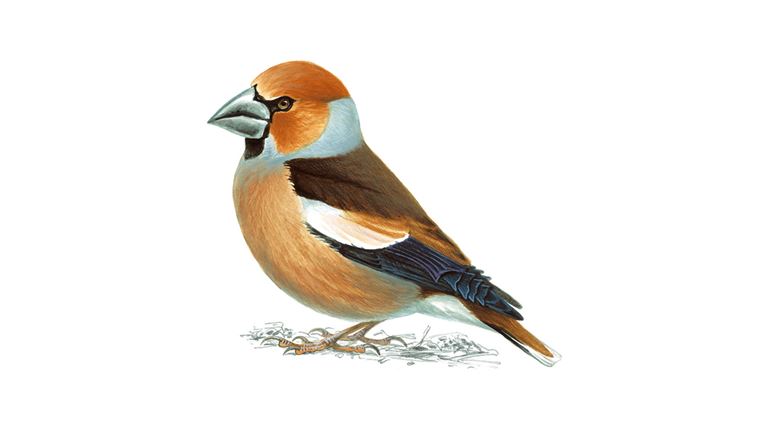
Hawfinches are beautiful and unmistakable birds with striking colouring and formidable conical bills. Usually secretive and shy, they spend most of their time in the topmost branches, making the UK’s largest finch difficult to spot. Typically found in mature deciduous and mixed woodland, hawfinches regularly frequent hornbeam trees. The bill of a hawfinch is highly specialised to cope with the hard seeds and cherry stones that form much of its diet. Once a bird reaches maturity, its skull ossifies and two hard knobs form within each mandible, which are essential for holding a seed still while it is cracked. Findings from an experiment showed that hawfinches can exert a pressure of 60-90 pounds of force, which isn’t bad for a bird smaller than a blackbird.

hawfinch_male_breedingplumage_1200x675
Hawfinch (RSPB)

As hawfinches frequent the tops of trees, spotting them can be a challenge, not to mention their timid calls are often lost among those of the more plucky birds. Although I never want to criticise the sun, it was shining at a rather inconvenient angle, so gazing up meant we could barely see the treetops, let alone brown birds. So, we tried to climb as high as possible to get a better vantage point. Soon we found a large clearing that gave us a 360° perspective of the forest. Seeming like a good place to set up shop for a while, we perched on a fallen tree and scanned with our binoculars.

There’s nothing quite like sitting in silence, listening to wildlife. Upon arrival you think the forest is a quiet and secluded place, and it would be to a person used to the thrum of cities and traffic. But to sit still and listen in a wild place is to hear a whole new language. I don’t understand it yet – something I’m hoping to soon rectify – but I could listen to its lyrical beats and rhythms all day. Understanding birdsong brings a whole new dimension to bird watching. Cain Scrimgeour, someone I consider a bird connoisseur, can hear the slightest chirrup up in the trees and tell you who made the sound. Sure enough, moments later that bird emerges. To me it’s magic. I consider my knowledge of British birds to be competent, but to know their sounds as well as their appearances is a truly incredible skill.

I heard a soft crunching of leaves as Kacper made his way towards me.

“What’s this?” He whispered, holding his camera up for me to look at the image on the screen.

My eyes popped and I bit back a loud gasp, “That’s a hawfinch! Where is it?”

He led me back to where he’d been standing and pointed up. Now began the near-impossible task of explaining to a person which tree in a hundred trees you are looking at. After a painfully long-winded ordeal I found where he was pointing, and with binoculars trained I saw my first hawfinch. Females are only slightly less brightly coloured than males, so to my eye I couldn’t tell which this one was. The bird was perched looking straight towards us, feathers hunched up. It was foraging, and I saw it pick a seed from its branch and arrange it in its bill to crunch down with that extraordinary force. The bill almost seemed too big for the bird’s body. It was like a person with a party hat positioned over their nose and mouth, almost comical.

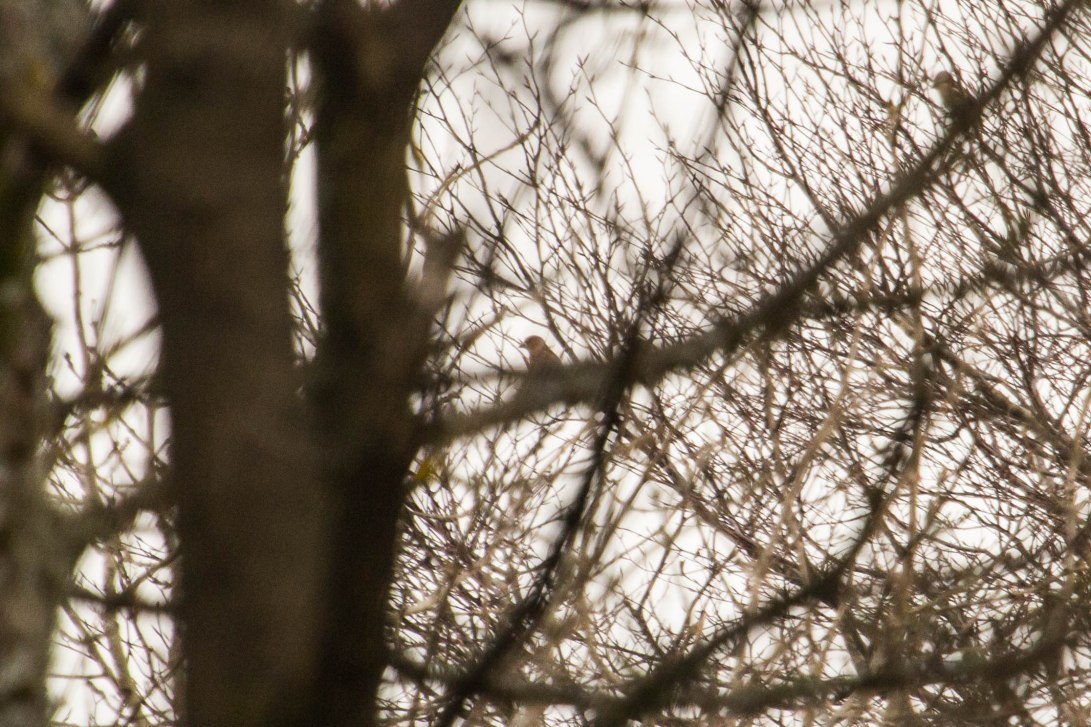
Zahrah was a way off, so I was incredibly patronising (though I believed it was necessary in this occasion) and made several hasty finger clicks to get her attention. Once she’d arrived Kacper explained the bird’s location again and we all watched. I made the mistake of retrieving my camera from its resting place by the log, and when I returned the bird had retreated to a tree further off. It was joined by three more, and although I tried they were too far off to photograph. This, to my shame, was the result.

IMG_8794
Not exactly Bird Photographer of the Year

There was another rustling of leaves and we turned to see an elderly man making his way down the bank.

“Seen any?” He asked, knowing exactly why we were gathered there.

“A few!” I replied excitedly, and once again Kacper directed the man’s view to the right tree.

“There were 43 here yesterday, so I’m told,” the man said, “The reserve ranger and volunteers saw them, couldn’t believe their eyes.”

Forty-three hawfinches. For a moment I cursed myself for not thinking to come a day earlier, but as I watched a pair perched way up in the topmost branches I was grateful we’d seen any at all, even if the photos were incredibly dodgy.

After a while the finches flew off. I glanced up in our immediate surroundings, wondering if the elusive birds had gathered directly over our heads – it’s something I would do to birdwatchers if I were a pretty finch – but the branches were bare.

“There’s another good spot back the way you came,” the man told us, “In the clearing. I’m walking back home that way I’ll show you.”

So we headed up the track, which by now had begun to thaw, the mud regaining its sticking power. Back in the open field, we were reminded again of the chilly February breeze, and willed the sun to make a reappearance.

We thanked the man as he went on his way, then we settled down to eat our lunch overlooking the open fields. Every time one of us spotted a dark patch in the treetops, we hastily studied it through the bins. But the hawfinches had headed off, submerged once again in their woodland domain.

On the Hunt

After watching Chris and Michaela hunt for great grey shrikes on Winterwatch, I realised what stunning birds they were and that I’d quite like to find one for myself. I asked Cain if he knew of any recent sightings and of course, he did. There was one of these beautiful shrikes in a patch of rural Newcastle that had remained in the area all winter. So, early on Friday morning, Zahrah and I set off to try and track the bird down.

As we made our way east towards Newcastle, the combination of pouring rain and sleet filled me with dread. As usual, the weather forecast had gone awry, and I hoped the grisly sleet would clear up by the time we arrived. Luckily it did, and once parked and heading down the track with eyes peeled, we stayed dry. We were looking for a patch of stark white at the tops of the bare trees. Every so often we would stop and peer across the field, binoculars meticulously scanning each tree. Unfortunately, great grey shrikes are not vocal birds, so there was no telltale call we could listen out for. This would be a case of sharp eyes.

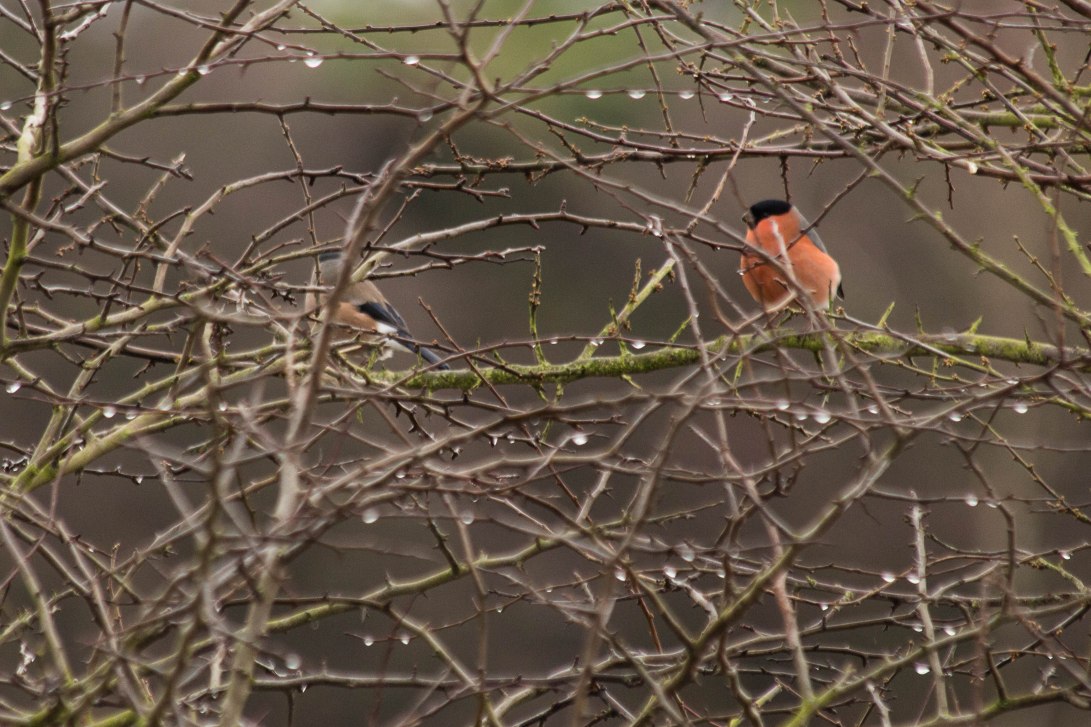
We came across a group of bullfinches – a handsome male and two females – as they foraged in the bushes. I have a soft spot for these vibrantly coloured birds, so stopped to take photos, trying to manoeuvre myself to sneak a clear glimpse of the male through a break in the tangle of twigs. This was only partially successful.

IMG_8729
Bullfinch pair

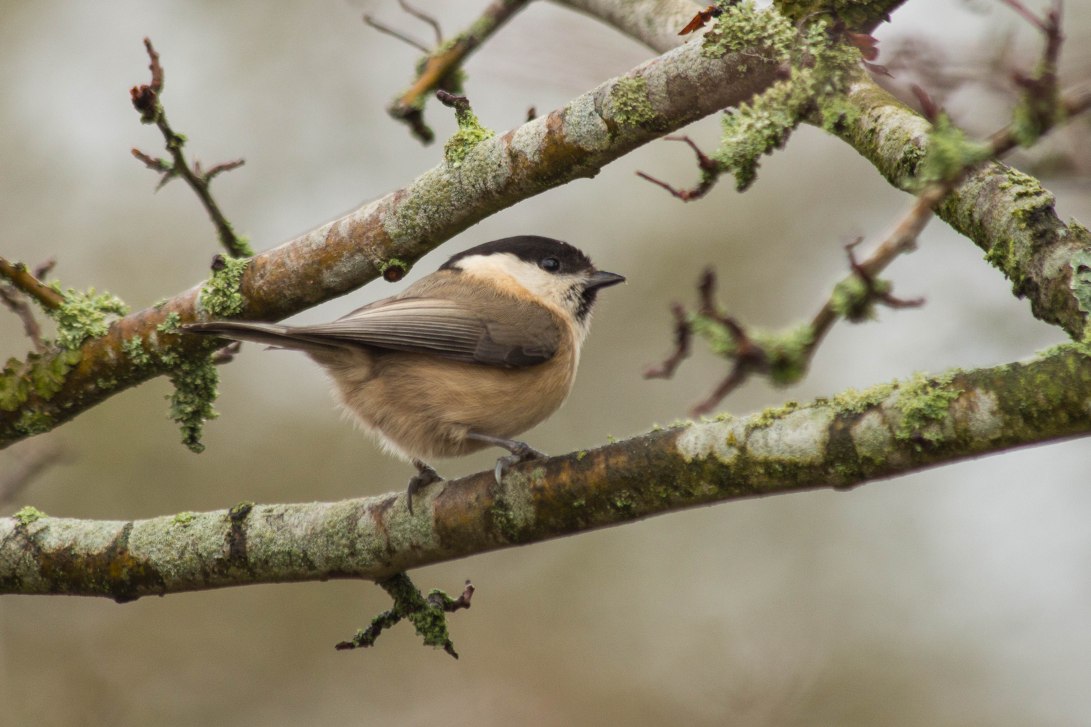
As we trudged up the track, the only sound to be heard was the mud as it sucked on our boots. I found it a challenge to survey the trees for signs of movement while keeping an eye on where my feet were landing. After no sign of the shrike, we decided to try the other stretch of track that hugged the same field. At the crossroads we encountered a vast flooded patch of grass. At first glance it seemed empty, but a look through the binoculars revealed a large gathering of lapwing and golden plover huddled together. Further up the track, a hubbub of activity surrounded the bird feeders hanging from a tree. Great tits, blue tits, robins, a ground-foraging blackbird and a special sighting: a willow tit. I’d never seen one so close – a bird that I find indistinguishable from the marsh tit. According to the BTO, the most reliable way of telling these two species apart is by listening to them, as the birds’ most common calls are quite distinctive from each other. While marsh tits make a sneeze-like “pitchu” call, willow tits have a nasal “chay chay” sound.

IMG_8743
Willow tit
IMG_8753
Great tit

We had come to the joint decision that our shrike would sadly not be making an appearance today. The needle was well hidden in the haystack, and we made our way back to the car. A little way further out was another reserve that we decided to visit. By this time, unexpected sunlight was filtering through the dissolving clouds, and gleamed on the pond, illuminating a flock of wigeon. They chatted to each other but were otherwise motionless. High up in the trees was a buzz of excitement, and yet more beautiful bullfinches! These ones were silhouetted against the sky, so their smart plumage was diluted in the sun. Accompanying them were great tits, siskin and a few goldfinches. A magpie was perched in the topmost branches, feathers ruffling as the wind caught him.

IMG_8760
Magpie

Before long it was golden hour, where the sun began to vanish behind the pond. The trees took on a shimmering glow, every hue heightened. A group of blue tits fluttered around, barely perching for a moment before swooping in another direction. I thought I saw the fluffy brush of a red squirrel’s tail disappearing between two boughs, but after waiting stock-still for it to emerge, I thought perhaps it was just a trick of the golden light.

IMG_8781
Golden hour

Species seen

Blackbird (Turdus merula) Black-headed gull (Larus ridibundus) Blue tit (Cyanistes caeruleus) Bullfinch (Pyrrhula pyrrhula) Buzzard (Buteo buteo) Carrion crow (Corvus corone) Cormorant (Phalacrocorax carbo) Goldcrest (Regulus regulus) Golden plover (Pluvialis apricaria) Goldfinch (Carduelis carduelis) Great tit (Parus major) Grey heron (Ardea cinerea) Lapwing (Vanellus vanellus) Magpie (Pica pica) Mallard (Anas platyrhynchos) Pheasant (Phasianus colchicus) Pied wagtail (Motacilla alba) Reed bunting (Emberiza schoeniclus) Robin (Erithacus rubecula) Siskin (Carduelis spinus) Song thrush (Turdus philomelos) Starling (Sturnus vulgaris) Treecreeper (Certhia familiaris) Wigeon (Anas penelope) Willow tit (Parus montanus) Woodpigeon (Columba palumbus) Wren (Troglodytes troglodytes)

Signs of Spring

Here is a piece I wrote for ‘A Focus on Nature’, the UK’s Youth Nature Network, where I’ve already met some really interesting writers, photographers and artists. I’m also very proud to say I’ve just been shortlisted for the AFON Pictures of the Week 2017. If you’d like to vote for my photography, follow the instructions on this link. Thank you!


“It is a moment of quickening, of rebirth. The old, lovely story: life surging back, despite everything, once again. However spring finds you – birdsong, blossom or spawn – it is a signal: the earth turning its ancient face back to the sun.” Melissa Harrison

One afternoon as I arrived home from a university lecture I stood at the living room window and peered out into the garden as I always do. As usual, the birdseed I had put out the evening before had already gone, polished off by jackdaw and sparrow alike. Today, however, there was a crucial and very welcome difference – the appearance of the first snowdrops of the year. They were very young, still curled up tight in stiff buds, but I knew before long they would be hesitantly opening, their petals tiny white flags signalling the slow beginning of spring.

1 Snowdrop Rebecca Gibson

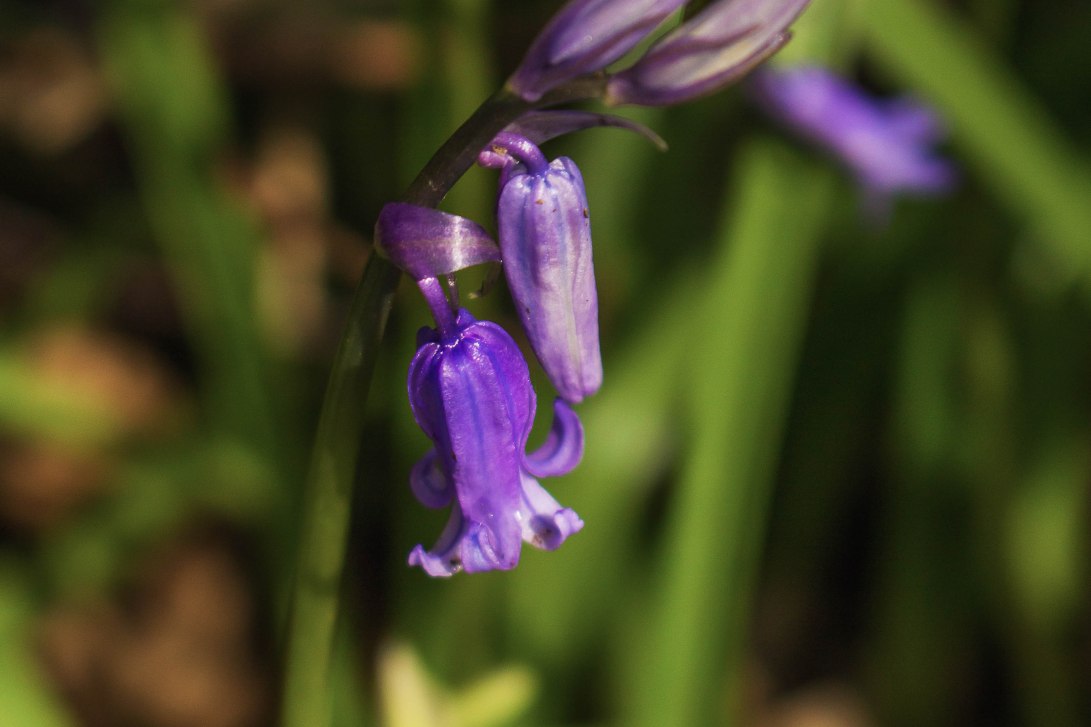
As January draws to a close, the temperature lifts and although the winter rains usually persist, our gardens are brightened by the tentative emergence of wildflowers. Bold snowdrops have led the way, but soon to follow are yellow and early (purple) crocuses, bringing a splash of colour to the repetitive greens of the lawn. Amongst all this emerging beauty is perhaps the true star of spring: the bluebell. A delicate flower more violet than blue; even one alone is a welcome sight after the biting winds and downpours of winter, but a carpet of bluebells is enough to take your breath away.

Two years ago, back home in Hertfordshire, I was stood in a patch of woodland that had long been heralded as a haven for bluebells. I surveyed the scene from a respectable distance, knowing I’d cause significant damage if I strayed from the worn path. The ocean was vast, spanning far in each direction. Together, the bluebells looked like a single blue blanket coating the tree roots, but up close each bell waved independently, and my romantic imagination gave them the quiet tinkling chime of their namesake.

2 Bluebell Rebecca Gibson

Aside from wildflowers, there are plenty more indications that spring is almost here, from birds to bees to rather odorous plants.

  • The gathering warmth of February rouses overwintering insects, such as the greenbottle fly, whose unappreciated beauty is something quite wonderful to see up close, even if they’re not always welcome buzzing around indoors.
  • Early breeding birds such as rooks will be seen gathering nesting material in preparation for the arrival of their broods. The first eggs will appear around early March, so be sure to look out for rookeries high up in the trees and listen for the constant chatter of busy parents-to-be.
  • One of my favourite spring sounds is the buzz of a busy bumblebee. As wildflowers expose their nectar, bees are quick to make use of the opportunity to gather it in the early part of the season.
  • The heady scent of wild garlic will soon be filling the air. A walk through my local park often includes a good whiff of this pungent but flavoursome plant. Note: wild garlic is similar in appearance to lily of the valley, which is poisonous, so if in doubt please do not forage to eat.

Spring is undoubtedly a time of rejuvenation – an opportunity to shake off the January blues and be inspired by the emerging life outside. As many of us live in towns and cities, it can be difficult to notice these subtle changes in such busy urban environments. This only emphasises how important it is to stop and look, just for a moment, and you’ll notice that however our world changes, nature will always persevere.

3 Wood Anemone Rebecca Gibson

Life in the Forest

For my latest university project, I explored the concept of forests and what people have to say about them. By creating a survey, I gathered a range of intimate stories that reveal just how important the forest habitat is to us all, for many different reasons.


Peaceful. Majestic. Timeless. Forests are a vast and highly diverse habitat with a different meaning for everyone, and provide the perfect opportunity to get time and space away from regular life. To find out just how significant forests can be, a recent survey was conducted, uncovering some varied and intimate stories.

“Forests remind me of home. While standing in any other habitat you surround yourself with nature, but the forest is the only one that swallows you.”

Despite our love for woodland, Britain and Ireland are some of the least wooded countries in Europe, even with the presence of approximately 13,000 ancient trees. Some of these have been standing for over a millennium. This, when compared to the human lifespan, seems an eternity.

“Woodland is a much-loved feature of the landscape,” writes Sophie Lake, author of ‘A Guide to the Wildlife Habitats of Britain and Ireland’, “Stepping inside an ancient wood can be a welcome escape from the monotony of the abrasive, urban environment.” For lots of us, forests are holders of secrets and memories, paving the way for personal reflection and relaxation that cannot always be achieved in the bustle and noise of our everyday existence. Forests enable us to lose ourselves, literally and figuratively.

We admire forests for their natural beauty. Most noticeable of all the seasons is undoubtedly autumn, when frost, crunching leaves and a flurry of excitement in preparation for winter really brings them alive. The forest is not just important for the survival of hundreds of forest-dwelling species but also for ourselves. We are nemophilists – that is, we have a deep fondness for forests and woodland – and have childhood stories to tell of long days spent climbing trees, collecting conkers or watching birds.
7W1A8426-2

“I went on aimless walks as a child – my mum and I used to collect pretty sticks and stones. I’ve always been surrounded by forests and even if I wasn’t in them physically, their presence was always there.”

Forests are a place of play, where children dream up kingdoms and magical lands. There is an undeniable magic to forests that we first discover during childhood, but this stays long into adulthood whether or not we care to admit it. We ask ourselves what exactly it is about a forest that makes us shed our deep-set cynicism and embrace childlike wonder again. Perhaps it is the seclusion that the trees provide that prompts a split from the real world and allows our minds to wander, creating a barricade that shields us from reality. There is also the enchanting way that many wild, forested places muffle our connection to technology, rendering our phones useless. We are cut off from the outside world so we must embrace wilderness, and that is when we realise what we’ve been missing.

“I was convinced I was Mowgli and went running off – ducking to make sure I wasn’t seen by any creatures that might be lurking in the woods. I wanted to stay there forever.”

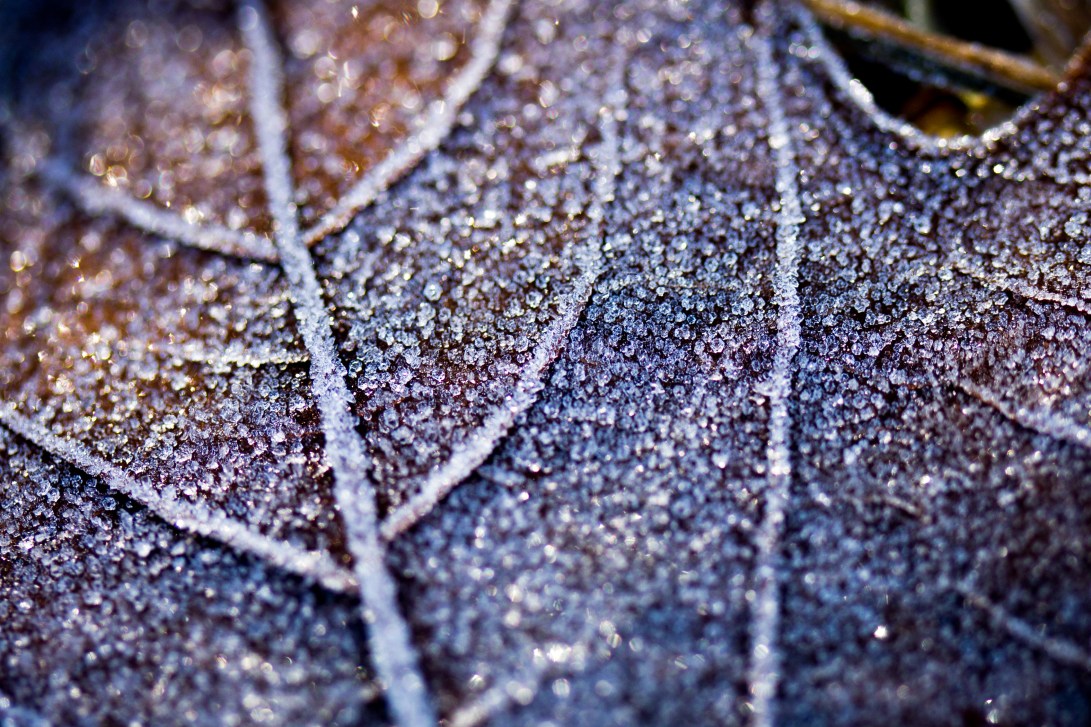
As children we see and savour so much more, with no limits to our imagination. The rumble in the bushes is a prowling tiger, so we pick up a stick and have a sword. By spending time in the forest as adults, we see nature with fresh eyes. Senses that have been dulled by noise and brightness are now reinvigorated to appreciate new marvels – the sound of birdsong, the smell of conifers, the sight of leaves coated in frozen, silver crystals. It is not until we return to a forest that we remember what a surreal place it is, full to bursting with secrets.

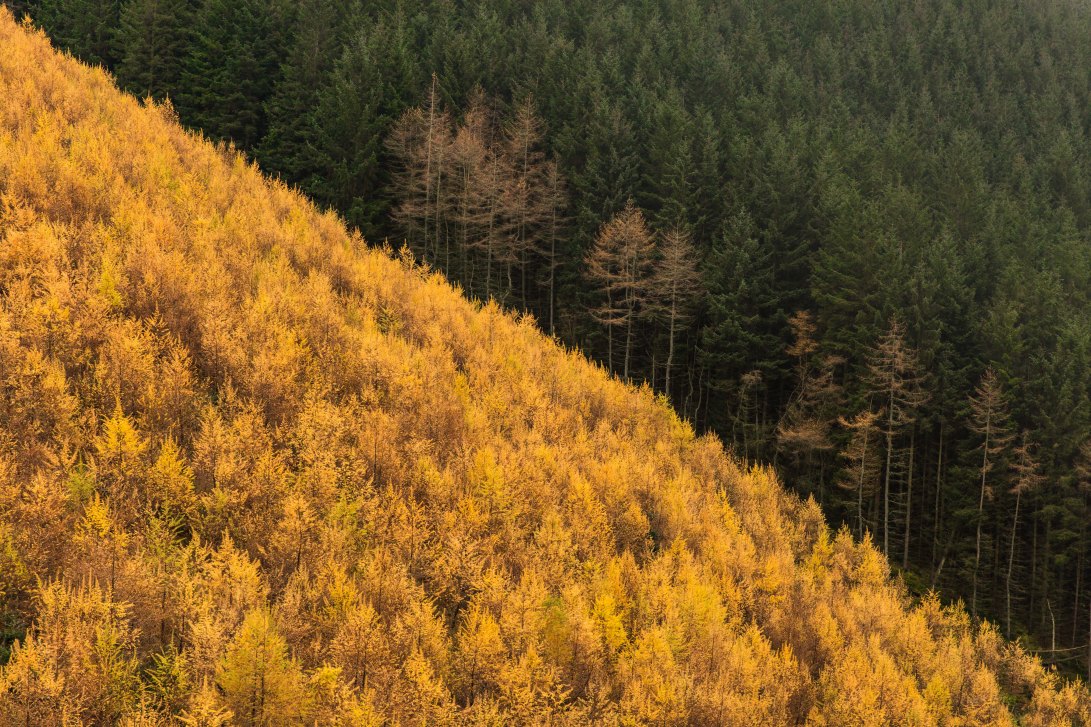
After a recent trip to Kidland Forest in the Northumberland National Park, with over five thousand acres to explore, all these feelings came flooding back to me. The forest was silent; listening while others threw sounds into the air. An abandoned tyre swing creaked, a tawny owl called, but the trees stayed hushed. Each one has survived bleak winters, dry summers and overseen a thousand births and deaths. Seeing such colossal larch trees stretching into the sky put into perspective how powerful and significant the forest landscape is.

“A favourite memory of mine is an enormous old oak that I used to play on. Its limbs went on forever – the sheer size was incredible and it’s amazing to think of the memories it might have held.”

Our love for forests must surely be from the respect we hold for these vast, natural structures that have been standing for centuries while generations have come and gone. These unmoving, unspeaking elephants with trunks of bark and thick, deep-set roots have a majesty that is easy to overlook. They begin life as a seed we can hide in our hands, but will eventually, and inevitably, dwarf adults and children alike.

“Spring is fresh and green, summer is full of birdsong, autumn brings the golden colours and in winter it is a stark place, with all the tree branches exposed scratching lines across the sky.”

Forests in November are patchwork blankets of green, orange and brown, where the trees shine like fiery beacons. It is autumn at its finest: an explosion of colour with just the right amount of chill in the air. Arranged in rows like ornately dressed soldiers, trees stand in silence, the sort of hush that comes just before something long-anticipated. The sun shines in slanted shards, illuminating certain branches and leaving others in chilled shadows. The forest is a drug – beautifully addictive. Its costumes are always changing throughout the year. This season: orange is well and truly in.

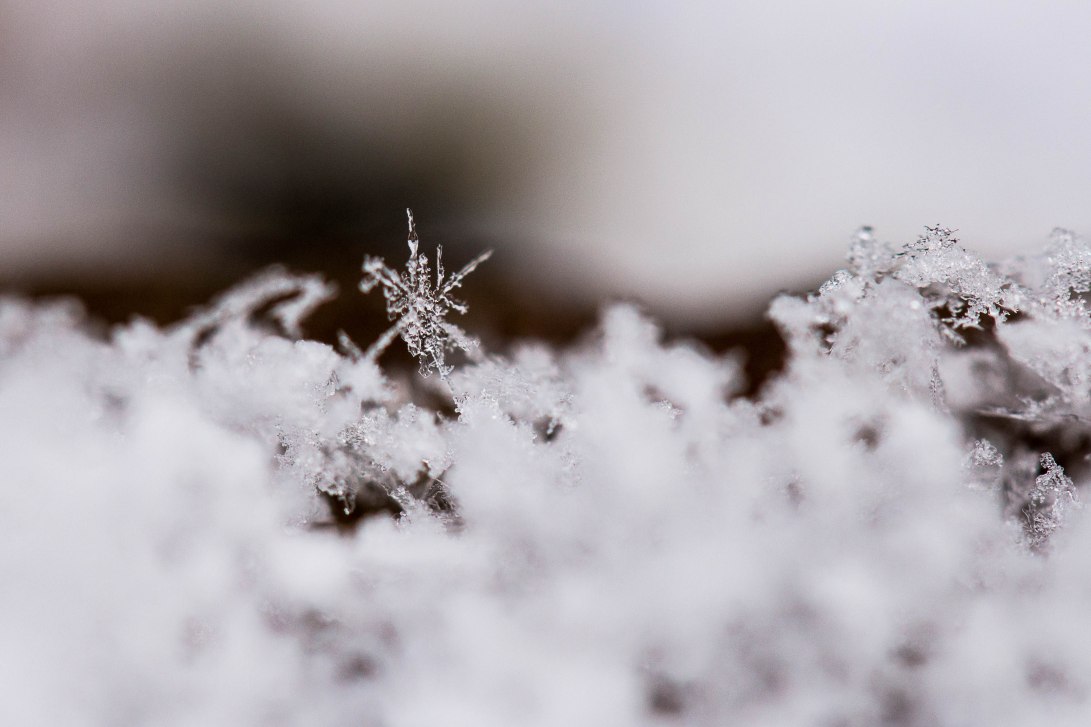
The forest is particularly wonderful because it never dies. Whatever the season, there is something happening. Come September, the temperatures drop and the rain persists, but new life is always arriving. Leaves fall and curl up into dry husks, but from amongst them sprout fungi, mushrooms of every colour that decorate and cloak the tree roots like nature’s Persian rug. Soon the nights will be cold enough to freeze, and come morning when the weak sunlight breaks through, millions of miniscule ice sculptures cling to every surface, each one unique. The forest is a menagerie of sights, smells and sounds; even with the wind and rain, the last few months of the year bring breathtaking beauty.

“Every Christmas morning my mum and I have breakfast in the forest. The whole place is frozen and beautiful. I remember how big it was and that I’d never see all of it. That just made what I did see more special.”

Christmas is undoubtedly a time of magic, and forests can be the perfect place for festive celebrations. Businesses are using this to their advantage and hosting holidays in wood cabins and yurts deep in picturesque forest locations; with ever advancing technology it is becoming even easier to find the perfect wild spot. If done sustainably, encouraging a greater participation in the forest can only be beneficial. Being surrounded by the winter chill with perhaps a sprinkling of snow is idyllic – the presence of such an enchanted habitat accentuates the beauty of winter.

7W1A8328

“It is the ability to put to one side the complexities of modern life and modern living and to escape into a world seemingly untouched by the industrial intervention of man.”

Forests are vast, varied and can accommodate everyone. They offer the freedom to forget the modern world for a while and spend time in true wilderness. Walking through a forest feels like stepping back in time, where nothing is artificial. The forest is vast, yet its size and range never seem ominous. Barren and haunting depictions of woodland always resurface around Halloween, painting a rather commercial picture of a scary place, but a forest in autumn and winter is as enchanting as one in midsummer, perhaps with even more wonder.

“I think forests are irreplaceable and I need to go there regularly to remind myself of what’s important.” 

Many people surveyed for this feature revealed that they spend time in forests for meditation, thinking and to enhance creativity. The fact that being surrounded by trees encourages this self-care is truly humbling. In our otherwise hectic existence, minds preoccupied with material wealth, a brief moment spent surrounded by peaceful, green silence allows us to step back and put all of these worries into perspective. And that is worth more than anything money can buy.
The Legend of Jokul Frosti

The frost coated everything in sight. Like a shimmering white blanket it lay draped over leaf, twig and soil. The spectacle brought a hush to the usual bustle of early morning; for the brief time that the frost was here, a silence that only winter could bring hovered in the air.

There were leaves scattered over the roots of the trees from which they were shed, curled and dry and chattering every time a breeze stirred them. Jack Frost had traced every vein with white crystal, setting down each cold stone beside the next like lines of silver beads. A knot in the wood of a fallen log had been sprinkled with frost too. The perfect cubes of ice were arranged in clusters like the hidden crystals that form inside a geode, except this display was here for everyone to see.

7W1A8300

Frost has been a source of delight for thousands of years. Over the course of a few hours, the sleeping streets are transformed into a stunning white sculpture. Perhaps the most magical of all is how fleeting it is; when the sun rises, the silver art melts, disappearing until the next freeze.

Formed from water vapour clinging to freezing surfaces, the white colour of frost is brought by air bubbles that have become trapped in the ice crystals. Hoar frost is the frozen version of dew, formed when water vapour transforms directly to solid ice. Its magical swirling patterns and shapes are perhaps what sparked the deep-set Norse mythology that gave frost a far greater meaning. According to legend, it was in fact the artwork of a mysterious character we all recognise: Jack Frost.

“Then he went to the mountain, and powdered its crest,

He climbed up the trees, and their boughs he dressed

With diamonds and pearls…”

Extract from “The Frost” by Hannah Flagg Gould (1789-1865)

Hannah Flagg Gould’s poem about Jack Frost is a playful representation. After painting the mountains and trees with an artistic flair, he causes mischief in a house by “biting a basket of fruit”, spoiling the food for the occupiers of the house to find the next morning.

It is thought that the legend of Jack Frost originated from Viking folklore. His modern name is an Anglicised rendition of Jokul Frosti, meaning “Icicle Frost”. The son of the Nordic wind god Kari, Jokul was a nymph-like creature who painted beautiful frosty patterns on windows during the night. He was the personification of the chill that arrived with winter and nipped the noses of children with his icy bite.

img_9065
Ice Crystals

While Jack Frost is often depicted as a playful sprite with innocent intentions, other cultures recognised Jokul as a more sombre figure – one that was feared and respected. Scandinavian mythology paints a picture of a frost giant that brought not only bitter cold but the black doom of winter that symbolised the end of the world. In northern Russia and Finland, an almighty deity known as Frostman commanded the weather, and was given sacrifices by reindeer herders to persuade him to lessen the severity of blizzards. The villagers would leave bowls of porridge for the Frostman to ensure their crops weren’t touched by the damaging frost. Elsewhere in Japanese folklore, Frostman was a malicious character, the brother of Mistman, who were both keepers of the frost and dew.

Jack Frost is well known but barely understood in modern culture. Most people envisage the elfish creature that decorates the night with beautiful silver patterns that melt with the sunrise. Over time, he has shed the fearsome demeanour that came with the frost giants of Norse mythology. Something as beautiful as sweeping hoarfrost or delicate ice crystals surely couldn’t have been summoned by a menacing omen of everlasting winter. Frost, like the Aurora borealis, is a natural wonder. Although it may not be as sought after as dancing green skylights, it is a microscopic miracle. Whether it is the handiwork of Jokul Frosti will forever be a mystery.

A Grand Day Out

On my first day off, I decided to cram in as much natural history as I could. First I went to Bristol Zoo for a spot of nostalgia. Going to the zoo was a thing of great excitement when I was younger – though half the time I was equally excited by the gift shop as by the animals – so considering I’d heard some good things about the Bristol Zoological Society and their conservation programmes, I made the chilly walk over to Clifton.

Unusually for me, I was drawn to the reptile house. Perhaps that was partly so I could warm up, but I also fell in love with the blue poison dart frogs. I’d seen them on TV before, but as is often the case, the screen dilutes the real wonder. Shocking azure and midnight blues and black speckles, with a perfect sheen across their skin. Lacking webbed toes, these beautiful frogs aren’t strong swimmers and instead frequent leaf litter or nooks and crannies in boulders. As their name implies, poison dart frogs release toxins from their skin, so don’t taste half as good as they look.

Other reptiles also caught my eye. There was the mountain chicken frog, so named because of its likeness to poultry when eaten, and the Chinese crocodile lizard that was locally known as the “lizard of great sleepiness”. I was also privileged enough to watch a face-off between a male turquoise dwarf gecko and an olive-coloured female. The pair were rather nonchalantly standing on a vertical wall of the tank, gazing intently at one another. The male twitched his tail and turned his head sharply to the side, perhaps displaying his beautifully chiselled cheekbones in an attempt to woo the female. I watched them with my neck at a unique angle for ages while they continued to stare at one another, until eventually the female headed back down the wall, obviously unimpressed.

I ate lunch on a bench overlooking Bug World. Almost immediately I was joined by a menagerie of birds trying to catch my eye; woodpigeons, blackbirds, and a particularly plucky starling. Just as I was admiring his beautiful plumage, he tried his luck and flew up, snatching a loose prawn from my sandwich. Before I’d even blinked it was down the hatch, leaving a smattering of mayonnaise on his bill. I doubted he’d been introduced to seafood before, and began to worry how he’d digest it. Then I remembered that the starling had in fact stolen from me, and I knew the resilience of urban birds was quite astonishing. The starling perched on the wall behind me, burbling for a while with head twitches this way and that. I finished the rest of my lunch in peace and he heartlessly left.

IMG_9269

After a loop of the zoo, I headed back into town. A man sat playing the accordion with a huge and very contagious smile plastered across his face. Opposite him was another man selling the Big Issue, rather begrudgingly wearing a Santa hat. Lights led the way up Queen’s Road, with shoppers dashing around laden down with bags.

It was undoubtedly winter. There was a chill that tightened my lungs when I gulped the air and my ears were moaning, wondering where my hat was. It had been consistently cold all week and there was a definite hint of trepidation in the air. Snow was waiting in the wings, I was sure of it.

When I reached the museum there was a Pliosaurus waiting for me; a large, blue poster flapping seductively. I couldn’t resist and hurried in. Meandering through an army of taxidermy, I gazed at okapi, kakapo and kingfishers, as well as a sea of dinosaur bones that included miniscule prehistoric teeth laid out in perfect rows. There was also Bristol’s very own dinosaur, Thecodontosaurus, which stood no taller than a Labrador but roamed a tropical habitat during the late Triassic period, 210 million years ago.

After a slice of bakewell cake in the café and customary browse through the shop, I headed back out into the quickly darkening afternoon. As I was trying to make my neck as short as possible in the biting air, my eye caught on £3 bookshop and I veered sharply to the left without a moment’s hesitation. Bristol was amazing! Every wall was lined with books, every one brand new and three pounds or cheaper. I purchased a copy of Moby Dick, but had a sneaking suspicion I’d be back before next week was up.