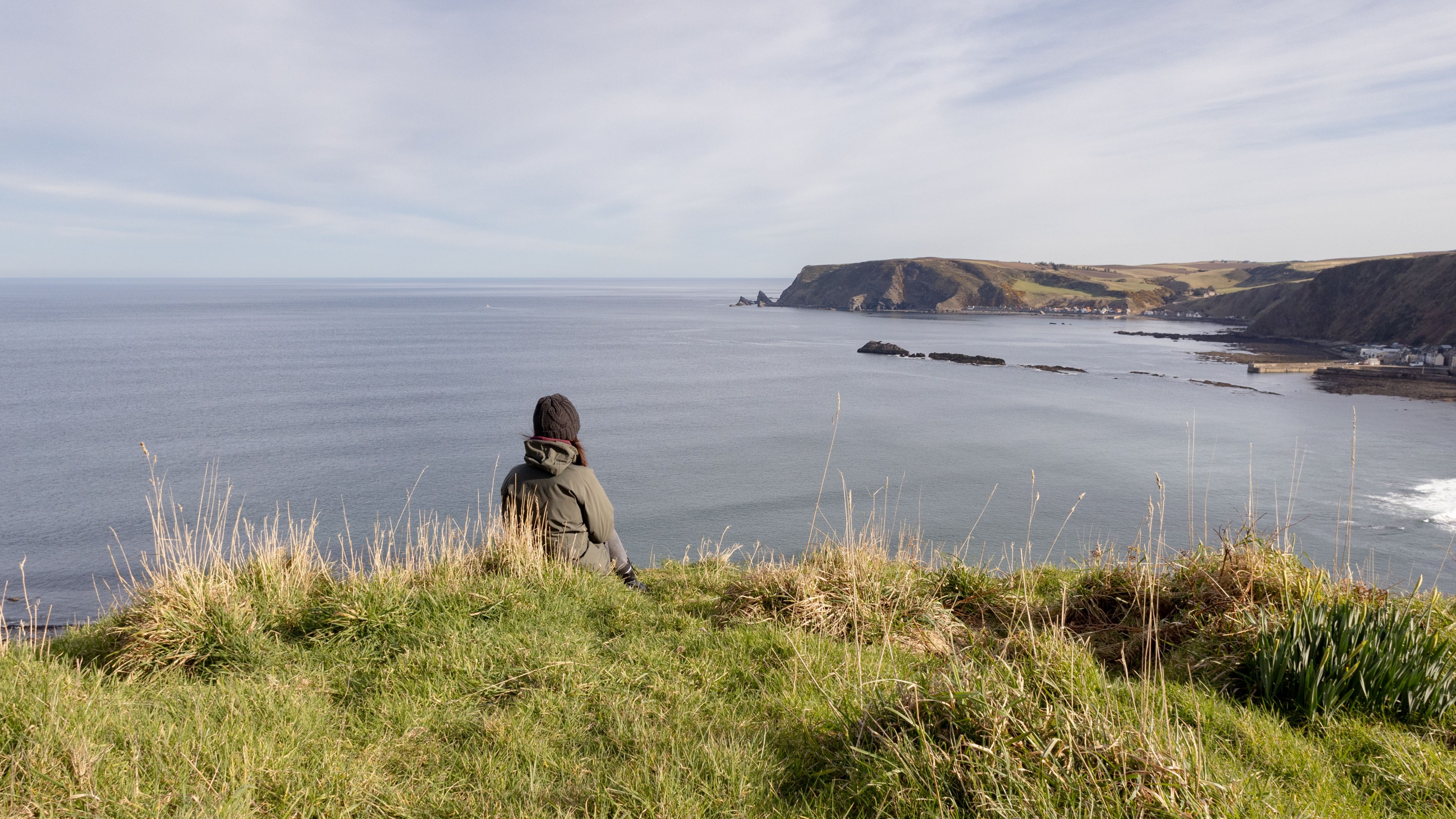
Extending from Moray’s western border near Nairn, along the Moray Firth and all the way around the right-angled wedge of Aberdeenshire, the North East coast of Scotland covers over 200 miles of coastline. Read on for my top five beaches along this stretch, from west to east, where you can spend the day foraging for shells, watching wildlife or just soaking it all in.
FINDHORN
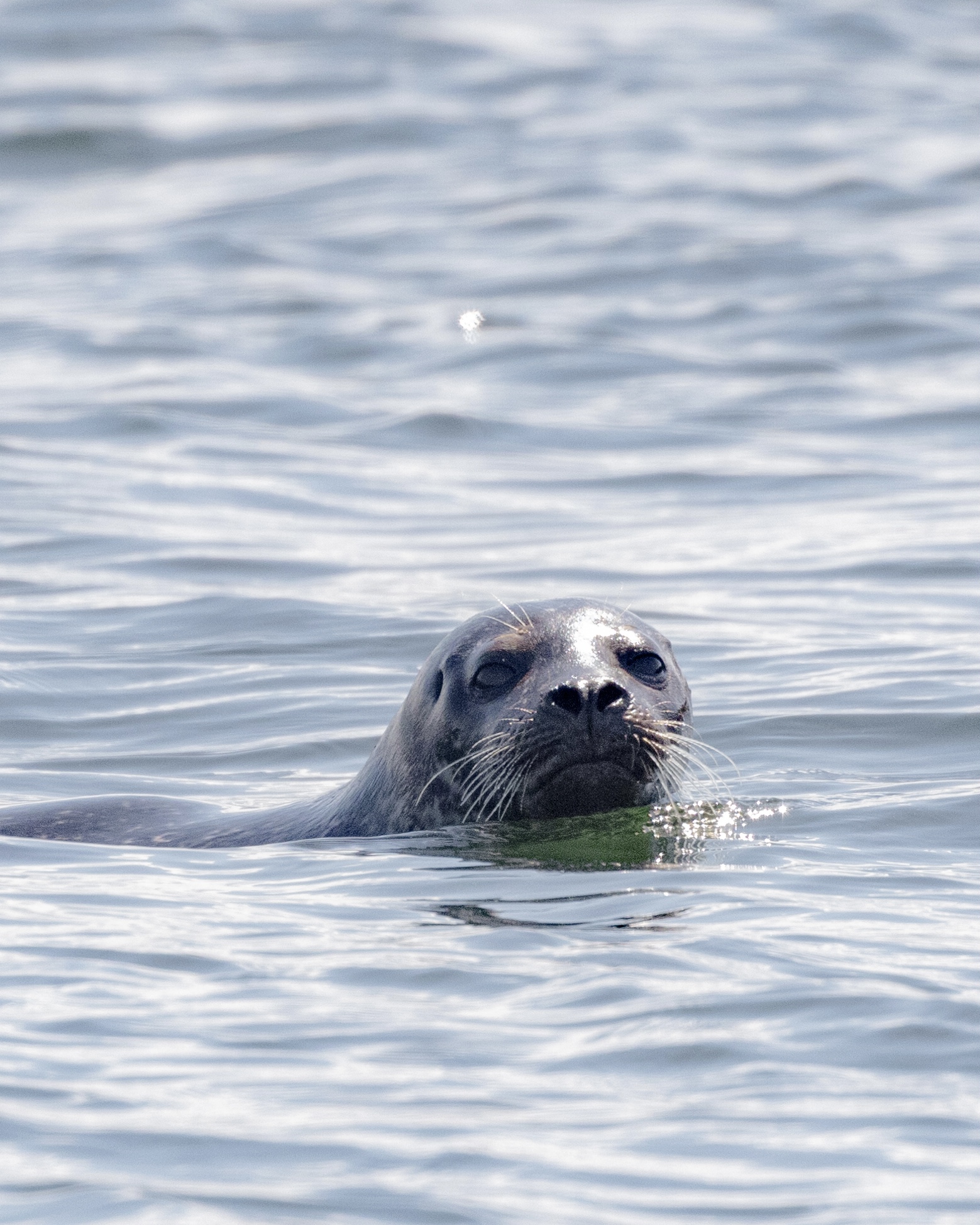
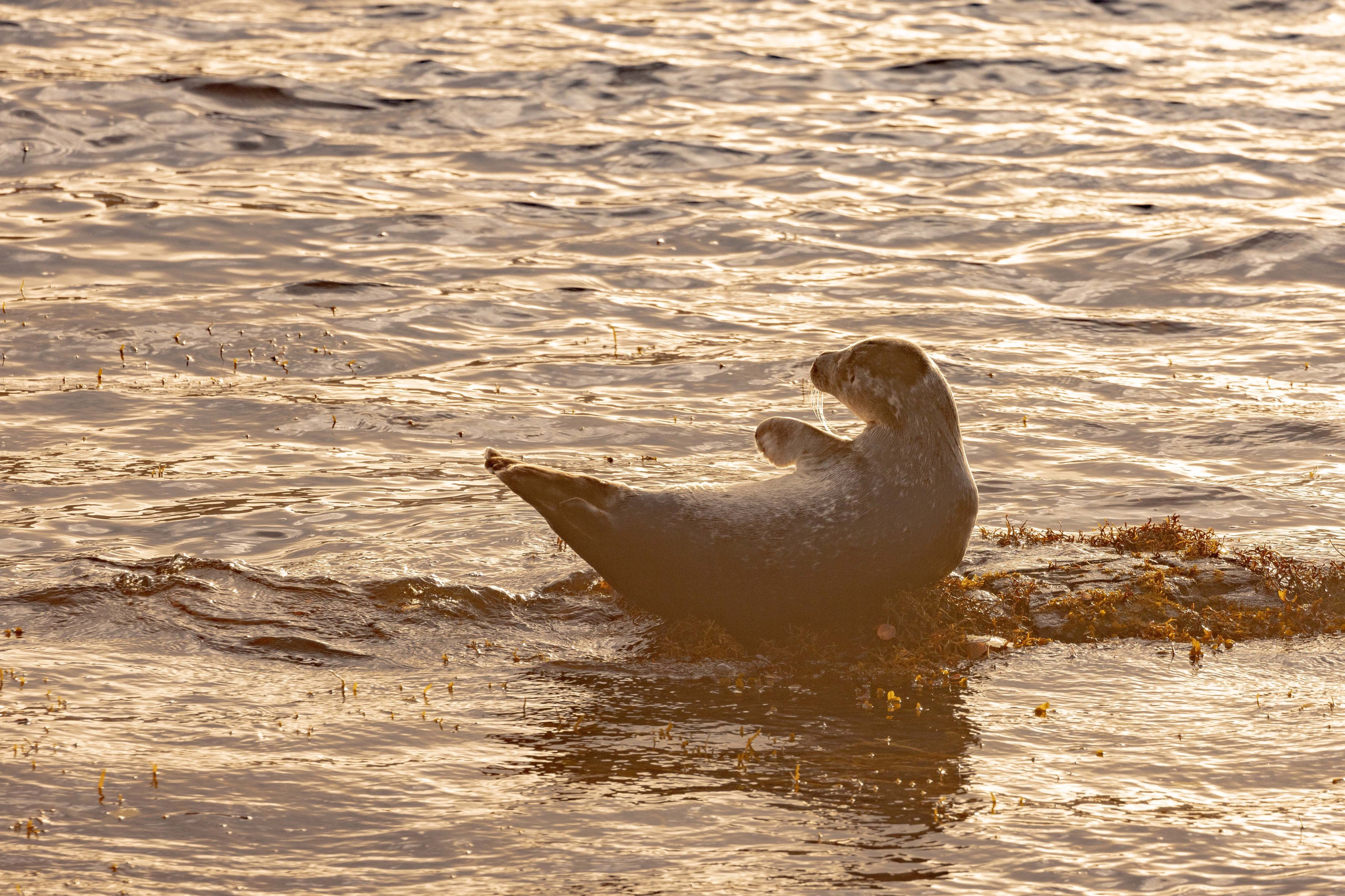
Findhorn has a beach of two halves. Surf down a steep shingle bank onto an expanse of fine sand, revealed at low tide. The bay here is known for its seals – depending on the tide they might be hauled out on the beach (if so then keep your distance) or bobbing in the shallows.
Covesea
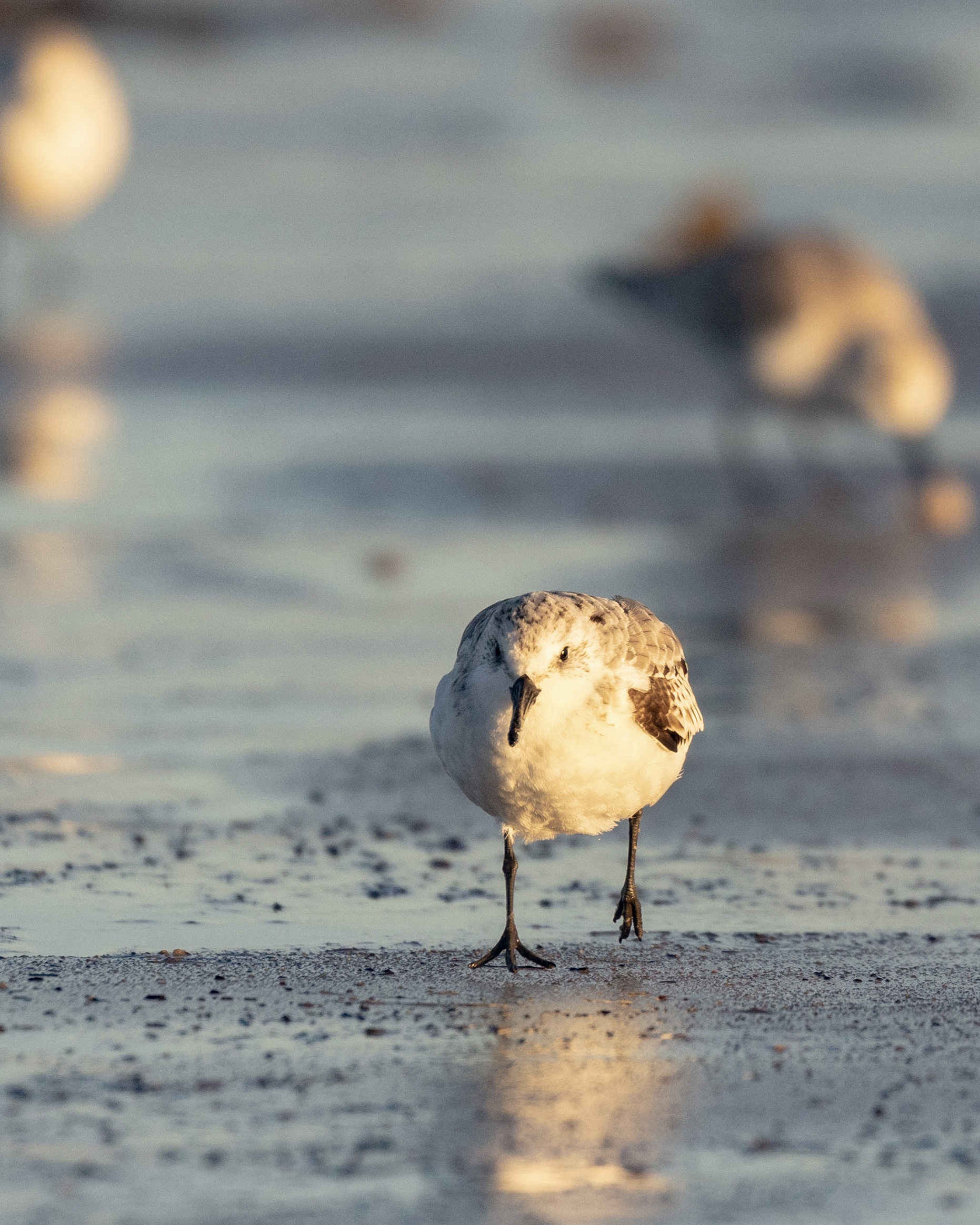
At the foot of Covesea Lighthouse is another sandy beach, running to nearby Lossiemouth. As the tide recedes on quiet winter days, you might see sanderlings feeding here. They move in sudden bursts like a breeze has swept them up.
Sunnyside
A lesser-known spot, Sunnyside is close to the ruin of Findlater Castle. Perch on the hip-high bank or roll your trousers up and explore the rockpools that collect among the geometric rock formations.
St Combs
The fishing village of St Combs, five miles southeast of Fraserburgh, has a curved beach facing east, making it a good sunrise location. The sand is the colour of Biscoff even on an overcast day, threaded with narrow water channels trickling into the bay.
Forvie
Forvie National Nature Reserve is 13 miles north of Aberdeen and famous for its magnificent shifting sand dunes. Watch seals and a variety of birds on the River Ythan or venture north along the beach and join walking trails through mixed heather and marram grass.
Yesterday I attended a conference in Kingussie, down in the Cairngorms National Park, about Scottish community tourism. It was hosted by SCOTO, a collaborative group of community tourism enterprises from all over Scotland.
One of my favourite speakers was Calum Maclean – a presenter, writer and Gaelic language activist who’s probably best known for his wild swimming. He’s just been voted the most influential Scot on TikTok, surpassing the likes of Lewis Capaldi.
What resonated with me about Calum was his enthusiasm. He spoke about ‘the power of localness’ and exploring past the obvious to get a deeper understanding of the places we visit. He also said to go ‘beyond the guidebooks’ that tend to gloss over the juicy, undiscovered places you’d only know about if you were a local, in favour of overpopulated tourist hotspots.
After his talk, I chatted with Calum about my Slow guide and how it was important to me to write a guidebook that included some of those undiscovered locations. I had the privilege of meeting lots of local people during my research and travels, and their contributions have made my book far richer. To reinforce the importance of this kind of immersive travel even more, Slow Travel is the theme for May in VisitScotland’s 2023 marketing calendar – impeccable timing for the release of my book that same month!
Recently, there’s been a surge in awareness of ‘sustainable tourism’. Initially that might make you think of the environment, and how visitors should respect wildlife and wild places while travelling. This is essential of course, but the sustainable mindset also relates to people. Supporting independent businesses instead of big chains, and making an effort to learn the heritage of new places as well as appreciate their beauty, are just as important as being mindful of campfires and taking your litter home.
Again, these are things that a good Slow guide should cover, and I consciously shopped small while I was travelling for my book, discovering fantastic small businesses that gave the places I visited even more colour.
Another excellent speaker at the conference was Scotland blogger, itinerary consultant and podcast host Kathi Kamleitner. Like Calum, Kathi’s passion was infectious and she spoke about connection as an emotional benefit of tourism. This connection can be with those you travel with, those you meet while travelling, and also with yourself.
Currently, one of the biggest travel trends is an interest in ‘localism and authentic experiences’. This links to the ‘staycation’ idea, which became even more prevalent during the pandemic. It was reassuring to see that my book links to this trend – I’ve highlighted many local people and hopefully conveyed enough immersive detail in my descriptions of lochs, forests, castles and distilleries to inspire these memorable and authentic experiences that visitors are looking for.
I’m a huge advocate of Scotland as a travel destination and clearly so is Kathi, who launched her business Watch Me See to help other people discover and fall in love with Scotland just like we both did. I’m always looking to connect with other solo female travellers and it was so lovely to hear Kathi’s perspective.
March is Scottish Tourism Month, so the conference was well-timed. It was a whirlwind of conversations and ideas, not to mention a shock to my system after several years of professional interaction exclusively via Zoom! I left feeling inspired and even more excited about the release of my book, having reaffirmed my belief that Slow is the way to go.
I moved to Scotland three years ago today. It’s not that long really, but both my world and the actual world have changed a huge amount in that time. Nonetheless, my local patch has stayed exactly the same.
If you’ve been following my updates for a while, you’ll know that I grew up in southeast England and went to university in Cumbria, where I lived just a few miles from the Scottish border. While my fellow students spent their weekends in the Lake District, I was pulled north instead. During my degree, my interest in nature became a passion and it took on a decidedly Scottish flavour.
After graduation, I had the unpleasant ‘oh god what now’ realisation and returned home, hoping to figure out what to do with the very expensive piece of paper I’d worked so hard for. Less than a year later, it was apparent that I didn’t belong in southeast England anymore. Having experienced what Scotland had to offer a bird nerd like me, I needed to be back there. On 22nd February 2020 I drove 546 miles to my new home on the Moray Coast.
Grey heron
Of course I had no idea what would happen to us all some three weeks later, but even after the first lockdown hit I was fortunate enough to have wildness literally on the doorstep. When restrictions were at their tightest, I walked the same mile of coast path every day.
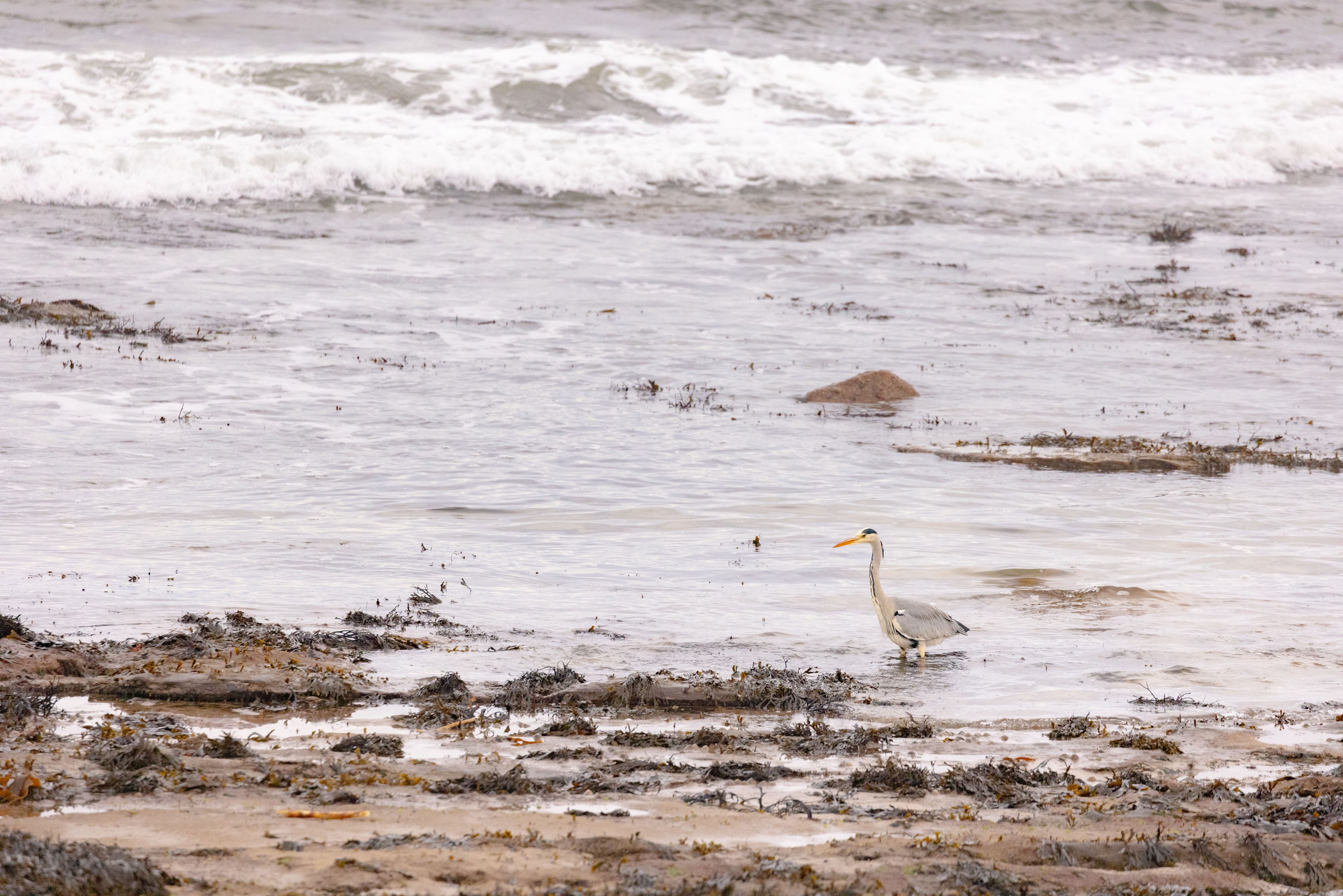
Because it followed a stretch of rocky shore, no two walks were the same. Sometimes the tide was out, revealing boulders both slick with kelp and crusty with barnacles. They were crowded with oystercatchers, redshanks, turnstones, ringed plovers, rock pipits, herons and bar-tailed godwits – I’d only seen most of these in books before that point. At high tide, deeper waves brought a legion of ducks closer to land including eider, goldeneye and long-tailed ducks, as well as cormorants, red-breasted mergansers and fulmars.
Fulmar
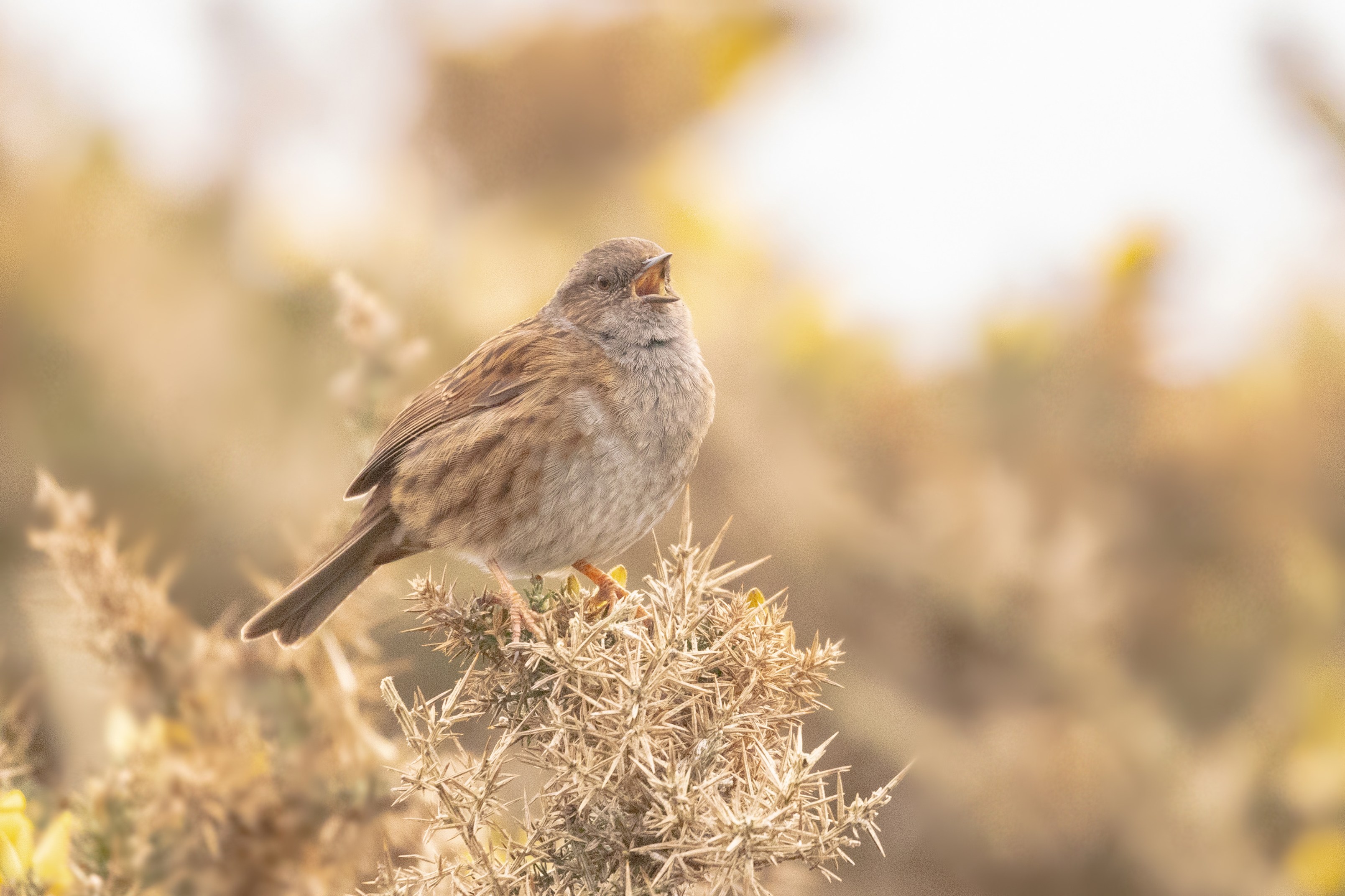
This was all going on in just one direction. If I swivelled to face south instead, my binoculars were full of yellowhammers, linnets, stonechats, dunnocks, wrens, goldfinches, reed buntings and song thrushes, all attracted by the dense shelter of gorse bushes and the stubble field beyond.
As my first spring in Moray became summer, these resident birds were joined by migrating visitors: whitethroats, willow warblers and chiffchaffs perched on the gorse while gannets, swallows and sandwich terns swooped over the water. I’d never seen so much birdlife in one small area, and the coast path remained my regular local patch even after restrictions eased.
Dunnock
However, my eyes naturally wandered and I ventured east into Aberdeenshire and south into the Cairngorms National Park. One thing led to another and less than eight months after moving to North East Scotland I secured a commission to write a book about it which, as you’ll probably know (because I never shut up about it), is what I’ve been grafting away on ever since.
While I was gallivanting all over the place researching my book, I neglected my little patch of coast path. I still walked the dog that way occasionally, but I couldn’t dedicate the same amount of time to watching the birds there as I could when I first moved.
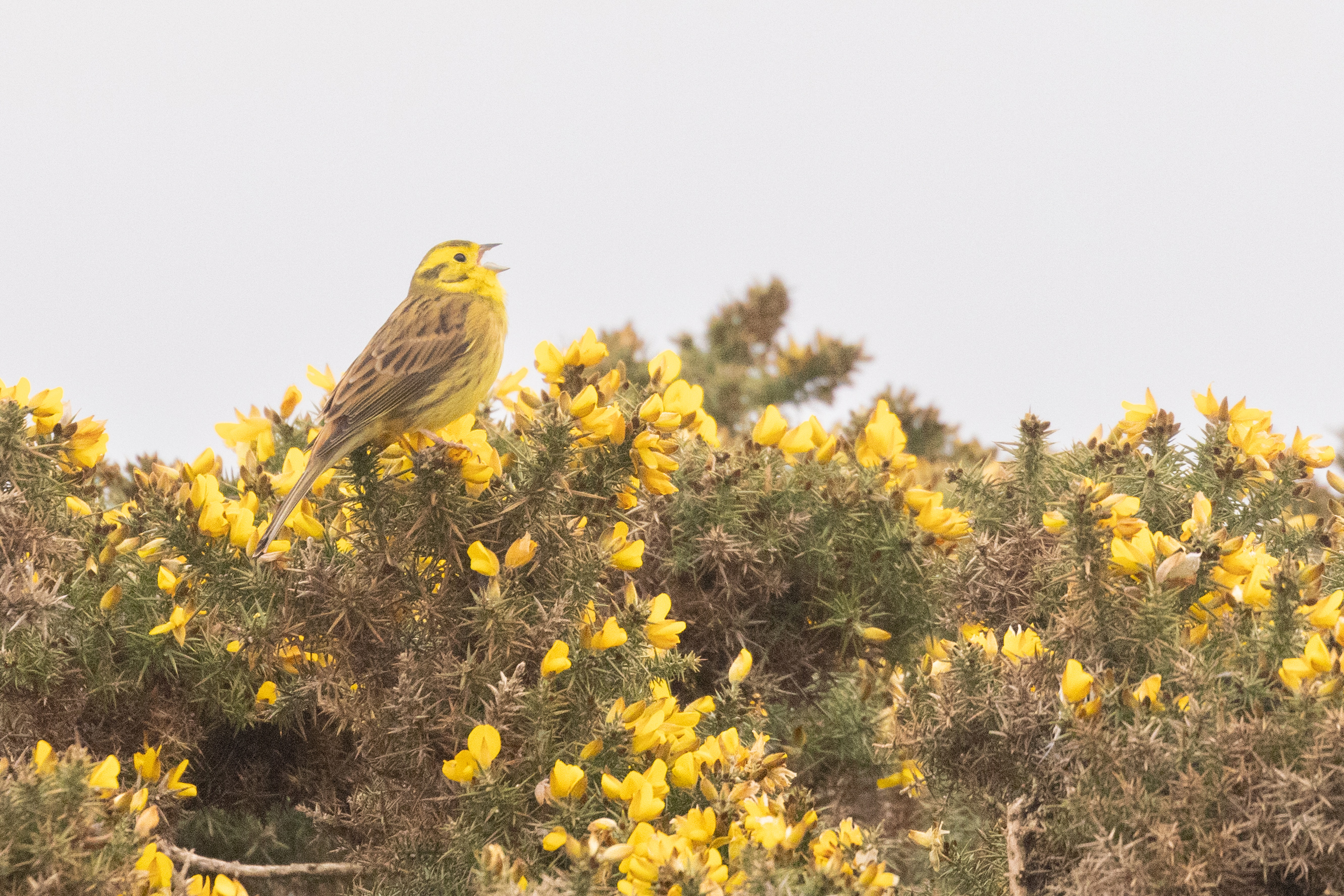
Yellowhammer
My book will be sent off to the typesetter in just over a week’s time, so aside from proofreads and final adjustments, this monumental task I’ve taken on is almost complete. Today, on my third anniversary in my new home, I walked the coast path again, dedicating a whole morning to wandering and watching.
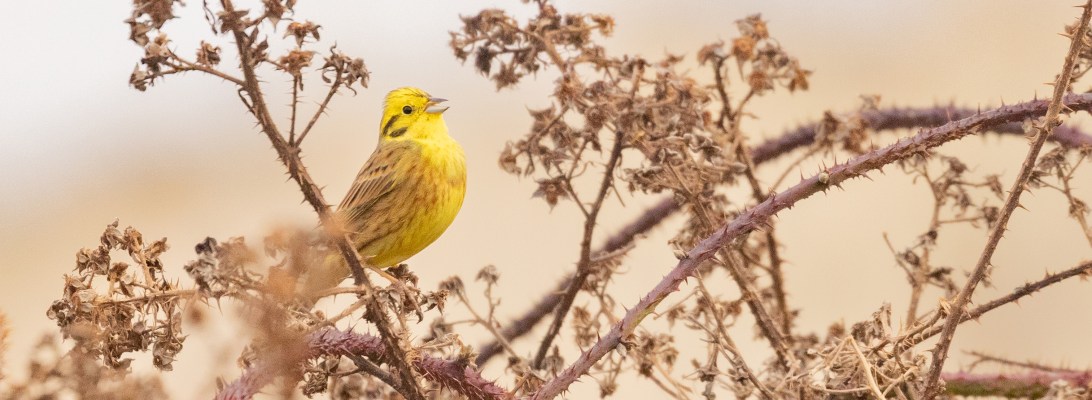
Although I couldn’t spot them all, I knew yellowhammers were everywhere because their distinctive song – ‘a little bit of bread and no cheese!’ – was bouncing around like a bullet in a cave. You wouldn’t think a luminous yellow bird could blend in, but when they’re perched on gorse flowers of a similar shade, they camouflage remarkably well.
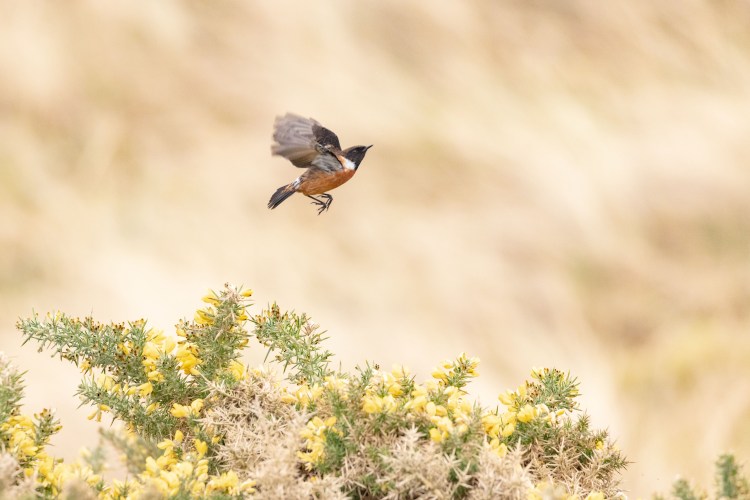
Elsewhere I saw a pair of stonechats on the tallest sprigs of a particular gorse bush, regarding me with a cock of the head and a bob of the tail. It’s fanciful thinking, but seeing as stonechats can live for a handful of years it’s possible that they’re the same ones, occupying the same territory, that I saw on my first forays in 2020.
In three hours, I spotted 33 different bird species – not bad for one mile of coastline before spring has even got going. Of that list, it was the yellowhammers and stonechats that I most enjoyed watching. They were two of the first birds I ever saw in my new home, so they’ve become familiar and even nostalgic – especially when I think back to the surreal times of only being allowed an hour’s outdoor time each day. Luckily for me, that one mile is as bursting with life now as it was back then.
Monday was the perfect combination of winter chill and dazzling sunshine, so I decided to take my mum and the dog to two of my favourite wild spots down in the Cairngorms.
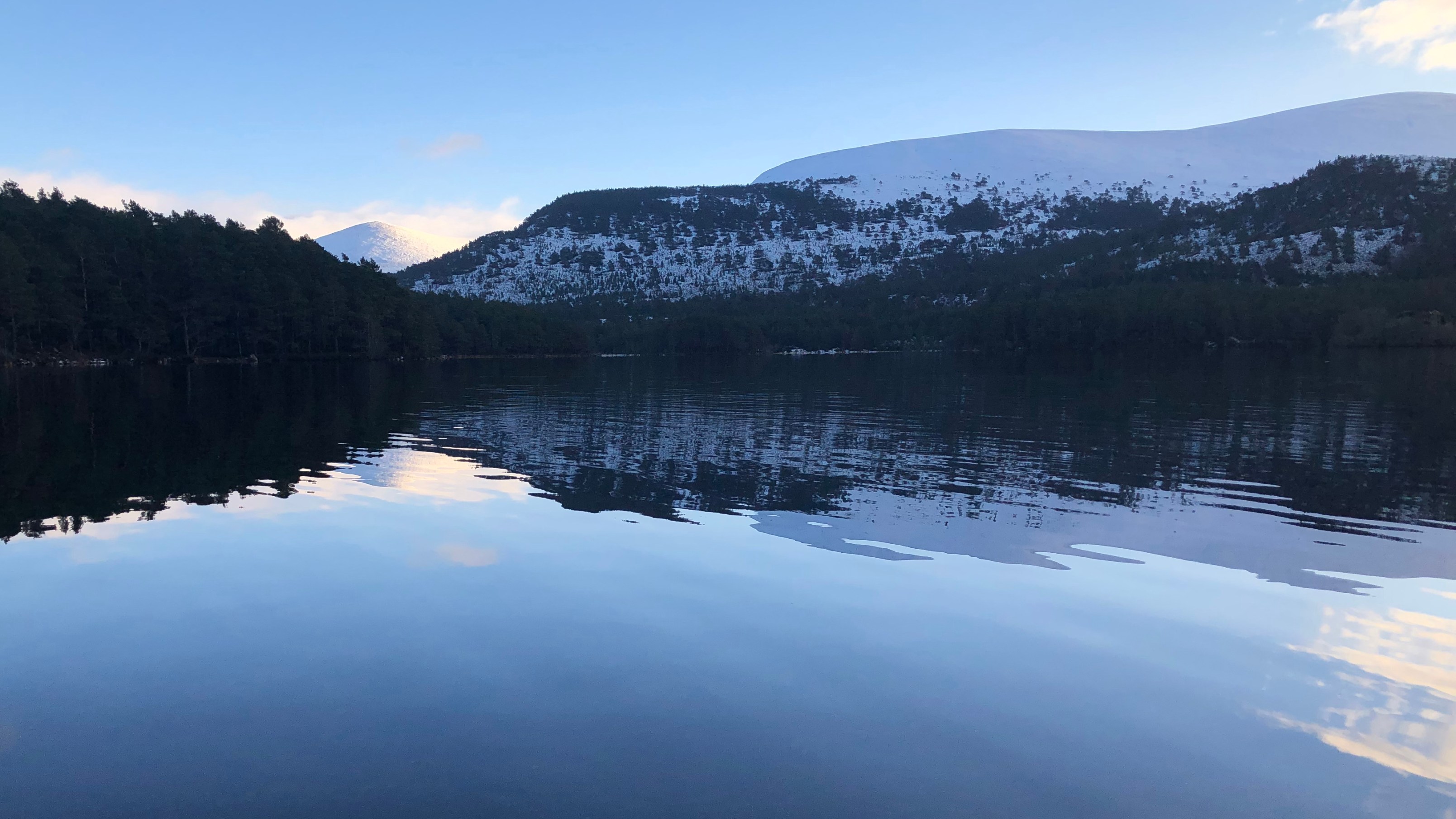
Looking like a blue pawprint when seen on a map, the Uath (pronounced ‘wah’) Lochans are four small pools bordered by pines. Their surfaces are sometimes wobbled by goldeneye ducks but they mostly stay mirror-steady, reflecting the trunks standing around them.
There are two short waymarked trails that can easily be combined into a meandering loop. One threads between the lochans, following compacted earth paths and sections of boardwalk over boggy pools. The other climbs a brief incline, offering an eagle’s eye view over carpets of pine and further into the mountains.
Less than three miles north, the Frank Bruce Sculpture Collection is a series of artworks that have been carved into wood and stone, destined to eventually rot and fade back into their woodland surroundings.
Because the carvings are natural, they have excellent camouflage and some are trickier to find than others. It takes a while for your eyes to adjust before you can pick out sculpted faces and hands among all the other trunks. A needle in haystack situation!
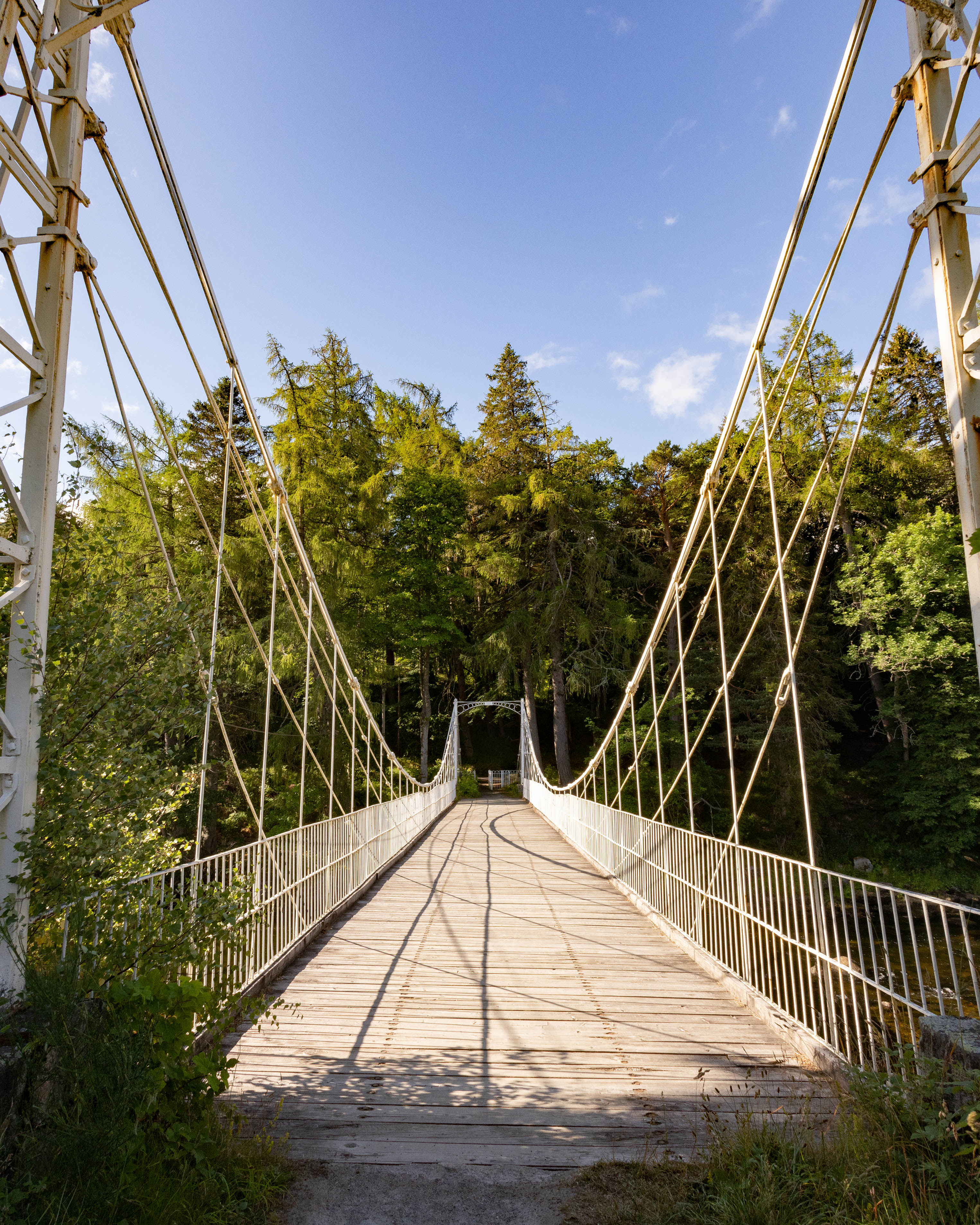
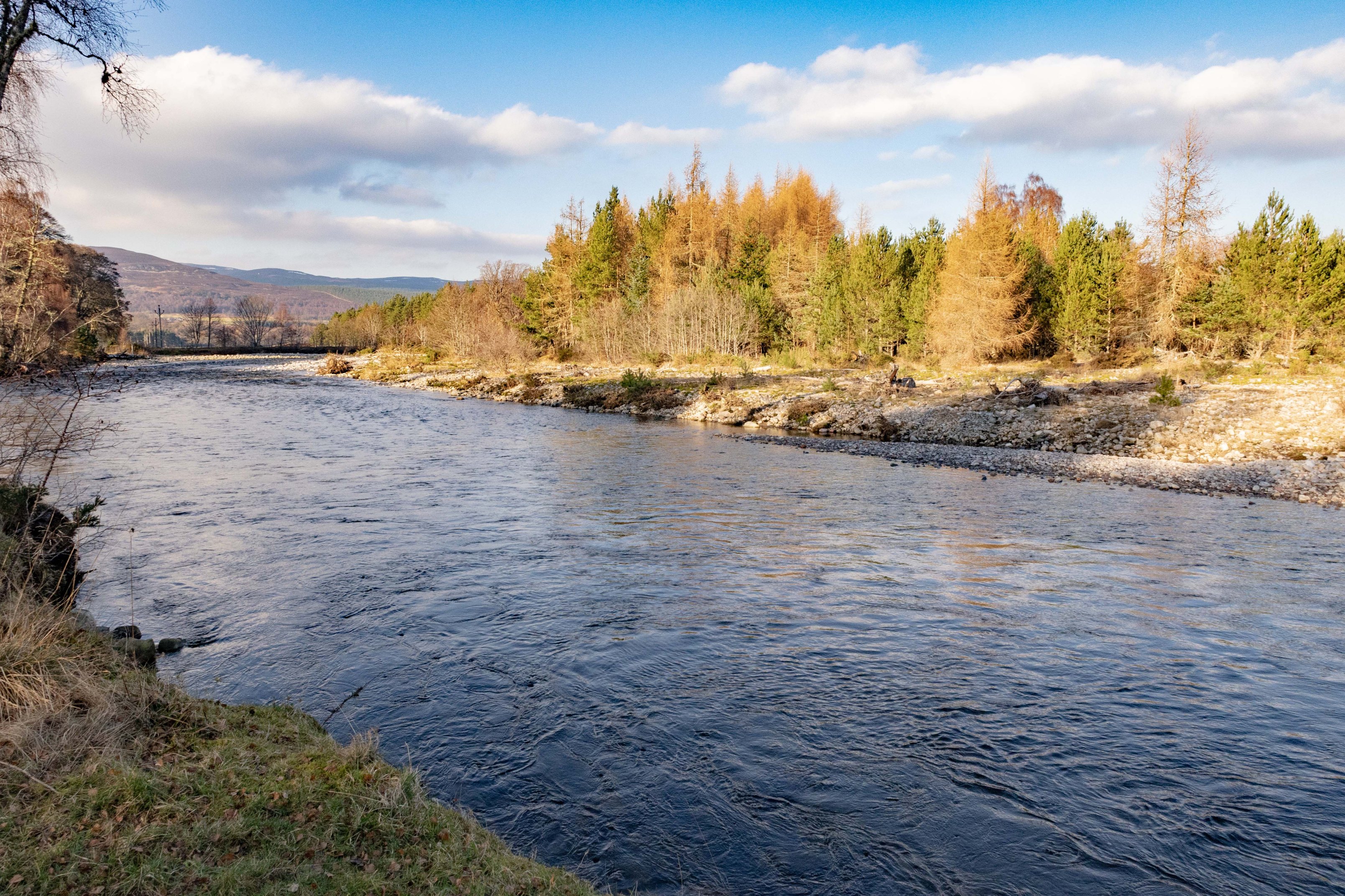
It’s possible to walk a small loop here too, following a stretch of the River Feshie as it tumbles over pale shingle. The river sparkled and the trees beyond shimmered in the winter sunlight.
Although the sun was boiling as it streamed through the car windows, outside was a different matter, so once the chill began to seep through our clothes we returned home. The winter light persisted until the very last moment and I wandered up to the headland to watch the sun set. It’s not often I spend a day without looking at screens, so it was a welcome treat.
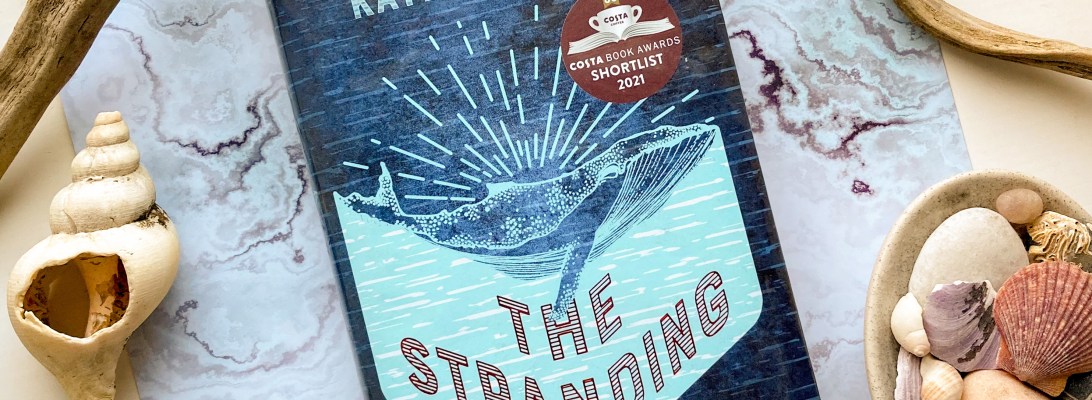
We’re told not to judge a book by its cover but we all do it, at least in the literal sense. Why else is Waterstones full of vibrant, juicy covers begging to be picked up and admired? So, when I saw a whale on the front of this book, it enticed me enough to read the blurb. And what a hook: “Far from home and with no real hope of survival, Ruth finds herself climbing into the mouth of a beached whale alongside a stranger.” Without wanting to sound like a T-Bird, tell me more.
Ruth’s life has become a hamster wheel of alcohol, bed hopping and a sense of something missing. When her latest relationship becomes claustrophobic, she decides to break the monotonous cycle she’s found herself in and travel to New Zealand. Here she hopes to fulfil a childhood dream of working with whales, but apocalypse strikes as soon as she arrives – don’t you hate it when well-laid plans get disrupted? Together with a stranger she meets on the beach, Ruth climbs into the mouth of a beached whale just before the blast hits. This saves her life, but now she has to figure out how to continue living.
This is only half the book, though. Alternating between chapters set in post-apocalyptic New Zealand are fragments of Ruth’s old life and the events that led to her trip. Somehow, there were close parallels between a dystopian world and the everyday routine of a young woman living in London, made sharper by the interwoven timelines. Like all good protagonists, Ruth has many flaws, and this makes her feel real. She makes human mistakes, and despite also building a shelter from whale ribs and making clothes from dried deer hides, her story resonates.
For me, part of this connection came from the book’s setting. I’ve never been to New Zealand, but “the breeze from across the water” and pulling “the salt-stiffened collar of the fleece towards her ears” were familiar sensations. Rather than obvious seaside description, Kate Sawyer uses thoughtful observations of a coastal landscape that essentially apply to any sandy beach in the world. Although my life in England wasn’t nearly so troubled as Ruth’s, I know exactly how being pulled somewhere feels; in her case it was to the whales she’d studied as a child in London’s Natural History Museum. The wonder of that place is something I can definitely relate to.
Dystopian stories have never interested me much, but I loved The Stranding because it was so much more than that. In fact, the apocalypse element was a back-seat theme for me. I felt that the backbone of the story was a woman’s pursuit of happiness and finding the courage to break a cycle and start a better life. And in Ruth’s case, it’s a life she could never have predicted.
Good weather may not be as forthcoming during winter, but I’d argue that winter light is the best of the year, if you can find a break in the clouds.
I checked the forecast and saw a long line of sun symbols, so I donned my thermals and headed out to see what wildlife I could photograph. First I tried for hares at sunrise, but they were otherwise engaged. Frustratingly, golden hour was flaring bright and I was itching to get photos of something, anything, in those syrupy hues.
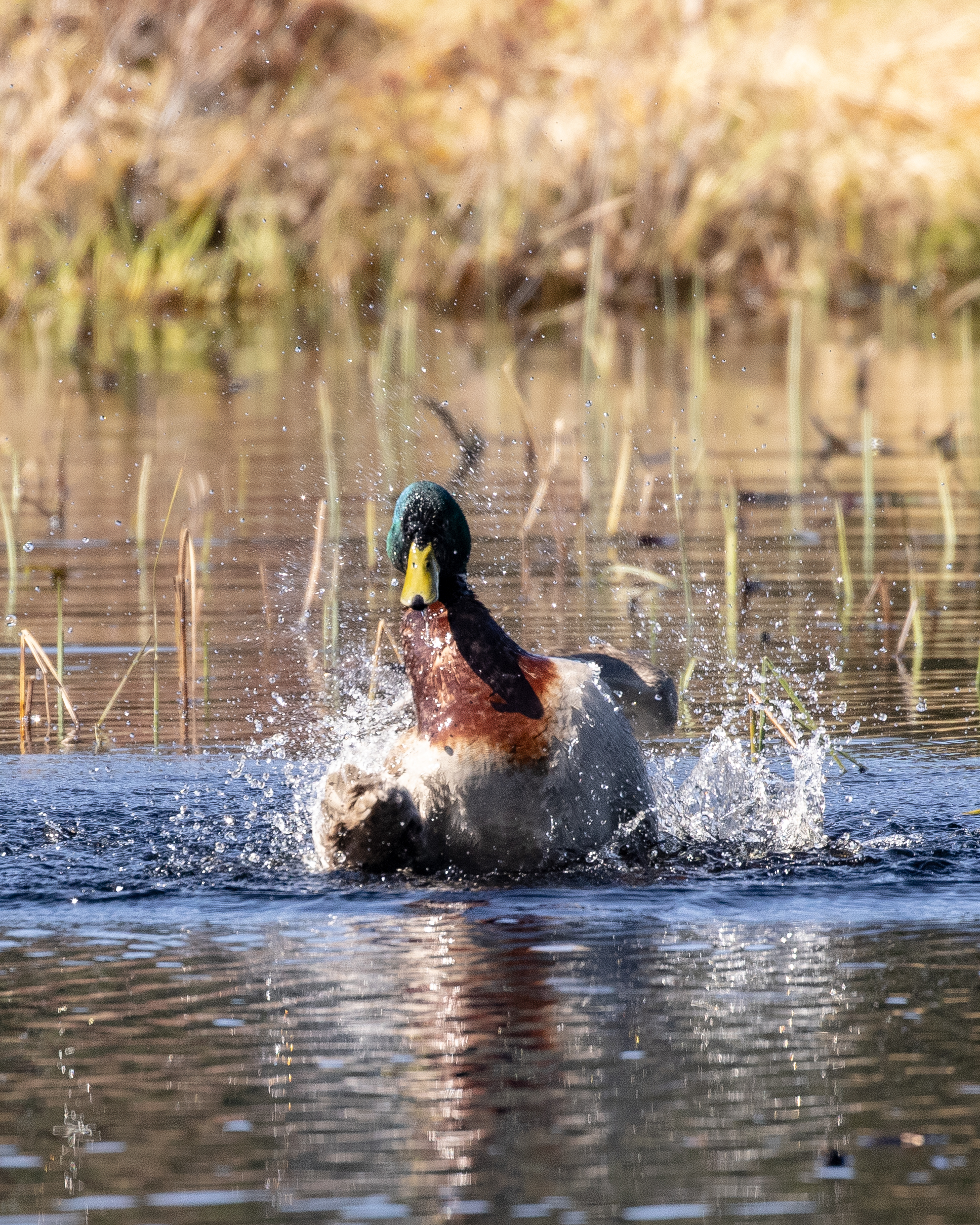
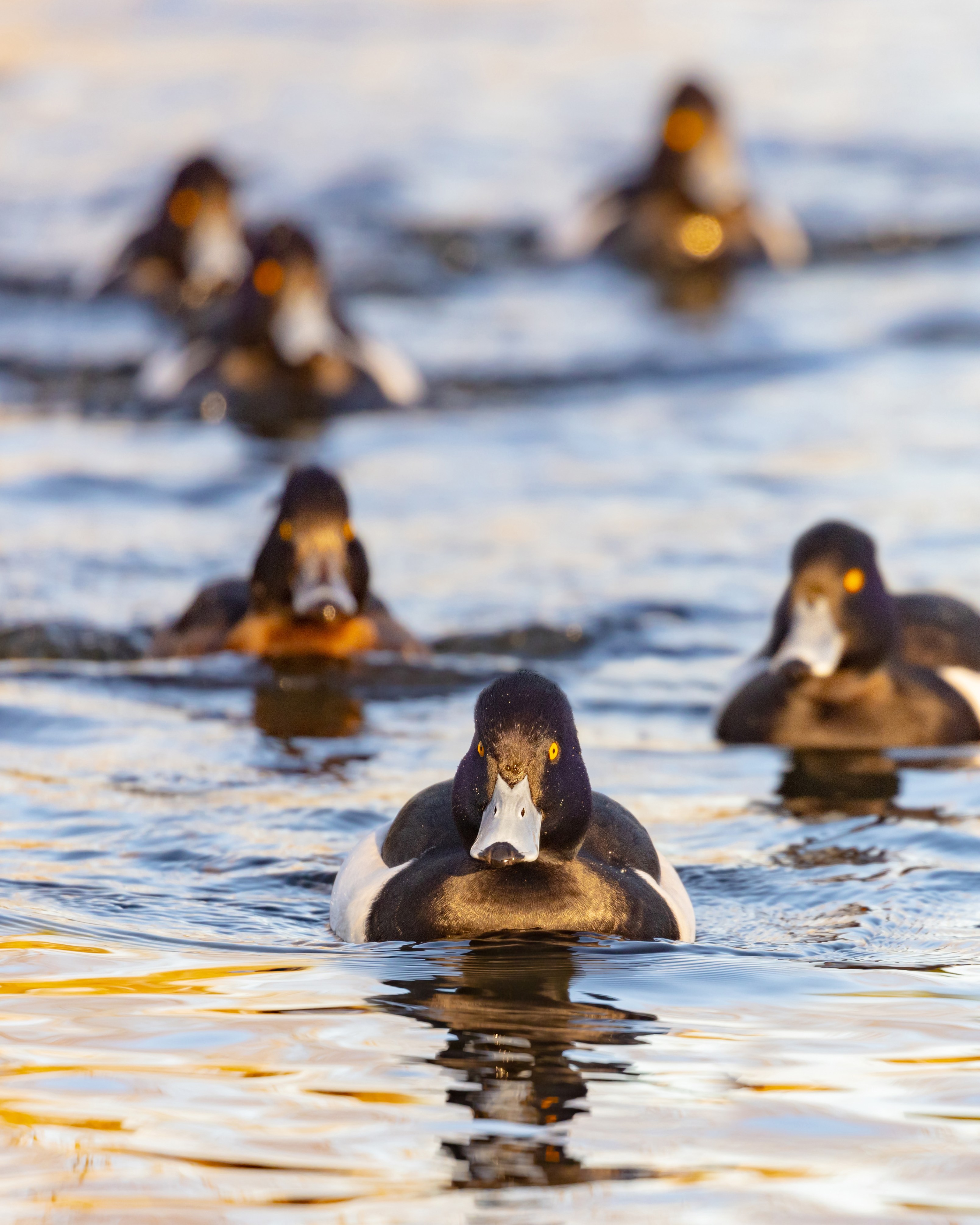
After several hours with a numb bum, looking at diddly squat, I visited the library to return a book and warm up. When I came out, a flock of tufted ducks were bobbing in the city pond. The light was still fantastic, so I lay on the ground and got snapping. Like mallards, tufties have stunning iridescence if you catch them in direct light. I hadn’t set out for ducks, but it was a happy accident and I loved photographing something so closely for a change.
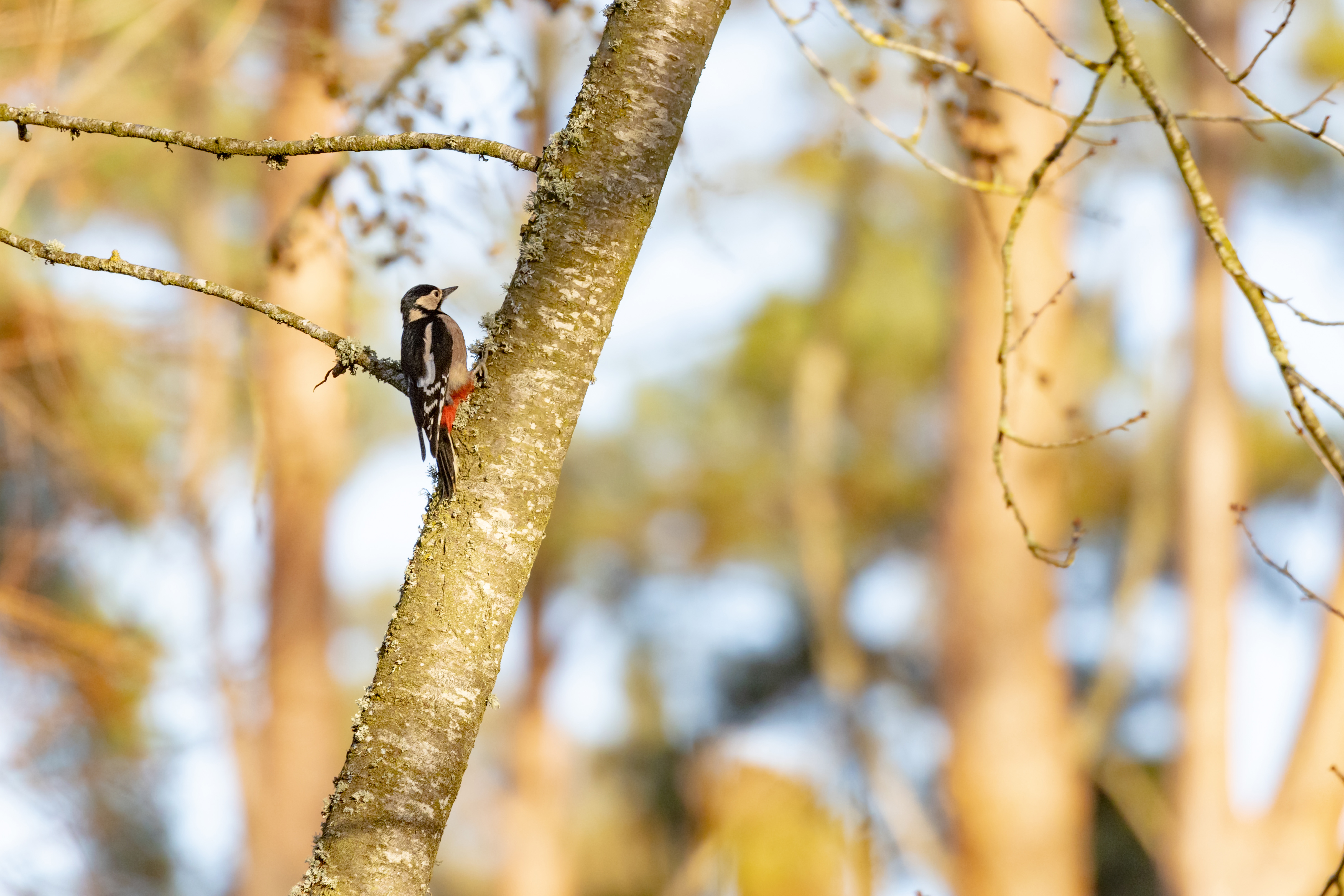
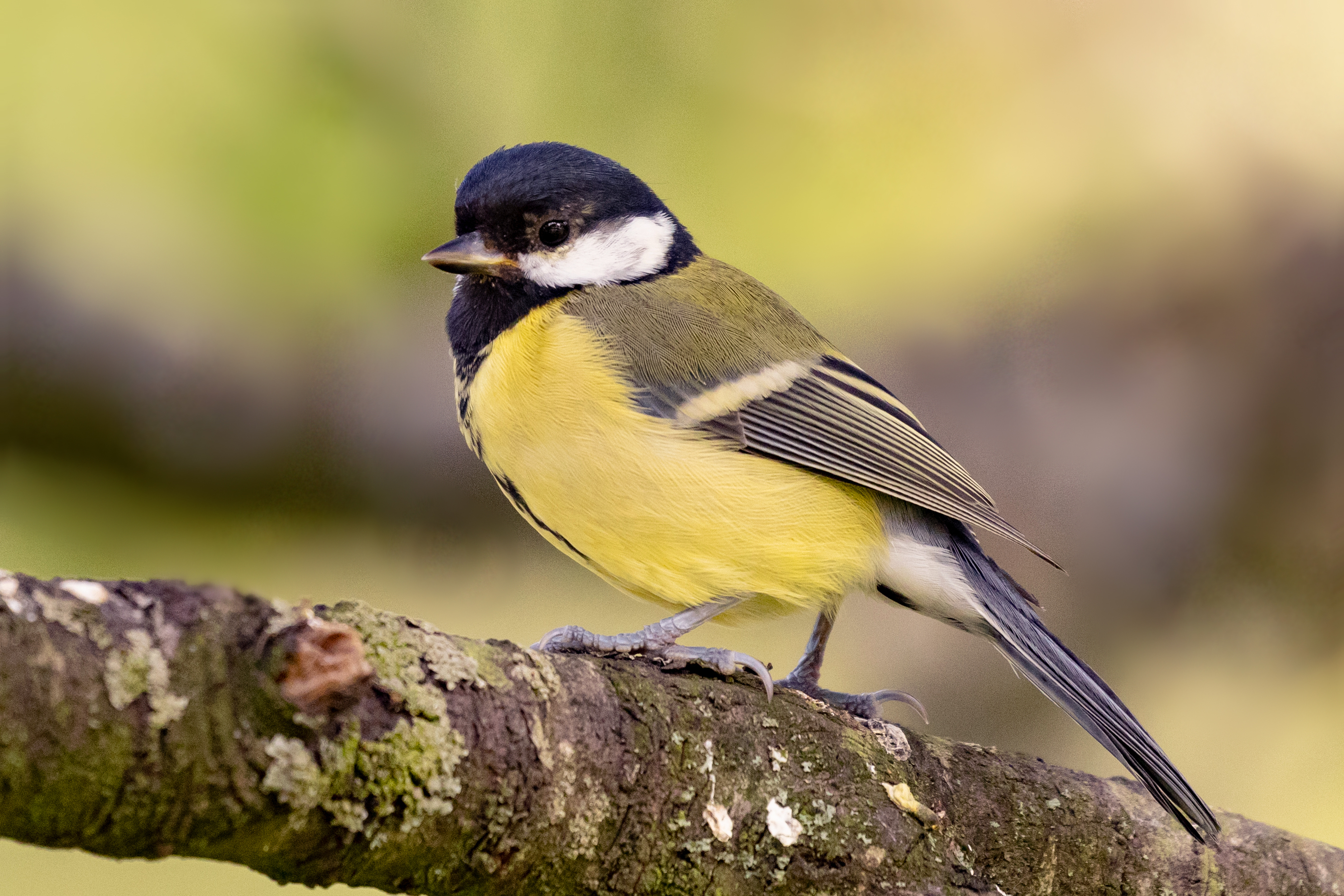
Rejuvenated by my unexpected success with the ducks, I moved on to one of my local lochs, where there’s always some sort of activity. As usual, the feeders were swept up in a feather storm: chaffinches, dunnocks, robins, great tits, long-tailed tits, blackbirds, woodpeckers and song thrushes all muscled in in for a mid-morning snack.
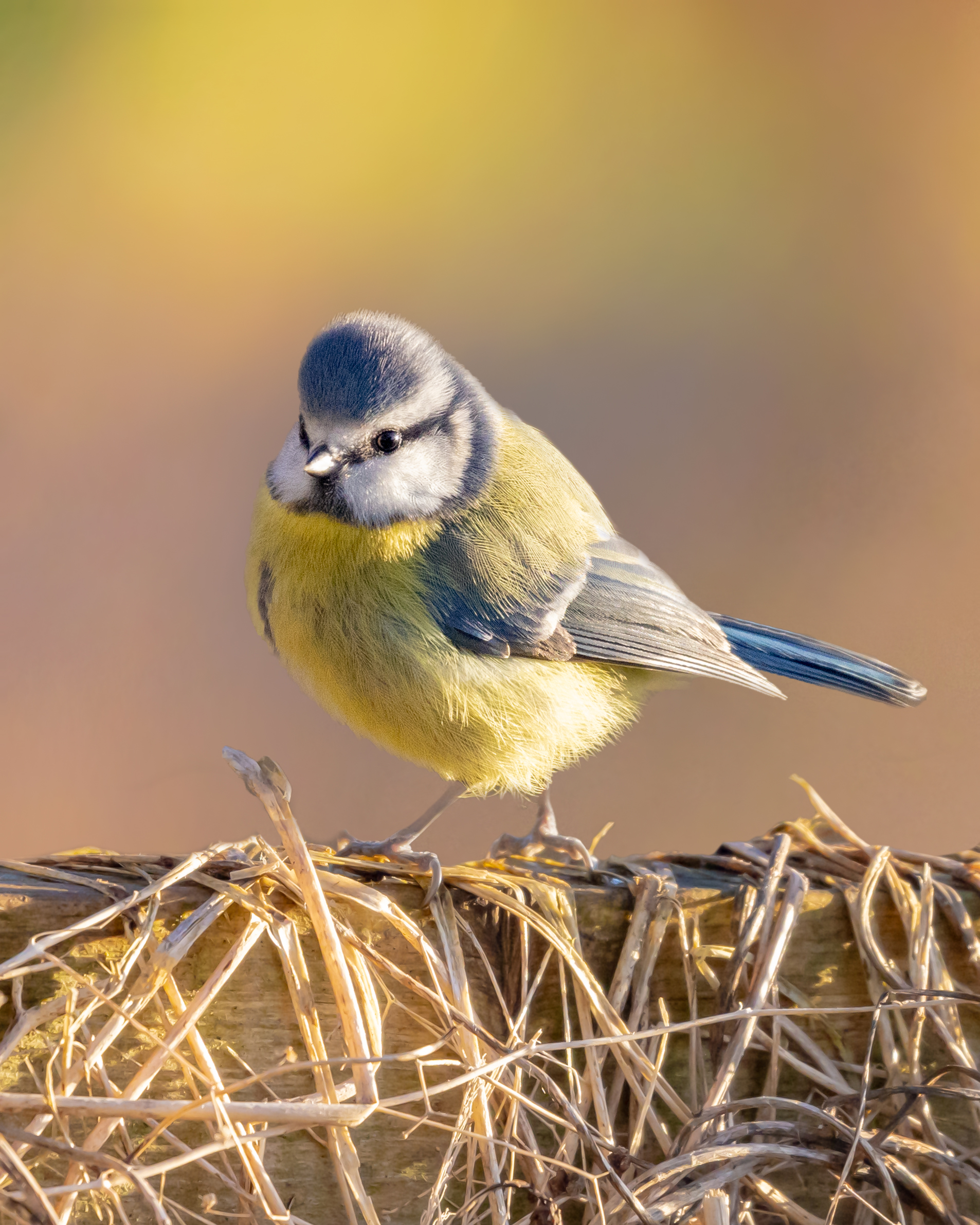
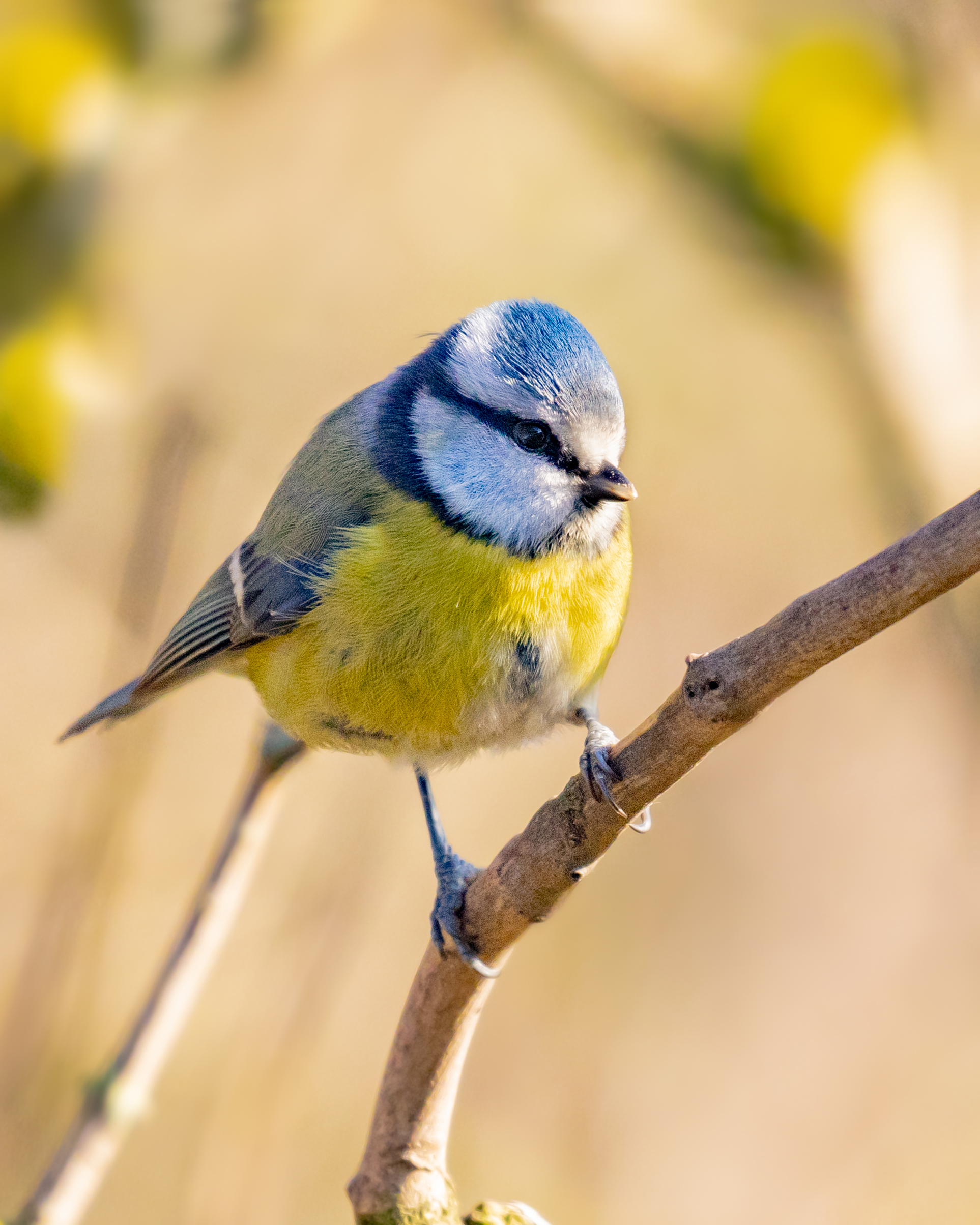
As my eyes snagged on each passing bird, I realised I couldn’t remember the last time I photographed a blue tit. I’m always looking for rarities and don’t appreciate common birds as much as I should. When I actually paid attention to the blue tits that were zinging in the bright sunshine, I appreciated just how multi-coloured they are. A British bird of paradise!
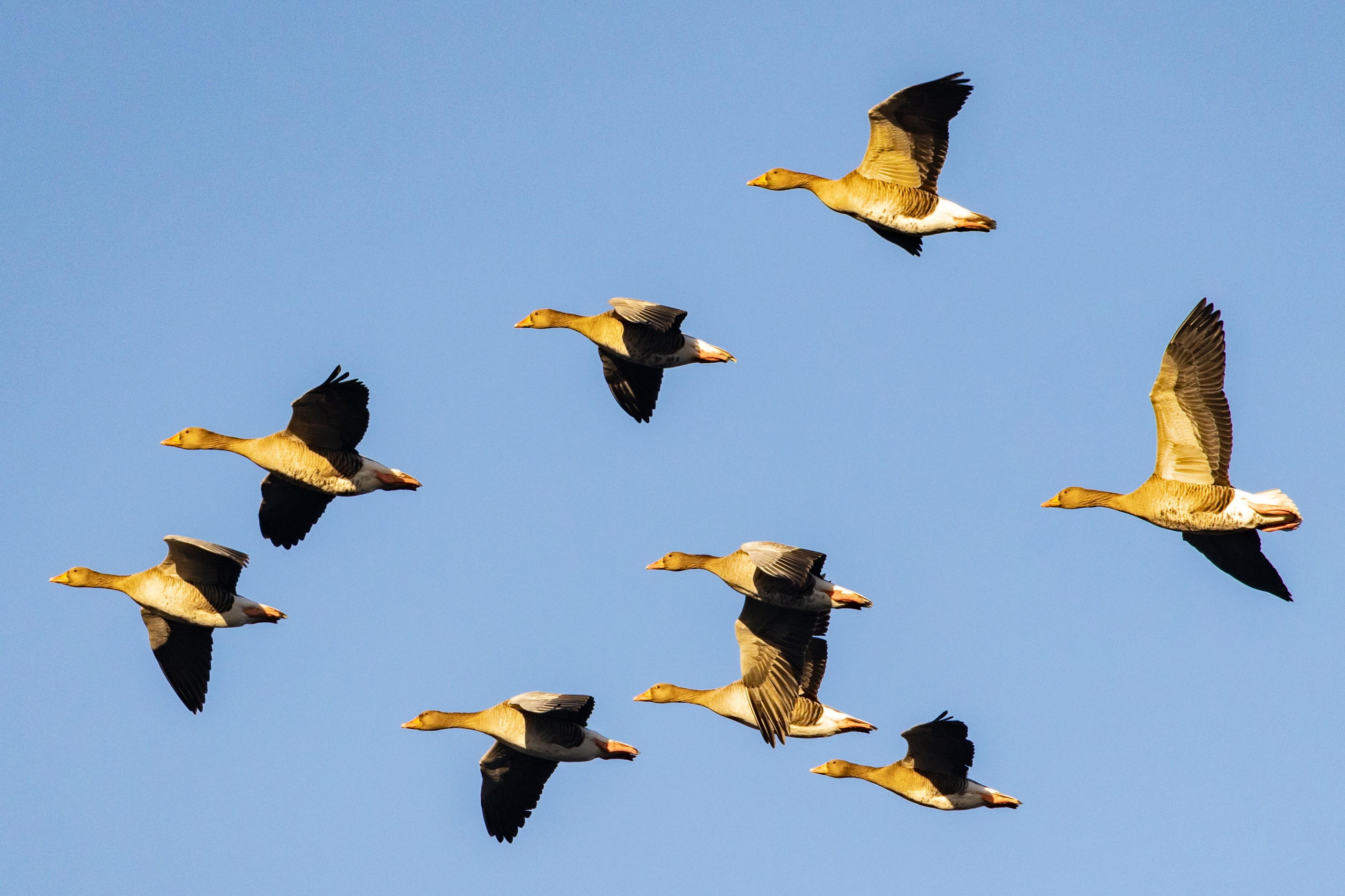
The sunlight may look warm in my photos but it didn’t feel it, and after a while I was ready to retreat for tea. Before I headed home, a small gaggle of greylag geese swept over the loch, dipping in flight until they skidded to a halt on the surface. Luckily for me they were facing the sun, so I caught some high-contrast shots of their smooth landing.
After an uncertain start, my trip became a common bird appreciation day, which I probably needed. I get blinkered looking for the rare and exotic, but with winter light as special as this, every bird looks superb.
I’m always looking for ways to restore my wonky work-life balance. We’re all capable of working too hard, but I often teeter on the edge of burnout and as a freelancer I really feel the pressure of having all my responsibilities on my own shoulders. Also, when your home and office are the same place, it’s far too easy to blur the boundaries between work and rest spaces, making switching off even harder.
My mental state is constantly lifting and dipping and this winter has been one of the dips. I’ve struggled to be inspired and have felt exhausted at times, despite sleeping well. I throw myself whole-heartedly into my work, but then it ends up taking over and my body has to force me to stop.
I was messaging my good friend Jeni about this recently and she sent me a post by Nicola Jane Hobbs, who’s a stress and rest researcher. Nicola defines rest as “anything that makes our nervous systems feel safe enough to switch off our stress responses so our minds and bodies can move into a state of recovery, restoration and growth.”
There are many different types of rest and Nicola says we should match them to the kind of stress we’re feeling: “I like to ask myself: What type of stress have I experienced today? What kind of rest do I need? If we’ve been in a loud, overstimulating environment, we can offer ourselves sensory rest with loose clothing and gentle music. If we’ve been busy all day working through our to-do lists, playful rest – romcoms, board games, making pizzas – will help us recover.”
This really resonated with me because my concept of rest had been purely physical. I consider myself lucky that I’m a heavy sleeper, but sleep is only one of the ten distinct types of rest that Nicola outlines in her post:
Physical rest – sleep, stretching, mindful movement
Playful rest – anything fun and unproductive eg watching films, board games
Ecological rest – walking, wild swimming, car-free days
Altruistic rest – giving without expecting anything in return eg volunteering, random acts of kinds
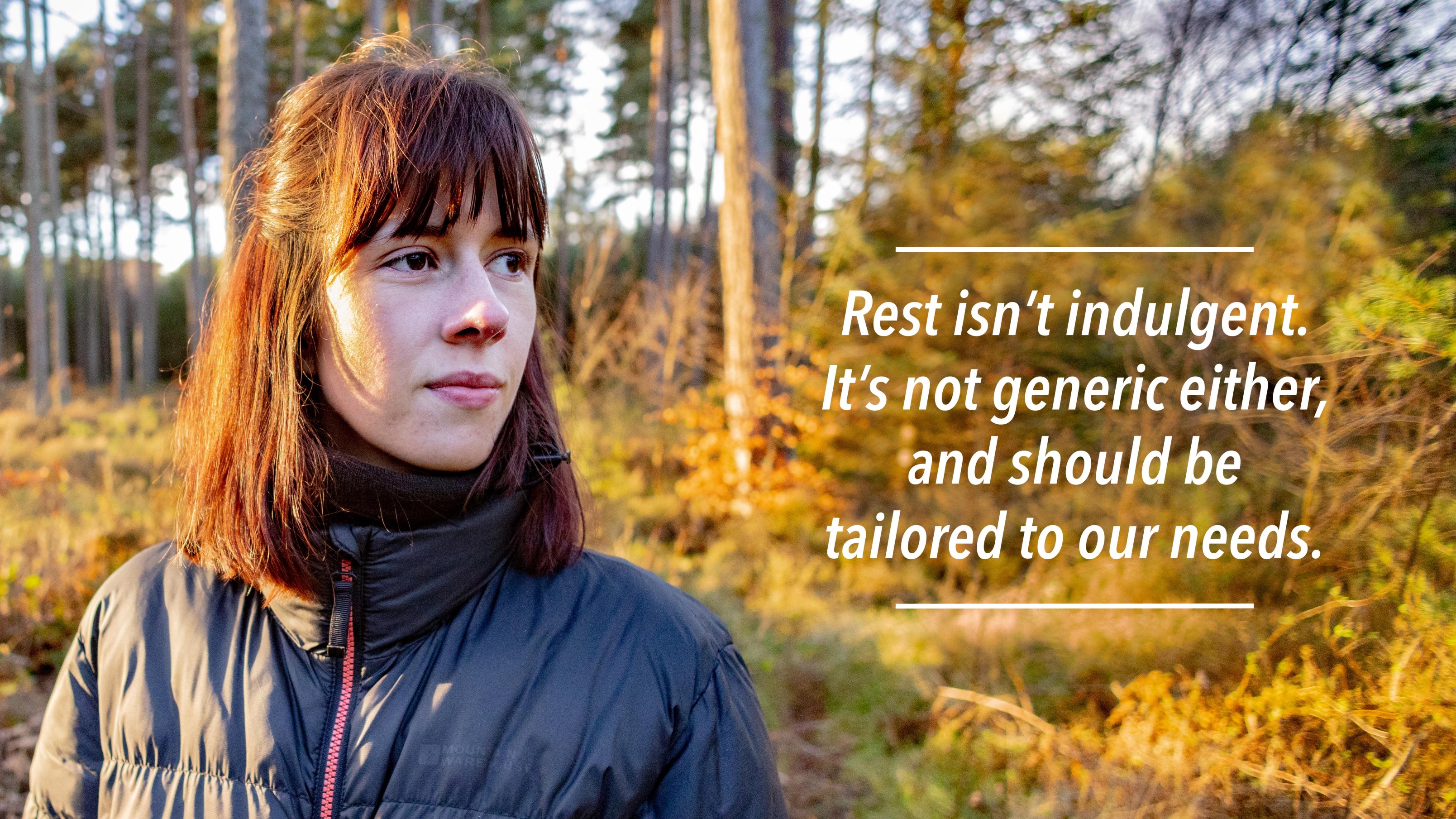
As much as I try to move away from my to-do list and take breaks, it doesn’t happen as often as it should. Rest isn’t indulgent. It’s not generic either, and should be tailored to our needs.
A big problem area for me is my eyes. If I’d been born a century earlier, I’d have written my book on a typewriter or even by hand. Instead, I spend the majority of each working day staring at a screen and have the headaches to prove it. Using Nicola’s model, I should increase the amount of sensory rest I get, so one of my resolutions for 2023 is to take more breaks with my eyes closed, use a heat mask, and write more by hand. It’s slower, but kinder to my eyes and so much more fulfilling.
Mental health is as important as physical health and I’m pleased it’s gaining more awareness in mainstream media, but there’s still not enough. Making little lifestyle changes like focussing on different types of rest is a way of integrating mindfulness into our daily routines.
I hope you find these tips as useful as I did. Some day maybe I’ll take my own advice and look after myself a little better. One step at a time!
The following article was featured in my latest issue of On The Wing magazine, which you can read here. I often see Aberdeen unfairly shrugged off as simply ‘The Granite City’. As with many urban places, there’s so much more to Aberdeen than grey buildings. Here are six of my favourite spots for nature enthusiasts to explore.
Tollohill Wood
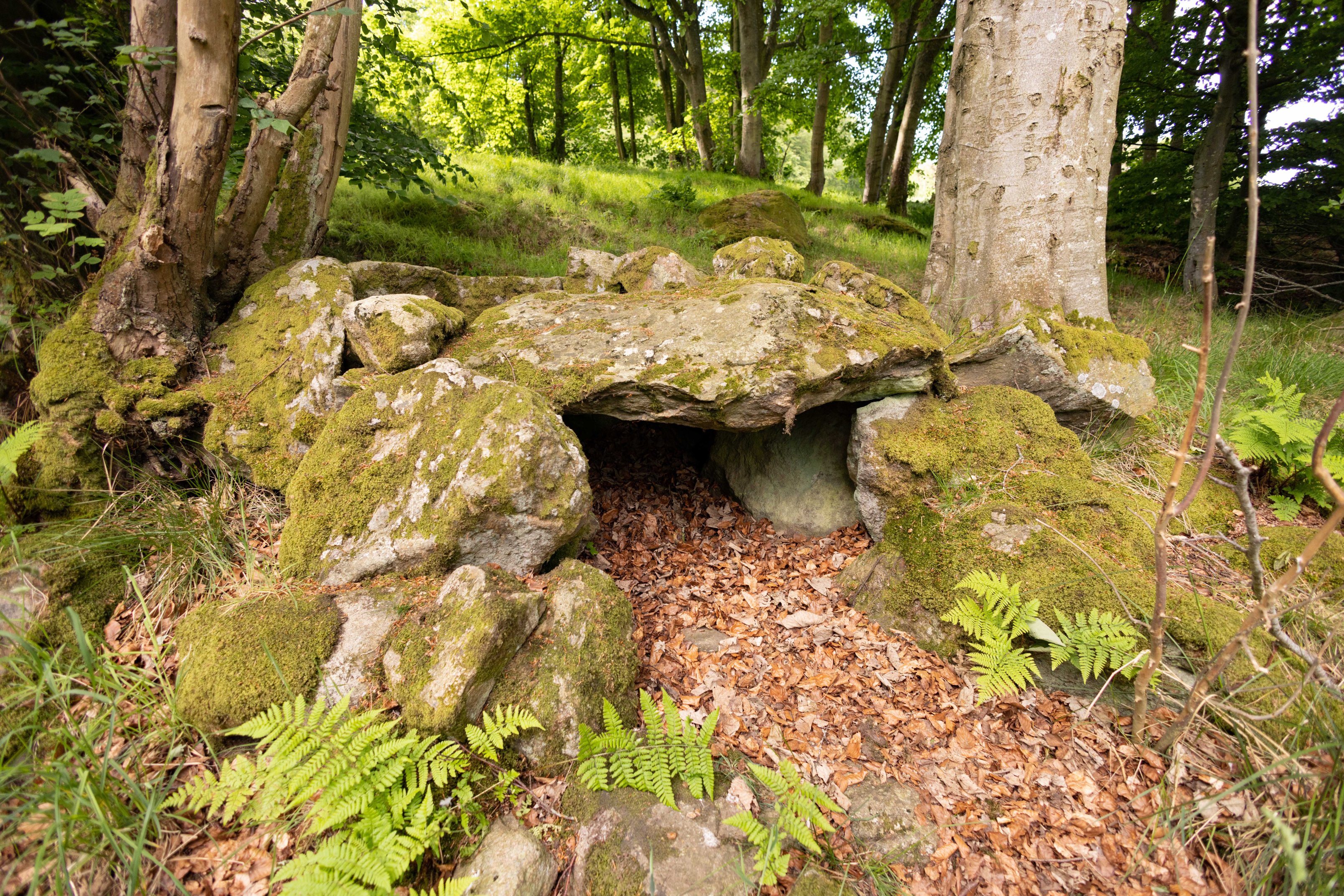
With its deep rocky dells and hip-high bracken, this is what I call a Jurassic forest because it doesn’t take much imagination to picture a dinosaur poking above the foliage. Beeches, birches and rowans line interweaving trails – look out for a Neolithic cairn and a stone monument hidden among the trees.
W3W: flute.saying.plans
Hazlehead Park
Like in all good parks, kids and dogs have open space to run around, but away from the play park area you can sit in a variety of gardens and hear nothing but birdsong. You can also explore Robert the Bruce stone cairns, a sculpture trail and Scotland’s oldest maze here.
Hazlehead Avenue, AB15 8BE
David Welch Winter Gardens
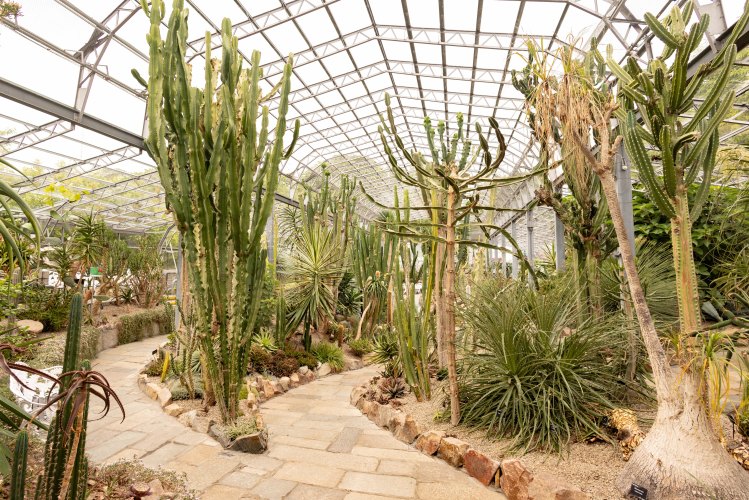
Within Duthie Park, this warren of greenhouses contains tropical flowers, roses, ferns and a squadron of carnivorous plants. I spent an unholy amount of time in the Arid House, where there’s every sort of cactus you could imagine. With more than 750 species, this collection is one of the largest in the UK.
Polmuir Road, AB11 7TH
Open: daily all year round
Entry: free
Greyhope Bay
This small headland forms a curved dell just past Aberdeen’s harbour. A range of seabirds gather in the shallows by the rocks and it’s a great spot to see bottlenose dolphins too. Watch in cosy comfort from the excellent Liberty Café, located within the historic structure of Torry Battery.
Greyhope Road, AB11 8QX
Seaton Park
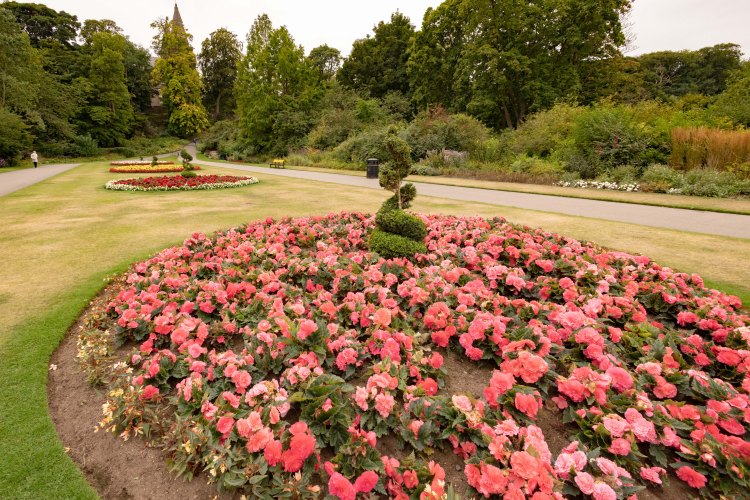
Sitting beside a dangling loop of the River Don, this is the largest green space in Old Aberdeen. Splashes of colour from dramatic flowerbeds, a high quality river footpath leading to a pedestrianised arched bridge, and several concealed features of historical interest make this more intriguing than your average park.
Don Street, AB24 1XS
University of Aberdeen Zoology Museum
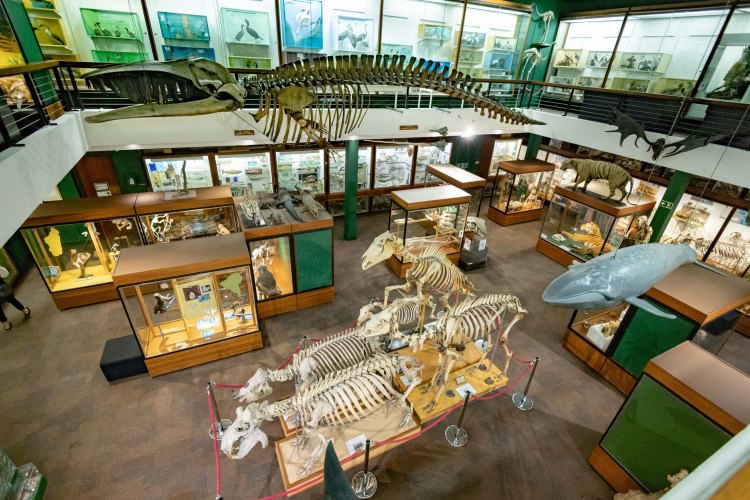
Scales and fur and feathers oh my! The lower gallery’s skeletons draw the eye first, but also make sure to check out minuscule amphibian bones, corals and a troupe of fish you wouldn’t want to meet down a dark alley. The upper gallery is an ornithologist’s delight, featuring everything from goldcrests to golden eagles.
Winter is the time to reflect. I love looking back on what I’ve done over the year, and once again I’ve put a summary of my work projects into my own mini magazine. I did this for the first time during lockdown when I was painfully idle and needed a project to distract me. It turned into something I was proud to share and this is now my third issue.
Between research trips for my book, I’ve been busy working on other projects including another mindful creative retreat at home on the Moray Coast, a design commission inspired by Thumbnail Nature, and my second wildlife calendar.





























 rebeccaonthewing.com