
The Legend of Jokul Frosti

The frost coated everything in sight. Like a shimmering white blanket it lay draped over leaf, twig and soil. The spectacle brought a hush to the usual bustle of early morning; for the brief time that the frost was here, a silence that only winter could bring hovered in the air.

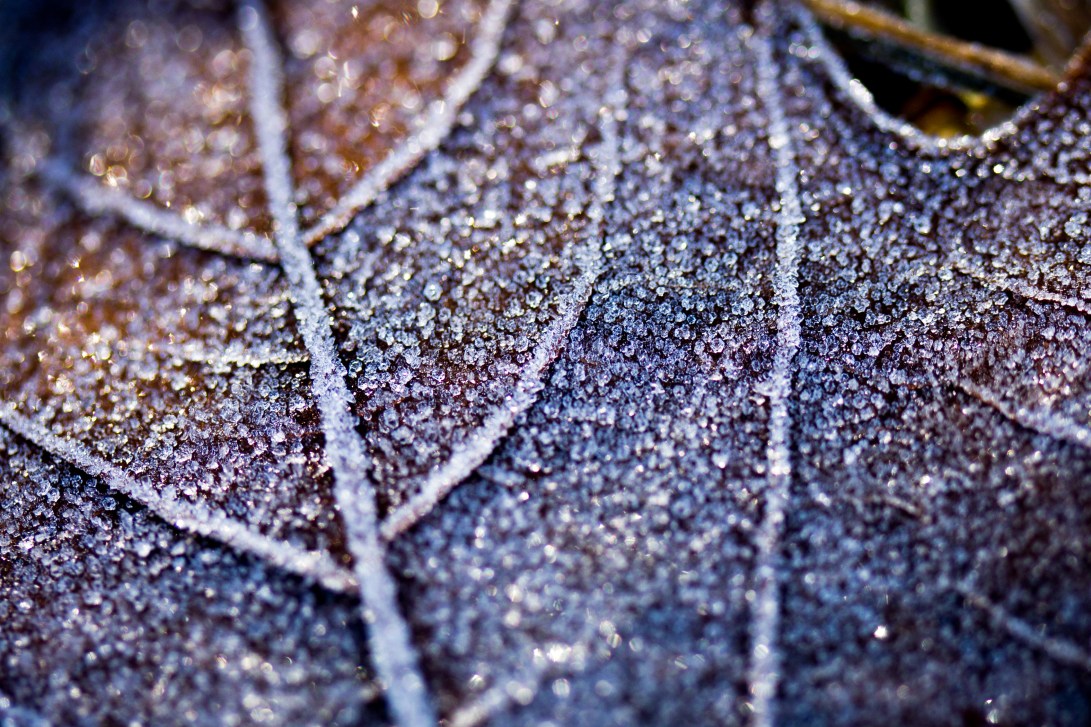
There were leaves scattered over the roots of the trees from which they were shed, curled and dry and chattering every time a breeze stirred them. Jack Frost had traced every vein with white crystal, setting down each cold stone beside the next like lines of silver beads. A knot in the wood of a fallen log had been sprinkled with frost too. The perfect cubes of ice were arranged in clusters like the hidden crystals that form inside a geode, except this display was here for everyone to see.

7W1A8300

Frost has been a source of delight for thousands of years. Over the course of a few hours, the sleeping streets are transformed into a stunning white sculpture. Perhaps the most magical of all is how fleeting it is; when the sun rises, the silver art melts, disappearing until the next freeze.

Formed from water vapour clinging to freezing surfaces, the white colour of frost is brought by air bubbles that have become trapped in the ice crystals. Hoar frost is the frozen version of dew, formed when water vapour transforms directly to solid ice. Its magical swirling patterns and shapes are perhaps what sparked the deep-set Norse mythology that gave frost a far greater meaning. According to legend, it was in fact the artwork of a mysterious character we all recognise: Jack Frost.

“Then he went to the mountain, and powdered its crest,

He climbed up the trees, and their boughs he dressed

With diamonds and pearls…”

Extract from “The Frost” by Hannah Flagg Gould (1789-1865)

Hannah Flagg Gould’s poem about Jack Frost is a playful representation. After painting the mountains and trees with an artistic flair, he causes mischief in a house by “biting a basket of fruit”, spoiling the food for the occupiers of the house to find the next morning.

It is thought that the legend of Jack Frost originated from Viking folklore. His modern name is an Anglicised rendition of Jokul Frosti, meaning “Icicle Frost”. The son of the Nordic wind god Kari, Jokul was a nymph-like creature who painted beautiful frosty patterns on windows during the night. He was the personification of the chill that arrived with winter and nipped the noses of children with his icy bite.
img_9065
Ice Crystals

While Jack Frost is often depicted as a playful sprite with innocent intentions, other cultures recognised Jokul as a more sombre figure – one that was feared and respected. Scandinavian mythology paints a picture of a frost giant that brought not only bitter cold but the black doom of winter that symbolised the end of the world. In northern Russia and Finland, an almighty deity known as Frostman commanded the weather, and was given sacrifices by reindeer herders to persuade him to lessen the severity of blizzards. The villagers would leave bowls of porridge for the Frostman to ensure their crops weren’t touched by the damaging frost. Elsewhere in Japanese folklore, Frostman was a malicious character, the brother of Mistman, who were both keepers of the frost and dew.

Jack Frost is well known but barely understood in modern culture. Most people envisage the elfish creature that decorates the night with beautiful silver patterns that melt with the sunrise. Over time, he has shed the fearsome demeanour that came with the frost giants of Norse mythology. Something as beautiful as sweeping hoarfrost or delicate ice crystals surely couldn’t have been summoned by a menacing omen of everlasting winter. Frost, like the Aurora borealis, is a natural wonder. Although it may not be as sought after as dancing green skylights, it is a microscopic miracle. Whether it is the handiwork of Jokul Frosti will forever be a mystery.
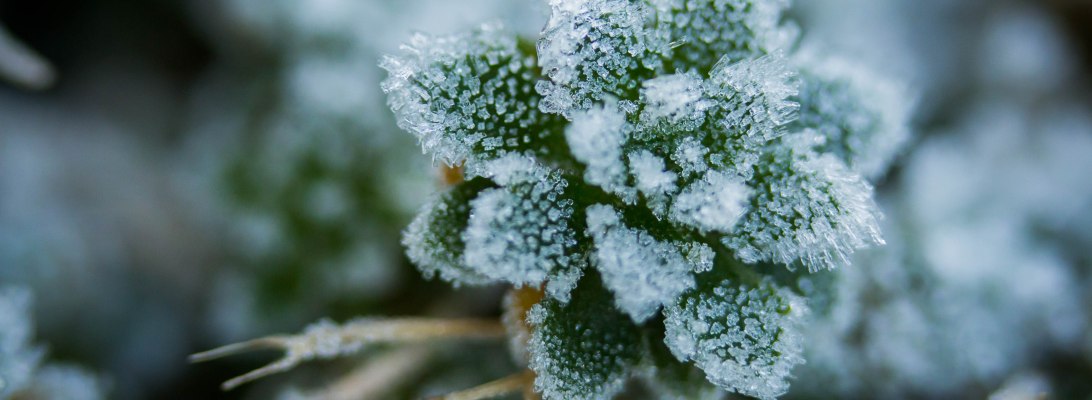
Winter Flora

Chances are, everyone has seen that Christmas is coming. Holly adorns the cards, wreaths hang on the front door and trees are being dragged into the house. Christmas traditions have been part of our culture for many years, but why do we follow them? I wanted to find out, so get yourself another mince pie and discover why exactly certain flora have become such icons of the festive period.

Holly

Holly has been a significant part of Christmas tradition for many thousands of years. The Druids regarded it as the king of winter. It was sacred; while other plants withered during the cold months, holly continued to flourish. As a result, the prickly plant became a symbol of renewal and rejuvenation, maintaining high spirits throughout the difficult winter. Many ancient Europeans brought holly into the home as protection, to ward off ill omens and bring good luck.

Holly also has religious connotations. Early Christians associated the prickly leaves as a crown of thorns and the bright berries as drops of the blood of Christ. According to legends, holly berries were originally white, but were stained red when Christ was crucified.

Ivy

The Druids considered ivy to be the queen to holly’s king. Also an evergreen that endures challenging environments and keeps its healthy green all year, ivy is symbolic of endurance and promise. Thought to possess magical qualities, it was hung in the home to bring luck in the spring.

For a time, ivy was banished by Christians during the festive period because it was able to grow in shade, which was considered a symbol of secrecy and deceit. However, this tradition soon wore off and ivy became a firm part of Christmas culture again.

Mistletoe

Mistletoe has long been regarded as a symbol of freedom – perhaps why it’s suspended rather magically in mid air. Ancient Europeans believed it was a sign of peace, and any time warring Celtics found it in the forests, they would honour the plant and drop their weapons. Today, mistletoe is less of a white flag of surrender, but we still honour it with compassion by sharing a kiss!

Christmas trees

Once again, Christmas trees (typically fir) are evergreens, so were seen as signs of eternal prosperity. They were a symbol of optimism and freshness even in unforgiving environments. By bringing its branches – and more recently, the whole tree – into the home during the Christmas period, it was believed that the evergreen could enliven and invigorate in preparation for the coming year.

So as you are decorating your home with beautifully smelling natural plants this December, remember why exactly they are there and how long these sacred traditions have endured!


A Grand Day Out

On my first day off, I decided to cram in as much natural history as I could. First I went to Bristol Zoo for a spot of nostalgia. Going to the zoo was a thing of great excitement when I was younger – though half the time I was equally excited by the gift shop as by the animals – so considering I’d heard some good things about the Bristol Zoological Society and their conservation programmes, I made the chilly walk over to Clifton.

Unusually for me, I was drawn to the reptile house. Perhaps that was partly so I could warm up, but I also fell in love with the blue poison dart frogs. I’d seen them on TV before, but as is often the case, the screen dilutes the real wonder. Shocking azure and midnight blues and black speckles, with a perfect sheen across their skin. Lacking webbed toes, these beautiful frogs aren’t strong swimmers and instead frequent leaf litter or nooks and crannies in boulders. As their name implies, poison dart frogs release toxins from their skin, so don’t taste half as good as they look.

Other reptiles also caught my eye. There was the mountain chicken frog, so named because of its likeness to poultry when eaten, and the Chinese crocodile lizard that was locally known as the “lizard of great sleepiness”. I was also privileged enough to watch a face-off between a male turquoise dwarf gecko and an olive-coloured female. The pair were rather nonchalantly standing on a vertical wall of the tank, gazing intently at one another. The male twitched his tail and turned his head sharply to the side, perhaps displaying his beautifully chiselled cheekbones in an attempt to woo the female. I watched them with my neck at a unique angle for ages while they continued to stare at one another, until eventually the female headed back down the wall, obviously unimpressed.

I ate lunch on a bench overlooking Bug World. Almost immediately I was joined by a menagerie of birds trying to catch my eye; woodpigeons, blackbirds, and a particularly plucky starling. Just as I was admiring his beautiful plumage, he tried his luck and flew up, snatching a loose prawn from my sandwich. Before I’d even blinked it was down the hatch, leaving a smattering of mayonnaise on his bill. I doubted he’d been introduced to seafood before, and began to worry how he’d digest it. Then I remembered that the starling had in fact stolen from me, and I knew the resilience of urban birds was quite astonishing. The starling perched on the wall behind me, burbling for a while with head twitches this way and that. I finished the rest of my lunch in peace and he heartlessly left.

IMG_9269

After a loop of the zoo, I headed back into town. A man sat playing the accordion with a huge and very contagious smile plastered across his face. Opposite him was another man selling the Big Issue, rather begrudgingly wearing a Santa hat. Lights led the way up Queen’s Road, with shoppers dashing around laden down with bags.

It was undoubtedly winter. There was a chill that tightened my lungs when I gulped the air and my ears were moaning, wondering where my hat was. It had been consistently cold all week and there was a definite hint of trepidation in the air. Snow was waiting in the wings, I was sure of it.

When I reached the museum there was a Pliosaurus waiting for me; a large, blue poster flapping seductively. I couldn’t resist and hurried in. Meandering through an army of taxidermy, I gazed at okapi, kakapo and kingfishers, as well as a sea of dinosaur bones that included miniscule prehistoric teeth laid out in perfect rows. There was also Bristol’s very own dinosaur, Thecodontosaurus, which stood no taller than a Labrador but roamed a tropical habitat during the late Triassic period, 210 million years ago.

After a slice of bakewell cake in the café and customary browse through the shop, I headed back out into the quickly darkening afternoon. As I was trying to make my neck as short as possible in the biting air, my eye caught on £3 bookshop and I veered sharply to the left without a moment’s hesitation. Bristol was amazing! Every wall was lined with books, every one brand new and three pounds or cheaper. I purchased a copy of Moby Dick, but had a sneaking suspicion I’d be back before next week was up.

Winter Migrations

During this time of year, many birds have migrated for the winter. Some, like Partridges, don’t stray more than a kilometre from where they were born, but most birds – at least 4000 species – will migrate to seek new pastures that will see them through the colder months. There are several different types of migration that British birds follow, due to food availability or sometimes their own adaptations.

In an irruption migration, large numbers of birds that do not usually visit the UK arrive in a short space of time. In some years, the population grows too large for the food that is available in the birds’ usual territories, forcing them to relocate. Waxwings (Bombycilla garrulus) migrate in this way; some years we are fortunate enough to see large groups of these striking birds feeding on berries high in the trees, while other years there are none at all.

While many birds travel from north to south or east to west, some make shorter journeys from low to high altitudes and vice versa. Even though this migration may not be as physically demanding, there are still new challenges that come with a change in environment. In the UK, various larks, pipits and buntings are altitudinal migrants, including the Skylark (Alauda arvensis). As well as an altitudinal transition, many Skylarks will change habitat in winter. Having spent most of the year roaming farmland and heathland, coastal marshes become more favourable during the winter months.

Other migrations aren’t as a result of finding new feeding grounds but simply to stay safe. While all birds shed old feathers to grow new ones, species such as the Shelduck (Tadorna tadorna) lose all their flight feathers, making them very vulnerable to predation. In order to increase their chances of surviving while new feathers come through, Shelducks migrate to safer areas in late summer once the breeding season is over. A popular location for Shelducks is the island of Heligoland, situated in the North Sea. This allows the birds to moult with little disturbance.